Adapalene vs Tretinoin: Which Retinoid Should You Choose for Your Skin?
SafeRxPills Pharmacy Team
Certified Pharmacist

Adapalene vs Tretinoin: Which Retinoid Should You Choose for Your Skin? | SafeRxPills - pharmacy guide
When deciding between adapalene vs tretinoin which to choose comes down to your skin goals and tolerance. Adapalene is gentler, available over-the-counter at 0.1%, and works well for mild to moderate acne with less irritation. Tretinoin is stronger, requires a prescription, and delivers faster results for both acne and anti-aging, but causes more initial redness and peeling. For first-time retinoid users or sensitive skin, start with adapalene. For stubborn acne or significant sun damage, tretinoin is the more powerful option.
Both adapalene and tretinoin belong to the retinoid family, but they work through different mechanisms and produce different results. Understanding these differences helps you pick the right one for your specific skin concerns, tolerance level, and lifestyle. Let's break down exactly how they compare.
What Are Adapalene and Tretinoin?
Adapalene is a third-generation synthetic retinoid developed specifically for acne treatment. The FDA approved it in 1996, and in 2016, the 0.1% strength became available over-the-counter under the brand name Differin. It binds selectively to specific retinoic acid receptors in the skin, which gives it a more targeted action than older retinoids.
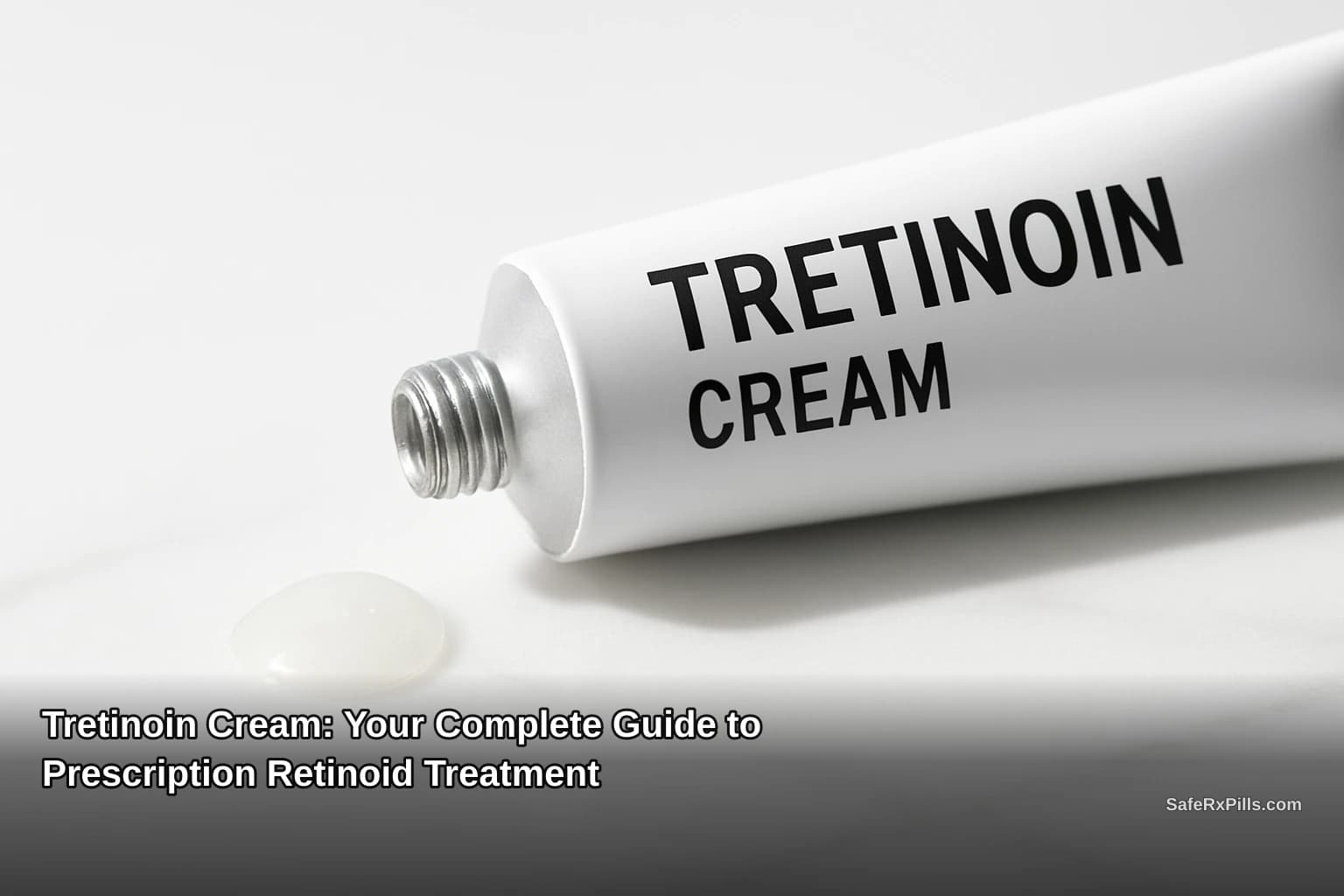
Tretinoin is the active form of vitamin A and the original prescription retinoid, approved by the FDA in 1971. Also called all-trans retinoic acid, it's the gold standard that all other retinoids get compared against. Tretinoin directly activates retinoic acid receptors without needing conversion, making it immediately bioactive when applied to skin.
The key difference in their chemistry affects how they work. Adapalene is photostable, meaning it doesn't break down in sunlight or oxidize easily. Tretinoin degrades when exposed to light and air, which is why it must be applied at night and comes in opaque tubes. This stability advantage makes adapalene easier to formulate and potentially more consistent in its effects.
How These Retinoids Work Differently
Both retinoids speed up skin cell turnover and prevent dead cells from clogging pores, but they take different paths to get there. Adapalene selectively binds to RAR-beta and RAR-gamma receptors. This selective binding targets the processes that cause acne while producing less widespread inflammation throughout the skin. The result is effective acne treatment with fewer side effects.
Tretinoin activates all three retinoic acid receptor subtypes (RAR-alpha, beta, and gamma). This broader receptor activation produces more complete changes in skin cells. It increases collagen production, accelerates cell turnover, improves pigmentation, and normalizes keratinization. The wider action explains why tretinoin works better for anti-aging but also causes more irritation.
At the cellular level, adapalene demonstrates anti-inflammatory properties that tretinoin lacks. Studies show adapalene reduces inflammatory markers like interleukin-8 and leukotriene B4. This anti-inflammatory effect helps calm existing acne while preventing new breakouts. Tretinoin focuses more on normalizing follicular keratinization, which prevents comedone formation but doesn't directly reduce inflammation.
Your skin responds differently to each retinoid because of these mechanisms. Adapalene typically causes less initial purging and redness. Tretinoin often triggers a more intense adjustment period with noticeable flaking and sensitivity during the first 4-6 weeks.
Which Is Better for Acne?
For mild to moderate acne, adapalene and tretinoin perform nearly equally. A 24-week comparative study published in the Journal of Drugs in Dermatology found adapalene 0.1% gel reduced inflammatory lesions by 54% compared to tretinoin 0.025% gel which reduced them by 52%. The difference isn't clinically significant, but patients using adapalene reported less skin irritation.
Tretinoin pulls ahead for severe acne, especially when combined with other treatments. Dermatologists often prescribe tretinoin 0.05% or higher for stubborn comedonal acne and deep cystic breakouts. The stronger concentrations (0.05% and 0.1%) penetrate deeper and produce faster clearing of severe lesions. Most patients see visible improvement within 8-12 weeks.
Adapalene works particularly well for inflammatory acne with lots of red, angry bumps. Its anti-inflammatory properties help calm the redness and swelling while unclogging pores. For this type of acne, adapalene 0.3% (prescription strength) matches or exceeds tretinoin 0.025% in clinical trials. The newer combination products containing adapalene with clindamycin offer even better results by attacking acne bacteria simultaneously.
Results timelines differ slightly. Adapalene users typically notice initial improvement around week 4-6, with continued progress over 12 weeks. Tretinoin often shows changes slightly faster, around week 3-4, but the initial purge can make things look worse before they get better. Both require at least 12 weeks for full assessment of effectiveness.
Which Works Better for Anti-Aging?
Tretinoin is the clear winner for anti-aging and photodamage reversal. Decades of research prove tretinoin reduces fine lines, improves skin texture, fades age spots, and increases collagen density. A landmark study in JAMA Dermatology showed tretinoin 0.05% cream significantly improved fine wrinkles, roughness, and mottled hyperpigmentation after 24 weeks of use.
The evidence for adapalene's anti-aging effects is much newer and more limited. Recent studies suggest adapalene 0.3% can improve fine lines and skin texture, but the results aren't as dramatic as tretinoin. A 2018 study found adapalene 0.3% gel improved fine lines by 28% after 12 weeks, while historical tretinoin studies show improvements of 40-50% over similar timeframes.
If your primary goal is reversing sun damage and reducing moderate to deep wrinkles, tretinoin remains the gold standard. Dermatologists typically prescribe tretinoin 0.05% or 0.1% for anti-aging because these higher strengths stimulate more collagen production. You can read more about tretinoin's anti-aging effects compared to retinol to understand why prescription strength matters.
For younger patients addressing early signs of aging (late twenties to early thirties), adapalene 0.3% offers a reasonable alternative. It provides some anti-aging benefits with less irritation, making it easier to use consistently. The real-world difference is that tretinoin will get you to visible anti-aging results faster, but adapalene can get you there eventually if you're patient.
Collagen stimulation differs between the two. Tretinoin increases types I and III collagen significantly within 10-12 months of regular use. Adapalene shows some collagen increase, but the effect is less pronounced. For significant skin thickening and wrinkle reduction, tretinoin's broader receptor activation gives it the advantage.
Side Effects: What to Expect from Each
Adapalene causes noticeably less irritation than tretinoin. Clinical trials consistently show adapalene users report less redness, peeling, burning, and dryness. About 20-30% of adapalene users experience mild irritation in the first few weeks. With tretinoin, that number jumps to 60-80%, with more severe symptoms.
Common adapalene side effects include mild dryness, occasional flaking (especially around the nose and mouth), and temporary redness after application. Most of these effects fade within 2-4 weeks as your skin adjusts. Severe irritation with adapalene is rare unless you're using it with other harsh products or over-exfoliating.
Tretinoin's side effects are more intense, especially during the first 6-8 weeks. Expect significant peeling, redness that can last several hours after application, increased sensitivity to skincare products, and temporary worsening of acne (the purge). Your skin may feel tight and look shiny from the increased cell turnover. See what to expect in our detailed guide to tretinoin results and timeline.
Both retinoids increase sun sensitivity because they thin the outermost dead cell layer (stratum corneum) while thickening the living epidermis underneath. You must use SPF 30+ sunscreen every morning without exception. Skipping sunscreen while using either retinoid will cause sunburn faster and increase your risk of hyperpigmentation.
Managing side effects differs between the two. With adapalene, most people can apply it nightly from the start, using a good moisturizer to handle any dryness. Tretinoin requires a slower approach. Start with once or twice weekly application, gradually increasing frequency over 4-6 weeks. The buffering technique (applying moisturizer before tretinoin) helps reduce irritation without significantly decreasing effectiveness.
Pregnancy and breastfeeding considerations are identical for both. Do not use adapalene or tretinoin if you're pregnant, planning pregnancy, or breastfeeding. Both are category C drugs with potential risks to fetal development. Stop use at least one month before trying to conceive.
Comparing Strength and Irritation Levels
The available strengths help you understand each retinoid's intensity. Adapalene comes in 0.1% (over-the-counter) and 0.3% (prescription). Tretinoin is available in 0.025%, 0.05%, and 0.1% concentrations in cream, gel, and micro-gel formulations. Despite the percentage differences, you can't directly compare the numbers because they're different molecules with different potencies.
In practical terms, adapalene 0.1% roughly equals tretinoin 0.025% in both effectiveness and irritation for acne treatment. Adapalene 0.3% compares to tretinoin 0.05% in strength. Tretinoin 0.1% is the most powerful option available, with no adapalene equivalent in terms of overall skin changes.
The irritation-to-benefit ratio favors adapalene at lower strengths. You get good acne results with minimal side effects. As you move up in tretinoin concentration, the benefit increases (especially for anti-aging), but so does the irritation. Many patients find tretinoin 0.1% too harsh for regular use, while adapalene 0.3% remains tolerable.
Formulation matters as much as concentration. Tretinoin microsphere gel and Retin-A Micro use encapsulation technology to slowly release the medication, reducing irritation compared to standard tretinoin cream or gel at the same strength. If you're considering tretinoin but worried about irritation, ask about these advanced formulations.
Combining either retinoid with other actives requires caution. Using adapalene or tretinoin with benzoyl peroxide, glycolic acid, or vitamin C can increase irritation significantly. Many dermatologists recommend using retinoids at night and other actives in the morning, with at least a 10-12 hour gap. The combination products that include retinoids with complementary ingredients are specifically formulated to work together without excessive irritation.
Getting Adapalene or Tretinoin in the USA
In the United States, adapalene 0.1% is the only retinoid you can buy without a prescription. It's sold over-the-counter at drugstores, supermarkets, and online retailers under the brand name Differin, typically costing $12-25 for a 45g tube. Generic adapalene 0.1% is also widely available at similar prices. This accessibility makes it the easiest retinoid to try if you're new to these medications.
Adapalene 0.3% and all tretinoin strengths require a prescription from a licensed healthcare provider in the USA. You'll need to see a dermatologist, primary care physician, or use a telemedicine service to get a prescription. Many insurance plans cover tretinoin for acne but not for anti-aging, so you might pay full retail price for cosmetic use.
Cost varies significantly depending on insurance coverage and pharmacy. Generic tretinoin cream 0.025% (20g tube) ranges from $30-75 without insurance. The 0.05% and 0.1% strengths cost more, typically $60-150 per tube. Brand names like Retin-A and Retin-A Micro are considerably more expensive, often $200-400, though manufacturer coupons can reduce the cost.
SafeRxPills offers an alternative for US patients who want convenient access to prescription-strength retinoids without the markup. We ship tretinoin formulations to all US states, including tretinoin gel in multiple strengths, with transparent pricing and reliable delivery. Our licensed pharmacy partners help you receive genuine medication at a fraction of typical US retail prices.
The ordering process is straightforward. Browse our selection of tretinoin products, add your preferred strength to the cart, and complete checkout. We handle the prescription process through our network of licensed physicians. Orders typically arrive within 14-21 business days via international shipping with full tracking. All medications are sourced from certified manufacturers and undergo quality verification.
US regulations allow personal importation of up to a 90-day supply of prescription medications for personal use. SafeRxPills operates within these guidelines, making it legal for American patients to order tretinoin through our service. Thousands of US customers trust us for ongoing tretinoin supplies because we combine pharmaceutical quality with affordable pricing.
How to Choose Between Adapalene and Tretinoin
Start with adapalene if you're new to retinoids, have sensitive skin, or mainly want to treat mild to moderate acne. The lower irritation profile means you're more likely to stick with it long enough to see results. Being able to buy it over-the-counter lets you start immediately without needing an appointment.
Choose tretinoin if you have stubborn acne that hasn't responded to other treatments, significant sun damage, moderate to deep wrinkles, or severe hyperpigmentation. The stronger action produces faster, more dramatic results. Accept that you'll need to manage more irritation during the adjustment phase, but the payoff is worth it for serious skin concerns.
Consider your lifestyle and commitment level. Adapalene's photostability means you can technically apply it morning or night (though night is still preferred). Tretinoin must be applied at night and requires strict sun protection. If you work outdoors or can't consistently use sunscreen, adapalene might be the safer choice.
Your age and skin goals matter. For patients in their twenties dealing with acne, adapalene 0.1% is often sufficient and easier to tolerate. For patients in their thirties and beyond who want both acne control and anti-aging benefits, tretinoin 0.05% delivers better overall results. The timeline expectation differs too: tretinoin shows visible anti-aging changes around month 3-4, while adapalene takes 6-9 months for similar improvements.
Budget plays a role for long-term use. Over-the-counter adapalene 0.1% costs about $15-20 monthly. Prescription adapalene 0.3% might cost $75-150 monthly without insurance. Generic tretinoin through traditional US pharmacies runs $30-150 monthly depending on strength. Through SafeRxPills, tretinoin becomes more affordable at $25-45 monthly for a 3-month supply, making it cost-competitive with prescription adapalene.
You can also use both sequentially. Many dermatologists recommend starting with adapalene for 12 weeks to build retinoid tolerance. If results are insufficient, upgrade to tretinoin 0.025% or 0.05%. Your skin will handle the stronger tretinoin better after adapalene preparation, experiencing less severe irritation.
The wrong choice is easier to identify than the right one. Don't choose tretinoin 0.1% as your first retinoid unless a dermatologist specifically recommends it for severe conditions. Don't stay on adapalene 0.1% for years if you're not seeing the anti-aging results you want. Reassess every 3-6 months and adjust your treatment based on results and tolerance.
Frequently Asked Questions
Can I use adapalene and tretinoin together?
No, you should not use adapalene and tretinoin together. They work through similar mechanisms, and combining them provides no additional benefit while significantly increasing irritation, redness, and peeling. Choose one retinoid and use it consistently. If one isn't working after 12-16 weeks, switch to the other rather than combining them.
How long does it take to see results from adapalene vs tretinoin?
Adapalene typically shows initial acne improvement around week 4-6, with optimal results at 12 weeks. Tretinoin often produces visible changes slightly faster, around week 3-4 for acne and 8-12 weeks for anti-aging effects. Both require at least 3 months of consistent use before you can fairly judge effectiveness. Tretinoin generally delivers faster and more dramatic results for both acne and aging, but adapalene gets there eventually with less irritation.
Is adapalene strong enough for wrinkles and anti-aging?
Adapalene 0.3% shows some effectiveness for mild fine lines and early signs of aging, but it's not as powerful as tretinoin for moderate to severe wrinkles and sun damage. Clinical studies demonstrate tretinoin produces significantly better collagen stimulation and wrinkle reduction. If anti-aging is your primary goal and you have visible sun damage or moderate wrinkles, tretinoin 0.05% or 0.1% will give you better, faster results than adapalene.
Which causes less purging, adapalene or tretinoin?
Adapalene generally causes less severe purging than tretinoin. The purge happens when retinoids accelerate skin cell turnover, bringing underlying clogged pores to the surface faster. Tretinoin's broader and stronger action typically produces more noticeable purging, especially in the first 4-6 weeks. Adapalene's more targeted mechanism and anti-inflammatory properties result in milder purging that resolves faster. However, both can cause some degree of temporary acne worsening before improvement occurs.
Can I switch from adapalene to tretinoin without problems?
Yes, you can switch from adapalene to tretinoin, and your skin will typically tolerate the transition better because adapalene has already built some retinoid tolerance. Start with the lowest tretinoin strength (0.025%) even if you were using adapalene 0.3%. Apply it every third night for two weeks, then every other night for two weeks, before attempting nightly use. You'll still experience some increased dryness and peeling during the switch, but it's usually less severe than starting tretinoin with no prior retinoid exposure.
This article is for informational purposes only and does not constitute medical advice. Consult a healthcare provider before starting any new medication, especially if you have skin conditions, allergies, or are taking other medications.
Medical References
- PubMed (NCBI) (PMID: 30674002) - 2019
- DailyMed (U.S. National Library of Medicine)
- DailyMed (U.S. National Library of Medicine)
Sources: U.S. National Library of Medicine (DailyMed, PubMed), openFDA
Related Products
- A Ret Gel 0.025% (Tretinoin) - beginner-strength tretinoin gel
- A Ret Gel 0.05% (Tretinoin) - mid-strength tretinoin for acne and anti-aging
- A Ret Gel 0.1% (Tretinoin) - strongest tretinoin for advanced users
SafeRxPills Pharmacy Team
PharmD, Clinical Pharmacist
Certified pharmacist with over 10 years of experience in clinical pharmacy and patient education. Specializes in generic medication counseling and medication therapy management.
Comments (0)
Leave a Comment
No comments yet. Be the first to share your thoughts!
Related Articles