
Bimatoprost Eyelash Serum Safety: What You Need to Know Before Using It
SafeRxPills Pharmacy Team
Editorial team at SafeRxPills. Articles are written and checked against regulatory drug labelling (DailyMed, FDA, EMA) and published literature.
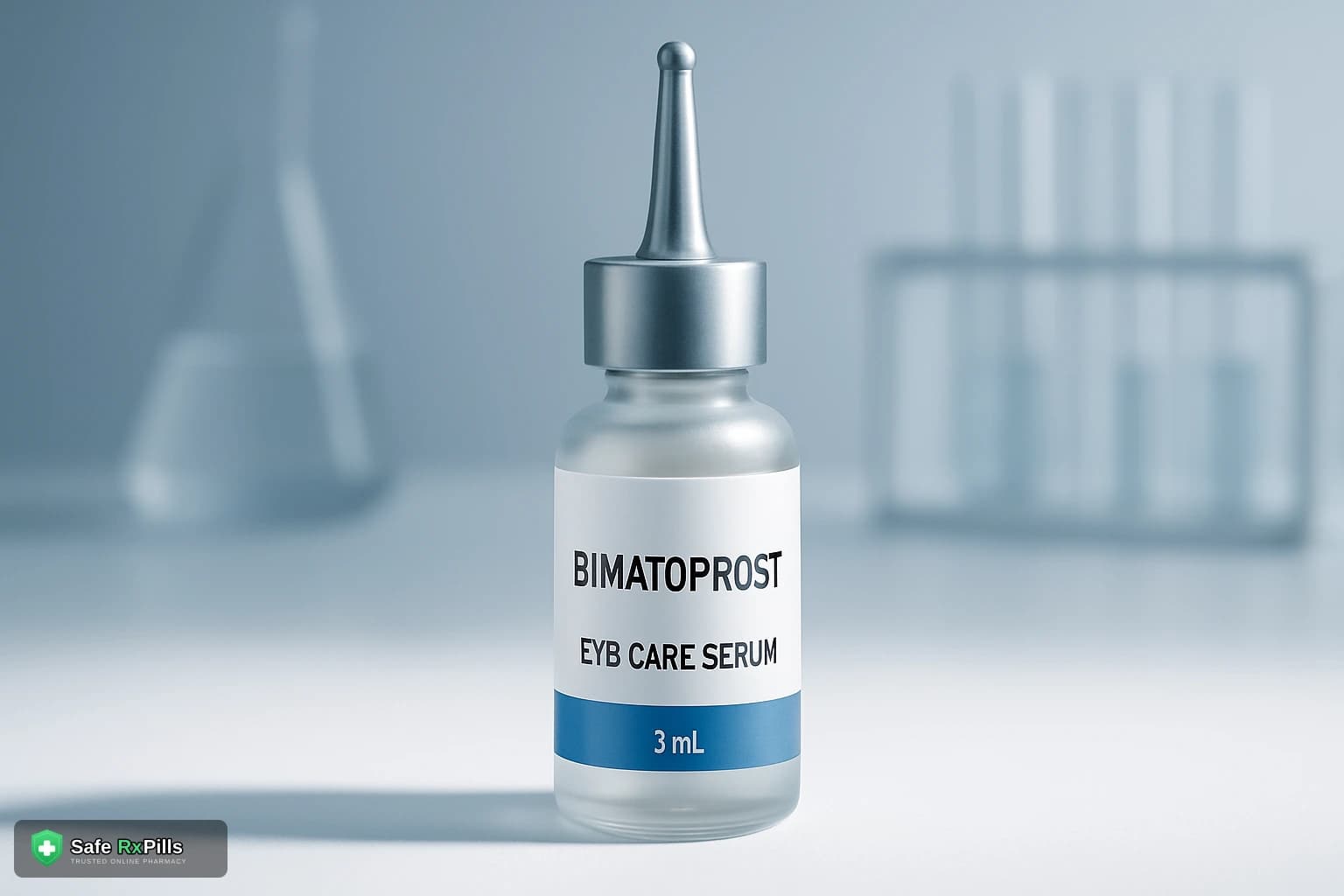
Bimatoprost Eyelash Serum Safety: What You Need to Know Before Using It | SafeRxPills - pharmacy guide
Bimatoprost Eyelash Serum Safety: What You Need to Know Before Using It
Bimatoprost eyelash serum safety is well-documented when the product is used correctly and under appropriate guidance. Bimatoprost is an FDA-recognized prostaglandin analog originally developed to treat glaucoma, and its eyelash-lengthening effect is a known, clinically observed outcome of the drug. The safety profile is solid for most healthy adults, but there are specific risks, including permanent pigmentation changes and eye irritation, that every user needs to understand before starting.
How Bimatoprost Works on Eyelashes
Bimatoprost is a synthetic analog of prostaglandin, a naturally occurring substance that influences many biological processes in the body. According to the FDA label, it works by selectively mimicking substances called prostamides. When applied to the eye or the eyelid margin, it interacts with receptors in the hair follicles, extending the growth phase of the lash cycle.
The result is eyelashes that grow longer, thicker, and more numerous over time. This is not a cosmetic trick. It is a direct pharmacological effect of the drug on follicle biology. In clinical trials of bimatoprost ophthalmic solution 0.03%, eyelash growth was reported as an adverse reaction in approximately 15% to 45% of glaucoma patients, which is how the lash-growth application was discovered in the first place.
The pharmacokinetics help explain why systemic exposure is minimal. After a single drop, blood concentrations peak within 10 minutes and fall below detectable levels in most people within 1.5 hours. The drug does not accumulate meaningfully in the body over time, which keeps the systemic risk profile low when used as directed.
If you want to try a clinically backed option, Careprost 3ml bimatoprost solution is one of the most widely used formulations available through licensed online pharmacies.
Real Side Effects You Should Know About
The FDA label lists conjunctival hyperemia (redness of the eye) as the most common adverse reaction, occurring in up to 45% of patients in clinical trials. That is a significant number. Most cases are mild, but roughly 3% of patients stopped treatment because of it.
Other side effects reported in 3% to 10% of users include:
- Ocular dryness
- Burning or stinging sensation
- Foreign body sensation in the eye
- Eye pain
- Periorbital skin darkening (skin around the eye becoming darker)
- Eyelid inflammation (blepharitis)
- Superficial punctate keratitis (tiny surface scratches on the cornea)
Less common reactions, seen in 1% to 3% of users, include tearing, light sensitivity, allergic conjunctivitis, and increased iris pigmentation. In under 1% of patients, intraocular inflammation presented as iritis.
Post-marketing reports, which reflect real-world use beyond controlled trials, have identified additional concerns. These include periorbital fat atrophy, meaning gradual loss of fat around the eye socket, which can cause a sunken appearance, eyelid drooping (ptosis), and deepening of the eyelid sulcus. These changes were associated with prolonged use and improper application technique where excess solution ran into the eye socket area rather than staying at the lash line.
Systemic effects are uncommon but not zero. About 10% of patients in trials reported infections such as colds, and 1% to 5% reported headaches, abnormal liver function tests, or generalized weakness. These were observed in glaucoma patients using a full drop in each eye daily, a substantially higher dose than applying a tiny amount along the lash line.
Which Changes Are Permanent vs. Reversible?
This is the question most people do not ask until it is too late, so pay attention here.
Iris pigmentation, meaning a change in your eye color, is likely permanent once it occurs. According to the FDA label, the change happens because bimatoprost increases melanin content in the iris melanocytes. The brown pigmentation typically starts around the pupil and spreads outward over months to years. If you have blue, grey, green, or hazel eyes and you use bimatoprost directly in the eyes, your irises may gradually become browner. You cannot reverse this.
Periorbital skin darkening and eyelash changes, by contrast, are usually reversible. The FDA label states these have been reported to reverse in some patients after stopping treatment. The keyword is "some." Reversal is not guaranteed and may be incomplete or slow.
For eyelash application specifically, where the solution is applied to the base of the upper lash line with an applicator rather than dropped directly into the eye, the risk of iris color change is lower because less drug reaches the anterior chamber of the eye. But it is not zero. Any excess that runs into the eye increases the risk. This is why application technique matters so much.
Understanding drug quality and safety standards is also important when sourcing any topical ophthalmic product. Our guide on WHO GMP certified medicine quality standards explains what to look for when choosing a trustworthy supplier.
Who Should Not Use Bimatoprost
Bimatoprost is contraindicated in anyone with a known hypersensitivity to bimatoprost or any ingredient in the formulation. That is the hard rule from the FDA label. Beyond that, certain groups need to exercise particular caution or avoid it entirely.
People with active eye inflammation. Prostaglandin analogs can worsen existing intraocular inflammation. If you have uveitis or any active inflammatory eye condition, bimatoprost can make it significantly worse.
People with a torn posterior lens capsule or aphakia. These patients face elevated risk of macular edema, a serious swelling of the central retina. The FDA label specifically calls this out as a precaution.
Soft contact lens wearers. Bimatoprost solution contains benzalkonium chloride, a preservative that absorbs into soft contact lenses and can discolor them. You need to remove contacts before applying and wait at least 15 minutes before reinserting them.
Pregnant or breastfeeding individuals. There is insufficient human safety data. Animal studies showed some fetal effects at high systemic doses. The risk-benefit decision should be made with a doctor.
Anyone with only one functioning eye. The risk of permanent iris color change in that eye carries much higher stakes.
Children are also not an established patient population for cosmetic eyelash use. The overdose data notes that the accidental exposure risk from one bottle is at least 70 times lower than doses that caused toxicity in animal studies even for a 10 kg child, which is reassuring for accidental ingestion, but pediatric cosmetic use is not appropriate.
How to Use It Correctly and Safely
For glaucoma treatment, the FDA-approved dosage is one drop in the affected eye once daily in the evening. More frequent use actually reduces effectiveness because prostaglandin analogs show diminished IOP-lowering effect with more than once-daily dosing.
For eyelash application, the approach is different from instilling a drop into the eye. You apply a small amount along the base of the upper eyelid lash line only, using the applicator brush or a thin eyeliner brush. Not the lower lashes. Not into the eye itself. The lower lash line application risks getting product into the eye with every blink, increasing the chance of pigmentation changes and irritation.
Key technique points:
- Apply in the evening, once daily
- Blot any excess solution immediately with a tissue
- Do not touch the applicator tip to any surface other than the lash line to prevent contaminationRemove contacts before application, wait 15 minutes to reinsert
- Wash hands before and after
- If you use other topical eye products, wait at least 5 minutes between applications
Results take time. Noticeable lash changes typically appear after 4 to 8 weeks of consistent nightly use, with optimal results visible around 12 to 16 weeks. If you stop using it, lashes gradually return to their previous appearance over several weeks to months.
Knowing how to buy medicines safely online is also part of the equation. Our guide on whether it is safe to buy medicine online covers the red flags to watch for and how to identify legitimate pharmacy sources.
Buying Bimatoprost in the USA: What Patients Need to Know
In the United States, bimatoprost ophthalmic solution is a prescription drug. The branded version, Latisse, is FDA-approved specifically for eyelash hypotrichosis, while generic bimatoprost 0.03% is approved for glaucoma and ocular hypertension. Getting a prescription through a US dermatologist or ophthalmologist is the standard route.
Retail pricing in the US is steep. A 5ml bottle of branded Latisse typically runs $150 to $200 without insurance. Generic versions from US pharmacies are cheaper but still often cost $60 to $100 per bottle. Most insurance plans do not cover it for cosmetic use.
Many US patients source bimatoprost from licensed international online pharmacies as a cost-saving option. This is a legal gray area in the US: the FDA technically prohibits importing prescription drugs for personal use, but enforcement against individuals importing small quantities for personal use is rare, and the FDA has published guidance indicating it exercises discretion in such cases.
If you go this route, choosing a pharmacy that ships verified, GMP-manufactured products matters. Careprost bimatoprost 3ml is a widely used formulation from licensed manufacturers and is available through SafeRxPills with shipping to US addresses. The cost difference compared to branded US retail is significant, which is why it remains popular with informed consumers.
Whatever your sourcing approach, the safety rules do not change. The drug is the same molecule, the side effect profile is identical, and the need for correct application technique is universal. Cheaper does not mean less effective if the product meets quality standards. It does mean you need to verify the source carefully.
Medical References
- Bimatoprost in the treatment of eyelash hypotrichosis. Clin Ophthalmol. 2010. PMID 20463804
- Bimatoprost 0.03% for the Treatment of Eyelash Hypotrichosis: A Pooled Safety Analysis of Six Randomized Trials. J Clin Aesthet Dermatol. 2015. PMID 26203317
- Bimatoprost for the treatment of eyelash, eyebrow and scalp alopecia. Expert Opin Investig Drugs. 2017. PMID 28264599
- DailyMed: Bimatoprost prescribing information. U.S. National Library of Medicine
Sources: U.S. National Library of Medicine (PubMed, DailyMed). Last reviewed August 2026.
This article is for informational purposes only and does not substitute for professional medical advice. Consult a licensed healthcare provider before starting or changing any treatment.
Where to Buy Careprost in Your Country
Bimatoprost is prescription-only in every market SafeRxPills ships to, but the rules on personal importation, customs handling and delivery times are different in each one. Pick the guide that matches where you live:
- Buy Careprost in the USA: FDA status, prescription rules, personal import allowance and counterfeit checks.
- Buy Careprost in the UK: MHRA position, customs handling and typical UK delivery windows.
- Buy Careprost in Australia: TGA Personal Importation Scheme, the 3 month supply limit and what Australian customers should expect.
To order directly, see Careprost 3ml (bimatoprost 0.03%) or browse the full eye care range.
?Frequently Asked Questions
Is bimatoprost eyelash serum safe for long-term use?
For most healthy adults, long-term use is tolerated well when applied correctly to the upper lash line only. The main concern with extended use is gradual pigmentation changes to the skin around the eye and, if the solution reaches the eye itself, potential iris color change that may be permanent. Regular monitoring by an eye care professional is a smart precaution for anyone using it for more than six months.
Can bimatoprost permanently change your eye color?
Yes, it can. According to the FDA label, iris pigmentation changes caused by bimatoprost are likely to be permanent after discontinuation. This occurs because the drug increases melanin production in iris melanocytes. The risk is higher with direct eye drop use than with careful lash-line application, but improper technique that allows excess product to enter the eye carries real risk.
How long does it take bimatoprost to grow eyelashes?
Most people notice visible lash changes after 4 to 8 weeks of nightly application. Full results, meaning maximum length, thickness, and fullness, typically appear around the 12 to 16 week mark with consistent use. If you stop treatment, lashes gradually revert to their baseline over the following weeks to months.
What happens if you stop using bimatoprost on your eyelashes?
Your eyelashes will slowly return to their previous appearance. The hair follicle growth cycle reverts without the drug's influence, so lashes shorten and thin over several weeks. Skin darkening around the eye also tends to fade for most patients, though the timeline varies. Iris color changes, if they occurred, do not reverse.
Can you use bimatoprost on your lower lashes?
This is not recommended. Applying bimatoprost to the lower lash line significantly increases the amount of drug that enters the eye with each blink, raising the risk of pigmentation changes, irritation, and other ocular side effects. The standard approach is upper lash line only, with any excess immediately blotted away with a tissue.
SafeRxPills Pharmacy Team
SafeRxPills Editorial Team
Editorial team at SafeRxPills. Articles are written and checked against regulatory drug labelling (DailyMed, FDA, EMA) and published literature.
Comments (0)
Leave a Comment
No comments yet. Be the first to share your thoughts!
Related Articles

Lumigan vs Careprost: Same Bimatoprost, Different Strengths and What That Means
June 26, 2026