
Buy Amaryl (Glimepiride) Online: Dosing, Hypoglycaemia Risk and What to Verify First
Milan Sojitra
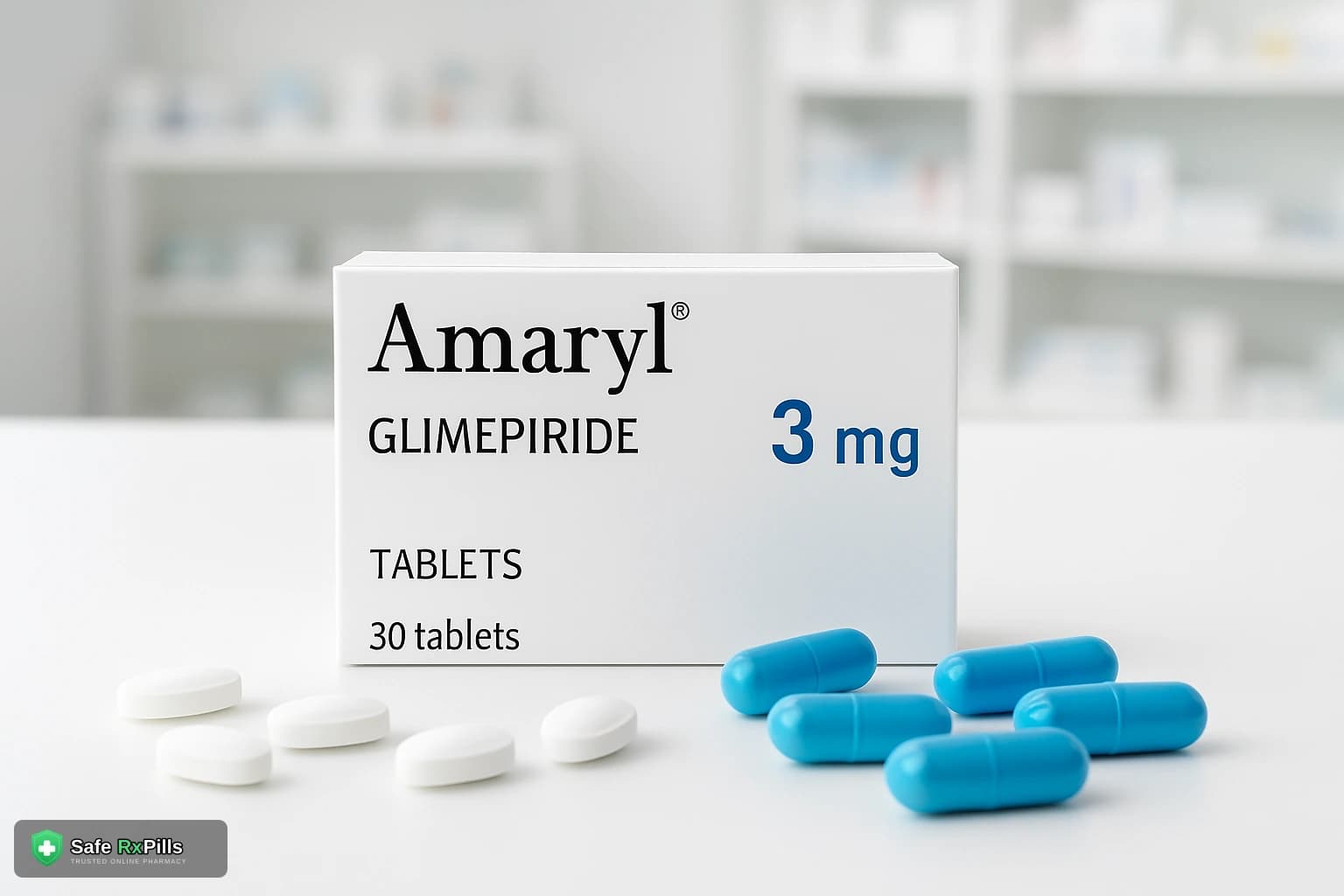
Buy Amaryl (Glimepiride) Online: Dosing, Hypoglycaemia Risk and What to Verify First | SafeRxPills — pharmacy guide
In this article (14 sections)
Amaryl is the original brand name for glimepiride, a second generation sulfonylurea used to lower blood glucose in type 2 diabetes. It works by stimulating the pancreas to release more insulin, which makes it effective, inexpensive and genuinely capable of causing dangerous low blood sugar if it is taken without monitoring.
That last point shapes this entire article. Glimepiride is not a supplement and it is not a low stakes medicine. Severe hypoglycaemia sends people to emergency departments and, in older adults, contributes to falls and fractures. If you are researching how to buy it online, the most useful thing we can give you is not a checkout link but a clear account of the dosing, the monitoring you need in place, and how to tell a properly manufactured product from a questionable one.
How Glimepiride Lowers Blood Sugar
Glimepiride binds to sulfonylurea receptors on pancreatic beta cells. That binding closes ATP sensitive potassium channels, depolarises the cell membrane and triggers insulin release. In simple terms, it tells your pancreas to secrete more insulin whether or not your blood glucose is currently high.
This mechanism explains both its strengths and its central weakness. It lowers HbA1c reliably and quickly, typically by around 1 to 1.5 percentage points, and it costs very little. But because the insulin release is not glucose dependent, glimepiride keeps pushing insulin out even when your blood sugar has already fallen. That is why it causes hypoglycaemia in a way that metformin, DPP-4 inhibitors and SGLT2 inhibitors largely do not. The two drug classes are set side by side, with the trial hypoglycaemia rates for each, in our comparison of metformin and glimepiride. The trade off runs both ways: metformin avoids the hypoglycaemia risk but produces far more early gastrointestinal upset, as the reported rates in metformin side effects show.
Glimepiride requires functioning beta cells to work at all. In people with long standing type 2 diabetes and significant beta cell exhaustion, it becomes progressively less effective, which is why secondary failure over several years is a well recognised pattern with this drug class. Metformin does not depend on beta cell reserve in the same way, and its own dosing ceiling and titration schedule are covered in the metformin dosage guide.
Where Glimepiride Sits in Modern Treatment Guidelines
Being straightforward about this matters, because a lot of online content presents sulfonylureas as a first line option and they are not.
Metformin remains the standard initial therapy for type 2 diabetes in both the American Diabetes Association Standards of Care and NICE guideline NG28 on type 2 diabetes management in adults. When a second agent is added, current guidance increasingly favours SGLT2 inhibitors and GLP-1 receptor agonists, particularly for people with cardiovascular disease, heart failure or chronic kidney disease, because those classes carry organ protective benefits that sulfonylureas do not.
Glimepiride retains a real place, though. It is one of the cheapest effective glucose lowering agents available anywhere, it works quickly, and in much of the world it is what people can actually afford and obtain. Cost is a legitimate clinical consideration, not a lesser one. The honest framing is that glimepiride is a reasonable second line choice when newer agents are unaffordable or unavailable, provided hypoglycaemia risk is managed properly.
If metformin is part of your regimen and you want background on how it behaves, our metformin treatment guide covers its mechanism and tolerability in detail, including the gastrointestinal effects that lead many people to stop taking it.
Standard Dosing and Titration
The FDA approved labelling for Amaryl, published through DailyMed, sets out a conservative titration schedule. It is conservative for a reason.
- Starting dose: 1 mg to 2 mg once daily, taken with breakfast or the first main meal of the day.
- Titration: increases of no more than 1 mg to 2 mg at a time, with at least one to two weeks between increases, guided by blood glucose response.
- Usual maintenance range: 1 mg to 4 mg once daily.
- Maximum recommended dose: 8 mg once daily.
- Older adults, kidney impairment or anyone at raised hypoglycaemia risk: start at 1 mg daily and titrate slowly.
Two practical points that cause most of the avoidable problems. First, glimepiride must be taken with food. Taking it and then skipping or delaying the meal is the single most common cause of hypoglycaemia with this drug. Second, doubling your own dose because readings look high is dangerous. The titration interval exists because the full effect of a dose change takes days to become visible, and stacking increases faster than that produces lows that arrive without warning.
Amaryl M and Amaryl M Forte: The Combination Tablets
Two related products cause frequent confusion when people order online, so it is worth separating them clearly.
Amaryl contains glimepiride alone, in 1 mg, 2 mg and 3 mg strengths.
Amaryl M combines glimepiride with metformin in one tablet. It suits people already established on both drugs separately, and reduces daily pill count.
Amaryl M Forte is the same pairing with a higher metformin component.
The risk with combination tablets is accidental duplication. If you are already taking separate metformin and then start a combination product, you can double your metformin dose without realising it. Check the full composition on the packaging against everything else you take, and confirm with a pharmacist if there is any ambiguity. Our range covers Amaryl 1mg, Amaryl 2mg, Amaryl 3mg and the combination options Amaryl M 1mg and Amaryl M 2mg, with the composition stated on each page.
Hypoglycaemia: The Risk That Matters Most
If you read nothing else here, read this section.
The CAROLINA trial, published in JAMA in 2019, randomised 6,033 people with type 2 diabetes and elevated cardiovascular risk to either glimepiride or linagliptin and followed them for a median of 6.3 years. Hypoglycaemia occurred in 37.7% of the glimepiride group, a highly significant excess over the comparator. That is not a rare adverse event. It is the expected behaviour of the drug class.
Recognise the early symptoms and act on them rather than waiting: shakiness, sweating, sudden hunger, palpitations, anxiety, difficulty concentrating, blurred vision, slurred speech and confusion. Severe episodes can progress to seizures and loss of consciousness.
The situations that most often trigger a low are predictable. Skipping or delaying meals after taking your dose. Unusually heavy or prolonged exercise. Drinking alcohol, especially without food. Illness that reduces your food intake. Declining kidney function, which slows clearance of the drug. Adding another glucose lowering agent without reducing the glimepiride dose.
Practical protection is simple and non negotiable. Always carry fast acting glucose such as tablets, juice or regular soft drink. Never take a dose without eating. Tell the people you live and work with what a low looks like and how to help. And if you have repeated lows, that is a signal to reduce the dose with a clinician, not something to push through. If you also take acarbose or miglitol, treat lows with glucose (dextrose) tablets instead, because those drugs slow the digestion of table sugar; see our miglitol vs acarbose guide.
A 2026 comparative safety analysis of sulfonylureas using claims data found meaningful within class differences, with glipizide associated with the lowest risk of severe hypoglycaemia and glimepiride with the lowest risk of major adverse cardiovascular events (PMID 41760122). If hypoglycaemia is your dominant concern and you have a choice, that comparison is worth raising with your prescriber.
What the Cardiovascular Evidence Actually Shows
Sulfonylureas carried a cardiovascular safety cloud for decades, dating back to interpretations of the University Group Diabetes Program in the 1970s. CAROLINA was designed to settle it for glimepiride specifically.
Over that 6.3 year median follow up, the longest of any cardiovascular outcome trial in diabetes, three point major adverse cardiovascular events occurred at essentially identical rates between glimepiride and linagliptin, with a hazard ratio of 0.98 and a confidence interval comfortably spanning one. There was no signal of excess cardiovascular death or all cause mortality. Subgroup analysis across age bands, including participants aged 75 and over, showed no meaningful difference either.
A population based cohort study reached similar conclusions on comparative cardiovascular and hypoglycaemic safety for glimepiride (PMID 31596043), and an indirect comparison drawing on CAROLINA and CARMELINA data described the cardiovascular safety profile as reassuring (PMID 33213193).
The fair summary: glimepiride does not appear to increase cardiovascular risk relative to a DPP-4 inhibitor, but it does not reduce it either, and it costs you a substantially higher rate of hypoglycaemia plus modest weight gain. That trade is the whole decision.
Other Side Effects and Interactions
Beyond hypoglycaemia, the common effects are weight gain of a few kilograms, nausea, dizziness and headache. Less common but more serious are hepatic reactions, blood disorders including thrombocytopenia and agranulocytosis, and hyponatraemia. Photosensitivity and skin reactions occur occasionally, and severe skin reactions warrant stopping the drug and seeking medical attention.
Interactions worth knowing:
- Alcohol both increases hypoglycaemia risk and can produce a flushing reaction.
- Beta blockers mask the warning signs of a low, particularly the palpitations and tremor you would otherwise notice.
- Fluconazole and some other CYP2C9 inhibitors raise glimepiride levels and increase hypoglycaemia risk.
- Corticosteroids, thiazide diuretics and some antipsychotics raise blood glucose and may reduce glycaemic control.
- Warfarin and other highly protein bound drugs can interact through displacement, warranting closer monitoring.
Erectile dysfunction is common in men with type 2 diabetes and is frequently caused by the underlying vascular and neurological effects of diabetes rather than by glimepiride itself. Our article on the diabetes and erectile dysfunction connection covers why glycaemic control and ED treatment work best addressed together.
Who Should Not Take Glimepiride
- Type 1 diabetes. Glimepiride requires functioning beta cells and has no role here.
- Diabetic ketoacidosis. This is a medical emergency requiring insulin.
- Severe kidney or liver impairment. Both prolong drug exposure and sharply raise hypoglycaemia risk.
- Known sulfonamide or sulfonylurea hypersensitivity.
- Pregnancy and breastfeeding. Insulin is the standard approach in pregnancy; discuss any change with your obstetric team well before conception.
- G6PD deficiency. Sulfonylureas carry a risk of haemolytic anaemia in this group.
Older adults are not contraindicated, but they need lower starting doses and closer follow up. Hypoglycaemia in this group contributes to falls and fractures, and the consequences of a single severe episode can be considerably worse than in a younger person.
Buying Glimepiride Online: What to Verify
Glimepiride is prescription only in the United States, the United Kingdom, Australia and Canada. There is no jurisdiction among our main markets where it is an over the counter medicine, and any site suggesting otherwise is misrepresenting the position.
If you are ordering internationally, these are the checks that separate a defensible source from a reckless one.
- Manufacturing credentials you can verify. A named manufacturer, a stated drug licence number and recognised certification such as WHO-GMP or ISO. Glucose lowering drugs are a class where a wrong dose strength is directly dangerous, so manufacturing quality is not a marketing detail here.
- Correct strength labelling. Confirm the tablets you receive match the strength you ordered before taking anything. A 3 mg tablet taken as though it were 1 mg is a hypoglycaemic episode waiting to happen.
- Intact packaging with batch number and expiry. Loose or repackaged tablets with no batch traceability are a hard stop.
- Full composition stated. Particularly for combination products, so you do not unknowingly duplicate metformin.
- A supplier that answers after the sale. If something arrives wrong, you need somewhere to go.
- No claims that it replaces monitoring. Anyone selling you a glucose lowering drug while implying you do not need blood glucose testing is not a source to trust.
Our diabetes products are manufactured under WHO-GMP and ISO certified conditions and the full range is listed on the diabetes category page with strength and composition stated on each product.
Strengths and Pricing
| Product | Composition | Price (USD) |
|---|---|---|
| Amaryl 1mg | Glimepiride 1 mg | $31.00 |
| Amaryl 2mg | Glimepiride 2 mg | $37.00 |
| Amaryl 3mg | Glimepiride 3 mg | $60.00 |
| Amaryl M 1mg | Glimepiride with metformin | $42.00 |
| Amaryl M 2mg | Glimepiride with metformin | $64.00 |
| Amaryl M Forte 1mg | Glimepiride with higher dose metformin | $57.00 |
| Amaryl M Forte 2mg | Glimepiride with higher dose metformin | $66.00 |
Prices are shown in US dollars and pack sizes are stated on each product page. Currency conversion is applied at checkout for buyers outside the United States.
Monitoring You Need in Place Before You Start
Glimepiride without monitoring is the combination that produces harm. Before starting, have the following organised.
- A glucose meter and test strips, with a supply of strips that will not run out mid month. Self monitoring is how you catch a downward trend before it becomes an emergency.
- A baseline HbA1c, repeated roughly every three months while the dose is being adjusted and every three to six months once stable.
- Kidney function testing, since declining renal clearance is one of the most common reasons a previously stable dose starts causing lows.
- Liver function testing at baseline if you have any history of liver disease.
- Fast acting glucose kept on your person, not in a cupboard at home.
- A prescriber who knows what you are taking. Even if you source the medicine internationally, someone qualified needs to be reviewing your readings and adjusting the dose. Self titrating a sulfonylurea from internet advice is the specific behaviour that lands people in hospital.
The CAROLINA Trial Data in Full
CAROLINA is the definitive dataset on glimepiride and worth reading properly rather than in summary. It randomised 6,033 adults aged 40 to 85 with type 2 diabetes across 607 sites in 43 countries to glimepiride 1 to 4 mg or linagliptin 5 mg once daily, added to standard care. Median diabetes duration at entry was around 6.2 years, 42 percent had established cardiovascular disease, 83 percent were already taking metformin, and people using insulin were excluded. Median follow up was 6.3 years, the longest of any cardiovascular outcome trial in diabetes.
| Outcome | Glimepiride | Linagliptin | Statistical result |
|---|---|---|---|
| Three point major adverse cardiovascular events | Essentially identical rates between groups | Hazard ratio 0.98 (95 percent CI 0.84 to 1.14) | |
| Cardiovascular mortality | No between group difference | Hazard ratio 1.00 (95 percent CI 0.81 to 1.24) | |
| Any investigator reported hypoglycaemia | 37.7 percent | 10.6 percent | P less than 0.0001 |
| Moderate to severe hypoglycaemia | 30.9 percent | 6.5 percent | P less than 0.0001 |
| Severe hypoglycaemia | 2.2 percent | 0.3 percent | P less than 0.0001 |
| Hospitalisation due to hypoglycaemia | 0.9 percent | 0.1 percent | P equals 0.0004 |
| Average HbA1c over the trial | No difference between groups | Weighted mean difference 0.00 percent (95 percent CI minus 0.05 to 0.05) | |
| Body weight | Glimepiride group heavier | Between group difference 1.5 kg (95 percent CI 1.3 to 1.8) favouring linagliptin | |
| Progression to insulin | 19.2 percent | 18.6 percent | No meaningful difference |
The chart makes the central trade off visible. Glycaemic control was identical. Cardiovascular risk was identical. The entire difference between these two drugs sits in the hypoglycaemia columns.
A follow up analysis of recurrent events published in Diabetes, Obesity and Metabolism in 2023 quantified the burden further. Rate ratios favouring linagliptin were 0.21 (95 percent CI 0.19 to 0.24) for first events and 0.12 (95 percent CI 0.10 to 0.14) for total events, equating to 8.7 first episodes and 60.8 total episodes prevented per 100 patient years. The difference held during both daytime and night time and was not explained by differences in HbA1c or insulin initiation.
How to use this practically. If cost is the binding constraint, CAROLINA supports glimepiride as cardiovascularly safe, which was a genuine open question for decades. If you can access a DPP-4 inhibitor, SGLT2 inhibitor or GLP-1 agonist affordably, the hypoglycaemia numbers above are the argument for doing so. Roughly one in three people on glimepiride had a hypoglycaemic episode over six years, and roughly one in fifty had a severe one. Those are the odds you are accepting in exchange for a cheaper tablet, and they are worth discussing with a prescriber rather than absorbing by default.
Medical Disclaimer
This article is for information only and does not replace advice from a doctor or pharmacist. Glimepiride is a prescription only medicine that can cause severe and occasionally life threatening low blood sugar. Do not start, stop or change the dose of any diabetes medication without medical supervision. Seek urgent medical help for confusion, seizure or loss of consciousness, and treat suspected low blood sugar immediately with fast acting glucose.
References: FDA prescribing information for Amaryl (glimepiride), via DailyMed. Rosenstock J, Kahn SE, Johansen OE, et al. Effect of linagliptin vs glimepiride on major adverse cardiovascular outcomes in patients with type 2 diabetes: the CAROLINA randomized clinical trial. JAMA. 2019;322(12):1155-1166. Comparative cardiovascular and hypoglycaemic safety of glimepiride in type 2 diabetes: a population based cohort study, PMID 31596043. Cardiovascular safety of glimepiride: an indirect comparison from CAROLINA and CARMELINA, PMID 33213193. Comparative safety of sulfonylurea therapies on cardiovascular and severe hypoglycemia outcomes, PMID 41760122. American Diabetes Association Standards of Care in Diabetes. NICE guideline NG28, Type 2 diabetes in adults: management.
Related reading on injectable and oral GLP-1 options
Metformin is usually the first oral agent, but GLP-1 receptor agonists are now a common next step or add-on. Our guides cover oral semaglutide dosing, semaglutide side effects at each dose, and the 2026 Rybelsus to Ozempic tablet conversion.
?Frequently Asked Questions
Is Amaryl the same as glimepiride?
Yes. Amaryl is the original brand name and glimepiride is the active ingredient. Generic glimepiride contains the same molecule at the same strengths and works identically. Amaryl M and Amaryl M Forte are different products again: they combine glimepiride with metformin in a single tablet, with the Forte version containing a higher metformin component. Check the full composition before ordering, because starting a combination tablet while already taking separate metformin can double your metformin dose without you realising.
What is the starting dose of glimepiride?
The FDA approved labelling recommends starting at 1 mg to 2 mg once daily, taken with breakfast or the first main meal. Increases should be no more than 1 mg to 2 mg at a time with at least one to two weeks between changes, guided by blood glucose readings. The usual maintenance range is 1 mg to 4 mg daily and the maximum recommended dose is 8 mg daily. Older adults, people with kidney impairment and anyone at raised hypoglycaemia risk should start at 1 mg and titrate slowly.
How dangerous is hypoglycaemia with glimepiride?
It is the main risk of the drug and it is common rather than rare. In the CAROLINA trial, which followed 6,033 people for a median of 6.3 years, hypoglycaemia occurred in 37.7% of participants taking glimepiride. Severe episodes can cause seizures and loss of consciousness, and in older adults contribute to falls and fractures. Always take the dose with food, always carry fast acting glucose, and treat repeated lows as a reason to reduce the dose with a clinician rather than something to tolerate.
Does glimepiride increase the risk of heart attack or stroke?
The evidence says no. The CAROLINA trial compared glimepiride against linagliptin over a median 6.3 years, the longest follow up of any cardiovascular outcome trial in diabetes, and found three point major adverse cardiovascular events occurred at essentially identical rates, with a hazard ratio of 0.98. There was no excess cardiovascular or all cause mortality, and no difference across age groups including those aged 75 and over. Glimepiride does not appear to raise cardiovascular risk, but neither does it lower it the way SGLT2 inhibitors and GLP-1 agonists can.
Can I buy glimepiride without a prescription?
Not legally in the United States, United Kingdom, Australia or Canada. Glimepiride is prescription only in all of these markets, and any website claiming it is an over the counter medicine is misrepresenting the position. Beyond the legal question there is a practical one: glimepiride requires blood glucose monitoring, periodic HbA1c testing and kidney function checks, and dose adjustments based on those results. Taking it without a prescriber reviewing your readings is the specific pattern that leads to hospital admissions for severe low blood sugar.
Why is metformin usually preferred over glimepiride?
Metformin remains first line therapy in both the American Diabetes Association Standards of Care and NICE guideline NG28 because it lowers glucose effectively without causing hypoglycaemia and does not cause weight gain. When a second agent is added, current guidance increasingly favours SGLT2 inhibitors and GLP-1 receptor agonists for people with cardiovascular disease, heart failure or chronic kidney disease, because those classes offer organ protection that sulfonylureas do not. Glimepiride retains a genuine role as an affordable and effective option when newer agents are unaffordable or unavailable.
What should I do if I miss a dose of glimepiride?
Take it with your next meal if you remember reasonably soon, and skip it entirely if your next scheduled dose is close. Never take two doses together to compensate, because doubling up is a direct route to severe hypoglycaemia. If you have already eaten your main meal and several hours have passed, it is usually safer to skip that dose than to take it late without food. Check your blood glucose more often than usual for the rest of that day and ask your prescriber if missed doses become a pattern.
Milan Sojitra
Founder, SafeRxPills, B.Pharm, Rajiv Gandhi University
Pharmacist and founder of SafeRxPills. Works on generic medicine sourcing and patient-facing drug information for the US, UK, Australian and Canadian markets.
Comments (0)
Leave a Comment
No comments yet. Be the first to share your thoughts!
Related Articles
Stromectol vs Generic Ivermectin: FDA-Approved Generics, Dosing and What It Treats
May 21, 2026


Understanding Antibiotic Resistance: When Antibiotics Don't Work and What You Can Do
April 30, 2026