
Amaryl 2mg
Generic: Glimepirideby Sanofi India Limited
Similar medicines
View all
About Amaryl 2mg
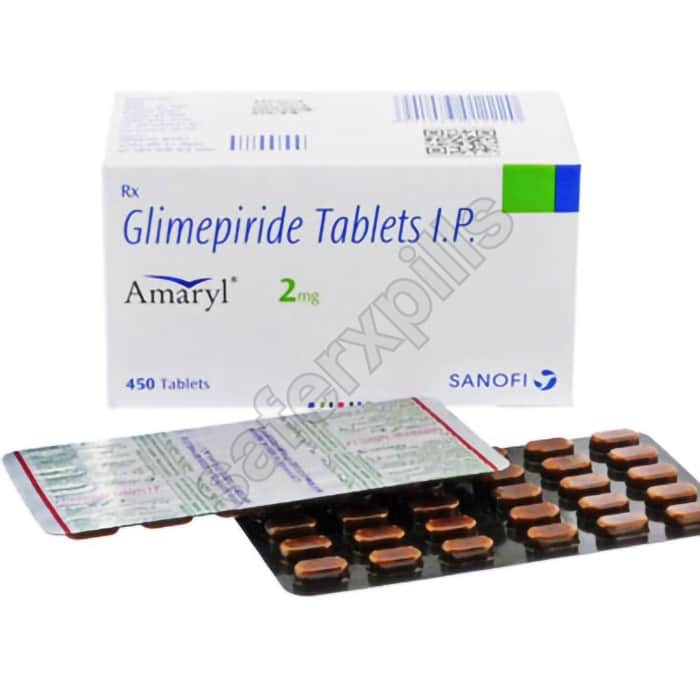
Amaryl 2mg is Sanofi India's glimepiride 2 mg tablet for type 2 diabetes. Glimepiride is a sulfonylurea: it makes the pancreas release more insulin, which lowers blood glucose. Each tablet contains one medicine only, glimepiride 2 mg, taken once a day with breakfast or the first main meal. We sell it in packs of 90, 180 and 270 tablets, from $0.35 a tablet in the largest pack.
Three points first. Glimepiride is not a starting tablet for everyone at 2 mg: the US label starts older people and people with kidney impairment on 1 mg, and the UK label starts everyone on 1 mg. It needs a doctor, regular blood glucose and HbA1c checks, and a plan for low blood sugar. And in the US, generic glimepiride 2 mg costs pharmacies about 4 cents a tablet, roughly a tenth of our price, so US readers with a prescription should compare local generic prices first. This page sets out the doses, warnings and prices from the current US glimepiride label and UK product information, listed at the end.
Amaryl 2mg at a glance
| Active ingredient | Glimepiride 2 mg per tablet (a sulfonylurea) |
| Brand and maker | Amaryl, Sanofi India Limited; Emcure Pharmaceuticals has distributed Sanofi India's oral diabetes brands, including Amaryl, in India since July 2025, while Sanofi India still makes them |
| Regulatory status | Glimepiride is licensed as generic tablets in the US, UK, Canada and Australia. This Indian Amaryl pack is not registered with the FDA, MHRA, TGA or Health Canada, and the Amaryl brand itself has been discontinued in the US and cancelled in Canada; in Australia, Amaryl 1 mg, 2 mg and 3 mg ARTG entries are listed as cancelled |
| Usual dose from the label | US: start at 1 mg or 2 mg once daily (1 mg for older people and kidney impairment), maximum 8 mg once daily. UK: start at 1 mg, maximum 6 mg a day |
| Half-life | About 5 to 8 hours (UK label 5.2); peak blood levels about 2 to 3 hours after a dose (US label 12.3) |
| Packs | 90, 180 and 270 tablets (Indian strips hold 30) |
| Price per tablet | $0.41 (90 pack) down to $0.35 (270 pack), before shipping |
| Delivery | 7 to 14 business days to the US, UK, Australia and Canada; $25 shipping under $149, free from $149 |
Price per tablet
Prices below are as of October 2026; the pack selector shows the current price.
| Pack | Price | Per tablet | Shipping | Per tablet with shipping |
|---|---|---|---|---|
| 90 tablets | $37 | $0.41 | $25 | $0.69 |
| 180 tablets | $68 | $0.38 | $25 | $0.52 |
| 270 tablets | $94 | $0.35 | $25 | $0.44 |
All three packs are under the $149 free shipping line, so each single pack carries $25 shipping. The larger packs are cheaper per tablet before shipping too.
How long a pack lasts. Glimepiride is taken once a day. If your doctor's dose is one 2 mg tablet a day, the 90 pack lasts 90 days (about 3 months), the 180 pack 180 days (about 6 months) and the 270 pack 270 days (about 9 months). That is our arithmetic, not a label figure. The UK label says glimepiride needs can fall as diabetes control improves, and that a timely dose reduction or stopping "must therefore be considered" to avoid low blood sugar. So do not buy a large pack until your doctor has settled your dose, and check that the expiry date on the strips covers the months you need.
Compared with US generics
| Amaryl 2mg (ours) | US generic glimepiride 2 mg | |
|---|---|---|
| Maker | Sanofi India | Several US generic makers (for example Aurobindo) |
| FDA approved | No (Indian pack) | Yes |
| Cost per tablet | $0.35 to $0.41 before shipping | About $0.04 (NADAC $0.03746) |
| Cost of 90 tablets | $37 before shipping | About $3.37 at NADAC |
NADAC is the average price US pharmacies pay to buy a medicine, published by the US Medicaid programme. It is not the price a patient pays at the counter, but the gap is wide: our tablet costs roughly 9 to 11 times the NADAC rate for generic glimepiride 2 mg ($0.03746 a tablet in the NADAC file effective 21 October 2026). If you are in the US and have a prescription, compare US generic cash prices first.
There is no US Amaryl to compare with. Sanofi's US Amaryl (1, 2 and 4 mg) is listed by the FDA as discontinued, with a Federal Register determination that it was not discontinued for reasons of safety or effectiveness. US generics were approved by showing they are bioequivalent to Amaryl. We have not seen bioequivalence data comparing the Indian Amaryl tablet with US generics.
Which strength to choose
| Daily dose | Product | How it fits the labels |
|---|---|---|
| 1 mg | Amaryl 1mg | UK starting dose for everyone. US starting dose for older people and people with kidney impairment, and one of two US starting options for others |
| 2 mg | Amaryl 2mg | US starting option for people not at higher risk of low blood sugar; UK first step up from 1 mg |
| 3 mg | Amaryl 3mg | A later step, within both labels' range |
| 4 mg | Glypride 4mg (Sun Pharma glimepiride) | Within both labels. The UK label says more than 4 mg a day "gives better results only in exceptional cases" |
| 6 mg | No single tablet in our range | UK maximum |
| 8 mg | No single tablet in our range | US maximum ("8 mg once daily") |
| Above 8 mg | None | Above the labelled maximum in both labels |
The US label says that after reaching 2 mg a day, the dose can go up in steps of 1 mg or 2 mg based on blood glucose, and "should not occur more frequently than every 1 to 2 weeks". The UK label describes steps about 1 to 2 weeks apart, to 2, 3 or 4 mg. Every change is your doctor's decision, made from your readings; never raise the dose yourself.
Higher doses do not add much for most people. In a 14 week US label trial, HbA1c fell by 1.2 points more than placebo at 1 mg and by 1.8 points at both 4 mg and 8 mg. The same trial reported possible low blood sugar in 4% at 1 mg, 17% at 4 mg and 16% at 8 mg (figure below).
Glimepiride is also sold by us as Glypride 1mg (Sun Pharma). Amaryl M 2mg is a different product: it adds metformin 500 mg prolonged release to the same 2 mg of glimepiride. The two are not interchangeable, so do not swap one for the other without your doctor.
How to take Amaryl 2mg
- Take it exactly as your doctor prescribes, once a day with breakfast or the first main meal (US label 2.1). The UK label says shortly before or during a substantial breakfast, or, if you skip breakfast, shortly before or during the first main meal.
- Swallow the tablet whole with some liquid (UK label 4.2).
- Do not skip the meal after taking it. The UK label says irregular or skipped meals can lead to low blood sugar.
- If you forget a dose, the UK label says it "should not be corrected by increasing the next dose". Agree a plan for missed doses and missed meals with your doctor in advance.
- Check your blood glucose as your doctor advises. The UK label calls for regular glucose monitoring, recommends HbA1c tests and asks for regular liver and blood count checks (especially white cells and platelets).
- If you also take colesevelam, take glimepiride at least 4 hours before it (US label 2.1 and 7.4).
- Never start, stop or switch diabetes medicines on your own.
Lower doses and extra care for some groups
- Older people. The US label says patients at increased risk of low blood sugar, such as the elderly, "should be started on 1 mg once daily", and that low blood sugar "may be difficult to recognize in the elderly" (2.1, 8.5). So Amaryl 2mg is not suitable for someone in this group who is starting glimepiride.
- Kidney impairment. The US label sets a starting dose of 1 mg daily "for all patients with type 2 diabetes and renal impairment" (8.6), so Amaryl 2mg is not suitable for someone in this group who is starting glimepiride. The UK label lists severe kidney disorders as a contraindication and says a change to insulin is required.
- Everyone starting glimepiride under the UK label. The UK starting dose is 1 mg for all patients, so under that label 2 mg is a step up, not a first dose.
- Liver problems. The UK label lists severe liver disorders as a contraindication, with a change to insulin. The US label says people with liver impairment are particularly susceptible to low blood sugar (5.1).
- Weak, underfed or with adrenal or pituitary problems. The US label says these people are particularly susceptible to low blood sugar, and advises caution when starting or raising the dose in anyone predisposed to it, including people on other diabetes medicines (5.1). It recommends a conservative titration scheme for them (2.1).
- Changing from a long-acting sulfonylurea such as chlorpropamide: the US label says the effects can overlap for 1 to 2 weeks, with monitoring for low blood sugar; the UK label says a wash out of a few days is advisable.
- Illness, injury, surgery or fever. The UK label says a temporary switch to insulin may be indicated in these stress situations.
Low blood sugar (hypoglycaemia)
Low blood sugar is the main risk of glimepiride. The US label states: "All sulfonylureas, including glimepiride, can cause severe hypoglycemia", and that severe hypoglycaemia "can lead to unconsciousness or convulsions and may result in temporary or permanent impairment of brain function or death" (5.1). In a 22 week US label trial in which the dose was adjusted to a fasting glucose target, 19.7% of people on glimepiride had possible hypoglycaemia against 3.2% on placebo.
Who is more at risk (US 5.1 and UK 4.4): older people; kidney impairment; liver impairment; adrenal or pituitary problems and some thyroid disorders; weak or undernourished people; missed, late or irregular meals, fasting or a change of diet; more exercise than usual without extra carbohydrate; alcohol, especially with a skipped meal; other diabetes medicines, including insulin; and the interacting medicines listed below.
Hidden warning signs. The US label says early warning symptoms may be different or less pronounced in older people, in people with nerve damage (autonomic neuropathy) and in people taking beta blockers or other sympatholytic medicines, so severe low blood sugar can arrive before the person notices. The UK label names beta blockers, clonidine, guanethidine and reserpine.
Signs listed in the UK label include headache, strong hunger, nausea, sleepiness, restlessness, aggression, poor concentration, confusion, speech and vision problems, tremor, dizziness, sweating, clammy skin, anxiety and a fast or pounding heartbeat, and in severe cases fits and loss of consciousness. It adds that a severe attack can look like a stroke.
What to do. The UK label says symptoms "can almost always be promptly controlled by immediate intake carbohydrates (sugar)" and that artificial sweeteners have no effect. Take glucose tablets, sugar or a sugary drink, then eat, because both labels warn that low blood sugar can come back after you first recover. Severe low blood sugar needs immediate medical treatment; the US label says it can be treated with glucagon or glucose into a vein (10). If someone is unconscious or cannot swallow safely, call emergency services; as general first aid, do not put food or drink in their mouth. Because low blood sugar affects concentration and reactions, the labels warn about driving or using machinery.
Side effects

| Effect | Glimepiride | Placebo | Source |
|---|---|---|---|
| Possible hypoglycaemia, 22 week dose-adjusted trial | 19.7% | 3.2% | US label 6.1 |
| Possible hypoglycaemia, 14 week trial, 1 mg / 4 mg / 8 mg | 4% / 17% / 16% | 0% | US label 6.1 |
| Headache | 8.2% | 7.8% | US label Table 1 |
| Accidental injury | 5.8% | 3.4% | US label Table 1 |
| Flu syndrome | 5.4% | 4.4% | US label Table 1 |
| Nausea | 5.0% | 3.4% | US label Table 1 |
| Dizziness | 5.0% | 2.4% | US label Table 1 |
| ALT (liver enzyme) over twice normal | 1.9% | 0.8% | US label 6.1 |
| Itching, redness, hives or rash | Under 1% | Not given | US label 6.1 |
Selected rows. Table 1 pools 11 placebo-controlled trials of 13 weeks to 12 months (745 people on glimepiride at 1 to 16 mg a day, 294 on placebo) and counts all adverse events, whether or not caused by the drug; the label notes there was not enough information to tell whether the accidental injuries were linked to low blood sugar. Glimepiride, like all sulfonylureas, can cause weight gain: in the 22 week trial weight rose 1.8 kg on glimepiride and fell 0.9 kg on placebo.
Reports after approval, without a reliable frequency (US 6.2), include serious allergic reactions (anaphylaxis, angioedema, Stevens-Johnson syndrome), haemolytic anaemia with or without G6PD deficiency, liver problems including cholestasis, jaundice, hepatitis and liver failure, low white cell counts, agranulocytosis, aplastic anaemia, very low platelets, low blood sodium, light sensitivity, vasculitis, porphyria reactions, disulfiram-like reactions, taste changes and hair loss. The UK label adds temporary vision changes at the start of treatment as blood glucose changes.
The sulfonylurea heart warning. The US label carries a special warning on increased risk of cardiovascular death with sulfonylureas, based on the UGDP study of 823 patients. People treated for 5 to 8 years with a fixed dose of tolbutamide had a cardiovascular death rate about 2.5 times that of diet alone; total deaths were not significantly increased. The label notes "controversy regarding the interpretation of these results", and says it is prudent to consider that the warning may also apply to other sulfonylureas such as glimepiride (5.4). It also says no clinical study has shown conclusive evidence that glimepiride or any other diabetes drug reduces large blood vessel disease (5.5). Ask your doctor what this means for you.
When to get urgent help
Get emergency help, or ask someone to call for you, if you have:
- Low blood sugar that does not improve after taking sugar, keeps coming back, or causes confusion, fits, fainting or loss of consciousness.
- Taken more than your prescribed dose. The UK label says low blood sugar after an overdose can last 12 to 72 hours, can come back after first recovery, and may not start for up to 24 hours, and that observation in hospital is generally recommended.
- A child has swallowed a tablet. The UK label singles out accidental intake by infants and young children. Get emergency help straight away, or call a poison line (US 1-800-222-1222, Australia 13 11 26).
- Swelling of the lips, tongue, face or throat, trouble breathing or swallowing, hives, a spreading rash, or blistering or peeling skin. The US label says to stop glimepiride promptly if an allergic reaction is suspected (5.2).
- Yellow skin or eyes, dark urine or pale stools, which can mean liver injury.
- Unusual bruising or bleeding. The US label reports very low platelet counts and other blood disorders after approval (6.2).
Tell the emergency staff that you took glimepiride (Amaryl), how much and when.
Who should not take Amaryl 2mg
Never take it if:
- you have had an allergic reaction to glimepiride or any ingredient of the tablet (US label 4; UK label 4.3)
- you have had an allergic reaction to sulfonamide derivatives. The US label says such patients "may develop an allergic reaction to glimepiride tablets" and "Do not use glimepiride tablets in patients who have a history of an allergic reaction to sulfonamide derivatives." The UK label also lists allergy to other sulfonylureas or sulfonamides as a contraindication
- you have type 1 diabetes, diabetic coma or ketoacidosis (UK label 4.3; the US label says glimepiride should not be used for type 1 diabetes or diabetic ketoacidosis "as it would not be effective")
- you have severe kidney or liver disorders (UK label 4.3, with a change to insulin)
Not recommended, or only with care:
- G6PD deficiency: sulfonylureas can cause haemolytic anaemia; the US and UK labels say use caution and consider a non-sulfonylurea alternative.
- Children and teenagers: the US label says glimepiride is "not recommended in pediatric patients" because of its effects on body weight and low blood sugar; the UK label says such use is not recommended.
- Pregnancy: the UK label says glimepiride "should not be used during the whole pregnancy", and that if you plan a pregnancy or become pregnant treatment should be switched to insulin as soon as possible. The US label says to stop glimepiride at least two weeks before the expected delivery, because of reports of prolonged severe low blood sugar in newborns. Tell your doctor straight away if you are or may be pregnant.
- Breastfeeding: the UK label says breastfeeding is advised against during treatment. The US label says to weigh the benefits and to watch a breastfed baby for signs of low blood sugar (jitters, blue colour, pauses in breathing, low temperature, excessive sleepiness, poor feeding, seizures).
- Lactose intolerance: the UK generic tablet contains lactose; we have not confirmed the excipients of the Indian Amaryl tablet, so read the pack.
Medicines that interact
- Medicines that can increase the sugar-lowering effect (risk of low blood sugar), from US label 7.1: other diabetes tablets, insulin, pramlintide, ACE inhibitors, H2 blockers, fibrates, anabolic steroids, fluconazole, clarithromycin, quinolone antibiotics, tetracyclines, sulfonamides, NSAIDs, salicylates, fluoxetine, MAO inhibitors, coumarins, probenecid, disopyramide and others.
- Miconazole: severe low blood sugar has been reported with oral miconazole and sulfonylureas (US 7.2).
- CYP2C9: glimepiride is broken down by the CYP2C9 enzyme. Fluconazole may raise glimepiride levels (the UK label cites about a 2-fold rise in exposure); rifampicin may lower them (US 7.3; UK 4.5).
- Medicines that can weaken the effect (higher blood sugar): corticosteroids, thiazide and other diuretics, thyroid hormones, oestrogens and oral contraceptives, phenytoin, nicotinic acid, phenothiazines, atypical antipsychotics such as olanzapine and clozapine, protease inhibitors, isoniazid, barbiturates, danazol, somatropin and sympathomimetics such as adrenaline (epinephrine) and salbutamol (albuterol).
- Beta blockers, clonidine and reserpine can make the effect stronger or weaker, and with guanethidine they can hide the warning signs of low blood sugar.
- Alcohol can make glimepiride's effect stronger or weaker in an unpredictable way.
- Colesevelam: take glimepiride at least 4 hours before it.
- Warfarin and other coumarin blood thinners: the UK label says glimepiride may make their effect stronger or weaker.
When any of these is started or stopped, the US label says to watch closely for low blood sugar or worsening control. Tell your doctor or pharmacist about every medicine and supplement you take.
Prescription and legal status
In the US, glimepiride is a prescription medicine ("Rx only") sold as FDA-approved generics; Sanofi's Amaryl brand is discontinued, and the FDA says personal importation of unapproved medicines is illegal in most circumstances. In Canada, Sanofi's Amaryl was cancelled in 2018, and generic glimepiride (Sandoz) is marketed as a prescription medicine. In Australia, Amaryl 1 mg, 2 mg and 3 mg ARTG entries are listed as cancelled, other glimepiride brands are listed, and healthdirect lists Amaryl as Schedule 4 (Prescription Only Medicine). In the UK, generic glimepiride tablets are licensed (for example Brown and Burk); we found no Amaryl listing on the electronic medicines compendium, which is not the full MHRA register, and we did not check glimepiride's UK legal category. In India, Tata 1mg and Truemeds mark Amaryl 2mg as prescription required. Check the rules where you live.
Buying genuine Amaryl
The MHRA warns that "Any medicine not authorised for sale in the UK can be unsafe or ineffective and there is no way of knowing what is in them or the negative health effects they can have", and it advises UK buyers to use only UK-registered pharmacies. That warning covers this Indian Amaryl pack. When your order arrives, read the strip: it should say Amaryl 2mg and glimepiride 2 mg, with a batch number and expiry date. Tata 1mg, Truemeds and Apollo list Amaryl 2mg as a Sanofi India strip of 30 tablets. These checks cannot prove that tablets are genuine, because counterfeiters copy packaging. Check your blood glucose closely during the first weeks on any new supply and tell your doctor if your readings change. If a batch causes unusual symptoms, seek medical advice and report it to your medicines regulator (the MHRA Yellow Card scheme in the UK, FDA MedWatch in the US, the TGA in Australia or Health Canada) as well as to us.
Delivery
We ship Amaryl 2mg to the US, UK, Australia and Canada in plain packaging with tracking. Standard delivery takes 7 to 14 business days. Shipping costs a flat $25 on orders under $149 and is free from $149. Order well before your current supply runs out, and do not stop or ration your tablets while you wait. See our shipping page and refund policy.
Related guides
Sources
- Glimepiride tablets USP, US prescribing information, Aurobindo Pharma, revised March 2026 (DailyMed setid 28eefc95-d92e-4555-b6c5-2933860b0610, version 12, effective 18 March 2026): sections 1, 2.1, 4, 5.1 to 5.5, 6.1, 6.2, 7.1 to 7.4, 8.1, 8.2, 8.4 to 8.6, 10, 12.2, 12.3, 14.1, 16. DailyMed
- Glimepiride 2 mg tablets, UK SmPC, Brown and Burk, updated 5 January 2021: sections 4.2, 4.3, 4.4, 4.5, 4.6, 4.7, 4.8, 4.9, 5.2. emc
- AMARYL (glimepiride) tablets, US prescribing information, sanofi-aventis U.S., revised December 2018 (last label before discontinuation). FDA label PDF
- US Food and Drug Administration, openFDA drug approvals: Amaryl NDA 020496, all strengths discontinued, Federal Register determination not for safety or effectiveness reasons; searched 19 October 2026.
- Centers for Medicare and Medicaid Services. National Average Drug Acquisition Cost (NADAC) 2026: glimepiride 2 mg tablet $0.03746 (18 NDC rows), in the NADAC file effective 21 October 2026; no Amaryl rows. data.medicaid.gov
- Health Canada Drug Product Database: Amaryl (Sanofi-Aventis Canada) cancelled post market 2018; Sandoz Glimepiride marketed, prescription; searched 19 October 2026. Health Canada
- healthdirect Australia, medicines that contain glimepiride, and Amaryl (Schedule 4); TGA ARTG entries for Amaryl glimepiride 1 mg, 2 mg and 3 mg tablets (listed as cancelled). healthdirect
- Sanofi India Limited and Emcure announce exclusive distribution partnership for Sanofi's oral anti-diabetic drugs, press release, 16 July 2025. Sanofi India
- Indian pharmacy listings for Amaryl 2mg (Tata 1mg, Truemeds, Apollo Pharmacy), checked 20 October 2026.
- MHRA. 20 million illegal erectile dysfunction pills seized as MHRA warns against risky online buys, 13 February 2026. GOV.UK
- US Food and Drug Administration. Personal Importation. FDA
This page is for information and is not medical advice. Amaryl is a prescription diabetes medicine. Take it only as prescribed by a doctor who monitors your blood glucose and HbA1c, and do not start, stop or switch diabetes medicines without your doctor.
Frequently asked questions
What is Amaryl 2mg?
Amaryl 2mg is Sanofi India's glimepiride 2 mg tablet for type 2 diabetes. Glimepiride is a sulfonylurea that makes the pancreas release more insulin. Each tablet contains glimepiride only and is taken once a day with breakfast or the first main meal. Glimepiride is licensed as generics in the US, UK, Canada and Australia, but this Indian Amaryl pack is not registered with the FDA, MHRA, TGA or Health Canada.
Is Amaryl 2mg the same as generic glimepiride 2 mg?
It contains the same medicine at the same strength. Amaryl was the original glimepiride brand, and US generics were approved by showing bioequivalence to it. The US Amaryl brand is now discontinued, and the FDA records that this was not for reasons of safety or effectiveness. We have not seen bioequivalence data comparing the Indian Amaryl tablet with US generics, and it is not interchangeable with Amaryl M 2mg, which also contains metformin.
What does Amaryl 2mg cost per tablet?
As of October 2026 it costs $0.41 a tablet in the 90 pack, $0.38 in the 180 pack and $0.35 in the 270 pack, before shipping. All three packs are under $149, so each carries $25 shipping: $0.69, $0.52 or $0.44 a tablet with shipping. US generic glimepiride 2 mg had a NADAC (pharmacy acquisition cost) of $0.03746 a tablet in the NADAC file effective 21 October 2026, so US buyers with a prescription should compare local generic prices first. The pack selector shows the current price.
How do I take Amaryl 2mg?
Take it exactly as your doctor prescribes, once a day with breakfast or the first main meal, swallowed whole with some liquid. Do not skip the meal after taking it. If you forget a dose, the UK label says not to make up for it by increasing the next dose; agree a plan with your doctor. If you take colesevelam, take glimepiride at least 4 hours before it. Check your blood glucose as advised and have HbA1c tests.
Should I start on Amaryl 1mg or 2mg?
That is your doctor's decision. The US label allows a start at 1 mg or 2 mg once daily, but says older people and people with kidney impairment should start on 1 mg, so Amaryl 2mg is not suitable for someone in these groups who is starting glimepiride. The UK label starts everyone on 1 mg. Doses are raised in steps of 1 mg or 2 mg, no more often than every 1 to 2 weeks (US), up to 8 mg a day in the US and 6 mg in the UK.
How long does a pack of Amaryl 2mg last?
Glimepiride is taken once a day. At one 2 mg tablet a day, the 90 pack lasts 90 days, the 180 pack 180 days and the 270 pack 270 days (our arithmetic). The UK label says glimepiride needs can fall as control improves and a dose reduction must then be considered, so check with your doctor that your dose is settled before buying a large pack, and check that the expiry date covers the months you need.
Is a higher dose better?
Not for most people. In a 14 week US label trial, HbA1c fell 1.2 points more than placebo at 1 mg and 1.8 points at both 4 mg and 8 mg, while possible low blood sugar was reported in 4% at 1 mg, 17% at 4 mg and 16% at 8 mg. The UK label says more than 4 mg a day gives better results only in exceptional cases. The maximum is 8 mg a day in the US label and 6 mg in the UK label. Never raise your dose yourself.
What are the side effects of Amaryl 2mg?
The main risk is low blood sugar: in a 22 week US label trial, 19.7% on glimepiride had possible hypoglycaemia against 3.2% on placebo. Other effects in the pooled US trials included headache, dizziness, nausea, flu-like illness and accidental injury, and glimepiride can cause weight gain. Rare reports include serious allergic reactions, liver injury, blood disorders and haemolytic anaemia. The US label also carries a special warning on cardiovascular deaths with sulfonylureas, based on the UGDP study.
Who should not take Amaryl 2mg?
Do not take it if you have had an allergic reaction to glimepiride, any ingredient of the tablet or sulfonamide derivatives (US label), or to other sulfonylureas or sulfonamides (UK label); or if you have type 1 diabetes, diabetic coma, ketoacidosis, or severe kidney or liver disorders (UK label). People with G6PD deficiency need caution and a non-sulfonylurea alternative should be considered. It is not recommended for children. The UK label says not to use it in pregnancy and advises against breastfeeding.
Do I need a prescription for Amaryl 2mg?
Yes, you should have one. Glimepiride is prescription only in the US and Canada, healthdirect lists Amaryl as Schedule 4 (Prescription Only Medicine) in Australia, and Tata 1mg and Truemeds mark Amaryl 2mg as prescription required in India. The FDA says personal importation of unapproved medicines is illegal in most circumstances. Glimepiride also needs regular blood glucose and HbA1c checks and a plan for low blood sugar, so do not start or switch without your doctor.
How long does delivery take?
Standard delivery takes 7 to 14 business days to the US, UK, Australia and Canada, in plain packaging with tracking. Shipping is a flat $25 on orders under $149 and free from $149. Order well before your current supply runs out, and do not stop or ration your diabetes tablets while you wait.
Medical References
Sources: U.S. National Library of Medicine (DailyMed, PubMed), openFDA
Related articles
Buy Amaryl (Glimepiride) Online: Dosing, Hypoglycaemia Risk and What to Verify First
Amaryl is brand name glimepiride, a sulfonylurea that lowers blood sugar effectively and cheaply but carries real hypoglycaemia risk. Dosing, the CAROLINA trial evidence, interactions, and what to verify before ordering online.
Read article
Avandaryl (Rosiglitazone and Glimepiride): Is It Still Available, What Happened, and the Alternative
Avandaryl combined rosiglitazone and glimepiride and is now discontinued in the US and suspended in the EU. This guide covers its availability, why there is no current price, the 2007 meta-analysis and RECORD trial, the heart failure warning, how pioglitazone compares, and what the pioglitazone and glimepiride combination costs against two separate generics.
Read article
Metformin vs Glimepiride: How the Two Most Prescribed Oral Diabetes Tablets Differ
Metformin lowers hepatic glucose output and improves insulin sensitivity; glimepiride forces insulin release. That single mechanistic difference explains the hypoglycaemia rates, the weight effects and why the two are so often combined.
Read articleCustomer Reviews
No reviews yet. Bought Amaryl 2mg? Tell other buyers how it went.