Hydroquinone Cream Guide: Complete Safety, Usage & Results Guide
SafeRxPills Pharmacy Team
Our pharmacy team consists of certified pharmacists and medical writers with 10+ years of experience in pharmaceutical sciences.
Hydroquinone Cream Guide: Complete Safety, Usage & Results Guide | SafeRxPills - pharmacy guide
What Is Hydroquinone Cream?
Hydroquinone is a topical depigmenting agent that works by inhibiting tyrosinase - the enzyme that controls the rate of melanin production in skin cells. By blocking this enzyme, hydroquinone reduces the formation of new melanin in hyperpigmented areas, gradually lightening dark spots, melasma patches, and post-inflammatory marks over several weeks of consistent use.
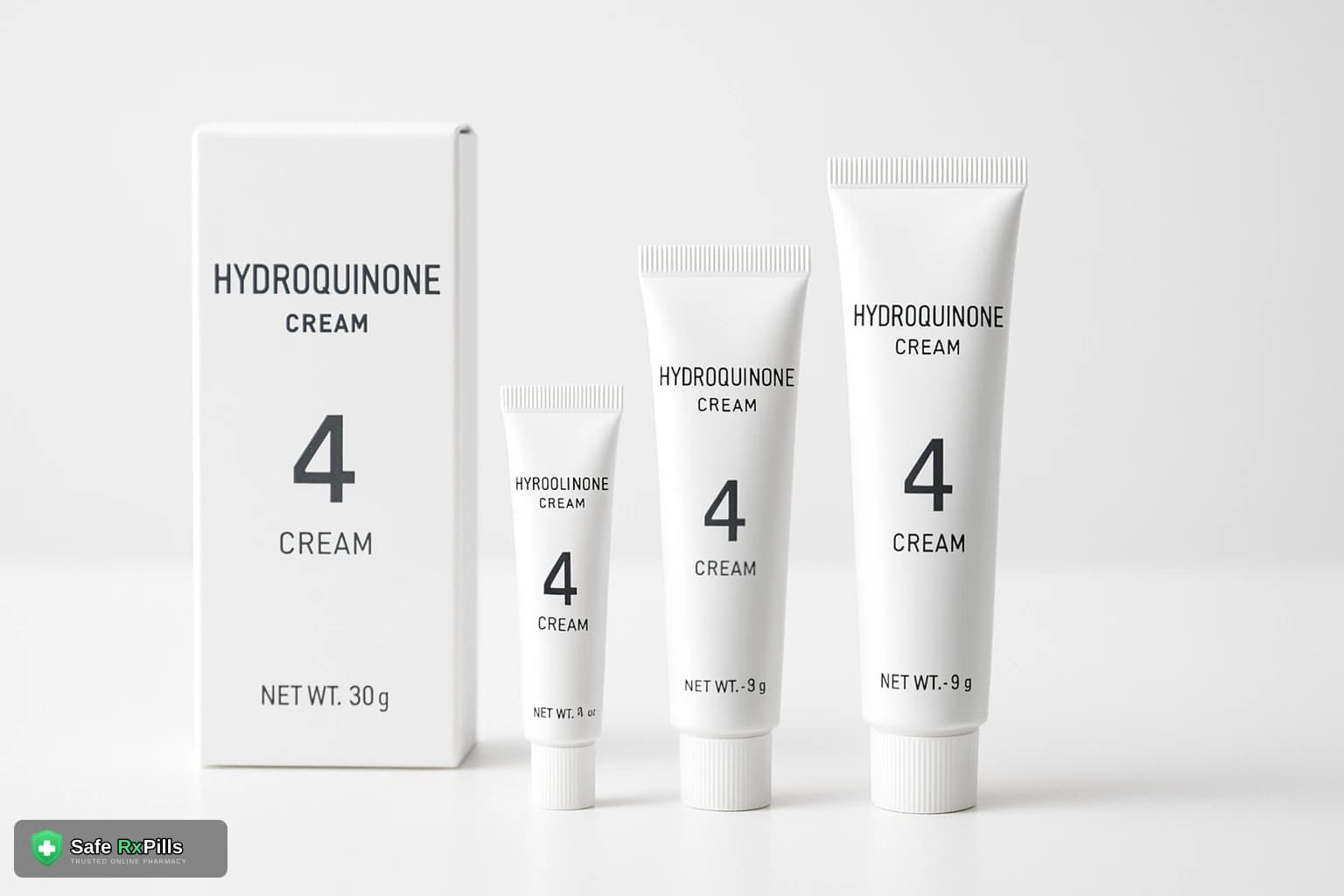
It has been used in dermatology since the 1960s and remains the most studied, most prescribed depigmenting agent in clinical practice. In the US, 2% hydroquinone is available OTC; 4% and higher require a prescription. Prescription formulations like Eukroma Cream provide pharmaceutical-grade hydroquinone at the clinically effective 4% concentration.
Hydroquinone is not a general skin "whitener" - it works by reducing excess melanin production in specific hyperpigmented areas. It does not affect normally pigmented skin to the same degree and cannot lighten your natural baseline skin tone.
Conditions Hydroquinone Treats
- Melasma: Brown or grey-brown patches typically on the forehead, cheeks, and upper lip, triggered by hormonal changes (pregnancy, oral contraceptives, menopause). Melasma is the primary FDA-approved indication for hydroquinone. It is a chronic condition prone to relapse and requires long-term management.
- Post-inflammatory hyperpigmentation (PIH): Dark marks left after acne lesions heal, eczema flares, burns, or any skin inflammation. More pronounced in darker skin tones. Hydroquinone accelerates fading of these marks by 2-4 months compared to untreated resolution.
- Solar lentigines: Flat brown spots from cumulative UV exposure, commonly called age spots or sun spots. Respond well to regular hydroquinone application combined with consistent SPF.
- Freckles: Can be lightened with hydroquinone, though results vary based on whether freckling has an epidermal (responds well) or dermal (less responsive) component.
How to Use Hydroquinone Cream Safely
Application: Apply a thin layer to the hyperpigmented area only (not to the entire face) once or twice daily, as directed by your prescriber. For most formulations, the standard is twice daily - morning and evening after cleansing.
Sun protection is mandatory: Apply SPF50 every morning, regardless of whether you are going outside. Hydroquinone works by reducing new melanin production - UV radiation actively stimulates melanocyte activity and creates new melanin simultaneously. Without rigorous sun protection, the treatment is fighting against itself. This is the single most important instruction for successful treatment.
Treatment cycles: Hydroquinone is used in cycles - typically 3-6 months of treatment followed by a break. Very prolonged continuous use has been associated with ochronosis (a rare paradoxical darkening) in some individuals. Cycling prevents this risk. After completing a treatment cycle, switch to a maintenance regimen using a retinoid, azelaic acid, or niacinamide to maintain results during the rest period.
Patch test first: Before applying to the face, test on a small area of inner arm for 24 hours to check for contact allergy. Allergy to hydroquinone is uncommon but does occur.
Combination Treatments: Why Hydroquinone Alone Is Not Always Enough
Hydroquinone as a standalone agent is effective, but combination approaches produce significantly better results for melasma and deep PIH:
Hydroquinone + Tretinoin + Corticosteroid (triple combination): This is the most studied topical regimen for facial melasma. Tretinoin accelerates shedding of already-pigmented cells and enhances penetration of hydroquinone. The corticosteroid reduces irritation from the other two agents and has its own mild depigmenting effect. A Ret HC 15g combines all three in a single formulation - hydroquinone, tretinoin, and hydrocortisone. Clinical studies show this triple combination produces greater and faster improvement than any component alone.
Hydroquinone + glycolic acid: Chemical exfoliation with Glyco 12 Cream (12% glycolic acid) accelerates removal of surface pigmented cells and enhances absorption of hydroquinone. Best used as separate products - glycolic acid in the evening, hydroquinone in the morning, to avoid over-exfoliation.
For patients with acne co-existing alongside hyperpigmentation, treating the active acne simultaneously is essential - each new inflammatory lesion creates new PIH. Topical retinoids and combination acne products like Acnewar 15g address both the active acne and help with PIH prevention.
Side Effects and Precautions
Common side effects (mild, usually temporary):
- Mild skin redness and irritation, particularly in the first 1-2 weeks. Usually resolves as skin adjusts.
- Mild dryness or flaking at the application site.
- Sensitivity to sun exposure - this increases the importance of daily SPF use.
Less common:
- Contact dermatitis - localised inflammation, redness, and itching suggesting allergic or irritant reaction. Discontinue and consult a dermatologist.
- Nail discolouration - can occur if hydroquinone contacts nails regularly. Use fingertip or cotton pad application.
Rare (with prolonged unsupervised use):
- Ochronosis - a bluish-grey paradoxical darkening from exogenous hydroquinone deposition. Reported primarily with very high concentrations (10%+) used continuously for years, often in combination with phenol-containing products. Extremely rare at prescription-appropriate 4% use with correct treatment cycling. Almost exclusively associated with unregulated products used without medical supervision.
Pregnancy: Hydroquinone is not recommended during pregnancy due to limited safety data. Melasma from pregnancy (chloasma) is typically managed with SPF alone during pregnancy and treated after delivery. Consult your doctor before using any depigmenting agent while pregnant or breastfeeding.
Skin Tone Considerations
Hydroquinone works across skin tones, but approach varies by Fitzpatrick type:
- Lighter skin tones (Types I-III): Generally tolerate standard concentrations well. Response is predictable. Lower ochronosis risk with appropriate cycling.
- Medium to darker skin tones (Types IV-VI): Effective treatment for PIH and melasma but require more caution. Irritation from hydroquinone can cause new PIH in darker skin - gradual introduction, lower initial frequency of application, and rigorous SPF use are particularly important. Azelaic acid may be a safer first-line option in very dark skin tones before introducing hydroquinone.
Expected Timeline of Results
Post-inflammatory hyperpigmentation: Visible lightening typically at 6-8 weeks. Significant improvement at 12 weeks. Complete resolution of superficial PIH in 3-4 months of consistent treatment. Deeper dermal PIH fades more slowly and may persist for 6-12 months even with treatment.
Melasma: Initial improvement at 6-8 weeks. Maximum response at 12-16 weeks of continuous treatment. Melasma is chronic - relapse after stopping is common. Sun protection and maintenance therapy (retinoids, azelaic acid) extend remission significantly.
Solar lentigines: Good response to hydroquinone over 8-12 weeks. Professional treatments (laser, intense pulsed light) can accelerate results but topical hydroquinone is effective for prevention of new spots and gradual treatment of existing ones.
Buying Hydroquinone Online: USA, UK, Australia, Canada
Prescription-strength hydroquinone (4%) is available through SafeRxPills. Eukroma Cream provides pharmaceutical-grade hydroquinone for melasma and hyperpigmentation treatment. For the triple-combination approach, A Ret HC 15g combines hydroquinone with tretinoin and hydrocortisone in a single product. Supporting exfoliant Glyco 12 Cream is also available. SafeRxPills ships to the US (10-21 days), UK (10-18 days), Australia (12-20 days), and Canada (10-16 days) with full tracking and discreet packaging. Pricing is significantly below US retail pharmacy costs for equivalent formulations.
How strong is 4% hydroquinone compared to 2% OTC?
Prescription 4% hydroquinone delivers roughly twice the active ingredient concentration of OTC 2% formulations. Clinical studies consistently show 4% produces faster and more complete lightening of melasma and PIH than 2%. For significant hyperpigmentation, 4% is the clinically meaningful threshold.
Can I use hydroquinone every day?
Yes, for a treatment cycle of 3-6 months, twice daily application is standard. After that, take a break of 1-3 months using a maintenance regimen before restarting if needed. Do not use continuously for longer than 6 months without reassessment by a dermatologist.
Does hydroquinone work for dark spots under the eyes?
Dark circles under the eyes are complex - many cases have a vascular or structural component (visible blood vessels, shadow from anatomy) that hydroquinone cannot treat. For hyperpigmentation-type dark circles with a brown pigment quality, hydroquinone can help but the under-eye area is particularly thin and sensitive. Use carefully at low frequency initially.
Can I use hydroquinone and vitamin C together?
It is generally advisable to separate them. Vitamin C and hydroquinone can react together to cause oxidation. Apply vitamin C in the morning and hydroquinone in the evening, or on alternate mornings, rather than in the same application.
What happens to my skin if I stop hydroquinone suddenly?
Nothing harmful - but without a maintenance strategy and continued sun protection, pigmentation will gradually return over weeks to months, especially for melasma which has an ongoing hormonal drive. Transition to azelaic acid, low-concentration tretinoin, or niacinamide for maintenance rather than abrupt discontinuation.
Conclusion
Hydroquinone cream at prescription strength (4%) is the most clinically validated depigmenting treatment available, with a well-established safety profile when used correctly in treatment cycles with appropriate sun protection. For melasma, post-inflammatory hyperpigmentation, and solar lentigines, it delivers measurable results within 8-12 weeks. Combination with tretinoin and proper exfoliation further enhances outcomes. Used as directed under medical supervision, it remains the gold standard for evidence-based management of skin hyperpigmentation disorders.
Medical Disclaimer: This article is for informational purposes only and does not constitute medical advice. Consult a dermatologist before starting hydroquinone treatment. Not recommended during pregnancy. SafeRxPills is operated by Actiza Pharmaceutical Pvt. Ltd., Drug Lic. 20B/GJ/SUR-111193.
Related Products
- Melalite Forte Cream (Hydroquinone 4%) - leading hydroquinone skin lightening cream
- Melalite 15 Cream - hydroquinone 2% for sensitive skin
- A Ret Gel 0.025% (Tretinoin) - tretinoin to enhance skin tone
Related Topics:
?Frequently Asked Questions
What is hydroquinone cream used for?
Hydroquinone cream is used to lighten dark spots, melasma, age spots, freckles, and post-inflammatory hyperpigmentation on the skin. It works by inhibiting tyrosinase, the enzyme responsible for melanin production, which gradually fades hyperpigmented areas over several weeks. This topical treatment has been a gold standard in dermatology since the 1960s for treating various forms of skin discoloration.
How long does it take for hydroquinone cream to show results?
Most people begin to see noticeable results from hydroquinone cream after 4-6 weeks of consistent daily use. Significant improvement in dark spots and hyperpigmentation typically occurs between 8-12 weeks of treatment. Results vary depending on the severity of pigmentation, concentration of hydroquinone used, and individual skin response.
Is hydroquinone cream safe for long-term use?
Hydroquinone cream is generally safe when used as directed for short to moderate periods, typically 3-4 months at a time. Long-term continuous use beyond 5-6 months is not recommended without medical supervision due to the risk of ochronosis, a paradoxical darkening of the skin. Dermatologists often recommend taking breaks between treatment cycles to maintain safety and effectiveness.
What concentration of hydroquinone cream should I use?
Over-the-counter hydroquinone cream is available in concentrations up to 2%, while prescription-strength formulations range from 4% to 8%. Beginners should start with lower concentrations (2%) to assess skin tolerance, while more stubborn hyperpigmentation may require prescription-strength 4% hydroquinone. Your dermatologist can recommend the appropriate concentration based on your skin type and pigmentation concerns.
What are the side effects of using hydroquinone cream?
Common side effects of hydroquinone cream include mild skin irritation, redness, dryness, and occasional stinging or burning sensations, especially when first starting treatment. More serious but rare side effects include allergic reactions, excessive lightening of surrounding skin, and ochronosis with prolonged use. Always perform a patch test before full application and discontinue use if severe irritation occurs.
Can I use hydroquinone cream with other skincare products?
Yes, hydroquinone cream can be used with other skincare products, but timing and combinations matter for optimal results and safety. It pairs well with sunscreen (which is essential during treatment), retinoids, vitamin C, and gentle moisturizers, though these should be introduced carefully to avoid irritation. Avoid using hydroquinone simultaneously with benzoyl peroxide, as it can cause temporary skin staining, and always consult a dermatologist about your complete skincare routine.
SafeRxPills Pharmacy Team
SafeRxPills Editorial Team
Our pharmacy team consists of certified pharmacists and medical writers with 10+ years of experience in pharmaceutical sciences.
Comments (0)
Leave a Comment
No comments yet. Be the first to share your thoughts!
Related Articles
Buy Tretinoin in the UK Online: Prescription Rules, Real Costs and Legal Routes
August 29, 2026