How to Save Up to 80% on Prescription Medications: A Practical Guide for Americans
Dr. Sarah Mitchell, PharmD
Certified Pharmacist
How to Save Up to 80% on Prescription Medications: A Practical Guide for Americans
Prescription drug costs in the United States are among the highest in the world. Millions of Americans struggle to afford their medications, with some skipping doses or abandoning treatment altogether. But there are legitimate ways to dramatically reduce your pharmacy bills—sometimes by 80% or more.
This guide covers practical, legal strategies that anyone can use to save money on prescription medications.
Why Are US Drug Prices So High?
Before diving into savings strategies, it helps to understand why medications cost so much:
- Patent protection: Brand-name drugs enjoy 20-year monopolies
- No price negotiation: Medicare is prohibited from negotiating drug prices (though this is changing)
- Middlemen: Pharmacy benefit managers (PBMs) add layers of cost
- Direct-to-consumer advertising: Expensive marketing drives up prices
- Regulatory costs: FDA approval process is lengthy and expensive
The same medications sold for $500 in the US might cost $50 in Canada, $30 in the UK, or $15 in India.
Strategy 1: Choose Generic Medications
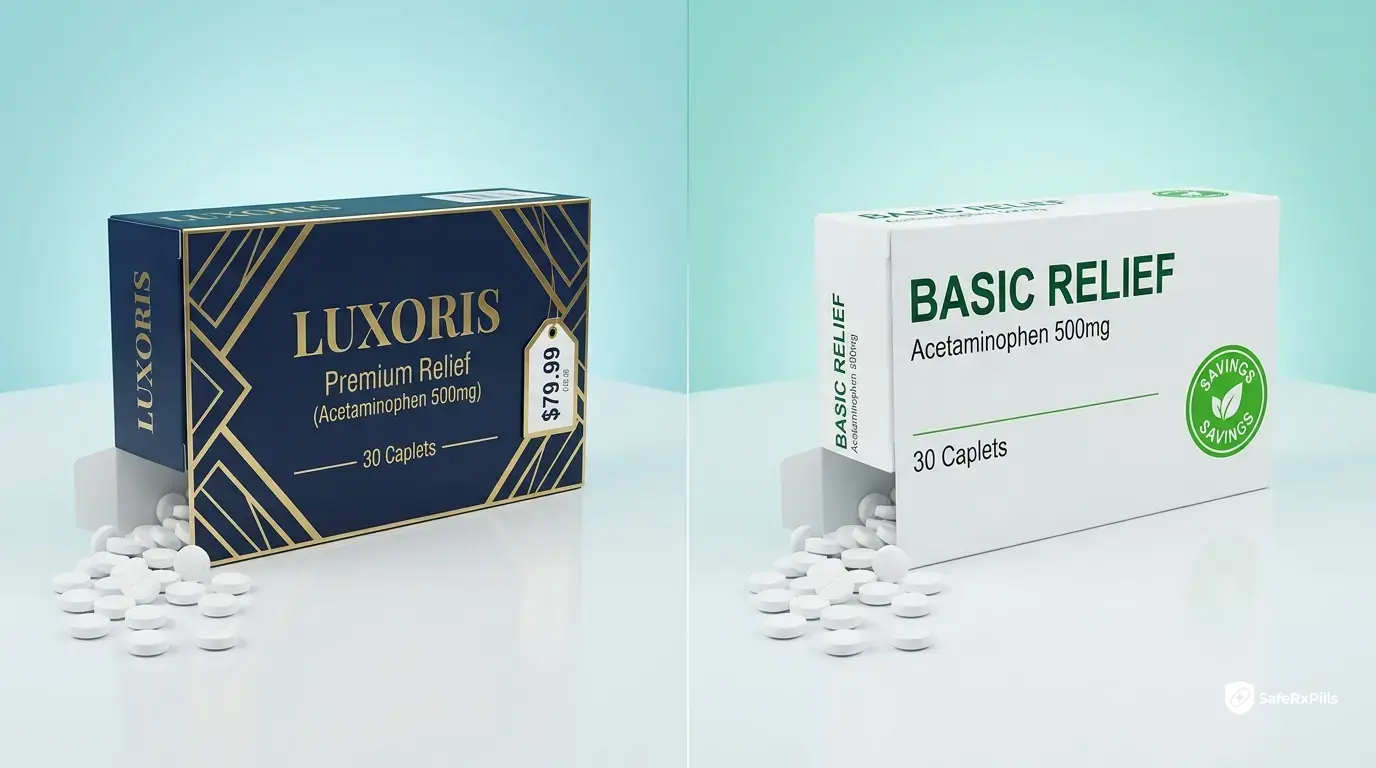
Generic drugs contain the same active ingredients as brand-name drugs and must meet the same FDA standards for safety, strength, and effectiveness.
Generic vs. Brand-Name Facts
| Aspect | Brand-Name | Generic |
|---|---|---|
| Active ingredient | Identical | Identical |
| FDA approval | Yes | Yes (bioequivalent) |
| Effectiveness | Proven | Proven equivalent |
| Average savings | — | 80-85% |
Examples of Major Savings
- Lipitor (atorvastatin): $300/month → $15/month generic
- Zoloft (sertraline): $250/month → $10/month generic
- Nexium (esomeprazole): $400/month → $25/month generic
Always ask your doctor: "Is there a generic version available?"
Strategy 2: Use Online Pharmacies
Licensed international and domestic online pharmacies can offer significant savings, especially for maintenance medications.
What to Look For
Legitimate pharmacies require:
- Valid prescription from a licensed doctor
- Licensed pharmacists available for consultation
- Physical address and phone number
- Clear privacy and security policies
Red flags:
- No prescription required
- Prices that seem "too good to be true"
- No licensed pharmacist available
- Ships from unverified locations
Potential Savings
- Domestic online pharmacies: 30-50% savings
- International pharmacies: 50-80% savings (especially from Canada, UK, Australia, India)
Strategy 3: Compare Prices Locally
Drug prices vary dramatically between pharmacies—even in the same neighborhood.
Tools to Compare Prices
- GoodRx: Free coupons accepted at most major pharmacies
- SingleCare: Price comparison and discount cards
- Amazon Pharmacy: Often competitive pricing with Prime benefits
- Costco Pharmacy: Open to non-members by law; often lowest cash prices
- Walmart $4 List: Select generics at very low prices
Real Example
A 30-day supply of metformin 500mg:
- CVS: $28
- Walgreens: $32
- Walmart: $4
- Costco: $8
- With GoodRx coupon: $12-15 at any pharmacy
Strategy 4: Patient Assistance Programs
Pharmaceutical companies offer programs to help uninsured or underinsured patients afford their medications.
Major Programs
- NeedyMeds: Database of patient assistance programs
- Partnership for Prescription Assistance: Connects patients to programs
- RxAssist: Comprehensive directory of assistance programs
- Manufacturer programs: Most major drug companies offer their own programs
Who Qualifies
Typically based on:
- Income (usually up to 300-400% of federal poverty level)
- Insurance status
- Citizenship/residency requirements
Strategy 5: Buy in Bulk
If you take medications long-term, a 90-day supply often costs less than three 30-day supplies.
Savings Example
| Supply | Typical Cost | Per-Day Cost |
|---|---|---|
| 30 days | $90 | $3.00 |
| 90 days | $210 | $2.33 |
| Savings | — | 22% |
Mail-order pharmacies often offer the best 90-day pricing.
Strategy 6: Split Higher-Dose Pills
Many medications cost the same regardless of dosage. With doctor approval, you can buy higher-dose pills and split them.
Example
- Crestor 10mg (30 tablets): $250
- Crestor 20mg (30 tablets): $250
Splitting the 20mg tablets gives you 60 days of 10mg doses—50% savings.
Never split: Extended-release, enteric-coated, or capsule medications without doctor approval.
Strategy 7: Check for Manufacturer Coupons
Brand-name drug manufacturers often offer coupons to reduce copays or cash prices.
Where to Find Coupons
- Manufacturer websites
- Your doctor's office
- Pharmacy websites
- Coupon databases like GoodRx
Important Note
Manufacturer coupons usually have:
- Annual maximums (e.g., $1,500/year)
- Eligibility requirements
- Expiration dates
Strategy 8: Consider Therapeutic Alternatives
Sometimes a different medication in the same class works as well but costs less.
Example: Statins for Cholesterol
| Drug | Monthly Cost |
|---|---|
| Crestor (rosuvastatin) | $250 |
| Lipitor (atorvastatin) | $300 |
| Generic atorvastatin | $15 |
| Generic simvastatin | $10 |
Discuss options with your doctor. Never switch medications without medical guidance.
Strategy 9: Use Health Savings Accounts (HSAs/FSAs)
While not a direct discount, using pre-tax dollars effectively reduces medication costs by your tax rate.
Tax Savings Example
If you're in the 22% tax bracket:
- $100 medication cost
- Using HSA/FSA: $100 pre-tax = $78 effective cost after tax savings
- Effective savings: 22%
Strategy 10: Talk to Your Doctor
The most important strategy is open communication with your healthcare provider.
Questions to Ask
- "Is this medication available as a generic?"
- "Are there lower-cost alternatives that work similarly?"
- "Can I get a 90-day prescription to save money?"
- "Are there samples or manufacturer coupons available?"
- "Is pill splitting appropriate for this medication?"
Most doctors want to help patients afford treatment and will work with you on cost-effective options.
Putting It All Together: A Real-World Example
Scenario: You need atorvastatin 20mg (generic Lipitor) for high cholesterol.
| Approach | Monthly Cost |
|---|---|
| Brand-name Lipitor at CVS | $300 |
| Generic atorvastatin at CVS | $45 |
| Generic at Walmart | $12 |
| Generic 90-day supply via mail order | $25 ($8.33/month) |
| Generic with GoodRx at local pharmacy | $10 |
| Best option: Generic + price comparison | $8-10/month |
| Total savings | 97% |
The Bottom Line
High prescription costs don't have to mean skipping medications or going without treatment. By combining these strategies—generics, price comparison, patient assistance, and smart purchasing—you can often reduce medication costs by 50-80% or more.
The key is being proactive: ask questions, compare prices, and explore all available options. Your health is worth the effort.
Ready to start saving? Browse our selection of affordable generic medications and see how much you can save on your prescriptions.
?Frequently Asked Questions
Are generic medications as effective as brand-name drugs?
Yes. Generic medications contain the same active ingredients and must meet the same FDA standards for safety, strength, purity, and effectiveness. The FDA requires generics to be bioequivalent to brand-name drugs, meaning they work the same way in your body.
Is it legal to buy medications from international online pharmacies?
The FDA generally discourages importing prescription drugs, but typically does not prosecute individuals importing small quantities (90-day supply) for personal use. Many Americans safely use licensed Canadian and other international pharmacies. Always ensure the pharmacy requires a valid prescription and is licensed.
How much can I really save with generic medications?
Generic medications typically cost 80-85% less than brand-name equivalents. For example, Lipitor might cost $300/month while generic atorvastatin costs $10-15/month. The savings vary by medication but are consistently significant.
Do I need a prescription to use GoodRx or other discount programs?
Yes, you still need a valid prescription from a licensed healthcare provider. GoodRx and similar programs provide discount coupons that reduce the price you pay at the pharmacy, but they do not replace the need for a prescription.
What if I cannot afford my medications even with these strategies?
If you still cannot afford medications, contact the manufacturer directly for patient assistance programs, speak with your doctor about therapeutic alternatives, contact local health departments for resources, or look into community health centers that offer sliding-scale pricing.
Dr. Sarah Mitchell, PharmD
PharmD, Clinical Pharmacist
Dr. Sarah Mitchell is a licensed pharmacist with over 15 years of experience in community pharmacy and patient advocacy. She specializes in helping patients find affordable medication options.
Comments (0)
Leave a Comment
No comments yet. Be the first to share your thoughts!
Related Articles