Tretinoin vs Retinol for Anti-Aging: Which Actually Works Better?
SafeRxPills Pharmacy Team
Editorial team at SafeRxPills. Articles are written and checked against regulatory drug labelling (DailyMed, FDA, EMA) and published literature.
Tretinoin vs Retinol for Anti-Aging: Which Actually Works Better? | SafeRxPills - pharmacy guide
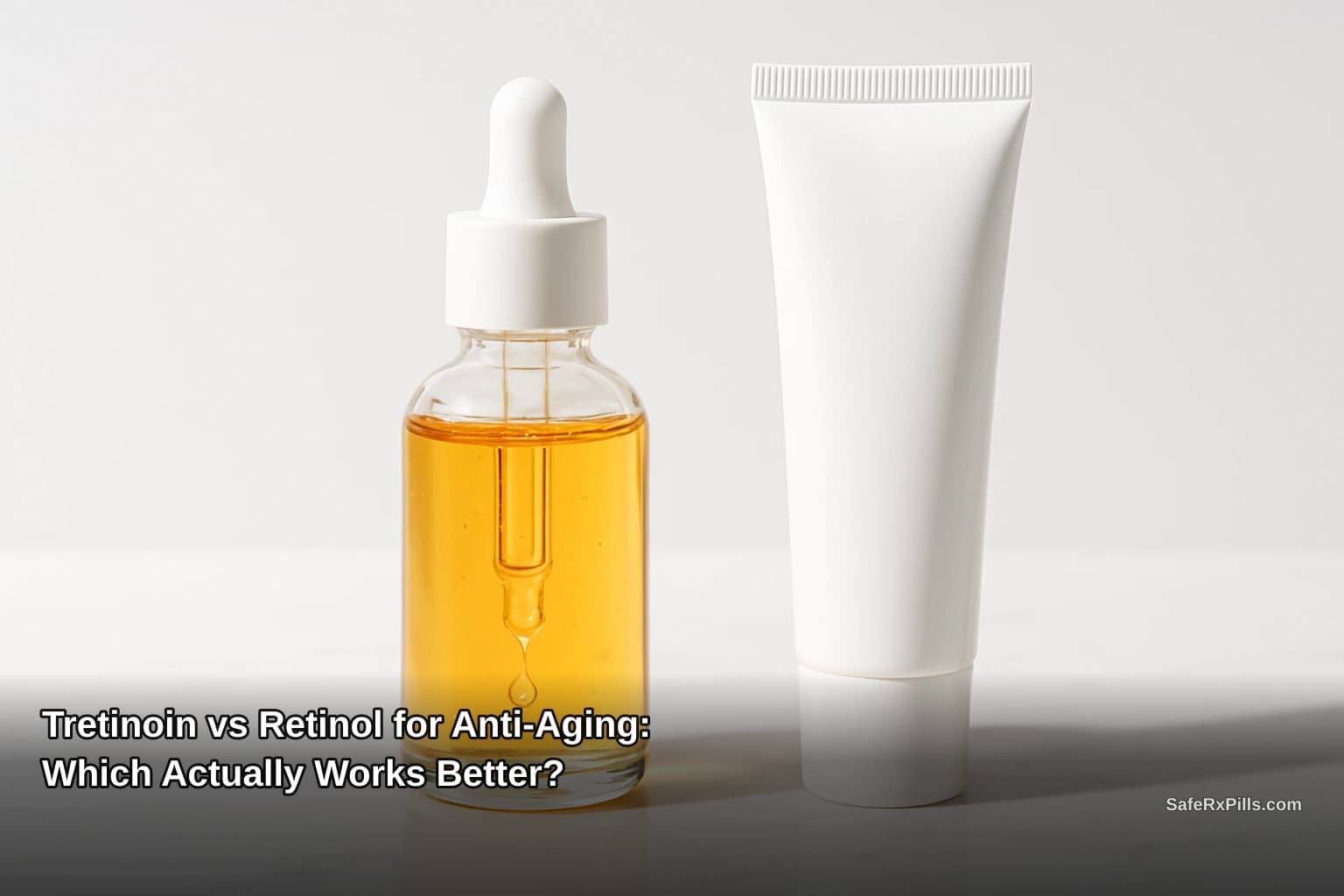
Tretinoin is prescription-strength retinoic acid that your skin uses immediately, while retinol is an over-the-counter ingredient that must convert through two steps before your skin can use it. This makes tretinoin roughly 20 times more effective for reducing wrinkles, reversing sun damage, and building collagen. Retinol works for mild concerns with fewer side effects, but if you want serious anti-aging results backed by 50 years of clinical data, tretinoin is the gold standard.
The choice between them isn't about which is "better" in general. It's about matching the right strength to your skin goals and tolerance level. Here's everything you need to know to make that decision.
How Tretinoin and Retinol Actually Work in Your Skin
Both belong to the retinoid family, derivatives of vitamin A that speed up skin cell turnover and stimulate collagen production. The crucial difference is how directly they work.
Tretinoin is retinoic acid, the active form your skin cells recognize and respond to immediately. When you apply it, it binds directly to retinoic acid receptors in your skin cells. These receptors then trigger gene expression changes that increase collagen production, speed up cell turnover, and normalize pigmentation. No conversion needed.
Retinol must convert twice before your skin can use it. First, enzymes convert retinol to retinaldehyde. Then different enzymes convert retinaldehyde to retinoic acid. Only then can it bind to those same receptors tretinoin hits directly. Each conversion step loses potency, like making a photocopy of a photocopy.
Think of it this way: tretinoin is the finished key that unlocks your skin's anti-aging mechanisms. Retinol is the raw metal that needs to be cut and shaped into that key. Some of the metal gets lost in the process.
Both increase collagen types I and III, the structural proteins that keep skin firm. Both reduce the enzyme collagenase that breaks down existing collagen. Both normalize melanin distribution to fade dark spots. Tretinoin just does all of this more efficiently because it skips the conversion steps.
The Strength Gap: Why Tretinoin Is 20x More Powerful
Studies measuring actual retinoic acid activity in skin cells show tretinoin delivers 20 to 100 times more active ingredient than equivalent percentages of retinol. A 0.025% tretinoin cream produces similar cellular activity to 1% retinol serum.
Here's the practical breakdown:
Tretinoin concentrations: Available in 0.025%, 0.05%, and 0.1% creams and gels. Even the lowest 0.025% strength produces measurable wrinkle reduction in 12 weeks. The 0.1% concentration shows results in as little as 6 weeks but with more initial irritation.
Retinol concentrations: Over-the-counter products range from 0.1% to 2%. Most drugstore formulas contain 0.3% to 1%. You need at least 0.5% to see any anti-aging effect, and even 1% retinol is considerably gentler than 0.025% tretinoin.
The conversion efficiency explains this gap. Studies show only 10-20% of applied retinol successfully converts to retinaldehyde, and only about 10% of that converts to retinoic acid. You lose roughly 90% of the original retinol before it becomes active.
Clinical trials confirm this in real faces. A 6-month study comparing 0.1% retinol to 0.025% tretinoin found tretinoin reduced fine wrinkles by 34% versus 10% for retinol. Tretinoin users showed 58% improvement in mottled pigmentation versus 23% for retinol. Same duration, dramatically different results.
This doesn't make retinol useless. It makes it appropriate for different situations, which we'll cover below.
What Results Look Like and When to Expect Them
Tretinoin shows visible changes faster, but both require patience. Neither works overnight.
Tretinoin timeline: Most people see initial improvements in skin texture and radiance by week 8. Fine lines start softening around week 12. Deeper wrinkles and significant sun damage require 6 to 12 months. Collagen remodeling continues improving for up to 2 years of consistent use. You can see detailed tretinoin before and after results showing what to expect at each stage.
The first 4 to 6 weeks often look worse due to increased cell turnover causing flaking and temporary redness. This isn't damage, it's adjustment. Your skin is shedding damaged surface cells faster than usual. Push through this phase and the payoff is substantial.
Retinol timeline: Subtle texture improvements appear around week 12. Fine lines may improve by month 6. Significant anti-aging effects require 9 to 12 months of nightly use. Results plateau earlier than tretinoin because the lower effective dose has limits.
One year of 0.05% tretinoin produces about the same wrinkle reduction as 2 years of 1% retinol. If you're 45 and want to reverse a decade of sun damage, tretinoin gets you there faster and more completely.
Both work progressively. The longer you use them, the better your skin looks, up to a point. Tretinoin's ceiling is higher.
Side Effects: What You'll Actually Experience
Tretinoin causes more irritation initially because it's more active. Retinol is gentler but can still cause problems if you use too much too soon.
Common tretinoin side effects in the first 6 weeks:
- Dryness and flaking, sometimes significant peeling
- Redness, especially around the nose, mouth, and eyes
- Temporary increase in sensitivity to skincare products
- Mild burning or stinging when first applied
- Possible temporary breakout as clogged pores clear
These side effects diminish substantially after your skin adapts, usually by week 8. Most long-term tretinoin users report minimal irritation once they're past the adjustment phase. The key is starting slowly with a low concentration and building tolerance gradually.
Retinol side effects are similar but milder: Light flaking, slight redness, occasional sensitivity. These typically resolve within 2 to 4 weeks. Retinol is less likely to cause significant peeling or prolonged redness.
Both increase sun sensitivity substantially. You must use broad-spectrum SPF 30 or higher every morning, even on cloudy days. This isn't optional. Retinoids make your skin more vulnerable to UV damage while they're repairing existing damage. Skip sunscreen and you'll make things worse.
Pregnant or trying to conceive? Avoid both. Tretinoin is absolutely contraindicated during pregnancy (Category C). While topical absorption is minimal, the risk isn't worth taking. Retinol falls in the same category. Stop both at least 3 months before trying to conceive.
Managing side effects is straightforward: start low, go slow, moisturize heavily, and protect from sun. Most people who quit tretinoin do so because they started too strong too fast, not because it's inherently intolerable.
Who Should Use Tretinoin vs Retinol
Your choice depends on your skin goals, current skin resilience, and willingness to manage an adjustment period.
Use tretinoin if you:
- Have moderate to severe wrinkles, deep lines, or significant sun damage
- Want maximum anti-aging results and are willing to work through initial side effects
- Have resilient skin that tolerates active ingredients reasonably well
- Are committed to strict daily sunscreen use
- Can follow a structured introduction protocol (starting 2-3x weekly and building up)
- Are treating acne along with aging concerns (tretinoin handles both)
Tretinoin is the evidence-based choice for serious anti-aging. It has 50 years of clinical data showing long-term safety and effectiveness. Dermatologists prescribe it because it works predictably and powerfully. If you're 40+ and want to actually reverse visible aging, not just slow it down, tretinoin is the answer.
Use retinol if you:
- Have very sensitive skin with a history of reactions to active ingredients
- Want mild preventive anti-aging in your late 20s or early 30s
- Prefer starting with something you can buy without a prescription
- Have minimal wrinkles and want to maintain that status
- Cannot commit to a prescription medication routine
- Want to test whether retinoids work for your skin before committing to prescription strength
Retinol is reasonable as a gateway to retinoids. Many people start with over-the-counter retinol, build tolerance over 6 months, then switch to tretinoin cream for stronger results. That progression makes sense if you're concerned about tolerating tretinoin right away.
Some dermatologists recommend starting retinol at 25 to 30 as preventive maintenance, then switching to tretinoin at 35 to 40 when correction becomes the priority. That's a logical timeline.
But if you're 45 with visible wrinkles and sun spots, starting with retinol wastes 6 to 12 months getting weak results when you could be getting strong results from tretinoin in the same timeframe. Your tolerance adjustment period is the same either way.
Getting Tretinoin in the USA Through SafeRxPills
Tretinoin requires a prescription in the United States. It's classified as a prescription-only medication by the FDA due to its potency and potential side effects. You cannot legally buy tretinoin over the counter at CVS, Walgreens, or any drugstore.
The traditional route involves scheduling a dermatologist appointment, waiting weeks for availability, paying consultation fees, then paying again at the pharmacy. With insurance, tretinoin typically costs $30 to $75 for a 20g tube. Without insurance, retail prices range from $150 to $400 depending on concentration and brand.
SafeRxPills offers a more convenient option for USA patients. As a licensed online pharmacy, we ship prescription tretinoin directly to your door after a simple online consultation process. No waiting weeks for a dermatology appointment. No sitting in waiting rooms.
Here's how it works: You complete a brief medical questionnaire detailing your skin concerns and medical history. A licensed healthcare provider reviews your information and determines if tretinoin is appropriate for you. If approved, your prescription ships within 24 to 48 hours. Delivery to most USA addresses takes 10 to 15 business days.
Pricing through SafeRxPills is transparent and competitive. You're getting the same pharmaceutical-grade tretinoin prescribed by dermatologists, manufactured in certified facilities, shipped in proper temperature-controlled packaging. Our customer service team can answer questions about starting protocols, managing side effects, and adjusting concentrations as your skin adapts.
For USA patients specifically, we understand the challenge of accessing prescription skincare without expensive specialist visits. That's why we've streamlined the process while maintaining proper medical oversight. You get legitimate tretinoin without the traditional healthcare hassle.
Starting Either One: Dosing and Application Guide
Whether you choose tretinoin or retinol, the introduction protocol determines whether you succeed or quit in frustration. Go too hard too fast and you'll get excessive irritation that makes you stop. Start properly and you build tolerance while getting results.
Tretinoin starting protocol:
Begin with 0.025% cream formulation. Gel versions are stronger and more irritating. Start with cream.
Week 1-2: Apply pea-sized amount to clean, completely dry skin 2 nights per week. Wait 20 minutes after washing before applying. Your skin must be totally dry or the tretinoin penetrates too aggressively. Apply only to areas with aging concerns, avoiding eyelids, corners of nose, and lips.
Week 3-4: Increase to 3 nights per week if you're tolerating it well with only mild flaking.
Week 5-8: Increase to every other night.
Week 9+: Work up to nightly use if your skin tolerates it. Some people stay at every-other-night long-term and still get excellent results.
Apply tretinoin to dry skin, wait 20 minutes, then apply a good moisturizer over it. This layering reduces irritation without significantly affecting efficacy. On nights you don't use tretinoin, use a rich moisturizer with ceramides and hyaluronic acid to support your skin barrier.
Morning routine must include gentle cleanser, antioxidant serum (vitamin C works well with tretinoin), and broad-spectrum SPF 50. This isn't negotiable.
If you experience excessive peeling, redness, or burning, scale back frequency. Let your skin calm for 3 to 5 days, then resume at a lower frequency. Slow progress is still progress.
After 6 months at 0.025%, you can consider moving to 0.05% if you want faster or stronger results. Most people find 0.05% is the sweet spot: strong enough for excellent results, not so strong that it's hard to tolerate.
Retinol starting protocol:
Start with 0.5% retinol serum or cream. Apply 2 to 3 nights per week for the first month. Increase to nightly use by month 2 if you're tolerating it well. After 3 to 6 months, you can increase to 1% if you want stronger effects.
The same rules apply: apply to dry skin, wait, then moisturize. Use SPF every morning. Scale back if irritation is excessive.
Many people combine retinol with Epiduo Gel for acne concerns, though that requires careful layering to avoid over-irritation.
Whether you choose tretinoin or retinol, consistency matters more than concentration. Using 0.025% tretinoin every other night for a year beats using 0.1% sporadically when your skin allows it.
This article is for informational purposes only and does not constitute medical advice. Consult with a qualified healthcare provider before starting tretinoin, retinol, or any prescription skincare treatment. Individual results and side effects may vary.
Medical References
Sources: U.S. National Library of Medicine (DailyMed, PubMed), openFDA
Related Products
- A Ret Gel 0.025% (Tretinoin) - beginner-strength tretinoin gel
- A Ret Gel 0.05% (Tretinoin) - mid-strength tretinoin for acne and anti-aging
- A Ret Gel 0.1% (Tretinoin) - strongest tretinoin for advanced users
Related Guides
- Buy Tretinoin in the UK Online: prescription rules, NHS and private costs, and the legal position on overseas orders.
?Frequently Asked Questions
Can I use tretinoin and retinol together?
No, using both together provides no added benefit and dramatically increases irritation risk. They work through the same mechanism, so layering them is redundant. Choose one based on the strength you need. If you're using tretinoin, adding retinol on top just wastes money and stresses your skin.
How long does tretinoin take to work compared to retinol?
Tretinoin shows initial texture improvements by week 8 and visible wrinkle reduction by week 12. Retinol takes 12 weeks for texture changes and 6 months for modest wrinkle improvement. For equivalent results, tretinoin is roughly twice as fast as retinol, meaning 6 months of tretinoin equals about 12 months of retinol in terms of anti-aging effect.
Is retinol safer than tretinoin for sensitive skin?
Retinol causes less irritation initially because it's weaker, not because it's fundamentally safer. Both are safe when used correctly. If you have sensitive skin, you can still use tretinoin by starting with 0.025% twice weekly and building tolerance slowly. Many sensitive skin types tolerate low-dose tretinoin better than high-dose retinol because the tretinoin works more efficiently at lower percentages.
Will switching from retinol to tretinoin cause a purge?
Possibly, but not always. If you have clogged pores, tretinoin's faster cell turnover can cause a temporary breakout as those clogs surface and clear. This usually happens in weeks 2 to 4 and resolves by week 8. If you've been using retinol consistently for months, your skin may already be accustomed to retinoid activity, which can reduce the purge when you switch to tretinoin.
Does tretinoin thin your skin over time?
No, this is a common myth. Tretinoin actually thickens the dermis (the deep structural layer) by increasing collagen production. It thins the stratum corneum (the outermost dead cell layer) by increasing turnover, which makes skin smoother. Skin biopsies of long-term tretinoin users show increased dermal thickness and collagen density compared to non-users. Your skin becomes structurally stronger, not weaker.
SafeRxPills Pharmacy Team
SafeRxPills Editorial Team
Editorial team at SafeRxPills. Articles are written and checked against regulatory drug labelling (DailyMed, FDA, EMA) and published literature.
Comments (0)
Leave a Comment
No comments yet. Be the first to share your thoughts!
Related Articles
Buy Tretinoin in the UK Online: Prescription Rules, Real Costs and Legal Routes
August 29, 2026