Fenbendazole vs Ivermectin: Differences, Parasite Coverage, and Whether You Can Take Both
Lokesh Maurya
B.Pharm, M.Pharm, Rajiv Gandhi University. Writes on antiparasitic and generic pharmacology for SafeRxPills.

Ivermectin and Fenbendazole: How They Work, Key Differences, and What to Know | SafeRxPills - pharmacy guide
Short answer: These are different drug classes that kill parasites in different ways, and they are not interchangeable. Ivermectin is FDA approved for human use, has been given several billion times worldwide, and has quantified efficacy data. Fenbendazole has no FDA approval for humans, no completed human efficacy trials, and no established human dose. Where both have theoretical activity, ivermectin is the one with evidence behind it. On taking them together: no human trial has evaluated the combination, and the honest position is that a theoretical rationale is not the same thing as evidence.
How each drug kills parasites
The two drugs belong to different antiparasitic classes and attack parasites through separate mechanisms. That is the root of every other difference between them.
Ivermectin is a macrocyclic lactone from the avermectin family, derived from the soil bacterium Streptomyces avermitilis. It binds selectively and with high affinity to glutamate gated chloride channels in invertebrate nerve and muscle cells. That binding increases membrane permeability to chloride ions, causes hyperpolarisation, and paralyses the parasite. It also interacts with GABA gated chloride channels. Mammals either lack these specific channels peripherally or express forms that ivermectin binds poorly, and ivermectin does not readily cross the human blood brain barrier, which is why it is well tolerated at therapeutic doses.
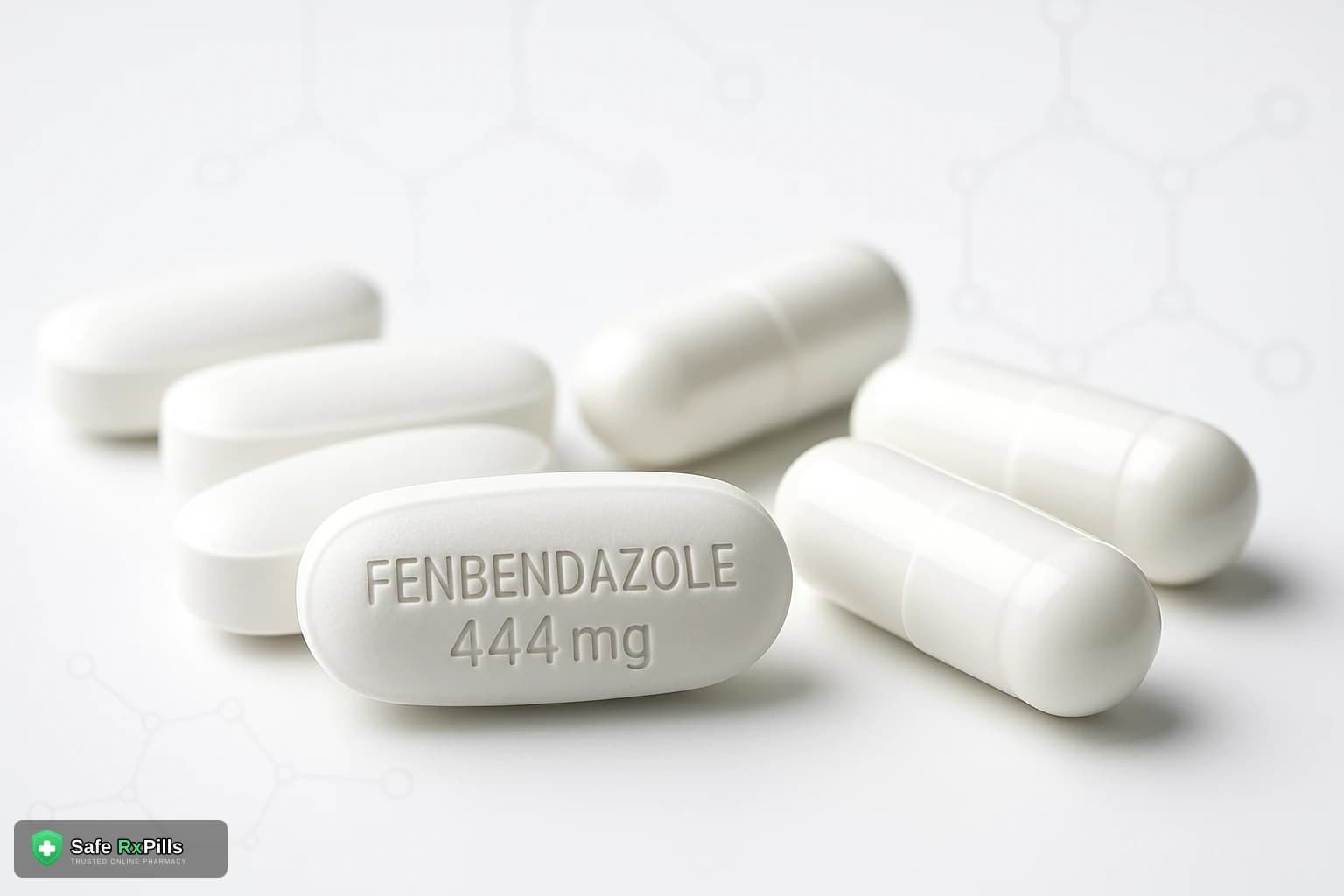
Fenbendazole is a benzimidazole. It binds beta tubulin inside the parasite cell and disrupts microtubule assembly. Without functional microtubules the parasite cannot maintain cell structure, absorb glucose, or divide. It effectively starves. This mechanism has been used in veterinary medicine since the 1970s across dogs, cats, cattle, horses and pigs.
Both spare mammalian cells, but through entirely different biochemistry. That distinction matters when working out which parasites each one actually kills.
Approval status is the biggest practical difference
This is where the two drugs separate completely, and it is the single most important point for anyone weighing one against the other.
Ivermectin is FDA approved for human use. The oral form has been approved since 1996 for strongyloidiasis and onchocerciasis. Topical formulations are approved for rosacea and head lice. It sits on the World Health Organization Model List of Essential Medicines, and several billion doses have been distributed through donation programmes since 1987, which represents one of the largest human safety datasets for any drug.
Fenbendazole has no FDA approval for human use. Every fenbendazole product sold legally in the United States is labelled for animal use. There is no human approved oral tablet, no FDA dosing guideline, and no completed Phase 3 human trial for any indication. Human interest in it is driven largely by anecdotal cancer claims that circulated from 2016 onward, which have produced case reports and laboratory work but no randomised controlled trial establishing efficacy or safety in people.
Stating that plainly is not a knock on the molecule. It is a statement about what is known. A drug can be pharmacologically interesting and still lack the evidence needed to dose it safely in humans.
Which parasites each drug actually treats
The coverage overlap is smaller than most side by side comparisons suggest.
Ivermectin, with human evidence
- Strongyloides stercoralis (threadworm): single dose at approximately 200 mcg/kg, cure rates in trials above 80 percent
- Onchocerca volvulus (river blindness): approximately 150 mcg/kg, repeated at intervals
- Sarcoptes scabiei (scabies): off label but widely used, with a repeat dose around day 14
- Head lice, topical or oral
- Cutaneous larva migrans
- Filariasis, within mass drug administration programmes
In controlled trials against albendazole for strongyloidiasis, ivermectin achieved cure rates of roughly 83 to 92 percent compared with 45 to 55 percent for albendazole.
Fenbendazole, from veterinary evidence
- Roundworms (Toxocara, Toxascaris)
- Hookworms (Ancylostoma, Uncinaria)
- Whipworms (Trichuris)
- Certain tapeworms (Taenia, though not Dipylidium)
- Giardia
- Some lungworms
Whether these effects translate at similar magnitude in humans has not been tested rigorously. This is the part worth sitting with: a closely related benzimidazole, mebendazole, has an established human safety and efficacy record and covers a similar parasite spectrum. When a physician wants benzimidazole coverage for a human parasitic infection, they prescribe mebendazole or albendazole. Not fenbendazole. Products such as Mebex 100mg and Zentel 400mg are the human formulations of that same drug class. Our fenbendazole vs mebendazole guide covers that comparison directly, and it is arguably the more useful comparison than this one for anyone with an actual diagnosed infection.
What the human evidence supports
There is no published randomised trial comparing fenbendazole and ivermectin head to head against any parasite in human patients. Any effectiveness comparison between them is inferred, not measured.
For parasites where both have theoretical activity, the practical answer is ivermectin, because its efficacy has been quantified in clinical settings across hundreds of millions of patients. Fenbendazole efficacy in humans is inferred from animal pharmacology and a small number of case reports. Those are not the same tier of evidence, and treating them as equivalent is the most common error in this comparison.
The context where fenbendazole draws most attention is not parasites at all. It is the alleged anticancer activity discussed in the Joe Tippens protocol. That is a separate question with its own unresolved evidence problems, and it does not change the human parasite treatment picture described here.
Dosing: one drug has a schedule, the other does not
Ivermectin follows established FDA labelling. Dosing is weight based, taken orally, and for strongyloidiasis is given as a single dose of approximately 200 mcg per kg of body weight. A 70 kg adult typically receives 12 mg, which is one Ivercor 12mg tablet or equivalent. Lower strengths such as Ivercor 6mg allow finer weight matching.
Two label details worth knowing. Ivermectin tablets are taken on an empty stomach with water, because a high fat meal increases bioavailability roughly 2.5 fold, which raises side effect risk rather than improving outcome. Plasma concentration peaks around 4 hours, half life is approximately 18 hours, and metabolism is primarily via CYP3A4. Our ivermectin dosage guide sets out the weight bands.
Fenbendazole has no FDA approved human dosing schedule. The regimens circulating online are extrapolated from veterinary dosing for large dogs and have not been validated in controlled human trials. There is no established maximum tolerated dose in humans and no long term human safety data at those doses. We are not going to publish a human protocol for a drug that does not have one, because doing so would present extrapolation as guidance.
Products such as Wormiza 444mg and Wormentel 888mg exist and are widely sold. Any human use of them sits outside approved medicine and belongs in a conversation with a physician who knows your full history.
Side effects and safety profiles
Ivermectin
Backed by decades of large scale human use. In clinical trials for strongyloidiasis, side effects reported as possibly or definitely related to the drug included dizziness (about 2.8 percent), pruritus (2.8 percent), diarrhoea (1.8 percent) and nausea (1.8 percent), with liver enzyme elevations in roughly 2 percent. In onchocerciasis treatment, Mazzotti reactions are common in the first four days, driven by the immune response to dying parasites rather than direct drug toxicity: itching, rash, fever and swollen lymph nodes.
Overdose is a real risk and worth stating clearly. Neurotoxicity including confusion, stupor, coma and death has been reported. Ivermectin is not a drug to escalate on your own judgement. It should not be used in children under 15 kg without physician oversight, and patients with possible loiasis need screening before treatment because high microfilarial loads carry serious neurological risk.
Fenbendazole
Not well characterised in humans, because it was never developed for them. Veterinary experience suggests good tolerance across a wide dose range in animals. In humans, isolated case reports have documented drug induced liver injury with prolonged use, including a 2022 Cureus case report describing severe liver injury in a woman taking fenbendazole at roughly 222 mg daily. FDA adverse event reports involving human fenbendazole use most commonly cite fatigue, diarrhoea, weakness, headache, shortness of breath and nausea, though voluntary reports do not establish incidence rates.
The important point: because no surveillance system tracks human fenbendazole use, the true rate of adverse effects is unknown. An absence of documented harm in a population that has never been counted is not evidence of safety.
Can you take fenbendazole and ivermectin together?
This is the most searched question on the topic, so here is the accurate answer rather than a comfortable one.
No clinical trial has evaluated this combination in humans. The two drugs do not have a documented direct pharmacokinetic interaction in the label data, and they follow different hepatic pathways, so head on drug interference is not the primary concern. The theory behind combining them, hitting the parasite through two mechanisms, is reasonable on paper and does have precedent in veterinary combination products.
What the theory does not supply: a validated human dosing schedule, safety data for concurrent use over extended durations, or evidence that the combination outperforms ivermectin alone for any human infection. The practical concerns are cumulative hepatic load, overlapping gastrointestinal effects, and the fact that one half of the combination has no approved human indication to anchor dosing against.
If you have a mixed or unidentified parasitic infection, the sequence that actually works is a stool examination first, then treatment matched to what is found. Antiparasitic drugs are not interchangeable and more is not better. For a licensed combination approach, Bandy-Plus pairs ivermectin 6mg with albendazole 400mg, both of which have human approval, which is a materially different evidence position from pairing ivermectin with fenbendazole. Wormentel Duo 156mg combines fenbendazole and ivermectin in one tablet and is subject to everything stated above about the fenbendazole component.
Sourcing in the USA
Ivermectin for human use is prescription only in the United States. Retail pharmacies stock branded and generic tablets, and telehealth prescribers can write for it where there is a legitimate indication. Veterinary ivermectin formulations such as pastes and pour ons are sold without prescription, but they are not dosed, formulated or regulated for humans, and the FDA has issued explicit warnings after serious poisonings.
Fenbendazole does not require a prescription in the US because it is sold as a veterinary product. No FDA registered facility manufactures a human oral tablet. International pharmacies sell pharmaceutical grade tablet formulations, and importing them for personal human use is not protected by the FDA personal importation policy, which applies to serious conditions lacking US treatment options.
The honest bottom line
If you have a diagnosed parasitic infection, this comparison mostly resolves itself: ivermectin or an approved benzimidazole such as mebendazole or albendazole, matched to the organism, prescribed by someone who has seen your stool test. That is not the exciting answer, but it is the one supported by evidence.
Fenbendazole is a legitimate veterinary drug being used by humans on the strength of animal pharmacology and anecdote. It may turn out to have human applications. Right now the trials that would establish that have not been done, the dose has not been characterised, and the liver signal in the case literature is real enough to take seriously. Anyone presenting a fenbendazole regimen as established human medicine is telling you something the evidence does not support.
References
- DailyMed and US FDA prescribing information, ivermectin tablets: indications, dosage and administration, adverse reactions, clinical pharmacology.
- US FDA prescribing information, mechanism of action and pharmacokinetics sections.
- FDA Adverse Event Reporting System, fenbendazole human reports.
- WHO Model List of Essential Medicines, anthelminthics.
- Case report literature on fenbendazole associated drug induced liver injury, Cureus, 2022.
Medical disclaimer: This article is for information only and is not medical advice. Ivermectin is a prescription medicine in the United States. Fenbendazole is not approved for human use in the United States and has no established human dose. Do not start, combine or escalate either drug without a qualified physician who knows your medical history, current medications and liver function. Seek medical care for confusion, severe abdominal pain, jaundice, vision changes or difficulty breathing.
?Frequently Asked Questions
What is the main difference between ivermectin and fenbendazole?
Ivermectin and fenbendazole differ primarily in their approved uses and mechanisms of action, with ivermectin being FDA-approved for human parasitic infections while fenbendazole is primarily a veterinary dewormer. Ivermectin works by paralyzing parasites through chloride channel activation, whereas fenbendazole disrupts the parasite's cellular structure by inhibiting microtubule formation. Both are antiparasitic medications but target different types of worms and have distinct safety profiles for human use.
Can you take ivermectin and fenbendazole together?
Taking ivermectin and fenbendazole together should only be done under medical supervision, as there is limited research on their combined effects in humans. While both drugs target parasites through different mechanisms, combining them without professional guidance may increase the risk of side effects or drug interactions. Always consult a healthcare provider before using these medications together, especially since fenbendazole is not FDA-approved for human use.
Is fenbendazole safe for human use?
Fenbendazole is not FDA-approved for human use and is primarily intended as a veterinary medication for deworming animals. While some people have used it off-label, there is insufficient clinical data on its safety, proper dosing, and long-term effects in humans. Anyone considering fenbendazole should consult with a healthcare professional and understand the risks of using non-approved medications.
What parasites do ivermectin and fenbendazole treat?
Ivermectin treats human parasitic infections including strongyloidiasis, onchocerciasis (river blindness), and certain types of roundworms and mites. Fenbendazole is used in veterinary medicine to treat various intestinal parasites in animals, including roundworms, hookworms, whipworms, and certain tapeworms. The two medications have overlapping but distinct parasite coverage based on their different mechanisms of action.
What are the common side effects of ivermectin and fenbendazole?
Ivermectin's common side effects in humans include dizziness, nausea, diarrhea, and mild skin rash, though serious reactions are rare when used as prescribed. Fenbendazole's side effects in humans are not well-documented due to limited clinical studies, but animal studies suggest potential gastrointestinal upset and liver enzyme changes. Both medications can cause more severe reactions if taken inappropriately or at incorrect doses.
Where can I legally buy ivermectin in the USA?
Ivermectin for human use is available in the USA only with a valid prescription from a licensed healthcare provider at pharmacies. Veterinary formulations of ivermectin are available without prescription but should never be used for human consumption due to different concentrations and inactive ingredients. Purchasing prescription ivermectin online requires using legitimate, licensed pharmacies that verify prescriptions to ensure safety and legality.
Lokesh Maurya
Pharmacist, Content, B.Pharm, M.Pharm, Rajiv Gandhi University
Pharmacist writing on antiparasitic, ophthalmic and dermatological generics. Focuses on what the regulatory labelling and published evidence actually support.
Comments (0)
Leave a Comment
No comments yet. Be the first to share your thoughts!
Related Articles