Fenbendazole 444mg: Complete Guide to Strength, Dosing, and Use
SafeRxPills Pharmacy Team
Editorial team at SafeRxPills. Articles are written and checked against regulatory drug labelling (DailyMed, FDA, EMA) and published literature.
Fenbendazole 444mg: Complete Guide to Strength, Dosing, and Use | SafeRxPills — pharmacy guide
Fenbendazole 444mg: Complete Guide to Strength, Dosing, and Use
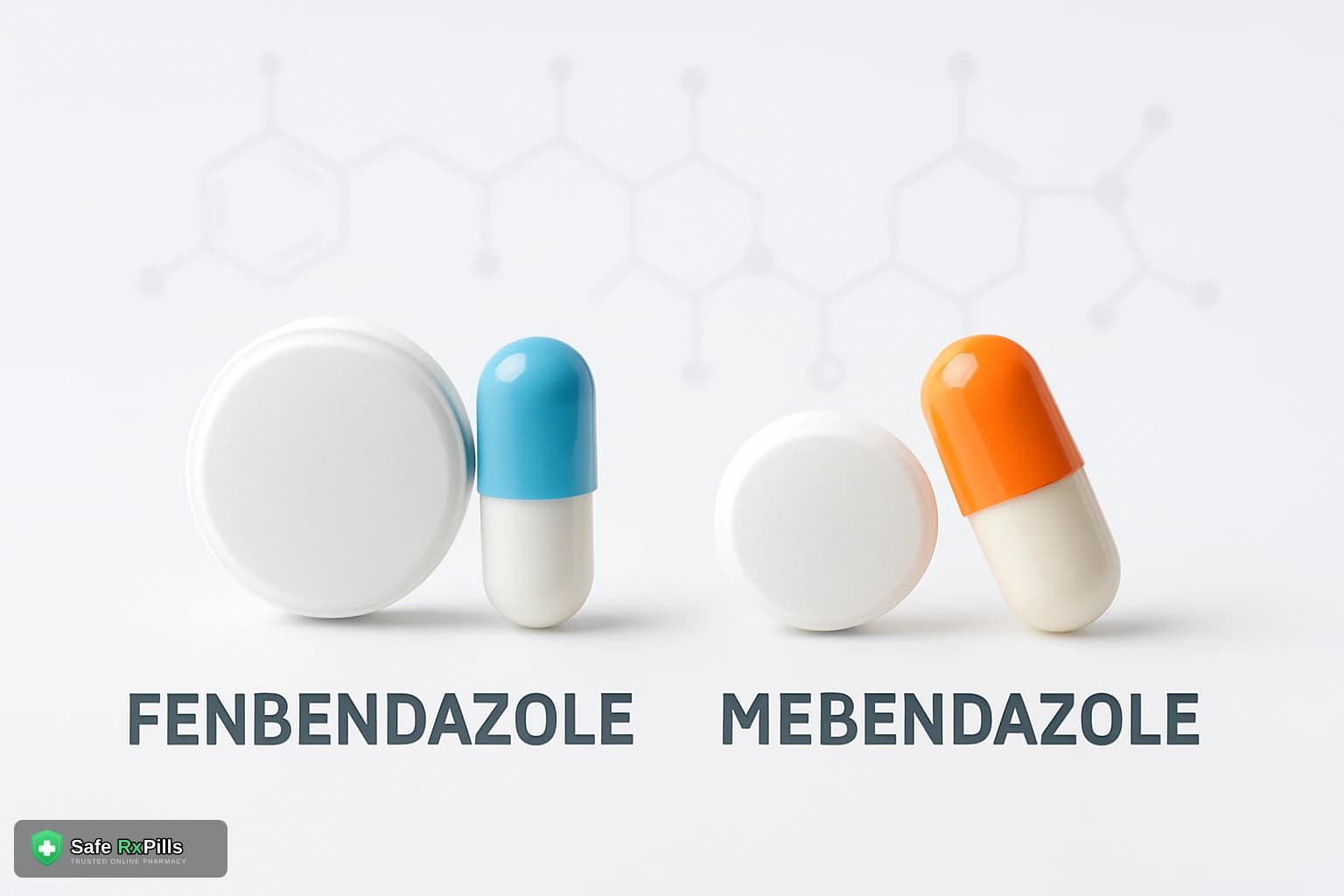
Fenbendazole 444mg is a specific dose of the antiparasitic drug fenbendazole, sold under the brand name Wormiza in international markets. It belongs to the benzimidazole class of dewormers, the same family as albendazole and mebendazole, and has been used in veterinary medicine for over fifty years to treat intestinal parasites in dogs, horses, cattle, and other animals. In recent years, interest in human use has grown significantly, largely driven by anecdotal reports and a small but growing body of case-series research exploring its potential as a repurposed therapy.
The 444mg strength sits in the middle of the fenbendazole dosing range and has become one of the most commonly requested doses for adults following self-administered protocols. This guide explains what fenbendazole 444mg is, how the dose is typically used, what the science actually says about it, and what to know before buying it.
Why the 444mg Strength Specifically?
The 444mg dose did not appear by accident. It was chosen to match the protocol popularized by Joe Tippens, a businessman from Oklahoma who reported using fenbendazole as part of his treatment for small-cell lung cancer in 2017. The Tippens protocol calls for 222mg of fenbendazole taken three days on, four days off. Two 222mg tablets equals 444mg, which is why manufacturers now produce a single tablet at this exact strength. It removes the need to take two tablets and reduces dosing errors.
For people following different protocols or weight-based dosing, the 444mg tablet also serves as a convenient single unit. Veterinary fenbendazole protocols for large dogs (around 50kg or 110 pounds) typically call for roughly 500mg, so 444mg falls within the same general range. The dose is high enough to be biologically active but low enough that gastrointestinal tolerability remains good for most users.
For more on the original protocol and how it became popular, our Joe Tippens fenbendazole protocol guide covers the dosing schedule, the supporting supplements he used (vitamin E, CBD, curcumin), and the limits of what can be concluded from a single case.
How Fenbendazole Actually Works in the Body
Fenbendazole is a microtubule inhibitor. Microtubules are protein structures inside cells that help with cell division, intracellular transport, and maintaining cell shape. The drug binds to a protein called beta-tubulin and prevents it from assembling into functional microtubules. In parasitic worms, this disrupts glucose uptake and energy metabolism, ultimately killing the parasite. The same mechanism is why fenbendazole has drawn interest from cancer researchers, since rapidly dividing tumor cells also depend heavily on microtubule function.
Oral fenbendazole has notoriously poor bioavailability. Less than 1% of an oral dose reaches systemic circulation in its unchanged form. This is partly why the doses used in protocols (444mg or higher) seem high compared to what you might expect from a more bioavailable drug. The body simply does not absorb most of what is swallowed. Taking fenbendazole with a fatty meal increases absorption modestly, which is why many protocols recommend dosing with food containing some fat content.
A 2025 study (PMID:40783068) tested nanoformulations of fenbendazole and ivermectin in experimental neurocysticercosis, a parasitic infection of the central nervous system. The nanosuspensions showed better blood-brain barrier penetration and more consistent drug delivery to parasite-affected tissue, with significantly lower inflammatory response compared to standard albendazole. This kind of research is part of why fenbendazole continues to attract scientific interest beyond its original veterinary use.
Common Self-Administered Protocols Using 444mg
Medical References
- Fenbendazole as a potential anticancer drug. Anticancer Res. 2013. PMID 23393324
- The Antitumor Potentials of Benzimidazole Anthelmintics as Repurposing Drugs. Immune Netw. 2020. PMID 32895616
- Fenbendazole Exhibits Antitumor Activity Against Cervical Cancer Through Dual Targeting. Molecules. 2025. PMID 40509264
Sources: U.S. National Library of Medicine (PubMed, DailyMed). Last reviewed August 2026.
Note: the fenbendazole cancer research cited here is preclinical, meaning cell-culture and animal work. Fenbendazole is a veterinary anthelmintic and is not approved for human use in any country.
Several informal protocols have emerged online, mostly within cancer-patient communities and integrative medicine forums. None of these are FDA-approved, none have been validated in randomized controlled trials in humans, and SafeRxPills does not recommend any specific protocol. The following is a description of what people are reportedly doing, not medical advice.
The Tippens schedule (modified): 444mg once daily for three consecutive days, then four days off. This pattern repeats weekly. People following this version typically combine it with vitamin E, curcumin, and CBD oil, as Joe Tippens did. The four-day break is intended to reduce gastrointestinal side effects and give the liver time to clear the drug.
Daily low-dose: 444mg once daily without a break, taken with a meal containing fat. This is closer to how the drug is dosed in animals on multi-day deworming regimens. Tolerability tends to be similar to the cycled version, though longer dosing increases exposure of the gut and liver to the drug.
Pulse dosing: 444mg once daily for two days per week, typically the same two days each week. This pattern has the lowest cumulative exposure and is sometimes used by people wanting to combine fenbendazole with other compounds in a structured weekly schedule.
The 444mg dose is not appropriate for pediatric use, pregnancy, or people with significant liver disease. Anyone with active cancer or other serious conditions should talk to an oncologist or specialist before starting any antiparasitic protocol. Drug interactions are possible with strong CYP enzyme inducers and inhibitors.
The Clinical Evidence: What Studies Actually Show
This is the part of the conversation that often gets skipped. Fenbendazole has substantial preclinical evidence, meaning in test tubes and animal models, but limited human clinical data. The drug has demonstrated activity against multiple cancer cell lines in vitro, including breast, colon, lymphoma, and lung cancer cells. In mouse models, it has slowed tumor growth in several studies. The mechanism appears to involve disruption of microtubule function in cancer cells, induction of apoptosis (programmed cell death), and possibly some immune-modulating effects.
Human evidence is much thinner. A 2025 case series (PMID:40605964) reported on three patients with advanced cancer (breast, prostate, melanoma) who incorporated fenbendazole into their treatment regimens. Two achieved complete remission and one achieved near-complete remission, with follow-up ranging from 11 months to nearly three years. All three tolerated the drug without reported adverse effects. The authors explicitly note that clinical evidence supporting fenbendazole in metastatic cancer is currently limited and that further clinical research is needed to establish efficacy.
What this means in practical terms: there is enough biological plausibility and preclinical data for fenbendazole to be a legitimate subject of scientific interest, but not enough human evidence to consider it a proven cancer therapy. The case-series format, by design, cannot establish causation. The patients in published case series were also receiving other treatments, which makes attributing outcomes to fenbendazole specifically very difficult.
If you are considering fenbendazole as part of an integrative approach to a serious illness, the honest position is that you are participating in something experimental. There is reasonable evidence of safety at typical doses, and there is biological rationale, but there is not yet evidence of clinical efficacy in the strict sense.
Safety Profile and Known Side Effects
Fenbendazole has a long safety record in animals, and the limited human data so far has been reassuring. Most reported side effects are mild and gastrointestinal in nature. These include nausea, mild abdominal discomfort, soft stools or mild diarrhea, and occasional headaches in the first few doses. Symptoms typically settle within a week as the body adjusts.
More serious concerns center on the liver. Benzimidazole drugs as a class can elevate liver enzymes, and prolonged high-dose exposure has caused liver injury in rare cases involving the related drug albendazole. People taking fenbendazole for extended periods should have liver function tests checked periodically, especially ALT, AST, GGT, and bilirubin. The risk appears low but is not zero, and underlying liver disease increases it.
Bone marrow suppression has been reported with high-dose albendazole and is theoretically possible with fenbendazole, though it has not been clearly documented in published human cases. A complete blood count is worth checking if dosing continues for months. People on chemotherapy should not add fenbendazole without their oncologist input, since the marrow-suppressive effects of chemo could be amplified.
Fenbendazole is not safe in pregnancy. Benzimidazoles cross the placenta and have caused birth defects in animal studies. Anyone who could become pregnant should use reliable contraception while taking it.
Choosing Between Fenbendazole Strengths
SafeRxPills carries fenbendazole in several strengths, each suited to different dosing patterns. The 444mg tablet is the most popular for adult protocols, but it is not always the right choice depending on what someone is trying to accomplish.
Wormiza 150mg is useful for people who want fine-grained control over their dose, who are sensitive to medication side effects, or who are titrating up slowly. Two 150mg tablets equals 300mg, three equals 450mg (essentially the same as a 444mg tablet), which gives flexibility.
Wormiza 222mg matches the original Joe Tippens dose exactly. People following his protocol to the letter prefer this strength. Two tablets gives 444mg if a higher dose day is needed.
Wormiza 444mg is the default single-tablet adult dose for most modern protocols. One tablet per dosing day, no math.
Wormiza 500mg is slightly higher than 444mg and may be useful for larger adults or those whose protocols call for veterinary-equivalent dosing by body weight.
Wormiza 1000mg is a high-dose option used in some aggressive protocols or for short pulse regimens. This is the strongest single tablet available and should only be used by people who have already tolerated lower doses without issue.
Wormentel 888mg is a different brand at twice the standard 444mg dose, intended for protocols that call for very high single doses. See our separate guide to fenbendazole 888mg for details on when this strength makes sense.
Where to Buy Fenbendazole 444mg Online
Fenbendazole is not FDA-approved for human use in the United States. It is sold over the counter in many countries as a veterinary product and is available through international pharmacies as a human-grade tablet. SafeRxPills sources fenbendazole 444mg from Indian manufacturers operating under WHO-GMP certification, which is the same quality standard applied to medications exported globally to the US, UK, Canada, and Australia.
What to look for when buying online: verifiable manufacturer (the tablet should specify Cipla, Sun Pharma, Ajanta, or another recognized name), clear strength labeling, intact blister packaging, and a supplier willing to share batch and expiry information. Avoid suppliers selling veterinary paste, granules, or powder for human use. The dosing math is much harder to get right with these formulations, and contamination risk is higher.
For market-specific buying guides, see buying fenbendazole in the USA, in Australia, in the UK, and in Canada. Shipping time, customs treatment, and payment options vary by country.
For a deeper look at the clinical considerations, our guide to fenbendazole for humans covers what is known about safety, dosing rationale, and how to think about adding it to a treatment plan. If you are following a specific protocol, the Joe Tippens protocol guide and our fenbendazole dosage calculator may help with the math.
Medical disclaimer: This article is for informational purposes only and does not constitute medical advice. Fenbendazole is not FDA-approved for human use. The clinical evidence supporting its use in cancer or other human diseases is preliminary and limited. Consult a qualified healthcare provider before starting any new medication, especially if you have an existing medical condition, take other medications, or are pregnant or breastfeeding.
Related Topics:
?Frequently Asked Questions
Is fenbendazole 444mg safe for humans?
Fenbendazole has a long safety record in animals and limited but reassuring data in humans at typical doses. Most side effects are mild and gastrointestinal: nausea, soft stools, occasional headaches. Liver enzyme elevation has been reported with prolonged use, so liver function monitoring is reasonable for anyone taking it for more than a few weeks. It is not FDA-approved for human use and is not safe in pregnancy.
How is fenbendazole 444mg typically taken?
The most common pattern is one 444mg tablet daily for three days, then four days off, taken with a meal containing fat to improve absorption. Other patterns include daily dosing or pulse dosing twice per week. The specific schedule depends on which protocol someone is following.
What is the difference between fenbendazole 444mg and 222mg?
444mg is exactly twice the dose of 222mg. The 222mg strength matches the original Joe Tippens protocol dose, while 444mg is the single-tablet equivalent of two 222mg tablets, used in modified or higher-dose protocols. Both contain the same active ingredient at different strengths.
Can fenbendazole 444mg treat cancer?
Fenbendazole has shown anticancer activity in cell-culture studies and animal models, with biologically plausible mechanisms involving microtubule disruption. Human evidence is limited to case reports and small case series, including a 2025 series of three patients with advanced cancer who reached complete or near-complete remission while using it. There are no randomized clinical trials, so it cannot be considered a proven cancer therapy.
How should fenbendazole 444mg be stored?
Store the tablets in the original blister packaging, below 30 Celsius, away from direct light and moisture. Typical shelf life is 24 months from manufacture. Check the expiry date on the carton.
What is the bioavailability of fenbendazole?
Oral fenbendazole has notoriously poor bioavailability, with less than 1% of an oral dose reaching systemic circulation in its unchanged form. Taking it with fatty food increases absorption modestly, which is why protocols typically recommend dosing with a meal containing some fat.
SafeRxPills Pharmacy Team
SafeRxPills Editorial Team
Editorial team at SafeRxPills. Articles are written and checked against regulatory drug labelling (DailyMed, FDA, EMA) and published literature.
Comments (0)
Leave a Comment
No comments yet. Be the first to share your thoughts!
Related Articles