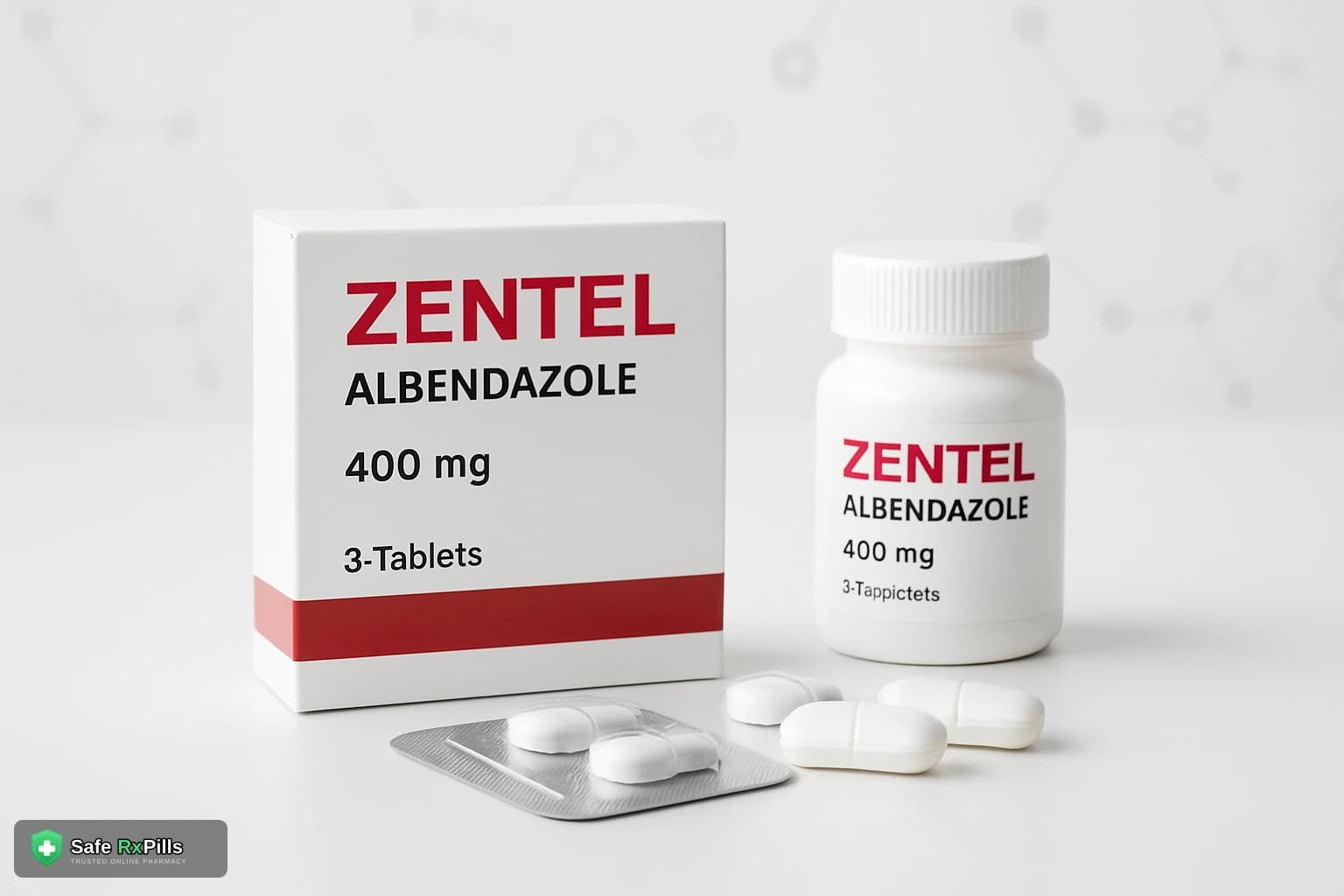
Zentel (Albendazole): Complete Guide to Uses, Dosage, and Where to Buy
SafeRxPills Pharmacy Team
Editorial team at SafeRxPills. Articles are written and checked against regulatory drug labelling (DailyMed, FDA, EMA) and published literature.
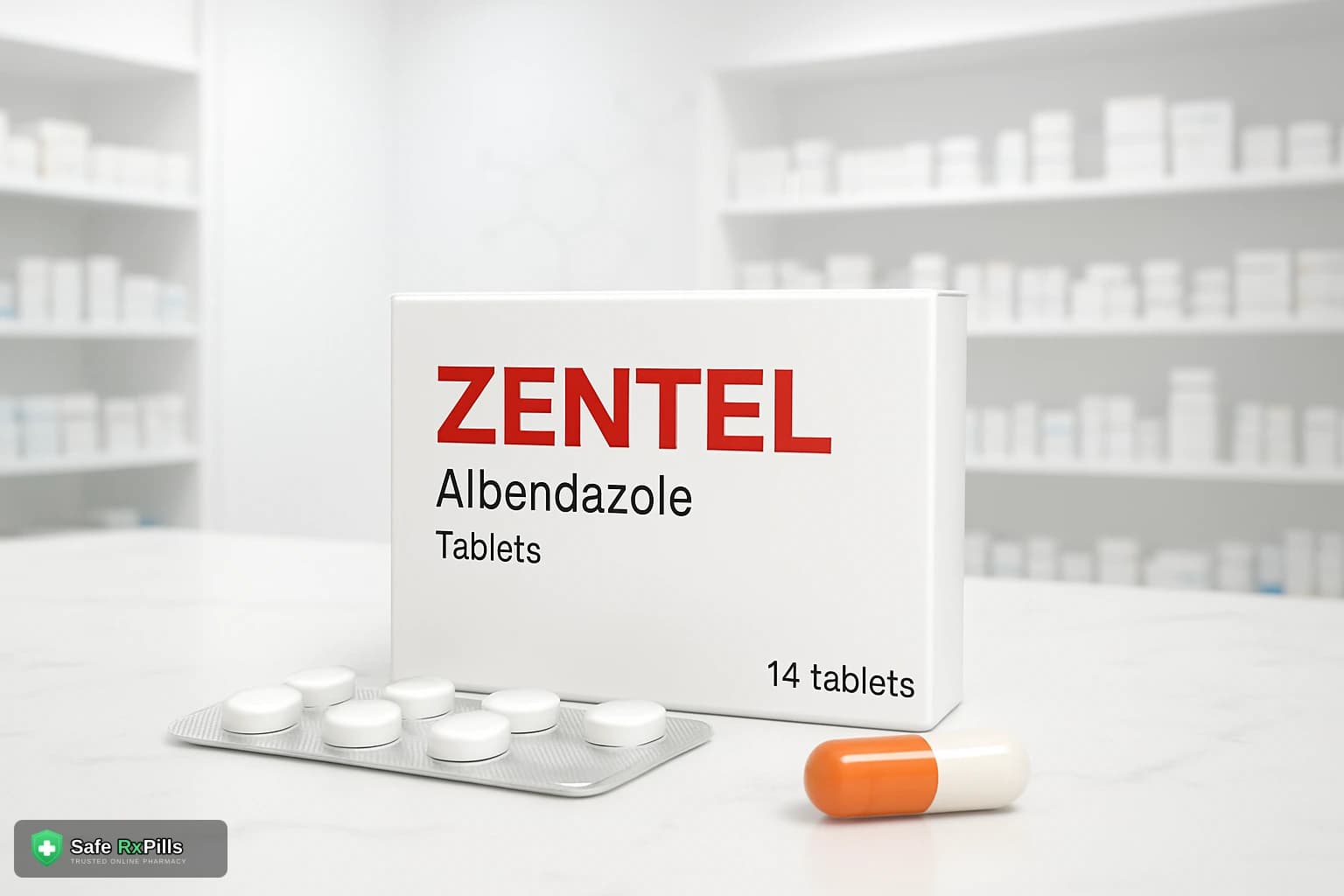
Zentel (Albendazole): Complete Guide to Uses, Dosage, and Where to Buy | SafeRxPills - pharmacy guide
Albendazole has been treating parasitic infections for over four decades, yet most people only encounter it under its brand name: Zentel. If your doctor has prescribed Zentel, or you are researching treatment options for a parasitic infection, this guide covers everything you need to know, including how it works, exact dosing, safety considerations, and how to source it internationally.
What Is Zentel?
Zentel is a brand name formulation of albendazole 400mg, manufactured by GlaxoSmithKline (GSK). Albendazole belongs to the benzimidazole class of antiparasitic drugs, the same chemical family as fenbendazole and mebendazole. It is listed on the World Health Organization (WHO) Model List of Essential Medicines and is considered a first-line treatment for several serious parasitic infections.
According to the FDA-approved label, albendazole is officially indicated for two conditions: neurocysticercosis (brain tapeworm infection caused by Taenia solium) and cystic hydatid disease of the liver, lung, and peritoneum caused by the dog tapeworm Echinococcus granulosus. In clinical practice, and under WHO guidelines, it is also widely used off-label for intestinal worm infections including roundworm, hookworm, pinworm, and whipworm.
Generic albendazole tablets are identical in active ingredient and dosage to Zentel but are produced by various manufacturers. SafeRxPills stocks Zentel 400mg as the branded formulation from its WHO-GMP certified supply chain.
How Does Albendazole Work?
Albendazole is a benzimidazole anthelmintic, meaning it kills parasitic worms by disrupting their cellular structure. Specifically, it binds to beta-tubulin in parasite cells, preventing the formation of microtubules. Microtubules are essential for cell division and nutrient transport within the worm. Without them, the parasite cannot maintain its energy metabolism, reproduce, or survive. It dies and is expelled from the body naturally.
One pharmacological detail worth understanding: albendazole itself is poorly absorbed from the gastrointestinal tract in its original form. It is rapidly converted by the liver into its primary active metabolite, albendazole sulfoxide, before reaching systemic circulation. This is the compound that actually kills the parasites. According to DailyMed pharmacokinetic data, plasma concentrations of albendazole sulfoxide peak 2 to 5 hours after dosing and reach maximum levels when albendazole is taken with a fatty meal. Taking Zentel with food is not just a suggestion, it is clinically significant for efficacy.
What Conditions Does Zentel Treat?
Neurocysticercosis
Neurocysticercosis occurs when the larval form of Taenia solium (pork tapeworm) reaches the brain and forms cysts. It is a leading cause of acquired epilepsy in developing regions and can cause severe neurological symptoms. Albendazole is the preferred treatment, as published in the journal Neurology (PMID:15853623), because it achieves therapeutic concentrations in cerebrospinal fluid (CSF), penetrating the blood-brain barrier more effectively than praziquantel.
For neurocysticercosis, treatment is typically 8 to 30 days, and patients must receive concurrent corticosteroids to manage the inflammatory response triggered by dying parasites in brain tissue.
Hydatid Disease (Echinococcosis)
Cystic echinococcosis produces fluid-filled cysts in the liver, lungs, and other organs. Left untreated, these cysts can grow to large sizes and rupture, causing serious complications. Albendazole is given in 28-day treatment cycles with 14-day drug-free intervals, for a minimum of 3 cycles. In some patients, it is used as an adjunct to surgical cyst removal to prevent recurrence.
Intestinal Worm Infections (Off-Label)
A single 400mg dose of albendazole is the WHO-recommended treatment for common intestinal helminth infections. A large-scale Phase 3 clinical trial (NCT03014167, involving 357,716 participants) confirmed the role of albendazole in mass drug administration (MDA) programs targeting soil-transmitted helminths including Ascaris lumbricoides (roundworm), Trichuris trichiura (whipworm), and hookworm species.
A 2024 randomized controlled trial (PMID:38563751) evaluated albendazole 400mg daily for 3 days in children with Trichuris trichiura infection. It achieved an egg reduction rate of 94% and cure rate of 71% at 3 weeks, outperforming combinations with mebendazole or pyrantel. If you want to compare albendazole with similar drugs, see our mebendazole vs albendazole comparison and our fenbendazole vs mebendazole guide.
Lymphatic Filariasis
Albendazole is used in combination with ivermectin or diethylcarbamazine (DEC) in WHO mass drug administration programs for lymphatic filariasis. A clinical trial published in 2015 (PMID:26486704) found that triple-drug therapy combining DEC, ivermectin, and albendazole achieved microfilaria clearance at one year in 100% of treated participants, versus 8% with the two-drug regimen. For more on combined antiparasitic therapy, see our guide on ivermectin and fenbendazole protocols.
Albendazole Dosage Guide
Dosing varies significantly by indication. Always follow your prescribing doctor's instructions. The FDA-approved dosing per the DailyMed label is as follows:
Neurocysticercosis
- Patients 60kg or more: 400mg twice daily with meals, for 8 to 30 days
- Patients under 60kg: 15mg/kg/day in two divided doses (maximum 800mg/day), for 8 to 30 days
Hydatid Disease
- Patients 60kg or more: 400mg twice daily with meals, in 28-day cycles with 14-day rest periods (minimum 3 cycles)
- Patients under 60kg: 15mg/kg/day in two divided doses (maximum 800mg/day), same cycle pattern
Intestinal Worms (Off-Label)
- Single 400mg dose for most intestinal helminth infections in adults and children over 2 years
- For pinworm (enterobiasis): a second dose after 2 weeks is often recommended to catch any newly hatched larvae
Take albendazole with food. Pharmacokinetic data shows that fat-containing meals increase absorption of albendazole sulfoxide (the active metabolite) by up to 5-fold compared to fasted dosing. A meal containing approximately 40 grams of fat is sufficient.
Safety and Side Effects
Albendazole has a long track record of safety across decades of clinical use. For single-dose intestinal worm treatment, side effects are typically mild and transient. For longer treatment courses (neurocysticercosis, hydatid disease), monitoring is required.
Common Side Effects (Hydatid Disease)
- Elevated liver enzymes (16% of patients in clinical trials)
- Abdominal pain (6%)
- Nausea and vomiting (4%)
- Reversible hair loss/alopecia (2%)
- Headache, dizziness, fever (1% each)
Common Side Effects (Neurocysticercosis)
- Headache (11%) and nausea/vomiting (6%) are more prominent due to inflammation from parasite die-off
- Raised intracranial pressure (2%) and meningeal signs (1%) can occur
Serious Warnings
The FDA requires monitoring of blood counts and liver enzymes at the start of each treatment cycle and every two weeks during therapy. Bone marrow suppression (including rare cases of aplastic anemia and agranulocytosis) has been reported, though fatalities are very rare. Albendazole is contraindicated in pregnancy and must not be used in patients with known hypersensitivity to benzimidazole compounds.
Drug Interactions
According to the FDA label, three notable drug interactions apply:
- Dexamethasone: co-administration increases albendazole sulfoxide blood levels by approximately 56%
- Praziquantel: increases albendazole sulfoxide maximum concentration and overall exposure by approximately 50% in the fed state
- Cimetidine: increases bile and cyst fluid concentrations of the active metabolite approximately 2-fold
A 2023 pharmacokinetic review (PMID:37315102) also confirmed that co-administration of albendazole with ivermectin and azithromycin in mass drug administration settings showed no clinically significant drug-drug interactions, supporting the safety of combination antiparasitic regimens.
Zentel vs Generic Albendazole: Is There a Difference?
Zentel (GSK) and generic albendazole 400mg tablets contain the same active ingredient at the same dose. Regulatory authorities require generic formulations to demonstrate bioequivalence to the branded product. In practical terms, the choice comes down to cost and availability. Generic albendazole is significantly less expensive and equally effective.
At SafeRxPills, we stock Zentel 400mg sourced through WHO-GMP and ISO-certified supply chains from Actiza Pharmaceutical, helping the same quality standards as the branded product. Our antiparasitic medicine guide covers the full range of antiparasitic options we carry.
Albendazole vs Mebendazole vs Fenbendazole
All three are benzimidazole antiparasitic drugs but they differ in their clinical applications and absorption profiles:
- Albendazole (Zentel): Systemically absorbed (as albendazole sulfoxide), making it suitable for tissue-invasive infections like neurocysticercosis and hydatid disease, as well as intestinal worms
- Mebendazole (Mebex): Very poorly absorbed, remaining primarily in the gut. Best for intestinal worms only. See our mebendazole vs albendazole comparison
- Fenbendazole (Wormiza, Wormentel): A veterinary benzimidazole with emerging off-label use in humans, particularly for antiparasitic and investigational cancer applications. See our fenbendazole vs mebendazole guide
Where to Buy Zentel (Albendazole) Online
Zentel requires a prescription in most countries. In the United States, albendazole (brand name Albenza) is a prescription medication. In Australia, it is similarly prescription-only. Access through an international online pharmacy is how many patients obtain it without working through local prescription barriers, particularly for off-label uses like intestinal worm infections where local prescriptions are not always forthcoming.
SafeRxPills stocks Zentel 400mg tablets available for international delivery to the USA, UK, Canada, and Australia. All products are sourced from WHO-GMP certified facilities. Regulations on importing personal-use quantities of medication vary by country. Consult your doctor before starting any antiparasitic treatment.
For related antiparasitic options, see our full range: guide to buying antiparasitic medicines online and our albendazole tablets guide.
Key Takeaways
- Zentel is the brand name for albendazole 400mg, a WHO Essential Medicine and first-line antiparasitic
- It is FDA-approved for neurocysticercosis and hydatid disease; widely used off-label for intestinal worms
- Always take with food (fatty meal) to maximise absorption of the active metabolite
- For long-term courses, monitor liver enzymes and blood counts every 2 weeks
- Generic albendazole is bioequivalent to Zentel at significantly lower cost
- Not for use in pregnancy; contraindicated in benzimidazole hypersensitivity
Medical disclaimer: This article is for informational purposes only and does not constitute medical advice. Albendazole is a prescription medication. Always consult a qualified healthcare provider before starting any antiparasitic treatment. Dosage and treatment duration must be determined by a doctor based on your specific diagnosis and medical history.
Related Products
- Mebex 100mg (Mebendazole) - broad-spectrum antiparasitic for intestinal worms
- Zentel 400mg (Albendazole) - alternative broad-spectrum antiparasitic
- Wormentel 888mg (Fenbendazole) - fenbendazole for resistant infections
Medical References
- Efficacy of albendazole against soil-transmitted helminth infections in Ethiopia: a systematic review and meta-analysis. Sci Rep. 2024. PMID 39304661
- Efficacy of Albendazole and Mebendazole Against Soil Transmitted Infections. J Epidemiol Glob Health. 2024. PMID 38696109
- DailyMed: Albendazole prescribing information. U.S. National Library of Medicine
Sources: U.S. National Library of Medicine (PubMed, DailyMed). Last reviewed August 2026.
?Frequently Asked Questions
What is Zentel used for?
Zentel (albendazole 400mg) is used to treat tapeworm infections including neurocysticercosis (brain tapeworm) and hydatid disease. It is also widely used off-label for intestinal worm infections such as roundworm, hookworm, whipworm, and pinworm.
What is the correct Zentel dosage for adults?
For intestinal worms, a single 400mg dose is standard. For neurocysticercosis or hydatid disease, adults weighing 60kg or more take 400mg twice daily with food. Those under 60kg take 15mg per kg per day in two divided doses, up to 800mg daily. Always follow your doctor's instructions.
Should I take Zentel with food?
Yes. Taking albendazole with a fatty meal increases absorption of its active metabolite (albendazole sulfoxide) by up to 5-fold. A meal containing around 40 grams of fat is sufficient. Taking it on an empty stomach significantly reduces effectiveness.
Is Zentel the same as generic albendazole?
Yes. Zentel contains albendazole 400mg, the same active ingredient and dose as generic albendazole tablets. Generic versions must meet bioequivalence standards set by regulatory authorities, making them equally effective at a lower cost.
Can I buy Zentel without a prescription?
Zentel requires a prescription in most countries including the US and Australia. International online pharmacies like SafeRxPills supply it for personal use. Regulations on importing medications vary by country, so check local rules and consult a doctor before ordering.
What are the side effects of Zentel?
For single-dose treatment, side effects are usually mild: stomach upset, nausea, or headache. For longer courses, elevated liver enzymes (16%), abdominal pain (6%), nausea (4%), and reversible hair loss (2%) are the most common. Blood counts and liver enzymes should be monitored every 2 weeks during extended treatment.
SafeRxPills Pharmacy Team
SafeRxPills Editorial Team
Editorial team at SafeRxPills. Articles are written and checked against regulatory drug labelling (DailyMed, FDA, EMA) and published literature.
Comments (0)
Leave a Comment
No comments yet. Be the first to share your thoughts!
Related Articles
Wormentel Duo (Ivermectin + Albendazole): The Combination Antiparasitic Explained
August 22, 2026