
Ivermectin Cream: Complete Guide to Uses, Application & Results
SafeRxPills Pharmacy Team
The SafeRxPills Pharmacy Team consists of licensed pharmacists and clinical health writers with over 10 years of experience in generic medicine, patient education, and international pharmaceutical standards. All content is reviewed for accuracy against current clinical guidelines.

Ivermectin Cream: Complete Guide to Uses, Application & Results - pharmacy guide
In this article (8 sections)
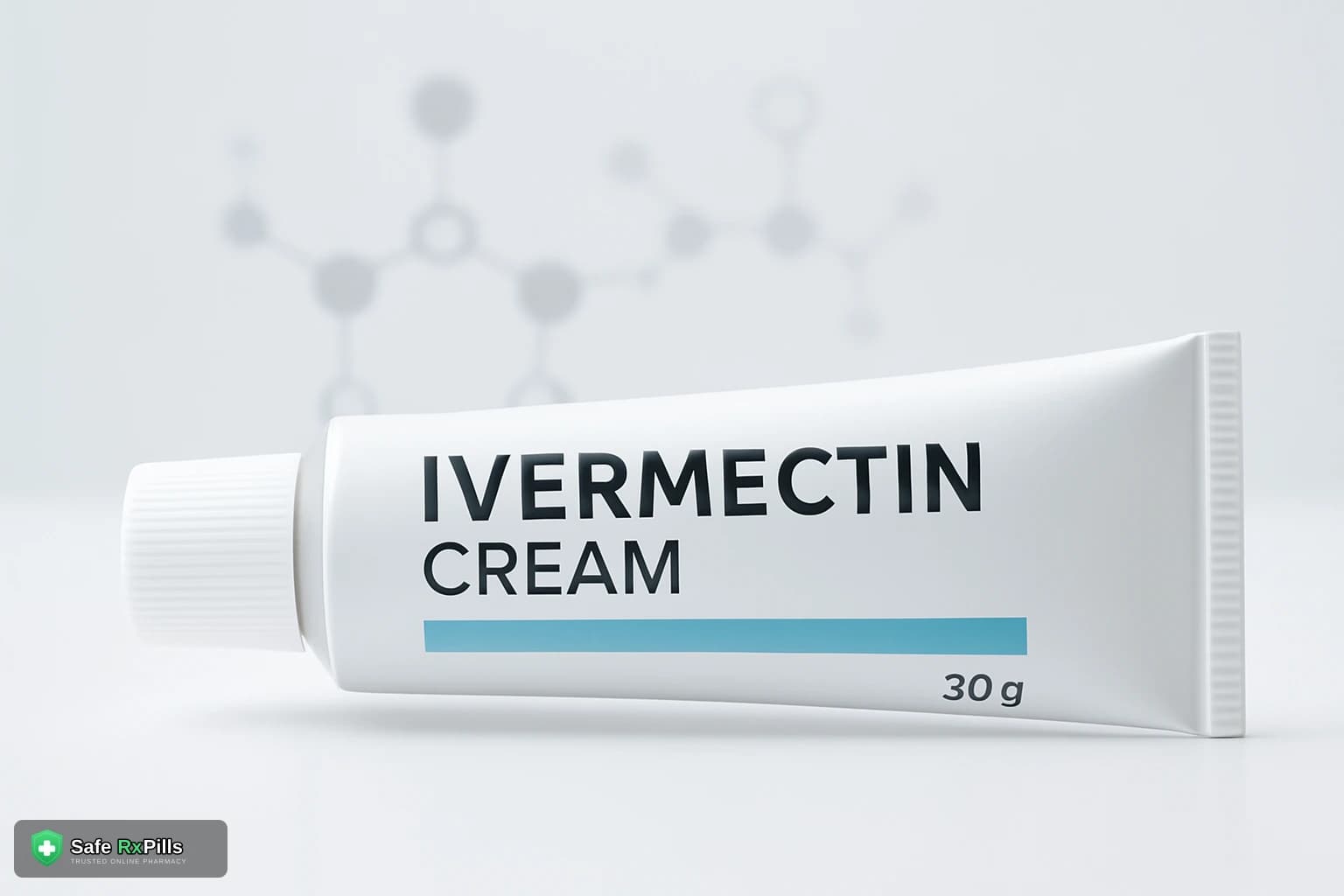
Ivermectin cream is a topical medication primarily used to treat inflammatory lesions of rosacea, a chronic skin condition that causes facial redness and bumps. The FDA-approved formulation (Soolantra) contains 1% ivermectin and works by reducing inflammation and killing Demodex mites that contribute to rosacea symptoms. Unlike ivermectin tablets, which treat internal parasitic infections, the cream targets skin-specific conditions through direct application.
If you've been dealing with persistent facial redness, papules, or pustules that won't respond to standard acne treatments, ivermectin cream might be what your dermatologist recommends. This guide covers everything you need to know about this prescription medication, from proper application technique to realistic timelines for seeing improvement.
What Does Ivermectin Cream Treat?
The primary approved use for ivermectin cream in the United States is treating inflammatory lesions of rosacea in adults. Rosacea affects approximately 16 million Americans, causing red bumps and visible blood vessels primarily on the cheeks, nose, chin, and forehead. Many patients mistake it for acne and waste months on treatments that don't work.
Here's what ivermectin cream specifically addresses:
Papulopustular rosacea: This subtype causes red bumps and pus-filled lesions that resemble acne but don't respond to typical acne medications. Studies show ivermectin cream reduces lesion count by 75-83% after 12 weeks of consistent use.
Demodex mite overgrowth: Everyone has Demodex mites living in their facial hair follicles, but people with rosacea often have significantly higher concentrations. These microscopic parasites trigger inflammation as they die and release bacteria. Ivermectin kills these mites, breaking the inflammatory cycle.
The cream does NOT treat the persistent facial redness (erythema) or visible blood vessels (telangiectasia) associated with other rosacea subtypes. Those symptoms typically require different treatments like laser therapy or medications such as brimonidine gel.
Some dermatologists prescribe ivermectin cream off-label for other conditions involving Demodex mites, including certain types of blepharitis (eyelid inflammation) and seborrheic dermatitis, though research for these uses remains limited compared to rosacea treatment.
How Ivermectin Cream Works on Your Skin
Ivermectin cream has a dual mechanism that makes it particularly effective for rosacea. First, it directly kills Demodex folliculorum and Demodex brevis mites by binding to their nerve and muscle cells, causing paralysis and death. This anti-parasitic action reduces the mite population that triggers inflammation.
Second, ivermectin has inherent anti-inflammatory properties independent of its effect on mites. It suppresses the release of pro-inflammatory cytokines and mediators that cause the characteristic redness and swelling of rosacea. This explains why patients often see improvement even before the mite population is fully controlled.
The 1% concentration in prescription cream penetrates the epidermis and reaches hair follicles where Demodex mites live. Unlike oral ivermectin, which circulates throughout your bloodstream, topical application limits systemic absorption to less than 4% of the applied dose. This localized action means fewer potential side effects while still achieving therapeutic benefit at the skin level.
Clinical trials demonstrate that ivermectin cream reduces inflammatory lesion counts within 4 weeks, with progressive improvement continuing through 12-16 weeks of treatment. The medication doesn't just mask symptoms - it addresses underlying causes by reducing both the parasitic trigger and the inflammatory response.
How to Apply Ivermectin Cream Correctly
Proper application technique makes the difference between good results and wasted tubes of medication. Most treatment failures happen because patients don't apply the cream consistently or use too much thinking it will work faster. Here's the correct method dermatologists recommend:
Timing: Apply once daily, ideally at the same time each day. Most patients prefer nighttime application since the cream needs to stay on your face without makeup or sunscreen layered over it immediately.
Preparation: Wash your face with a gentle cleanser and pat completely dry. Wait 5-10 minutes after cleansing before applying the cream. Wet or damp skin increases absorption and potential irritation.
Amount: Use a pea-sized amount for your entire face. Seriously. One small pump or squeeze covers the full treatment area. More doesn't speed up results and wastes expensive medication.
Application technique: Dot the cream on your forehead, each cheek, nose, and chin. Spread in a thin, even layer across the entire face, avoiding your eyes, lips, and the inside of your nose and mouth. Don't rub vigorously - gentle smoothing works better.
Frequency: Once daily application is standard. Never apply twice daily unless your dermatologist specifically instructs you to do so. The formulation is designed for once-daily dosing, and more frequent application increases irritation risk without improving efficacy.
You can apply moisturizer, sunscreen, and makeup after the ivermectin cream has dried (usually 15-20 minutes). Some patients find using gentle moisturizing creams helps counter any dryness from the treatment. Just wait for the ivermectin cream to absorb first.
Continue daily application even after your skin clears. Rosacea is a chronic condition, and stopping treatment often leads to relapse within weeks. Most dermatologists recommend maintenance therapy once your skin has improved.
When You'll See Results
Set realistic expectations: ivermectin cream works, but not overnight. The timeline for improvement follows a predictable pattern based on clinical trial data involving over 2,000 patients.
Weeks 1-2: You probably won't notice significant changes yet. Some patients experience mild irritation or temporary worsening during this initial period as the medication begins killing Demodex mites. This is normal and doesn't mean the treatment isn't working.
Weeks 3-4: Most patients start seeing reduction in new lesion formation. Existing bumps begin flattening, though redness may persist. About 30% of patients report noticeable improvement by week 4.
Weeks 8-12: This is when the dramatic improvements happen. Clinical studies show 75-80% lesion reduction on average by week 12. The bumpy texture smooths out significantly, and inflammatory papules decrease substantially.
Weeks 12-16: Continued improvement with maintenance of results. Many patients achieve near-complete clearance of inflammatory lesions by 16 weeks of consistent daily use.
The redness and flushing associated with rosacea improve more slowly than the bumps. Background erythema typically requires 12-16 weeks to show significant reduction, and some persistent redness may remain requiring additional treatments.
Individual results vary based on rosacea severity, consistency of application, and whether you're using complementary strategies like gentle skincare and trigger avoidance. Patients who combine ivermectin cream with rosacea-friendly cleansers and sun protection see better outcomes than those using the medication alone.
If you see no improvement after 12 weeks of correct daily application, talk to your dermatologist. You might need a different concentration, combination therapy, or evaluation for conditions that mimic rosacea.
Side Effects and What to Watch For
Ivermectin cream is generally well-tolerated with fewer side effects than many other rosacea treatments. Clinical trials show side effect rates similar to placebo, but you should know what's normal and what requires medical attention.
Common reactions (affecting 1-4% of users):
Skin burning or stinging immediately after application. This usually subsides within 20-30 minutes and decreases over time as your skin adapts. Applying to completely dry skin reduces this sensation.
Mild skin irritation, dryness, or peeling during the first few weeks. Using a gentle, fragrance-free moisturizer like Moisturex Soft 15-20 minutes after application helps manage this. If irritation persists beyond 2-3 weeks, consult your dermatologist.
Temporary worsening of rosacea symptoms. Some patients experience increased redness or new papules during the first 1-2 weeks as Demodex mites die off and trigger inflammation. This typically resolves without stopping treatment.
Uncommon reactions (under 1% of users):
Contact dermatitis or allergic reaction to inactive ingredients in the formulation. Signs include severe itching, rash beyond the rosacea areas, swelling, or blistering. Stop use and contact your healthcare provider.
Eye irritation if the cream accidentally gets in your eyes. Rinse thoroughly with water. Avoid applying cream near your eyelid margins.
Unlike oral ivermectin, which can cause systemic side effects like nausea, dizziness, or liver enzyme changes, topical ivermectin cream has minimal systemic absorption. Blood levels remain extremely low with topical use, making serious systemic reactions virtually nonexistent.
Who shouldn't use ivermectin cream: Avoid if you're allergic to ivermectin or any cream ingredients. Safety hasn't been established in pregnancy (Category C), so discuss risks and benefits with your doctor if you're pregnant or breastfeeding. Not recommended for children under 18 as rosacea rarely affects pediatric patients and safety data is limited.
Getting Ivermectin Cream in the USA
Ivermectin cream requires a prescription in the United States. The FDA-approved brand name Soolantra (1% ivermectin) is the most commonly prescribed formulation, though generic versions have recently become available at lower prices.
Prescription process: You need a diagnosis from a dermatologist or primary care physician who can confirm rosacea and determine if ivermectin cream is appropriate for your specific subtype. Telemedicine dermatology consultations have made this easier - many patients now get prescriptions through virtual visits without traveling to an office.
Cost considerations: Brand-name Soolantra typically costs $500-700 for a 60g tube without insurance. Many insurance plans cover it with prior authorization, reducing copays to $30-75. Generic ivermectin cream costs significantly less, usually $150-300 for the same size tube. GoodRx and similar discount programs can reduce prices further.
Where to fill prescriptions: Most retail pharmacies stock or can order ivermectin cream. Online pharmacies like SafeRxPills provide another option, especially for patients seeking competitive pricing or discreet shipping. When buying ivermectin online in the USA, verify the pharmacy is licensed and requires valid prescriptions - legitimate vendors always do.
SafeRxPills ships prescription medications including topical treatments directly to patients throughout the United States, offering convenience for those with mobility issues or pharmacy access challenges. All orders require prescription verification before shipping, helping safety and legal compliance.
Insurance tips: If your insurance denies coverage, ask your dermatologist to submit a letter explaining why ivermectin cream is medically necessary for your specific case. Documentation of failed previous treatments (like metronidazole gel or azelaic acid) strengthens prior authorization requests. Some insurers cover generic but not brand formulations - ask your pharmacist about available options.
Ivermectin Cream vs. Oral Tablets
Many people confuse topical ivermectin cream with oral ivermectin tablets since both contain the same active ingredient. They're completely different medications used for different conditions.
Different purposes: Oral ivermectin treats internal parasitic infections like intestinal strongyloidiasis, onchocerciasis (river blindness), and certain cases of scabies or lice. The cream treats skin-specific conditions, primarily rosacea. Taking oral ivermectin won't effectively treat rosacea, and applying cream won't treat intestinal parasites.
Different doses: A typical oral ivermectin dose for parasitic infections is 200 mcg per kg of body weight - a 70 kg person takes about 14 mg as a single dose or short course. Ivermectin cream contains 10 mg per gram, but topical absorption is minimal (under 4%), so actual systemic exposure is less than 1 mg even with full-face application. The mechanisms work at entirely different scales.
Different side effect profiles: Oral ivermectin can cause nausea, diarrhea, dizziness, and in rare cases liver problems or neurological effects. The cream causes mainly local skin reactions like burning or dryness. The safety profile differs substantially between formulations.
Some dermatologists prescribe both: Occasionally, doctors prescribe a short course of oral ivermectin (3-4 doses spread over weeks) combined with topical cream for severe rosacea with high Demodex counts. This combination approach rapidly reduces mite populations, then the cream maintains results. This isn't standard treatment but can be effective for resistant cases.
Never substitute one formulation for another without medical guidance. If you have a prescription for oral ivermectin tablets, don't stop taking them to use cream instead, and vice versa. The conditions they treat are entirely different.
Alternative Treatments to Consider
Ivermectin cream works well for inflammatory rosacea, but it's not the only option. Understanding alternatives helps you have informed discussions with your dermatologist about the best approach for your specific situation.
Metronidazole gel or cream (0.75% or 1%): This antibiotic with anti-inflammatory properties has been used for rosacea for decades. It's generally less expensive than ivermectin cream and well-tolerated. However, comparative studies show ivermectin cream produces better lesion reduction - about 83% versus 74% for metronidazole at 16 weeks. Many insurance plans require trying metronidazole first before approving ivermectin.
Azelaic acid (15% gel or 20% cream): This naturally occurring acid has antibacterial and anti-inflammatory effects. It's particularly useful for rosacea with hyperpigmentation or post-inflammatory marks. Some patients find azelaic acid more irritating than ivermectin cream initially, though tolerance typically improves with continued use.
Brimonidine gel (0.33%): Unlike ivermectin, which treats bumps, brimonidine specifically targets facial redness by constricting blood vessels. It works within 30 minutes but effects last only 12 hours. Many patients use brimonidine in combination with ivermectin cream - ivermectin for lesions, brimonidine for flushing and persistent redness.
Oral antibiotics (doxycycline): Low-dose doxycycline (40 mg daily) is FDA-approved for rosacea and works through anti-inflammatory mechanisms rather than antibiotic effects. It's often prescribed for moderate to severe rosacea, sometimes in combination with topical treatments. The advantage is addressing inflammation systemically; the disadvantage is potential side effects like GI upset and photosensitivity.
Other topical options like corticosteroid creams should generally be avoided for rosacea despite their anti-inflammatory effects. Regular use can worsen rosacea long-term through a phenomenon called steroid-induced rosacea. Only use corticosteroids on your face if specifically prescribed by a dermatologist for short-term use.
Complementary skincare products like gentle antifungal creams may help if you have overlapping conditions like seborrheic dermatitis, which sometimes coexists with rosacea. Always consult your dermatologist before combining multiple prescription products.
Medical References
- PubMed (NCBI) (PMID: 12362927) - 2002
- PubMed (NCBI) (PMID: 34570241) - 2021
- DailyMed (U.S. National Library of Medicine)
- PubMed (NCBI) (PMID: 26555785) - 2016
- PubMed (NCBI) (PMID: 41405131) - 2026
Sources: U.S. National Library of Medicine (DailyMed, PubMed), openFDA
Related Products
- Ivercor 12mg (Ivermectin) - prescription-strength ivermectin tablets
- Ivercor 6mg (Ivermectin) - standard dose for most adult protocols
- Ivermaxx 80mg - high-dose ivermectin for specific protocols
?Frequently Asked Questions
What is ivermectin cream used for?
Ivermectin cream is primarily used to treat inflammatory lesions of rosacea, a chronic skin condition that causes facial redness, bumps, and pimples. The medication works by reducing inflammation and targeting Demodex mites that can contribute to rosacea symptoms. It's applied topically to affected areas of the face once daily as prescribed by a healthcare provider.
How long does it take for ivermectin cream to work?
Most people begin to see noticeable improvements in their rosacea symptoms within 2-4 weeks of consistent use, though optimal results typically appear after 3-4 months of treatment. The timeline can vary depending on the severity of your condition and how regularly you apply the medication. Continued use as directed by your doctor is important for maintaining results.
How do you apply ivermectin cream correctly?
Apply a pea-sized amount of ivermectin cream to clean, dry skin once daily, spreading it in a thin layer across the entire affected area of your face while avoiding the eyes and lips. Wash your hands before and after application, and wait until the cream is fully absorbed before applying other skincare products or cosmetics. For best results, use the medication at the same time each day as part of your regular skincare routine.
What are the common side effects of ivermectin cream?
The most common side effects include skin burning, irritation, itching, and dryness at the application site, which are usually mild and temporary. Some people may also experience redness or a stinging sensation when first starting treatment. If you experience severe reactions, swelling, or signs of an allergic response, discontinue use and contact your healthcare provider immediately.
Is ivermectin cream the same as ivermectin tablets?
No, ivermectin cream and oral ivermectin tablets are different formulations designed for different purposes and conditions. The topical cream is specifically formulated for treating skin conditions like rosacea and works locally on the skin surface, while oral tablets are used to treat parasitic infections systemically throughout the body. They should not be used interchangeably without consulting a healthcare provider.
Do you need a prescription for ivermectin cream?
Yes, ivermectin cream requires a prescription from a licensed healthcare provider in the United States and most other countries. You'll need to consult with a dermatologist or primary care physician who can evaluate your skin condition and determine if this medication is appropriate for your specific case. The prescription ensures proper dosage and medical supervision during treatment.
SafeRxPills Pharmacy Team
SafeRxPills Editorial Team
The SafeRxPills Pharmacy Team consists of licensed pharmacists and clinical health writers with over 10 years of experience in generic medicine, patient education, and international pharmaceutical standards. All content is reviewed for accuracy against current clinical guidelines.
Comments (0)
Leave a Comment
No comments yet. Be the first to share your thoughts!
Related Articles
Where to Buy Ivermectin in the US: Prescriptions, State Laws, Prices and What to Avoid
May 26, 2026