
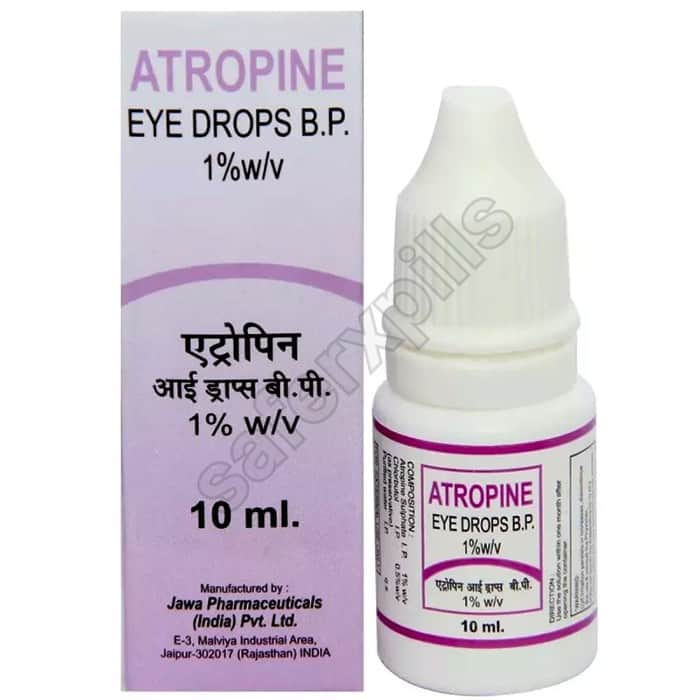
Atropine Eye Drop
Generic: Atropine
Select Pack Size:
Selected: 1 Bottle
$8.00 total
$16.00 total
Save 50%About Atropine Eye Drop
Atropine Eye Drop is a 10 mL bottle of atropine sulfate 1% (10 mg per mL), an antimuscarinic eye drop that widens the pupil (mydriasis) and relaxes the eye's focusing muscle (cycloplegia). It is not an antibiotic and does not treat eye infections. The pack we sell is the Indian product listed under Jawa Pharmaceuticals (Tata 1mg names Jawa Pharmaceuticals Pvt Ltd; Truemeds names Jawa Laboratories). It costs $8 for one bottle, or $5 a bottle in the 6 bottle pack, before shipping.
Atropine 1% is a strong, long-acting drop. One dose can blur near vision and make the eyes sensitive to light for up to 2 weeks, it can set off an acute glaucoma attack in eyes with a narrow drainage angle, and enough of it absorbed into the body can poison a small child. It is used for eye examinations, for some types of eye inflammation and for treating a lazy eye, and in each case an eye doctor should first examine the eye and decide on the dose. This 1% drop is not the low-dose atropine used to slow short-sightedness in children (see below). Clinical details on this page come from the US and UK labels listed under Sources.
Atropine Eye Drop at a glance
| Active ingredient | Atropine sulfate 1% w/v (10 mg per mL), 10 mL bottle (Indian listings) |
| Maker | Jawa Pharmaceuticals (Indian pack) |
| Labelled uses | US: mydriasis, cycloplegia, and penalization of the healthy eye in the treatment of amblyopia (lazy eye). UK: iritis and uveitis, mydriasis and cycloplegia in adults, and cycloplegic refraction in children |
| Regulatory status | Atropine 1% eye drops are approved by the FDA (the earliest approval listed in Drugs@FDA is from 2014), licensed in the UK, registered in Australia and authorised in Canada, but the Indian Jawa pack we sell is not the pack registered in any of those countries |
| Usual dose | US label: 1 drop about 40 minutes before maximal dilation is needed, from 3 months of age; from 3 years, up to twice daily as needed. UK doses depend on the use (see How to use it) |
| How long it lasts | Blurred vision and light sensitivity "may last up to 2 weeks" (US label 5.1) |
| Packs | 1, 3 or 6 bottles |
| Price per bottle | $5 to $8 before shipping ($0.50 to $0.80 per mL) |
| Delivery | 7 to 14 business days to the US, UK, Australia and Canada; $25 shipping under $149, free from $149 |
Price per bottle
Prices as of October 2026; the pack selector shows the current price. None of the packs reaches the $149 free shipping level on its own, so each includes the $25 shipping charge below unless you add other items.
| Pack | Price | Per bottle | Per mL | Shipping | Per bottle with shipping | Per mL with shipping |
|---|---|---|---|---|---|---|
| 1 bottle (10 mL) | $8.00 | $8.00 | $0.80 | $25 | $33.00 | $3.30 |
| 3 bottles (30 mL) | $18.00 | $6.00 | $0.60 | $25 | $14.33 | $1.43 |
| 6 bottles (60 mL) | $30.00 | $5.00 | $0.50 | $25 | $9.17 | $0.92 |
Think about how much you will use before buying a larger pack. The UK labels for multi-dose atropine 1% say to discard the bottle 28 days or 4 weeks (Aspire, Martindale, Neon) or 30 days (Macure) after first opening, while the US Apotex label says an opened bottle can be used until the expiry date; the Indian listings we checked give no opened-bottle rule, so read the Jawa carton. For an eye test or a short course, one bottle is usually more than enough (our estimate), and spare bottles add risk if there are children at home.
Compared with atropine 1% eye drops in the US
In the US, atropine sulfate 1% eye drops are sold as Isopto Atropine (Alcon) and as generics from several makers, in 2 mL, 5 mL and 15 mL bottles. The figures below are what US pharmacies paid according to the Medicaid NADAC survey (file as of 14 October 2026, rates effective 23 September 2026). They are pharmacy acquisition costs, not the price at the counter.
| Product | Maker | FDA approved | Cost per mL | Per bottle |
|---|---|---|---|---|
| Atropine 1%, 5 mL (Alcon, sold under its NDA) | Alcon | Yes | $10.35 | About $51.73 |
| Generic atropine 1%, 2 mL | Several (for example Apotex, Amneal) | Yes | $11.51 | About $23.03 |
| Generic atropine 1%, 5 mL | Several (for example Apotex, Amneal) | Yes | $5.13 | About $25.67 |
| Generic atropine 1%, 15 mL | Several (for example Apotex, Amneal) | Yes | $4.16 | About $62.43 |
| Atropine 1%, 10 mL, Indian Jawa pack (this page) | Jawa Pharmaceuticals | No (not the US pack) | $0.50 to $0.80 from us | $5 to $8, before shipping |
NADAC had no row for the Isopto Atropine brand name in this file. A single bottle from us with shipping ($33) costs more than a US pharmacy pays for a 5 mL generic bottle, so if you are in the US and have a prescription, compare US generic cash prices and your insurance cover before ordering from abroad.
Atropine 1% is not a myopia drop
Very dilute atropine is used to slow the worsening of short-sightedness (myopia) in children. In the EU and UK, Ryjunea 0.1 mg/mL (0.01%) from Santen is licensed for this, for children aged 3 to 14 at the start of treatment, at one drop in each eye once daily, and treatment "should only be initiated by an ophthalmologist or a healthcare professional who has myopia within their scope of practice" (UK SmPC 4.1, 4.2). The European Commission authorised it in June 2025 and the UK on 30 October 2025. Drugs@FDA lists no low-dose atropine eye drop as of 19 October 2026; the US approvals we found are all for the 1% strength.
| Product | Strength | Labelled use |
|---|---|---|
| Atropine Eye Drop (this page) | 1% (10 mg per mL) | Dilating the pupil and relaxing focus for eye tests, uveitis and iritis, lazy eye treatment |
| Ryjunea (EU and UK; not sold by us) | 0.01% (0.1 mg per mL), 100 times weaker | Slowing myopia progression in children |
Do not use this 1% drop for myopia control, and do not try to dilute it at home. A home dilution cannot be made sterile or accurate, and a mistake leaves a child with a drop far stronger than intended (our advice). If your child's short-sightedness is getting worse, ask an eye doctor about licensed options where you live.
How to use Atropine Eye Drop
Use it only as your eye doctor directs. The labelled doses differ by country and use:
| Who and why | Label dose | Label |
|---|---|---|
| Under 3 months | "Not recommended" | US 8.4 |
| 3 months to 3 years | 1 drop about 40 minutes before dilation is needed; no more than one drop per eye per day | US 2, 8.4 |
| 3 years and older, including adults | 1 drop about 40 minutes before dilation is needed; may be repeated up to twice daily as needed | US 2 |
| Adults: eye test (refraction) | 1 or 2 drops one hour before the test | UK 4.2 |
| Adults: uveitis or iritis | 1 or 2 drops, up to 4 times daily | UK 4.2 |
| Children: eye test (refraction) | 1 drop in each eye twice daily for 1 to 3 days before the test | UK 4.2 |
| Children: uveitis or iritis | 1 drop in each eye, up to 3 times daily | UK 4.2 |
- Before the first use, the UK label says the depth of the eye's drainage angle "should be assessed" (UK 4.2). That needs an eye examination.
- Wash your hands. Tilt the head back, pull the lower lid down gently and put one drop into the pocket. Do not let the dropper tip touch the eye, eyelids or any other surface, as this may contaminate the solution (Apotex US label 5.3).
- Close the eye and press on the inner corner, next to the nose, for a minute or more. Two UK labels say this may reduce how much reaches the bloodstream, and the Minims label says it "is especially advisable in children."
- Wash your hands afterwards. The UK label says "great care should be taken to avoid getting the product into the mouth." If a drop runs onto a child's cheek, wipe or wash it off straight away.
- Watch a child for 30 minutes after the drop (UK label 4.4).
- If you use other eye drops, leave at least 5 minutes between them, and put eye ointments in last (UK label 4.2).
- Keep the bottle tightly closed, out of the sight and reach of children. Do not use the drops if the solution is cloudy or discoloured (Truemeds), or after the expiry date.
Contact lenses. The US bottles and the UK multi-dose bottles of atropine 1% contain benzalkonium chloride (the UK Minims single-use units have no preservative). One UK label says to remove soft or hard lenses before the drop and wait at least 15 minutes before putting them back; another says soft lenses "must not be worn during the period of use." The Indian listings we checked do not name the preservative in the Jawa pack, so read the carton and ask your eye doctor (our advice).
Blurred vision and driving. In the Isopto Atropine label, the pupil reaches full size in about 30 to 40 minutes and recovers in about 7 to 10 days; focusing is fully relaxed within 60 to 180 minutes and recovers in about 7 to 12 days (US label 14). Do not drive or do anything hazardous while your pupils are dilated or your vision is blurred, and protect your eyes in bright light (US label 17; UK label 4.7).
Groups who need extra care
- Babies and young children. The UK label says atropine "should be used with caution in children and particularly in children with low body weight" and in those with epilepsy, brain disorders or Down syndrome, because of "the increased risk of central nervous system, cardiac, respiratory and gastrointestinal toxicity" (UK 4.4). Bowel blockage, bloating and slow heart rate have been found in preterm or low birth weight babies (UK 4.8). Use the lowest dose that works.
- Down syndrome, spastic paralysis or brain damage. The Isopto Atropine label says these people "are particularly susceptible to central nervous system disturbances, cardiopulmonary, and gastrointestinal toxicity from systemic absorption of atropine" (Isopto Atropine US label 5.3).
- Older people. The UK label says elderly patients "are at increased risk of systemic adverse effects" and that mydriatics should be used with caution in the elderly (UK 4.2, 4.4). The US labels report no overall differences in safety or effectiveness (US 8.5).
- Fever or hot weather. Atropine reduces sweating. The UK label says to use it with caution in people with fever or at high temperatures because of the risk of overheating (UK 4.4).
- Raised eye pressure, fast heart rate or high blood pressure. Use with caution in anyone who may have raised eye pressure, and care is needed with conditions that cause a fast heart rate (Martindale UK label 4.4). Rises in blood pressure have been reported after normal doses (US 5.2).
- Dark eyes. A darkly pigmented iris is harder to dilate, and the UK label warns to take care to avoid overdosage (Martindale UK label 4.4).
- Dry eye or corneal problems. The benzalkonium chloride in UK atropine drops can irritate and dry the eye; use with caution and with regular checks (Aspire UK label 4.4).
- Pregnancy. The US label says it "should only be used during pregnancy if the potential benefit justifies the potential risk to the fetus" (8.1). The Aspire UK label says atropine "should only be used during pregnancy if absolutely required and at the lowest possible dose" (4.6); other UK labels say to use it only when directed by a doctor (Martindale, Macure, Minims) or that it is preferable to avoid it during pregnancy (Neon).
- Breastfeeding. The Aspire UK label says atropine passes into breast milk and "the drug should not be administered during breastfeeding" (4.6); other UK labels say to use it only when directed by a doctor, or to decide with your doctor between breastfeeding and treatment. The US label has no data on milk and asks you and your doctor to weigh the benefits of breastfeeding against the need for the drop (8.2).
Medicines to mention to your doctor:
- MAO inhibitors: the US label says the combination "is generally not recommended because of the potential to precipitate hypertensive crisis" (US 7.1).
- Other medicines with antimuscarinic effects, for example some antihistamines and tricyclic antidepressants: the effects of atropine may be increased (UK 4.5).
Side effects
The labels give no frequency table from trials for the eye drop. They list:
- In the eye: eye pain and stinging when the drop goes in; blurred vision, light sensitivity, superficial keratitis (surface irritation of the cornea) and fewer tears are common; allergic reactions such as papillary conjunctivitis, contact dermatitis and eyelid swelling are less common (US 6.1). Longer use can cause irritation, redness, swelling and conjunctivitis (UK 4.8).
- In the body: dry skin, mouth and throat; drowsiness; restlessness, irritability or delirium; fast heart rate; flushed skin of the face and neck (US 6.2). The Aspire UK label lists hallucinations, confusion, agitation, fast heart rate, constipation, fever and flushing as common (1 in 100 to 1 in 10), and urinary retention, convulsions, low blood pressure and slowed breathing with frequency not known (UK 4.8).
- Raised eye pressure: closed-angle glaucoma is listed as rare (UK 4.8), and the risk is highest in eyes with a narrow drainage angle.
The UK label says toxic symptoms "are usually transient (several hours) but may last up to 24 hours", and that atropine eye drops have been associated with psychotic reactions and behaviour changes in children (UK 4.8).
When to get urgent help
- A child swallows the drops or gets too many. Call emergency services or poison control straight away (911 in the US and Canada, 999 in the UK, 000 in Australia; US Poison Help 1-800-222-1222; Australian Poisons Information Centre 13 11 26). Each mL of a 1% solution holds 10 mg of atropine sulfate, and the US Apotex label says that "in pediatric patients, 10 mg or less may be fatal" (US 10).
- Signs of atropine poisoning in a child or adult: hot, dry, flushed skin, fever, a very dry mouth, a fast or irregular heartbeat, confusion, agitation, hallucinations, unsteadiness, slurred speech, fits, trouble passing urine, or slow breathing (UK 4.8, 4.9). Get emergency help, and tell staff what was used, how much and when.
- Sudden eye pain, a painful red eye or worse vision after the drop: this can be an attack of closed-angle glaucoma (UK 4.8) and needs emergency eye care straight away (our advice).
- Allergy signs: swelling of the eyelids, lips, face or throat, rash, hives or trouble breathing. Stop using the drop and get help (our advice).
Who should not use it
Never use it if:
- You have had an allergic reaction to atropine or any ingredient of the drop (US 4; UK 4.3). The Aspire UK label also lists hypersensitivity to belladonna alkaloids.
- You have closed-angle (narrow-angle) glaucoma or a narrow drainage angle, or a tendency towards glaucoma (UK 4.3). The Minims UK label adds that it should not be used "where latent narrow angle glaucoma is suspected." The US labels list only hypersensitivity as a contraindication, but because of this risk, have your eye examined first (our advice).
Not recommended or use with care:
- Babies under 3 months: "not recommended" (US 8.4).
- With MAO inhibitors: "generally not recommended" (US 7.1).
- Breastfeeding: "should not be administered" (Aspire UK 4.6); weigh the benefits with your doctor (US 8.2).
- Young or low weight children, Down syndrome, spastic paralysis, brain damage or epilepsy, older people, fever or hot weather, conditions with a fast heart rate: caution as above.
- Myopia control in children: this 1% product is not a low-dose myopia drop.
Prescription and legal status
Atropine 1% eye drops are prescription medicines in the US ("Rx only" on the labels; the earliest approval listed in Drugs@FDA, NDA 206289, is dated 18 July 2014, and Isopto Atropine, NDA 208151, followed on 1 December 2016), the UK (prescription only medicine on the emc, for example Minims Atropine Sulphate 1% and Atropine 1% eye drops from Aspire and Martindale), Australia (Atropt 1% is Schedule 4, Prescription Only Medicine) and Canada (Alcon Atropine, DIN 00035017, and Minims Atropine Sulphate, DIN 02148358, are marketed as prescription drugs). The Indian listings we checked do not state the prescription status of the Jawa pack. The FDA says personal importation of unapproved medicines is illegal in most circumstances, and the Indian pack is not the US-approved pack. Check the rules where you live, and use this drop only with a prescription and instructions from your eye doctor.
Buying genuine atropine eye drops
The MHRA warns: "Any medicine not authorised for sale in the UK can be unsafe or ineffective and there is no way of knowing what is in them or the negative health effects they can have." It also advises: "Only use UK-registered pharmacies, including online pharmacies displaying the official green cross logo." When your order arrives, check that the carton and bottle say atropine sulfate 1%, name Jawa, and show a batch number and an expiry date, that the seal is intact, and that the solution is clear and colourless. These checks cannot prove a bottle is genuine, because counterfeiters copy packaging. If a drop does not dilate the pupil as your eye doctor expects, or if a batch causes symptoms, seek medical advice and report it to your medicines regulator (the MHRA Yellow Card scheme in the UK, FDA MedWatch in the US, the TGA in Australia or Health Canada) as well as to us.
Delivery
We ship Atropine Eye Drop to the US, UK, Australia and Canada in plain packaging with tracking. Standard delivery takes 7 to 14 business days, so order well before an eye test or a planned course of treatment. Shipping costs a flat $25 on orders under $149 and is free from $149. Store the bottle as the carton says; Truemeds lists below 30°C and protected from light for the Jawa pack. See our shipping page and refund policy.
Related guides
- How to buy eye care medicine online safely
- Buying eye drops from an online pharmacy: what you need to know
- Glaucoma eye drops: every type explained
Another dilating drop: Tropicacyl Eye Drop (tropicamide). Ask your eye doctor which drop suits the test or treatment you need.
Sources
- Isopto Atropine (atropine sulfate ophthalmic solution) 1%, US prescribing information, Alcon Laboratories, DailyMed setid 20491566-e6eb-8d4a-3083-77ea429f7bc4, version 8, effective 7 October 2022, sections 1 to 8, 10 to 12, 14, 16 and 17. DailyMed
- Atropine sulfate ophthalmic solution USP 1%, US prescribing information, Apotex Corp., DailyMed setid 127a7e32-a150-01d6-a66a-b7708d85809f, version 8, revised March 2026, sections 4, 5, 8, 10, 12, 14, 16 and 17. DailyMed
- Atropine 1% w/v eye drops, solution, UK Summary of Product Characteristics, Aspire Pharma Ltd, PL 35533/0162, revised 9 July 2021, sections 4.1 to 4.9 and 6. emc
- Atropine Eye Drops 1.0% w/v (Vistatropine), UK Summary of Product Characteristics, Martindale Pharmaceuticals, PL 00156/0044, revised 6 October 2016, sections 4.1 to 4.9 and 6.3. emc
- Atropine 1% w/v eye drops, solution, UK Summary of Product Characteristics, Macure Pharma UK, PL 54594/0008, sections 4.4, 4.6 and 6.3. emc
- Atropine 1.0% w/v eye drops, solution, UK Summary of Product Characteristics, Neon Healthcare, PL 45043/0132, revised 6 December 2023, sections 4.6 and 6.3. emc
- Minims Atropine Sulphate 1%, UK Summary of Product Characteristics, Bausch and Lomb UK, PL 03468/0068, revised 22 April 2015, sections 4.3, 4.4, 4.6 and 6.1. emc
- Ryjunea 0.1 mg/ml eye drops, solution, UK Summary of Product Characteristics, Santen, PL 16058/0037, first authorised 30 October 2025, revised 3 September 2026, sections 4.1 and 4.2; Santen press release on European Commission approval, 5 June 2025. emc
- US Food and Drug Administration, Drugs@FDA (via openFDA, searched 19 October 2026): atropine sulfate ophthalmic solution 1%, NDA 206289 (approved 18 July 2014), NDA 208151 Isopto Atropine (1 December 2016), NDA 213581 and ANDAs. Drugs@FDA
- healthdirect Australia: Atropt 1% eye drops, 15 mL, Schedule 4, accessed October 2026. healthdirect
- Health Canada Drug Product Database: Alcon Atropine (DIN 00035017) and Minims Atropine Sulphate (DIN 02148358), atropine sulfate 1%, prescription, marketed, searched October 2026. Health Canada DPD
- Centers for Medicare and Medicaid Services. National Average Drug Acquisition Cost (NADAC), atropine 1% eye drops, per-NDC rows, 2026 file as of 14 October 2026 (rates effective 23 September 2026). data.medicaid.gov
- Truemeds and Tata 1mg. Atropine 1% eye drops 10 mL (Jawa) listings, accessed October 2026. Truemeds
- MHRA. 20 million illegal erectile dysfunction pills seized as MHRA warns against risky online buys, 13 February 2026. GOV.UK
- US Food and Drug Administration. Personal Importation. FDA
This page is for information and is not medical advice. Atropine 1% is a prescription medicine; your eye doctor should examine your eyes and set the dose.
Key Information
- ✓Active Ingredient: Atropine
- ✓Category: Eye Care
- ✓Form: Eye Drop
- ✓Brand: Jawa Pharmaceuticals Pvt Ltd
- ✓Manufacturer: Jawa Pharmaceuticals Pvt Ltd
Frequently Asked Questions
What is Atropine Eye Drop used for?
Atropine sulfate 1% is an antimuscarinic eye drop that widens the pupil and relaxes the eye's focusing muscle. The US label lists mydriasis, cycloplegia and penalization of the healthy eye in the treatment of amblyopia (lazy eye); the UK labels add iritis and uveitis, and cycloplegic refraction in children. It is not an antibiotic and does not treat eye infections.
Is the Indian Jawa atropine the same as US or UK atropine 1%?
It contains the same active ingredient at the same strength, atropine sulfate 1% (10 mg per mL), in a 10 mL bottle according to Tata 1mg and Truemeds. Atropine 1% eye drops are FDA approved and licensed in the UK, Australia and Canada, but the Jawa pack is not the pack registered in those countries. The US bottles and UK multi-dose bottles contain benzalkonium chloride; the Indian listings we checked do not name the preservative, so read the carton.
How much does Atropine Eye Drop cost?
As of October 2026, $8 for one 10 mL bottle, $18 for three ($6 each) and $30 for six ($5 each), plus $25 shipping on orders under $149. The pack selector shows the current price. US pharmacies paid about $25.67 for a 5 mL bottle of generic atropine 1% in September 2026 (NADAC), so US buyers with a prescription should compare local cash prices.
How do I use atropine 1% eye drops?
Follow your eye doctor's dose. The US label dose is 1 drop about 40 minutes before dilation is needed, repeated up to twice daily as needed from age 3, and no more than one drop per eye per day from 3 months to 3 years. Do not let the tip touch anything, press on the inner corner of the eye for a minute to cut absorption, wash your hands and keep it away from the mouth.
Can I use this for my child's myopia?
No. Myopia control uses very dilute atropine, such as Ryjunea 0.01% (0.1 mg per mL), licensed in the EU and UK for children aged 3 to 14 and started by an eye specialist. This product is 1%, 100 times stronger. Do not dilute it at home, because a home dilution cannot be made sterile or accurate. Ask an eye doctor about licensed options where you live.
How long do the effects of atropine eye drops last?
A long time. The US label says light sensitivity and blurred vision may last up to 2 weeks. In the Isopto Atropine label the pupil recovers in about 7 to 10 days and focusing in about 7 to 12 days. Do not drive while your pupils are dilated or your vision is blurred, and protect your eyes from bright light.
Why do children need extra care with atropine?
Atropine absorbed through the eye and nose can poison a small child. The UK label warns of central nervous system, heart, breathing and bowel toxicity, especially in low weight children and those with epilepsy, brain disorders or Down syndrome. The US labels say use under 3 months is not recommended, and the US Apotex label says that in children 10 mg or less may be fatal, which is the amount of atropine sulfate in 1 mL of a 1% solution. Keep the bottle out of reach.
What are the side effects of atropine eye drops?
Stinging on use, blurred vision and light sensitivity are expected. Labels also list eye irritation, allergic reactions of the eyelids and conjunctiva, dry mouth and skin, flushing, fast heart rate, drowsiness, restlessness and, in some people, confusion or hallucinations. Rarely it can trigger closed-angle glaucoma. Get urgent help for sudden eye pain, signs of poisoning or if a child swallows the drops.
Who should not use atropine eye drops?
Anyone allergic to atropine or an ingredient of the drop (all labels). The UK labels also contraindicate it in closed-angle glaucoma, a narrow drainage angle or a tendency towards glaucoma. It is not recommended under 3 months and generally not recommended with MAO inhibitors (US), and the Aspire UK label says it should not be used during breastfeeding. Older people, young children, and people with fever or a fast heart rate need extra care.
Do I need a prescription for atropine eye drops?
Yes in the US (Rx only), the UK (prescription only medicine), Australia (Schedule 4) and Canada (prescription). The FDA says personal importation of unapproved medicines is illegal in most circumstances, and the Indian pack is not the US-approved pack. An eye doctor should examine the eye before use, because atropine can set off an acute glaucoma attack in eyes with a narrow angle.
How long does delivery take?
Standard delivery to the US, UK, Australia and Canada takes 7 to 14 business days, in plain packaging with tracking. Shipping is $25 on orders under $149 and free from $149. Order well before a planned eye test or course of treatment.
Medical References
Sources: U.S. National Library of Medicine (DailyMed, PubMed), openFDA
Related Products
View all

Customer Reviews
No reviews yet. Be the first to review Atropine Eye Drop.
Related Articles
Health guides about Atropine, written by pharmacists
Cyclosporine Eye Drops for Dry Eye: Restasis, Cyclomune and What the Trials Show
Cyclosporine eye drops treat the inflammation behind chronic dry eye rather than just wetting the surface. They are slow, they often sting, and in the main trials only about 15 percent of patients reached the headline tear production target. This guide explains what to expect and how Cyclomune 0.05% and 0.1% compare with Restasis.
Bimatoprost for Eyebrows: What the Trials Show About Off Label Use
Bimatoprost is FDA approved for eyelashes, not eyebrows, so brow use is off label and rarely discussed properly. A Phase 3 trial and three smaller randomised studies say it works. This guide covers the evidence, a realistic timeline, how brow application differs from lashes, and the risks worth taking seriously.
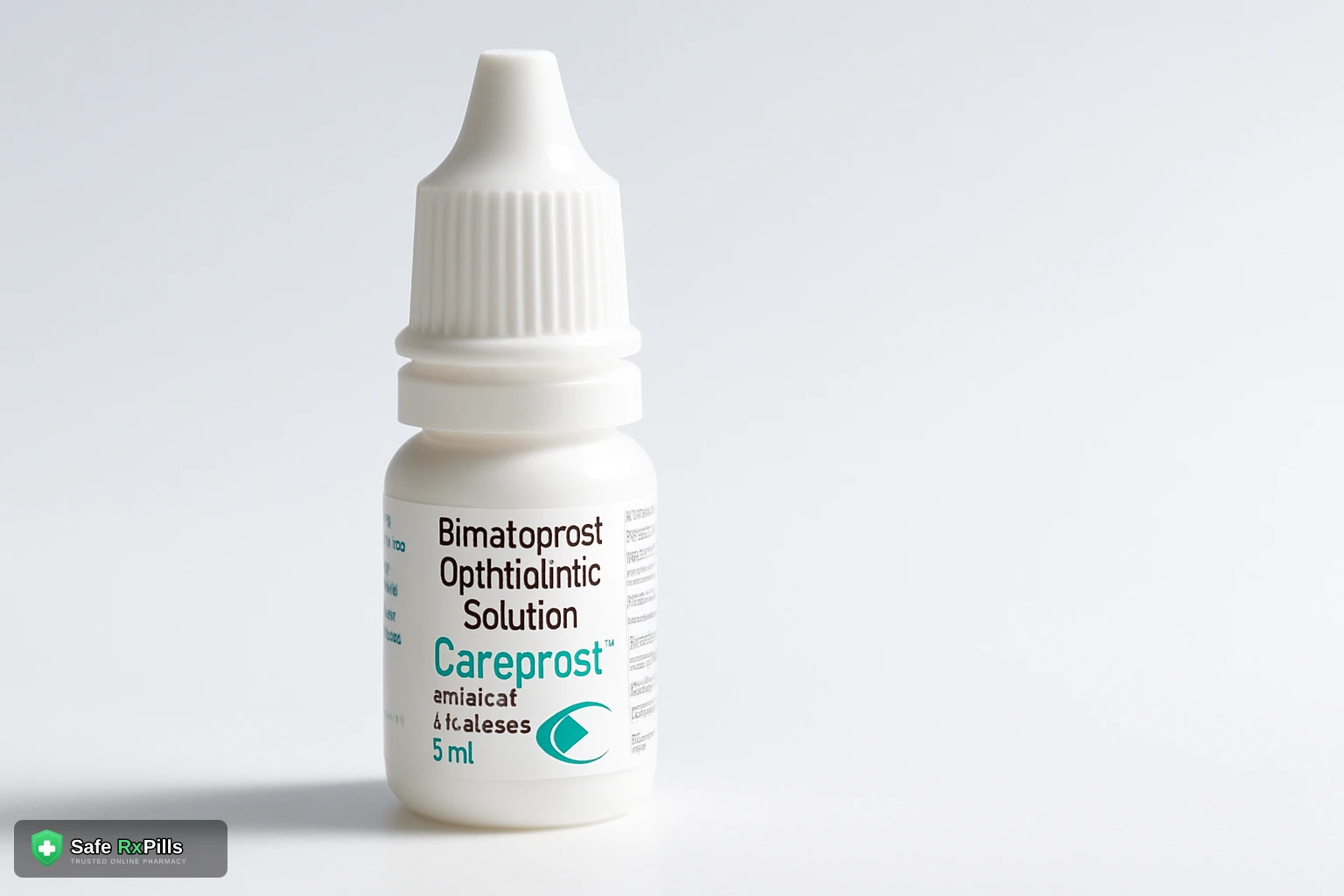
Is Careprost Legal in the USA? FDA Status, Prescription Rules and Counterfeit Risk
Careprost is not FDA approved and bimatoprost is prescription only in the US for every use, including lash growth. An accurate read of the law, the FDA label warnings, and how to tell a real supplier from a dangerous one.
Related Health Guide
Understanding Eyelash Growth & Eye Conditions: Complete Guide