Azelaic Acid Cream: The Underrated Acne and Rosacea Treatment (2026 Guide)
SafeRxPills Pharmacy Team
Editorial team at SafeRxPills. Articles are written and checked against regulatory drug labelling (DailyMed, FDA, EMA) and published literature.
Azelaic Acid Cream: The Underrated Acne and Rosacea Treatment (2026 Guide) | SafeRxPills — pharmacy guide
In this article (9 sections)
Azelaic Acid Cream: The Underrated Acne and Rosacea Treatment (2026 Guide)
Quick verdict: Azelaic acid is one of the few skincare actives that treats acne, rosacea, and post-acne dark marks at the same time, and it is safe enough to use in pregnancy. Prescription-strength versions sit at 15 to 20 percent, while over-the-counter serums usually cap out around 10 percent. If you have breakouts that leave brown spots behind, or redness that flushes easily, this is often a better first move than a retinoid. Generic azelaic acid creams and gels cost a fraction of branded Finacea or Azclear, which is where an international pharmacy like SafeRxPills comes in.
What Azelaic Acid Actually Is
Azelaic acid is a dicarboxylic acid that occurs naturally in grains like barley, wheat, and rye. It is also produced on healthy human skin by a yeast called Malassezia. That natural origin is part of why it tends to be gentler than lab-built actives, though the concentrations used in medicine are far higher than anything your skin makes on its own.
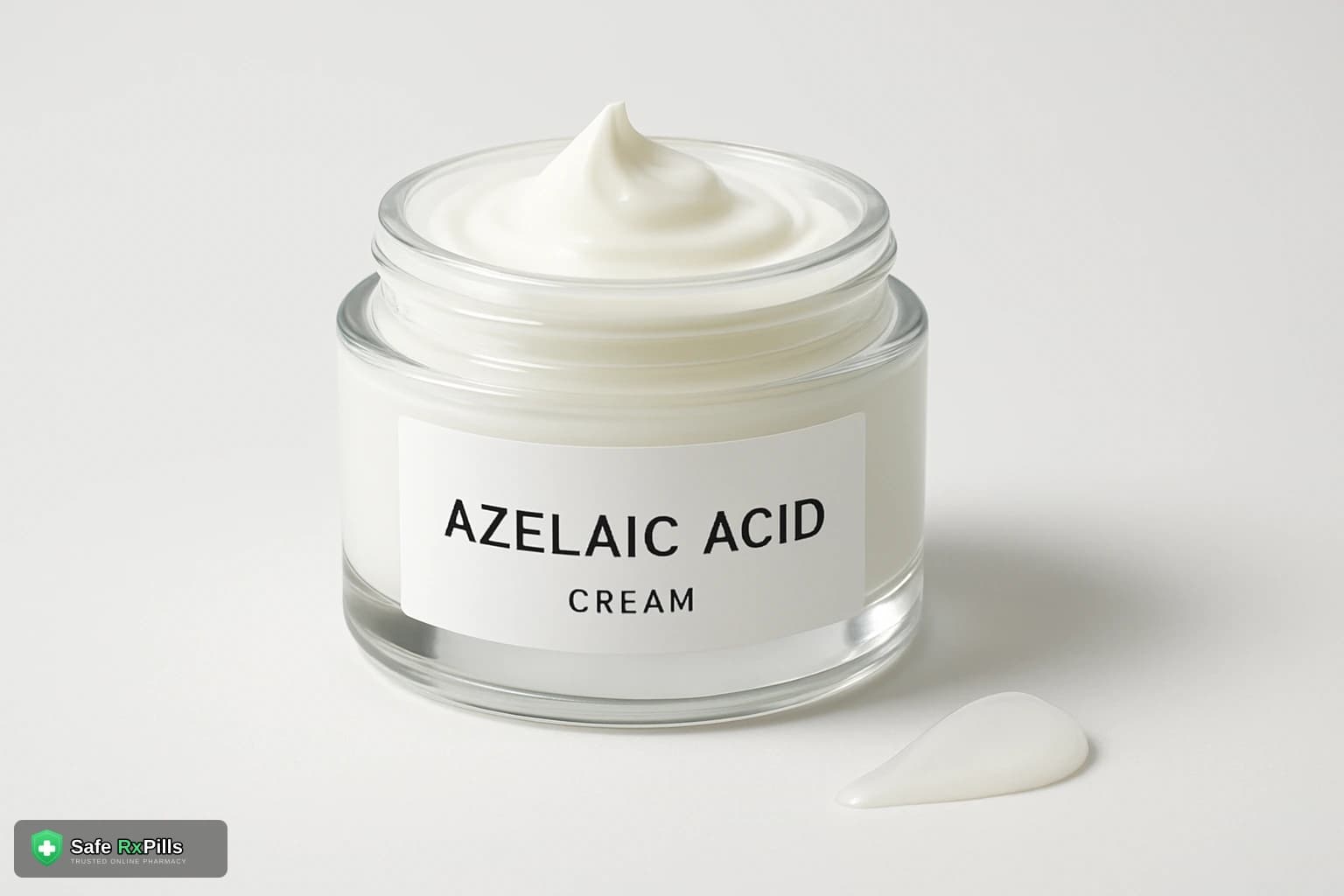
In clinical skincare it shows up as a topical cream, gel, or foam. The prescription strengths are 15 percent (sold as Finacea in much of the world) and 20 percent (the classic acne concentration, sold under names like Skinoren and Azclear in Australia). Lower 10 percent versions are sold over the counter as cosmetic serums by brands like The Ordinary. The gap between a 10 percent serum and a 20 percent medical cream matters, and we cover it in the strengths section below.
What makes azelaic acid unusual is its range. Most actives do one job. Salicylic acid unclogs pores. Hydroquinone fades pigment. Metronidazole calms rosacea. Azelaic acid does a version of all three at once, which is why dermatologists reach for it when a patient has more than one problem happening on the same face.
How It Works on Skin
Azelaic acid works through several separate mechanisms, and understanding them explains why it treats such different conditions.
It kills acne bacteria. Azelaic acid is antibacterial against Cutibacterium acnes, the organism that drives inflammatory acne. Unlike antibiotics, bacteria do not build resistance to it, so it does not lose effectiveness over months of use.
It normalizes keratin. Clogged pores form when dead skin cells stick together and trap oil. Azelaic acid slows the abnormal buildup of keratin inside the follicle, which means fewer blackheads and whiteheads over time.
It reduces inflammation. Azelaic acid scavenges free radicals and dials down the inflammatory signaling that makes rosacea skin red and reactive. This is the mechanism behind its rosacea approval.
It blocks pigment production. Azelaic acid inhibits tyrosinase, the enzyme that skin cells use to make melanin. Critically, it targets overactive melanocytes more than normal ones, so it fades dark spots without lightening surrounding healthy skin the way hydroquinone can. Our hydroquinone cream guide explains that contrast in more detail.
What It Treats: Acne, Rosacea, Pigmentation
Acne. Azelaic acid is approved for mild to moderate acne, both the clogged-pore kind and the red inflamed kind. It is slower than a retinoid or benzoyl peroxide for pure clogging, but it wins when acne comes with sensitivity or leaves marks. For people who cannot tolerate the peeling of tretinoin, it is often the fallback. If you are weighing acne options broadly, our acne treatment guide maps out where each active fits.
Rosacea. This is where azelaic acid genuinely shines. The 15 percent gel is a first-line prescription treatment for the papulopustular type of rosacea, the kind with red bumps and pustules. It reduces both the bumps and the background redness, and many people prefer it to metronidazole because it also helps with texture.
Post-inflammatory hyperpigmentation. Those stubborn brown marks left after a pimple heals are post-inflammatory hyperpigmentation, and they are worse and longer-lasting in darker skin tones. Azelaic acid is one of the safest pigment treatments for Black, South Asian, Middle Eastern, and Hispanic skin precisely because it will not cause the paradoxical darkening or halo effect that stronger lighteners sometimes trigger. Our skin lightening medicine guide covers the full comparison.
Melasma. For the hormonal pigmentation that shows up as symmetric patches on the cheeks and upper lip, azelaic acid is a recognized option, often stacked with sunscreen and sometimes with other agents.
Pregnancy and breastfeeding. This is a big practical advantage. Retinoids are off-limits in pregnancy and hydroquinone is usually avoided. Azelaic acid is classed as one of the safer topical options during pregnancy, which makes it the go-to for pregnancy acne and the melasma that pregnancy so often brings on. Always confirm with your own doctor, but it is the active most commonly recommended in this situation.
Strengths: 10%, 15%, and 20% Explained
The percentage on the tube changes what the product can realistically do, so do not assume all azelaic acid is equal.
10 percent (cosmetic serums). These are the drugstore and The Ordinary style products. They give a mild glow-up, help slightly with texture and tone, and are a reasonable maintenance step. They are generally too weak to clear real acne or treat diagnosed rosacea. Think of 10 percent as skincare, not treatment.
15 percent (Finacea gel). This is the medical rosacea strength. The gel base is engineered so that a 15 percent gel penetrates comparably to a 20 percent cream, which is why it works at a lower number. This is the concentration to look for if redness and bumps are the main concern.
20 percent (classic acne cream). This is the original prescription acne and pigmentation strength, sold as Skinoren, Azclear, and generically. For clearing breakouts and fading dark marks, 20 percent is the workhorse. Products like Aziderm 20% sit here.
SafeRxPills stocks the medical strengths that actually treat conditions rather than just the cosmetic tier. The Aziderm Gel 20% is the acne and pigmentation strength, while Aziderm Cream 15% and Aziderm Gel 15% cover the rosacea concentration. The Azelax 20g is a budget entry point at ten dollars.
How to Use It Without Irritation
Azelaic acid is forgiving compared to retinoids, but a few habits make the difference between smooth results and a tingly mess.
Start once a day. Apply a thin layer to clean, dry skin, usually in the evening. A pea-sized amount covers the whole face. More does not work faster, it just wastes product and raises irritation.
Wait for dry skin. Applying to damp skin drives the product in harder and increases the stinging. Give your face a few minutes after cleansing.
Expect a tingle, not a burn. A mild prickling or warmth in the first couple of weeks is normal and fades as your skin adapts. A genuine burn, swelling, or spreading redness is not normal and means you should cut back frequency.
Build up slowly. After one to two weeks of once-daily use without trouble, you can move to twice daily if you want faster results, but many people do fine staying at once a day.
Sunscreen is non-negotiable for pigmentation. If you are using azelaic acid for dark marks or melasma, unprotected sun exposure will undo the work. Daily broad-spectrum SPF is part of the treatment, not an optional extra.
Give it time. Acne and rosacea usually show improvement around 4 weeks, with fuller results by 8 to 12 weeks. Pigmentation is the slowest and can take a few months. This is not an overnight active.
Side Effects and What Is Normal
Azelaic acid has one of the cleaner safety profiles in prescription skincare, which is a big part of its appeal. The common effects are local and mild.
Expected and harmless: tingling or stinging on application, a warm sensation, mild dryness or light flaking, and temporary redness in the first weeks. These typically settle as your skin gets used to it.
Less common: itching and more noticeable dryness. Dropping to alternate-day use usually fixes this.
Rare but worth knowing: in people with very dark skin tones, there have been isolated reports of localized hypopigmentation, or light patches. This is uncommon, but if you notice lightening rather than fading of dark marks, stop and speak to a clinician.
Allergic reaction: genuine allergy is rare. Swelling, hives, or difficulty breathing means stop immediately and seek care. A patch test on the inner forearm for a couple of days before facial use is a sensible precaution if you have reactive skin.
Because it does not cause the sun sensitivity that acids like glycolic or actives like tretinoin do, azelaic acid is one of the few treatments you can reasonably start in summer.
Azelaic Acid vs Other Actives
Vs tretinoin. Tretinoin is stronger for both acne and anti-aging, but it peels, irritates, and is banned in pregnancy. Azelaic acid is gentler, safe in pregnancy, and better at fading dark marks without the purge. Many people use tretinoin for results and azelaic acid when their skin needs a break, or layer them on alternate nights. Our retinoid comparison and tretinoin purge guide explain why the peeling happens.
Vs benzoyl peroxide. Benzoyl peroxide is a stronger acne bacteria killer but it bleaches fabric, dries skin, and does nothing for pigment or rosacea. Azelaic acid is milder and multi-purpose.
Vs niacinamide. Niacinamide is a gentle everyday supporting active. Azelaic acid is a genuine treatment. They layer well together.
Vs hydroquinone. For pure pigment lightening, hydroquinone is more aggressive and faster, but it carries a risk of rebound darkening with overuse and is not for long-term or pregnancy use. Azelaic acid is the safer long-game choice, especially in darker skin.
Vs topical antibiotics. Antibiotic gels like clindamycin work for inflammatory acne but drive resistance over time. Azelaic acid gives antibacterial action without that problem, which is why it is often preferred for long-term control. See our topical antibiotics guide for the resistance issue.
Buying Azelaic Acid Cream Online
In most countries the 15 and 20 percent medical strengths are prescription items, while 10 percent cosmetic serums are sold freely. That gap is exactly why people search for azelaic acid online: the effective strengths are harder to get at a local chemist without a doctor visit, and branded versions are expensive.
In Australia, shoppers often search for Azclear at Priceline or azelaic acid at Chemist Warehouse and find only the low cosmetic strengths or a script requirement for the real thing. An international pharmacy fills that gap by supplying the generic 15 and 20 percent formulations that are the same molecule as the branded products, at generic pricing.
When buying online, the things that matter are that the pharmacy sources from a licensed manufacturer, that the product is a recognized generic rather than an unbranded mystery cream, and that the strength is clearly stated. SafeRxPills supplies azelaic acid manufactured under WHO-GMP certified conditions. If you are new to ordering medicines internationally, our acne treatment online pharmacy guide walks through what to check.
Brand Names and Pricing
Azelaic acid is sold under many names depending on the country. Finacea (15 percent gel) is the most recognized branded version internationally. Skinoren is the classic 20 percent cream sold across Europe and Asia. Azclear is a familiar name in Australia. Aziderm and Azelax are widely used Indian generics containing the identical active.
The price difference between branded and generic is large. Branded Finacea or a dermatologist-supplied 20 percent cream can run many times the cost of the generic equivalent. Generic options at SafeRxPills:
Azelax 20g at $10.00 is the budget starting point. Aziderm Gel 15% at $26.25 and Aziderm Cream 15% at $28.75 are the rosacea strength in gel and cream bases. Aziderm Gel 20% at $28.75 is the full-strength acne and pigmentation option. The gel bases suit oilier skin, while the cream base suits drier or more sensitive skin.
Azelaic acid will not transform your skin in a week, and it is not the strongest option for any single problem. What it is, is the most versatile and best-tolerated active for anyone juggling acne, redness, and dark marks at once, and the safest real treatment available during pregnancy. For a lot of people that combination makes it the smartest place to start.
This article is for general information and does not replace advice from a qualified healthcare professional. Azelaic acid at treatment strengths is a medicine. Confirm suitability with your own doctor or pharmacist, especially if you are pregnant, breastfeeding, or using other prescription skincare.
Related Topics:
?Frequently Asked Questions
Is azelaic acid safe to use during pregnancy?
Azelaic acid is considered one of the safer topical treatments for acne and melasma during pregnancy and breastfeeding, unlike retinoids and hydroquinone which are usually avoided. It is a common recommendation for pregnancy-related breakouts and pigmentation. As with any medicine in pregnancy, confirm suitability with your own doctor or midwife before starting.
What percentage of azelaic acid actually works for acne?
The 15 percent and 20 percent medical strengths are the ones that treat diagnosed acne and rosacea. The 10 percent cosmetic serums sold in drugstores are generally too weak to clear real breakouts and act more as a mild tone and texture step. For genuine treatment, look for 15 or 20 percent.
How long does azelaic acid take to work?
Acne and rosacea usually begin improving around 4 weeks, with fuller results by 8 to 12 weeks. Post-acne dark marks and melasma are slower and can take a few months of consistent use plus daily sunscreen. It is a steady treatment, not an overnight fix.
Can I use azelaic acid with tretinoin or other actives?
Yes. Azelaic acid layers well with most routines. Many people alternate it with tretinoin on different nights to get retinoid results while giving irritated skin a recovery step, or pair it with niacinamide. Avoid stacking too many strong acids at once, and introduce one new active at a time.
Does azelaic acid cause purging like tretinoin?
Azelaic acid causes much less purging than tretinoin. Some people see a brief adjustment period, but the aggressive weeks-long purge associated with retinoids is uncommon. Mild tingling and light flaking in the first couple of weeks are the more typical early effects.
Why buy azelaic acid cream online instead of at a pharmacy?
In many countries the effective 15 and 20 percent strengths are prescription-only, while local shops carry only the weak cosmetic versions. Branded products like Finacea are also expensive. An international pharmacy supplies the generic medical strengths, the same active molecule, at generic prices. Choose a pharmacy that names its manufacturer and states the strength clearly.
SafeRxPills Pharmacy Team
SafeRxPills Editorial Team
Editorial team at SafeRxPills. Articles are written and checked against regulatory drug labelling (DailyMed, FDA, EMA) and published literature.
Comments (0)
Leave a Comment
No comments yet. Be the first to share your thoughts!
Related Articles