How to Save Money on Prescription Medication: Real Strategies That Work in 2026
SafeRxPills Pharmacy Team
Editorial team at SafeRxPills. Articles are written and checked against regulatory drug labelling (DailyMed, FDA, EMA) and published literature.
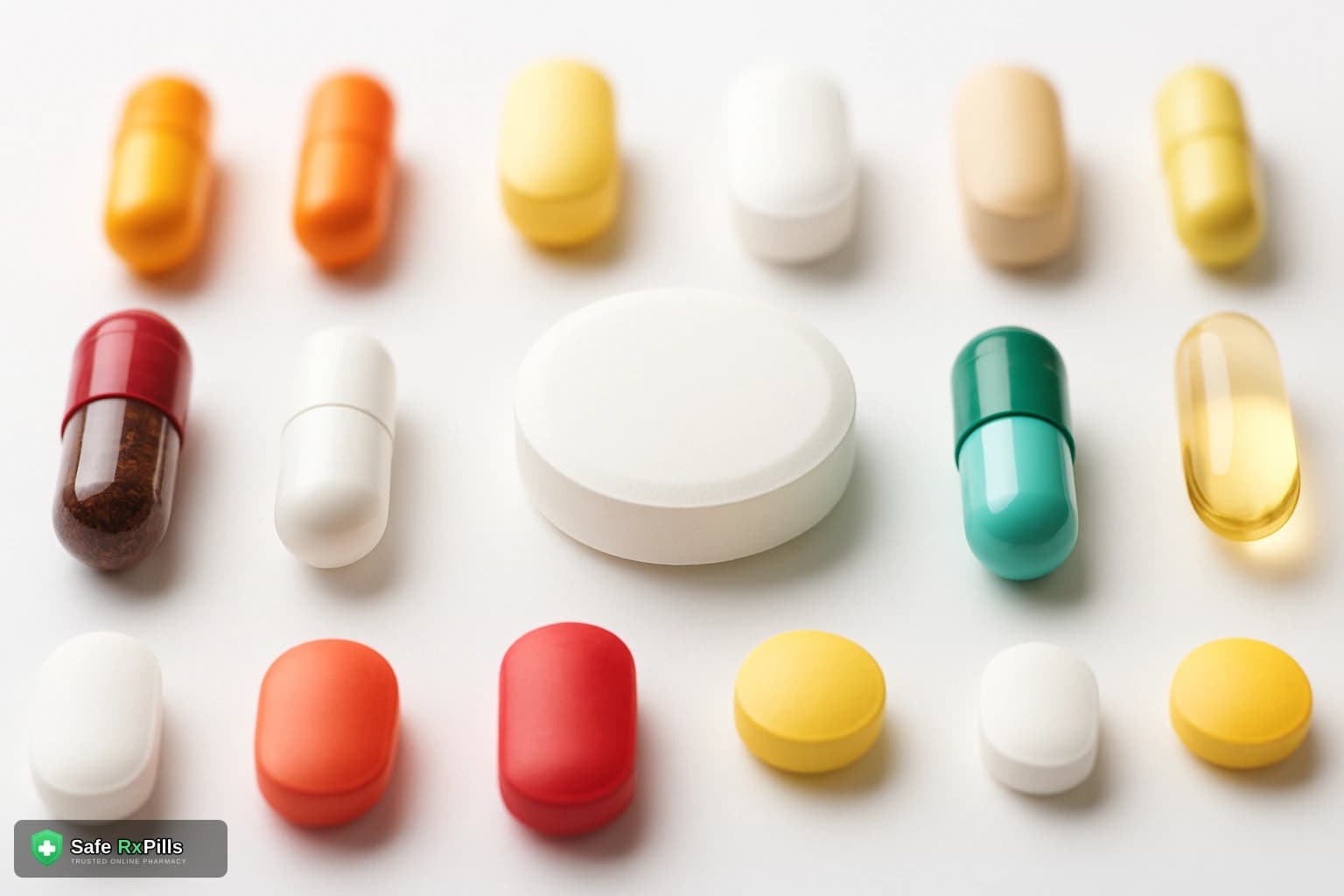
How to Save Money on Prescription Medication: Real Strategies That Work in 2026 | SafeRxPills - pharmacy guide
How to Save Money on Prescription Medication: Real Strategies That Work in 2024
The most reliable ways to save money on prescription medication include switching to generic drugs, using discount cards like GoodRx, ordering from licensed online pharmacies, and enrolling in manufacturer patient assistance programs. Americans pay 2 to 3 times more for brand-name drugs than patients in Canada, the UK, or Australia, but you have legal and practical options to close that gap significantly. With the right combination of strategies, most people can cut their annual prescription costs by 40% to 80%.
This isn't about cutting corners on your health. Every strategy here involves the same FDA-approved active ingredients your doctor prescribed. The difference is simply in where you buy them and how you pay.
Why Prescription Costs Are So High in the USA
The US doesn't allow Medicare to negotiate drug prices directly with manufacturers, unlike every other developed country. Pharmaceutical companies set their own prices, and insurers negotiate rebates that rarely reach patients at the pharmacy counter. The result: a 30-day supply of a brand-name drug that costs $15 in Canada or $20 in Australia can run $300 or more at an American retail pharmacy.
Brand-name exclusivity periods also play a role. When a drug is under patent, typically for 20 years from the filing date, no generic can enter the market. Once that patent expires, generic manufacturers flood in and prices drop fast. Atorvastatin (generic Lipitor) now costs under $10 a month at most pharmacies. The brand-name version still retails for over $400. Same molecule. Wildly different price.
Understanding this system is the first step to working around it legally and safely.
Switch to Generics and Save Up to 85%
Generic drugs contain the identical active ingredient, at the same dose, with the same route of administration as the brand-name version. The FDA requires that generics demonstrate bioequivalence, meaning they absorb into your bloodstream at the same rate and to the same extent as the original drug. They are not inferior. They are chemically the same treatment.
The savings are substantial. Here are some real examples:
- Metformin (generic Glucophage) for type 2 diabetes: $4 to $10 per month vs. $150+ for the brand
- Lisinopril (generic Zestril) for blood pressure: under $10 per month vs. $60 to $90 for the brand
- Sertraline (generic Zoloft) for depression: $10 to $20 per month vs. $120+ for the brand
- Sildenafil (generic Viagra) for ED: $15 to $30 per month vs. $400+ for brand Viagra
Ask your pharmacist directly: "Is there a generic available for this?" Doctors don't always write generic names by default, especially when a drug rep has been in their office recently. You have every right to request the generic. If your doctor requires the brand for a specific clinical reason, they'll tell you, but that's the exception.
Products like Fildena 100mg sildenafil are a clear example of how generic versions of well-known drugs deliver the same effect at a fraction of the cost, making ongoing treatment sustainable for more patients.
GoodRx, Manufacturer Coupons, and Patient Assistance Programs
Even without insurance, you have real options at the pharmacy counter.
GoodRx and Similar Discount Cards
GoodRx is free to use and works at over 70,000 pharmacies across the US. You enter your zip code and medication, and it shows you real-time prices at nearby pharmacies. The price differences between pharmacies for the same drug can be shocking, sometimes 300% apart within a mile radius. Always check before you fill.
Blink Health, RxSaver, and NeedyMeds are similar tools. Run your medication through two or three of them before deciding where to fill.
Manufacturer Copay Cards
If you're insured and taking a brand-name drug, check the manufacturer's website for a copay card or savings card. These can reduce a $200 copay to $0 for patients with commercial insurance. They don't work with Medicare or Medicaid, but for privately insured patients under 65, they can make brand-name drugs genuinely affordable short-term.
These cards are a marketing strategy from drug companies, and they have expiration dates and eligibility limits. Use them while they're available, but always ask your doctor if a generic alternative exists for long-term use.
Patient Assistance Programs (PAPs)
Most major pharmaceutical manufacturers run patient assistance programs for uninsured or underinsured patients who meet income requirements. NeedyMeds.org and RxAssist.org both maintain searchable databases of these programs. Applications require proof of income and a prescription, and processing takes 2 to 6 weeks, but the drugs are often provided completely free.
For people managing chronic conditions like diabetes, cardiovascular disease, or autoimmune disorders, PAPs can eliminate prescription costs entirely.
How Licensed Online Pharmacies Cut Your Costs
Licensed online pharmacies operate with significantly lower overhead than brick-and-mortar retail chains. No physical storefront, no retail markup, no pharmacy benefit manager taking a cut. Those savings pass directly to you.
The key distinction is legitimacy. A licensed online pharmacy requires a valid prescription for prescription drugs, displays its licensing information clearly, has a physical address and pharmacist on staff, and doesn't sell controlled substances without proper oversight. Our guide to identifying legitimate online pharmacies walks through the verification steps in detail.
SafeRxPills ships to the USA and sources medications from licensed manufacturers. For people managing ongoing conditions, this means consistent access to medications like Janumet 50mg/500mg for diabetes at prices that don't require you to choose between filling your prescription and paying another bill.
If you're new to ordering medications online, the international online pharmacies safety guide covers what to look for and what red flags to avoid.
Prescription Costs in the USA: What You're Actually Paying For
The average American with insurance still pays $339 per year out of pocket on prescription drugs, according to Kaiser Family Foundation data. For the roughly 26 million uninsured Americans, the number is dramatically higher. Patients with chronic conditions requiring multiple medications can spend $1,000 to $5,000 or more annually even with coverage.
The Inflation Reduction Act (2022) introduced some changes: Medicare can now negotiate prices for a limited number of drugs, and out-of-pocket costs for Medicare Part D enrollees are capped at $2,000 per year starting in 2025. These are meaningful steps, but they don't help the majority of working-age Americans on employer-sponsored insurance or those without coverage at all.
In practice, the most impactful moves most Americans can make right now are using generics consistently, price-shopping across pharmacies, and using a licensed online pharmacy for medications they take long-term. For a deeper breakdown of specific savings tactics by drug category, see our guide on how to save up to 80% on prescription medications.
One note on importing medications from international pharmacies: the FDA technically prohibits personal importation of prescription drugs, but it has a policy of exercising discretion for personal-use quantities (typically a 90-day supply or less) when the drug is for a serious condition and poses no safety risk. Millions of Americans do this legally and safely every year.
Getting More From Your Insurance
Your insurance formulary, the list of covered drugs, is not fixed. You can appeal it.
Request a formulary exception. If your doctor believes a non-formulary drug is medically necessary, they can submit a formulary exception request. Approval rates are meaningful, especially when a physician submits documentation supporting the clinical need.
Use your plan's mail-order option. Most insurance plans offer a 90-day mail-order supply for 2 to 3 times the 30-day copay. That's effectively a free month every quarter for maintenance medications. For drugs you take daily for blood pressure, cholesterol, thyroid, or diabetes, this adds up to $100 to $400 in annual savings.
If you take medications for cardiovascular conditions, the article on blood pressure medications covers specific drug classes, costs, and how to have a productive conversation with your doctor about cost-effective options.
Switch to a high-deductible health plan with an HSA if it makes sense for your situation. Health Savings Accounts let you pay for prescription drugs with pre-tax dollars. If you're in the 22% federal tax bracket, every $100 in HSA spending on medications effectively costs you $78. The savings compound over years of chronic medication use.
Timing matters at year-end. If you've hit your deductible late in the year, fill 90-day supplies of everything before January 1st. Your deductible resets, and you'll be paying out of pocket again from day one of the new plan year.
Pill Splitting and Quantity Discounts
This strategy works for specific medications and requires a conversation with your doctor first.
Many drugs are priced nearly the same regardless of dose. A 20mg tablet often costs within a few dollars of a 10mg tablet. If your prescription is for 10mg daily, your doctor may be willing to prescribe 20mg tablets with instructions to split them. You get twice the supply for roughly the same price.
This works well for drugs like atorvastatin, lisinopril, sertraline, and sildenafil. It does not work for extended-release formulations, enteric-coated tablets, capsules, or any drug where splitting would affect the delivery mechanism. Never split a tablet without confirming it's safe to do so with your pharmacist.
Quantity discounts are straightforward. Ordering a 90-day supply instead of 30 days typically reduces the per-unit cost by 15% to 30%, both at retail pharmacies and through online options. For medications you'll take indefinitely, this is a simple, consistent saving with no tradeoffs.
This article is for informational purposes only. Always consult your doctor or pharmacist before making changes to your medications or treatment plan.
Popular Products
- Cenforce 200mg (Sildenafil) - top-selling generic ED medication
- Wormiza 444mg (Fenbendazole) - leading fenbendazole supplement
- Careprost 3ml (Bimatoprost) - best-selling eyelash growth serum
?Frequently Asked Questions
Is it safe to buy prescription medication from an online pharmacy?
Yes, provided the pharmacy is properly licensed and requires a valid prescription. Look for pharmacies verified by NABP (National Association of Boards of Pharmacy) or international equivalents. SafeRxPills operates with licensed pharmacists, requires prescriptions for prescription medications, and ships only approved formulations. Avoid any site that sells prescription drugs without asking for a prescription or that has no verifiable contact information.
Are generic drugs really as effective as brand-name drugs?
Yes. The FDA requires generics to demonstrate bioequivalence to the brand-name version, meaning the active ingredient reaches your bloodstream at the same rate and concentration. The inactive ingredients (fillers, binders, dyes) can differ slightly, and in very rare cases some patients notice a difference with specific narrow-therapeutic-index drugs like levothyroxine or warfarin. For the vast majority of medications, there is no clinically meaningful difference between generic and brand.
How much can I actually save by using a discount card like GoodRx?
Savings vary widely by drug and location, but GoodRx typically shows discounts of 30% to 80% off retail pharmacy prices for common generics. For a drug like metformin 500mg, the retail price at a major chain might be $45 without insurance while GoodRx brings it to $8 to $12 at the same pharmacy. The savings are most dramatic on generics; brand-name drugs see smaller percentage reductions.
What is a patient assistance program and who qualifies?
A patient assistance program (PAP) is a program run by a pharmaceutical manufacturer to provide free or heavily discounted medications to patients who cannot afford them. Eligibility is typically based on income (often at or below 200% to 400% of the federal poverty level) and insurance status. You apply through the manufacturer's website or through a directory like NeedyMeds.org, and your doctor usually needs to sign the application. Processing takes several weeks, so apply before you run out of medication.
Can I legally order medications from a Canadian or international pharmacy?
Technically, the FDA prohibits personal importation of foreign prescription drugs, but it has a long-standing policy of exercising enforcement discretion for personal-use quantities (90-day supply or less) of medications for serious conditions that pose no significant safety concern. Millions of Americans order from licensed international pharmacies each year under this policy. The key is using a pharmacy that is genuinely licensed, requires prescriptions, and dispenses authentic medications from regulated manufacturers.
SafeRxPills Pharmacy Team
SafeRxPills Editorial Team
Editorial team at SafeRxPills. Articles are written and checked against regulatory drug labelling (DailyMed, FDA, EMA) and published literature.
Comments (0)
Leave a Comment
No comments yet. Be the first to share your thoughts!
Related Articles

How to Save Up to 80% on Prescription Medications: A Practical Guide for Americans
April 30, 2026
How to Order Medications Online Safely: Complete Guide to Legitimate Online Pharmacies
April 30, 2026
