Careprost Eyelash Results Week by Week: What to Realistically Expect
SafeRxPills Pharmacy Team
Editorial team at SafeRxPills. Articles are written and checked against regulatory drug labelling (DailyMed, FDA, EMA) and published literature.

Careprost Eyelash Results Week by Week: What to Realistically Expect | SafeRxPills - pharmacy guide
Careprost Eyelash Results Week by Week: What to Realistically Expect
Careprost eyelash results week by week follow a predictable pattern: most users notice early length changes around weeks 4 to 6, visible thickness by weeks 8 to 10, and full results by week 16. The active ingredient, bimatoprost 0.03%, extends the anagen (growth) phase of the eyelash cycle, which is why patience is non-negotiable. If you apply it consistently every night, the timeline below tells you exactly what to expect and when.
Why Bimatoprost Grows Lashes
Bimatoprost is a prostaglandin analogue originally developed to lower intraocular pressure in glaucoma patients. Doctors noticed a side effect quickly: patients were growing noticeably longer, darker, and thicker eyelashes. That observation led to the FDA approval of Latisse (the brand-name version) in 2008, and Careprost is the bimatoprost 0.03% equivalent manufactured in India.
Here is the mechanism in plain terms. Every eyelash follicle cycles through three phases: anagen (active growth), catagen (transition), and telogen (resting and shedding). The average anagen phase for lashes is about 30 to 45 days, which is why lashes stay short compared to scalp hair. Bimatoprost extends that anagen phase and may also increase the number of follicles in the growth phase at any given time. The result is lashes that grow longer before they shed, and more of them growing simultaneously.
You can read the full mechanism and usage breakdown in the Careprost eyelash serum guide if you want more background before starting.
Careprost Eyelash Results Week by Week
This timeline assumes nightly application to the upper lash line using an applicator brush, with no missed nights. Missing applications consistently will push every milestone back.
Weeks 1 to 2: Nothing Visible Yet
This is the hardest stretch. You will not see anything happening. Bimatoprost is working at the follicle level, shifting hairs from the resting phase into active growth. No external change is visible yet. Some users report mild eye redness or a slight sensation of warmth at the lash line in the first few days. That usually settles within a week. Stick with it.
Weeks 3 to 4: First Signs of Length
Around week three, some users start to see the tips of their lashes reaching slightly further than before. It is subtle. You might notice it more in photos than in the mirror. Your lashes are not yet thicker or darker, just fractionally longer. This is a sign the cycle shift is underway. If you are not seeing anything by week four, that is still normal. Everyone's follicle cycle sits at a slightly different phase when they start.
Weeks 5 to 8: Noticeable Length, Early Thickness
This is where most users get excited. By week six, the length increase is clear enough that other people may comment. By week eight, thickness starts to catch up. The lashes are not just longer, they are beginning to look fuller. Pigmentation (darkening) also becomes more apparent in this window, especially if your natural lashes are light or sparse. Some users see a fine line of darker skin at the lash base at this point. That is a known, reversible effect of bimatoprost.
Weeks 9 to 12: Significant Change in Fullness
By week ten, most users describe their lashes as looking like they are wearing mascara without any mascara. The combination of length, thickness, and darker pigmentation creates a frame around the eye that is genuinely striking. This is when before-and-after photos become compelling. You are not yet at peak results, but you are close enough to see the full picture of where this is heading.
Weeks 13 to 16: Full Results
Clinical studies on bimatoprost for eyelash growth define the primary endpoint at week 16. At this point, the average increase in lash length is around 25%, thickness increases by roughly 106%, and darkness increases by approximately 18% compared to baseline. Your individual results will vary based on your starting point, application consistency, and genetics. But by week 16, you are seeing the full effect of a properly completed treatment course.
After Week 16: Maintenance Phase
Here is what a lot of guides skip. Careprost results are not permanent. If you stop applying it, your lashes will gradually return to their original length and thickness over 4 to 8 weeks as the follicle cycle resets. Most users who want to maintain results switch to applying every other night rather than nightly. That reduces the total bimatoprost exposure while keeping follicles in the extended growth phase.
How to Apply Careprost for Best Results
Application technique matters more than most people realise. Done wrong, you can spread bimatoprost to areas where you do not want hair growth, or reduce the amount reaching the lash follicles by letting it run into the eye.
Follow this process every night before bed:
- Remove all makeup and contact lenses first. Contacts can absorb bimatoprost and should stay out for at least 15 minutes after application.
- Place one drop of Careprost on the applicator brush provided, or use a clean thin eyeliner brush. You only need one drop per eye.
- Draw the brush along the skin of the upper lash line, from inner to outer corner, as close to the lash roots as possible. Think of it like applying liquid eyeliner.
- Blot any excess that seeps onto the eyelid with a tissue. Do not apply to the lower lash line directly. The solution will migrate there naturally when you blink.
- Applying to both upper and lower lash lines doubles the risk of skin pigmentation and unwanted hair growth on the cheeks if it drips.
The guide on applying topical treatments safely has useful context on nighttime skincare routines if you are combining Careprost with other actives.
Side Effects You Should Know About
Careprost has a strong safety profile when used as directed, but it does have side effects that are worth understanding before you start.
Iris pigmentation: In glaucoma patients using bimatoprost eye drops (which go inside the eye), permanent darkening of the iris has been documented. With Careprost applied to the skin of the lash line, this risk is extremely low but not zero. If you have light-coloured eyes, this is worth discussing with your doctor before starting.
Periorbital skin darkening: A brownish tinge along the upper lash line and eyelid is common. It affects roughly 3% to 5% of users and is reversible when you stop using Careprost, though it can take several months to fully fade.
Eye redness and irritation: Usually mild and most common in the first two weeks. If redness is significant or persistent, stop use and check with a doctor.
Unwanted hair growth: Any bimatoprost that touches skin outside the lash line can stimulate hair growth there. This is why blotting excess and staying precise with application matters.
Who should avoid it: Careprost is not suitable during pregnancy, breastfeeding, or if you have active eye infections or known hypersensitivity to bimatoprost.
Buying Careprost in the USA
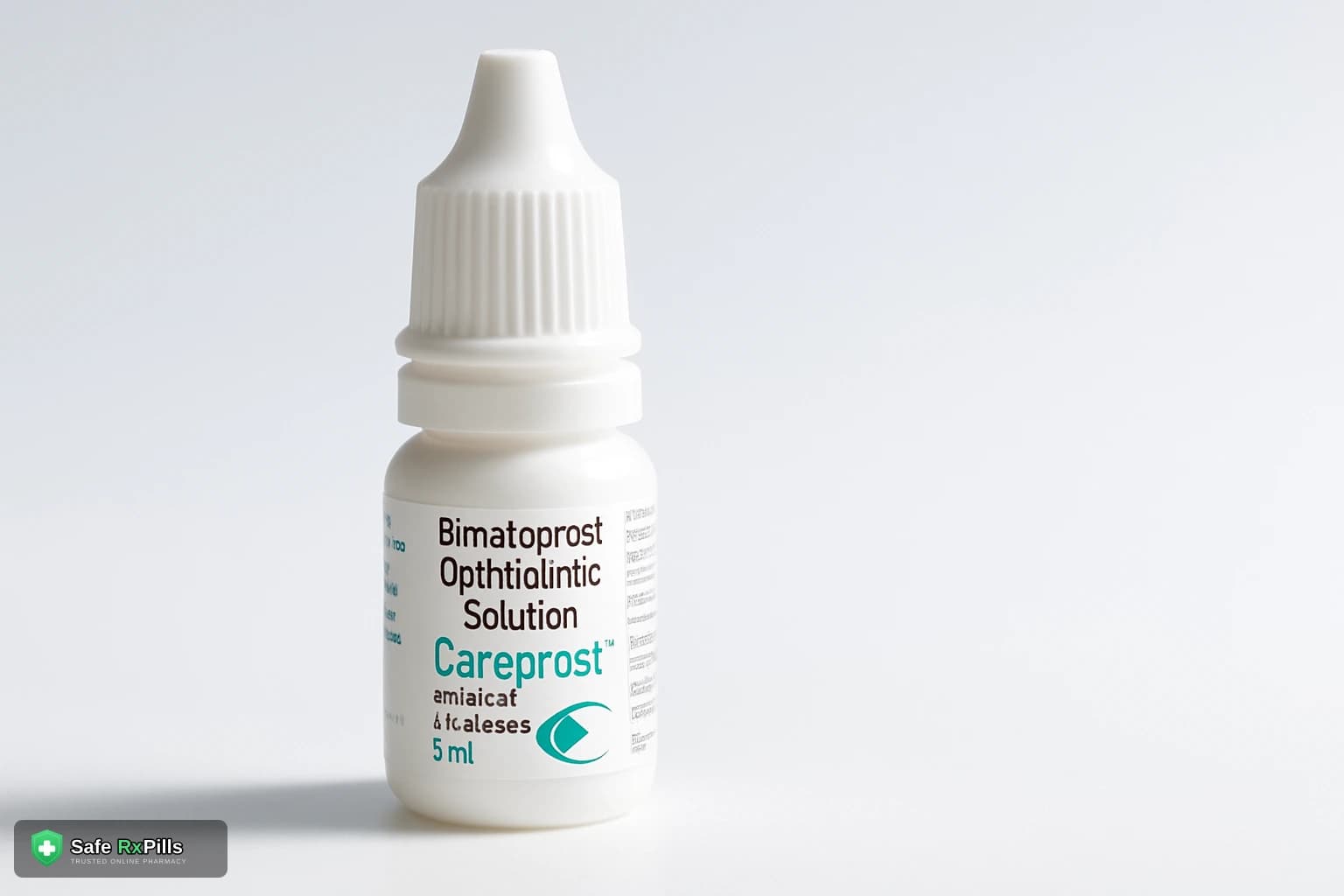
In the United States, bimatoprost requires a prescription. The brand-name version, Latisse, is sold at dermatology clinics and costs between $120 and $200 for a 5ml bottle, often without insurance coverage. Careprost contains the same 0.03% bimatoprost concentration and is available at a fraction of that price through licensed online pharmacies that import from regulated manufacturers.
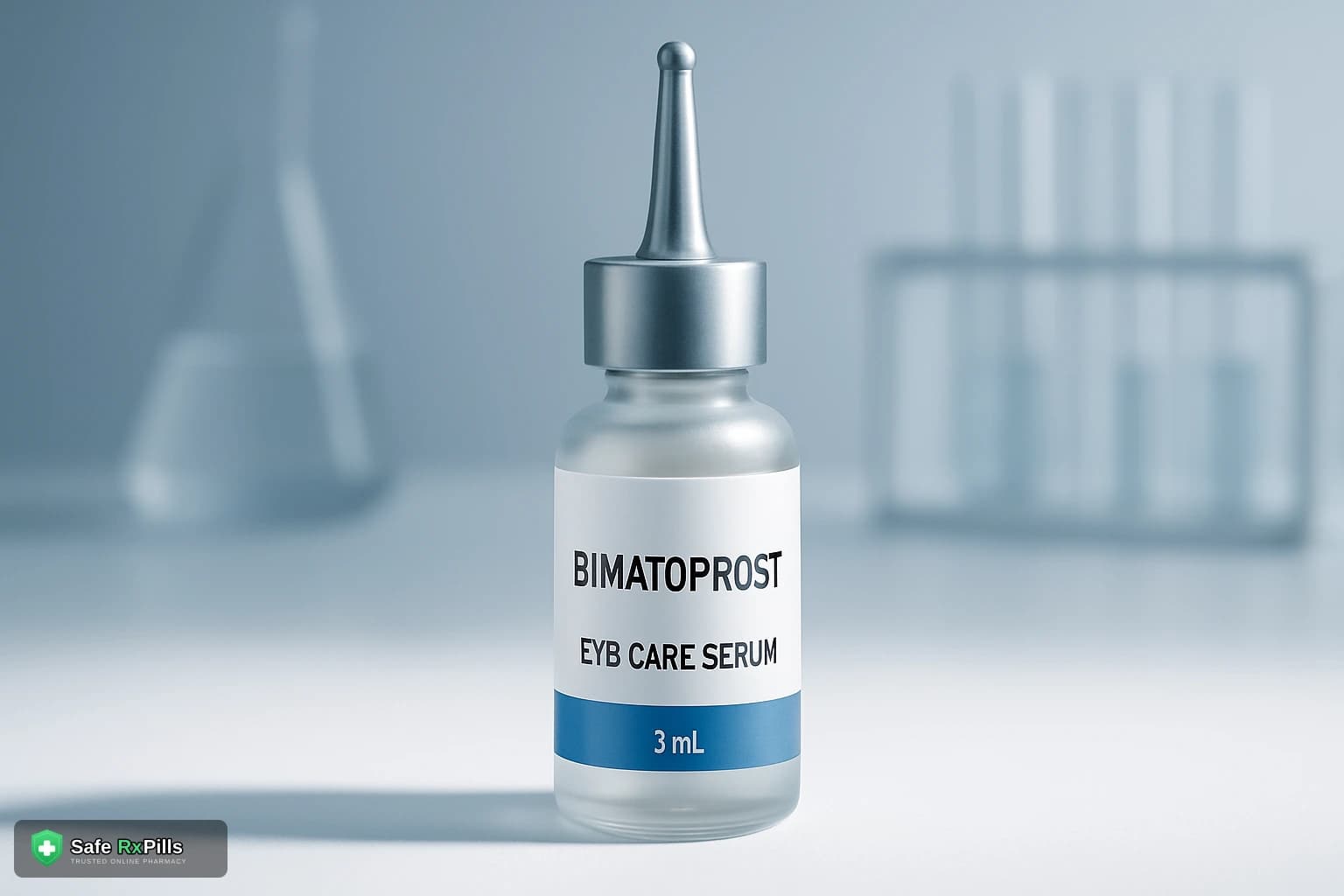
SafeRxPills ships Careprost 3ml bimatoprost directly to US addresses. The 3ml bottle provides enough solution for a full 16-week treatment course when used on both eyes nightly. Shipping from our fulfilment centres typically reaches US customers within 10 to 14 business days, with tracked dispatch confirmation sent by email.
A note on customs: importing personal-use quantities of prescription-strength cosmeceuticals like bimatoprost is generally permitted under FDA personal import policy for US residents, but it is your responsibility to check current regulations. If you have an existing prescription, keep a copy on hand.
If you are also managing skin concerns alongside your lash treatment, products like Betnovate GM or reading the hydroquinone cream guide might be useful for addressing periorbital pigmentation if it develops.
What to Do If Your Results Stall
Some users reach week eight and feel like progress has plateaued. Before assuming the product is not working, run through this checklist.
Check your consistency. Missing three or more nights per week significantly slows the timeline. The follicle cycle does not pause while you skip applications. Set a phone reminder for the same time every night.
Check your application site. If you are applying too far above the lash root (on the eyelid skin rather than right at the base of the lashes), far less bimatoprost reaches the follicles. The brush needs to touch the skin at the very base of the upper lashes.
Check the product storage. Careprost should be stored below 25 degrees Celsius, away from direct sunlight. Heat degrades the active ingredient faster than the expiry date suggests.
Consider your baseline. If your lashes were already moderately full to begin with, the percentage change will be less dramatic visually than for someone starting with sparse or short lashes. Clinical trials measure change from individual baselines, not from a fixed standard.
Rule out deficiencies. Severe iron deficiency or thyroid dysfunction can blunt response to any lash-growth treatment. If you have been losing lashes elsewhere on the body or have other symptoms, see your doctor.
This article is for informational purposes only. Consult a licensed healthcare professional before starting any new treatment.
Medical References
- Bimatoprost in the treatment of eyelash hypotrichosis. Clin Ophthalmol. 2010. PMID 20463804
- Bimatoprost 0.03% for the Treatment of Eyelash Hypotrichosis: A Pooled Safety Analysis of Six Randomized Trials. J Clin Aesthet Dermatol. 2015. PMID 26203317
- Bimatoprost for the treatment of eyelash, eyebrow and scalp alopecia. Expert Opin Investig Drugs. 2017. PMID 28264599
- DailyMed: Bimatoprost prescribing information. U.S. National Library of Medicine
Sources: U.S. National Library of Medicine (PubMed, DailyMed). Last reviewed August 2026.
Related Products
- Careprost 3ml (Bimatoprost) - most popular eyelash growth serum
- Latisse Generic (Bimatoprost 0.03%) - Latisse alternative at fraction of the price
- Lumigan 0.03% Eye Drop - Allergan bimatoprost formula
Where to Buy Careprost in Your Country
Bimatoprost is prescription-only in every market SafeRxPills ships to, but the rules on personal importation, customs handling and delivery times are different in each one. Pick the guide that matches where you live:
- Buy Careprost in the USA: FDA status, prescription rules, personal import allowance and counterfeit checks.
- Buy Careprost in the UK: MHRA position, customs handling and typical UK delivery windows.
- Buy Careprost in Australia: TGA Personal Importation Scheme, the 3 month supply limit and what Australian customers should expect.
To order directly, see Careprost 3ml (bimatoprost 0.03%) or browse the full eye care range.
Using bimatoprost on eyebrows
Eyebrow timelines differ from lash timelines, because brow hair has a shorter growth phase and the treatment area is larger. Phase 3 trial data showed darkness improving from month 1 and fullness from month 2, with the primary endpoint at month 7. The full breakdown is in bimatoprost for eyebrows. For what the product costs and why insurance declines it, see is Latisse covered by insurance.
?Frequently Asked Questions
How long does Careprost take to show results?
Most users see early length changes by weeks 4 to 6, noticeable fullness by weeks 8 to 10, and full results by week 16. The timeline varies depending on your natural lash cycle, application consistency, and individual response to bimatoprost 0.03%.
What happens if I stop using Careprost?
Your lashes will gradually return to their pre-treatment length and thickness over approximately 4 to 8 weeks as your follicle cycle resets. Careprost does not permanently alter the follicle. To maintain results, most users switch to every-other-night application rather than stopping entirely.
Can Careprost change your eye color?
Permanent iris pigmentation has been documented in patients using bimatoprost as glaucoma eye drops placed directly in the eye. Applied to the lash line as a serum, the risk of iris color change is very low but not zero. If you have blue, green, or hazel eyes, discuss this with your doctor before starting.
Is Careprost the same as Latisse?
Both contain bimatoprost 0.03% as the active ingredient and work through the same mechanism. Latisse is the FDA-approved brand manufactured by Allergan and sold in the US for around $120 to $200 per bottle. Careprost is made in India by Sun Pharmaceuticals and contains the equivalent concentration at a significantly lower price point.
Can I use Careprost on my eyebrows?
Some users apply Careprost to sparse eyebrow areas with reported success, and the mechanism of action suggests it should work on brow follicles too. However, this is an off-label use with less clinical data behind it than lash application. Precision is critical because bimatoprost will stimulate hair growth wherever it contacts skin.
SafeRxPills Pharmacy Team
SafeRxPills Editorial Team
Editorial team at SafeRxPills. Articles are written and checked against regulatory drug labelling (DailyMed, FDA, EMA) and published literature.
Comments (0)
Leave a Comment
No comments yet. Be the first to share your thoughts!
Related Articles
Is Careprost Legal in the USA? FDA Status, Prescription Rules and Counterfeit Risk
August 18, 2026