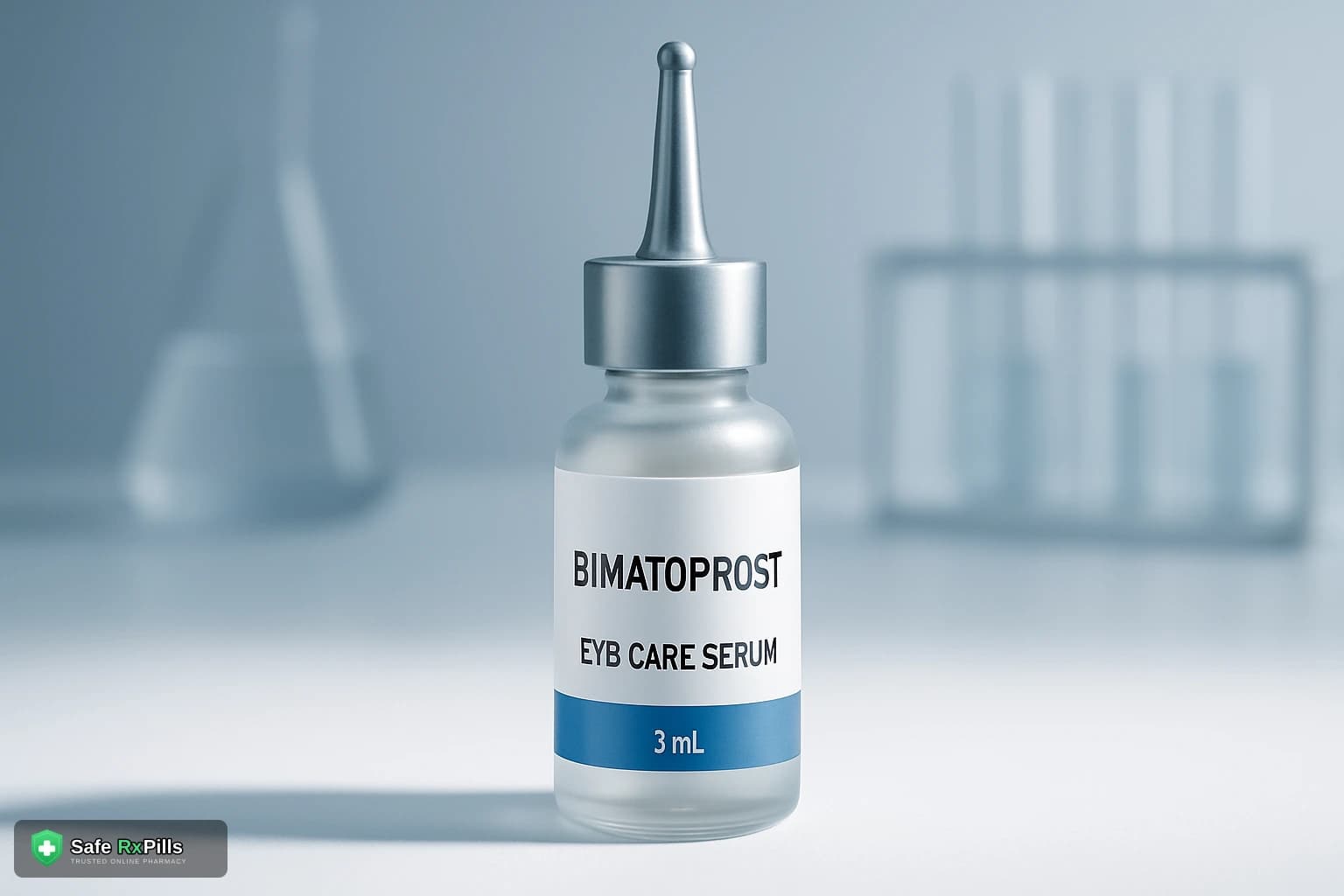
How to Apply Careprost Eyelash Serum: Step-by-Step Guide
SafeRxPills Pharmacy Team
Editorial team at SafeRxPills. Articles are written and checked against regulatory drug labelling (DailyMed, FDA, EMA) and published literature.
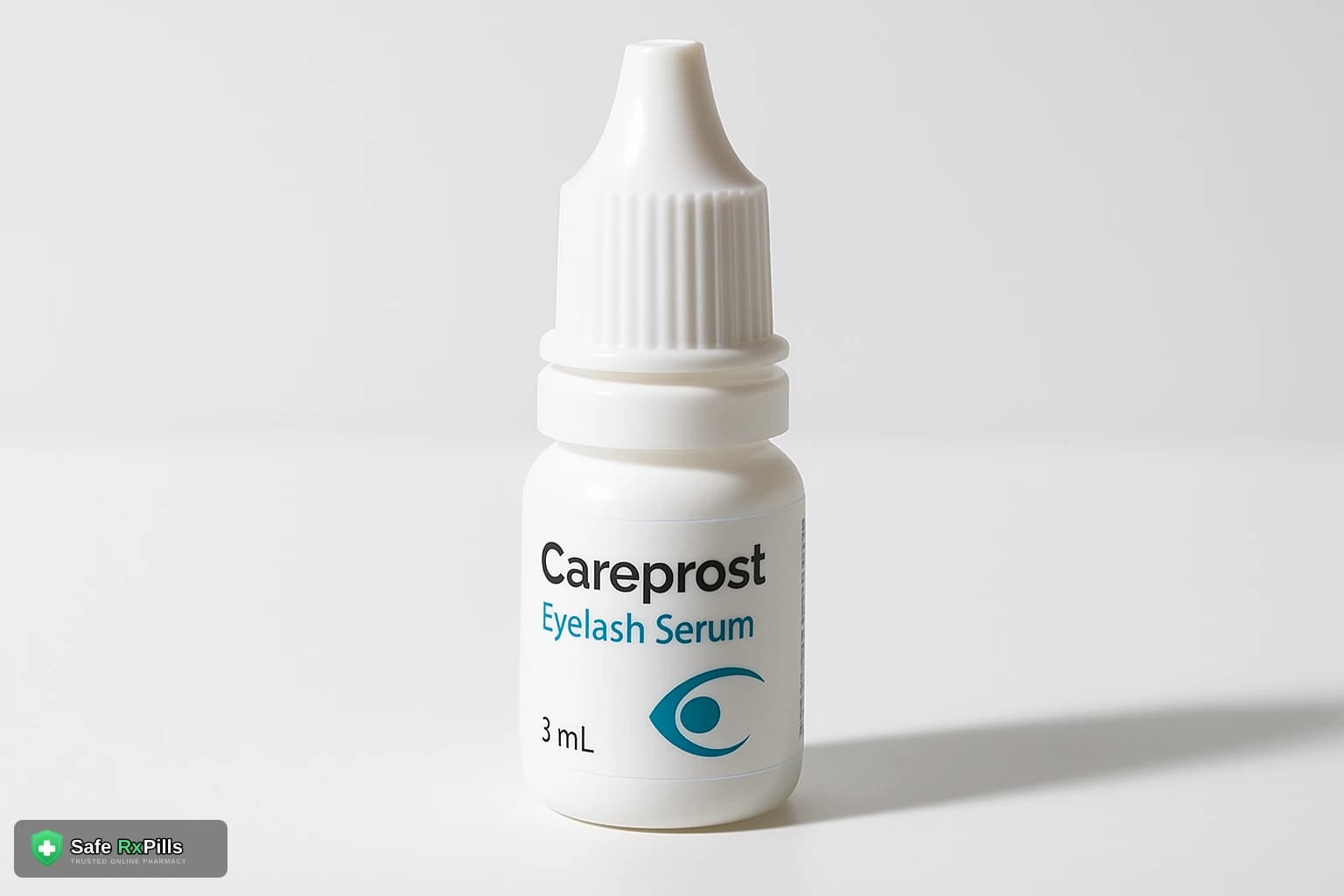
How to Apply Careprost Eyelash Serum: Step-by-Step Guide | SafeRxPills - pharmacy guide
How to Apply Careprost Eyelash Serum: Step-by-Step Guide
To apply Careprost eyelash serum, use the included applicator brush to draw a thin line of solution along the base of your upper eyelid, from the inner corner to the outer corner, once each night. Wipe away any serum that touches your lower lash line or skin to prevent unwanted hair growth. Done consistently, most users see noticeable lash growth within 8 to 12 weeks.
What You Need Before You Apply Careprost
Getting the application right starts before you even open the bottle. A few minutes of preparation make the difference between great results and wasted serum.
First, wash your face and remove all eye makeup. Every trace of mascara, eyeliner, and eyeshadow needs to come off. Makeup residue on your lash line prevents the bimatoprost solution from making proper contact with the skin at the follicle level.
If you wear contact lenses, take them out. Careprost contains 0.03% bimatoprost, and even small amounts of the solution can absorb into soft contact lenses and cause irritation. Wait at least 15 minutes after applying before putting lenses back in.
You will also need:
- The Careprost applicator brushes included in the box (or sterile eyeliner brushes as a backup)
- Clean cotton swabs or tissue for wiping excess
- A well-lit mirror
Use a fresh applicator for each eye. This is not just a hygiene preference. Reusing the same brush on both eyes is a real cross-contamination risk, especially if you have any minor eye irritation.
How to Apply Careprost Eyelash Serum: Step-by-Step
Follow these steps exactly each night for consistent, safe results.
- Wash and dry your face thoroughly. Pat your eye area dry. The skin at your lash line should be clean and free of moisture before you apply.
- Place one drop of Careprost onto the applicator brush. Tilt the Careprost 3ml bimatoprost bottle gently and let one small drop fall onto the tip of the brush. Do not dip the brush directly into the bottle opening. You need very little solution per application.
- Draw a thin line along the upper lash base. Look straight ahead into your mirror. Starting at the inner corner of your upper eyelid, draw a fine line along the skin where your upper lashes meet the lid. Move toward the outer corner. Think of it like applying liquid eyeliner, except you want the line as close to the lash roots as possible.
- Blot any excess immediately. Use a clean tissue or cotton swab to absorb any serum that has pooled beyond the lash line or dripped onto your cheek. This step matters. Bimatoprost stimulates hair growth wherever it contacts skin, so any stray solution can cause fine hair growth in unintended areas.
- Repeat on the other eye with a fresh brush. Never use the same applicator you just used on the first eye.
- Do not apply to the lower lash line directly. The lower lashes will pick up residual solution naturally when you blink. Directly applying to the lower lid increases pigmentation risk and the chance of unwanted hair growth below the eye.
The entire process takes about two minutes. Do it at bedtime so the serum can work undisturbed overnight without being washed off or diluted by eye drops.
How Often Should You Apply Careprost?
Apply Careprost once daily, at night, every day during the growth phase. Once-daily application is the clinically established dosing for bimatoprost 0.03%. Applying it twice a day does not speed up results and actually increases the risk of side effects like eye redness and irritation.
The growth phase typically runs for 12 to 16 weeks. After that, most people drop to a maintenance schedule of three to four nights per week to keep the results they have achieved. If you stop using Careprost entirely, lashes will gradually return to their original length over roughly four to eight weeks, because bimatoprost only maintains its effect while it is actively applied.
For a detailed breakdown of what happens each week, the Careprost eyelash results week by week guide covers what changes to expect from week two through week sixteen.
Common Application Mistakes That Hurt Your Results
Most people who complain that Careprost is not working are making one of these errors.
Applying to the lower lash line directly
This is the most common mistake. The lower lid skin is thinner and more exposed. Direct application there raises the risk of periorbital skin darkening, which is a reversible but annoying side effect where the skin around the eye takes on a slightly deeper pigmentation.
Skipping nights
Bimatoprost works by extending the anagen (active growth) phase of the hair follicle cycle. Missing multiple applications breaks the consistent stimulation the follicles need. Missing one night occasionally is not a disaster, but skipping three or four nights a week will significantly slow your results.
Applying before makeup removal
Serum applied over mascara or liner residue cannot penetrate to the follicle properly. You are essentially wasting product.
Using too much product
A single drop per eye is the correct amount. Flooding the lash line with serum does not accelerate growth. It just increases the chance of the solution running into your eye or onto surrounding skin.
Applying in the morning
Morning application means the serum gets washed off during your daytime face-washing routine. Nighttime application gives the bimatoprost uninterrupted contact time with the follicle area for six to eight hours.
When Will You Actually See Results?
Expect to see small but real changes by week four to six. You might notice lashes looking slightly less sparse and a little darker at the roots. The more dramatic length and fullness changes typically appear between weeks eight and twelve.
By week sixteen, most consistent users see their lashes at maximum length, up to 25% longer than baseline in clinical measurements, with improved thickness and darker pigmentation. Individual results vary based on your natural lash cycle and how consistently you apply.
The Careprost eyelash serum guide has more detail on what drives individual variation in results and how to get the most from your treatment cycle.
One realistic note: Careprost is not an overnight fix. Lash follicles operate on their own biological timeline, and no topical product can override that entirely. Patience and consistency are what separate people who see dramatic results from those who give up at week five.
Buying Careprost in the USA
In the United States, bimatoprost is FDA-approved under the brand name Latisse for eyelash hypotrichosis, requiring a prescription. Careprost contains the same active ingredient at the same 0.03% concentration and is widely purchased by American consumers as a cost-effective alternative.
Latisse typically costs between $120 and $180 per 3ml bottle at US pharmacies. Careprost from SafeRxPills is significantly more affordable, making consistent long-term use practical rather than prohibitive. For many people, the cost difference alone is the reason they can actually complete a full 16-week treatment cycle instead of stopping early.
SafeRxPills ships directly to US addresses, with packaging that protects the integrity of the solution. The Careprost 3ml bimatoprost bottle includes applicator brushes, so you have everything you need to start on day one.
If you have a history of elevated intraocular pressure or are currently using glaucoma medications, speak with an eye doctor before starting Careprost. Bimatoprost is also used clinically to lower intraocular pressure, which is not a concern for most cosmetic users but is relevant if you have an underlying eye condition.
This article is for informational purposes only. Consult a qualified healthcare professional before starting any new treatment, particularly if you have existing eye conditions or are taking medications that affect intraocular pressure.
Medical References
- Bimatoprost in the treatment of eyelash hypotrichosis. Clin Ophthalmol. 2010. PMID 20463804
- Bimatoprost 0.03% for the Treatment of Eyelash Hypotrichosis: A Pooled Safety Analysis of Six Randomized Trials. J Clin Aesthet Dermatol. 2015. PMID 26203317
- Bimatoprost for the treatment of eyelash, eyebrow and scalp alopecia. Expert Opin Investig Drugs. 2017. PMID 28264599
- DailyMed: Bimatoprost prescribing information. U.S. National Library of Medicine
Sources: U.S. National Library of Medicine (PubMed, DailyMed). Last reviewed August 2026.
Related Products
- Careprost 3ml (Bimatoprost) - most popular eyelash growth serum
- Latisse Generic (Bimatoprost 0.03%) - Latisse alternative at fraction of the price
- Lumigan 0.03% Eye Drop - Allergan bimatoprost formula
Where to Buy Careprost in Your Country
Bimatoprost is prescription-only in every market SafeRxPills ships to, but the rules on personal importation, customs handling and delivery times are different in each one. Pick the guide that matches where you live:
- Buy Careprost in the USA: FDA status, prescription rules, personal import allowance and counterfeit checks.
- Buy Careprost in the UK: MHRA position, customs handling and typical UK delivery windows.
- Buy Careprost in Australia: TGA Personal Importation Scheme, the 3 month supply limit and what Australian customers should expect.
To order directly, see Careprost 3ml (bimatoprost 0.03%) or browse the full eye care range.
Applying to eyebrows instead of lashes
Brow application uses a different technique from the lash line, and the supporting evidence is off label. Both are covered in bimatoprost for eyebrows. US regulatory status is covered in is Careprost legal in the USA.
?Frequently Asked Questions
Can I apply Careprost to my lower lashes?
Do not apply Careprost directly to the lower lash line. Your lower lashes will still benefit from residual transfer when you blink. Direct lower lid application significantly increases the risk of skin darkening around the eye and unwanted hair growth on the lower cheek area.
What happens if Careprost gets in my eye?
A small amount entering the eye is not dangerous and is actually how the drug works in its glaucoma application. You may experience temporary mild redness or a slight stinging sensation. Rinse with clean water if the irritation bothers you. If you notice persistent redness, blurred vision, or discomfort lasting more than a day, stop use and consult a doctor.
Can I apply mascara over Careprost?
Yes, but apply mascara in the morning, not immediately after your nighttime Careprost application. Let the serum absorb overnight without anything on top of it. Your regular mascara and makeup routine can continue as normal during the day.
Will my lashes go back to normal if I stop using Careprost?
Yes. Bimatoprost works by extending the active growth phase of the lash follicle. Once you stop applying it, the follicles return to their natural cycle and lashes gradually return to their original length, typically over four to eight weeks. To maintain results long-term, most people settle into a three to four times per week maintenance schedule.
How long does one 3ml bottle of Careprost last?
With correct once-daily application using one drop per eye, a 3ml bottle typically lasts between four and six weeks. If you are in the maintenance phase applying three to four times per week, the same bottle will last two to three months. Using more than one drop per eye per application burns through product without improving results.
SafeRxPills Pharmacy Team
SafeRxPills Editorial Team
Editorial team at SafeRxPills. Articles are written and checked against regulatory drug labelling (DailyMed, FDA, EMA) and published literature.
Comments (0)
Leave a Comment
No comments yet. Be the first to share your thoughts!
Related Articles
Is Careprost Legal in the USA? FDA Status, Prescription Rules and Counterfeit Risk
August 18, 2026