Ivermectin and Fenbendazole Tablets: The Combination Tablet vs Separate Tablets
Lokesh Maurya
Ivermectin and Fenbendazole Tablets: Uses, Dosage & Where to Buy in the USA | SafeRxPills - pharmacy guide
In this article (19 sections)
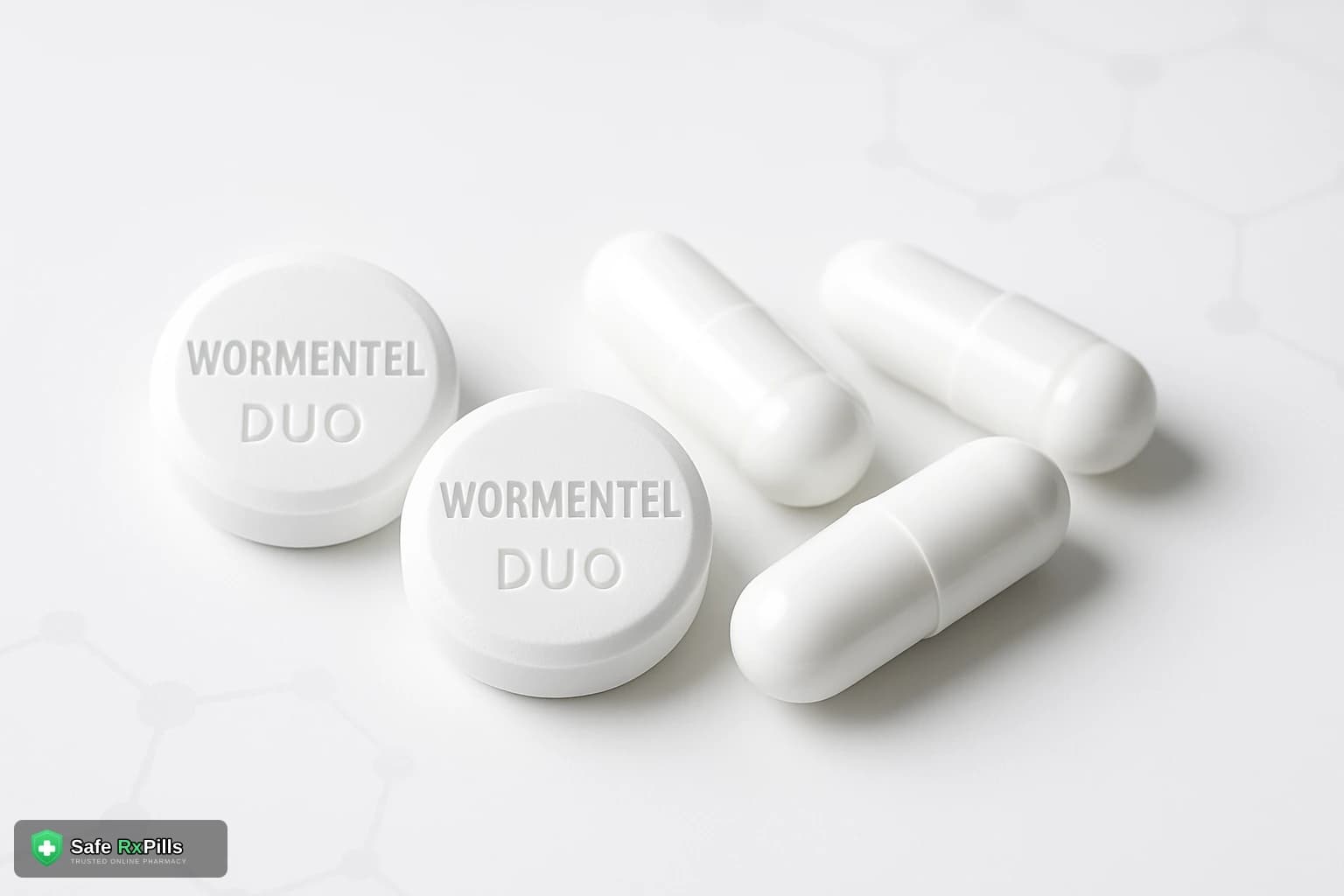
"Ivermectin and fenbendazole tablets" can mean two different things: a single combination tablet that contains both drugs, or two separate tablets taken side by side. The combination exists. Wormentel Duo 156, made in India by Kachhela Medex, contains fenbendazole 150 mg and ivermectin 6 mg in each tablet. Whether that tablet suits you is a different question, and the answer turns on dose arithmetic that most product pages skip.
This guide compares the combination tablet with separate tablets: what each contains, how the fixed ratio lines up with the only approved human dosing that exists (ivermectin's), why the two drugs pull in opposite directions on food and on schedule, the safety record of each, and what each option costs. We sell both the combination and the separate tablets, so we have a commercial interest. Nothing here is a treatment protocol, and fenbendazole is not approved for human use in any country.
The short answer
The combination tablet is convenient but rigid. One Wormentel Duo tablet supplies the label ivermectin dose only for someone weighing 25 to 35 kg. An adult of 70 kg would need two and a half tablets to reach the label ivermectin dose, which brings 375 mg of fenbendazole with it whether that is wanted or not. Taking the combination daily, as some fenbendazole regimens suggest, also means taking ivermectin daily, which is not how ivermectin is labelled. Separate tablets let each drug be dosed on its own terms and cost about the same per dose.
What the combination tablet contains
| Detail | Wormentel Duo 156 |
|---|---|
| Fenbendazole | 150 mg per tablet |
| Ivermectin | 6 mg per tablet |
| Ratio | 25 mg fenbendazole for every 1 mg ivermectin, fixed |
| Maker | Kachhela Medex Pvt. Ltd., India |
| Pack | 10 strips of 10 tablets |
| Regulatory status | Not approved by the FDA, MHRA, TGA or Health Canada |
| Our price | US$88 per 100 tablets (about US$0.88 each) |
The "156" in the name is simply 150 plus 6. It is not a dose of anything.
Separate tablets: what is available
- Ivermectin: 3 mg (Ivercor 3), 6 mg (Ivercor 6) and 12 mg (Ivercor 12, Ivecop 12).
- Fenbendazole: 222 mg (Wormiza 222), 444 mg (Wormiza 444) and 888 mg (Wormentel 888), among others.
The 3 mg ivermectin strength matters because it matches the US Stromectol label, which doses by counting 3 mg tablets against body weight.
The approval gap between the two drugs
Ivermectin is an FDA-approved human medicine. The Stromectol label covers intestinal strongyloidiasis and onchocerciasis, with weight-based single doses. Fenbendazole has no human approval anywhere. It is a veterinary benzimidazole; the benzimidazoles approved for people are albendazole and mebendazole. That gap is the root of every problem with dosing the combination: only one of the two drugs has an official human dose to anchor to. Our fenbendazole vs ivermectin comparison sets out the evidence for each drug in detail.
How the fixed ratio lines up with label ivermectin dosing
For strongyloidiasis, the Stromectol label gives a single dose of about 200 micrograms per kilogram, expressed as a number of 3 mg tablets by weight band. Converting those bands into 6 mg Wormentel Duo tablets shows the problem.

Only one weight band, 25 to 35 kg, lands exactly on one tablet. Everyone else either has to split tablets or accept an ivermectin dose above or below the label amount. For adults of 80 kg and over, the label calls for 200 mcg/kg, which means 16 mg or more, close to three Duo tablets.
What that does to the fenbendazole dose
| Body weight | Label ivermectin dose | Duo tablets needed | Fenbendazole that comes with it |
|---|---|---|---|
| 25 to 35 kg | 6 mg | 1 | 150 mg |
| 36 to 50 kg | 9 mg | 1.5 | 225 mg |
| 51 to 65 kg | 12 mg | 2 | 300 mg |
| 66 to 79 kg | 15 mg | 2.5 | 375 mg |
Because there is no approved human fenbendazole dose, none of those amounts can be called right or wrong for fenbendazole. The point is that with a fixed ratio, you cannot change one dose without changing the other. With separate tablets you can.
The schedule clash
The label gives ivermectin as a single oral dose for strongyloidiasis, with follow-up stool checks and retreatment only if larvae persist. For onchocerciasis it is repeated at intervals of months. Fenbendazole regimens circulating online are usually daily or several days a week, for weeks. If you take the combination tablet on a fenbendazole-style schedule, you are also taking ivermectin daily. That is not a labelled regimen, and ivermectin has a plasma half-life of about 18 hours, so daily dosing builds exposure. This is the single biggest reason we do not suggest the combination tablet for anyone following a daily fenbendazole schedule.
The food conflict
The Stromectol label says to take ivermectin on an empty stomach with water. Its clinical pharmacology section explains why food matters: a 30 mg dose taken after a high-fat meal produced about 2.5 times the bioavailability of the same dose taken fasting.

Fenbendazole is poorly absorbed, and regimens shared online commonly tell people to take it with a fatty meal to improve uptake. With two separate tablets, you can follow the ivermectin label and take fenbendazole on its own terms. With one combination tablet, you cannot do both: take it fasting and you follow the ivermectin label; take it with a fatty meal and you multiply the ivermectin exposure.
When the combination tablet is reasonable
- Your body weight is close to the 25 to 35 kg band, or your doctor has worked out a dose that happens to match whole tablets.
- It is a single dose or a short, defined course, not a daily schedule.
- Your doctor has reviewed the fenbendazole component and is comfortable with it.
When separate tablets are the better choice
- You are an adult in the 50 to 100 kg range and want the label ivermectin dose without splitting tablets.
- You want ivermectin as a single dose and fenbendazole on a different schedule.
- You want to take ivermectin fasting, as the label directs.
- You want to stop one drug, for example after a side effect, without stopping the other.
Splitting tablets
Splitting a tablet only gives an even dose when the tablet is scored and made to be divided. Check the tablets you receive. If they are not scored, half-tablet doses will be uneven, which is one more argument for separate tablets in the strength you need: an adult can reach most label ivermectin doses with 3 mg and 12 mg tablets alone.
Ivermectin safety in brief
In the Stromectol label's strongyloidiasis trials, side effects judged possibly or definitely drug related included dizziness and itching (each about 2.8%), and diarrhoea and nausea (each about 1.8%). The label warns of rare but serious neurological effects, including confusion, stupor and coma, at recommended doses and in overdose. People who have lived in or travelled to central or west Africa may need screening for Loa loa before treatment, and ivermectin can raise the INR in people taking warfarin. Our ivermectin side effects guide covers the label data by indication.
Fenbendazole safety in brief
Fenbendazole has never been through human clinical trials, so its human side-effect rate is unknown. Published case reports describe drug-induced liver injury in people who took it themselves, including a patient with lung cancer reported in Case Reports in Oncology in 2021. Anyone taking fenbendazole repeatedly should discuss liver blood tests with a doctor, and pregnant or breastfeeding women should avoid it. More detail is in our guide to fenbendazole and human use.
Interactions to check
- Warfarin: increased INR has been reported with ivermectin.
- Medicines that affect CYP3A4 can change ivermectin levels.
- Alcohol and other drugs that strain the liver add to any liver load from fenbendazole.
- Other antiparasitic medicines: do not stack products without a clear reason from a clinician.
Better-studied alternatives for a diagnosed infection
If you have a confirmed worm infection, the combinations with human trial data pair ivermectin with albendazole, not fenbendazole. Bandy-Plus 12 combines ivermectin 12 mg with albendazole 400 mg. For benzimidazole coverage on its own, albendazole (Zentel 400) and mebendazole (Mebmox 500) are the human-approved members of the drug family. A stool test should come first, because the right drug depends on the parasite. Our fenbendazole vs mebendazole guide explains the difference.
Cost: combination vs separate tablets
| Option | Pack price | Per tablet | Per "6 mg ivermectin plus fenbendazole" dose |
|---|---|---|---|
| Wormentel Duo 156 (combination) | US$88 for 100 | US$0.88 | US$0.88 (with 150 mg fenbendazole) |
| Ivercor 6 plus Wormiza 222 (separate) | US$65 + US$32, each 100 | US$0.65 + US$0.32 | US$0.97 (with 222 mg fenbendazole) |
The combination is slightly cheaper per tablet, but the separate route is close in price and far more flexible. Prices are our October 2026 catalogue figures.
Buying in the USA
Oral ivermectin is a prescription medicine in the United States. Fenbendazole tablets for humans, and Wormentel Duo, are not FDA approved; personal importation of unapproved drugs is left to FDA discretion and is not guaranteed. Our ivermectin USA page and fenbendazole USA page cover shipping, timing and payment for US orders.
A note on protocols
We do not publish a human dosing protocol for fenbendazole, because no validated one exists. Pages that present one as standard are extrapolating from animal use. If you are weighing a regimen you have read about, take it to a doctor along with this page, and see our ivermectin dosage guide for the label weight bands.
Sources
- STROMECTOL (ivermectin) tablets, US prescribing information, Merck Sharp and Dohme. Indications, Dosage and Administration (strongyloidiasis and onchocerciasis tables), Clinical Pharmacology (pharmacokinetics, high-fat meal effect, half-life), Warnings, Adverse Reactions, Precautions (warfarin).
- Wormentel Duo 156 pack labelling, Kachhela Medex Pvt. Ltd.: fenbendazole 150 mg and ivermectin 6 mg per tablet, 10 x 10 tablets.
- Yamaguchi T, et al. Drug-induced liver injury in a patient with non-small cell lung cancer after the self-administration of fenbendazole. Case Rep Oncol 2021;14(2):886-891. PMC8255718.
- SafeRxPills product catalogue, prices as of October 2026.
This guide is general information and does not replace advice from a doctor who knows your medical history. Fenbendazole is not approved for human use. Do not start, combine or change antiparasitic medicines without medical advice.
Comments (0)
No comments yet. Be the first to share your thoughts!
Related Articles
Wormentel Duo (Ivermectin + Albendazole): The Combination Antiparasitic Explained
August 22, 2026

Fenbendazole vs Ivermectin: Differences, Parasite Coverage, and Whether You Can Take Both
June 19, 2026