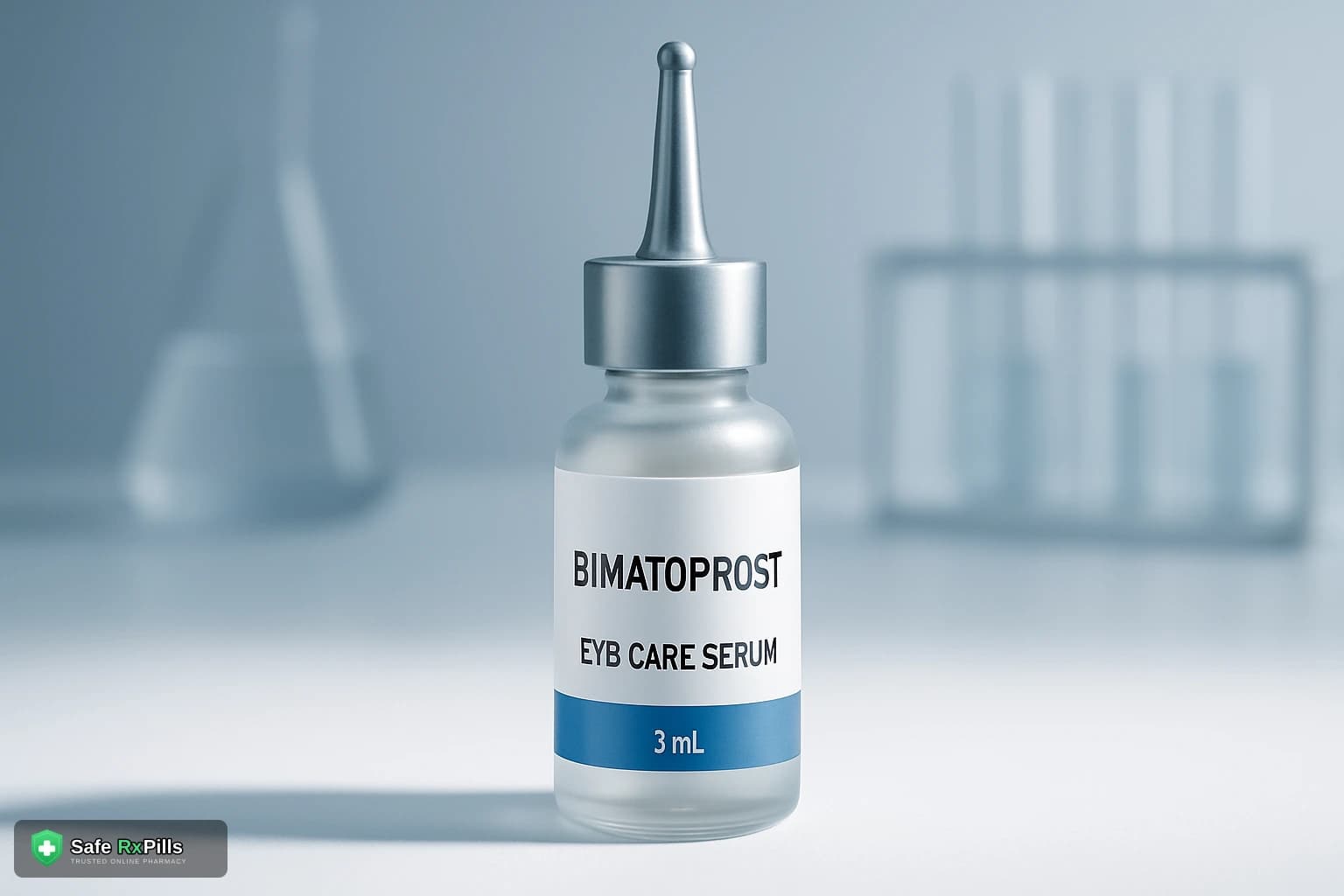
Latisse vs Bimatoprost Difference: What US Patients Need to Know
SafeRxPills Pharmacy Team
Editorial team at SafeRxPills. Articles are written and checked against regulatory drug labelling (DailyMed, FDA, EMA) and published literature.

Latisse vs Bimatoprost Difference: What US Patients Need to Know | SafeRxPills - pharmacy guide
Latisse vs Bimatoprost Difference: What US Patients Need to Know
The latisse vs bimatoprost difference comes down to one thing: branding. Latisse is Allergan's brand-name version of bimatoprost 0.03% ophthalmic solution, while generic bimatoprost contains the exact same active ingredient at the exact same concentration. The only meaningful differences are the price, the packaging, and the manufacturer behind the label.
What Is Bimatoprost and How Does It Work?
Bimatoprost is a synthetic prostaglandin analog. According to the FDA label, it selectively mimics naturally occurring substances called prostamides and works by increasing the outflow of aqueous humor through both the trabecular meshwork and uveoscleral routes. More fluid draining out means lower pressure inside the eye.
Elevated intraocular pressure (IOP) is the primary risk factor for glaucomatous field loss. The higher your IOP, the greater the risk of optic nerve damage and permanent vision loss. Bimatoprost addresses that directly.
The pressure-lowering effect starts roughly 4 hours after the first dose, with maximum effect reached within 8 to 12 hours, according to the DailyMed label. Blood concentrations peak within 10 minutes of dosing and drop below detectable levels in most patients within 1.5 hours. It does not accumulate in the body over time.
After reaching the bloodstream, bimatoprost undergoes oxidation, N-deethylation, and glucuronidation to form a range of metabolites. About 67% of an intravenous dose is excreted in the urine, with 25% recovered in feces. The elimination half-life is approximately 45 minutes.
Latisse and Bimatoprost: Same Drug, Different Packaging
Both Latisse and generic bimatoprost eye drops contain bimatoprost 0.03%. The concentration is identical. The mechanism is identical. The clinical outcomes are identical.
What differs is the presentation. Latisse is specifically marketed for eyelash growth and comes with sterile applicator brushes. Generic bimatoprost for glaucoma is dispensed in a standard multi-dose dropper bottle. Some patients using generic bimatoprost for IOP reduction noticed as a side effect that their eyelashes grew longer and thicker. Allergan turned that observation into a separate brand and a much higher price tag.
Many dermatologists and ophthalmologists prescribe generic bimatoprost off-label for eyelash hypotrichosis because the formula is chemically the same. The FDA does not require you to buy the branded version to get the same active molecule.
Understanding this dynamic is the same principle explained in our post on generic medicine vs brand medicine: once a drug's patent expires or a generic is approved, you are paying for a name, not a better product.
FDA-Approved Uses: Glaucoma vs Eyelash Growth
The FDA label for bimatoprost ophthalmic solution 0.03% specifically indicates it for the reduction of elevated intraocular pressure in patients with open-angle glaucoma or ocular hypertension. That is the primary, on-label use.
Latisse carries a separate FDA approval for treating hypotrichosis of the eyelashes, which is the medical term for inadequate or sparse lashes. It is applied nightly to the base of the upper eyelid using the included applicators.
Here is what matters practically: the drug doing the work in both products is bimatoprost 0.03%. Ophthalmologists treating glaucoma frequently see patients whose lashes darken and thicken as a secondary effect. That is not a coincidence. It is the same biological mechanism. The eyelash changes from bimatoprost are listed as a known adverse reaction in the FDA label, occurring in a significant percentage of glaucoma patients who had no intention of growing longer lashes.
If you have been prescribed Latisse specifically for eyelash growth, your prescriber is using the on-label approval. If a doctor writes you a script for bimatoprost 0.03% and you use it the same way, the clinical effect is the same.
Side Effects You Should Know Before Starting
The FDA label is direct about this: the most common adverse reaction, occurring in up to 45% of patients, is conjunctival hyperemia (redness of the eye). Most patients tolerate it, but approximately 3% discontinued treatment because of it.
Other reactions occurring in 15% to 45% of patients include growth of eyelashes and ocular itching. Reactions occurring in 3% to 10% of patients include:
- Ocular dryness
- Visual disturbance
- Ocular burning
- Foreign body sensation
- Periorbital skin darkening
- Blepharitis
- Superficial punctate keratitis
The warnings you need to take seriously involve pigmentation. According to DailyMed, bimatoprost can permanently increase brown pigmentation of the iris. This change may not become visible for several months to years. The mechanism is increased melanin in existing melanocytes, not new melanocyte growth. Once the iris changes color, it likely does not reverse after you stop the drug. Periorbital skin darkening and eyelash color changes are more often reversible.
Macular edema has been reported during treatment. Patients who are aphakic, have a torn posterior lens capsule, or have known risk factors for macular edema should use this medication with caution. Intraocular inflammation, including uveitis, has also been reported with prostaglandin analogs as a class.
One practical note: bimatoprost solution contains benzalkonium chloride as a preservative. Remove soft contact lenses before instilling the drops and wait at least 15 minutes before reinserting them. Benzalkonium chloride can absorb into soft lenses and discolor them.
Systemic side effects occurred in roughly 10% of patients in clinical trials, primarily upper respiratory infections and colds. Headaches, abnormal liver function tests, and asthenia were reported in 1% to 5% of patients.
Dosage and How to Use It Correctly
The FDA-recommended dose is one drop in the affected eye or eyes once daily in the evening. That timing matters. According to the DailyMed label, bimatoprost should not be administered more than once daily. More frequent dosing of prostaglandin analogs can actually reduce the IOP-lowering effect, not increase it.
If you are using bimatoprost alongside other topical eye medications, space them out by at least 5 minutes to prevent dilution and washout of either drug.
For the eyelash growth application, the technique is different from a glaucoma drop. You apply one drop to the applicator brush and draw it across the base of the upper eyelid margin, similar to applying liquid eyeliner. Avoid getting excess solution in the eye or on the lower lid. Any solution that drips onto the lower lash line will also stimulate growth there.
Steady state is reached within the first week of once-daily dosing. Mean peak blood concentrations are approximately 0.08 ng/mL, which is very low. There is no significant systemic accumulation over time.
The contraindication is straightforward: do not use bimatoprost if you have a known hypersensitivity to bimatoprost or any ingredient in the formulation.
USA Pricing, Prescriptions, and Ordering Options
In the United States, both Latisse and generic bimatoprost require a prescription. You cannot walk into a pharmacy and buy either one over the counter. That said, the price gap between the two is significant and consistently reported by patients as one of the main reasons they search for alternatives.
Brand-name Latisse at US retail pharmacies typically costs between $150 and $200 for a 5 mL bottle, sometimes more depending on the pharmacy and whether insurance covers it. Most insurance plans do not cover Latisse when prescribed for cosmetic eyelash growth, which means the full cost lands on you. Generic bimatoprost 0.03% is available at a fraction of that price.
SafeRxPills ships to the USA and offers generic bimatoprost eye drops at a substantially lower cost than domestic retail. The active ingredient, concentration, and clinical effect are the same as the branded product. For patients managing a long-term condition like glaucoma or ocular hypertension, or maintaining an eyelash treatment regimen, the cost difference adds up quickly over months and years.
When ordering from an online pharmacy, the things to verify are licensing, dispensing practices, and whether the product is clearly labeled with its active ingredient and concentration. SafeRxPills operates as a licensed online pharmacy with transparent product listings.
It is worth knowing that a completed phase 4 clinical study (ClinicalTrials.gov NCT01975714) comparing bimatoprost 0.03% preservative-free formulation to latanoprost 0.005% confirmed bimatoprost's IOP-lowering efficacy in patients with open-angle glaucoma and ocular hypertension over a 6-month period. The evidence behind generic bimatoprost is not thin. It is the same compound that has been studied extensively for decades.
Patients looking to understand broader context around how generic drugs compare to their branded counterparts can read more in our article on generic medicine vs brand medicine, which covers the regulatory framework behind generic approval in the US.
Medical References
- Bimatoprost in the treatment of eyelash hypotrichosis. Clin Ophthalmol. 2010. PMID 20463804
- Bimatoprost 0.03% for the Treatment of Eyelash Hypotrichosis: A Pooled Safety Analysis of Six Randomized Trials. J Clin Aesthet Dermatol. 2015. PMID 26203317
- Bimatoprost for the treatment of eyelash, eyebrow and scalp alopecia. Expert Opin Investig Drugs. 2017. PMID 28264599
- DailyMed: Bimatoprost prescribing information. U.S. National Library of Medicine
Sources: U.S. National Library of Medicine (PubMed, DailyMed). Last reviewed August 2026.
This article is for informational purposes only. Always consult a licensed healthcare professional before starting, stopping, or changing any medication.
Related Products
- Careprost 3ml (Bimatoprost) - most popular eyelash growth serum
- Latisse Generic (Bimatoprost 0.03%) - Latisse alternative at fraction of the price
- Lumigan 0.03% Eye Drop - Allergan bimatoprost formula
Where to Buy Careprost in Your Country
Bimatoprost is prescription-only in every market SafeRxPills ships to, but the rules on personal importation, customs handling and delivery times are different in each one. Pick the guide that matches where you live:
- Buy Careprost in the USA: FDA status, prescription rules, personal import allowance and counterfeit checks.
- Buy Careprost in the UK: MHRA position, customs handling and typical UK delivery windows.
- Buy Careprost in Australia: TGA Personal Importation Scheme, the 3 month supply limit and what Australian customers should expect.
To order directly, see Careprost 3ml (bimatoprost 0.03%) or browse the full eye care range.
?Frequently Asked Questions
Is generic bimatoprost exactly the same as Latisse?
Yes. Both contain bimatoprost 0.03% as the active ingredient. The concentration, mechanism, and clinical effect are identical. The difference is the manufacturer, the branding, and the price. Latisse is marketed specifically for eyelash growth and includes applicator brushes; generic bimatoprost is typically dispensed in a standard dropper bottle used for glaucoma treatment.
Can I use bimatoprost eye drops for eyelash growth instead of Latisse?
Many physicians prescribe generic bimatoprost off-label for eyelash growth because the active molecule is the same. The eyelash-thickening and lengthening effect is a well-documented side effect listed in the FDA label for bimatoprost, occurring in a significant percentage of glaucoma patients. Talk to your prescriber about writing a script for generic bimatoprost if cost is a concern.
How long does bimatoprost take to grow eyelashes?
Most patients see noticeable eyelash changes after 4 to 8 weeks of nightly use, with full results typically visible around the 12 to 16 week mark. The FDA label lists eyelash growth as an adverse reaction occurring in a large percentage of patients using bimatoprost for glaucoma, which confirms it is a reliable biological effect of the drug.
Will my eye color change permanently if I use bimatoprost?
It can. According to the DailyMed label, bimatoprost increases melanin content in iris melanocytes, which can cause permanent darkening of the iris. This change may not be visible for several months to years. Periorbital skin darkening and eyelash color changes are more likely to be reversible after stopping the medication, but iris pigmentation changes are considered likely permanent.
How often should I apply bimatoprost or Latisse?
Once daily in the evening. The FDA label is explicit that bimatoprost should not be used more than once per day. More frequent dosing of prostaglandin analogs can reduce the intraocular pressure-lowering effect rather than enhance it. For eyelash applications, one drop per applicator to the upper eyelid margin nightly is the standard approach.
SafeRxPills Pharmacy Team
SafeRxPills Editorial Team
Editorial team at SafeRxPills. Articles are written and checked against regulatory drug labelling (DailyMed, FDA, EMA) and published literature.
Comments (0)
Leave a Comment
No comments yet. Be the first to share your thoughts!
Related Articles
Is Careprost Legal in the USA? FDA Status, Prescription Rules and Counterfeit Risk
August 18, 2026