
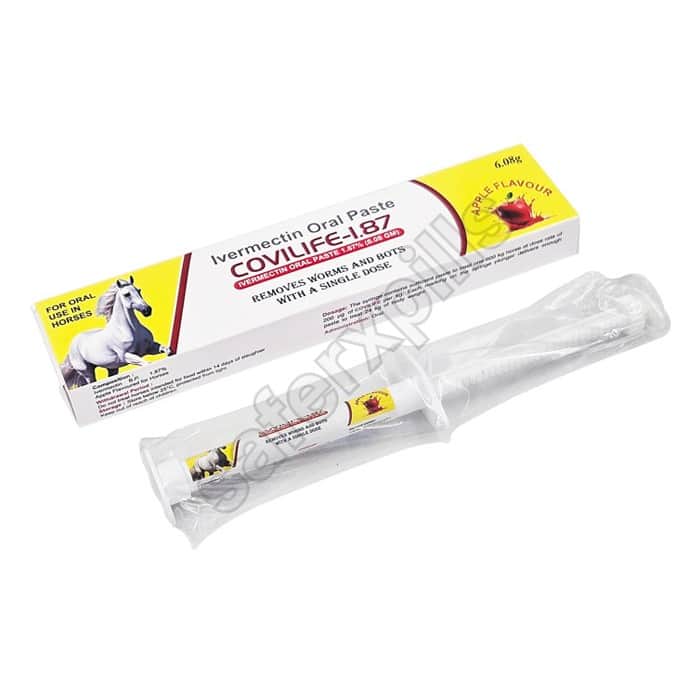
Covilife 1.87% Oral Paste for Horse
Generic: Ivermectin
Select Pack Size:
Selected: 1 Paste
$20.00 total
$30.00 total
Save 33%About Covilife 1.87% Oral Paste for Horse
Covilife 1.87% Oral Paste for Horse is a veterinary ivermectin formulation manufactured for equine antiparasitic use. Each gram of paste contains 18.7 mg of ivermectin in a flavored oral gel base designed for administration to horses by mouth using a graduated syringe applicator. A standard tube of veterinary ivermectin paste delivers enough drug to treat a 1,250 lb horse at the manufacturer-recommended dose of 200 micrograms of ivermectin per kilogram of body weight.
Ivermectin is a macrocyclic lactone with broad-spectrum activity against nematodes and ectoparasites. It works by binding to glutamate-gated chloride channels in invertebrate nerve and muscle cells, which causes paralysis and death of the parasite. Mammalian cells lack these channels at physiologically reachable concentrations, which gives ivermectin its wide therapeutic window in horses, cattle, dogs, and other species (PMID 28749905).
What this product treats in horses
The standard equine indication covers large strongyles, small strongyles, ascarids (Parascaris equorum), pinworms (Oxyuris equi), hairworms, large-mouth stomach worms, lungworms (Dictyocaulus arnfieldi), and the intestinal stages of Strongyloides westeri. It is also used against bot fly larvae (Gasterophilus species) and certain external parasites including ticks and lice. The 1.87% formulation is the most widely available veterinary ivermectin presentation worldwide.
Important note on intended species
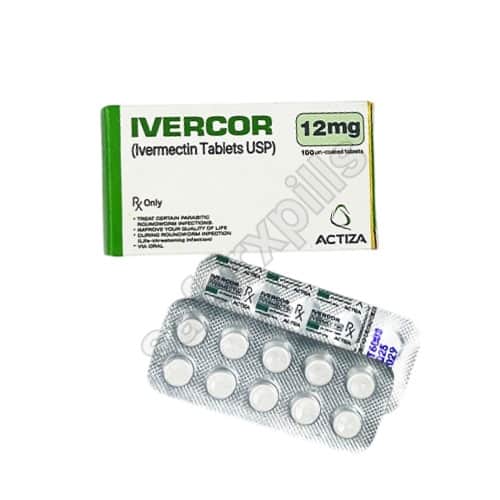
This product is a veterinary medicine intended for use in horses by the dosing schedule on the manufacturer label. It is not a human medicine. Veterinary ivermectin paste and human ivermectin tablets contain the same active molecule but the formulation, excipients, and concentration are different. This is exactly the point covered in our detailed explainer on ivermectin horse paste for humans and the broader analysis of why ivermectin paste is not the right choice for human treatment. Human ivermectin treatment, when clinically indicated, uses precisely dosed oral tablets prescribed by a clinician (see our ivermectin dosage guide and complete tablet guide for the human protocol). If you are looking at this product page for a human indication, you should be looking at the human-dose tablet instead. We carry Ivercor 12 mg (ivermectin) and Ivercor 6 mg (ivermectin) in the human formulation.
Dosage and administration in horses
The label dose is 200 mcg of ivermectin per kg of horse body weight, administered orally as a single dose. The graduated syringe delivers paste in increments calibrated by horse weight (typically marked in 250 lb increments). Insert the syringe into the corner of the horse's mouth and deposit the paste on the back of the tongue. Routine deworming intervals are 6 to 8 weeks for adult horses and more frequent in foals or in management systems with high parasite pressure. Veterinary protocols vary by region and parasite resistance profile.
Adverse effects in horses
Adverse effects in healthy adult horses are rare at the label dose. Hypersensitivity-type reactions can occur when treating horses with very high parasite burdens due to mass parasite die-off, particularly with onchocerciasis. Neurologic toxicity has been reported in horses with MDR1 (now called ABCB1) gene defects, although this is more relevant in dogs (collies, Australian shepherds) than horses.
Storage and handling
Store at room temperature out of direct sunlight. Keep away from children and non-target animals. Do not contaminate water sources or feed troughs with leftover paste, as ivermectin is toxic to aquatic invertebrates at low concentrations.
For related human-dose antiparasitic options, see Ivercor 12mg, Ivercor 6mg, Ivercor 24mg (higher-strength), Wormiza 444mg (fenbendazole), Wormentel 888mg (fenbendazole higher dose), Mebex 100mg (mebendazole), or Zentel 400mg (albendazole). For a full safety comparison before you switch from veterinary to human formulations, see our ivermectin side effects guide.
References
- Campbell WC. Curr Pharm Biotechnol 2012. PMID 22039780.
- Geary TG. Trends Parasitol 2005. PMID 16040274.
- Mealey KL et al. Pharmacogenetics 2001. PMID 11668219.
Related Guides
- Ivermectin Horse Paste for Humans: What You Need to Know
- Ivermectin Paste: Why You Shouldn't Use It and What to Take Instead
- What Is Ivermectin? Complete Guide to Uses and Safety
- Ivermectin Tablets: Complete Guide (Human Formulation Alternative)
- Ivermectin Dosage Guide: Safe Use Instructions
- Liquid Ivermectin Dosage for Humans
- High Dose Ivermectin Guide
- Ivermectin Side Effects: Complete Safety Guide
Key Information
- ✓Active Ingredient: Ivermectin
- ✓Category: Antiworm
- ✓Form: Tablet
- ✓Brand: Kachhela Medex Pvt. Ltd.
- ✓Manufacturer: Kachhela Medex Pvt. Ltd.
Frequently Asked Questions
What is Covilife 1.87% Oral Paste for Horse used for?
Covilife 1.87% Oral Paste is an antiworm medication for horses containing ivermectin as the active ingredient. It effectively treats and controls various internal parasites including large strongyles, small strongyles, pinworms, ascarids, hairworms, large mouth stomach worms, bots, lungworms, and threadworms. This paste formulation makes it easy to administer directly into your horse's mouth for convenient deworming treatment.
What is the recommended dosage of Covilife 1.87% Oral Paste for Horse?
The recommended dosage is based on your horse's body weight. Each syringe of Covilife contains 6.08 grams and treats horses weighing up to 1,250 pounds. Administer the paste orally by depositing it on the back of the horse's tongue. Always consult your veterinarian for specific dosing instructions based on your horse's weight and condition. Do not underdose, as this may reduce effectiveness.
How long does Covilife 1.87% Oral Paste for Horse take to work?
Covilife begins working immediately after administration, with ivermectin being absorbed into the horse's system within hours. Most parasites are killed within 24 to 48 hours of treatment. However, you may not see visible results immediately. Dead parasites are passed through the digestive system naturally. For complete parasite control, follow your veterinarian's recommended deworming schedule, which typically involves retreatment every 6-8 weeks.
Is Covilife 1.87% Oral Paste for Horse safe to use?
Covilife is generally safe when used as directed for horses. It has a wide margin of safety and can be used on horses of all ages, including pregnant mares and breeding stallions. Side effects are rare but may include mild digestive upset or lethargy. Do not use on other animal species. Always follow dosage instructions carefully and consult your veterinarian before use, especially if your horse has health conditions.
Can I buy Covilife 1.87% Oral Paste for Horse online without a prescription?
Availability varies by location and local regulations. In many areas, equine ivermectin paste products are available over-the-counter without a prescription from veterinary supply stores and online retailers. However, it's strongly recommended to consult with your veterinarian before purchasing to ensure proper parasite management and deworming protocols. Your vet can advise on the appropriate treatment schedule for your horse's specific needs.
Medical References
Sources: U.S. National Library of Medicine (DailyMed, PubMed), openFDA
Related Products
View all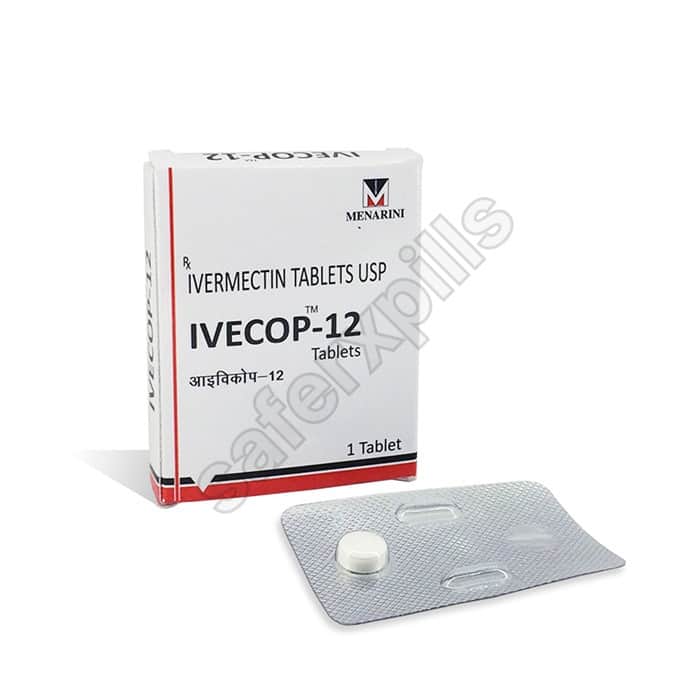
Customer Reviews
Good but packaging is basic
Product is exactly what's described. Packaging is pharmaceutical-grade but the outer box was slightly dented in transit. Content was perfect though. Would order again.
Exactly the right product
Covilife 1.87% oral paste. Correct concentration, sealed properly, expiry date clearly printed. Arrived 9 days, faster than expected. Good site.
Related Articles
Health guides about Ivermectin, written by pharmacists
Ivecop 12 vs Ivercor 12: Same Ivermectin, Different Brands and Prices
A fact-checked comparison of two Indian ivermectin 12 mg brands: who makes Ivecop and Ivercor, what WHO-GMP does and does not mean, which weight a 12 mg tablet fits, how to take it, cure rates, side effects, warnings and price per tablet.
Where to Buy Ivermectin in the US: Prescriptions, State Laws, Prices and What to Avoid
The four ways to get ivermectin tablets in the US, which states let pharmacists dispense it without a prescription, what pharmacies pay per tablet (Medicaid NADAC, September 2026), how many tablets a dose needs, and why veterinary and very high-strength products are a bad idea.
Stromectol vs Generic Ivermectin: FDA-Approved Generics, Dosing and What It Treats
Stromectol is Merck's ivermectin. This guide compares it with the seven FDA-approved AB-rated generics and with imported brands, and covers the label's cure rates, weight-based dosing, safety warnings and what the large COVID-19 trials showed.
Ivermectin Side Effects: Why the Same Drug Shows 2.8% Itching in One Use and 27.5% in Another
The FDA label reports ivermectin side effects separately for each approved use, and they are not alike: itching in 2.8% of strongyloidiasis patients against 27.5% in onchocerciasis. This guide explains why, with both tables in full, the Loa loa warning, food, pregnancy and interactions.
Ivermectin Horse Paste for Humans: What You Need to Know
Ivermectin horse paste uses the same active ingredient as human ivermectin tablets, but the veterinary formulation is dangerous for people due to imprecise dosing, untested excipients, and concentrations designed for animals weighing over 1,000 pounds. Human-grade ivermectin is available online in the USA, properly dosed, and far safer.
Ivermectin and Fenbendazole Protocol: Complete Guide to Combined Use
The ivermectin and fenbendazole protocol combines two antiparasitic medications with different mechanisms. Learn proper dosing schedules, safety considerations, and how to access these medications in the USA.
Related Health Guide
Understanding Intestinal Parasites & Worm Infections: Complete Guide