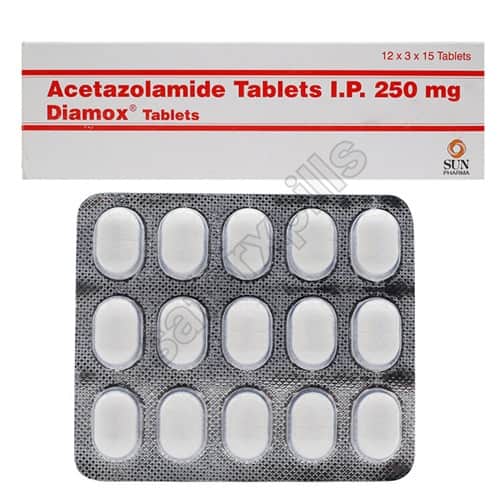
Diamox Tablet
Generic: Acetazolamie
Select Pack Size:
Selected: 60 Tablet
$14.00 total
$28.00 total
Save 50%About Diamox Tablet
Diamox Tablet is an Indian acetazolamide 250 mg tablet. Acetazolamide is a carbonic anhydrase inhibitor: it lowers fluid production inside the eye, makes the kidneys pass more bicarbonate and water, and speeds up how the body adjusts to high altitude. Labels list it for some types of glaucoma, fluid retention and some forms of epilepsy, and the US label also lists it for acute mountain sickness. We sell it in packs of 60, 120 and 240 tablets, from $0.21 a tablet in the largest pack.
Four points first. Diamox is a prescription medicine everywhere we ship. Altitude sickness is a labelled use in the US only: the UK, Australian and Canadian labels do not list it, so there it is used off label on a doctor's advice. Acetazolamide is a sulfonamide derivative, and the labels set out serious, sometimes fatal reactions, so it needs a doctor who knows your allergies, kidneys, liver and other medicines. And in the US, generic acetazolamide 250 mg costs pharmacies about 13 cents a tablet, so US readers with a prescription should compare local generic prices first. This page sets out the doses, warnings and prices from the current US, UK, Australian and Canadian labels, listed at the end.
Diamox 250mg at a glance
| Active ingredient | Acetazolamide 250 mg per tablet (a carbonic anhydrase inhibitor and a sulfonamide derivative) |
| Brand and maker | Diamox; our listing names Pfizer India. PharmEasy shows a Pfizer Limited address in Verna, Goa with Sun Pharma as the maker, and Truemeds names Sun Pharma Laboratories as the marketer, so read the strip |
| Regulatory status | Acetazolamide tablets are licensed in the US, UK, Australia and Canada. This Indian Diamox pack is not registered with the FDA, MHRA, TGA or Health Canada. The Diamox brand is licensed in the UK and Australia, discontinued in the US and cancelled in Canada |
| Usual dose from the label | Glaucoma: 250 mg to 1 g in 24 hours, in divided doses above 250 mg (US, UK and Australian labels). Altitude sickness (US label only): 500 mg to 1,000 mg a day in divided doses |
| Half-life | About 4 hours, with peak blood levels about 2 hours after a dose (UK label 5.2) |
| Packs | 60, 120 and 240 tablets (Indian strips hold 15) |
| Price per tablet | $0.23 (60 and 120 packs) and $0.21 (240 pack), before shipping |
| Delivery | 7 to 14 business days to the US, UK, Australia and Canada; $25 shipping under $149, free from $149 |
Price per tablet
Prices below are as of October 2026; the pack selector shows the current price.
| Pack | Price | Per tablet | Shipping | Per tablet with shipping |
|---|---|---|---|---|
| 60 tablets | $14 | $0.23 | $25 | $0.65 |
| 120 tablets | $28 | $0.23 | $25 | $0.44 |
| 240 tablets | $50 | $0.21 | $25 | $0.31 |
All three packs are under the $149 free shipping line, so each single pack carries $25 shipping. Before shipping, the 60 and 120 packs cost the same per tablet; only the 240 pack is cheaper per tablet. With shipping, the larger packs cost less per tablet because the flat $25 is spread over more tablets.
How long a pack lasts. At the glaucoma doses in the labels (one to four 250 mg tablets a day), the 60 pack lasts 15 to 60 days, the 120 pack 30 to 120 days and the 240 pack 60 to 240 days. For one altitude trip, the US label dose (500 mg to 1,000 mg a day, started 24 to 48 hours before ascent and continued for 48 hours at altitude) comes to about 6 to 16 tablets. Both are our arithmetic, not label figures. Even our smallest pack is far more than one altitude course, so check the expiry date on the strips and do not keep leftover tablets to treat yourself on a later trip without fresh advice.
Compared with Diamox and generic acetazolamide in the US
| Diamox 250mg (ours) | US generic acetazolamide 250 mg | |
|---|---|---|
| Maker | Indian Diamox pack (see maker note above) | Several US generic makers (for example Strides, Zydus and Aurobindo) |
| FDA approved | No (Indian pack) | Yes |
| Cost per tablet | $0.21 to $0.23 before shipping | About $0.13 (NADAC $0.13173) |
| Cost of 60 tablets | $14 before shipping, $39 with shipping | About $7.90 at NADAC |
NADAC is the average price US pharmacies pay to buy a medicine, published by the US Medicaid programme. It is not the price a patient pays at the counter. All 13 NADAC rows for acetazolamide 250 mg tablets carry the same rate, $0.13173 a tablet, effective 21 October 2026. Our tablets cost about 1.6 to 1.8 times that before shipping, and more once shipping is added. US generics are cheaper, so if you are in the US and have a prescription, compare US generic cash prices first. US generic 125 mg tablets also exist (NADAC $0.09640 a tablet, same date), which matters for the lower altitude dose described below.
There is no US Diamox to compare with: the FDA lists Teva's Diamox tablets and Diamox Sequels capsules as discontinued. We have not seen bioequivalence data comparing the Indian Diamox tablet with US generics.
Which dose fits which use
Diamox comes in one strength in our range, 250 mg. The table maps the doses in the labels and in CDC travel guidance to 250 mg tablets.
| Dose | Where it comes from | In 250 mg tablets |
|---|---|---|
| 125 mg twice a day | CDC Yellow Book altitude prevention dose for adults (guidance, not a label dose); NHS Specialist Pharmacy Service, off label in the UK | Half a tablet twice a day, only if the tablet is scored and your prescriber agrees (see below) |
| 250 mg twice a day | CDC altitude prevention dose above 100 kg body weight, and CDC treatment dose for acute mountain sickness | One tablet twice a day |
| 500 mg to 1,000 mg a day, divided | US label, acute mountain sickness; 1,000 mg is the US label dose for rapid ascent such as rescue or military operations | Two to four tablets a day |
| 250 mg to 1 g in 24 hours | US, UK and Australian labels, chronic open-angle glaucoma, alongside the usual therapy | One to four tablets a day |
| 250 mg every 4 hours | US and Australian labels, secondary glaucoma and before surgery for some acute closed-angle glaucoma (short term, under specialist care) | One tablet every 4 hours |
| Above 1 g a day for glaucoma | The US label says a dose above 1 g in 24 hours has "usually been found" not to add effect; the Australian label puts that line at 2 g | We would not recommend going above your doctor's dose |
About halving. UK and Australian Diamox tablets and the US Strides generic are scored in quarters, and the NHS Specialist Pharmacy Service says smaller doses "can be given by halving 250mg tablets which are scored". The UK patient leaflet, on the other hand, says to swallow the tablet whole and not to chew or crush it. We have not confirmed whether the Indian Diamox tablet is scored. If your prescriber wants 125 mg and your tablets are not scored, ask about a 125 mg tablet instead of guessing.
The labels also give doses for fluid retention (250 mg to 375 mg once a day, often on alternate days) and for epilepsy (8 to 30 mg per kg a day in divided doses; the UK label caps children at 750 mg a day). Those uses need a specialist, and the labels say a higher dose does not increase the diuresis.
Diamox for altitude sickness
A large share of people searching for Diamox are planning a trek or a high-altitude trip, so here is what the labels and guidance say, label by label.
- US label: acetazolamide tablets are indicated "for the prevention or amelioration of symptoms associated with acute mountain sickness in climbers attempting rapid ascent and in those who are very susceptible to acute mountain sickness despite gradual ascent". Dose: 500 mg to 1,000 mg daily in divided doses; it is "preferable to initiate dosing 24 to 48 hours before ascent and to continue for 48 hours while at high altitude, or longer as necessary to control symptoms". The label adds that placebo-controlled trials of 250 mg every 8 to 12 hours before and during rapid ascent found fewer or less severe symptoms such as headache, nausea, shortness of breath, dizziness, drowsiness and fatigue.
- UK, Australian and Canadian labels: none of them lists altitude sickness. The NHS Specialist Pharmacy Service says "No medicines are licensed for preventing AMS" in the UK and gives "acetazolamide 125mg twice daily (off-label)". The NHS altitude sickness page says a GP or travel clinic may prescribe medicine to help prevent altitude sickness if you have had it before or are travelling to altitude quickly.
- CDC Yellow Book 2026 (guidance, not a label): prevention 125 mg twice a day for adults, or 250 mg twice a day above 100 kg body weight, starting the day before ascent and continuing for the first two days at altitude, and longer if ascent continues; treatment 250 mg twice a day. The CDC says 125 mg every 12 hours is effective and "minimizes the common side effects of paresthesia". It sorts travellers into low, medium and high risk by past altitude illness, sleeping altitude on the first night and ascent rate, and says prophylaxis is not indicated for low risk, should be considered for medium risk and strongly encouraged for high risk.
The US label dose and the CDC dose differ; the CDC dose is lower. Which one you take is your prescriber's decision. Two points apply whichever dose you use:
- Acetazolamide does not replace descent. The US label says its use "does not obviate the need for prompt descent if severe forms of high altitude sickness occur", meaning high altitude pulmonary oedema or cerebral oedema. The CDC says gradual or staged ascent "provides crucial time for the body to adjust". The NHS says to go down 300 to 1,000 metres if symptoms get worse or do not improve after a day.
- Children are a separate decision. The CDC gives a weight-based children's dose, but the US label says safety and effectiveness in children have not been established. Do not cut adult tablets for a child without a doctor's dose.
The labels and the CDC disagree on sulfa allergy; see "Who should not take Diamox" below. We do not yet have a full altitude sickness guide; for now, use the CDC and NHS pages listed in the sources.
How to take Diamox
- Take it exactly as your doctor prescribes. For glaucoma, the US label says it "should be used as an adjunct to the usual therapy" with "continuous supervision by a physician", so keep your eye drops and your pressure checks.
- The UK patient leaflet says to swallow the tablet whole with a drink of water, just before or just after a meal. PharmEasy's Indian listing also says to take it whole with a glass of water.
- Doses above 250 mg a day are split through the day (US, UK and Australian labels).
- Expect a blood count and blood salts test. The US label recommends a baseline blood count and platelet count before starting and at regular intervals, and periodic electrolyte checks; the UK label recommends periodic blood counts and electrolytes for long-term use.
- Tell your doctor about every other medicine, especially aspirin, other carbonic anhydrase inhibitors (including eye drops), seizure medicines, lithium and diabetes medicines (see the interactions list).
- Drowsiness, fatigue, dizziness and short-sightedness can affect driving and machinery (US Precautions; Australian label 4.7).
Lower doses and extra care for some groups
- Kidney impairment. The Australian label contraindicates acetazolamide below a GFR of 10 mL/min, and above that says the dose "should be reduced by half or the dosage interval should be increased to every 12 hours". The US and UK labels contraindicate it in "marked kidney" disease or dysfunction. Have your kidney function checked before starting.
- Older people. The US label says metabolic acidosis, "which can be severe", may occur in older people with reduced kidney function, and that dose selection should usually start at the low end. The UK label says to use it "only with particular caution" in older people.
- Lung disease. In pulmonary obstruction or emphysema, acetazolamide "may precipitate or aggravate acidosis" and should be used with caution (US Precautions); the UK and Australian labels (4.4) say it "may aggravate acidosis" and should be used with caution.
- Diabetes. Blood glucose can go up or down (US Precautions; Australian 4.4). Check your readings more often.
- Past kidney stones. The UK and Australian labels say benefit "should be balanced against the risks of precipitating further calculi". The US label lists an increased risk of kidney stones with long-term therapy, and taking sodium bicarbonate at the same time raises the risk further.
- Recent eye surgery. The US label reports choroidal effusion and detachment after acetazolamide in the period after eye surgery.
- Hyperkalaemic periodic paralysis. The Australian label reports increased, occasionally severe, muscle weakness.
Side effects
None of the labels gives a frequency table for acetazolamide tablets (the UK label rates every listed effect as "not known"), so we have not drawn a chart. The effects people notice most often, from the label lists:
- Tingling and numbness in the fingers, toes and face (paraesthesia). The labels say raising the dose may make drowsiness and tingling more likely.
- Taste change. The US label lists taste alteration and the UK leaflet a metallic taste. The CDC notes that fizzy drinks can taste different, because acetazolamide blocks the enzyme that normally acts on carbon dioxide on the tongue; it says this is not an adverse reaction.
- Passing more urine, thirst, loss of appetite, nausea, vomiting and diarrhoea.
- Drowsiness, tiredness, dizziness, headache, confusion and depression.
- Temporary short-sightedness (transient myopia), which the UK label says "invariably" subsides when the dose is lowered or stopped.
- Hearing problems and ringing in the ears, flushing, fever, sensitivity to sunlight and reduced libido.
Serious effects listed in the labels: severe skin reactions (Stevens-Johnson syndrome, toxic epidermal necrolysis, and acute generalised exanthematous pustulosis in the UK, Australian and Canadian labels); anaphylaxis; blood disorders (aplastic anaemia, agranulocytosis, low white cells or platelets); fulminant liver necrosis and cholestatic jaundice; metabolic acidosis with low potassium and low sodium; kidney stones, crystals or blood in the urine and kidney failure; convulsions; choroidal effusion and detachment; and non-cardiogenic pulmonary oedema (fluid on the lungs not caused by the heart). The US label says fatalities have occurred, "although rarely", from severe reactions to sulfonamides, and growth retardation has been reported in children on long-term treatment.
The UK and Australian labels add that suicidal thoughts and behaviour have been reported with antiepileptic medicines and that the data "do not exclude the possibility of an increased risk" for acetazolamide.
When to get urgent help
Stop taking Diamox and get emergency help, or ask someone to call for you, if you have:
- Shortness of breath, difficulty breathing, a cough or wheeze after a dose. The UK, Australian and Canadian labels report severe non-cardiogenic pulmonary oedema, "also after a single dose", typically within minutes to hours. At altitude, breathlessness at rest can also be high altitude pulmonary oedema: go down and get help straight away.
- At altitude, confusion, unsteady walking, severe headache, being very sleepy or hard to wake, or symptoms that get worse despite treatment. These are reasons to descend, not to take more tablets (US label; NHS; CDC).
- Sudden blurred or reduced vision or eye pain. The labels report choroidal effusion and detachment within hours to weeks of starting; the UK, Australian and Canadian labels say to stop acetazolamide "as rapidly as possible", the Australian and Canadian labels add to get medical evaluation immediately, and the Canadian label adds acute angle-closure glaucoma.
- A rash with fever, blisters, peeling skin, pus-filled spots, or sores in the mouth, eyes or genitals. The labels say to stop at the first sign of a serious skin or allergic reaction; the UK label also says to report any unusual rash.
- Swelling of the lips, tongue, face or throat, trouble breathing or swallowing, or hives.
- Sore throat, fever, mouth ulcers, unusual bruising or bleeding: signs that can go with the blood disorders the labels list. Tell your doctor the same day.
- Yellow skin or eyes, dark urine or pale stools, which can mean liver injury.
- Severe pain in the side or back, or blood in your urine (kidney stones and kidney colic are listed).
- Thoughts of harming yourself (UK and Australian labels 4.4).
- Deep, fast breathing, marked drowsiness or confusion while also taking aspirin. The US label reports anorexia, fast breathing, lethargy, metabolic acidosis, coma and death with high-dose aspirin.
- Taking more than prescribed, or a child swallowing tablets. There is no specific antidote (US and UK labels). Call a poison line (US 1-800-222-1222, Australia 13 11 26, Canada 1-844-764-7669) or your emergency number.
Tell the emergency staff that you took acetazolamide (Diamox), how much and when, and whether you take aspirin.
Who should not take Diamox
Never take it if:
- you have had an allergic reaction to acetazolamide or any ingredient of the tablet (US, UK and Australian labels). The US label says cross sensitivity between acetazolamide, sulfonamides and other sulfonamide derivatives "is possible"; the UK label says Diamox "should not be used in patients hypersensitive to sulphonamides"; the Australian label lists hypersensitivity to sulfonamides or sulfonamide derivatives as a contraindication
- your blood sodium or potassium is low (US, UK, Australian and Canadian labels)
- you have marked kidney disease or dysfunction (US and UK), a GFR below 10 mL/min (Australia) or kidney failure (Canada)
- you have marked liver disease or dysfunction, or cirrhosis, because of the risk of hepatic encephalopathy (US contraindication; UK says it "should not be used" in hepatic cirrhosis)
- you have adrenal (suprarenal) gland failure, or hyperchloraemic acidosis (all four labels list these, Canada as adrenal failure and metabolic acidosis)
- you have chronic non-congestive angle-closure glaucoma and the plan is long-term use: the labels say long-term use "may permit organic closure of the angle to occur while the worsening glaucoma is masked by lowered intraocular pressure"
- you have severe glaucoma due to peripheral anterior synechias, or haemorrhagic glaucoma (Australian and Canadian labels)
- you have had acute generalised exanthematous pustulosis on acetazolamide (UK and Australian labels say any later use is contraindicated), or non-cardiogenic pulmonary oedema after acetazolamide (UK, Australian and Canadian labels say it should not be given again)
Sulfa allergy and altitude. The CDC Yellow Book says "people allergic to sulfa antibiotics can take acetazolamide", while advising caution for people with a history of anaphylaxis to any medicine or with several drug allergies. The UK and Australian labels say the opposite for anyone hypersensitive to sulphonamides. If you have any sulfa allergy, do not decide this yourself: tell the prescriber, who can weigh the labels against the CDC advice.
Not advisable, or only with care:
- High-dose aspirin: the US label warns that anorexia, tachypnoea, lethargy, metabolic acidosis, coma and death have been reported. The UK label says aspirin with acetazolamide "may result in severe acidosis and increase central nervous system toxicity".
- Other carbonic anhydrase inhibitors, including the eye drops Azopt (brinzolamide) and Dorzox (dorzolamide): concomitant use "is not advisable" because of possible additive effects (US, UK and Australian labels).
- Pregnancy: the UK and Australian labels say it "should not be used in pregnancy, especially during the first trimester" (Australian category B3). The US label says to use it only if the potential benefit justifies the potential risk to the fetus, after limb defects in animal studies. Tell your doctor if you are or may be pregnant, including before a trip.
- Breastfeeding: the UK and Australian labels say "extreme caution", because acetazolamide passes into breast milk in low levels. The US label asks for a decision between stopping breastfeeding and stopping the medicine.
- Children: safety and effectiveness have not been established (US label), and growth retardation has been reported with long-term use.
- Older people, lung disease, diabetes, past kidney stones: see the extra care section above.
Medicines that interact
- Aspirin and other salicylates: see above. The Australian label adds that severe metabolic acidosis has been reported in people with normal kidney function taking both.
- Phenytoin: acetazolamide raises phenytoin levels and may increase osteomalacia (softening of the bones) in long-term use (US; UK 4.5).
- Primidone levels may fall, and carbamazepine levels may rise (isolated reports, UK and Australian labels).
- Lithium: acetazolamide increases lithium excretion, so lithium levels may fall.
- Diabetes medicines: blood glucose can go up or down.
- Amphetamines and quinidine: their effects may be stronger and last longer.
- Methenamine: its urinary antiseptic effect may be lost.
- Ciclosporin: levels may rise.
- Folic acid antagonists: their effects may be increased.
- Sodium bicarbonate: raises the risk of kidney stones.
- Oral anticoagulants, heart glycosides and blood pressure medicines: the UK and Australian labels say effects may be increased or doses may need adjusting.
Tell your doctor or pharmacist about every medicine and supplement you take.
Prescription and legal status
Acetazolamide tablets are prescription medicines in all four countries we ship to: in the US the labels are "Rx only" and sold as FDA-approved generics; in the UK, Diamox 250mg Tablets (ADVANZ Pharma, PL 12762/0147) are listed on the electronic medicines compendium as a prescription only medicine; in Australia, Diamox (Arrotex, ARTG 15204) is Schedule 4, prescription only; and in Canada, AA Pharma's acetazolamide 250 mg tablet (DIN 00545015) is marketed as a prescription medicine, while every Canadian Diamox entry is cancelled. In India, PharmEasy and Truemeds mark Diamox 250 as prescription required. Acetazolamide is licensed in all four countries, but the Indian pack we sell is not registered with the FDA, MHRA, TGA or Health Canada, and the FDA says personal importation of unapproved medicines is illegal in most circumstances. Check the rules where you live.
Buying genuine Diamox
The MHRA warns: "Any medicine not authorised for sale in the UK can be unsafe or ineffective and there is no way of knowing what is in them or the negative health effects they can have." That warning covers this Indian pack. The MHRA also advises: "Only use UK-registered pharmacies, including online pharmacies displaying the official green cross logo." When your order arrives, read the strip: it should say Diamox and acetazolamide 250 mg, name the maker or marketer (the Indian listings name Pfizer or Sun Pharma), and show a batch number and an expiry date. PharmEasy and Truemeds list Diamox 250 as a strip of 15 tablets, stored below 30 C. These checks cannot prove that tablets are genuine, because counterfeiters copy packaging. If you take it for glaucoma, keep your pressure checks, and tell your eye doctor where the tablets came from if your pressure changes. If a batch causes symptoms, seek medical advice and report it to your medicines regulator (the MHRA Yellow Card scheme in the UK, FDA MedWatch in the US, the TGA in Australia or Health Canada) as well as to us.
Delivery
We ship Diamox 250mg to the US, UK, Australia and Canada in plain packaging with tracking. Standard delivery takes 7 to 14 business days. Shipping costs a flat $25 on orders under $149 and is free from $149. If you need it for a trip, order well before you leave: tablets that arrive after your departure date are no use at altitude. See our shipping page and refund policy.
Related guides
- Glaucoma eye drops: every type explained
- How to buy eye care medicine online safely
- Glaucoma treatments we stock
Other glaucoma medicines: Azopt Eye Drop (brinzolamide), Dorzox Eye Drop (dorzolamide), Alphagan P Eye Drop (brimonidine) and Lumigan 0.01% Eye Drop (bimatoprost). Eye drops are not a substitute for acetazolamide tablets, or the other way round, without your eye doctor.
Sources
- Acetazolamide Tablets USP 125 mg and 250 mg, US prescribing information, Strides Pharma, revised 12/2025 (DailyMed setid 4813b9dd-5f58-44bb-ad64-cdb331828080, version 12, effective 19 August 2026): Indications and Usage, Clinical Pharmacology, Contraindications, Warnings, Precautions, Adverse Reactions, Overdosage, Dosage and Administration, How Supplied. DailyMed
- Diamox 250mg Tablets, UK SmPC and patient leaflet, ADVANZ Pharma (Mercury Pharmaceuticals), SmPC updated 28 October 2024, leaflet revised October 2024: sections 4.1 to 4.9, 5.2, 6.1, 6.4. emc
- Australian Product Information, Diamox (acetazolamide) tablets, Arrotex Pharmaceuticals, revised 28 November 2025: sections 4.1 to 4.9, 6.4, 7. TGA
- Acetazolamide tablets 250 mg, Canadian product monograph, AA Pharma, revised 7 May 2025, and Health Canada Drug Product Database (DIN 00545015 marketed; Diamox entries cancelled), searched 27 October 2026. Health Canada
- CDC Yellow Book 2026, High-Altitude Travel and Altitude Illness (Hackett and Shlim): Tables 3.5.1 and 3.5.2. CDC
- NHS Specialist Pharmacy Service. Using medicines for preventing acute mountain sickness. SPS
- NHS. Altitude sickness, page last reviewed 31 July 2023. NHS
- US Food and Drug Administration, openFDA drug approvals: Diamox tablets NDA 008943 and Diamox Sequels NDA 012945, discontinued; searched 27 October 2026.
- Centers for Medicare and Medicaid Services. National Average Drug Acquisition Cost (NADAC) 2026: acetazolamide 250 mg tablet $0.13173 (13 NDC rows) and 125 mg tablet $0.09640 (10 rows), effective 21 October 2026; no Diamox rows. data.medicaid.gov
- Indian pharmacy listings for Diamox 250 mg (PharmEasy, Truemeds), checked 27 October 2026.
- MHRA. 20 million illegal erectile dysfunction pills seized as MHRA warns against risky online buys, 13 February 2026. GOV.UK
- US Food and Drug Administration. Personal Importation. FDA
This page is for information and is not medical advice. Diamox is a prescription medicine. Take it only as prescribed by a doctor who knows your allergies, kidney and liver function and other medicines, and for altitude travel, plan your ascent with a doctor or travel clinic.
Key Information
- ✓Active Ingredient: Acetazolamie
- ✓Category: Eye Care
- ✓Form: Tablet
- ✓Brand: Pfizer India Ltd
- ✓Manufacturer: Pfizer India Ltd
Frequently Asked Questions
What is Diamox 250mg?
Diamox 250mg is an Indian acetazolamide 250 mg tablet. Acetazolamide is a carbonic anhydrase inhibitor used for some types of glaucoma, fluid retention and some forms of epilepsy, and, under the US label, for preventing or easing acute mountain sickness. Our listing names Pfizer India as the maker; Indian pharmacy listings also name Sun Pharma, so read the strip. Acetazolamide is licensed in the US, UK, Australia and Canada, but this Indian pack is not registered with the FDA, MHRA, TGA or Health Canada.
Is Diamox the same as generic acetazolamide?
It contains the same medicine at the same strength as 250 mg acetazolamide tablets sold elsewhere. Diamox is still a licensed brand in the UK and Australia; in the US the Diamox brand is discontinued and only generics are sold, and in Canada the Diamox entries are cancelled. We have not seen bioequivalence data comparing the Indian Diamox tablet with US or UK products.
What does Diamox 250mg cost per tablet?
As of October 2026 it costs $0.23 a tablet in the 60 and 120 packs and $0.21 in the 240 pack, before shipping. All three packs are under $149, so each carries $25 shipping: $0.65, $0.44 or $0.31 a tablet with shipping. US generic acetazolamide 250 mg had a NADAC (pharmacy acquisition cost) of $0.13173 a tablet, effective 21 October 2026, so US buyers with a prescription should compare local generic prices first. The pack selector shows the current price.
Can Diamox be used for altitude sickness?
The US label lists acetazolamide tablets for preventing or easing acute mountain sickness in climbers making a rapid ascent and in people very susceptible to it, at 500 mg to 1,000 mg a day in divided doses, started 24 to 48 hours before ascent and continued for 48 hours at altitude or longer if needed. The UK, Australian and Canadian labels do not list altitude sickness, so there it is used off label on a doctor's advice. The CDC Yellow Book (guidance, not a label) gives a lower adult prevention dose of 125 mg twice a day, or 250 mg twice a day above 100 kg, from the day before ascent through the first two days at altitude. It does not replace gradual ascent or prompt descent if symptoms become severe.
How do I take Diamox?
Take it exactly as your doctor prescribes. The UK patient leaflet says to swallow the tablet whole with a drink of water, just before or just after a meal. Doses above 250 mg a day are split through the day. For glaucoma it is used alongside your usual treatment under continuous supervision, so keep your eye drops and pressure checks. The US label recommends a blood count and platelet count before starting and at intervals, and periodic electrolyte tests.
Can I take half a tablet for the 125 mg altitude dose?
Only if your prescriber agrees and the tablet is scored. UK and Australian Diamox tablets and the US Strides generic are scored in quarters, and the NHS Specialist Pharmacy Service says smaller doses can be given by halving scored 250 mg tablets, but the UK patient leaflet says to swallow tablets whole. We have not confirmed whether the Indian Diamox tablet is scored. If it is not, ask your prescriber about a 125 mg tablet instead.
How quickly does Diamox work and how long does it last?
The UK label says peak blood levels come about 2 hours after a dose and the half-life is about 4 hours, which is why doses above 250 mg are split through the day. For altitude, the US label starts dosing 24 to 48 hours before ascent and the CDC the day before, so do not wait until you feel unwell at altitude to start unless your prescriber has told you to.
What are the side effects of Diamox?
The labels give no frequencies, but list tingling or numbness in the fingers, toes and face, taste change (a metallic taste; the CDC notes fizzy drinks taste different), passing more urine, thirst, nausea, loss of appetite, drowsiness, tiredness, dizziness and temporary short-sightedness. Serious effects include severe skin reactions, anaphylaxis, blood disorders, liver injury, kidney stones, metabolic acidosis, eye problems (choroidal effusion) and fluid on the lungs, which the UK, Australian and Canadian labels say can follow even a single dose. Stop and get emergency help for breathing trouble, sudden vision change, a blistering or feverish rash, or signs of an allergic reaction.
Who should not take Diamox?
The labels say never take it if you are allergic to acetazolamide or any tablet ingredient; have low blood sodium or potassium; have marked kidney or liver disease or cirrhosis; have adrenal gland failure or hyperchloraemic acidosis; or need long-term treatment for chronic non-congestive angle-closure glaucoma. The UK and Australian labels also rule it out for anyone hypersensitive to sulphonamides, while the CDC says people allergic to sulfa antibiotics can take it; tell your prescriber about any sulfa allergy. Use with high-dose aspirin or other carbonic anhydrase inhibitors is warned against, and the UK and Australian labels say it should not be used in pregnancy, especially the first trimester.
Do I need a prescription for Diamox?
Yes. Acetazolamide tablets are prescription medicines in the US (Rx only), the UK (Diamox is a prescription only medicine), Australia (Schedule 4) and Canada (prescription), and Indian listings mark Diamox 250 as prescription required. This Indian pack is not registered with the FDA, MHRA, TGA or Health Canada, and the FDA says personal importation of unapproved medicines is illegal in most circumstances. For altitude travel, a GP or travel clinic can advise and prescribe.
How long does delivery take?
We ship to the US, UK, Australia and Canada in plain packaging with tracking. Standard delivery takes 7 to 14 business days. Shipping is a flat $25 on orders under $149 and free from $149. If you need Diamox for a trip, order well before you leave, and check that the expiry date on the strips covers your travel dates.
Medical References
- 1.DailyMed (U.S. National Library of Medicine)
- 2.PubMed (NCBI) (PMID: 32768459) — 2020
- 3.PubMed (NCBI) (PMID: 17023566) — 2007
- 4.PubMed (NCBI) (PMID: 35673961) — 2022
Sources: U.S. National Library of Medicine (DailyMed, PubMed), openFDA
Related Products
View all

Customer Reviews
No reviews yet. Be the first to review Diamox Tablet.
Related Articles
Health guides about Acetazolamie, written by pharmacists
Cyclosporine Eye Drops for Dry Eye: Restasis, Cyclomune and What the Trials Show
Cyclosporine eye drops treat the inflammation behind chronic dry eye rather than just wetting the surface. They are slow, they often sting, and in the main trials only about 15 percent of patients reached the headline tear production target. This guide explains what to expect and how Cyclomune 0.05% and 0.1% compare with Restasis.
Bimatoprost for Eyebrows: What the Trials Show About Off Label Use
Bimatoprost is FDA approved for eyelashes, not eyebrows, so brow use is off label and rarely discussed properly. A Phase 3 trial and three smaller randomised studies say it works. This guide covers the evidence, a realistic timeline, how brow application differs from lashes, and the risks worth taking seriously.
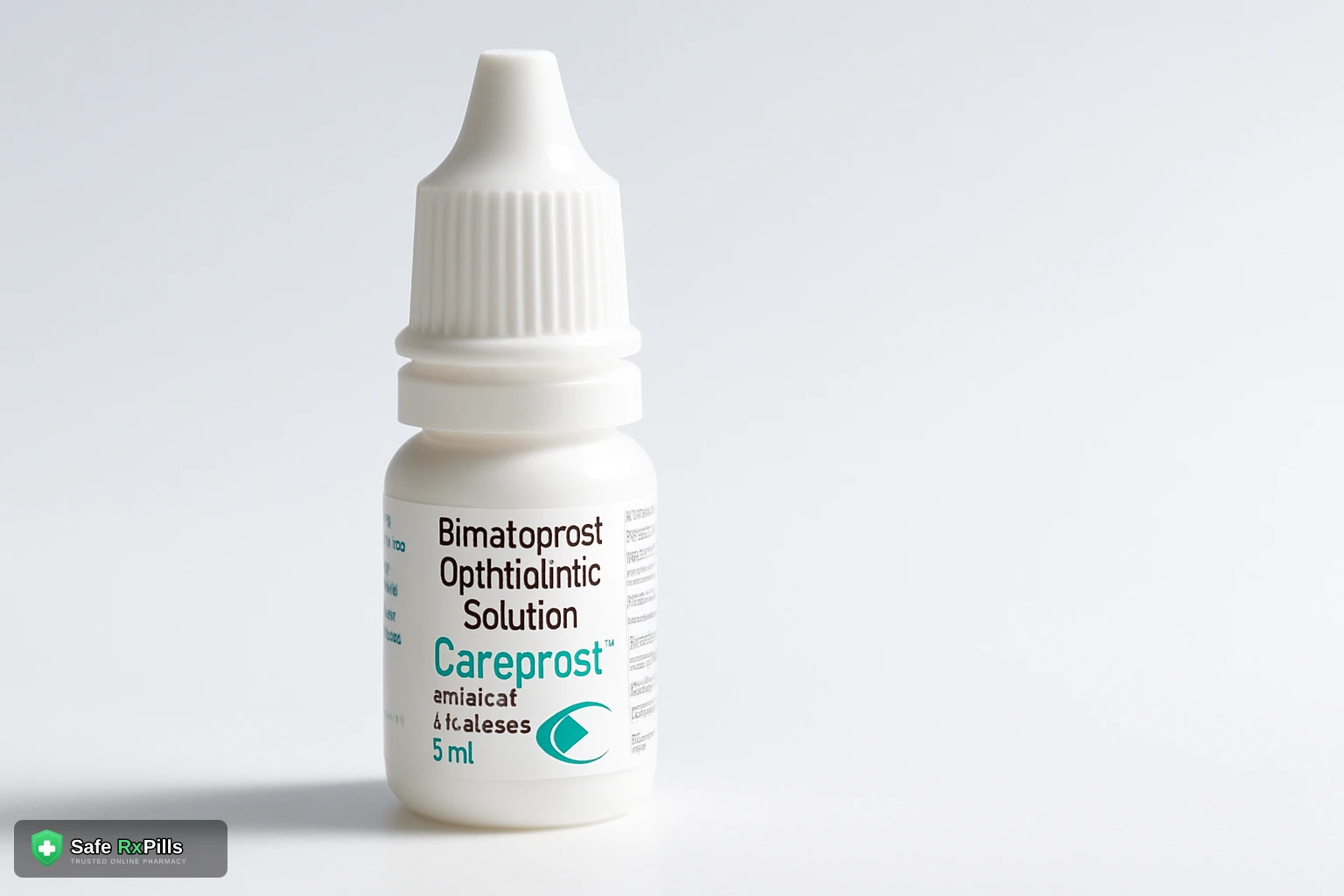
Is Careprost Legal in the USA? FDA Status, Prescription Rules and Counterfeit Risk
Careprost is not FDA approved and bimatoprost is prescription only in the US for every use, including lash growth. An accurate read of the law, the FDA label warnings, and how to tell a real supplier from a dangerous one.
Related Health Guide
Understanding Eyelash Growth & Eye Conditions: Complete Guide