
Lumigan Eye Drops for Glaucoma: Uses, Dosage, Side Effects, and Cost
SafeRxPills Pharmacy Team
Editorial team at SafeRxPills. Articles are written and checked against regulatory drug labelling (DailyMed, FDA, EMA) and published literature.
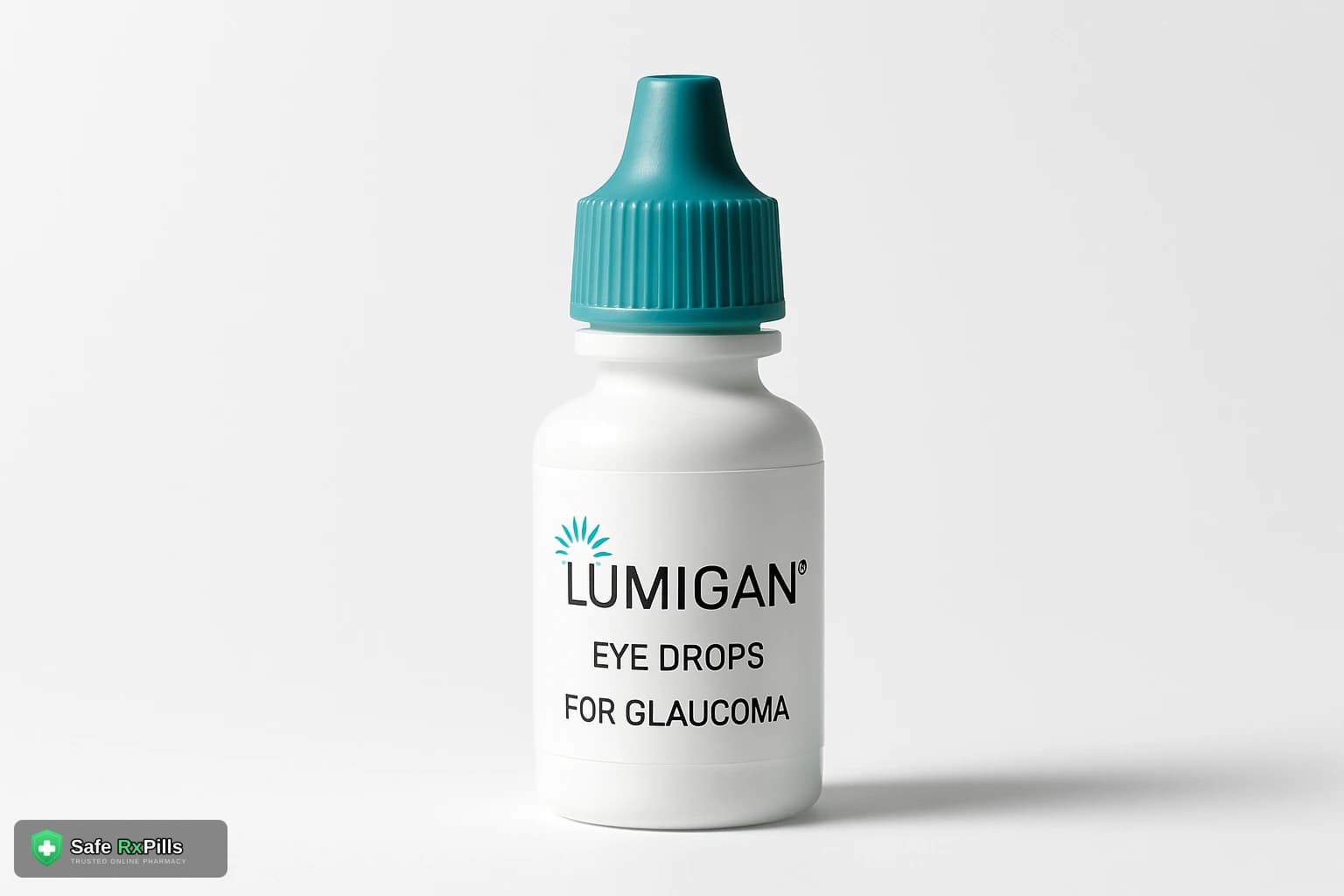
Lumigan Eye Drops for Glaucoma: Uses, Dosage, Side Effects, and Cost | SafeRxPills — pharmacy guide
Quick verdict: Lumigan is bimatoprost, a prostaglandin analog eye drop that lowers intraocular pressure by 27 to 33 percent, used first-line for open-angle glaucoma and ocular hypertension. It comes in two strengths: 0.03% (the original) and 0.01% (reformulated to reduce redness). It is one drop at night. The same molecule at a lower concentration is also sold cosmetically for eyelash growth (Latisse, Careprost), which is why Lumigan gets confused with lash serums. This guide is about its primary job: controlling glaucoma.
What Lumigan Is and What It Treats
Lumigan is the brand name for bimatoprost ophthalmic solution, made by Allergan and FDA approved in 2001. It is prescribed to lower elevated intraocular pressure (IOP) in adults with open-angle glaucoma or ocular hypertension. Like latanoprost, it belongs to the prostaglandin analog class, the most effective single-drug family for lowering eye pressure and the recommended first-line therapy in glaucoma guidelines.
Glaucoma damages the optic nerve through sustained high pressure and is a leading cause of irreversible blindness. The disease cannot be cured, but consistently lowering the pressure slows or stops the optic nerve damage. Lumigan is one of the strongest options for achieving that pressure reduction with a single daily drop.
How Lumigan Works
Bimatoprost lowers eye pressure by increasing the drainage of aqueous humor, the fluid inside the eye, through both the trabecular meshwork (the main drainage route) and the uveoscleral pathway (a secondary route). By boosting outflow through both pathways, it reduces pressure by roughly 27 to 33 percent from baseline, placing it among the most potent pressure-lowering eye drops available.
The effect starts within about 4 hours of application and peaks around 8 to 12 hours later. It is dosed once at night so the peak effect covers the overnight and early-morning hours when eye pressure naturally tends to be highest.
Lumigan 0.03% vs 0.01%: Which Strength
Lumigan comes in two concentrations, and the difference matters:
- Lumigan 0.03% ($50, 3ml): the original concentration. Slightly stronger pressure-lowering in some patients, but more likely to cause eye redness (hyperemia).
- Lumigan 0.01% ($44, 3ml): reformulated in 2010 with a lower bimatoprost concentration and more benzalkonium chloride to maintain absorption. It delivers comparable pressure control for most patients with noticeably less redness, which is why it became the more commonly prescribed strength.
For most new glaucoma patients, 0.01% is the default because of the better tolerability. Patients who need maximum pressure reduction, or who tolerate the original fine, may stay on 0.03%. This is a decision for your ophthalmologist based on your target pressure and how your eyes respond.
Dosage and How to Apply It
The standard dose is one drop in the affected eye or eyes once daily in the evening, per DailyMed Lumigan labeling. Key application points:
- Once daily only. As with all prostaglandin analogs, using bimatoprost more than once a day reduces its effectiveness. One nightly drop is correct and maximal.
- Remove contact lenses before applying, wait 15 minutes before reinserting. Both Lumigan strengths contain benzalkonium chloride.
- Space multiple drops. If you use other eye medications, wait at least 5 minutes between them.
- Punctal occlusion: after the drop, close the eye and gently press the inner corner near the nose for 1 to 2 minutes to reduce systemic absorption and keep more drug on the eye.
- Avoid contact with surrounding skin where possible, since bimatoprost on the skin can darken it and stimulate fine hair growth in the contact area.
Miss a dose? Skip it and resume the next evening. Never double up.
Side Effects and the Eyelash Question
Most side effects are local to the eye. Common ones:
- Conjunctival hyperemia (red eyes), the most common effect and the main reason the 0.01% strength exists.
- Eyelash growth: longer, thicker, darker lashes. This is the basis for the cosmetic products Latisse and Careprost, which are the same bimatoprost molecule at a lower cosmetic concentration.
- Iris and eyelid skin darkening, gradual and, for the iris, generally permanent.
- Itching, dryness, foreign-body sensation, mild stinging.
- Darkening or growth of fine hair where the drops repeatedly contact facial skin.
The eyelash growth is a harmless side effect for glaucoma patients, though it can be uneven if only one eye is treated. If you specifically want the cosmetic lash-growth application, our Careprost vs Latisse guide and Lumigan vs Careprost article explain how the same drug is used across glaucoma and cosmetic contexts. Do not use a glaucoma-strength drop as a lash serum without medical guidance.
Who Should Not Use Lumigan
- Hypersensitivity to bimatoprost or benzalkonium chloride.
- Active or prior eye inflammation (uveitis, iritis), due to a small risk of worsening inflammation or macular edema.
- Aphakic patients or torn posterior lens capsule, for macular edema risk.
- History of herpetic eye infection, as prostaglandins may reactivate herpes simplex keratitis.
- Pregnancy and breastfeeding: use only if clearly needed, under ophthalmologist guidance.
Lumigan does not treat acute angle-closure glaucoma, which is an emergency needing different immediate treatment.
Lumigan vs Latanoprost vs Travatan
All three are prostaglandin analogs, all first-line, all once-nightly. The practical differences:
- Bimatoprost (Lumigan) tends to give the strongest average pressure reduction of the three, but historically the most redness (mitigated by the 0.01% strength).
- Latanoprost (Xalatan, Lacoma PF) is the mildest on redness and the cheapest, which is why it is usually tried first. See our latanoprost guide.
- Travoprost (Travatan) sits between the two on both effect and tolerability.
Many patients start on latanoprost and switch to bimatoprost if they need more pressure reduction. There is meaningful individual variation, so the best drug is often the one your eyes respond to best at an acceptable redness level. For the full class overview, see Glaucoma Eye Drops: Every Type Explained.
Cost and How to Buy It Online
Brand-name Lumigan is expensive at US retail without insurance. Generic bimatoprost and international Lumigan are far cheaper for the identical molecule. SafeRxPills stocks both strengths: Lumigan 0.01% at $44 and Lumigan 0.03% at $50, both 3ml, both authentic bimatoprost.
Lumigan is prescription-only in the US, UK, Australia, and Canada. For patients with an established glaucoma diagnosis, personal-quantity import from a WHO-GMP certified international pharmacy is a common affordable route under FDA personal-importation enforcement discretion. Before ordering from any online source, verify the manufacturer is named and WHO-GMP certified, the strength is stated correctly, a real business address and license are published, and card payment is accepted. And keep your ophthalmology pressure checks regardless of where you buy: the drops only help if monitoring confirms your pressure is controlled.
Bottom Line
Lumigan (bimatoprost) is one of the most potent first-line glaucoma drops, with once-nightly dosing and strong pressure lowering. The 0.01% strength is the usual default for its better tolerability; 0.03% is available when maximum effect is needed. The eyelash-growth side effect is the same mechanism behind cosmetic lash serums but is incidental here. Generic and international Lumigan 0.01% delivers the identical drug affordably. Use one drop at night, mind the contact-lens timing, and keep your pressure monitoring going.
Related reading: Latanoprost Eye Drops Guide, Glaucoma Eye Drops: Every Type Explained, and the full eye care catalog.
References:
- DailyMed. Lumigan (bimatoprost ophthalmic solution) Prescribing Information. National Library of Medicine.
- American Academy of Ophthalmology. Primary Open-Angle Glaucoma Preferred Practice Pattern. 2020.
- Katz LJ, Cohen JS, Batoosingh AL, et al. Mitigating the effects of glaucoma medication with reformulated bimatoprost 0.01%. Am J Ophthalmol. 2010;149(4):661 to 671. PMID: 20144838.
- European Glaucoma Society. Terminology and Guidelines for Glaucoma, 5th Edition. 2020.
- World Health Organization. WHO Model List of Essential Medicines, 23rd edition, 2023.
?Frequently Asked Questions
What is the difference between Lumigan 0.01% and 0.03%?
Both contain bimatoprost, but at different concentrations. Lumigan 0.03% is the original, slightly stronger in some patients but more likely to cause eye redness. Lumigan 0.01% was reformulated in 2010 with lower bimatoprost concentration and adjusted preservative to maintain absorption, giving comparable pressure control for most patients with noticeably less redness. The 0.01% strength became the more commonly prescribed default because of its better tolerability, while 0.03% is used when maximum pressure reduction is needed.
Is Lumigan the same as Latisse and Careprost?
They are the same active molecule, bimatoprost, but at different concentrations and for different purposes. Lumigan is the glaucoma medication used to lower eye pressure. Latisse and Careprost are lower-concentration cosmetic formulations applied to the lash line to grow eyelashes. The eyelash growth seen with Lumigan is actually a side effect of the same mechanism. You should not repurpose glaucoma-strength Lumigan as a lash serum without medical guidance, because the eye-pressure effect and application method differ.
How much does Lumigan lower eye pressure?
Lumigan (bimatoprost) lowers intraocular pressure by roughly 27 to 33 percent from baseline, placing it among the most potent single glaucoma eye drops available. The effect begins within about 4 hours of application and peaks 8 to 12 hours later. It is dosed once nightly so the peak covers the overnight and early-morning hours when eye pressure naturally rises. Your ophthalmologist confirms the actual reduction with a follow-up pressure check a few weeks after starting.
Why does Lumigan cause red eyes?
Conjunctival hyperemia, or red eyes, is the most common side effect of bimatoprost because the drug dilates the small blood vessels on the eye surface. It is usually mild and often fades with continued use. The reformulated Lumigan 0.01% was specifically developed to reduce this redness while maintaining pressure control, which is why it is the more commonly prescribed strength for patients who find the redness bothersome on the original 0.03%.
Can I use Lumigan more than once a day?
No. Like all prostaglandin analog eye drops, using bimatoprost more than once daily actually reduces its pressure-lowering effect rather than improving it. One drop at night is both the correct and the maximum useful dose. If your eye pressure is not adequately controlled on once-nightly Lumigan, the answer is adding a different class of glaucoma drug, not using Lumigan more often. This should be decided by your ophthalmologist.
How does Lumigan compare to latanoprost?
Both are first-line prostaglandin analogs dosed once at night. Bimatoprost (Lumigan) tends to give the strongest average pressure reduction but historically caused the most redness, which the 0.01% strength largely addresses. Latanoprost (Xalatan, Lacoma PF) is the gentlest on redness and the cheapest, so it is usually tried first. Many patients start on latanoprost and switch to bimatoprost if they need more pressure reduction. Individual response varies, so the best drug is often the one your eyes tolerate and respond to best.
Do I need to remove contact lenses to use Lumigan?
Yes. Both Lumigan strengths contain benzalkonium chloride, a preservative that is absorbed by soft contact lenses and can damage them. Remove your lenses before applying the drop, wait 15 minutes, then reinsert. Also try to keep the drops off the surrounding facial skin, since bimatoprost can darken skin and stimulate fine hair growth where it repeatedly makes contact.
Is generic bimatoprost as good as brand-name Lumigan?
Yes. Generic bimatoprost contains the identical active molecule at the same concentration to the same pharmacopeia specifications as brand-name Lumigan. WHO-GMP certified manufacturers follow international quality standards. The differences are the manufacturer, packaging, and price. The pressure-lowering effect is equivalent. As with any glaucoma medication, continue your ophthalmology pressure monitoring regardless of whether you use brand or generic.
SafeRxPills Pharmacy Team
SafeRxPills Editorial Team
Editorial team at SafeRxPills. Articles are written and checked against regulatory drug labelling (DailyMed, FDA, EMA) and published literature.
Comments (0)
Leave a Comment
No comments yet. Be the first to share your thoughts!
Related Articles
Latanoprost Eye Drops: Complete Guide to Dosage, Side Effects, and Buying Online
July 7, 2026
Is Latisse Covered by Insurance? Real Costs, Coupons & Cheaper Alternatives (2026)
August 17, 2026
Lumigan vs Careprost: Same Bimatoprost, Different Strengths and What That Means
June 26, 2026