Lumigan vs Careprost: Same Bimatoprost, Different Strengths and What That Means
SafeRxPills Pharmacy Team
Editorial team at SafeRxPills. Articles are written and checked against regulatory drug labelling (DailyMed, FDA, EMA) and published literature.
Lumigan vs Careprost: Are They Really the Same Drug? | SafeRxPills - pharmacy guide
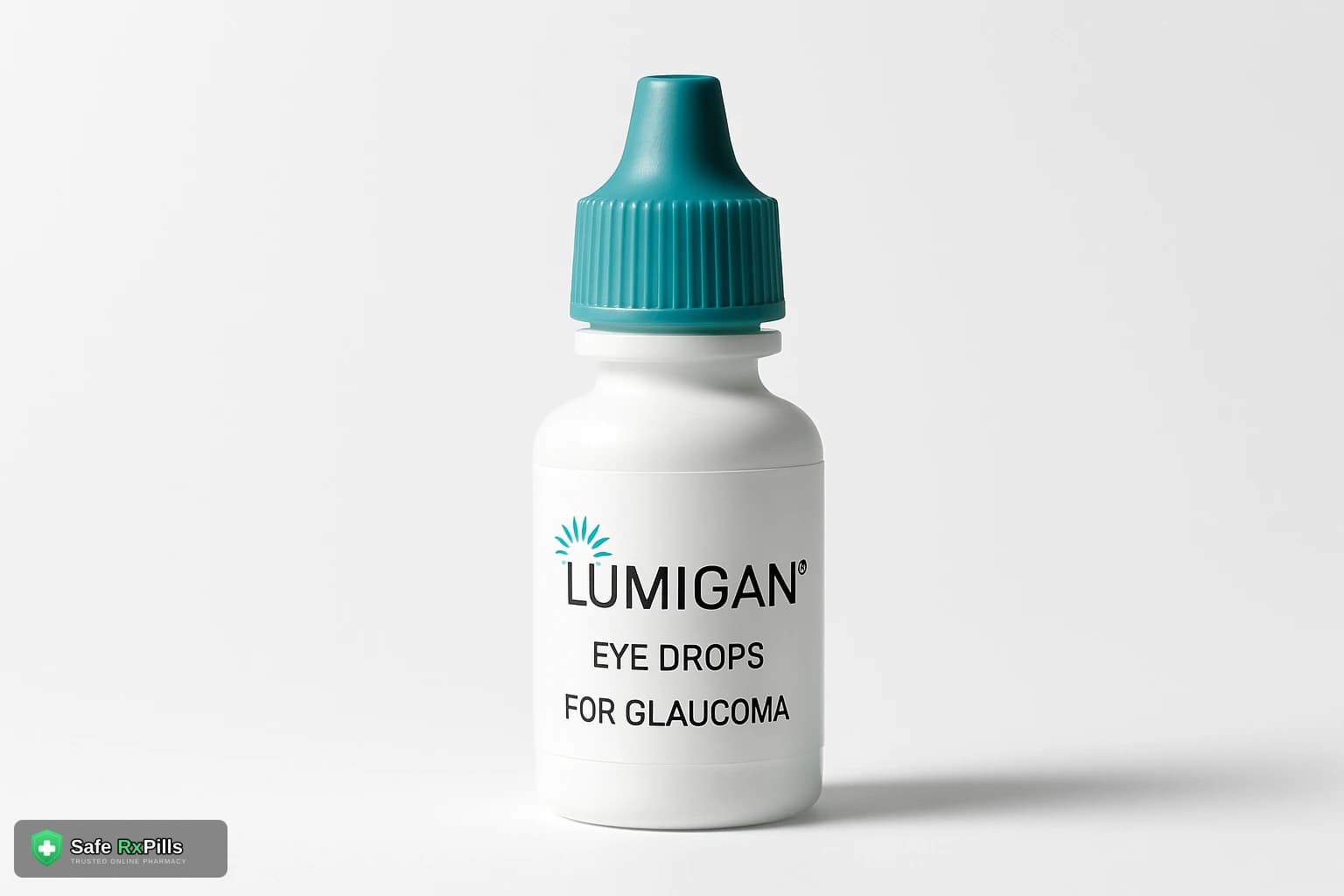
Lumigan and Careprost both contain bimatoprost, a prostaglandin eye drop that lowers eye pressure in glaucoma and, as a side effect, grows eyelashes. People often read that they are "the same drug". The active ingredient is the same, but in the US they are no longer the same strength: Lumigan is now sold there as 0.01%, while Careprost is 0.03%, the strength of the original Lumigan and of the eyelash product Latisse.
This guide explains what each product is, what the strength difference means for eye pressure and side effects, how bimatoprost compares with other glaucoma drops, what each costs, and why switching a glaucoma drop is a decision for an eye doctor. If you are interested in bimatoprost for eyelashes, our Careprost vs Latisse guide covers that side, and the Careprost product page has price and delivery details.
The short answer
Lumigan is Allergan's FDA-approved bimatoprost glaucoma drop; the US product is 0.01%, and the original 0.03% Lumigan has been discontinued in the US. Careprost is Sun Pharma's bimatoprost 0.03% glaucoma drop from India, not approved by the FDA, the MHRA, the TGA or Health Canada. In a 12-month trial, 0.01% lowered eye pressure as well as 0.03% with less eye redness. For glaucoma, the drop and strength should be chosen and monitored by an eye doctor. For eyelashes, the approved product is Latisse (0.03%), not Lumigan.
Lumigan vs Careprost at a glance
| Lumigan (US) | Careprost | |
|---|---|---|
| Active ingredient | Bimatoprost 0.01% (0.1 mg per mL) | Bimatoprost 0.03% (0.3 mg per mL) |
| Maker | Allergan, now part of AbbVie | Sun Pharmaceutical Industries, India |
| Labelled use | Lowering raised eye pressure in open-angle glaucoma or ocular hypertension | Glaucoma and high eye pressure |
| FDA approved | Yes (0.01%); the 0.03% version is discontinued in the US | No (also not approved by the MHRA, TGA or Health Canada) |
| Dose | One drop in the affected eye once daily in the evening | Pack directions; not reviewed by a US, UK, Australian or Canadian regulator |
| Bottle sizes | 2.5 mL, 5 mL, 7.5 mL (US) | 3 mL |
| Preservative | Benzalkonium chloride | Benzalkonium chloride, according to Indian pharmacy listings |
What Lumigan is
Lumigan is bimatoprost eye drops made by Allergan, now part of AbbVie. The US label approves Lumigan 0.01% to lower raised eye pressure in people with open-angle glaucoma or ocular hypertension. The dose is one drop in each affected eye once daily in the evening. The label warns against using it more than once a day, because more frequent use of prostaglandin drops can reduce the pressure-lowering effect. Pressure starts to fall about 4 hours after the first drop, with the maximum effect at about 8 to 12 hours.
Lumigan 0.01% was approved in the US on 31 August 2010, and the original Lumigan 0.03% had been withdrawn from the US market by the end of 2012. The FDA has recorded that it was not withdrawn for safety or effectiveness reasons. FDA-approved generic bimatoprost 0.03% glaucoma drops are still on sale there. The FDA approved the first generics of the 0.01% strength in 2025, and they entered US pharmacy pricing data in June 2026.
What Careprost is
Careprost is a 3 mL bottle of bimatoprost 0.03% eye drops made in India by Sun Pharma for glaucoma. Many people buy it for their eyelashes, because 0.03% is the strength of Latisse, the FDA-approved eyelash product. Careprost has not been assessed by the FDA, the MHRA, the TGA or Health Canada, and it is not the product used in the Lumigan or Latisse trials.
Same drug, different strength: does it matter?
For eye pressure, the lower strength holds up. In a 12-month randomised, double-masked trial of 561 patients with glaucoma or ocular hypertension, bimatoprost 0.01% lowered eye pressure as well as 0.03%: the difference in average pressure stayed under 0.9 mmHg throughout, and 0.01% met the trial's equivalence criteria. Treatment-related side effects were less common at 0.01%, and the clearest difference was eye redness:
| Strength | Moderate to severe increase in eye redness over 12 months |
|---|---|
| Bimatoprost 0.01% | 3.2% |
| Bimatoprost 0.0125% | 9.0% |
| Bimatoprost 0.03% | 9.1% |

For eyelashes, the approved strength is 0.03% (Latisse), and the eyelash trials used 0.03%; we found no trial of Lumigan 0.01% for eyelash growth.
How bimatoprost compares with other glaucoma drops
A network meta-analysis of 114 randomised trials with 20,275 participants estimated how much more each first-line glaucoma drop lowered eye pressure than a placebo at 3 months. Six common drops of the 14 analysed:
| Drop | Extra fall in eye pressure compared with placebo at 3 months |
|---|---|
| Bimatoprost | 5.61 mmHg |
| Latanoprost (Xalatan) | 4.85 mmHg |
| Travoprost (Travatan) | 4.83 mmHg |
| Timolol | 3.70 mmHg |
| Brimonidine | 3.59 mmHg |
| Dorzolamide | 2.49 mmHg |

The bimatoprost figure is mostly 0.03% data: 15 of the 17 bimatoprost trials used 0.03%. Analysed separately, bimatoprost 0.03% came first (5.77 mmHg more than placebo), while 0.01%, the strength of US Lumigan, ranked fourth behind latanoprost and travoprost (4.74 mmHg). The authors noted that the differences within this drug class were small and may not be clinically meaningful, and that side effects, preference and cost should also guide the choice. The estimates combine head-to-head trials with indirect comparisons; direct trial evidence existed for only 39 of the 105 drug pairs.
Side effects of bimatoprost eye drops
In a 12-month study of Lumigan 0.01%, the most common side effect was eye redness (conjunctival hyperemia), reported in 31% of patients; about 1.6% stopped because of it. That figure counts any reported redness; the 3.2% in the trial above counts only a moderate to severe increase, measured objectively. Other side effects in 1% to 4% included swelling of the eye surface, small bleeds on the white of the eye, irritation, pain, itching, red or itchy eyelids, extra lash or hair growth, darker skin, and blurred or reduced vision. The label also warns about:
- Brown darkening of the iris, which is likely to be permanent, and darkening of the eyelid skin.
- Longer, thicker and more numerous eyelashes in the treated eye, which can make the eyes look different from each other.
- Inflammation inside the eye; caution in people with active uveitis.
- Macular oedema; caution in some people who have had cataract surgery and in others with risk factors.
- Infection from a contaminated bottle tip.
- Soft contact lenses: remove them first and wait 15 minutes before putting them back, because of the preservative.
Since approval there have been reports of fat loss around the eye that tightens the skin, deepens the lid crease or causes a drooping lid, as well as allergic reactions, dizziness, headache, high blood pressure and breathing symptoms. These warnings come from the Lumigan label but apply to bimatoprost drops generally, including Careprost.
Can you switch from Lumigan to Careprost?
Not on your own. Glaucoma damages the optic nerve and the vision it takes is not recovered, so the drop, the strength and the follow-up should be set by an eye doctor who measures your pressure. Switching from Lumigan 0.01% to a 0.03% product changes the strength, and in the trial above the higher strength caused more redness while lowering pressure by a similar amount. If cost is the problem, ask your eye doctor or pharmacist about FDA-approved generics first.
Can you use Lumigan for eyelashes?
Lumigan is approved for glaucoma, not for eyelashes. The approved eyelash product is Latisse, bimatoprost 0.03%, applied to the upper lid margin with sterile single-use applicators. US Lumigan is 0.01%, a third of that strength, and we found no trial of it for lash growth. Our Careprost application guide explains the Latisse method.
Using bimatoprost on your lashes if you already have glaucoma
The Latisse label says people on any eye pressure medicine, including Lumigan or other prostaglandin drops, or with a history of abnormal eye pressure, should only use a lash product after consulting their doctor, and should have their eye pressure monitored, because extra bimatoprost may reduce the pressure-lowering effect. Never add Careprost to the lashes on top of a glaucoma drop without telling your eye doctor.
How much each costs
| Product | Paid by US pharmacies per mL | Bottle |
|---|---|---|
| Lumigan 0.01% | $103.06 | About $258 for 2.5 mL |
| Generic bimatoprost 0.01% | $42.52 to $43.41 | 2.5 mL, 5 mL or 7.5 mL |
| Generic bimatoprost 0.03% glaucoma drops | $4.21 to $8.85 | 2.5 mL, 5 mL or 7.5 mL |
| Careprost 0.03%, 3 mL | Not sold in US pharmacies | $9 a bottle from us, plus $25 shipping under $149 |

The US figures are pharmacy acquisition costs from the Medicaid NADAC file dated 30 September 2026; the price at the counter is higher and depends on insurance.
Does Medicare cover Lumigan?
Glaucoma drops are not in the classes that Medicare Part D excludes, so Lumigan and generic bimatoprost can be covered when prescribed for glaucoma, depending on each plan's formulary and tier. Part D excludes drugs when used for cosmetic purposes or hair growth, which covers Latisse used for lashes, although some enhanced plans offer excluded drugs as an extra benefit. Careprost is not covered by US insurance.
Using more than one eye drop
Lumigan can be used alongside other glaucoma drops. The label says to leave at least 5 minutes between different eye drops. The label warns that more frequent dosing of prostaglandin-type drops can reduce the pressure-lowering effect, so two prostaglandin drops, such as bimatoprost with latanoprost or travoprost, are not normally combined.
Storage and handling
The Lumigan label says to store the bottle between 2°C and 25°C (36°F to 77°F) and that, once opened, it can be used until the expiry date on the bottle. Never let the tip touch your eye, fingers or any surface: the label warns that contaminated solutions can cause serious eye infections and loss of vision. Seek your doctor's advice straight away if you develop an eye injury or infection, need eye surgery, or have an eye or eyelid reaction.
Who should not use bimatoprost drops, or should check first
- Anyone allergic to bimatoprost or any ingredient of the drop. This is the label's contraindication.
- Anyone under 16: the label does not recommend it because of concerns about increased pigmentation with long-term use.
- Anyone with active inflammation inside the eye, or at risk of macular oedema: the label advises caution, so only with their eye doctor's advice.
- Anyone already using another prostaglandin drop for eye pressure, because more frequent dosing of this drug class can reduce its effect.
- Anyone pregnant or breastfeeding should discuss it with their doctor first; there are no adequate studies in pregnancy, although the label notes no increase in major birth defects or miscarriage in postmarketing experience.
Stop and see a doctor for eye pain, discharge, persistent redness, swelling, a change in iris colour or any change in vision.
Is Careprost legal?
Bimatoprost is a prescription medicine in the US, UK, Australia and Canada. Careprost is not licensed by the FDA, the MHRA, the TGA or Health Canada. In the US, the FDA says that in most circumstances it is illegal for individuals to import medicines for personal use, and that a drug approved in another country but not in the US is illegal to import. See our guide Is Careprost legal in the USA?
Which should you use?
| Your situation | The reasonable choice |
|---|---|
| You have glaucoma or ocular hypertension | The drop your eye doctor prescribes, with regular pressure checks; ask about generics if cost is a problem |
| You are on Lumigan and want to pay less | Ask about generic bimatoprost 0.01% or 0.03%; do not switch without your eye doctor |
| You want longer lashes and have no eye condition | Latisse or an FDA-approved generic eyelash solution, or, where it is legal to obtain, Careprost applied the Latisse way if you accept an unapproved product |
| You want longer lashes and use glaucoma drops | Only with your eye doctor's agreement and pressure monitoring |
Sources
- LUMIGAN (bimatoprost ophthalmic solution) 0.01% US prescribing information (Allergan), sections 1 to 6, 8, 14, 16 and 17. DailyMed
- LATISSE (bimatoprost ophthalmic solution) 0.03% US prescribing information (Allergan), sections 2 and 5.1. DailyMed.
- Drugs@FDA: LUMIGAN NDA 021275 (0.03%, discontinued; Federal Register determination that it was not withdrawn for safety or effectiveness reasons) and NDA 022184 (0.01%, approved 31 August 2010); generic bimatoprost 0.01% ANDA 218196 (17 March 2025) and ANDA 217289 (22 September 2025); via the openFDA drugsfda API, October 2026.
- Katz LJ et al. Twelve-month, randomized, controlled trial of bimatoprost 0.01%, 0.0125%, and 0.03% in patients with glaucoma or ocular hypertension. Am J Ophthalmol 2010;149(4):661-671. PMID 20346780.
- Li T et al. Comparative effectiveness of first-line medications for primary open-angle glaucoma: a systematic review and network meta-analysis. Ophthalmology 2016;123(1):129-40. PMID 26526633.
- Centers for Medicare and Medicaid Services. National Average Drug Acquisition Cost (NADAC), 2026 file, as of 30 September 2026. data.medicaid.gov
- Centers for Medicare and Medicaid Services. Excluded Drug Reference File: questions and answers (December 2020). CMS
- US Food and Drug Administration. Personal Importation. FDA
This guide is for information only and is not medical advice. Glaucoma needs regular care from an eye doctor; never change or stop a glaucoma drop without their advice.
Comments (0)
No comments yet. Be the first to share your thoughts!
Related Articles