
Loette
Generic: Ethinylestradiol/Levonorgestrelby Pfizer India Ltd
Select pack size
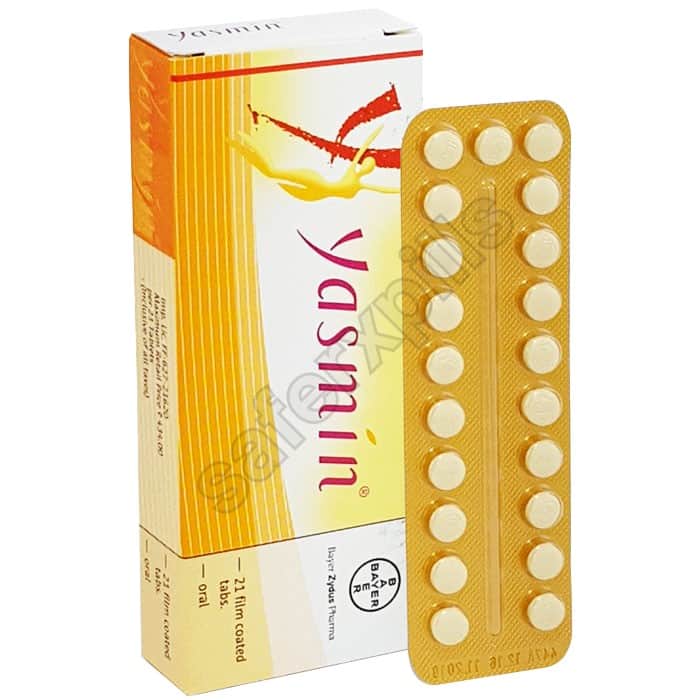
About Loette
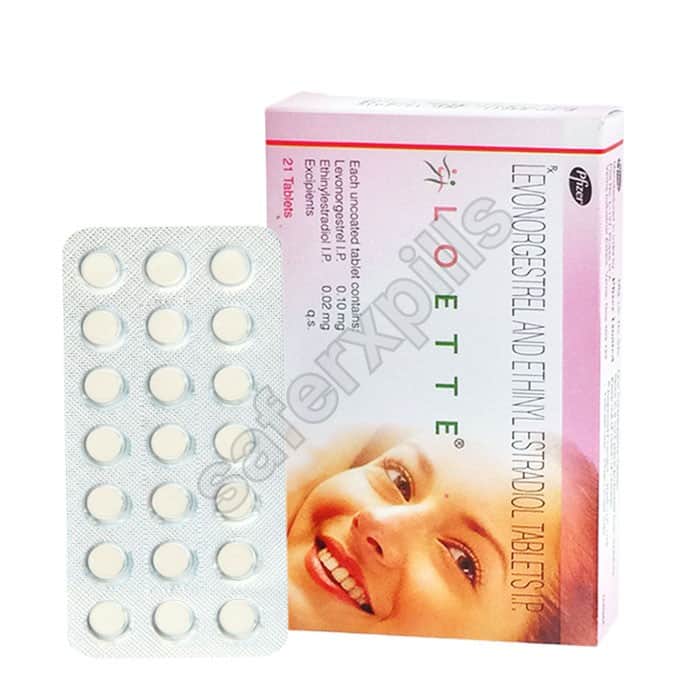
Loette is a combined birth control pill made in India by Pfizer Limited at its Verna, Goa plant. Each tablet contains 100 micrograms (0.1 mg) of levonorgestrel, a progestogen, and 20 micrograms (0.02 mg) of ethinylestradiol, an oestrogen. Many combined pills contain 30 micrograms of ethinylestradiol; Loette contains 20. The Indian pack holds 21 hormone tablets and no dummy tablets: you take one a day for 21 days, then have 7 tablet-free days. The same two doses are sold as Alesse in Canada, as Loette in Australia, and as generics such as Aviane, Lessina and Vienva in the US. We sell Loette in packs of 21 tablets (one cycle) and 42 tablets (two cycles), from $13 a cycle in the larger pack, before shipping.
This page covers how to start Loette, the label's missed pill rule, what to do after vomiting, the medicines that stop it working, the blood clot risk, who must not take it, the price per cycle and per year, and how our price compares with US generics. Clinical facts come from Pfizer's Indian prescribing information for Loette (January 2023), which is the label for the pack we sell. Where the US label (Lutera, a US generic of the same doses) or the Canadian Alesse product monograph says something different, we name the label. All sources are listed at the end.
Loette at a glance
| Active ingredients | Levonorgestrel 100 micrograms and ethinylestradiol 20 micrograms per tablet |
| Brand and maker | Loette, by Pfizer Limited, India (trademark of Wyeth LLC, used under licence) |
| Licensed use (Indian label) | Prevention of pregnancy; also moderate acne in women aged 18 or over who want contraception |
| Regulatory status | The same doses are licensed as prescription medicines in the US (generics; the original Alesse brand is discontinued there), in Canada (Alesse 21 and 28) and in Australia (Loette, Schedule 4). We found no product with these doses on the UK medicines compendium (emc). This Indian pack is not registered with the FDA, MHRA, TGA or Health Canada |
| Usual dose from the label | One tablet a day at about the same time for 21 days, then 7 tablet-free days |
| Missed tablet window | 12 hours (Indian label) |
| Packs | 21 tablets (one cycle) and 42 tablets (two cycles) |
| Price per tablet | $0.81 (21 pack) and $0.62 (42 pack), before shipping |
| Delivery | 7 to 14 business days to the US, UK, Australia and Canada; $25 shipping under $149, free from $149 |
Price per cycle and per year
Prices below are as of October 2026. The pack selector above always shows the current price. One cycle is 21 tablets followed by 7 tablet-free days, so a year of continuous use is 13 cycles.
| Pack | Price | Per tablet | Per cycle | Shipping | Per cycle with shipping | 13 cycles (one year) |
|---|---|---|---|---|---|---|
| 21 tablets (1 cycle) | $17 | $0.81 | $17 | $25 | $42 | $546 if you order one pack at a time |
| 42 tablets (2 cycles) | $26 | $0.62 | $13 | $25 | $25.50 | $348 if you order one pack at a time (six 42 packs at $51 each plus one 21 pack at $42) |
| Six 42 packs and one 21 pack in one order | $173 | $0.63 | $13.31 | Free | $13.31 | $173 |
The flat $25 shipping fee more than doubles the cost of a single 21 tablet pack. The 42 pack is cheaper per cycle before shipping as well ($13 against $17), so the saving is not only about shipping. If you already take this pill and your doctor is happy for you to continue, ordering a year's supply at once is the cheapest way to buy it from us: six 42 packs on their own come to $156 and ship free (12 cycles).
Compared with US generics
| Loette (ours) | US generics with the same doses | |
|---|---|---|
| Examples | Loette, Pfizer Limited, India | Aviane, Lessina, Vienva, Aubra EQ, Falmina |
| FDA approved | No (Indian pack) | Yes |
| Pack | 21 hormone tablets, then a 7 day break | 21 hormone tablets and 7 inactive tablets (28 a pack) |
| Cost per cycle | $13 to $17 before shipping | About $4.40 (NADAC $0.15724 a tablet x 28) |
| Cost per year (13 cycles) | $173 in one order with free shipping | About $57 at NADAC |
NADAC is the average price US pharmacies pay to buy a medicine, published by the US Medicaid programme, in this case the file effective 21 October 2026. It is not the price a patient pays at the counter, but the gap is wide: even our cheapest cycle costs about three times the NADAC rate. If you are in the US and have a prescription, a US generic is likely to be cheaper and is FDA approved, so compare US cash prices or your insurance cover first.
The original US brand, Alesse (a Wyeth trademark, first approved in March 1997), is listed by the FDA as discontinued, with a Federal Register determination that it was not withdrawn for reasons of safety or effectiveness. US generics were approved by showing they are bioequivalent to Alesse. We have not seen a published study comparing the Indian Loette tablet with US generics or with the Australian Loette, which is a film-coated tablet in a 28 tablet pack; the Indian label describes an uncoated tablet. Treat them as the same doses, not as proof of the same product.
Loette compared with other pills we sell
Loette is the only levonorgestrel 100 microgram pill in our range. Other options to discuss with your doctor:
- Ovral L (Pfizer India): levonorgestrel 150 micrograms with ethinylestradiol 30 micrograms, so more of both hormones. As of October 2026 it costs $13 for 42 tablets ($6.50 a cycle) and $18 for 63 tablets ($6 a cycle), before shipping, which is about half the price of Loette per cycle.
- Femilon (MSD): the same 20 micrograms of ethinylestradiol, with desogestrel instead of levonorgestrel.
- Yaz (Bayer Zydus): 20 micrograms of ethinylestradiol with drospirenone, in a 24 plus 4 pack.
- Cerazette (MSD): a progestogen-only pill with no oestrogen, an option for women who cannot take oestrogen. Ask a doctor whether it suits you.
The progestogen matters for blood clot risk. Our guide to birth control pills and blood clots explains how levonorgestrel pills compare with desogestrel and drospirenone pills. Changing pills is a decision to make with a doctor or nurse.
What Loette is licensed for
The Indian label (4.1) licenses Loette for preventing pregnancy, and for moderate acne in women aged 18 or over who have no reason not to take a combined pill, want contraception and have started their periods. The Canadian Alesse monograph has a similar acne indication in women over 14 years of age, and the Australian Loette entry covers moderate acne not controlled with skin treatments in women who accept contraception. The US Lutera label covers pregnancy prevention only. If acne is your main reason for taking it, our guide to doxycycline for acne covers another treatment doctors use.
How to take Loette
From the Indian label (section 4.2):
- Swallow one tablet whole, with some liquid, at about the same time every day, in the order shown on the strip.
- Take one tablet a day for 21 days in a row.
- Then stop for 7 days. A withdrawal bleed usually starts 2 to 3 days after the last tablet, and may not have finished before the next strip is due.
- Start the next strip after the 7 tablet-free days.
Starting for the first time (no hormonal contraception in the past month): take the first tablet on the first day of your period. You are then protected from the start. You can start on days 2 to 5 of your cycle instead, but then use condoms or another non-hormonal method as well for the first 7 days.
Switching from another combined pill, ring or patch: start Loette preferably the day after the last hormone tablet of your old pill, and at the latest on the day after the old pill's usual tablet-free or inactive tablet interval (the Canadian monograph's wording; the Indian label says the same less clearly). After a ring or patch, start on the day you remove it.
Switching from a progestogen-only method: from a progestogen-only pill, you can stop on any day and start Loette the next day; from an implant or hormonal coil, start on the day it is removed; from an injection, start on the day the next injection is due. In all these cases use a non-hormonal method as well for the first 7 days.
After a birth or abortion: after a first trimester abortion you can start straight away, with no extra protection needed. After giving birth, the label says not to start before day 28, because of the clot risk in the weeks after delivery, and to use a non-hormonal method for the first 7 days. If you have already had sex since the birth, pregnancy must be ruled out first, or you must wait for your first period. After a second trimester abortion, the label says not to start before day 28, as after a birth. If you are breastfeeding, the label says a combined pill is usually not recommended until your baby is fully weaned (4.6).
Before you start. The label says pregnancy must be ruled out, and a doctor should take your personal and family history and check at least your blood pressure, breasts, abdomen and pelvic organs, including a cervical smear, before you start, and then at least once a year (4.4, 4.6). In our view, a blood pressure check before the first pack is the one step you should never skip.
Delaying a period. The label says you can start the next strip straight away without the 7 day break, up to the end of the second strip, and that spotting or breakthrough bleeding may happen while you do this.
If you miss a tablet
The Indian Loette label (4.2) gives a 12 hour rule:
- Less than 12 hours late: take the tablet as soon as you remember and take the next one at the usual time. You do not need extra protection.
- More than 12 hours late, or more than one tablet missed: protection may be reduced. Take the last missed tablet as soon as you remember, even if that means two tablets in one day, then carry on at the usual time. Use condoms or another non-hormonal method for the next 7 days.
- If those 7 days run past the end of the strip: start the next strip as soon as the current one is finished, with no break. You may not have a withdrawal bleed until the end of the second strip. If you have no bleed then, pregnancy must be ruled out before you carry on.
The US Lutera label (a 28 tablet pack) and the Canadian Alesse 21 and 28 monograph use a different chart, counted by the number of pills missed. Follow the 12 hour rule above for the Indian Loette pack, even if guidance for another pill you have used differs. Our general missed pill guide uses a 24 hour window; for Loette, follow the label's 12 hour rule above. If you missed tablets and had sex in the days before, ask a pharmacist or doctor straight away whether you need emergency contraception (our advice). Our delivery takes 7 to 14 business days, so for emergency contraception use a local pharmacy.
Vomiting or diarrhoea
If you vomit within 4 hours of taking a tablet, it may not have been absorbed. The Indian label says to follow the missed tablet advice above and to take the replacement tablet from a spare strip. The label also says diarrhoea can reduce absorption (4.4). The Canadian Alesse monograph applies the same 4 hour rule to vomiting and/or diarrhoea. The US Lutera label's prescribing section is different: it says not to take an extra hormone tablet that day and to carry on the next day, and if vomiting or diarrhoea lasts 48 hours or more, to contact your healthcare provider and use a back-up method until you have taken hormone tablets for 7 days in a row after it stops. For the Indian pack, follow the Indian label, and keep a spare strip at home.
Medicines that stop Loette working
From the Indian label (4.5) unless another label is named:
- Enzyme inducers lower ethinylestradiol levels and can cause breakthrough bleeding or pregnancy: rifampicin, rifabutin, barbiturates, primidone, phenylbutazone, phenytoin, dexamethasone, griseofulvin, topiramate, various protease inhibitors, modafinil and carbamazepine (and, the label says, presumably oxcarbazepine and felbamate), as well as St John's wort and ritonavir. Use condoms or another non-hormonal method as well while you take any of them and for 28 days after stopping; the label says enzyme induction can take several weeks to wear off. (For other substances that lower ethinylestradiol levels, such as those that shorten gut transit time, the label gives 7 days.) If the other medicine runs past the end of the strip, start the next strip without a break. For long-term use of these medicines, the label says a combined pill should not be your main contraception.
- Hepatitis C medicines: the Indian label (4.3) contraindicates Loette with ombitasvir/paritaprevir/ritonavir and dasabuvir, with glecaprevir/pibrentasvir, and with sofosbuvir/velpatasvir/voxilaprevir, because liver enzyme (ALT) rises were seen in women taking ethinylestradiol. Switch to a progestogen-only or non-hormonal method before starting them; Loette can be restarted 2 weeks after the course ends (4.5). The US Lutera label names ombitasvir/paritaprevir/ritonavir "with or without dasabuvir", and the Canadian Alesse monograph names ombitasvir, paritaprevir, ritonavir and dasabuvir "with or without ribavirin".
- Raised hormone levels: atorvastatin, vitamin C, paracetamol and CYP3A4 inhibitors such as indinavir and fluconazole can raise ethinylestradiol levels.
- Effects on other medicines: levels of ciclosporin, theophylline and corticosteroids may rise, and lamotrigine levels may fall. Doses of diabetes tablets or insulin may need adjusting. The US label adds that women on thyroid hormone should have their TSH level checked.
- Antibiotics: the US patient labeling lists "possibly certain antibiotics (such as ampicillin and other penicillins, and tetracyclines)". Ask your pharmacist about any antibiotic course.
Tell your doctor and pharmacist about every medicine and herbal product you take.
Bleeding changes and side effects
Spotting early on is common. The Indian label lists breakthrough bleeding and spotting as very common and says they happen especially in the first three months. In the US label's trial of this exact dose, 30.5% of women had unscheduled bleeding or spotting in cycle 1, falling to 18.2% by cycle 12. Keep taking the tablets. If bleeding persists, or starts after long use, see a doctor to rule out other causes. If you miss two withdrawal bleeds in a row, or miss one after not taking the tablets as directed, the label says to stop the tablets and use a non-hormonal method until pregnancy has been ruled out (4.4).
| How often (Indian label 4.8) | Selected side effects |
|---|---|
| Very common (1 in 10 or more) | Headache, including migraine; breakthrough bleeding; spotting |
| Common (1 in 100 to 1 in 10) | Vaginal infection including thrush, weight change, mood swings including depression, change in sex drive, nervousness, sleepiness, nausea, vomiting, abdominal pain, acne, breast pain, tenderness, enlargement or discharge, painful periods, change in menstrual flow, no periods, fluid retention |
| Uncommon (1 in 1,000 to 1 in 100) | Changes in blood fats, change in appetite, higher blood pressure, abdominal cramps, wind, rash, darker skin patches (chloasma, possibly permanent), excess hair growth, hair loss |
| Rare (1 in 10,000 to 1 in 1,000) | Serious allergic reactions, lower folate levels, glucose intolerance, contact lens intolerance, cholestatic jaundice, erythema nodosum |
| Very rare (under 1 in 10,000) | Liver cancer, worsening of lupus, porphyria or chorea, optic neuritis, clot in the eye (retinal thrombosis), worse varicose veins, pancreatitis, ischaemic colitis, gallbladder disease including gallstones, erythema multiforme, haemolytic uraemic syndrome |
| Frequency not known | Worse hereditary or acquired angioedema, inflammatory bowel disease (Crohn's disease, ulcerative colitis), liver injury (hepatitis) |
Mood. The Indian label says depressed mood and depression are well-known effects of hormonal contraceptives, that "Depression can be serious and is a well-known risk factor for suicidal behaviour and suicide", and that women should contact their doctor about mood changes, including soon after starting (4.4).
Cancer. The Indian label (4.4) reports a meta-analysis of 54 studies that found a slightly higher chance of breast cancer being diagnosed in pill users, falling over the 10 years after stopping, and says the studies do not prove cause. Some studies suggest a higher risk of cervical cancer in some groups of users; persistent HPV infection is the main risk factor. Liver tumours have been reported in very rare cases.
How well it works. The Indian label (5.2) puts the failure rate at about 0.1% a year with correct use and about 5% with typical use. In the trial described in the US and Canadian labels, 1,477 women took this dose for 7,720 cycles and the pregnancy rate (Pearl Index) was 0.84 per 100 women a year. The US label says its effectiveness in women with a BMI over 35 has not been adequately evaluated.
Blood clot risk
All combined pills raise the risk of blood clots in the veins (venous thromboembolism, VTE: deep vein thrombosis and pulmonary embolism), and also of heart attack and stroke. The labels give these figures:
| Group | Venous clots | Label |
|---|---|---|
| Women not on the pill | 5 to 10 per 100,000 women a year | Canadian Alesse monograph |
| Levonorgestrel pills with 30 micrograms of ethinylestradiol | About 20 per 100,000 women a year (the label prints "30 mg", evidently micrograms, and gives no separate figure for 20 micrograms) | Indian Loette label 4.4 |
| Pills with less than 50 micrograms of ethinylestradiol | About 20 to 40 per 100,000 women a year, varying with the progestogen | Canadian Alesse monograph |
| Combined pill users in general | 3 to 9 per 10,000 women a year | US Lutera label |
| Pregnancy | About 60 per 100,000 pregnancies (Indian label) or per 100,000 women a year (Canadian monograph) | Indian label and Canadian monograph |
The Indian label says the extra risk is highest in the first year a woman ever uses a combined pill, and that VTE is fatal in 1 to 2% of cases. The US label adds that the risk is also highest when restarting after a break of four weeks or longer, and returns to baseline about 3 months after stopping. The risk rises with obesity (BMI over 30), age, a family history of clots, surgery or injury, long immobility and the weeks after giving birth. For planned surgery, the Indian label says stop Loette, if possible, one month before the operation and do not restart until you are fully mobile again. The label also says to stop it during any prolonged immobilisation. It also says that one major risk factor, or several risk factors, for blood clots may count as a contraindication (4.4).
Smoking. The labels word this differently, so here is each one:
- US Lutera label, boxed warning: "Cigarette smoking increases the risk of serious cardiovascular events from combined oral contraceptives (COC) use. This risk increases with age, particularly in women over 35 years of age, and with the number of cigarettes smoked. For this reason, COCs, including Lutera, are contraindicated in women who are over 35 years of age and smoke."
- Canadian Alesse monograph, serious warnings box: the risk "becomes significant in hormonal contraceptive users older than 35 years of age who smoke. Women should be counselled not to smoke."
- Indian Loette label (4.4): "Women aged over 35 years who smoke should consider other methods of contraception."
Our view: if you are over 35 and smoke, do not take Loette or any other combined pill.
When to get urgent help
The Indian label (section 9) says to seek urgent medical attention for any of these, which can be signs of a blood clot, heart attack or stroke. Stop taking Loette and call emergency services (911 in the US and Canada, 999 in the UK, 000 in Australia; calling straight away is our advice):
- pain and/or swelling in one leg
- sudden, marked chest pain, which may spread to the left arm
- sudden breathlessness or a sudden cough
- an unusual, severe and long-lasting headache
- sudden partial or complete loss of vision, double vision, slurred speech or difficulty speaking, or vertigo
- collapse, with or without a seizure
- sudden weakness or numbness of one side of the body or of a limb, or difficulty moving
- sudden (acute) pain in the abdomen
Also get urgent help for swelling of the lips, tongue or throat, trouble breathing, hives or a rash, which can be signs of a serious allergic reaction (rare, Indian label 4.8). Contact a doctor straight away for yellowing of the skin or eyes, which the US patient labeling says may come with fever, tiredness, loss of appetite, dark urine or pale stools; for a big rise in blood pressure; for a first or worsening migraine, or a new severe, recurrent or persistent headache (the Indian label says the pill must then be stopped); and for severe low mood or thoughts of self-harm. Tell the medical staff that you take levonorgestrel with ethinylestradiol, how much and since when.
An overdose may cause nausea, vomiting, breast tenderness, dizziness, abdominal pain, sleepiness or tiredness, and withdrawal bleeding (4.9). There is no antidote. If a child swallows tablets, call a doctor or a poison line (our advice).
Who should not take Loette
Never take it if (Indian label 4.3 contraindications) you:
- are allergic to levonorgestrel, ethinylestradiol or any ingredient of the tablet
- have cerebrovascular disease or coronary heart disease
- have or have had a blood clot in a vein or an artery (deep vein thrombosis, pulmonary embolism, heart attack) or a stroke
- have or have had warning signs of a clot, such as a transient ischaemic attack or angina
- have an inherited or acquired tendency to clot, such as APC resistance, antithrombin III, protein C or protein S deficiency, hyperhomocysteinaemia or antiphospholipid antibodies
- have heart valve disease or a heart rhythm disorder
- have migraine with focal neurological symptoms, such as aura
- have diabetes with blood vessel damage
- have uncontrolled high blood pressure
- have a severe disorder of blood fats
- have or may have breast cancer or another oestrogen-dependent cancer
- have liver tumours, or active liver disease until liver tests are back to normal
- have vaginal bleeding that has not been diagnosed
- have or have had pancreatitis linked with very high triglycerides
- take the hepatitis C medicines listed above
The label says that if any of these appears for the first time while you take Loette, stop it at once.
The US and Canadian labels add other contraindications. The US Lutera label: women over 35 who smoke; women aged 35 or older with any migraine, with or without aura; prolonged immobilisation, especially with major surgery; jaundice in pregnancy or with earlier pill use; and a past history of breast cancer. The Canadian Alesse monograph: known or suspected pregnancy; abnormal liver function tests; jaundice related to steroids or pregnancy; and any eye lesion caused by blood vessel disease of the eye, such as partial or complete loss of vision or a defect in the visual field.
Pregnancy. The Indian label says pregnancy must be ruled out before the first tablet, and that the pill must be stopped at once if you become pregnant. It also says there is no definite evidence that the hormones harm the baby if a pregnancy happens by accident (4.6).
Should not take. The Indian label says Loette contains lactose, and that people with rare hereditary problems of galactose intolerance, total lactase deficiency or glucose-galactose malabsorption "should not take this medicine". The label says combined pills are not indicated after the menopause or before the first period (4.4, 4.6).
Strict medical supervision. The Indian label (4.4) says strict medical supervision is needed if you have, or have had, any of these: diabetes or high blood fats, high blood pressure, a family history of blood vessel disease, superficial thrombophlebitis, varicose veins, jaundice or itching from cholestasis, gallstones, porphyria, herpes gestationis, otosclerosis, asthma, epilepsy, migraine, chorea, heart, kidney or liver problems, lupus, obesity, multiple sclerosis, tetany, depression, haemolytic uraemic syndrome or sickle cell anaemia.
Other warnings in the Indian label (4.4): oestrogens may bring on or worsen hereditary or acquired angioedema; Crohn's disease and ulcerative colitis have been associated with combined pill use; and women prone to chloasma should avoid sun and UV light. For women with high blood pressure or a history of it, the label says another method of contraception may be preferable, and if a combined pill is used, blood pressure should be monitored closely and the pill stopped if it rises significantly.
Sexually transmitted infections. Loette does not protect against HIV or other sexually transmitted infections. Use condoms for that.
Prescription and legal status
- US: levonorgestrel 100 micrograms with ethinylestradiol 20 micrograms is sold as FDA-approved generics, prescription only (for example Vienva, "Rx only"). The original brand, Alesse, is discontinued. The FDA says personal importation of unapproved medicines is illegal in most circumstances.
- UK: we found no pill with these doses on the electronic medicines compendium (emc), which is not the full MHRA register. The fixed-dose levonorgestrel combined pills listed there (Microgynon 30, Rigevidon, Levest, Ovranette and Maexeni) contain 150 micrograms of levonorgestrel with 30 micrograms of ethinylestradiol; Logynon and Triregol are triphasic pills. Microgynon 30 is a prescription-only medicine. The Indian Loette pack is not authorised in the UK.
- Australia: Loette (Pfizer Australia) is on the ARTG and is Schedule 4, prescription only, and healthdirect says it is not on the PBS. The Australian pack is a different presentation (21 hormone tablets plus 7 inactive tablets). We found no ARTG listing for the Indian pack.
- Canada: Alesse 21 and Alesse 28 (Pfizer Canada, DIN 02236974 and 02236975) and generics such as Aviane, Alysena, Audrina and Laylaa are listed in Health Canada's Drug Product Database as prescription medicines. We found no DIN for the Indian pack.
- India: Truemeds marks Loette as prescription required, and Apollo Pharmacy lists it as a prescription drug.
A combined pill needs a doctor's or nurse's check first, mainly of your blood pressure, smoking, migraine type and clot risk. See one before you take Loette, and check the rules where you live.
Buying genuine Loette
The MHRA warns that "Any medicine not authorised for sale in the UK can be unsafe or ineffective and there is no way of knowing what is in them or the negative health effects they can have", and it advises UK buyers to use only UK-registered pharmacies. That warning covers this Indian Loette pack. When your order arrives, read the strip: it should name Loette, levonorgestrel 0.10 mg and ethinylestradiol 0.02 mg, Pfizer Limited, 21 tablets, a batch number and an expiry date. These checks cannot prove that tablets are genuine, because counterfeiters copy packaging. A pill that does not contain the right dose could fail without any sign, so if you have any doubt about a supply, use condoms as well and take a pregnancy test if a withdrawal bleed does not come (our advice). If a batch causes unusual symptoms, seek medical advice and report it to your medicines regulator (the MHRA Yellow Card scheme in the UK, FDA MedWatch in the US, the TGA in Australia or Health Canada) as well as to us.
Delivery
We ship Loette to the US, UK, Australia and Canada in plain packaging with tracking. Standard delivery takes 7 to 14 business days to most countries. Shipping costs a flat $25 on orders under $149 and is free from $149. The Indian label says to store the strips below 30°C and protect them from moisture. Order your next cycles well before your current strip runs out, so you never have to extend the 7 day break while you wait. See our shipping page and refund policy.
Related guides
Sources
- Pfizer Limited, India. Levonorgestrel and Ethinylestradiol Tablets I.P., LOETTE, prescribing information LPDLTE012023, date of revision January 2023, sections 2, 4.1 to 4.9, 5.2, 8.3, 8.4, 9, 10 and 11. Pfizer labeling
- Lutera (levonorgestrel and ethinyl estradiol tablets USP, 0.1 mg/0.02 mg), prescribing information, Dr. Reddy's Laboratories, Rev. 11/2025: boxed warning, Indications and Usage, Contraindications, Warnings 1, 4, 9 and 11, Precautions 8 and 9, Dosage and Administration, patient labeling. DailyMed
- ALESSE 21 and ALESSE 28 Product Monograph, Pfizer Canada ULC, date of revision 26 July 2024: 1 Indications, 2 Contraindications, 3 Serious Warnings and Precautions box, 4 Dosage and Administration, 7 Warnings and Precautions (Cardiovascular, Hematologic, Hepatitis C), 14 Clinical Trials. Health Canada DPD
- Health Canada Drug Product Database: Alesse 21 (DIN 02236974) and Alesse 28 (DIN 02236975), Marketed, Prescription; Alysena, Audrina, Aviane and Laylaa 21 and 28, Marketed, Prescription. Health Canada
- healthdirect Australia. Loette (ARTG data): indications, Schedule 4, not PBS listed, pack presentations; data updated 3 August 2026. healthdirect
- US FDA, Drugs@FDA: Alesse, NDA 020683, discontinued, with a Federal Register determination that it was not discontinued or withdrawn for safety or effectiveness reasons. Drugs@FDA
- CMS National Average Drug Acquisition Cost (NADAC), file effective 21 October 2026: Aviane-28, Lessina-28, Vienva-28, Aubra EQ-28 and Falmina-28, $0.15724 per tablet. data.medicaid.gov
- electronic medicines compendium (emc) search for levonorgestrel with ethinylestradiol, checked 21 October 2026; Microgynon 30 legal category POM. emc
- Truemeds and Apollo Pharmacy product listings for Loette Tablet 21 (Pfizer Ltd), checked 21 October 2026. Truemeds, Apollo Pharmacy
- MHRA. 20 million illegal erectile dysfunction pills seized as MHRA warns against risky online buys, 13 February 2026. GOV.UK
- US Food and Drug Administration. Personal Importation. FDA
This page is for information and is not medical advice. Loette should be started only after a doctor or nurse has checked your blood pressure and your blood clot risk.
Frequently asked questions
What is Loette?
Loette is a combined birth control pill made in India by Pfizer Limited. Each tablet contains levonorgestrel 100 micrograms (0.1 mg) and ethinylestradiol 20 micrograms (0.02 mg). The Indian label licenses it to prevent pregnancy and to treat moderate acne in women aged 18 or over who also want contraception. The Indian strip holds 21 tablets: one a day for 21 days, then 7 tablet-free days.
Is Loette the same as Alesse or US generics such as Aviane?
It has the same doses. The same 100 microgram and 20 microgram combination is sold as Alesse in Canada, as Loette in Australia and as US generics such as Aviane, Lessina and Vienva; the original US Alesse brand is discontinued. The Indian Loette is an uncoated tablet in a 21 tablet strip, while the US and Australian packs have 28 tablets including 7 inactive ones. We have not seen a study comparing the Indian tablet with those products, so treat it as the same doses, not proof of the same product.
How much does Loette cost per cycle and per year?
As of October 2026, a 21 tablet pack (one cycle) costs $17 and a 42 tablet pack (two cycles) costs $26, which is $13 a cycle. Shipping is $25 under $149 and free from $149, so one 21 pack costs $42 delivered. A year is 13 cycles: six 42 packs and one 21 pack in one order cost $173 with free shipping. US generics with the same doses cost US pharmacies about $4.40 a cycle (NADAC, October 2026), so if you are in the US with a prescription, a US generic is likely to be cheaper.
How do I take Loette?
Take one tablet a day at about the same time for 21 days, swallowed whole with some liquid, then have 7 tablet-free days before the next strip. A withdrawal bleed usually starts 2 to 3 days after the last tablet. If you start on the first day of your period you are protected from the start; if you start on days 2 to 5, use condoms as well for the first 7 days (Indian label 4.2).
What should I do if I miss a Loette tablet?
The Indian Loette label uses a 12 hour rule. If a tablet is less than 12 hours late, take it as soon as you remember and carry on; no extra protection is needed. If it is more than 12 hours late or you missed more than one, take the last missed tablet straight away, even if that means two in one day, and use condoms for the next 7 days. If those 7 days run past the end of the strip, start the next strip with no break. If you vomit within 4 hours of a tablet, follow the same missed tablet advice.
When does Loette start working?
If you take the first tablet on the first day of your period, the Indian label says no extra protection is needed. If you start later, on days 2 to 5, or switch from a progestogen-only method, use condoms or another non-hormonal method for the first 7 days. Some medicines, such as rifampicin, carbamazepine, phenytoin, topiramate and St John's wort, can stop it working; tell your doctor about everything you take.
Should I take Loette or Ovral L?
Both contain levonorgestrel and ethinylestradiol. Loette has 100 micrograms of levonorgestrel and 20 micrograms of ethinylestradiol; Ovral L has 150 micrograms and 30 micrograms, so more of both hormones. Ovral L costs about half as much per cycle from us. Which one suits you is a decision for your doctor or nurse, who can weigh your bleeding pattern, side effects and clot risk.
What are the side effects of Loette?
The Indian label lists headache, breakthrough bleeding and spotting as very common, and nausea, vomiting, abdominal pain, breast tenderness, mood changes, weight change and vaginal thrush among the common ones. Spotting is most likely in the first three months; in the US label's trial of this dose, 30.5% of women had unscheduled bleeding or spotting in cycle 1 and 18.2% in cycle 12. The most serious risk is a blood clot, which is rare but can be fatal.
Who should not take Loette?
The Indian label says never take it if you have or have had a blood clot, stroke, heart attack or angina, a clotting disorder, heart valve or rhythm disease, migraine with aura, diabetes with blood vessel damage, uncontrolled high blood pressure, liver tumours or active liver disease, breast cancer, undiagnosed vaginal bleeding, or if you take certain hepatitis C medicines. The US label also contraindicates it in women over 35 who smoke. Pregnancy must be ruled out before you start.
Do I need a prescription for Loette?
Yes, in practice. Pills with these doses are prescription only in the US, Canada and Australia, and Indian pharmacies such as Truemeds and Apollo list Loette as prescription required. This Indian pack is not registered with the FDA, MHRA, TGA or Health Canada, and the FDA says personal importation of unapproved medicines is illegal in most circumstances. See a doctor or nurse first: they should check your blood pressure, smoking, migraine type and clot risk.
How long does delivery take?
Standard delivery to the US, UK, Australia and Canada takes 7 to 14 business days, in plain packaging with tracking. Shipping is $25 on orders under $149 and free from $149. Order your next cycles well before your current strip runs out, because the delivery time is too long for emergency contraception or for a strip you need next week.
Medical References
- 1.PubMed (NCBI) (PMID: 16266199) — 2005
- 2.PubMed (NCBI) (PMID: 7758251) — 1995
- 3.DailyMed (U.S. National Library of Medicine)
- 4.PubMed (NCBI) (PMID: 32162237) — 2020
- 5.PubMed (NCBI) (PMID: 12908020) — 2003
- 6.PubMed (NCBI) (PMID: 36744531) — 2023
Sources: U.S. National Library of Medicine (DailyMed, PubMed), openFDA
Related articles
How to Apply Estradiol Gel: Where to Put It, Pump vs Packet, and What Changes Absorption
Where and how to apply estradiol gel, product by product: the arm for EstroGel and Elestrin pumps, the upper thigh for Divigel and generic 0.1% packets. Covers priming, drying and no-contact times, what washing, sunscreen and moisturizer do to absorption, missed doses, the 2026 boxed warning change and who should not use it.
Read article
Diane-35 in the USA: Why It Isn't FDA-Approved, What It Treats, Clot Risk and US Alternatives
Diane-35 combines cyproterone acetate 2 mg with ethinylestradiol 35 micrograms for acne and hirsutism in women. It is prescribed in Canada, the UK, Australia and India but has never been FDA-approved. This guide covers its licensed uses, trial results, the 2013 European review, blood clot risk against other pills, the 2020 meningioma review, who should not take it, and FDA-approved US alternatives.
Read article
Visanne (Dienogest 2 mg) for Endometriosis: Trial Results, Side Effects and Where It Is Available
Visanne is Bayer's dienogest 2 mg tablet for endometriosis pain. This guide covers the placebo and leuprorelin trials, how many women got a large benefit, bleeding changes, side effects, mood and bone density, who must not take it, interactions, and its status in the US, UK, Canada and Australia, with FDA-approved US alternatives.
Read articleCustomer Reviews
No reviews yet. Bought Loette? Tell other buyers how it went.