
Expert Pharmacy Insights
Evidence-based health articles, medication guides, and wellness tips from certified pharmacists
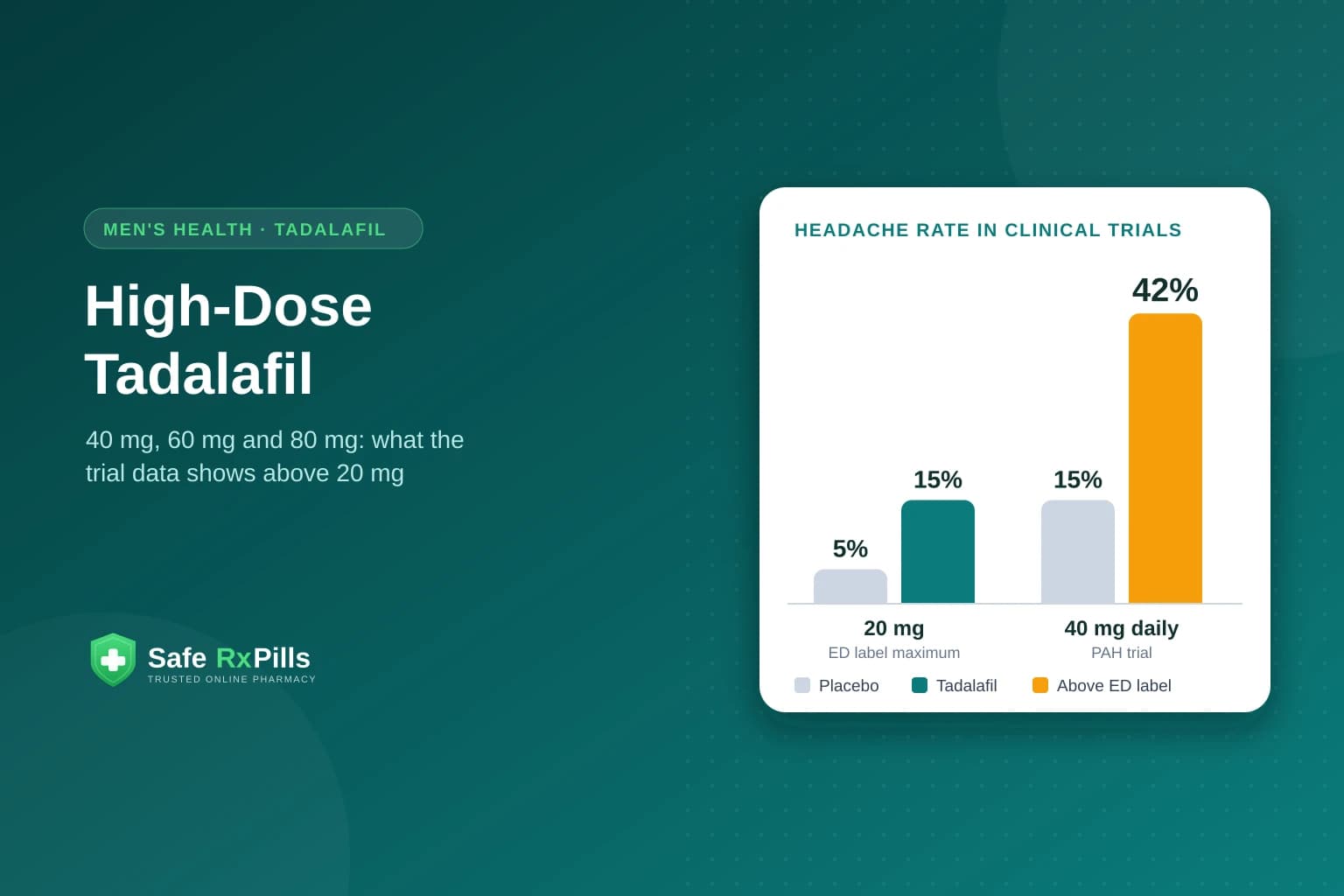
Tadalafil 40mg, 60mg and 80mg: What the Evidence Says About High-Dose Tadalafil
Tadalafil for erectile dysfunction is labelled up to 20 mg, yet 40 mg, 60 mg and 80 mg tablets are widely sold. The only approved use of 40 mg is daily treatment for pulmonary arterial hypertension, and the side effect data from that use is sobering. This guide sets out what is known and what is not.
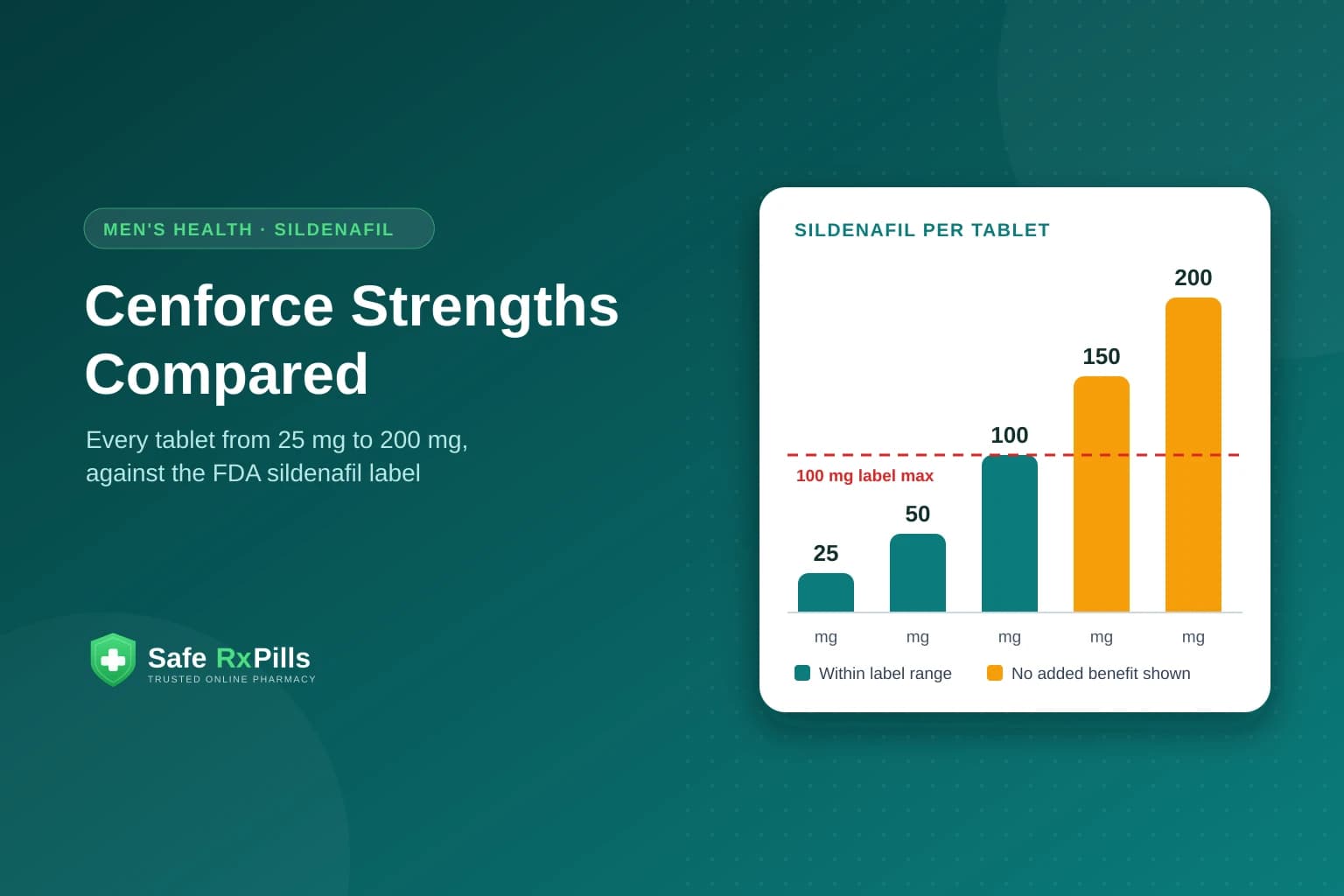
Cenforce Strengths Compared: 25mg to 200mg, Soft, Professional and D Explained
Cenforce comes in more than ten versions, but they all contain sildenafil, and the regulatory ceiling for sildenafil is 100 mg once a day. This guide lines up every Cenforce strength against the FDA trial data so you can see what a higher number actually buys you, and what it costs in side effects.
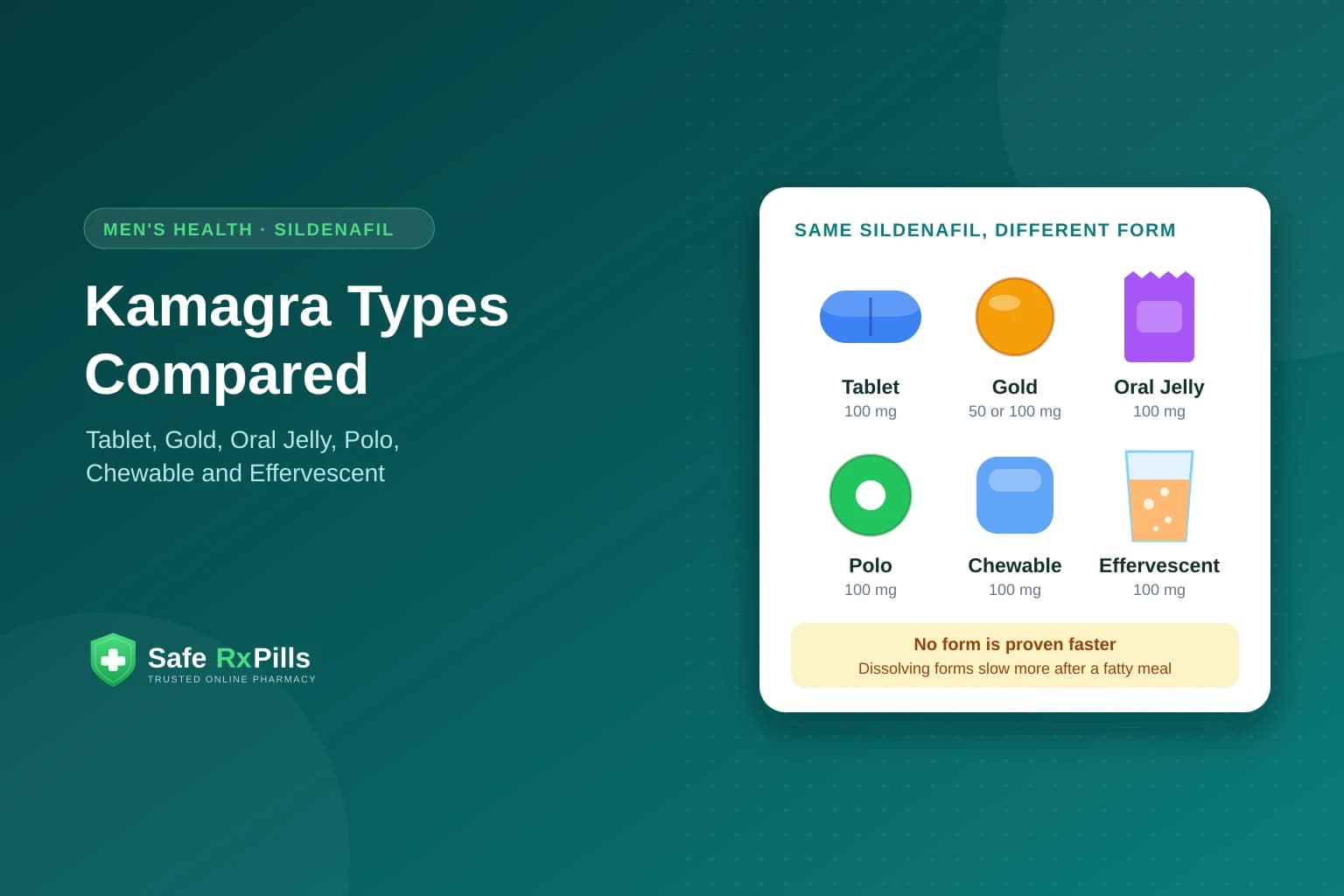
Kamagra Types Compared: Tablets, Gold, Oral Jelly, Polo, Effervescent and Chewable
Ajanta Pharma makes Kamagra in at least six forms, and all of them deliver 100 mg or less of sildenafil. The real differences are texture, water, flavour and how badly a heavy meal slows each one down. This guide compares every version using regulatory data on dissolving sildenafil.
Sildenafil and Dapoxetine Together: Super P-Force, Cenforce D and Super Kamagra Explained
Super P-Force, Super Kamagra and Cenforce D contain 100 mg sildenafil plus 60 mg dapoxetine. The Priligy label advises against combining dapoxetine with PDE5 inhibitors, yet a 495 man trial found adding dapoxetine raised average ejaculation time from 3.4 to 5.2 minutes, and a 2025 meta-analysis found the combination beat dapoxetine alone. What each tablet contains and who it suits.
Dapoxetine Side Effects by Dose: Nausea, Dizziness and the Fainting Risk
In trials of more than 4,200 men, nausea affected 11.0 percent on dapoxetine 30 mg and 22.2 percent on 60 mg. Fainting was rare: 0.06 percent at 30 mg and 0.23 percent at 60 mg, mostly within three hours of the first dose. Side effects by dose, the warning signs of fainting, dangerous combinations and who is most at risk.
Dapoxetine Dosage Guide: 30 mg vs 60 mg, Timing, and the 60 mg Ceiling
Dapoxetine starts at 30 mg taken 1 to 3 hours before sex, with a 60 mg maximum once in 24 hours. In the 24 week Priligy trial, median ejaculation time rose from 1.05 minutes on placebo to 1.72 on 30 mg and 1.91 on 60 mg. What each dose achieves, which medicines cap it at 30 mg, and why 90 mg tablets are above any licensed dose.
Tiotropium Inhaler Guide: Why 18 mcg and 5 mcg Are the Same Dose, and Who Actually Benefits
Tiotropium comes as 18 mcg capsules, 5 mcg soft mist and 9 mcg puffs, and the 17,135 patient TIOSPIR trial showed the capsule and soft mist doses perform the same. UPLIFT found 14 percent fewer COPD exacerbations but no slowing of lung function decline. Where it sits under GOLD 2025, its role as an asthma add-on, and side effects against placebo.
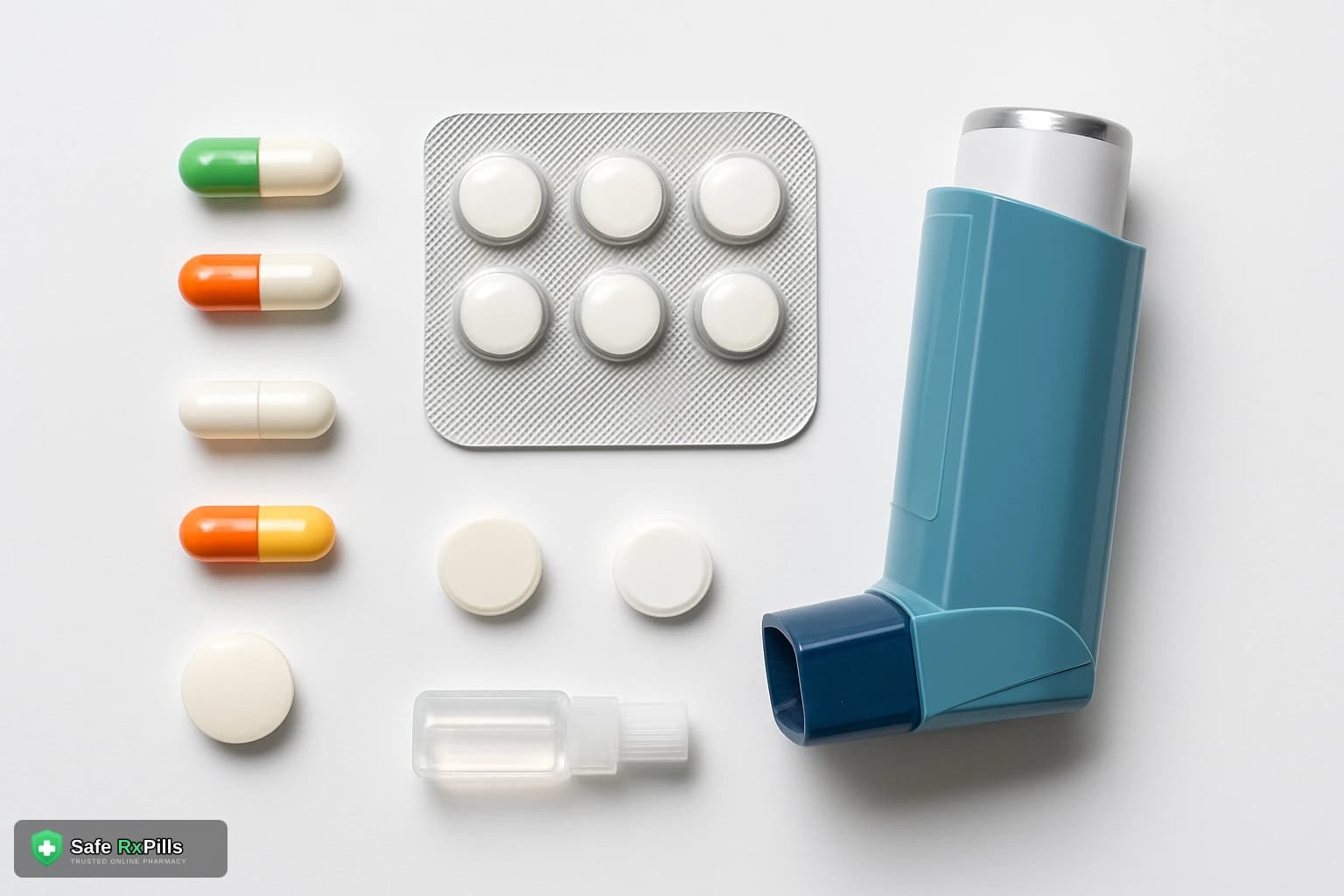
Rotacaps vs Inhaler vs Respules: Which Asthma Device Actually Gets the Dose Into Your Lungs
Only 31 percent of people use their inhaler correctly, and that figure has not improved in 40 years. How aerosol inhalers, spacers, Synchrobreathe, Rotacaps, Turbuhaler and nebulizer respules differ, the errors that waste each dose, what a Cochrane review found on spacers versus nebulizers, and which device suits children, older adults and severe COPD.
Advair vs Symbicort (Seroflo vs Foracort): Which Combination Inhaler, and Why Only One Doubles as a Reliever
Advair and Symbicort, sold as Seroflo and Foracort, both pair an inhaled steroid with a long-acting bronchodilator. The difference is formoterol's fast onset, which lets budesonide with formoterol double as a reliever and cut severe exacerbations by 39 percent against fixed salmeterol and fluticasone in COMPASS. Dose bands, metered vs delivered labeling and the FDA safety trials compared.
Provera and the Progestin Withdrawal Bleed: What Bleeding, or Not Bleeding, Actually Tells You
A progestin course to bring on a missed period is a diagnostic test, not just a treatment. Bleeding proves estrogen, a responsive endometrium and an open outflow tract all at once; no bleeding sends the investigation somewhere else entirely. Label doses for medroxyprogesterone and micronized progesterone, the response rates behind them, and why the pregnancy test comes first.

The hCG Trigger Shot: Dose, the 36 Hour Window, and When It Stops Faking a Positive Test
The trigger shot starts a 34 to 36 hour clock that ends at retrieval, which is why clinics give the time to the minute. Dose equivalence across urinary and recombinant products, why 500 mcg bought more hyperstimulation and no more pregnancies than 250 mcg, the clearance data behind how long the injection keeps faking a positive test, and the FDA position on hCG for weight loss.

Progesterone for Luteal Phase Support: Why the Route Changes Everything
Vaginal progesterone gives serum levels that look low while putting roughly eight times more hormone into the endometrium than an injection does, and raising the dose does not raise the blood level. Route by route dosing, the endometrial versus serum numbers, what 26,198 randomised women showed about choosing between injection and vaginal, and why dydrogesterone will not show on a progesterone test.
Doxycycline Dosage by Indication: From 40 mg to 200 mg a Day
Doxycycline is dosed across a five fold range and the same capsule serves completely different purposes depending on indication. Verified regimens for chlamydia, doxy PEP, Lyme prophylaxis and treatment, malaria prophylaxis, anthrax, acne and rosacea, with paediatric and renal dosing and the interactions that reduce absorption.
Doxycycline vs Minocycline: Same Results, Different Risks
Doxycycline and minocycline produce comparable results in acne, so the choice is a safety trade off rather than an efficacy one. Cochrane found no evidence minocycline is superior and more severe adverse effects than doxycycline, including drug induced lupus at 8.8 cases per 100,000 person years. Full side by side on vestibular effects, pigmentation, photosensitivity, renal dosing and cost.

Doxycycline for Acne: Dose, Duration, and Why It Never Works Alone
Doxycycline is the only oral antibiotic the AAD strongly recommends for acne, but it comes with rules most people never hear: a three to four month cap, never as monotherapy, and a topical retinoid doing the maintenance work afterwards. Doses from 40 mg to 200 mg, the trial behind subantimicrobial dosing, and how to take it without esophageal irritation.
Minoxidil Shedding: How Long It Lasts and When It Means Something Is Wrong
Minoxidil shedding is in the manufacturer leaflet, with a stated duration and a point at which it stops being normal. Here is the labelled window, the hair cycle mechanism, and how to tell an expected shed from a real problem.
Minoxidil 2% vs 5% vs 10%: Which Strength Is Actually Worth Using?
Only 2 percent and 5 percent minoxidil have FDA approval behind them. Here is what each strength is licensed for, why 10 percent is not automatically better, and why the volume you apply matters more than the number on the bottle.
Finasteride Side Effects: What the 1mg and 5mg Trial Data Actually Show
Finasteride 1mg and 5mg have separate FDA adverse reaction tables, and most articles mix them up. Here are both sets of trial figures with their placebo columns, what happens to the rates after year one, and where post-finasteride syndrome sits in the evidence.
Missed a Birth Control Pill: The Seven Day Rule and Why the Week Matters
Seven consecutive active tablets suppress ovulation and seven or more hormone-free days let it restart. That single number explains why one missed tablet needs nothing, two in week three means skipping the break, and two in week one may need emergency contraception.
Yaz vs Yasmin: Same Progestin, Different Estrogen Dose and a Different Pill Schedule
Yaz and Yasmin both contain drospirenone 3 mg. What differs is the ethinyl estradiol dose, 0.02 mg against 0.03 mg, the 24 plus 4 versus 21 plus 7 pack schedule, and the licensed indications in United States labelling.
Birth Control Pills and Blood Clots: What the Progestin Generation Actually Changes
United States labelling puts venous thromboembolism at roughly 3 to 9 events per 10,000 woman-years on the combined pill against 40 to 65 in the twelve weeks after delivery. Here is what the progestin generation, the estrogen dose and your own history actually change.
Amoxicillin and Clavulanate Dosage: Why Two 250 mg Tablets Are Not One 500 mg
A 625 mg co-amoxiclav tablet is 500 mg amoxicillin plus 125 mg clavulanate, and every common strength carries the same 125 mg of clavulanate. That is why two 375 mg tablets are not one 750 mg dose, and why the label forbids certain substitutions.
Nitrofurantoin for UTI: Dosing, and Why It Fails Above the Bladder
Nitrofurantoin concentrates in urine and barely reaches anything else, which makes it excellent for cystitis and useless for a kidney infection. Labelled dosing, why every dose needs food, and the pulmonary reaction that appears after six months of suppressive therapy.
Azithromycin Dosage: Why a Five Day Course Keeps Working After You Stop
Azithromycin has a serum half life near 70 hours, so a five day course keeps working long after the last tablet. Labelled doses by infection, the trial data showing three and five day courses give comparable total exposure, and the QT warning that decides who should avoid it.
Showing 1-5 of 214 articles