
About Atarax 25mg
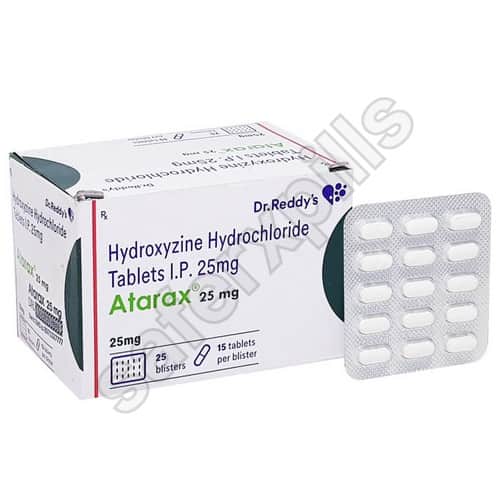
Atarax 25mg is Dr Reddy's Indian brand of hydroxyzine hydrochloride 25 mg tablets. The carton in our product photo reads "Hydroxyzine Hydrochloride Tablets I.P. 25mg", "Atarax 25 mg" and "15 tablets per blister", and carries the "Rx" symbol. Hydroxyzine is an older, sedating antihistamine. Its labels cover itching from allergic skin conditions such as hives and eczema, and short-term help with anxiety. We sell it in packs of 90, 120 and 180 tablets, from $0.26 to $0.28 a tablet before shipping (see Price per tablet).
Four points before you read further. First, hydroxyzine can affect the heart rhythm (QT prolongation and a dangerous rhythm called torsade de pointes). Since a 2015 European review, the UK limits adults to 100 mg a day (four of these tablets) and advises avoiding it in older people. Second, it causes drowsiness, and alcohol makes that worse. Third, it is a prescription medicine in the US, UK, Canada and Australia, but it is not a controlled substance in any of them. Fourth, in the US, generic hydroxyzine 25 mg tablets cost pharmacies about $0.03 each, roughly an eighth of our price, so US readers with a prescription should compare a local generic first. This page uses the current US hydroxyzine hydrochloride tablet label, the UK hydroxyzine 25 mg tablet label (SmPC), the MHRA's 2015 safety update, Canadian and Australian regulator records and Indian pharmacy listings, all listed at the end.
Atarax 25mg at a glance
| Active ingredient | Hydroxyzine hydrochloride 25 mg per tablet (carton in our product photo; PharmEasy, Truemeds and Apollo list hydroxyzine 25 mg) |
| Brand and maker | Atarax, Dr Reddy's Laboratories Ltd (carton in our photo; PharmEasy, Truemeds, Apollo). PharmEasy lists an address of Exemed Pharmaceuticals, Vapi (District Valsad); the "Mfd. by" line is not legible in our photo, so read the strip you receive |
| Drug class | First-generation (sedating) antihistamine; one of its breakdown products is cetirizine (UK label 5.2) |
| Regulatory status | Hydroxyzine is licensed as generic tablets in the US and UK and as Atarax syrup, generic capsules and an injection in Canada; it is Schedule 4 in Australia. The US Atarax tablet brand is discontinued. This Indian Atarax pack is not registered with the FDA, MHRA, TGA or Health Canada (see Prescription and legal status) |
| Usual dose from the label | Itching: US label 25 mg three or four times a day; UK label start with 25 mg at night, increasing as necessary to 25 mg three or four times a day. UK maximum for adults 100 mg a day, for older people 50 mg a day |
| Timing and half-life | Effects "usually noted within 15 to 30 minutes" (US label). Half-life reported as 14 and 20 hours in adults, and 29 hours on average in older people (UK label 5.2) |
| Packs | 90, 120 and 180 tablets (6, 8 and 12 Indian blisters of 15) |
| Price per tablet | $0.26 to $0.28 before shipping; $0.39 to $0.56 with shipping on a single pack (our arithmetic) |
| Delivery | 7 to 14 business days to the US, UK, Australia and Canada; $25 shipping under $149, free from $149 |
Price per tablet
Prices below are as of November 2026; the pack selector shows the current price. Per-tablet figures are our arithmetic.
| Pack | Price | Per tablet | Shipping | Per tablet with shipping |
|---|---|---|---|---|
| 90 tablets | $25.00 | $0.28 | $25 | $0.56 |
| 120 tablets | $32.00 | $0.27 | $25 | $0.48 |
| 180 tablets | $46.00 | $0.26 | $25 | $0.39 |
The larger packs cost slightly less per tablet before shipping as well, but most of the difference with shipping comes from spreading the flat $25 over more tablets. Every single pack is below the $149 free shipping line.
How long a pack lasts at label doses (our arithmetic, one tablet = 25 mg):
| Daily dose | Tablets a day | 90 pack | 120 pack | 180 pack |
|---|---|---|---|---|
| 25 mg at night (UK starting dose for itching) | 1 | 90 days | 120 days | 180 days |
| 50 mg (UK maximum for older people; low end of the UK anxiety range) | 2 | 45 days | 60 days | 90 days |
| 75 mg (25 mg three times a day) | 3 | 30 days | 40 days | 60 days |
| 100 mg (25 mg four times a day; UK adult maximum) | 4 | 22 to 23 days | 30 days | 45 days |
The UK label says hydroxyzine "should be used at the lowest effective dose and for the shortest possible duration", and the US label says its value for anxiety beyond 4 months "has not been assessed by systematic clinical studies". So the 180 pack only makes sense for someone whose doctor has them on a steady daily dose. Do not stock up for occasional use: check the expiry on the strips against the date you would finish the pack (the Indian listings we checked show expiry dates between January 2027 and May 2028).
Compared with US generic hydroxyzine
| Atarax 25mg (ours, India) | US generic hydroxyzine HCl 25 mg tablets | |
|---|---|---|
| Maker | Dr Reddy's Laboratories | Many FDA-approved generic makers (for example Teva, Aurobindo) |
| FDA approved | No | Yes |
| Cost per tablet | $0.26 to $0.28 before shipping; $0.39 to $0.56 with shipping | $0.03243 (NADAC) |
| Cost of 90 tablets | $25.00 before shipping, $50.00 with shipping | About $2.92 (NADAC; our arithmetic) |
NADAC is the average price US pharmacies pay to buy a medicine, published by the US Medicaid programme. It is not the counter price, which adds a dispensing fee and margin, and insurance can change what you pay. All 25 NDC rows for hydroxyzine HCl 25 mg tablets in the NADAC file dated 28 October 2026 show $0.03243 per tablet, effective 21 October 2026. On that figure, our tablets cost about 8 to 9 times what US pharmacies pay before shipping, and up to about 17 times with shipping on a 90 pack (our arithmetic). Hydroxyzine pamoate 25 mg capsules, another US oral form, show $0.06496 per capsule in the same file. If you are in the US with a prescription, a local generic will almost certainly be cheaper and faster than ours. Ask your pharmacy for the cash price before you compare.
The Atarax brand itself is no longer sold in the US: Drugs@FDA lists Pfizer's Atarax tablets (10, 25, 50 and 100 mg, NDA 010392) as discontinued, with a Federal Register determination that they were not withdrawn for safety or effectiveness reasons. We have seen no bioequivalence study of the Indian Atarax 25mg against a US or UK hydroxyzine tablet.
What hydroxyzine is for, and what it is not for
US label. Hydroxyzine hydrochloride tablets are labelled "for symptomatic relief of anxiety and tension associated with psychoneurosis and as an adjunct in organic disease states in which anxiety is manifested"; as "useful in the management of pruritus due to allergic conditions such as chronic urticaria and atopic and contact dermatoses and in histamine-mediated pruritus"; and as a sedative before and after general anaesthesia. The label adds: "The effectiveness of hydroxyzine as an antianxiety agent for long term use, that is more than 4 months, has not been assessed by systematic clinical studies. The physician should reassess periodically the usefulness of the drug for the individual patient."
UK label. The UK label is narrower: "to assist in the management of anxiety in adults", and "the management of pruritus associated with acute and chronic urticaria, including cholinergic and physical types, and atopic and contact dermatitis in adults and children". It does not list use before surgery.
Not a sleeping tablet. Hydroxyzine makes many people drowsy, and you may read that it is used for sleep. Neither the US nor the UK label lists insomnia as a use. If poor sleep is the main problem, speak to a doctor rather than buying a sedating antihistamine for it (our advice).
Not a cure for the cause of itching. It eases the itch of hives and eczema; it does not treat scabies, fungal infections or other causes. If your itch is new, spreading or keeps others in your home awake too, see a doctor (our advice; see our scabies treatment guide).
Which strength to choose
| Tablet | How it fits the labels |
|---|---|
| Atarax 10mg (Dr Reddy's, also in our range) | Suits the lower doses: older people (UK maximum 50 mg a day), liver or kidney impairment, and children under a doctor's care (UK maximum 2 mg per kg a day up to 40 kg) |
| Atarax 25mg (this page) | One tablet is the UK starting dose for itching (25 mg at night); three to four tablets give the US and UK itching dose of 25 mg three or four times a day; four tablets (100 mg) is the UK adult maximum |
| 50 mg tablets (US only; not in our range) | US generics come in 10, 25 and 50 mg; the UK tablets on emc are 10 mg and 25 mg only |
Daily limits differ by country. After a European review of heart rhythm risks, the MHRA said in April 2015 that "the maximum daily dose is now 100 mg for adults", 50 mg for older people "(if use cannot be avoided)" and 2 mg per kg for children up to 40 kg. The current UK label carries the same limits. The current US generic labels we read give no daily maximum and still list an anxiety dose for adults of "50 to 100 mg q.i.d." (four times a day), which is 200 to 400 mg a day: two to four times the UK maximum (our arithmetic). In our view, the lower UK limit is the safer one to follow; never take more than your doctor has prescribed.
How to take Atarax 25mg
- Take it exactly as your doctor prescribes. For itching, the UK label starts with one 25 mg tablet at night, increasing as necessary to 25 mg three or four times a day. For anxiety in adults, the UK label gives 50 to 100 mg a day in divided doses.
- Use the lowest dose that works, for the shortest time. Both the MHRA and the UK label say this.
- Do not go above 100 mg (four tablets) a day as an adult, or 50 mg (two tablets) a day if you are older and your doctor still decides you need it (UK label 4.2).
- Swallow the tablet by mouth. The labels give no food instructions. We could not confirm whether the Indian tablet is scored, so ask your pharmacist before splitting one.
- Take your first dose at a time when you do not need to drive, and see how drowsy it makes you.
- Tell the clinic if you are due an allergy skin test: the UK label says stop hydroxyzine at least one week before skin testing, and 96 hours before a methacholine breathing test, because it affects the results.
The heart rhythm (QT) warning
This is the most important safety point on this page. Hydroxyzine can lengthen the QT interval on the heart tracing (ECG), which can lead to torsade de pointes, a fast, irregular heart rhythm. Health Canada notes that in some rare cases an abnormal heart rhythm can cause death.
US label (Precautions): "Cases of QT prolongation and Torsade de Pointes have been reported during post-marketing use of hydroxyzine. The majority of reports occurred in patients with other risk factors for QT prolongation/TdP (pre-existing heart disease, electrolyte imbalances or concomitant arrhythmogenic drug use). Therefore, hydroxyzine should be used with caution in patients with risk factors for QT prolongation, congenital long QT syndrome, a family history of long QT syndrome, other conditions that predispose to QT prolongation and ventricular arrhythmia, as well as recent myocardial infarction, uncompensated heart failure, and bradyarrhythmias." The US label makes a prolonged QT interval a contraindication: "Hydroxyzine is contraindicated in patients with a prolonged QT interval."
UK label (4.4): "Hydroxyzine has been associated with prolongation of the QT interval on the electrocardiogram. During post-marketing surveillance, there have been cases of QT interval prolongation and torsade de pointes in patients taking hydroxyzine." It goes on: "Treatment with hydroxyzine should be stopped if signs or symptoms occur that may be associated with cardiac arrhythmia, and the patients should seek immediate medical attention." and "Patients should be advised to promptly report any cardiac symptoms."
MHRA, April 2015: the European review "concluded that hydroxyzine is associated with a small risk of QT interval prolongation and Torsade de Pointes", most likely in people who already have risk factors. Its advice to prescribers: "do not prescribe hydroxyzine to people with a prolonged QT interval or who have risk factors for QT interval prolongation". Health Canada reviewed the same risk in 2016 and said it was working with makers to update their product information.
The key difference. In the UK label, the risk factors themselves (heart disease, low potassium or magnesium, a family history of sudden cardiac death, a slow heart rate, and other medicines that prolong QT) are contraindications. In the US label they call for caution. If you have any of them, do not take hydroxyzine unless a doctor who knows about them has prescribed it (our advice).
Lower doses and extra care for some groups
- Older people. UK label 4.4: "Hydroxyzine is not recommended in elderly patients because of a decrease of hydroxyzine elimination in this population as compared to adults and the greater risk of adverse reactions (e.g. anticholinergic effects)". If it is used, the UK maximum is 50 mg a day. The MHRA says "avoid use in the elderly". The US label says: "Sedating drugs may cause confusion and over sedation in the elderly; elderly patients generally should be started on low doses of hydroxyzine and observed closely." At 50 mg a day, two of these tablets are the UK limit; the 10 mg tablet gives more room for a lower dose.
- Liver problems. UK label: "The total daily dose should be reduced by 33%", and use in severe liver disease "should be avoided" because of an increased risk of coma, and in liver failure because of possible hepatic encephalopathy. In people with primary biliary cirrhosis the half-life was 36.6 hours on average (UK label 5.2).
- Kidney problems. UK label: for moderate or severe kidney impairment "the total daily dosage should be reduced by 50%". On the 100 mg adult maximum, that would be 50 mg a day (our arithmetic). The US label says the extent of kidney excretion "has not been determined".
- Children. The labels differ widely: the US label gives 50 mg a day in divided doses under 6 years; the UK label gives 5 to 15 mg a day from 6 months to 6 years and a maximum of 2 mg per kg a day up to 40 kg. The UK label adds that "Children and the elderly are more susceptible to side-effects." Children's dosing is a doctor's decision; do not buy this 25 mg product for a child without one.
Side effects
The US label says side effects "are usually mild and transitory in nature". It lists dry mouth, and drowsiness that "is usually transitory and may disappear in a few days of continued therapy or upon reduction of dose". Tremor and convulsions have been reported, "usually with doses considerably higher than those recommended". It also lists QT prolongation and torsade de pointes, and, from post-marketing reports, allergic reaction, headache, hallucination, itching, rash, hives, fixed drug eruptions and acute generalized exanthematous pustulosis (AGEP), a serious skin reaction.
The UK label says the most common effect of sedating antihistamines is depression of the nervous system, ranging "from slight drowsiness to deep sleep", with tiredness, dizziness and poor coordination; sedation "may diminish after a few days of treatment". Paradoxical stimulation (restlessness or excitement) "may occasionally occur, especially at high doses and in children and the elderly". Its list includes headache, dry mouth, blurred vision, constipation, urinary retention, confusion, low blood pressure, fast heartbeat and palpitations, liver test changes, blood disorders and serious skin reactions (Stevens-Johnson syndrome, toxic epidermal necrolysis, AGEP). The UK label gives most of these a frequency of "not known", and the skin reactions "very rare"; it gives no percentages, and the US label gives none either, so we do not show a rate chart for this product.
Drowsiness, driving and alcohol
US label: "Since drowsiness may occur with use of this drug, patients should be warned of this possibility and cautioned against driving a car or operating dangerous machinery while taking hydroxyzine. Patients should also be advised against the simultaneous use of other CNS depressant drugs, and cautioned that the effects of alcohol may be increased."
UK label: hydroxyzine "may impair their ability to perform activities requiring mental alertness or physical co-ordination such as operating machinery or driving a vehicle" (4.7); "The concomitant use of alcohol and hydroxyzine should be avoided" (4.4); and "Patients should be warned of impaired judgement and dexterity" (4.4).
In Australia, hydroxyzine is on the Poisons Standard list of medicines that must carry a sedation warning (Appendix K). In our view: no alcohol while you take it, and no driving until you know how it affects you, including the morning after a night-time dose, since the half-life is long.
When to get urgent help
Call emergency services (911 in the US and Canada, 999 in the UK, 000 in Australia), or ask someone to call for you, if you or someone taking hydroxyzine has:
- Fainting, a racing, pounding or irregular heartbeat, chest pain or a seizure. The UK label says treatment "should be stopped" if signs of an abnormal heart rhythm appear and the patient "should seek immediate medical attention".
- Swelling of the face, lips, tongue or throat, trouble breathing or wheezing, or hives spreading over the body. The UK label lists hypersensitivity reactions, anaphylaxis and angioedema.
- A new rash with fever and many small pus-filled spots on red, swollen skin, or blistering or peeling skin. The US label says to "discontinue hydroxyzine at the first appearance of a skin rash, worsening of pre-existing skin reactions which hydroxyzine may be used to treat, or any other sign of hypersensitivity", and not to restart it if AGEP is suspected.
- Taking more than prescribed, or a child swallowing the tablets. The US label says: "The most common manifestation of hydroxyzine overdosage is hypersedation. Other reported signs and symptoms were convulsions, stupor, nausea and vomiting." and "Hydroxyzine overdose may cause QT prolongation and Torsade de Pointes. ECG monitoring is recommended in cases of hydroxyzine overdose." Poison lines (our addition, not from the label): US 1-800-222-1222, Australia 13 11 26.
- Severe confusion, hallucinations or being very hard to wake, especially after alcohol or other sedating medicines.
Tell the emergency staff that the medicine is hydroxyzine (Atarax 25 mg tablets), how much was taken and when, and anything else taken with it. The US label says there is no specific antidote, and that adrenaline (epinephrine) should not be used to raise blood pressure, because "hydroxyzine counteracts its pressor action".
Who should not take hydroxyzine
Never take it if:
- you are allergic to hydroxyzine or cetirizine (US and UK labels), to levocetirizine (US label), or to any ingredient of the tablet; the UK label adds other piperazine derivatives, aminophylline and ethylenediamine
- you have a prolonged QT interval, whether you were born with it or it was acquired (US and UK labels)
- you have a risk factor for QT prolongation: known heart disease, significant low potassium or magnesium, a family history of sudden cardiac death, a significantly slow heart rate, or you take a medicine that prolongs QT (contraindications in the UK label; the US label says use with caution)
- you are pregnant: the UK label contraindicates it in pregnancy; the US label says it "is contraindicated in early pregnancy"
- you are breastfeeding: the UK label contraindicates it; the US label says it "should not be given to nursing mothers"
- you have porphyria, or asthma in which an antihistamine has previously caused a serious breathing reaction (UK label)
The UK tablets contain lactose, and the UK label says people with galactose intolerance, Lapp lactase deficiency or glucose-galactose malabsorption should not take them. We have not seen the ingredient list of the Indian Atarax tablet; ask us or read the pack if this applies to you.
Use only with care (UK label 4.4), because of hydroxyzine's anticholinergic effects: angle-closure glaucoma or raised eye pressure, difficulty passing urine or an enlarged prostate, narrowing of the stomach outlet, epilepsy or other seizure disorders, myasthenia gravis, dementia, slow bowel movement, breathing problems such as emphysema or chronic bronchitis, an overactive thyroid, heart disease and high blood pressure.
Medicines that interact
- Medicines that prolong QT. The UK label contraindicates the combination and names, for example, quinidine, disopyramide, amiodarone, sotalol, haloperidol, citalopram, escitalopram, mefloquine, erythromycin, levofloxacin, moxifloxacin, pentamidine, prucalopride, toremifene, vandetanib and methadone. The US label recommends caution with QT-prolonging drugs including quinidine, procainamide, amiodarone, sotalol, ziprasidone, iloperidone, clozapine, quetiapine, chlorpromazine, citalopram, fluoxetine, azithromycin, erythromycin, clarithromycin, gatifloxacin, moxifloxacin, pentamidine, methadone, ondansetron and droperidol. The UK label also advises caution with medicines that slow the heart or lower potassium.
- Alcohol and other sedating medicines. The US label says the potentiating action of hydroxyzine "must be considered" with central nervous system depressants such as narcotics, non-narcotic analgesics and barbiturates, and their dosage "should be reduced". The UK label lists alcohol, barbiturates, benzodiazepines, sleeping tablets, opioids, antipsychotics, antidepressants, antiepileptics, other antihistamines, muscle relaxants and anaesthetics.
- Anticholinergic medicines (for example atropine, tricyclic antidepressants and MAOIs): more dry mouth, constipation, urine retention and confusion (UK label).
- Medicines that raise hydroxyzine levels. The UK label says hydroxyzine is broken down by alcohol dehydrogenase and CYP3A4/5, so strong inhibitors of these enzymes may raise its blood levels; cimetidine 600 mg twice a day raised them in a study.
- Other effects (UK label): hydroxyzine inhibits CYP2D6 and may interact with medicines broken down by it; it may oppose betahistine and anticholinesterase drugs; and it has been suggested that some sedating antihistamines could mask the warning signs of ear damage from aminoglycoside antibiotics.
- Cetirizine and levocetirizine. These are related antihistamines; a known allergy to cetirizine rules out hydroxyzine (US and UK labels), and so does an allergy to levocetirizine (US label). After AGEP or another allergic reaction to hydroxyzine, the US label says to avoid cetirizine and levocetirizine because of cross-sensitivity. Our Montair LC contains levocetirizine.
Tell your doctor or pharmacist about every medicine and supplement you take before you start, and before you start anything new.
Prescription and legal status
In India, the carton in our product photo carries the "Rx" symbol, Truemeds marks Atarax 25mg as "Prescription required" and Apollo lists it as a "Prescription Medicine".
- US: hydroxyzine hydrochloride tablets are prescription only ("Rx only"). Hydroxyzine is not a controlled substance: it does not appear in the federal schedules (21 CFR Part 1308). The FDA says personal importation of unapproved medicines is illegal in most circumstances.
- UK: hydroxyzine 10 mg and 25 mg tablets are prescription only medicines (POM on emc), not controlled drugs. The emc lists no Atarax or Ucerax product.
- Canada: the Health Canada Drug Product Database lists Atarax syrup (10 mg per 5 mL) and generic hydroxyzine capsules (10, 25 and 50 mg) as marketed prescription products, with no controlled-drug schedule. We found no hydroxyzine tablet currently marketed in Canada; Atarax capsules were cancelled in 2005.
- Australia: hydroxyzine is Schedule 4, Prescription Only Medicine, in the Poisons Standard (October 2026), not Schedule 8. We could not confirm a hydroxyzine product currently registered on the ARTG.
This Indian Atarax pack is not registered with the FDA, the MHRA, the TGA or Health Canada. Check the rules where you live.
Buying genuine Atarax 25mg
The MHRA warns that "Any medicine not authorised for sale in the UK can be unsafe or ineffective and there is no way of knowing what is in them or the negative health effects they can have", and it advises UK buyers to "Only use UK-registered pharmacies, including online pharmacies displaying the official green cross logo". That warning covers this Indian pack, which is not authorised in the UK. When your order arrives, read the blister and carton: they should say Atarax 25 mg and "Hydroxyzine Hydrochloride Tablets I.P. 25mg", name Dr Reddy's, and carry a batch number, a manufacturing date and an expiry date. These checks cannot prove that tablets are genuine, because counterfeiters copy packaging. If a batch causes unusual symptoms, seek medical advice and report it to your medicines regulator (the MHRA Yellow Card scheme in the UK, FDA MedWatch in the US, the TGA in Australia or Health Canada) as well as to us.
Delivery
We ship Atarax 25mg to the US, UK, Australia and Canada in plain packaging with tracking. Standard delivery takes 7 to 14 business days to most countries. Shipping costs a flat $25 on orders under $149 and is free from $149. Storage advice on the Indian listings varies: PharmEasy says at or below 25°C, Apollo room temperature (ideally 20°C to 25°C) and protected from light, heat and moisture, and Truemeds below 30°C. Keep the tablets in the blister, out of the reach of children. See our shipping page and refund policy.
Related pages
- Allegra 180mg (fexofenadine): a once-a-day second-generation antihistamine. If hives are your reason for buying, ask your doctor whether a newer antihistamine suits you better than a sedating one (our advice).
- Montair LC (montelukast with levocetirizine): note the cross-allergy with hydroxyzine above.
- Ivermectin for scabies: dose by weight and second dose timing, if your itch could be scabies.
Sources
- Hydroxyzine Hydrochloride Tablets USP 10, 25 and 50 mg, US prescribing information, Aurobindo Pharma (DailyMed setid 9de2de56-614f-4294-8794-d30758cf5f70, SPL version 2, effective 3 March 2026): Description, Clinical Pharmacology, Indications and Usage, Contraindications, Warnings, Precautions (QT prolongation, driving, alcohol, geriatric use, AGEP), Adverse Reactions, Overdosage, Dosage and Administration. Cross-checked against the Teva label (setid 80309ec1-e5d5-4454-b8ce-67d7e6805e44, version 17, effective 31 July 2025). DailyMed
- Hydroxyzine hydrochloride 25 mg film-coated tablets, UK SmPC, Morningside Healthcare Ltd, PL 20117/0318, legal category POM, text revised 27 August 2025: sections 4.1 to 4.9, 5.2, 6.1, 6.4. Cross-checked against Ipca Laboratories UK, PL 28278/0032, revised 19 May 2025. emc
- Medicines and Healthcare products Regulatory Agency. Hydroxyzine (Atarax, Ucerax): risk of QT interval prolongation and Torsade de Pointes. Drug Safety Update volume 8 issue 9, 29 April 2015. GOV.UK
- Health Canada. Summary Safety Review: Hydroxyzine (Atarax and generics), assessing the potential risk of abnormal heart rhythm, issued 6 June 2016; Drug Product Database entries for hydroxyzine (Atarax syrup DIN 00024694; AA Pharma capsules DINs 00646059, 00646024, 00646016; Atarax capsules cancelled 2005), checked 2 November 2026. Health Canada
- Therapeutic Goods (Poisons Standard, October 2026) Instrument 2026, F2026L01327: hydroxyzine, Schedule 4 and Appendix K.
- openFDA Drugs@FDA: Atarax tablets, NDA 010392, discontinued (Federal Register determination: not discontinued for safety or effectiveness reasons), accessed 2 November 2026; Code of Federal Regulations, Title 21, Part 1308.
- Centers for Medicare and Medicaid Services. National Average Drug Acquisition Cost (NADAC) 2026, file dated 28 October 2026: hydroxyzine HCl 25 mg tablet, 25 NDC rows, all $0.03243 per tablet, effective 21 October 2026; hydroxyzine pamoate 25 mg capsule $0.06496, effective 21 October 2026. data.medicaid.gov
- Indian listings for Atarax 25mg, checked 2 November 2026: PharmEasy (Dr Reddy's, Exemed Pharmaceuticals address, strip of 15, store at or below 25°C), Truemeds (Dr Reddy's, strip of 15, prescription required, store below 30°C), Apollo Pharmacy (Dr Reddy's, 15 tablets, prescription medicine, 20°C to 25°C), Tata 1mg (strip of 15).
- Medicines and Healthcare products Regulatory Agency, press release on buying medicines online, 13 February 2026.
- US Food and Drug Administration. Personal importation policy.
Key Information
- ✓Active Ingredient: Hydroxyzine
- ✓Category: Skin Care
- ✓Form: Tablet
- ✓Brand: Atarax
- ✓Manufacturer: Dr Reddy's Laboratories Ltd
Frequently Asked Questions
What is Atarax 25mg?
Atarax 25mg is Dr Reddy's Indian brand of hydroxyzine hydrochloride 25 mg tablets, sold in blisters of 15. Hydroxyzine is an older, sedating antihistamine. The US label covers itching from allergic skin conditions such as chronic hives and eczema, anxiety and tension, and sedation around surgery; the UK label covers itching from hives and dermatitis and help with anxiety in adults.
Is Atarax 25mg the same as US or UK hydroxyzine tablets?
It contains the same active ingredient at the same strength as US and UK hydroxyzine hydrochloride 25 mg tablets. The Atarax brand is no longer sold in the US (Drugs@FDA lists Pfizer's Atarax tablets as discontinued, not for safety or effectiveness reasons), and the UK emc lists no Atarax product. We have seen no bioequivalence study of the Indian Atarax tablet against a US or UK tablet. This Indian pack is not registered with the FDA, MHRA, TGA or Health Canada.
How much does Atarax 25mg cost per tablet?
As of November 2026, $0.28 a tablet in the 90 pack ($25), $0.27 in the 120 pack ($32) and $0.26 in the 180 pack ($46), before shipping. Shipping is $25 under $149, so a single pack works out at $0.39 to $0.56 a tablet with shipping (our arithmetic). The pack selector shows the current price. In the US, pharmacies pay about $0.03 a tablet for generic hydroxyzine 25 mg (NADAC, effective 21 October 2026), so a local generic will almost certainly be cheaper for US readers with a prescription.
How do I take Atarax 25mg?
Exactly as your doctor prescribes. For itching, the UK label starts with one 25 mg tablet at night and increases as necessary to 25 mg three or four times a day; the US label gives 25 mg three or four times a day. For anxiety in adults, the UK label gives 50 to 100 mg a day in divided doses. Use the lowest dose that works for the shortest time, and take the first dose when you do not need to drive.
What is the maximum dose of hydroxyzine?
Under the UK label and the MHRA's 2015 advice, the maximum is 100 mg a day for adults (four Atarax 25mg tablets), 50 mg a day for older people if use cannot be avoided, and 2 mg per kg a day for children up to 40 kg. The current US generic labels give no daily maximum and list an anxiety dose of 50 to 100 mg four times a day, which is above the UK limit. Never take more than your doctor has prescribed.
Should I choose Atarax 10mg or 25mg?
One 25 mg tablet is the UK starting dose for itching, and three or four tablets give the usual adult itching dose. The 10 mg tablet suits lower doses: older people (UK maximum 50 mg a day), people with liver or kidney impairment (the UK label reduces the daily dose by a third and by half), and children under a doctor's care. Your doctor should choose the strength.
How quickly does hydroxyzine work and how long does it last?
The US label says its effects are usually noted within 15 to 30 minutes after a dose. The UK label reports a half-life of about 14 to 20 hours in adults and about 29 hours on average in older people, so in our view drowsiness can carry over to the next morning. The US label says its value for anxiety beyond 4 months has not been assessed in systematic studies.
What are the side effects of Atarax 25mg?
The US label lists dry mouth and drowsiness, which is usually temporary, and says side effects are usually mild and transitory. Hydroxyzine can also prolong the QT interval and cause torsade de pointes, a dangerous heart rhythm. Rare but serious skin reactions (AGEP) and allergic reactions have been reported. Stop it and get urgent help for fainting, a racing or irregular heartbeat, facial swelling, trouble breathing or a new rash with fever and pus-filled spots.
Who should not take hydroxyzine?
Anyone allergic to hydroxyzine or cetirizine (US and UK labels) or levocetirizine (US label), anyone with a prolonged QT interval, and anyone pregnant or breastfeeding (US and UK labels; the US label says early pregnancy). The UK label also rules it out with heart disease, low potassium or magnesium, a family history of sudden cardiac death, a slow heart rate, other medicines that prolong QT, porphyria, and asthma in which an antihistamine has caused a serious breathing reaction. The UK label says it is not recommended in older people.
Is hydroxyzine a controlled substance, and do I need a prescription?
Hydroxyzine is not a controlled substance in the US (it is not in 21 CFR Part 1308), the UK, Canada or Australia (Schedule 4, not Schedule 8). It is prescription only in all four countries. This Indian Atarax pack is not registered with the FDA, MHRA, TGA or Health Canada, and the FDA says personal importation of unapproved medicines is illegal in most circumstances.
How long does delivery of Atarax 25mg take?
Standard delivery takes 7 to 14 business days to the US, UK, Australia and Canada, in plain packaging with tracking. Shipping is a flat $25 on orders under $149 and free from $149.
Related Products
View all
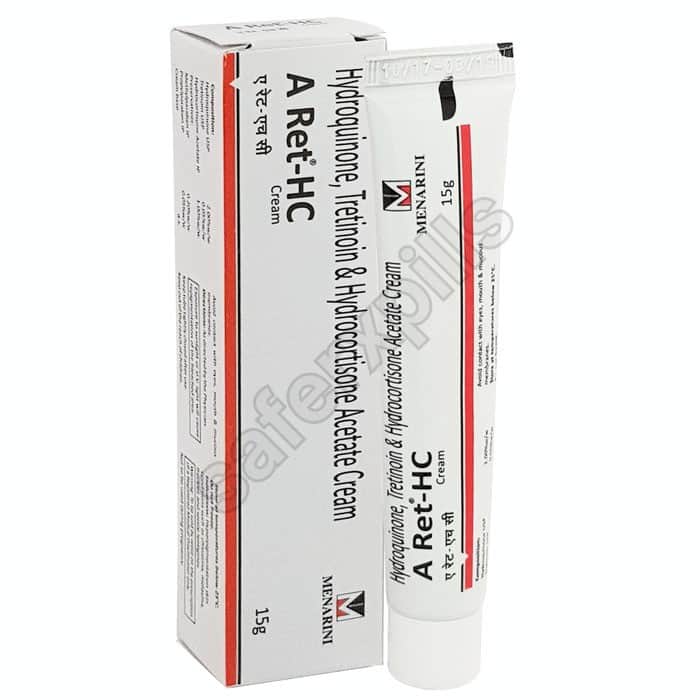
Customer Reviews
No reviews yet. Be the first to review Atarax 25mg.
Related Articles
Health guides about Hydroxyzine, written by pharmacists
Epiduo vs Epiduo Forte: How Adapalene and Benzoyl Peroxide Gel Works, Results Timeline, Side Effects and Cost
Epiduo combines adapalene with benzoyl peroxide 2.5% in one once-daily acne gel, in 0.1% and 0.3% (Forte) strengths. This guide covers how the two strengths differ in the trials, how to apply the gel, what to expect week by week, the irritation rates from the US labels, bleaching of fabric and hair, the exact pregnancy wording, the over-the-counter Differin Epiduo, and what US pharmacies pay for brand and generic versions.
Dapsone Gel (Aczone) 5% vs 7.5%: How to Use It, Results, Side Effects, Warnings and Cost
Dapsone gel (Aczone) is a prescription acne gel in two strengths: 5% twice daily and 7.5% once daily. This guide covers how to apply each, who it is approved for, what the four label trials showed against vehicle, side effects with label rates, the methemoglobinemia and G6PD warnings, the orange staining with benzoyl peroxide, pregnancy and breastfeeding, generic approvals and what US pharmacies pay per gram.
Generic Otezla (Apremilast): Is It Available in the US, What It Costs, Dosing and Side Effects
The FDA has approved generic apremilast from 13 companies, but none is on sale in US pharmacies as of October 2026. This guide covers the patent dates, what apremilast treats, the 5-day starting schedule, kidney dosing, trial results, side effects and warnings, and what a month of Otezla costs pharmacies compared with Indian apremilast.
Related Health Guide
Understanding Acne & Skin Care: Complete Guide