
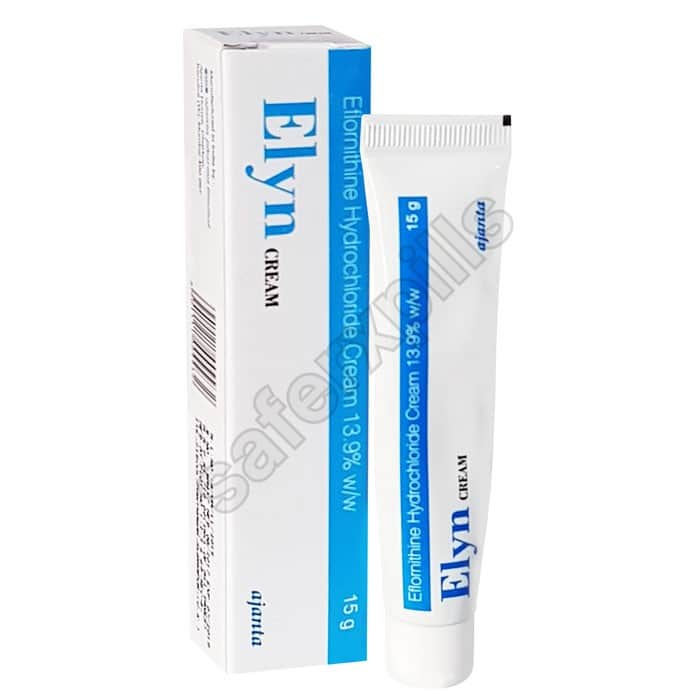
Elyn Cream
Generic: Eflornithine
Select pack size
1 cream
About Elyn Cream
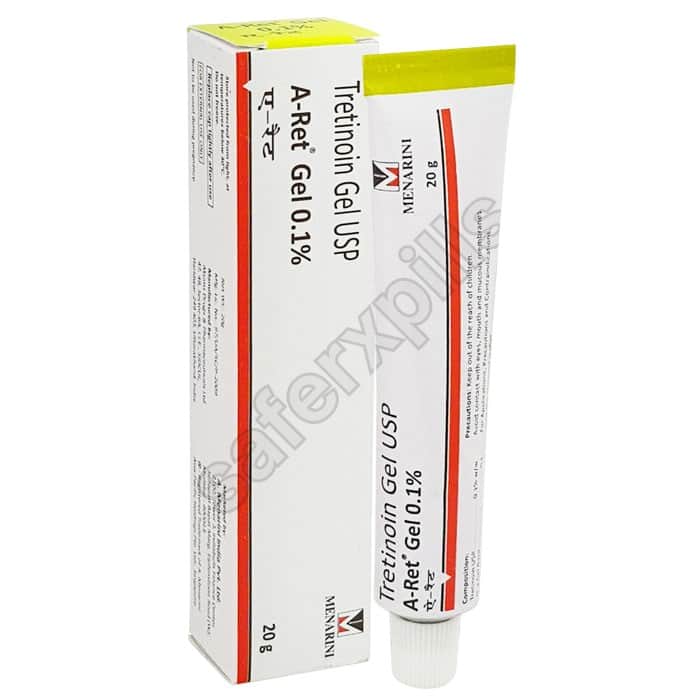
Elyn Cream is an eflornithine hydrochloride 13.9% w/w cream from Ajanta Pharma, an Indian maker, for unwanted facial hair in women. The active ingredient and stated strength are the same as Vaniqa, the eflornithine cream first approved in the US in 2000 and still licensed in the UK, the EU and Canada. Eflornithine blocks ornithine decarboxylase, an enzyme involved in the production of the hair shaft by the hair follicle (UK Vaniqa label 5.1). It does not remove hair and it does not work for good: it slows regrowth for as long as you keep using it, so most women carry on shaving, threading or plucking. The carton and tube in our product photo are 15 g, and we sell 1, 3 or 6 tubes, from $23.96 a tube in the 6 tube order before shipping.
Below: the price per tube and per gram, how long a tube is likely to last, how Elyn compares with Eflora (the other eflornithine cream we sell) and with Vaniqa, how to apply it, what the two Vaniqa trials found, side effects, the pregnancy and breastfeeding rules, and why new facial hair should be checked by a doctor first. Clinical figures come from the US and UK Vaniqa labels, listed at the end. We found no published trial of Elyn itself.
Elyn Cream at a glance
| Active ingredient | Eflornithine hydrochloride 13.9% w/w (our product photo; Tata 1mg, Apollo and Medkart listings). PharmEasy writes it as 139 mg. The UK Vaniqa label states the same cream as 11.5% eflornithine because it counts the eflornithine without the hydrochloride part of the salt (our explanation) |
| Brand and maker | Elyn, Ajanta Pharma Ltd, Mumbai (Tata 1mg, PharmEasy, Apollo, Medkart, Netmeds; Ajanta name on the carton in our photo) |
| Used for | Reducing unwanted facial hair in women (US Vaniqa label); facial hirsutism in women (UK Vaniqa label). Studied only on the face and under the chin |
| Regulatory status | Eflornithine cream is licensed in the UK, the EU and Canada as Vaniqa. In the US, Vaniqa is listed as discontinued and no generic is listed; in Australia, Vaniqa's registration was cancelled. This Indian pack is not registered with the FDA, MHRA, TGA or Health Canada |
| How to use (labels) | A thin layer on the affected areas twice a day, at least 8 hours apart, rubbed in well |
| When results show | US label: as little as 4 to 8 weeks. UK label: within eight weeks. Stop if no benefit within four months (UK label) or no improvement after 6 months (US leaflet) |
| Packs | 1, 3 or 6 tubes of 15 g (tube size from our product photo and the Indian listings) |
| Price per tube | $30 (1 tube) down to $23.96 (6 tubes), before shipping |
| Delivery | 7 to 14 business days to the US, UK, Australia and Canada; $25 shipping under $149, free from $149 |
Price per tube
Prices are as of November 2026; the pack selector shows the current price. Per gram figures use the 15 g tube.
| Order | Price | Per tube | Shipping | Per tube with shipping | Per gram with shipping |
|---|---|---|---|---|---|
| 1 tube (15 g) | $30 | $30.00 | $25 | $55.00 | $3.67 |
| 3 tubes (45 g) | $73.75 | $24.58 | $25 | $32.92 | $2.19 |
| 6 tubes (90 g) | $143.75 | $23.96 | $25 | $28.13 | $1.88 |
All three Elyn orders are under the $149 free shipping line, so each one pays $25 shipping. That matters most for a single tube, which costs almost twice its shelf price once shipping is added. It also means the 6 tube Elyn order ($168.75 delivered) costs slightly more than 6 tubes of Eflora Cream ($166.25, which crosses $149 and ships free), even though Elyn is cheaper per tube before shipping. If your order includes other items that take it to $149 or more, shipping is free.
How much cream you need, and what our packs mean
Neither label gives an amount in grams. Both say to apply a thin layer to the affected areas twice a day. The only gram figures in the labels are these: in the US label's absorption study, women with unwanted facial hair applied 0.5 g twice a day (1 g a day), and the UK label says doses of up to 30 g a month were used safely in the trials. Using the study amount of 1 g a day, which is close to the UK trial maximum of 30 g a month, our estimates are:
- One 15 g tube lasts about 15 days. A woman treating only the upper lip or a small area of the chin will use less, and her tube will last longer; the labels give no figure for that.
- 3 tubes (45 g) cover about six weeks, which is short of the eight weeks within which the UK label says improvement may be noticed (US label: as little as 4 to 8 weeks).
- 6 tubes (90 g) cover about three months. The UK label says to stop if there is no benefit within four months; at 1 g a day, a full four month trial would use about 8 tubes.
These are our arithmetic from the study amount, not label figures. The UK label also says to throw away an opened tube after 6 months, so open one tube at a time. The benefit lasts only while you use the cream: the UK label says hair growth may return to pretreatment levels within eight weeks of stopping.
Elyn or Eflora: which to buy
Eflornithine cream comes in one strength, so there is no stronger Elyn to move up to, and applying it more than twice a day is not the label instruction. We sell two Indian brands of the same cream:
| Elyn Cream (this page) | Eflora Cream | |
|---|---|---|
| Maker | Ajanta Pharma | Sun Pharma |
| Stated strength | Eflornithine hydrochloride 13.9% w/w | Eflornithine hydrochloride 13.9% w/w |
| Tube in our photo | 15 g | 15 g |
| 1 tube, delivered | $55.00 | $61.00 |
| 3 tubes, delivered | $98.75 | $112.50 |
| 6 tubes, delivered | $168.75 | $166.25 (free shipping) |
On price alone, Elyn is the cheaper choice for 1 or 3 tubes and Eflora is slightly cheaper for 6. We found no study comparing the two brands with each other or with Vaniqa, and we have not seen the full ingredient list of either Indian cream, so if you react to one, do not assume the other will suit you.
Eflornithine treats the hair, not its cause. When excess hair comes from polycystic ovary syndrome (PCOS), doctors may also use hormonal treatment. We sell Diane 35 (cyproterone acetate with ethinylestradiol); the same combination is licensed in the UK, as Dianette, for hirsutism in women of reproductive age; it is a prescription tablet with a blood clot risk and a decision for your doctor, not a stronger version of the cream.
Compared with Vaniqa, and what is sold where you live
| Elyn Cream (Indian pack, from us) | Vaniqa | |
|---|---|---|
| Active ingredient | Eflornithine hydrochloride 13.9% w/w (carton and listings) | 13.9% (139 mg/g) anhydrous eflornithine hydrochloride (US label); 115 mg eflornithine per gram, shown as 11.5% (UK label) |
| Maker | Ajanta Pharma Ltd | Almirall (UK and EU); Cipher Pharmaceuticals (Canada); last US label from Allergan, revised January 2018 |
| Status | Not registered with the FDA, MHRA, TGA or Health Canada | US: NDA 021145, approved 27 July 2000, listed as discontinued in Drugs@FDA. UK: PLGB 16973/0041. EU: authorised (EMA). Canada: DIN 02243837, marketed. Australia: ARTG 80167 cancelled |
| Tube sizes | 15 g | 15 g, 30 g or 60 g (UK label, not all marketed); 45 g (last US label) |
| Price data | $1.60 to $2.00 per gram from us, before shipping | UK NHS Drug Tariff: eflornithine 11.5% cream 60 g, £56.87 (about 95p a gram; NHS reimbursement price, not a retail price). US: no NADAC row for Vaniqa or any eflornithine cream (2026 file, checked 2 November 2026) |
United States. We checked Drugs@FDA (through openFDA) on 2 November 2026: Vaniqa (NDA 021145) is listed as discontinued, and no generic eflornithine cream is listed. The only eflornithine product Drugs@FDA lists as a current prescription medicine is Iwilfin, a tablet used in neuroblastoma (a cancer), which is not a hair treatment. DailyMed also carries an eflornithine cream called Florexa (Pella Pharmaceuticals), but its listing is marked "unapproved drug other", which means it is not FDA approved. NADAC, the survey of what US pharmacies pay, has no eflornithine cream rows in 2026, so there is no US price to compare with. We found no FDA notice giving a reason for Vaniqa's discontinuation and do not suggest one. If you live in the US, ask your doctor about the options there, which may include a compounded cream on prescription.
UK and Canada. Vaniqa is licensed and needs a prescription in both. That is the regulated route, and the one we would point you to first.
Australia. The TGA lists Vaniqa (ARTG 80167) as cancelled under section 30(1)(c) of the Therapeutic Goods Act, and we found no other eflornithine cream on the ARTG. An Australian compounding pharmacy (Skin Plus) says it makes eflornithine cream to order on a doctor's prescription.
How to use Elyn Cream
- Clean and dry the skin you will treat (UK label 4.2; Tata 1mg and Apollo listings say the same).
- After shaving, threading or another hair removal method, wait at least 5 minutes. The UK label says applying it sooner may cause more stinging or burning.
- Apply a thin layer to the affected areas of the face and the nearby affected areas under the chin, and rub it in thoroughly. The UK label says no cream should be left visible after rubbing in. Both labels say it was only studied on the face and under the chin, so keep to these areas.
- Use it twice a day, at least 8 hours apart (US and UK labels; Tata 1mg's Elyn listing gives the same 8 hour gap).
- Do not wash the treated area for at least 4 hours (US label; the UK label says this is "for maximal efficacy").
- Wash your hands afterwards (UK label 4.2).
- Make up and sunscreen can go on once the cream has dried (US label), and no sooner than five minutes after applying it (UK label).
- Keep it away from the eyes and the inside of the nose and mouth. If it gets in, rinse well with water (UK leaflet); the US leaflet adds to contact your doctor if it gets in your eyes.
- Keep up your usual hair removal as needed. The US label says the cream "is not a depilatory".
- If you miss a dose, the UK leaflet says apply it as soon as you remember and then wait at least 8 hours before the next one. The US leaflet says do not try to make it up; go back to your normal schedule.
If your skin gets irritated, both labels say to cut back to once a day for a while. If irritation continues, the US label says to stop, and the UK label says to stop and see the doctor. The US label says it is not known whether eflornithine cream interacts with other products put on the skin, and the UK label says no interaction studies have been done, so the US leaflet asks you to check with your doctor first if you use other medicines or other facial or skin creams.
What the trials found
Vaniqa was tested in two randomised, double blind trials in women who removed facial hair at least twice a week. They used the cream or the plain cream base (vehicle) twice a day for up to 24 weeks, and doctors graded the treated areas 48 hours after shaving. The US and UK labels report the combined results a little differently, so we show both as printed:
| Doctor's assessment at 24 weeks | US label: Vaniqa (393) | US label: plain cream (201) | UK label: Vaniqa (395) | UK label: plain cream (201) |
|---|---|---|---|---|
| Clear or almost clear | 5% | 0% | 6% | 0% |
| Marked improvement | 27% | 8% | 29% | 9% |
| Improved | 26% | 26% | 35% | 33% |
| No improvement or worse | 42% (includes missing) | 66% (includes missing) | 30% | 58% |
Sources: US Vaniqa label, Clinical Trials (594 women); UK Vaniqa label 5.1 (596 women; results of women who stopped early were carried forward to week 24). The US label counts "marked improvement or greater" as success: about 32% on Vaniqa against 8% on the plain cream. Our reading: roughly one woman in three had a marked result after 6 months, and most did not, so go in expecting that it helps some women a lot and others little.
Who did better. The US label reports success in 37% of White women and 22% of non-White women (mostly Black women), against 5% of non-White women on the plain cream. The UK label gives 39% and 27%, and 43% of women with a BMI under 30 against 29% with a BMI of 30 or more. About 12% of the women were postmenopausal; the US label gives 38% success in that group against 0% on the plain cream.
Timing. The US label says marked improvement was seen consistently at 8 weeks and continued through the 24 weeks, and that hair growth approached pretreatment levels within 8 weeks of stopping. Women on the cream also reported being less bothered by their facial hair and spending less time removing or hiding it.
Side effects
Most side effects are on the skin. The US label says they were primarily mild and generally went away without treatment or stopping the cream, and 2% of women stopped the trials because of a side effect related to Vaniqa.
| Adverse event (24 week vehicle controlled trials) | Vaniqa (393 women) | Plain cream (201 women) |
|---|---|---|
| Acne | 21.3% | 21.4% |
| Pseudofolliculitis barbae (shaving bumps) | 16.3% | 15.4% |
| Stinging skin | 7.9% | 2.5% |
| Burning skin | 4.3% | 2.0% |
| Tingling skin | 3.6% | 1.5% |
| Rash | 2.8% | 0.0% |
| Itching | 3.8% | 4.0% |
| Headache | 3.8% | 5.0% |
| Redness | 1.3% | 0.0% |
| Dry skin | 1.8% | 3.0% |
Selected rows from the US Vaniqa label adverse events table, which lists events above 1% and also includes dyspepsia, skin irritation, hair loss, dizziness, folliculitis, ingrown hair, facial swelling, loss of appetite, nausea, weakness and vertigo. Acne and shaving bumps were about as common on the plain cream. The UK label says burning, stinging, tingling, rash and redness were reported more often with Vaniqa than with the plain cream; it lists acne as very common, and among its uncommon effects swelling of the face or mouth, cold sores, eczema, lip numbness, pale patches of skin and unusual hair texture or growth. The US label notes that in an open label study some women had a rise in liver enzymes (transaminases), of unknown clinical significance.
The UK Vaniqa cream contains cetostearyl alcohol and stearyl alcohol, which the UK label says may cause local skin reactions, and parabens, which may cause allergic reactions (possibly delayed). We have not seen Elyn's full ingredient list, so check the carton if you know you react to any of these.
Pregnancy and breastfeeding
- UK label: "women who are pregnant or planning pregnancy should use an alternative means to manage facial hair" (4.6), and "Women should not use Vaniqa whilst breastfeeding." The UK leaflet says: "Do not use Vaniqa if you are pregnant or breast-feeding."
- US label: there are no adequate and well controlled studies in pregnant women, so the risk and benefit "should be weighed carefully with serious consideration for either not implementing or discontinuing use". It is not known whether eflornithine passes into breast milk, and "Caution should be exercised".
- Indian listing: Tata 1mg says the safety of Elyn Cream during pregnancy "has not been established" and that information on breastfeeding is not available.
- What is known: 19 pregnancies occurred in women using Vaniqa in the trials: 9 healthy infants, 4 miscarriages, 5 elective abortions and 1 birth defect (Down syndrome, in a 35 year old mother). Animal studies showed harm to the fetus at high doses, without birth defects (US and UK labels).
Our advice: facial hair can wait. Do not use Elyn if you are pregnant, trying to conceive or breastfeeding, and stop it and tell your doctor if you find you are pregnant.
See a doctor first
The UK label warns that excessive hair growth "can result from serious underlying disorders (e.g. polycystic ovary syndrome, androgen secreting neoplasm)" or from medicines such as ciclosporin, glucocorticoids (steroids), minoxidil, phenobarbitone, phenytoin and combined oestrogen and androgen hormone replacement therapy. An androgen secreting neoplasm is a hormone producing tumour. In our view, any woman with new or worsening facial hair should see a doctor before treating it, and quickly if the hair appears suddenly or spreads fast, or comes with a deeper voice, hair loss at the temples, missed periods or enlargement of the clitoris. Our guide to metformin for PCOS covers one common cause.
Also talk to a doctor before using it if you have kidney or liver problems (the UK label says safety has not been established and advises caution in severe kidney impairment), or if the skin on your face is broken or grazed (the US label says stinging or burning may occur on broken skin, and Apollo's Elyn listing says not to apply it to broken, sunburned, grazed or severely irritated skin).
When to get urgent help
- Swelling of the face, lips, tongue or throat, trouble breathing or swallowing, or widespread hives: stop the cream and get urgent medical help. The US label says to discontinue use if hypersensitivity occurs; the urgent help step is our general safety advice.
- If anyone, especially a child, swallows the cream: the UK leaflet says contact your doctor immediately. The US label says a 30 g tube contains 4.2 g of eflornithine hydrochloride and that the person should be monitored. Call a poison line (US 1-800-222-1222, Australia 13 11 26) or your local emergency number.
- Irritation that does not settle after cutting back to once a day: stop and speak to a doctor (US and UK labels).
- Hair growth that gets worse while you use it: the US leaflet says stop and contact your doctor.
Who should not use it
Never use it if (contraindication): you are allergic to eflornithine or any ingredient of the cream (US and UK labels).
The labels say not to use it, or to use another method:
- Pregnancy, planning a pregnancy, or breastfeeding (UK label and leaflet; see the section above for the US wording).
- Children and teenagers: the US label says safety and effectiveness are not established under 12, and the US leaflet says you should not use it if you are under 12. The UK label says safety and efficacy are not established from 0 to 18 years, and the UK leaflet says it is "not recommended for use in anyone younger than 18 years of age". Apollo's Elyn listing says it is not recommended below 12.
- Areas other than the face and under the chin: neither label covers other parts of the body.
Prescription and legal status
Eflornithine cream is a prescription only medicine in the UK (Vaniqa is POM in the NHS dictionary of medicines and devices) and a prescription medicine in Canada (Health Canada Drug Product Database). In the US, Vaniqa was Rx only before it was discontinued. In Australia, compounded eflornithine cream is supplied on a doctor's prescription. In India, Tata 1mg and Medkart mark Elyn as prescription required and Apollo lists it as a prescription medicine. The Indian pack is not registered with the FDA, the MHRA, the TGA or Health Canada, and the FDA says personal importation of unapproved medicines is illegal in most circumstances. See a doctor before you start, and check the rules where you live.
Buying genuine Elyn Cream
The MHRA warns: "Any medicine not authorised for sale in the UK can be unsafe or ineffective and there is no way of knowing what is in them or the negative health effects they can have." That warning covers this pack, which is not the one authorised in the UK, and the MHRA advises: "Only use UK-registered pharmacies, including online pharmacies displaying the official green cross logo". When your order arrives, check that the carton and tube name Ajanta and show eflornithine hydrochloride 13.9% w/w, 15 g, a batch number and an expiry date, and that the tube is sealed. These checks cannot prove a tube is genuine, because counterfeiters copy packaging. If a tube causes unusual symptoms, stop using it, seek medical advice, and report it to the MHRA Yellow Card scheme, FDA MedWatch, the TGA or Health Canada, as well as to us.
Storage. Indian listings for Elyn say store below 25 C (Tata 1mg), not more than 25 C (Netmeds), at 15 to 30 C (Apollo) or in a cool, dry place (PharmEasy). The US Vaniqa label says store at 25 C, with short periods at 15 to 30 C allowed, and do not freeze; the UK label says do not store above 25 C and keep the cap tightly closed. None says to refrigerate it. Our advice is to keep it below 25 C once it arrives and to throw away an opened tube after 6 months (UK label).
Delivery
We ship Elyn Cream to the US, UK, Australia and Canada in plain packaging with tracking. Standard delivery takes 7 to 14 business days to most countries. Shipping costs a flat $25 on orders under $149 and is free from $149. See our shipping page and refund policy.
Related products and guides
- Eflora Cream: Sun Pharma's eflornithine 13.9% cream, the same stated strength and tube size.
- Diane 35: a prescription hormonal tablet; the same combination (Dianette) is licensed in the UK for hirsutism.
- Metformin for PCOS: a treatment guide for women
- Diane-35 in the USA: what it treats, clot risk and US alternatives
- Is it safe to buy medicine online?
Sources
- VANIQA (eflornithine hydrochloride) Cream, 13.9%, US prescribing information and patient information, Allergan USA, revised January 2018 (document 73326US11): Description, Indications, Contraindications, Warnings, Precautions, Information for Patients, Pregnancy, Nursing Mothers, Pediatric Use, Overdosage, Dosage and Administration, How Supplied. AbbVie
- VANIQA cream, US label on DailyMed (SkinMedica text, repackaged by Physicians Total Care), setid a2c3d206-b893-4f65-a2f6-c11fa9a0e486, version 1, published 20 September 2012: Clinical Pharmacology, Clinical Trials, Adverse Reactions. DailyMed
- Vaniqa 11.5% cream, UK Summary of Product Characteristics and patient leaflet, Almirall, PLGB 16973/0041, text revised 4 May 2022 (sections 2, 4.1 to 4.9, 5.1, 5.3, 6.1 to 6.5), checked 2 November 2026. emc
- European Medicines Agency. Vaniqa EPAR: authorised; marketing authorisation issued 19 March 2001. EMA
- Drugs@FDA via openFDA, searched for eflornithine on 2 November 2026: NDA 021145 Vaniqa cream 13.9%, approved 27 July 2000, discontinued; Ornidyl injection, discontinued; Iwilfin tablets, prescription. No generic eflornithine cream.
- DailyMed: Florexa (eflornithine hydrochloride) cream, Pella Pharmaceuticals, setid d0842c09-4f4f-5209-e053-2a95a90a54d6, marketing category "unapproved drug other" (checked 2 November 2026).
- Health Canada Drug Product Database: Vaniqa, DIN 02243837, Cipher Pharmaceuticals, marketed, prescription (checked 2 November 2026).
- Therapeutic Goods Administration: VANIQA eflornithine hydrochloride 139mg/g cream tube, ARTG 80167, cancelled under section 30(1)(c). TGA
- Skin Plus Compounding Pharmacy. Eflornithine cream for facial hair: discontinued brand name Vaniqa in Australia.
- NHS dm+d: Vaniqa 11.5% cream, legal category POM. NHS Drug Tariff via OpenPrescribing: eflornithine 11.5% cream 60 g, Part VIIIA Category C, 5687p (checked 2 November 2026). OpenPrescribing
- Centers for Medicare and Medicaid Services. National Average Drug Acquisition Cost (NADAC) 2026 dataset: no rows for Vaniqa or eflornithine (queried 2 November 2026). data.medicaid.gov
- Indian pack details: Tata 1mg, PharmEasy, Apollo Pharmacy, Medkart and Netmeds listings for Elyn Cream 15 g, checked 2 November 2026; SafeRxPills product photo (15 g carton and tube).
- MHRA. 20 million illegal erectile dysfunction pills seized as MHRA warns against risky online buys, 13 February 2026. GOV.UK.
- US Food and Drug Administration. Personal Importation. FDA
This page is for information and is not medical advice. Eflornithine cream is a prescription medicine; talk to a doctor or pharmacist before using it.
Key Information
- ✓Active Ingredient: Eflornithine
- ✓Category: Skin Care
- ✓Form: Cream
- ✓Brand: Ajanta Pharma Ltd
- ✓Manufacturer: Ajanta Pharma Ltd
Frequently Asked Questions
What is Elyn Cream?
Elyn Cream is an eflornithine hydrochloride 13.9% w/w cream made in India by Ajanta Pharma for unwanted facial hair in women. It slows hair regrowth by blocking an enzyme the hair follicle uses to make the hair shaft. It does not remove hair, so most women keep shaving, threading or plucking while they use it. The carton and tube in our product photo are 15 g.
Is Elyn Cream the same as Vaniqa?
It has the same active ingredient at the same stated strength. The US Vaniqa label gives 13.9% eflornithine hydrochloride; the UK label describes the same cream as 11.5% eflornithine because it does not count the hydrochloride part of the salt. The other ingredients may differ, we have not seen Elyn's full ingredient list, and we found no study comparing Elyn with Vaniqa. Elyn is not registered with the FDA, MHRA, TGA or Health Canada.
How much does Elyn Cream cost?
As of November 2026, 1 tube costs $30, 3 tubes $73.75 ($24.58 a tube) and 6 tubes $143.75 ($23.96 a tube), before shipping. All three orders are under $149, so each pays $25 shipping: $55.00, $98.75 and $168.75 delivered. The pack selector shows the current price.
Is Elyn cheaper than Eflora Cream?
Per tube before shipping, yes: Elyn is $23.96 to $30 a tube and Eflora $27.71 to $36, both 15 g tubes in our photos. Delivered, Elyn is cheaper for 1 tube ($55.00 against $61.00) and 3 tubes ($98.75 against $112.50), but 6 Eflora tubes ($166.25) cross the $149 free shipping line and come out $2.50 cheaper than 6 Elyn tubes ($168.75).
How do I apply Elyn Cream?
Following the Vaniqa labels: on clean, dry skin, apply a thin layer to the affected areas of the face and under the chin twice a day, at least 8 hours apart, and rub it in well. Wait at least 5 minutes after shaving or other hair removal. Do not wash the area for at least 4 hours, wash your hands afterwards, and put make up or sunscreen on only once the cream has dried.
How long does Elyn Cream take to work?
The US Vaniqa label says improvement can show in as little as 4 to 8 weeks, and the UK label says within eight weeks. The UK label says to stop if there is no benefit within four months, and the US patient leaflet says to stop if there is no improvement after 6 months. Hair growth can return to how it was within about 8 weeks of stopping, so the effect lasts only while you keep using it.
How long does one 15 g tube last?
The labels say a thin layer twice a day and give no amount in grams. In the US label's absorption study, women used 0.5 g twice a day; at that rate a 15 g tube lasts about 15 days, 3 tubes about six weeks and 6 tubes about three months. Treating only the upper lip or chin uses less. This is our arithmetic, not a label figure. The UK label says to throw away an opened tube after 6 months.
How well does eflornithine cream work?
In the two 24 week Vaniqa trials, about 32% of women on the cream had marked improvement or better, against 8% on the plain cream (US label). The UK label reports 6% clear or almost clear and 29% marked improvement, against 0% and 9%. So roughly one woman in three got a marked result, and the rest had a smaller effect or none.
What are the side effects of Elyn Cream?
Mostly skin effects, usually mild. In the US Vaniqa trials, stinging (7.9% against 2.5% on the plain cream), burning (4.3% against 2.0%), tingling, rash and redness were more common on the cream; acne and shaving bumps were about as common on both. 2% stopped because of a side effect. If irritation occurs, both labels say to cut back to once a day, and to stop if it continues.
Who should not use Elyn Cream?
Anyone allergic to eflornithine or any ingredient of the cream (US and UK labels). The UK Vaniqa leaflet says do not use it if you are pregnant or breastfeeding and that it is not recommended under 18; the US leaflet says do not use it under 12. Use it only on the face and under the chin, and see a doctor about the cause of new facial hair first: the UK label warns it can come from conditions such as polycystic ovary syndrome or a hormone producing tumour.
Do I need a prescription, and how long is delivery?
Eflornithine cream is prescription only in the UK and Canada, Vaniqa was Rx only in the US before it was discontinued, and Indian listings (Tata 1mg, Apollo, Medkart) mark Elyn as a prescription medicine. In the US, the FDA says personal importation of unapproved medicines is illegal in most circumstances. We ship in plain packaging with tracking in 7 to 14 business days; shipping is $25 under $149 and free from $149.
Medical References
- 1.DailyMed: Vaniqa (eflornithine) cream 13.9% US label
- 2.emc: Vaniqa 11.5% cream UK SmPC
- 3.PubMed (NCBI) (PMID: 11705097) — 2001
Sources: U.S. National Library of Medicine (DailyMed, PubMed), openFDA
Related Products
View all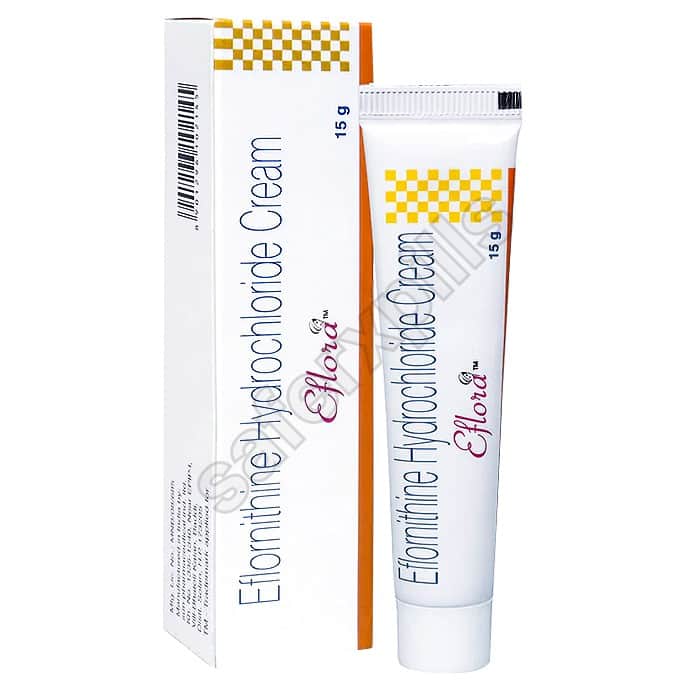
Customer Reviews
No reviews yet. Be the first to review Elyn Cream.
Related Articles
Health guides about Eflornithine, written by pharmacists
Epiduo vs Epiduo Forte: How Adapalene and Benzoyl Peroxide Gel Works, Results Timeline, Side Effects and Cost
Epiduo combines adapalene with benzoyl peroxide 2.5% in one once-daily acne gel, in 0.1% and 0.3% (Forte) strengths. This guide covers how the two strengths differ in the trials, how to apply the gel, what to expect week by week, the irritation rates from the US labels, bleaching of fabric and hair, the exact pregnancy wording, the over-the-counter Differin Epiduo, and what US pharmacies pay for brand and generic versions.
Dapsone Gel (Aczone) 5% vs 7.5%: How to Use It, Results, Side Effects, Warnings and Cost
Dapsone gel (Aczone) is a prescription acne gel in two strengths: 5% twice daily and 7.5% once daily. This guide covers how to apply each, who it is approved for, what the four label trials showed against vehicle, side effects with label rates, the methemoglobinemia and G6PD warnings, the orange staining with benzoyl peroxide, pregnancy and breastfeeding, generic approvals and what US pharmacies pay per gram.
Generic Otezla (Apremilast): Is It Available in the US, What It Costs, Dosing and Side Effects
The FDA has approved generic apremilast from 13 companies, but none is on sale in US pharmacies as of October 2026. This guide covers the patent dates, what apremilast treats, the 5-day starting schedule, kidney dosing, trial results, side effects and warnings, and what a month of Otezla costs pharmacies compared with Indian apremilast.
Related Health Guide
Understanding Acne & Skin Care: Complete Guide