
Glycomet 500mg
Generic: Metforminby USV Pvt Ltd
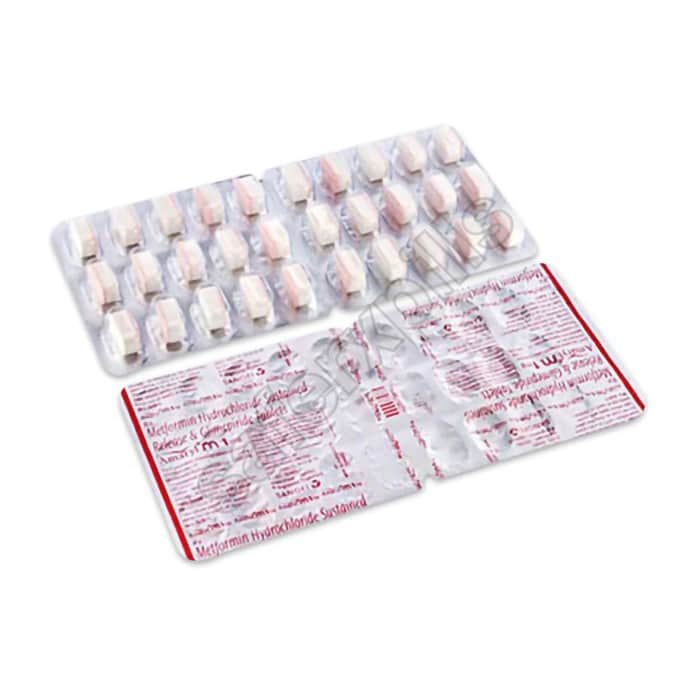
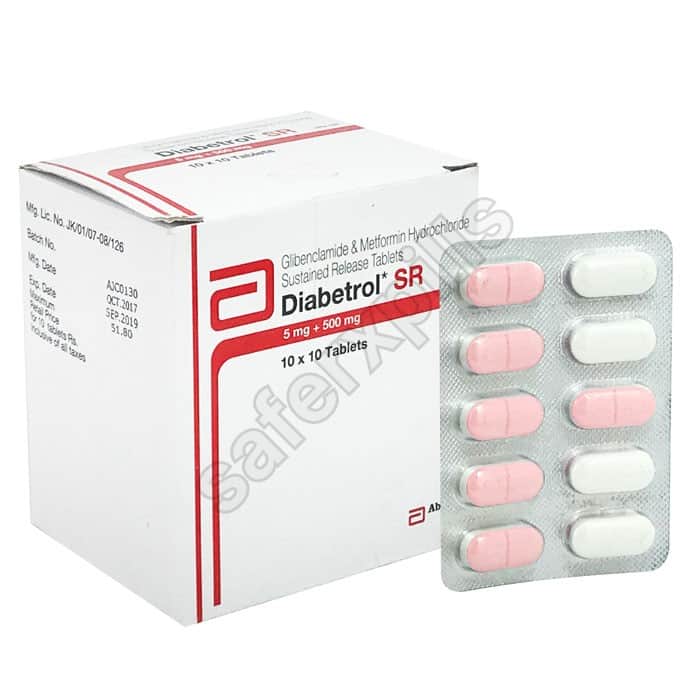
Similar medicines
View all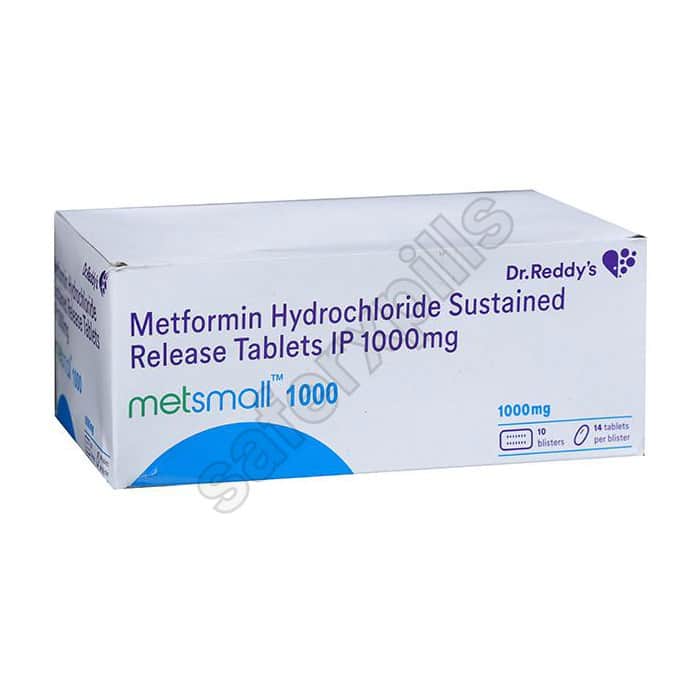
About Glycomet 500mg
Glycomet 500mg is a metformin tablet from USV Private Limited, an Indian maker based in Mumbai. Each tablet contains 500 mg of metformin hydrochloride in the standard (immediate release) form. It is not Glycomet 500 SR, which is a separate slow release product with its own dosing. We sell Glycomet 500 in packs of 100, 200 and 300 tablets, from $0.31 a tablet in the 300 pack before shipping.
Three points before you read further. First, metformin is a prescription medicine in the US, UK, Australia and Canada, and it needs a doctor who checks your blood glucose, HbA1c and kidney function. Second, metformin is one of the cheapest medicines sold in the US: generic metformin 500 mg costs US pharmacies about 1.5 cents a tablet, so if you are in the US with a prescription, a local pharmacy is likely to be far cheaper than us. Third, the main serious risk is lactic acidosis, which is rare but can be fatal; the warning signs are set out below. This page uses a current US metformin tablet label (Zydus, July 2026) and the UK Glucophage 500 mg label (November 2025), listed at the end.
Glycomet 500 at a glance
| Active ingredient | Metformin hydrochloride 500 mg per tablet, immediate release |
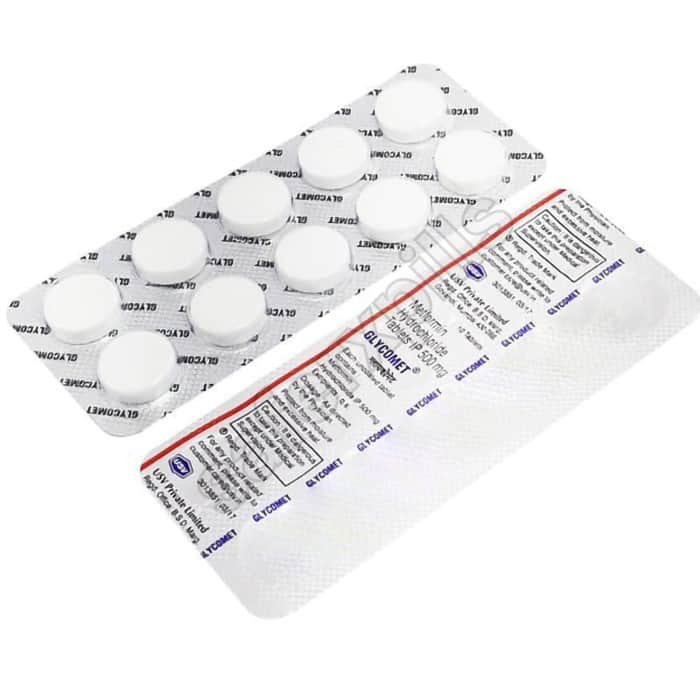
| Brand and maker | Glycomet, USV Private Limited, India (named on the strip in our product photo and on the PharmEasy, Truemeds and Medkart listings) |
| Drug class | Biguanide |
| Regulatory status | Metformin is licensed in the US, UK, Australia and Canada, but this Indian Glycomet pack is not registered with the FDA, MHRA, TGA or Health Canada |
| Usual dose from the label | US label: start with 500 mg twice a day with meals, raise by 500 mg a week, maximum 2,550 mg a day. UK label: start with 500 mg two or three times a day during or after meals, maximum 3 g a day. Your doctor sets the dose |
| Half-life | About 6.2 hours in plasma (US label 12.3) |
| Packs | 100, 200 and 300 tablets (Indian strips hold 10) |
| Price per tablet | $0.38 (100 pack) down to $0.31 (300 pack), before shipping |
| Delivery | 7 to 14 business days to the US, UK, Australia and Canada; $25 shipping under $149, free from $149 |
Glycomet 500 or Glycomet 500 SR: which one is this?
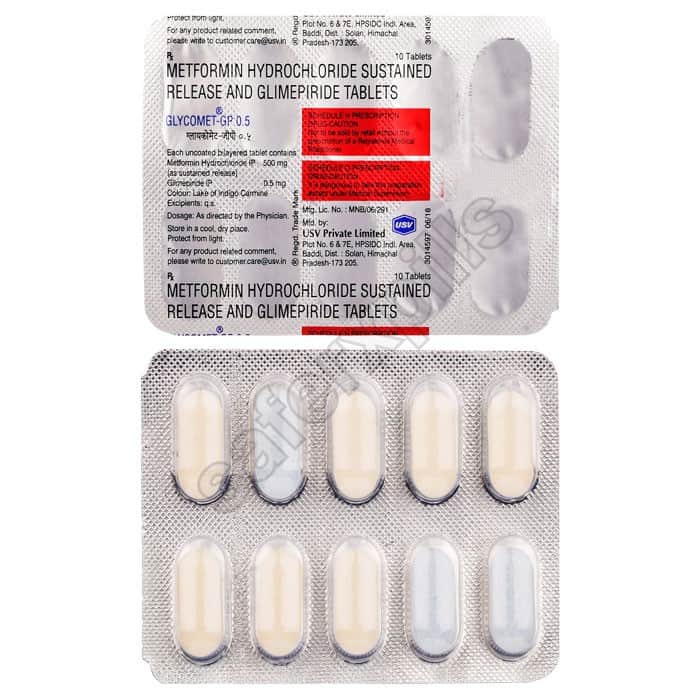
This listing is the standard (immediate release) Glycomet 500. The strip in our product photo reads "Metformin Hydrochloride Tablets IP 500 mg" with no SR or prolonged release wording, and holds 10 tablets. The PharmEasy, Truemeds and Medkart listings for Glycomet 500 describe a plain tablet in strips of 10, and PharmEasy lists Glycomet SR 500 as a separate product. We also sell Glycomet 500mg SR as a separate listing.
The difference matters. Immediate release metformin is usually taken two or three times a day with meals. Slow release metformin is usually taken once a day with the evening meal: the UK Glucophage SR label starts it at one 500 mg tablet once daily with the evening meal, and says people already on standard metformin tablets should start on the same total daily dose. The two forms are not swapped tablet for tablet without your doctor. When your order arrives, check that the strip says what your prescription says.
Price per tablet
Prices below are as of November 2026. The pack selector above always shows the current price.
| Pack | Price | Per tablet | Shipping | Per tablet with shipping |
|---|---|---|---|---|
| 100 tablets | $38 | $0.38 | $25 | $0.63 |
| 200 tablets | $63 | $0.32 | $25 | $0.44 |
| 300 tablets | $94 | $0.31 | $25 | $0.40 |
All three packs are under the $149 free shipping line, so each one pays $25 shipping on its own. The 300 pack is the cheapest per tablet both before and after shipping. How long a pack lasts depends on the dose your doctor sets. Our estimate, using doses within the label range:
| Pack | 2 tablets a day (1,000 mg) | 3 tablets a day (1,500 mg) | 4 tablets a day (2,000 mg) |
|---|---|---|---|
| 100 tablets | 50 days | 33 days | 25 days |
| 200 tablets | 100 days | 66 days | 50 days |
| 300 tablets | 150 days | 100 days | 75 days |
Metformin doses often change in the first weeks, and kidney function can change over time. Check with your doctor that your dose is settled before you buy a large pack, and check the expiry date on the strips when they arrive.
Compared with US generic metformin
| Glycomet 500mg (ours) | US generic metformin 500 mg tablet | |
|---|---|---|
| Maker | USV Private Limited, India | Many US generic makers |
| FDA approved | No (this pack is not registered with the FDA) | Yes |
| Cost per tablet | $0.31 to $0.38 before shipping | About $0.015 (NADAC $0.01483) |
| Cost per day at 1,000 mg | $0.63 to $0.76 before shipping | About $0.03 |
NADAC is the average price US pharmacies pay to buy a medicine, published by the US Medicaid programme; it is not the price a patient pays at the counter. All 57 NDC rows for generic metformin HCl 500 mg tablets in the NADAC file as of 4 November 2026 show $0.01483 a tablet, effective 21 October 2026. That is pennies for a month's supply. Our tablet costs about 21 to 26 times that NADAC figure before shipping. If you are in the US and have a prescription, compare US generic cash prices first: they are very likely to be lower than ours. NADAC lists no rows for the Glucophage brand, and the FDA lists Glucophage as discontinued, noting that it was not discontinued for reasons of safety or effectiveness.
Which strength to choose
| Product | Metformin per tablet | Form | Price per tablet (largest pack, before shipping) |
|---|---|---|---|
| Glycomet 500mg (this page) | 500 mg | Immediate release | $0.31 |
| Glycomet 850mg | 850 mg | Immediate release | $0.38 |
| Glycomet 1000mg | 1,000 mg | Check the strip (PharmEasy lists Glycomet 1gm as a plain tablet) | $0.72 |
| Glycomet 500mg SR | 500 mg | Slow release | $0.62 |
| Glycomet 850mg SR | 850 mg | Slow release | $0.70 |
How the 500 mg tablet fits the labels: the US label's usual starting dose is one 500 mg tablet twice a day (or one 850 mg tablet once a day), and its maximum is 2,550 mg a day, which is five 500 mg tablets (2,500 mg). The UK label's maximum is 3 g a day, six 500 mg tablets, in three divided doses. For children aged 10 and over, both labels set a maximum of 2,000 mg a day. Lower kidney function lowers the maximum (see below). The 500 mg tablet is the one that allows the smallest dose steps; 850 mg and 1,000 mg tablets mean fewer tablets at higher doses. Glycomet-GP tablets, such as Glycomet-GP 1, combine metformin with glimepiride and are a different medicine.
What metformin does
Metformin lowers blood glucose mainly by cutting the amount of glucose the liver makes and by helping the body respond to its own insulin (US label 12.1; UK label 5.1). It does not make the body release more insulin, which is why it does not cause low blood sugar on its own. In the 29 week US trial in the label, HbA1c fell by 1.4 points on metformin (from 8.4%) and rose by 0.4 on placebo (US label 14.1). In the UK Prospective Diabetes Study, overweight people given metformin after diet alone failed had 29.8 diabetes related events per 1,000 patient-years against 43.3 on diet alone, and lower overall death rates (13.5 against 20.6 per 1,000 patient-years) (UK label 5.1). The US label says there have been "no clinical studies establishing conclusive evidence of macrovascular risk reduction" with metformin (5.4).
How to take Glycomet 500
- Take it exactly as your doctor prescribes. The US label starts at 500 mg twice a day with meals; the UK label starts at 500 mg two or three times a day during or after meals.
- Take it with food. The US patient information says to take it with meals "to help lessen an upset stomach side effect".
- Expect slow dose steps. The US label raises the dose by 500 mg a week; the UK label adjusts it after 10 to 15 days on the basis of blood glucose, and says "A slow increase of dose may improve gastrointestinal tolerability".
- Have your kidney function (eGFR) tested before you start and at least once a year (US label 5.1; UK label 4.2). The UK label says every 3 to 6 months for older people and people at risk of worsening kidney function.
- Tell any doctor who plans a scan with iodinated contrast dye, or surgery, that you take metformin (see below).
- Keep to your diet. The UK label says patients should continue their diet with a regular spread of carbohydrate through the day.
- Never start, stop or change diabetes medicines on your own. If you are switching from another brand or from a slow release tablet, ask your doctor how to match the dose.
Lower doses and extra care for some groups
- Kidney impairment. The US label says metformin is contraindicated below an eGFR of 30 mL/min/1.73 m2, and "Initiation of metformin hydrochloride tablets in patients with an eGFR between 30 mL/minute/1.73 m2 to 45 mL/minute/1.73 m2 is not recommended". If eGFR later falls below 45, the label says to assess the benefit and risk of continuing, and to stop metformin if it falls below 30. The UK label sets maximum daily doses by kidney function: 3,000 mg at a GFR of 60 to 89, 2,000 mg at 45 to 59 and 1,000 mg (two Glycomet 500 tablets) at 30 to 44, with the starting dose at most half the maximum in the lower two bands.
- Older people. The US label says dose selection for an elderly patient should be cautious, usually starting at the low end of the range, with kidney function checked more often. The US patient information says people over 80 should not take metformin unless their kidneys have been checked and are normal.
- Liver problems. The US label says metformin is "not recommended in patients with hepatic impairment". The UK label lists hepatic insufficiency as a contraindication.
- Heart failure. The UK label allows metformin in stable chronic heart failure with regular monitoring of heart and kidney function, and contraindicates it in acute and unstable heart failure. The US label lists acute congestive heart failure among the low oxygen states that raise the lactic acidosis risk.
- Illness and dehydration. The UK label says that in case of dehydration (severe diarrhoea or vomiting, fever or reduced fluid intake), "metformin should be temporarily discontinued and contact with a health care professional is recommended".
- Children. Both labels cover children from 10 years of age, with a maximum of 2,000 mg a day. The US label says safety and effectiveness are not established under 10. The UK label recommends particular caution between 10 and 12.
Lactic acidosis
US metformin labels carry a boxed warning for lactic acidosis, a build-up of acid in the blood. The current US label states: "Postmarketing cases of metformin-associated lactic acidosis have resulted in death, hypothermia, hypotension, and resistant bradyarrhythmias. The onset of metformin-associated lactic acidosis is often subtle, accompanied only by nonspecific symptoms such as malaise, myalgias, respiratory distress, somnolence, and abdominal pain." The UK label calls it "a very rare, but serious metabolic complication".
Risk factors in the US boxed warning: kidney impairment, some medicines (for example carbonic anhydrase inhibitors such as topiramate), age 65 or older, X-ray studies with contrast dye, surgery and other procedures, low oxygen states such as acute congestive heart failure, excessive alcohol intake, liver impairment and mitochondrial diseases. The UK label adds inadequately controlled diabetes, ketosis and prolonged fasting.
Symptoms (US patient information): feeling very weak and tired, unusual muscle pain, trouble breathing, unusual sleepiness or sleeping longer than usual, unexplained stomach or gut problems with nausea and vomiting or diarrhoea, feeling cold especially in the arms and legs, feeling dizzy or lightheaded, and a slow or irregular heartbeat. The patient information says to stop taking metformin and call your healthcare provider right away, and that lactic acidosis "is a medical emergency and must be treated in a hospital". The UK label says that with suspected symptoms "the patient should stop taking metformin and seek immediate medical attention".
Contrast dye and surgery. The US label says to stop metformin at the time of, or before, an iodinated contrast imaging procedure in people with an eGFR of 30 to 60, a history of liver disease, alcoholism or heart failure, or who will be given contrast into an artery, then recheck eGFR 48 hours later and restart if kidney function is stable. The UK label says intravascular iodinated contrast "may lead to contrast induced nephropathy", and that metformin should be stopped before or at the time of the procedure and not restarted for at least 48 hours, once kidney function is rechecked and stable. The UK label also says metformin "must be discontinued at the time of surgery under general, spinal or epidural anaesthesia", restarting no earlier than 48 hours after surgery or after eating again.
Side effects
All rows below are from Table 1 of the US label: a US trial in which 141 people took metformin tablets (up to 2,550 mg a day) and 145 took placebo. The table lists reactions reported in more than 5% of people on metformin and more often than on placebo.
| Side effect | Metformin | Placebo |
|---|---|---|
| Diarrhoea | 53% | 12% |
| Nausea or vomiting | 26% | 8% |
| Flatulence | 12% | 6% |
| Weakness (asthenia) | 9% | 6% |
| Indigestion | 7% | 4% |
| Abdominal discomfort | 6% | 5% |
| Headache | 6% | 5% |
Diarrhoea led 6% of people to stop metformin in that trial (US label 6.1). The UK label says stomach and gut effects (nausea, vomiting, diarrhoea, abdominal pain and loss of appetite) are very common, occur most often when treatment starts and "resolve spontaneously in most cases"; taking metformin in two or three daily doses during or after meals and raising the dose slowly helps. The UK label lists taste disturbance and a fall in vitamin B12 as common, and liver test changes or hepatitis and skin reactions (redness, itching, hives) as very rare. The US label reports liver injury from postmarketing use (6.2).
Vitamin B12. In 29 week US trials, previously normal vitamin B12 levels fell below normal in about 7% of people (US label 5.2). The US label says to measure blood counts every year and vitamin B12 every 2 to 3 years. The UK label says the risk of low B12 rises with dose, treatment length and other risk factors, and that B12 should be checked if anaemia or nerve damage (neuropathy) is suspected. Low B12 can be treated, and the UK label says metformin should be continued for as long as it is tolerated and not contraindicated.
Low blood sugar. The UK label says "Metformin alone does not cause hypoglycaemia, but caution is advised when it is used in combination with insulin or other oral antidiabetics (e.g. sulfonylureas or meglitinides)." The US label (5.3) says metformin "may increase the risk of hypoglycemia when combined with insulin and/or an insulin secretagogue", and a lower dose of the other medicine may be needed. If you take Glycomet with a sulfonylurea such as glimepiride or gliclazide, or with insulin, learn the signs of low blood sugar and keep glucose tablets or a sugary drink with you.
Pregnancy chance. The US label (8.3) says metformin may result in ovulation in some premenopausal women who do not ovulate, which may lead to an unintended pregnancy.
When to get urgent help
Get emergency help, or ask someone to call for you, if you have:
- Signs of lactic acidosis: severe weakness or tiredness, unusual muscle pain, trouble breathing, unusual sleepiness, feeling cold, dizziness, a slow or irregular heartbeat, or stomach pain with nausea, vomiting or diarrhoea. Stop taking metformin. Lactic acidosis must be treated in hospital.
- Taken more than your prescribed dose. The US label says lactic acidosis has been reported in about 32% of metformin overdose cases; the UK label says high overdose may lead to lactic acidosis, which "is a medical emergency and must be treated in hospital".
- Low blood sugar that does not improve after taking sugar, comes back, or causes confusion, fits or loss of consciousness (a risk mainly when metformin is taken with a sulfonylurea or insulin). If someone is unconscious or cannot swallow, call emergency services and do not put food or drink in their mouth (general first aid).
- Swelling of the lips, tongue, face or throat, trouble breathing or swallowing, or a spreading rash or hives. Allergy to metformin is a contraindication in both labels; this step is our general safety advice.
- Yellow skin or eyes, dark urine or pale stools, which can mean liver injury (US label 6.2 reports liver injury; the signs are our general advice).
Tell the emergency staff that you take metformin (Glycomet), how much and when, and about any other diabetes medicines.
If vomiting, severe diarrhoea, fever or not drinking enough leaves you dehydrated, the UK label says to stop metformin for a while and contact a health professional.
Who should not take Glycomet 500
Never take it if (the label named for each item):
- you are allergic to metformin or any ingredient of the tablet (US label 4; UK label 4.3)
- your eGFR is below 30 mL/min (severe kidney impairment) (US label 4; UK label 4.3)
- you have acute or chronic metabolic acidosis, including diabetic ketoacidosis, with or without coma (US label 4), or any type of acute metabolic acidosis or diabetic pre-coma (UK label 4.3)
- you have an acute condition that can affect the kidneys, such as dehydration, severe infection or shock (UK label 4.3)
- you have a disease that can starve tissues of oxygen, such as decompensated heart failure, respiratory failure, a recent heart attack or shock (UK label 4.3)
- you have hepatic insufficiency (impaired liver function), acute alcohol intoxication or alcoholism (UK label 4.3)
Not recommended, or only with your doctor's close care:
- Starting metformin at an eGFR of 30 to 45: "not recommended" (US label 2.3).
- Liver impairment: "not recommended" (US label 8.7); a contraindication in the UK label.
- Known mitochondrial disease such as MELAS or MIDD: metformin is "not recommended" (US label 5.1; UK label 4.4).
- Type 1 diabetes: the US patient information says metformin "should not be used to treat people with type 1 diabetes".
- Age over 80 without a normal kidney check (US patient information).
- Children under 10: safety and effectiveness not established (US label 8.4).
- Heavy or binge drinking: the US label says to warn patients against excessive alcohol intake.
Pregnancy and breastfeeding. The UK label (4.6) says that if clinically needed, metformin "can be considered during pregnancy and in the periconceptional phase as an addition or an alternative to insulin", and that breastfeeding "is not recommended" during metformin treatment, with a decision to be made on the benefits and risks. The US label (8.1) says data in pregnant women are limited and not sufficient to determine a drug-associated risk, and that published studies have not reported a clear link between metformin and major birth defects or miscarriage, and (8.2) that the benefits of breastfeeding should be weighed with the mother's need for metformin. If you are pregnant, planning a pregnancy or breastfeeding, decide with your doctor.
Medicines that interact
- Carbonic anhydrase inhibitors (topiramate, zonisamide, acetazolamide, dichlorphenamide) may raise the lactic acidosis risk; the US label says to consider more frequent monitoring.
- Medicines that reduce metformin clearance (OCT2 or MATE inhibitors) such as ranolazine, vandetanib, dolutegravir and cimetidine can raise metformin levels (US label 7). The UK label adds trimethoprim and isavuconazole, says verapamil may reduce metformin's effect and rifampicin may increase it, and advises caution, especially with kidney impairment.
- Medicines that can affect the kidneys, such as NSAID painkillers, ACE inhibitors, angiotensin II receptor blockers and diuretics, especially loop diuretics: the UK label says close monitoring of kidney function is necessary.
- Insulin and insulin secretagogues such as sulfonylureas: higher risk of low blood sugar; a lower dose of the other medicine may be needed.
- Medicines that can raise blood glucose: thiazides and other diuretics, corticosteroids, phenothiazines, thyroid products, oestrogens, the contraceptive pill, phenytoin, nicotinic acid, sympathomimetics, calcium channel blockers and isoniazid (US label 7). Watch for loss of control when they start and for low blood sugar when they stop.
- Alcohol increases the effect of metformin on lactate. The UK label says alcohol intoxication raises the lactic acidosis risk, particularly with fasting, malnutrition or liver impairment.
- Iodinated contrast dye: see the lactic acidosis section.
Tell your doctor or pharmacist about every medicine and supplement you take before you start, and before you start anything new.
Prescription and legal status
Metformin is a prescription medicine in all four countries we ship to. In the US, generic metformin tablets are prescription medicines (the US label is marked "Rx only"); the Glucophage brand is discontinued. In the UK, the NHS says metformin is only available with a prescription, and Glucophage 500 mg is licensed (Merck). In Canada, the Health Canada Drug Product Database lists Glucophage (DIN 02099233) as marketed, with a prescription schedule. In Australia, healthdirect lists Diabex 500 mg as "Schedule 4: Prescription Only Medicine". In India, the Truemeds and Medkart listings mark Glycomet 500 as prescription required.
Glycomet itself is not registered with the FDA, the MHRA, the TGA or Health Canada. The FDA says personal importation of unapproved medicines is illegal in most circumstances. Check the rules where you live.
Buying genuine Glycomet 500
The MHRA warns that "Any medicine not authorised for sale in the UK can be unsafe or ineffective and there is no way of knowing what is in them or the negative health effects they can have", and it advises: "Only use UK-registered pharmacies, including online pharmacies displaying the official green cross logo". That warning covers Glycomet, which is not authorised in the UK. When your order arrives, read the strip: it should say Glycomet and "Metformin Hydrochloride Tablets IP 500 mg", name USV Private Limited, and carry a batch number and an expiry date. If it says SR or prolonged release, it is a different product from this one. These checks cannot prove that tablets are genuine, because counterfeiters copy packaging. Check your blood glucose closely during the first weeks on any new supply, and tell your doctor if your readings change. If a batch causes unusual symptoms, seek medical advice and report it to your medicines regulator (the MHRA Yellow Card scheme in the UK, FDA MedWatch in the US, the TGA in Australia or Health Canada) as well as to us.
Storage: the PharmEasy and Medkart listings say to store Glycomet below 25 C, away from moisture and direct sunlight. Truemeds gives both 25 C and 30 C on the same page, so follow the carton.
Delivery
We ship Glycomet 500mg to the US, UK, Australia and Canada in plain packaging with tracking. Standard delivery takes 7 to 14 business days. Shipping costs a flat $25 on orders under $149 and is free from $149. Diabetes tablets should not run out: order well before your current supply ends, and do not stop or ration your tablets while you wait. See our shipping page and refund policy.
Related guides
- Metformin dosage guide: starting doses, titration steps and maximum daily limits
- Metformin side effects: trial incidence rates, GI timing and B12 monitoring
- Metformin vs glimepiride: how the two most prescribed oral diabetes tablets differ
- Generic Janumet (sitagliptin and metformin): strengths, doses and cost
Other strengths: Glycomet 850mg, Glycomet 1000mg, Glycomet 500mg SR.
Sources
- Metformin hydrochloride tablets USP, US prescribing information and patient information, Zydus Pharmaceuticals (USA) (DailyMed setid c82a10fa-1e8e-46b6-890a-737de3f34ee1, SPL version 17, effective 15 July 2026, Rev. 07/26): boxed warning, sections 1, 2.1 to 2.4, 4, 5.1 to 5.4, 6.1, 6.2, 7, 8.1 to 8.7, 10, 12.1, 12.3, 14.1. DailyMed
- Glucophage 500 mg and 850 mg film-coated tablets, UK SmPC, Merck, text revised November 2025 (emc updated 22 December 2025): sections 4.1 to 4.9, 5.1. emc
- Glucophage SR 500 mg prolonged release tablets, UK SmPC, Merck, updated 31 March 2025: section 4.2 (once daily with the evening meal; switching from immediate release). emc
- Centers for Medicare and Medicaid Services. National Average Drug Acquisition Cost (NADAC) 2026: metformin HCl 500 mg tablet, 57 NDC rows at $0.01483, effective 21 October 2026 (file as of 4 November 2026); no Glucophage rows. data.medicaid.gov
- US Food and Drug Administration, openFDA drug approvals: Glucophage (NDA 020357), all strengths discontinued, not for reasons of safety or effectiveness.
- Health Canada Drug Product Database: Glucophage, DIN 02099233, marketed, prescription, searched 6 November 2026. Health Canada
- healthdirect Australia: Diabex (metformin), Schedule 4 Prescription Only Medicine. healthdirect
- NHS. Metformin. NHS
- Indian pharmacy listings for Glycomet 500 and Glycomet SR 500 (PharmEasy, Truemeds, Medkart), checked 6 November 2026.
- MHRA. 20 million illegal erectile dysfunction pills seized as MHRA warns against risky online buys, 13 February 2026. GOV.UK
- US Food and Drug Administration. Personal Importation. FDA
This page is for information and is not medical advice. Glycomet is a prescription diabetes medicine. Take it only as prescribed by a doctor who monitors your blood glucose, HbA1c and kidney function, and do not start, stop or switch diabetes medicines without your doctor.
Frequently asked questions
What is Glycomet 500mg?
Glycomet 500mg is a metformin hydrochloride 500 mg tablet made by USV Private Limited in India. It is the standard (immediate release) form, used with diet and exercise to lower blood glucose in type 2 diabetes. Metformin is licensed in the US, UK, Australia and Canada, but this Indian pack is not registered with the FDA, MHRA, TGA or Health Canada.
Is Glycomet 500 the same as Glycomet 500 SR?
No. Glycomet 500 is immediate release metformin, usually taken two or three times a day with meals. Glycomet 500 SR is slow release metformin, usually taken once a day with the evening meal. The strip in our product photo for this listing reads "Metformin Hydrochloride Tablets IP 500 mg" with no SR wording. Do not swap one for the other without your doctor.
Is Glycomet the same medicine as Glucophage or US generic metformin?
It contains the same active ingredient, metformin hydrochloride 500 mg. Glycomet is an Indian brand and has not been reviewed by the FDA, MHRA, TGA or Health Canada, so we cannot claim it has been shown to be bioequivalent to Glucophage or to any US generic.
How much does Glycomet 500mg cost per tablet?
As of November 2026, $0.38 a tablet in the 100 pack, $0.32 in the 200 pack and $0.31 in the 300 pack, before shipping. All three packs are under $149, so each pays $25 shipping, which brings the cost to $0.63, $0.44 and $0.40 a tablet. The pack selector shows the current price. In the US, generic metformin 500 mg costs pharmacies about $0.015 a tablet (NADAC, effective 21 October 2026), so a US pharmacy is very likely to be cheaper if you have a prescription.
How should I take Glycomet 500?
Exactly as your doctor prescribes, with meals. The US label starts at 500 mg twice a day and raises the dose by 500 mg a week, up to 2,550 mg a day. The UK label starts at 500 mg two or three times a day during or after meals, adjusts after 10 to 15 days and allows up to 3 g a day. Your kidney function should be tested before you start and at least once a year.
Should I choose 500 mg, 850 mg or 1000 mg?
That depends on the dose your doctor sets. The 500 mg tablet allows the smallest dose steps and matches the US and UK starting dose. Higher strengths mean fewer tablets at higher doses. Kidney function also limits the dose: the UK label allows at most 1,000 mg a day at a GFR of 30 to 44, and the US label says not to start metformin at an eGFR of 30 to 45.
How long does a pack last?
Our estimate: at 2 tablets a day (1,000 mg), the 100 pack lasts 50 days, the 200 pack 100 days and the 300 pack 150 days. At 4 tablets a day (2,000 mg), they last 25, 50 and 75 days. Check that your dose is settled before buying a large pack.
What are the side effects of Glycomet 500?
Stomach and gut effects are the most common. In the US label trial, diarrhoea affected 53% on metformin against 12% on placebo, and nausea or vomiting 26% against 8%; 6% stopped because of diarrhoea. The UK label says these effects are most frequent at the start and resolve in most cases. Long-term use can lower vitamin B12 (about 7% in 29 week US trials). The rare but serious risk is lactic acidosis.
Can Glycomet 500 cause low blood sugar?
The UK label says metformin alone does not cause hypoglycaemia, but caution is advised when it is used with insulin or other diabetes tablets such as sulfonylureas. The US label says the combination may increase the risk of hypoglycaemia and a lower dose of the other medicine may be needed.
Who should not take Glycomet 500?
Do not take it if you are allergic to metformin, have an eGFR below 30, or have metabolic acidosis including diabetic ketoacidosis (US and UK labels). The UK label also lists dehydration, severe infection or shock, oxygen-starving conditions such as decompensated heart failure or a recent heart attack, hepatic insufficiency, and alcohol intoxication or alcoholism. The US label says starting it at an eGFR of 30 to 45 is not recommended. Stop it and get urgent help for signs of lactic acidosis.
Do I need a prescription, and how long does delivery take?
Metformin is a prescription medicine in the US, UK, Australia (Schedule 4) and Canada, and Indian listings mark Glycomet 500 as prescription required. The FDA says personal importation of unapproved medicines is illegal in most circumstances. We ship in plain packaging with tracking in 7 to 14 business days; shipping is $25 under $149 and free from $149.
Medical References
- 1.Metformin hydrochloride tablets USP, US prescribing information and Patient Information, Zydus Pharmaceuticals (USA) (DailyMed SPL version 17, effective 15 July 2026) — 2026
- 2.Glucophage 500 mg and 850 mg film-coated tablets, UK Summary of Product Characteristics (Merck, text revised November 2025) — 2025
- 3.Glucophage SR 500 mg prolonged release tablets, UK Summary of Product Characteristics (Merck) — 2025
- 4.CMS National Average Drug Acquisition Cost (NADAC) 2026, metformin HCl 500 mg tablet rows effective 21 October 2026, file as of 4 November 2026 — 2026
- 5.healthdirect Australia: Diabex (metformin), Schedule 4 Prescription Only Medicine
- 6.NHS: Metformin
- 7.US Food and Drug Administration: Personal Importation
Sources: U.S. National Library of Medicine (DailyMed, PubMed), openFDA
Related articles
Generic Janumet (Sitagliptin and Metformin): Now in US Pharmacies, Strengths, Doses and Cost
Generic sitagliptin and metformin tablets from Sandoz, Apotex and Par Health went on sale in the US in 2026. This guide covers who makes them, what the strength numbers mean, Janumet vs Janumet XR, how much the combination lowered A1C in the label's trials, the lactic acidosis and kidney rules, and what a month of each option costs US pharmacies.
Read article
Metformin vs Glimepiride: How the Two Most Prescribed Oral Diabetes Tablets Differ
Metformin lowers hepatic glucose output and improves insulin sensitivity; glimepiride forces insulin release. That single mechanistic difference explains the hypoglycaemia rates, the weight effects and why the two are so often combined.
Read article
Metformin Dosage Guide: Starting Doses, Titration Steps and Maximum Daily Limits
Exact metformin dosing from the approved label: 500 mg or 850 mg starting doses, weekly titration steps, the 2,550 mg immediate-release and 2,000 mg extended-release ceilings, and the eGFR thresholds that decide eligibility.
Read article
Metformin Side Effects: Trial Incidence Rates, GI Timing and B12 Monitoring
What the registration trials actually reported: diarrhoea in 53.2 percent on immediate-release metformin versus 9.6 percent on extended-release, vitamin B12 decline in 7 percent, and lactic acidosis at 0.03 cases per 1,000 patient-years.
Read article
Metformin for PCOS: Complete Treatment Guide for Women with Polycystic Ovary Syndrome
Metformin is a game-changer for many women with PCOS. Learn how this diabetes medication treats polycystic ovary syndrome, expected benefits, side effects, and how to use it effectively.
Read articleCustomer Reviews
No reviews yet. Bought Glycomet 500mg? Tell other buyers how it went.