
Metrogyl Gel
Generic: Metronidazoleby J. B. Chemicals and Pharmaceuticals Ltd
Select pack size
Similar medicines
View all
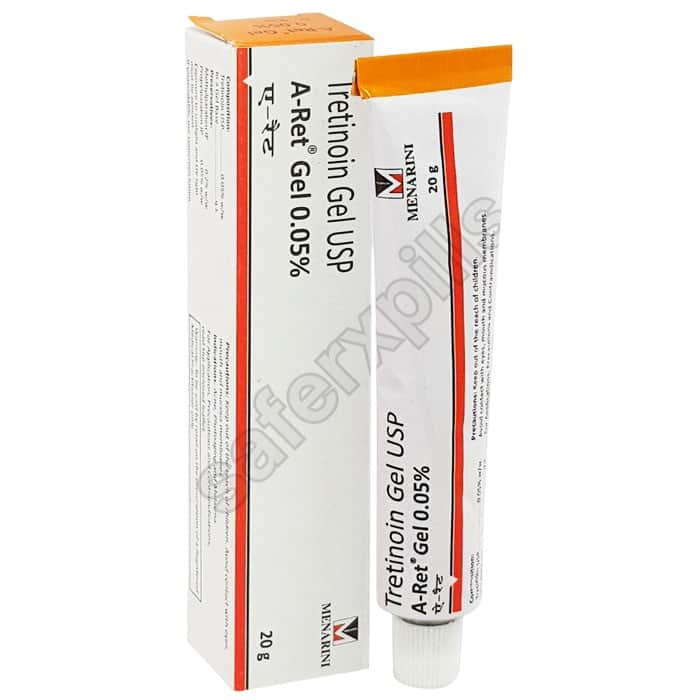
About Metrogyl Gel
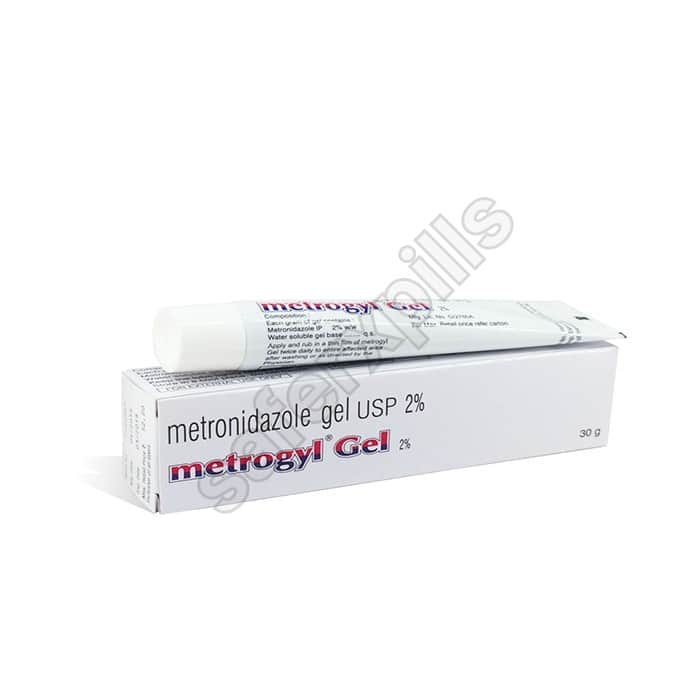
Metrogyl Gel is J. B. Chemicals and Pharmaceuticals' metronidazole skin gel from India. The tube and carton in our product photo (an older batch) read "metronidazole gel USP 2%", "Metronidazole IP 2% w/w" in a "Water soluble gel base", and "30 g", with the direction "Apply and rub in a thin film of metrogyl Gel twice daily to entire affected area after washing or as directed by the Physician." Truemeds, Medkart and Apollo list the same 2% w/w gel in 30 g tubes. Topical metronidazole is licensed in the US, UK, Canada and Australia for rosacea (the red, bumpy facial skin condition), at 0.75% or 1%. We sell packs of 3, 6 and 12 tubes, from $7.19 a tube before shipping.
Please read this before you order. First, this is the skin gel. J. B. Chemicals also sells Metrogyl DG, a dental gel of metronidazole 1% with chlorhexidine 0.25% for the gums (Apollo listing), and Metrogyl 200, 400 and ER tablets; in Australia, "Metrogyl" is a tablet brand from a different company. Second, the strength: 2% is higher than any metronidazole skin product we found licensed in the US, UK, Canada or Australia, and we found no trial showing that 2% works better than 0.75% or 1% for rosacea. Third, the labels we can check (US, UK and Australian) license topical metronidazole only for rosacea (the UK Metrogel label also covers smelly fungating tumours); none of them lists acne or general "bacterial skin infections", which is what our old listing said. Rosacea needs a diagnosis, because acne, steroid damage and other rashes can look like it. Fourth, US readers with a prescription can get generic metronidazole 0.75% gel for less per gram than ours costs with shipping (see the price comparison below).
Metrogyl Gel at a glance
| Active ingredient | Metronidazole 2% w/w (20 mg per gram, our arithmetic), a nitroimidazole medicine with antibacterial and antiprotozoal action. Strength from our product photo (tube "Metronidazole IP 2% w/w"; carton "metronidazole gel USP 2%"), Truemeds ("Metronidazole 2%"), Medkart and Apollo ("2% w/w") and PharmEasy ("2.0 %"). |
| Brand and maker | Metrogyl is a J. B. Chemicals and Pharmaceuticals Ltd brand. Truemeds and Medkart name J B Chemicals and Pharmaceuticals Ltd; Apollo names Lekar Pharma Ltd, with a Prabhadevi, Mumbai address. |
| Licensed use elsewhere | US 1% gel: "topical treatment of inflammatory lesions of rosacea". UK Rozex 0.75% gel: "inflammatory papules, pustules and erythema of rosacea". The tube in our photo does not state a use; Indian listings give rosacea (Truemeds, Apollo) or acne and infections (Medkart). |
| Regulatory status | Topical metronidazole is licensed and prescription only in the US, UK, Canada and Australia, at 0.75% (all four) and 1% (US and Canada). We found no 2% metronidazole skin gel licensed in any of the four. This Indian tube is not registered with the FDA, MHRA, TGA or Health Canada. |
| How often | Indian tube: twice daily. US and UK 0.75% gels: twice daily, morning and evening. US 1% gel: once daily. |
| How long | UK Rozex label: "The average period of treatment is three to four months." Australian Rozex label: "Significant therapeutic results should be noted within three weeks." |
| Prescription | Truemeds and Medkart: "Prescription required". Prescription only in the US ("Rx only"), UK (POM), Canada and Australia (Schedule 4). |
| Tube size | 30 g (our product photo; Truemeds, Medkart and Apollo). PharmEasy also lists a 20 g tube, and Truemeds, Medkart and Apollo a 40 g tube; our photo shows the 30 g tube. |
| Packs | 3, 6 and 12 tubes |
| Price per tube | $7.50 (3 tubes) down to $7.19 (12 tubes), before shipping |
| Storage | No fridge needed. Apollo: non cold chain, "10 to 25°C or below 30°C"; Medkart: room temperature; Truemeds gives both "below 30°C" and "below 25°C". The UK Rozex label says "Do not store above 25°C. Do not freeze." |
| Delivery | 7 to 14 business days to the US, UK, Australia and Canada; $25 shipping under $149, free from $149 |
Metrogyl Gel price per tube and per gram
Prices below are as of November 2026; the pack selector shows the current price.
| Pack | Price | Per tube | Per gram | Shipping | Per tube with shipping | Per gram with shipping |
|---|---|---|---|---|---|---|
| 3 tubes (90 g) | $22.50 | $7.50 | $0.250 | $25 | $15.83 | $0.528 |
| 6 tubes (180 g) | $44.00 | $7.33 | $0.244 | $25 | $11.50 | $0.383 |
| 12 tubes (360 g) | $86.25 | $7.19 | $0.240 | $25 | $9.27 | $0.309 |
All three packs are under the $149 free shipping threshold, so every order pays $25 shipping, which is more than the gel itself in the 3 pack. The per gram figures are our arithmetic, assuming 30 g tubes as in our photo. In India, Truemeds and Medkart list a maximum retail price of Rs 104.48 for one 30 g tube.
How long a tube lasts (our estimate). The US 0.75% gel label says "The mean dose of gel applied during clinical studies was 600 mg" per application. At that amount twice daily, as the Indian tube directs, a 30 g tube lasts about 25 days, so 3 tubes last about 2.5 months, 6 tubes about 5 months and 12 tubes about 10 months (our arithmetic; a larger area uses more). The UK label gives an average course of three to four months, with a further three to four months only "if a clear benefit has been demonstrated", and says "In the absence of a clear clinical improvement, therapy should be stopped." So the 12 pack is more than most people should need before a review. Please do not order it to keep for later or to share, and check the expiry date on each tube.
Compared with what you can get locally
| Where | What is licensed | Cost |
|---|---|---|
| US | MetroGel 1% gel (Galderma), MetroCream and MetroLotion 0.75% (Galderma), Noritate 1% cream (Bausch), and generic metronidazole 0.75% gel, 1% gel, 0.75% cream and 0.75% lotion, all prescription only (Drugs@FDA). The original MetroGel 0.75% is discontinued; the FDA recorded that this was not for safety or effectiveness reasons. | NADAC, effective 21 October 2026: generic 0.75% gel $0.19923 a gram (45 g tube about $8.97); 0.75% cream $0.25935 a gram (45 g about $11.67); 1% gel $0.63279 a gram (60 g tube about $37.97) and $0.55966 a gram in a 55 g pump. No NADAC rows for the MetroGel, MetroCream or Noritate brands. These are pharmacy acquisition costs, not shelf prices. |
| UK | Rozex 0.75% gel and cream and Metrogel 0.75% gel (Galderma), prescription only medicines (emc). Acea 0.75% gel is also on the emc. | Not checked |
| Canada | MetroGel 0.75% and 1%, Nidagel 0.75% gel and Noritate 1% cream are marketed, all prescription (Health Canada Drug Product Database). Generic 0.75% and 1% gels from Pharmascience, Taro and JAMP were approved in 2026. | Not checked |
| Australia | Rozex 0.75% gel and cream (Galderma), prescription only medicine (Schedule 4), not on the PBS (healthdirect). | Not checked |
| SafeRxPills | Indian Metrogyl Gel 2%, 30 g tubes | $0.240 to $0.250 a gram before shipping; $0.309 to $0.528 a gram with shipping |
Per gram, a US pharmacy pays less for generic metronidazole 0.75% gel ($0.20) than you pay us for Metrogyl Gel, before or after shipping. Our gel costs less per gram than the US 1% gel ($0.56 to $0.63), but a doctor would choose the strength, not the price. Our 2% gel holds more metronidazole per gram, but no study we found shows that the extra drug gives a better result for rosacea, so we do not count it as better value. NADAC is not what you pay at the counter: if you are in the US and have a prescription, compare local cash prices and your insurance copay first, because a US generic gel will very likely cost you less. We have not found a published study comparing Indian Metrogyl Gel with any licensed metronidazole gel.
What the evidence shows
- Rosacea, 1% gel (US label, section 14): in a randomized trial of 746 people with rosacea, mostly "moderate", metronidazole 1% gel or the gel base alone was used once daily for 10 weeks. Inflammatory lesions fell by 50.7% (from a mean of 18.3 to 8.9) with metronidazole and by 32.6% with the gel base; 38.4% and 27.5% were "clear" or "almost clear". The mean difference was 3.8 lesions.
- Rosacea, overall: a Cochrane review of 106 randomized trials found that topical metronidazole and azelaic acid "both appeared to be more effective than placebo" (moderate and high quality evidence), and that topical ivermectin was "slightly more effective than metronidazole in one study" (van Zuuren 2015, PMID 26099423). NICE summarised that 16 week study: inflammatory lesions fell by 83.0% with ivermectin cream and 73.7% with metronidazole 0.75% cream (NICE evidence summary ESNM68, up to date January 2016).
- The 2% strength: we found no rosacea trial of a 2% metronidazole gel. The licensed products and their trials use 0.75% or 1%. The label figures for blood levels (below) come from those strengths, not from 2%.
- Acne: acne is not a licensed use in the US, UK or Australian labels. In a double blind trial of 96 people with mild to moderate acne, 0.75% metronidazole gel showed "no significant benefit" over placebo (Tong 1994, PMID 8033381). In a split face trial, 70 young adults with moderate acne used 2% metronidazole gel on one side of the face and placebo on the other twice daily for 8 weeks; lesion counts were lower on the metronidazole side at every visit, and 22.9% reported dryness (Khodaeiani 2012, PMID 22837561). One small trial is not enough to call it an acne treatment, in our view; see our acne guides below for treatments with stronger evidence.
| US 1% gel rosacea trial, week 10 (label Table 3) | Metronidazole 1% gel (557 people) | Gel base alone (189 people) |
|---|---|---|
| Inflammatory lesions, mean at start | 18.3 | 18.4 |
| Inflammatory lesions, mean at week 10 | 8.9 | 12.8 |
| Reduction | 9.4 (50.7%) | 5.6 (32.6%) |
| Clear or almost clear | 214 (38.4%) | 52 (27.5%) |
Which metronidazole gel or rosacea treatment
| Product | Strength and use | How often (label) |
|---|---|---|
| US, UK, Canadian and Australian 0.75% gels and creams (MetroGel 0.75%, Rozex, generics) | 0.75%; rosacea | Twice daily, morning and evening |
| US and Canadian 1% gel (MetroGel 1%, generics); Noritate 1% cream | 1%; rosacea | Once daily (1% gel) |
| Metrogyl Gel (this page, Indian) | 2%; no licence outside India that we found | Twice daily (Indian tube) |
| Iverheal 1% Cream or Ivrea 1% Cream | Ivermectin 1% cream, the type compared with metronidazole cream for the bumps and spots of rosacea (see the evidence above) | See its page |
| Azelax 20g | Azelaic acid cream; see our azelaic acid guide for its use in acne and rosacea | See its page |
| Erythego Gel | Brimonidine; facial redness of rosacea, not the spots | See its page |
On metronidazole content (our arithmetic): 600 mg of 2% gel holds about 12 mg of metronidazole, against the 4.5 mg per application that the US 0.75% label reports from its trials, so twice daily use of Metrogyl Gel puts more than two and a half times as much metronidazole on the skin as twice daily 0.75% gel. Whether that raises side effects or blood levels has not been studied, as far as we found. If a doctor has prescribed a 0.75% or 1% gel for you, do not swap to 2% without asking them. For tablets, see Metrogyl 400mg; for the mouth, Flagyl Gel is an oral gel of metronidazole with chlorhexidine and lidocaine for mouth ulcers. Do not use Metrogyl Gel in the mouth.
How to use Metrogyl Gel
The Indian tube gives only short directions, so the steps below add the US and UK labels for metronidazole skin gels. Where they differ, we say so. Follow the directions of the doctor who prescribed it.
- Skin only. US 1% label: "For topical use only, not for oral, ophthalmic, or intravaginal use." Do not put it in the mouth, eyes or vagina (US patient information).
- Wash first. Indian tube: apply "after washing". UK Rozex: "Areas to be treated should be washed with a mild cleanser before application."
- A thin film, rubbed in, twice daily. Indian tube: "Apply and rub in a thin film of metrogyl Gel twice daily to entire affected area". The US and UK 0.75% labels also say twice daily, morning and evening; the US 1% label says once daily.
- Keep it away from the eyes. The labels report watering eyes, and the UK label says watery eyes "have been reported if applied too closely to this area". UK and Australian labels: avoid contact with mucous membranes. If it gets in an eye, rinse with water (our advice).
- Make up afterwards, if you like. US: "Cosmetics may be applied after the application". UK: use "non-comedogenic and non-astringent cosmetics".
- Limit sun and sunbeds. UK Rozex 4.4: exposure of treated skin to ultraviolet (solarium, sun lamp) or strong sunlight "should be avoided during use of metronidazole", because metronidazole "transforms into inactive metabolite due to UV exposure, therefore its efficacy decreases significantly". The US labels do not include this warning.
- If it irritates, the UK label says to use it less often or stop for a while and seek medical advice if necessary. The US 1% label says: "If dermatitis occurs, patients may need to discontinue use."
- Give it time, then review. Australian Rozex: "Significant therapeutic results should be noted within three weeks. Clinical studies have demonstrated continuing improvement over nine weeks of therapy. In the absence of a clear clinical improvement, therapy should be stopped." UK: average course three to four months; "The recommended duration of treatment should not be exceeded."
- Missed application: apply it when you remember, but do not apply extra to make up for it (our advice).
Metrogyl Gel side effects
The UK Rozex label says that, because little metronidazole is absorbed from the skin, "the adverse experiences reported with the oral form of the drug have not been reported", and that reactions "have been only local and mild". The US 1% label measured blood levels after 1 g of 1% gel on the face once daily for 7 days: the peak was "less than 1%" of the level after one 250 mg tablet. Those figures are for 0.75% and 1% gels; we found no data for 2%.
| Skin irritation worse than at the start (US 1% gel label, Table 2) | Metronidazole 1% gel (544 people) | Gel base alone (184 people) |
|---|---|---|
| Dryness | 25.4% | 34.2% |
| Scaling | 24.6% | 32.6% |
| Itching | 15.8% | 19.0% |
| Stinging or burning | 10.3% (severe 1.8%) | 15.2% (severe 0.5%) |
- Other trial events (US 1% label, Table 1, selected): headache 2.2% vs 0.5%, contact dermatitis 1.3% vs 0.5%, dry skin 1.1% vs 1.6%. The label adds reports of "transient redness, metallic taste, tingling or numbness of extremities, and nausea" with topical use.
- UK Rozex 4.8: common (1 in 100 to 1 in 10): dry skin, redness, itching, burning or stinging, skin irritation and "worsening of rosacea". Uncommon: reduced feeling, pins and needles, metallic taste, nausea. Frequency unknown: contact dermatitis, swelling of the face, peeling skin.
- Nerves: US 1% label 5.1: "Peripheral neuropathy has been reported with the post approval use of topical metronidazole. The appearance of abnormal neurologic signs should prompt immediate reevaluation". The patient information says to tell your doctor about "tingling, burning, pain or numbness in your hands or feet".
- Ingredients: the UK Rozex gel contains methyl and propyl hydroxybenzoate (parabens), which "may cause allergic reactions (possibly delayed)", and propylene glycol, which "may cause skin irritation". The Indian tube lists only a "Water soluble gel base"; check the carton for the full list if you react to parabens.
When to get urgent help
- Allergy: swelling of the face, lips, tongue or throat, trouble breathing or swallowing, or a widespread rash or hives. Stop the gel and call emergency services: 911 in the US and Canada, 999 in the UK, 000 in Australia (our advice; the UK label lists swelling of the face, and allergy to metronidazole is a contraindication in the US, UK and Australian labels).
- Numbness, tingling or burning in the hands or feet, or other new nerve symptoms: stop the gel and see a doctor promptly (US 1% label 5.1 asks for "immediate reevaluation").
- Blistering, peeling or a spreading rash where you applied it: stop and see a doctor (our advice; the US patient information lists rash, swelling and blisters among skin reactions to report).
- Eye pain, redness or blurred vision after gel got into an eye that does not settle after rinsing: see a doctor the same day (our advice).
- Swallowed gel, especially by a child: call Poison Control on 1-800-222-1222 in the US, or the Poisons Information Centre on 13 11 26 in Australia (our advice). One 30 g tube of 2% gel holds about 600 mg of metronidazole (our arithmetic). The UK label says "No data exists about overdosage in humans".
Who should not use Metrogyl Gel
Do not use it:
- if you are allergic to metronidazole or any ingredient of the gel (US, UK and Australian labels: contraindicated). The US 0.75% gel and Australian Rozex labels also name parabens (hydroxybenzoates).
- if you have Cockayne syndrome, a rare genetic condition: UK Rozex 4.3 says "Metronidazole must not be used in patients with Cockayne syndrome", because of severe and sometimes fatal liver failure reported with metronidazole taken by mouth or injection. The US topical labels do not include this.
- in the eyes, mouth or vagina (US label).
Ask a doctor first:
- Pregnancy: the labels differ. Australian Rozex: "Rozex gel should not be used during pregnancy." UK Rozex and the US 0.75% gel: use in pregnancy "only if clearly needed". The US 1% label says available data "have not established an association" with birth defects or miscarriage.
- Breastfeeding: US 1% label: "breastfeeding is not recommended during treatment"; its patient information says "Do not breastfeed during treatment". The UK and Australian labels say to decide between stopping breastfeeding and stopping the gel.
- Children: safety and effectiveness have not been established (US); "Not recommended" (UK and Australian labels).
- Blood disorders: metronidazole "should be used with care in patients with evidence of, or history of, blood dyscrasia" (UK 4.4; US 5.2 is similar).
- Nerve or brain conditions: US 1% label: metronidazole "should be administered with caution to patients with central nervous system diseases".
- Warfarin or other coumarin blood thinners: tablets of metronidazole raise their effect. The US 1% label says this is "less likely" with topical use, and the UK label reports "very rare cases of modification of the INR values" with Rozex and coumarin anticoagulants. Tell the doctor who checks your INR (our advice).
- Alcohol: the labels do not tell you to avoid alcohol with the gel, but the UK label notes that "disulfiram-like reactions have been reported in a small number of patients taking metronidazole and alcohol concomitantly", and the Australian label says much the same. See our metronidazole and alcohol guide.
- Steroid creams on the face: do not use a steroid cream on rosacea unless a doctor tells you to; steroids can make rosacea worse (our advice).
Prescription and legal status
- India: Truemeds and Medkart say a prescription is required. We could not confirm its drug schedule or find a J. B. Chemicals prescribing information for the 2% gel. A J. B. Chemicals export summary of product characteristics on the Ethiopian FDA website describes a different Metrogyl Gel, 1% once daily for rosacea, and part of its text is copied from an aciclovir label, so we do not rely on it for this tube.
- US: topical metronidazole 0.75% and 1% are FDA approved and prescription only. This Indian tube is not registered with the FDA. The FDA says personal importation of drugs is illegal in most circumstances.
- UK: Rozex and Metrogel 0.75% are prescription only medicines. This Indian tube is not registered with the MHRA.
- Canada: metronidazole gels and creams are prescription drugs. This Indian tube is not registered with Health Canada.
- Australia: Rozex is a prescription only medicine (Schedule 4). This Indian tube is not registered with the TGA.
Check the rules where you live before you order.
Buying genuine Metrogyl Gel
The MHRA warns: "Any medicine not authorised for sale in the UK can be unsafe or ineffective and there is no way of knowing what is in them or the negative health effects they can have." It advises UK buyers: "Only use UK-registered pharmacies, including online pharmacies displaying the official green cross logo". That warning covers this Indian tube, which is not authorised in the UK. When your order arrives, check that the carton and tube say Metrogyl Gel and metronidazole 2%, show 30 g and J. B. Chemicals, carry a batch number and an expiry date, and that the tube seal is intact. These checks cannot prove a tube is genuine, because counterfeiters copy packaging. If a tube causes unusual symptoms, stop using it, seek medical advice, and report it to your medicines regulator (the MHRA Yellow Card scheme in the UK, FDA MedWatch in the US, the TGA in Australia or Health Canada) as well as to us. Keep it out of the reach of children.
Delivery
We ship Metrogyl Gel to the US, UK, Australia and Canada in plain packaging with tracking. Standard delivery takes 7 to 14 business days to most countries. The gel does not need a fridge, but we cannot control temperatures in transit; if a tube arrives with gel that has separated, changed colour or smells unusual, contact us before using it (our advice). Shipping costs a flat $25 on orders under $149 and is free from $149. See our shipping page and refund policy.
Related guides
Sources
- Metronidazole Gel USP, 1%, US prescribing information and patient information, Taro Pharmaceutical Industries (listed on DailyMed under Sun Pharmaceutical Industries), DailyMed setid 5842a554-58d1-4ee4-99aa-1e6029a69be2, SPL version 6, published 16 July 2026 (text revised December 2022): sections 1, 2, 4, 5.1 to 5.4, 6.1, 6.2, 7, 8.1, 8.2, 8.4, 12.3, 14, 16, 17. DailyMed
- Metronidazole Gel USP, 0.75%, US prescribing information, Taro Pharmaceutical Industries, DailyMed setid 4a233572-2471-4e99-a45e-2de978abcf16, SPL version 6, published 16 July 2026 (text revised February 2011): clinical pharmacology, contraindications, precautions, dosage and administration, how supplied. DailyMed
- Rozex 0.75% w/w Gel, UK Summary of Product Characteristics, Galderma (U.K.) Limited, PL 10590/0016, revised 30 September 2026, sections 4.1 to 4.9 and 6.4. emc
- Metrogel 0.75% w/w Gel, UK Summary of Product Characteristics, Galderma (U.K.) Limited, PL 10590/0035, revised 30 September 2026, section 4.1. emc
- Rozex (metronidazole) Gel, Australian Product Information, Galderma Australia, revised 29 August 2023, sections 4.2 to 4.8 and 7. Galderma Australia; healthdirect, Rozex brand page (Schedule 4, not on the PBS), checked 5 November 2026.
- US Food and Drug Administration: openFDA Drugs@FDA, topical metronidazole products and marketing status, checked 5 November 2026. FDA, Personal Importation. FDA
- Health Canada Drug Product Database: metronidazole gels, creams and lotions, with status and schedule, checked 5 November 2026.
- NADAC (National Average Drug Acquisition Cost), data.medicaid.gov, metronidazole topical 0.75% gel, 1% gel, 1% gel pump and 0.75% cream, per NDC, week of 4 November 2026 (all rows effective 21 October 2026). data.medicaid.gov
- Indian listings for Metrogyl Gel (composition, maker, tube size, prescription status, storage, price): Truemeds, Medkart, Apollo Pharmacy and PharmEasy, checked 5 November 2026; Apollo Pharmacy listing for Metrogyl DG gel; SafeRxPills product photo.
- Ethiopian Food and Drug Authority: Metrogyl Gel (Metronidazole Gel USP) summary of product characteristics, Unique Pharmaceutical Laboratories (a division of J.B. Chemicals and Pharmaceuticals Ltd.), revised 27 July 2023 (1% strength; not the product sold here).
- van Zuuren EJ, et al. Interventions for rosacea: abridged updated Cochrane systematic review including GRADE assessments. Br J Dermatol 2015. PMID 26099423.
- NICE. Inflammatory lesions of papulopustular rosacea: ivermectin 10 mg/g cream. Evidence summary ESNM68 (content up to date January 2016). NICE
- Tong D, et al. Evaluation of 0.75% metronidazole gel in acne: a double-blind study. Clin Exp Dermatol 1994. PMID 8033381.
- Khodaeiani E, et al. Efficacy of 2% metronidazole gel in moderate acne vulgaris. Indian J Dermatol 2012. PMID 22837561.
- MHRA press release, 13 February 2026 (unlicensed medicines bought online). GOV.UK
Frequently asked questions
What is Metrogyl Gel?
Metrogyl Gel is J. B. Chemicals and Pharmaceuticals' metronidazole 2% w/w skin gel from India, sold in 30 g tubes (our product photo; Truemeds, Medkart and Apollo listings). Topical metronidazole is licensed in the US, UK, Canada and Australia for rosacea, at 0.75% or 1%. It is not the same product as Metrogyl DG, J. B. Chemicals' dental gel of metronidazole 1% with chlorhexidine, or the Metrogyl tablets.
Is Metrogyl Gel the same as MetroGel or Rozex?
It contains the same medicine, metronidazole, but at a higher strength: 2% against 0.75% (Rozex, MetroGel or Metrogel 0.75%, Acea and US generics) or 1% (MetroGel 1% and US generics). We found no 2% metronidazole skin gel licensed in the US, UK, Canada or Australia, no trial showing 2% works better than 0.75% or 1% for rosacea, and no study comparing Indian Metrogyl Gel with a licensed gel. This Indian tube is not registered with the FDA, MHRA, TGA or Health Canada.
How much does Metrogyl Gel cost per tube?
As of November 2026, $7.50 a tube in the 3 pack, $7.33 in the 6 pack and $7.19 in the 12 pack, before shipping; the pack selector shows the current price. All three packs are under $149, so $25 shipping applies, which makes it $15.83, $11.50 and $9.27 a tube delivered. A US pharmacy pays about $0.20 a gram for generic metronidazole 0.75% gel (NADAC, effective 21 October 2026), less than our gel costs per gram, so US readers with a prescription should compare local prices first.
How do I use Metrogyl Gel?
The Indian tube says to apply and rub in a thin film twice daily to the entire affected area after washing, or as directed by the physician. Keep it away from the eyes, mouth and other mucous membranes. You can apply make up afterwards; the UK Rozex label suggests non-comedogenic, non-astringent cosmetics. The UK label also says to avoid sunbeds, sun lamps and strong sunlight on treated skin, because UV light makes metronidazole inactive.
Which strength should I use, 2%, 1% or 0.75%?
That is a decision for the doctor treating your skin. The licensed rosacea products are 0.75% twice daily or 1% once daily (US and UK labels). Metrogyl Gel 2% used twice daily puts more than two and a half times as much metronidazole on the skin as twice daily 0.75% gel (our arithmetic), and we found no study of whether that changes results or side effects. If you have been prescribed 0.75% or 1%, do not switch to 2% without asking.
How long does Metrogyl Gel take to work, and how long should I use it?
The Australian Rozex label says significant results should be noted within three weeks, with continuing improvement over nine weeks. The UK Rozex label gives an average course of three to four months, with a further three to four months only if there is a clear benefit, and says to stop if there is no clear improvement. At the 600 mg per application reported in the US 0.75% gel trials, one 30 g tube lasts about 25 days at twice daily use (our estimate).
Can I use Metrogyl Gel for acne or skin infections?
Acne and skin infections are not licensed uses in the US, UK or Australian labels, which cover rosacea (and, for UK Metrogel, the smell of fungating tumours). A 1994 trial found 0.75% gel no better than placebo for acne; a 2012 split face trial of 70 young adults found fewer acne lesions with 2% gel than placebo after 8 weeks. That is limited evidence. See a doctor for acne or an infected wound, which may need a different treatment.
What are the side effects of Metrogyl Gel?
In the US 1% gel trial, dryness, scaling, itching and stinging or burning were common, though no more often than with the gel base. The UK Rozex label lists dry skin, redness, itching, burning or stinging, irritation and worsening of rosacea as common, and pins and needles, metallic taste and nausea as uncommon. The US label reports peripheral neuropathy with topical metronidazole: stop and see a doctor if you get numbness or tingling in the hands or feet.
Who should not use Metrogyl Gel?
Do not use it if you are allergic to metronidazole or any ingredient (US, UK and Australian labels), or if you have Cockayne syndrome (UK Rozex 4.3). Ask a doctor first if you are pregnant (the Australian Rozex label says it should not be used during pregnancy; UK and US 0.75% labels say only if clearly needed), breastfeeding (the US 1% label says breastfeeding is not recommended), have a blood disorder or a nervous system disease, take warfarin, or for children.
Do I need a prescription for Metrogyl Gel?
Topical metronidazole is prescription only in the US, UK (POM), Canada and Australia (Schedule 4), and Truemeds and Medkart say a prescription is required in India. This Indian tube is not registered with the FDA, MHRA, TGA or Health Canada, and the FDA says personal importation of drugs is illegal in most circumstances. Check the rules where you live before you order.
How long does delivery take?
Standard delivery takes 7 to 14 business days to the US, UK, Australia and Canada, in plain packaging with tracking. Shipping is a flat $25 on orders under $149 and free from $149. The gel does not need a fridge; the UK label says do not store above 25°C and do not freeze.
Medical References
- 1.Metronidazole Gel USP 1%, US prescribing information, Taro (DailyMed, SPL version 6, July 2026) — 2026
- 2.Metronidazole Gel USP 0.75%, US prescribing information, Taro (DailyMed, SPL version 6, July 2026) — 2026
- 3.Rozex 0.75% w/w Gel, UK Summary of Product Characteristics, Galderma (revised 30 September 2026) — 2026
- 4.Metrogel 0.75% w/w Gel, UK Summary of Product Characteristics, Galderma (revised 30 September 2026) — 2026
- 5.Rozex Gel, Australian Product Information, Galderma Australia (revised 29 August 2023) — 2023
- 6.FDA: Personal Importation
- 7.NADAC 2026, metronidazole topical gels and cream (effective 21 October 2026) — 2026
- 8.NICE ESNM68: Inflammatory lesions of papulopustular rosacea: ivermectin 10 mg/g cream — 2016
- 9.van Zuuren EJ, et al. Interventions for rosacea: abridged updated Cochrane systematic review. Br J Dermatol 2015 (PMID: 26099423) — 2015
- 10.Khodaeiani E, et al. Efficacy of 2% metronidazole gel in moderate acne vulgaris. Indian J Dermatol 2012 (PMID: 22837561) — 2012
- 11.Tong D, et al. Evaluation of 0.75% metronidazole gel in acne: a double-blind study. Clin Exp Dermatol 1994 (PMID: 8033381) — 1994
- 12.MHRA press release, 13 February 2026 (unlicensed medicines bought online) — 2026
Sources: U.S. National Library of Medicine (DailyMed, PubMed), openFDA
Related articles
Metronidazole and Alcohol: What the Labels Say, What the Studies Found and How Long to Wait
Metronidazole labels say no alcohol during treatment and for 48 hours (UK) or 3 days (US) afterwards. This guide sets out what each label says, where the warning came from, what the double-blind study, chart review and 2026 evidence review found, the CDC's 2021 position, tinidazole and secnidazole, and when avoiding alcohol clearly matters.
Read article
Flagyl Metronidazole: Complete Guide to Uses, Dosage, and Side Effects
Flagyl (metronidazole) is a prescription antibiotic treating bacterial and parasitic infections in the GI tract, reproductive organs, and other tissues. Learn evidence-based information about proper dosage, side effects, drug interactions, and why alcohol must be avoided during treatment.
Read article
Epiduo vs Epiduo Forte: How Adapalene and Benzoyl Peroxide Gel Works, Results Timeline, Side Effects and Cost
Epiduo combines adapalene with benzoyl peroxide 2.5% in one once-daily acne gel, in 0.1% and 0.3% (Forte) strengths. This guide covers how the two strengths differ in the trials, how to apply the gel, what to expect week by week, the irritation rates from the US labels, bleaching of fabric and hair, the exact pregnancy wording, the over-the-counter Differin Epiduo, and what US pharmacies pay for brand and generic versions.
Read articleCustomer Reviews
No reviews yet. Bought Metrogyl Gel? Tell other buyers how it went.