
Augmentin 625mg
Generic: Amoxicillin/Clavulanic Acidby GlaxoSmithKline Pharmaceuticals Ltd
Similar medicines
View all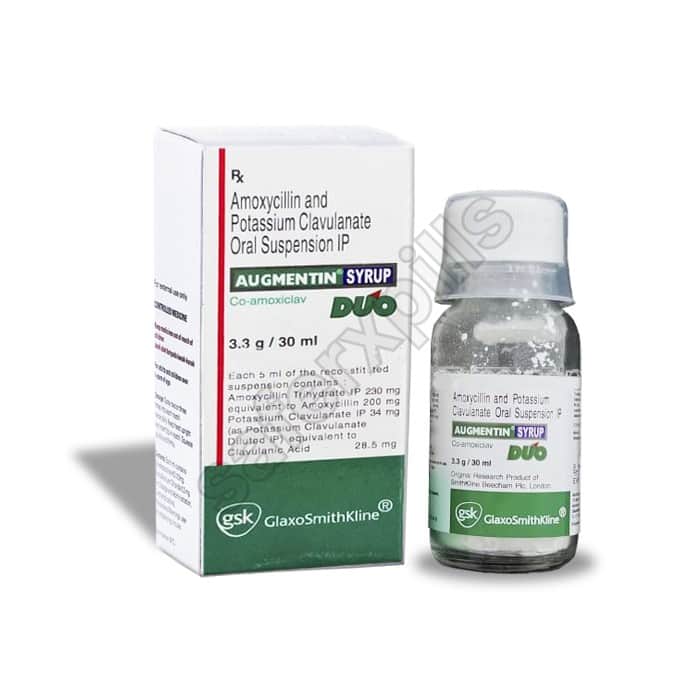

About Augmentin 625mg
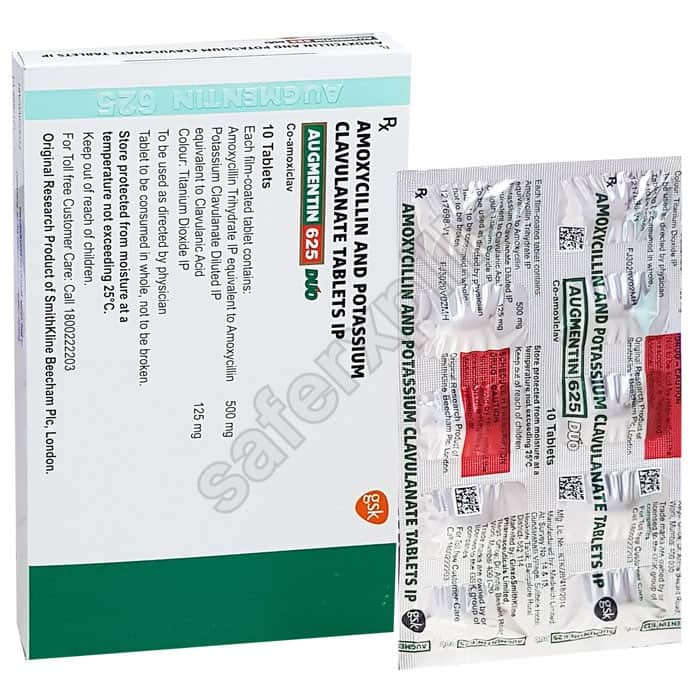
Augmentin 625mg is GSK India's Augmentin 625 Duo tablet. Each film-coated tablet contains amoxicillin 500 mg (as amoxicillin trihydrate) and clavulanic acid 125 mg (as potassium clavulanate), so the "625" is the two amounts added together. Amoxicillin is a penicillin antibiotic. Clavulanic acid blocks some of the beta-lactamase enzymes that bacteria use to break amoxicillin down, which widens the range of bacteria the tablet can treat. We sell it in packs of 30, 60 and 90 tablets, from $1.46 a tablet in the largest pack, before shipping.
Three things before you read further. First, this is a prescription antibiotic in every country we ship to, and it should be taken only for a bacterial infection a clinician has diagnosed, at the dose and for the number of days they set. It does not treat colds, flu or other viral infections. Second, our smallest pack of 30 tablets is more than a typical course, and a US pharmacy pays about $0.25 for a generic tablet of the same strength, so check the price and pack sections before you buy. Third, our delivery takes 7 to 14 business days, which is too slow for an infection you have now. This page uses GSK India's own prescribing information for Augmentin 625 and 1g Duo (version AUG-TAB/PI/IN/2025/01, revised 16 October 2025), the US Augmentin label (revised July 2026) and the UK Augmentin 625 mg label (revised February 2026), all listed at the end.
Augmentin 625mg at a glance
| Active ingredients | Amoxicillin 500 mg (as trihydrate) and clavulanic acid 125 mg (as potassium clavulanate) per film-coated tablet |
| Brand and maker | Augmentin 625 Duo, GlaxoSmithKline Pharmaceuticals Ltd, India. The strip names the manufacturing site; PharmEasy lists a Medreich Limited address |
| Drug class | Penicillin antibiotic with a beta-lactamase inhibitor. The World Health Organization places amoxicillin with clavulanic acid in its Access group |
| Regulatory status | Amoxicillin with clavulanic acid 500/125 mg tablets are licensed in the US, UK, Canada and Australia, but this Indian pack is not registered with the FDA, MHRA, TGA or Health Canada. It is a prescription medicine in all four countries and in India |
| Usual dose (Indian label) | Adults and children over 12: one tablet every 12 hours for mild to moderate infections, or one tablet every 8 hours for severe infections. The UK label gives one tablet three times a day |
| When to take it | At the start of a meal (Indian and US labels); with a meal (UK label) |
| Half-life | About 1.3 hours for amoxicillin and about 1 hour for clavulanic acid (US label) |
| Packs | 30, 60 and 90 tablets (sold in India in strips of 10) |
| Price per tablet | $2.00 (30 pack) down to $1.46 (90 pack), before shipping |
| Delivery | 7 to 14 business days to the US, UK, Australia and Canada; $25 shipping under $149, free from $149 |
Price per tablet
Prices below are as of October 2026; the pack selector shows the current price.
| Pack | Price | Per tablet | Shipping | Per tablet with shipping |
|---|---|---|---|---|
| 30 tablets | $60 | $2.00 | $25 | $2.83 |
| 60 tablets | $94 | $1.57 | $25 | $1.98 |
| 90 tablets | $131 | $1.46 | $25 | $1.73 |
The larger packs are cheaper per tablet before shipping as well as after it. All three packs are under $149, so each single pack pays $25 shipping.
How many tablets does a course need? Less than any of our packs, for most people. GSK India's label gives one tablet every 12 hours or every 8 hours depending on how severe the infection is, and says treatment "should not be extended beyond 14 days without review". The UK label says the same about 14 days and that the length of treatment "should be determined by the response of the patient". UK national guidance (NICE) uses co-amoxiclav 500/125 mg three times a day for 5 days for adults with acute sinusitis who are systemically very unwell or at high risk of complications, or whose symptoms worsen on the first choice antibiotic (phenoxymethylpenicillin), uses a 3 day course when antibiotics are given to prevent infection after a bite and a 5 day course for treating most infected bites (up to 7 days with review), and says to stop pneumonia treatment after 5 days in most cases. At the label doses, a 5 day course is 10 tablets (twice a day) or 15 tablets (three times a day), and a 7 day course is 14 or 21 tablets. Even the 14 day review point is 28 or 42 tablets. This is our arithmetic from the label doses. So our smallest pack of 30 holds two or more typical courses at the twice-daily dose, and the 90 pack holds many more than one person should need. Please do not keep leftover tablets to treat yourself or someone else next time: a new infection needs a new diagnosis, and the right antibiotic may be a different one. Ask a pharmacist how to dispose of unused tablets.
Compared with the brand and US generics
| Augmentin 625mg (our Indian pack) | Augmentin 500/125 mg (US) | Generic amoxicillin/clavulanate 500/125 mg (US) | |
|---|---|---|---|
| Contents per tablet | Amoxicillin 500 mg + clavulanic acid 125 mg | Amoxicillin 500 mg + clavulanic acid 125 mg | Amoxicillin 500 mg + clavulanic acid 125 mg |
| Maker | GlaxoSmithKline Pharmaceuticals Ltd, India | USAntibiotics, under licence from GSK | Several, for example Aurobindo, Sandoz and Teva |
| Status | Not registered with the FDA | FDA approved (Augmentin first approved in 1984), prescription only | FDA approved, prescription only |
| Cost per tablet | $1.46 to $2.00 before shipping | No NADAC row for brand tablets | $0.25 (NADAC) |
NADAC is the US National Average Drug Acquisition Cost: what US pharmacies pay for a medicine, not the cash price at the counter. The generic figure is $0.24905 per 500/125 mg tablet, the per-NDC rate effective 21 October 2026. Before shipping, ours costs about 6 to 8 times that (our arithmetic). If you are in the US and a doctor prescribes amoxicillin with clavulanate, a local generic is almost certainly cheaper and you can collect it without waiting for international delivery; compare US generic cash prices first. In Australia, the PBS dispensed price for a pack of 10 generic 500/125 mg tablets is A$17.40 (Augmentin Duo itself A$22.53), under a restriction for infections where amoxicillin resistance is suspected or proven.
Is the Indian tablet the same as US or UK Augmentin? It has the same two ingredients at the same strengths and the same GSK brand, but it is made in India for the Indian market, with its own excipient list and its own label. We have not found a published study comparing the Indian pack with the US or UK tablets.
Which strength to choose
| Product | Per tablet | How it fits the labels | Price per tablet (30 pack, before shipping) |
|---|---|---|---|
| Augmentin 375mg | Amoxicillin 250 mg + clavulanic acid 125 mg | US label: one tablet every 8 hours for mild to moderate infections. Two of these are not the same as one 625 tablet | $1.40 |
| Augmentin 625mg | Amoxicillin 500 mg + clavulanic acid 125 mg | Indian and US labels: one every 12 hours (mild to moderate) or every 8 hours (severe). UK label: three times a day. The Indian label uses this tablet, every 12 or 24 hours, in severe kidney impairment | $2.00 |
| Augmentin 1000 Duo | Amoxicillin 875 mg + clavulanic acid 125 mg (GSK India calls it Augmentin 1g Duo) | Indian and US labels: one every 12 hours for severe infections. Not for people with a creatinine clearance of 30 mL/min or less | $3.27 |
The US label says "Two AUGMENTIN 250 mg/125 mg Tablets are not substitutable with one AUGMENTIN 500 mg/125 mg Tablet", because both tablets contain the same 125 mg of clavulanic acid, so two of the smaller tablets give twice the clavulanic acid. Our amoxicillin and clavulanate dosage guide explains the ratios. The 625 tablet is not for young children: GSK India says its 625 and 1g Duo tablets "are not recommended in children of 12 years and under", the US label says tablets are only for children weighing 40 kg or more, and the UK label says children under 25 kg must not be treated with Augmentin tablets. A child's antibiotic and dose should be set by their doctor, usually as a liquid (GSK India's children's form is Augmentin Duo suspension).
How to take Augmentin 625mg
- Take it only as prescribed. The Indian label says the dose "depends on the age and renal function of the patient and the severity of the infection".
- Take each dose at the start of a meal. GSK India says absorption "is optimized when taken at the start of a meal" and that this reduces stomach upset. The US label says absorption of clavulanate is enhanced at the start of a meal.
- Swallow the tablet whole. The Indian label says "Tablets to be consumed in whole, not to be broken."
- Space the doses evenly: every 12 hours, or every 8 hours if your prescriber chose the higher dose.
- Finish the course you were prescribed, even if you feel better early. The US label says patients should be told that "Skipping doses or not completing the full course of therapy may: (1) decrease the effectiveness of the immediate treatment, and (2) increase the likelihood that bacteria will develop resistance".
- If you are not getting better after 2 or 3 days, or you are getting worse, see a doctor (our advice). Do not add another antibiotic you have at home.
Lower doses and extra care for some groups
- Kidney problems. No dose change is needed when creatinine clearance is above 30 mL/min (Indian and UK labels). Below that, GSK India gives one 625 tablet every 12 hours at a creatinine clearance of 10 to 30 mL/min, one tablet every 24 hours below 10 mL/min, and for haemodialysis one tablet every 24 hours plus a further tablet during dialysis, repeated at the end of dialysis. The US label gives the same 500 mg every 12 or 24 hours and says patients with a GFR below 30 mL/min "should not receive the 875 mg/125 mg dose". So in severe kidney impairment the 625 every 8 hours dose is not a label dose, and Augmentin 1000 Duo is not suitable.
- Liver problems. GSK India says "Administer with caution; monitor hepatic function at regular intervals." The UK label says it should be used with caution in people with evidence of liver impairment. The US label says to "Monitor hepatic function as appropriate during therapy".
- Older people. The UK label says no dose adjustment is considered necessary, but liver reactions have been reported mainly in men and older people (see side effects), and the US label says older people are more likely to have reduced kidney function.
- Pregnancy. GSK India says "As with all medicines, use should be avoided in pregnancy, unless considered essential by the physician." Both the Indian and US labels describe one study in women whose waters broke early (preterm prelabour rupture of membranes), in which preventive amoxicillin with clavulanate was linked to more necrotising enterocolitis, a serious bowel condition, in the newborn babies: 1.9% against 0.5% with placebo (US label). The US label also says decades of data have not established a drug-associated risk of major birth defects or miscarriage.
- Breastfeeding. GSK India says it may be given while breastfeeding, apart from the risk of sensitising the baby. The US label says there are reports of diarrhoea, irritability and rash in breastfed babies, who should be monitored for these. The UK label says diarrhoea and fungal infection of the mucous membranes are possible in the breastfed baby, "so that breast-feeding might have to be discontinued", and that it "should only be used during breast-feeding after benefit/risk assessment by the physician in charge."
- Long courses. The UK label advises periodic checks of kidney, liver and blood function during prolonged therapy.
Side effects
The US label's tablet trials found diarrhoea or loose stools in 9% of patients, nausea in 3%, skin rash and hives in 3%, vomiting in 1% and vaginitis in 1%; fewer than 3% stopped because of side effects, and side effects, particularly diarrhoea, increased with higher doses. In two trials comparing the 875 mg tablet every 12 hours with the 500/125 mg tablet every 8 hours, diarrhoea was reported in 15% and 14% of patients. GSK India's label groups side effects by how often they occur:
| How often (Indian label, adults) | Side effects |
|---|---|
| Very common (more than 1 in 10) | Diarrhoea |
| Common (1 in 100 to 1 in 10) | Nausea, vomiting, thrush (mucocutaneous candidiasis) |
| Uncommon (1 in 1,000 to 1 in 100) | Dizziness, headache, indigestion, a moderate rise in liver enzymes (AST and/or ALT), skin rash, itching, hives |
| Rare (1 in 10,000 to 1 in 1,000) | Reversible low white cell count (including neutropenia) and low platelet count; erythema multiforme |
| Very rare (less than 1 in 10,000) | Agranulocytosis and haemolytic anaemia; longer bleeding and prothrombin times; anaphylaxis, angioneurotic oedema, serum sickness-like syndrome, hypersensitivity vasculitis, haemophagocytic lymphohistiocytosis; reversible hyperactivity, aseptic meningitis, convulsions; Kounis syndrome; antibiotic-associated colitis and drug-induced enterocolitis syndrome; black hairy tongue; hepatitis and cholestatic jaundice; Stevens-Johnson syndrome, toxic epidermal necrolysis, bullous exfoliative dermatitis, AGEP, DRESS, SDRIFE and linear IgA disease; interstitial nephritis and crystalluria |
GSK India says the very rare frequencies were mainly determined from post-marketing data and "refer to a reporting rate rather than a true frequency". The UK label also lists acute pancreatitis, with a frequency it cannot estimate.
The liver. The US label says liver problems, including hepatitis and cholestatic jaundice, have been associated with Augmentin: "Hepatotoxicity is usually reversible; however, deaths have been reported. These cases have generally been associated with serious underlying diseases or concomitant medications." It says liver problems have been reported more often in older people, in men and in people on prolonged treatment, and may start during treatment or several weeks after it ends. The UK and Indian labels say hepatic events have been reported "predominantly in males and elderly patients and may be associated with prolonged treatment", and that the rare deaths "have almost always occurred in patients with serious underlying disease or taking concomitant medications known to have the potential for hepatic effects". GSK India adds that signs of cholestatic jaundice "may not become apparent for up to six weeks after treatment has ceased."
Diarrhoea and C. difficile. The US label says Clostridioides difficile diarrhoea has been reported with nearly all antibiotics, including Augmentin, and "may range in severity from mild diarrhea to fatal colitis"; it has been reported more than two months after a course. GSK India says that if diarrhoea is prolonged or significant, or comes with stomach cramps, "treatment should be discontinued immediately and the patient investigated further". The UK label says medicines that slow the gut (anti-peristaltic medicines) are contraindicated in this situation, so do not take an anti-diarrhoea medicine for it without medical advice.
Rash with glandular fever. The US label says "A high percentage of patients with mononucleosis who receive amoxicillin develop an erythematous skin rash" and to avoid Augmentin in these patients.
When to get urgent help
Stop taking Augmentin and get medical help straight away if you have:
- Swelling of the face, lips, tongue or throat, trouble breathing or swallowing, wheezing, fainting, hives, or chest pain together with any allergy signs. The labels say serious and occasionally fatal allergic reactions have been reported with penicillin and other beta-lactam antibiotics, and GSK India says "Serious anaphylactic reactions require immediate emergency treatment with adrenaline." The Indian and UK labels add that an allergic reaction can progress to Kounis syndrome, which can cause a heart attack. Call emergency services (911 in the US and Canada, 999 in the UK, 000 in Australia).
- Blistering, peeling or purple patches on the skin, sores in the mouth, eyes or genitals, or a feverish red rash with small pustules early in treatment. The US label tells patients to stop the medicine immediately and promptly report the first signs of a skin rash, mucosal lesions or any other sign of hypersensitivity. The UK label says the pustular rash (AGEP) "requires Augmentin discontinuation and contraindicates any subsequent administration of amoxicillin."
- Watery or bloody diarrhoea, with or without stomach cramps and fever, during the course or up to 2 months or more afterwards (US label). The US label also says to call your doctor if diarrhoea is severe or lasts more than 2 or 3 days.
- Yellow skin or eyes, dark urine or pale stools, even weeks after you finish. These can be signs of the liver reactions described above.
- Repeated, prolonged vomiting starting 1 to 4 hours after a dose, with no rash or breathing symptoms, especially in a child. The labels describe this as drug-induced enterocolitis syndrome, which can lead to shock.
- Fever with a rash, swollen glands and feeling very unwell. The Indian and UK labels say these can be signs of haemophagocytic lymphohistiocytosis, an immune reaction that "can be life threatening", and that patients should be evaluated immediately.
- Severe pain in the stomach or back that does not go away (the NHS lists this as a sign of acute pancreatitis), unusual bruising or bleeding, or a fit (seizure).
- Signs that the infection is getting worse: high fever, spreading redness or swelling, confusion, or feeling very unwell (our advice).
If someone has taken too many tablets, tell the emergency staff that they took amoxicillin with clavulanic acid, how much and when. The US label says overdose mainly causes stomach symptoms but has caused crystals in the urine and kidney failure, and lists the US Poison Help line, 1-800-222-1222.
Who should not take Augmentin 625mg
Never take it if:
- you are allergic to penicillin or amoxicillin, or have had an allergic reaction to a cephalosporin or another beta-lactam antibiotic. The three labels word this differently. GSK India says Augmentin is contraindicated "in patients with a history of hypersensitivity to beta-lactams, e.g. penicillins and cephalosporins." The US label says it is contraindicated after "serious hypersensitivity reactions (e.g., anaphylaxis or Stevens-Johnson syndrome) to amoxicillin, clavulanate or to other beta-lactam antibacterial drugs (e.g., penicillins and cephalosporins)." The UK label contraindicates it after hypersensitivity to either ingredient, to any of the penicillins or to the excipients, and after a "severe immediate hypersensitivity reaction (e.g. anaphylaxis) to another beta-lactam agent (e.g. a cephalosporin, carbapenem or monobactam)". All three labels say a prescriber should ask about previous reactions before starting: to penicillins, cephalosporins or other allergens (US and Indian labels), or to penicillins, cephalosporins or other beta-lactam agents (UK label). If you have ever reacted to an antibiotic, tell the prescriber what happened.
- you have had jaundice or liver problems with amoxicillin and clavulanate before. The US label: contraindicated in patients with "a previous history of cholestatic jaundice/hepatic dysfunction associated with treatment with amoxicillin/clavulanate potassium". The UK label: "History of jaundice/hepatic impairment due to amoxicillin/clavulanic acid". The Indian label says the same.
- you have had acute generalised exanthematous pustulosis (AGEP) with amoxicillin: the UK label says it "contraindicates any subsequent administration of amoxicillin".
Avoid it:
- if you have, or may have, glandular fever (infectious mononucleosis): the US label says "Avoid AUGMENTIN use in patients with mononucleosis"; the Indian and UK labels say it "should be avoided if infectious mononucleosis is suspected".
- with probenecid: all three labels say using them together "is not recommended".
- for children of 12 and under, in the 625 tablet form (Indian label; see the strength section for the US and UK wording).
Talk to a doctor first if:
- you have liver or kidney problems (see above)
- you have many allergies: the US label says serious reactions are more likely in people with "a history of sensitivity to multiple allergens", and the UK label says in atopic people
- you are pregnant or breastfeeding (see above)
- you take any of the medicines in the next section
Medicines that interact
- Warfarin and acenocoumarol (blood thinners): the US label says abnormal prolongation of prothrombin time (increased INR) has been reported, that "Appropriate monitoring should be undertaken", and that the anticoagulant dose may need adjusting. The UK label says the INR should be carefully monitored when amoxicillin is added or withdrawn.
- Methotrexate: the Indian and UK labels say "Penicillins may reduce the excretion of methotrexate causing a potential increase in toxicity." The US label does not list it; tell your prescriber either way.
- Allopurinol (for gout): the US label says the combination "increases substantially the incidence of rashes" and tells prescribers to stop allopurinol at the first appearance of a skin rash. If you take allopurinol and a rash appears, contact your doctor rather than stopping either medicine on your own (our advice). The Indian and UK labels say allopurinol with amoxicillin "can increase the likelihood of allergic skin reactions".
- Probenecid: not recommended (all three labels). It raises and prolongs amoxicillin blood levels.
- Mycophenolate mofetil (after transplants): the Indian and UK labels report a fall of about 50% in the pre-dose level of its active form; the UK label advises close clinical monitoring during and shortly after the antibiotic.
- Combined contraceptive pills: GSK India's label says Augmentin "may affect the gut flora, leading to lower oestrogen reabsorption and reduced efficacy of combined oral contraceptives". One US generic label (USAntibiotics amoxicillin and clavulanate potassium, revised 05/2024, section 7.4) says the same. The current US Augmentin label (revised 7/2026), the Aurobindo generic label (revised 09/2026) and the UK label do not list this interaction. Ask your prescriber whether you need extra precautions, and check your pill's own leaflet about vomiting and diarrhoea.
- Tests: amoxicillin can give false positive urine glucose results with non-enzyme tests such as Clinitest (US and UK labels). The UK label adds a possible false positive Coombs test and false positive results with one Aspergillus blood test. Tell the person doing the test that you take this antibiotic.
Tell your doctor or pharmacist about every medicine and supplement you take before you start.
Using an antibiotic responsibly
The World Health Organization's 2025 AWaRe classification puts amoxicillin with clavulanic acid in its Access group, which WHO describes as antibiotics "recommended as essential first or second choice empiric treatment options" for the infections its expert committee reviewed. That is about being a sensible first choice for a diagnosed infection, not about using it without a prescription. The US label says it "should be used only to treat or prevent infections that are proven or strongly suspected to be caused by susceptible bacteria", and that when tests show the bacteria respond to amoxicillin alone, the combination "should not be used". The UK label says that in that case consideration should be given to switching to amoxicillin.
In practice this means: do not start Augmentin on your own for a sore throat, cough, cold or tooth pain; see a doctor or dentist, who may find you need no antibiotic, or a different one. Do not keep leftovers or pass them on. Our antibiotic resistance guide explains why unneeded courses matter beyond one person. One more check: WHO lists fixed combinations of amoxicillin and clavulanic acid with lactic acid bacteria (lactobacillus) or with nimesulide as "Not recommended". Augmentin 625 Duo contains only amoxicillin and clavulanic acid, so read the strip to be sure that is what you received.
Prescription and legal status
GSK India's prescribing information is headed "For the use only of Registered Medical Practitioners or a Hospital or a Laboratory", and Tata 1mg, Truemeds and Medkart mark Augmentin 625 Duo as prescription only. We did not check its Indian drug schedule.
- US: Augmentin tablets (first approved in 1984, now marketed by USAntibiotics under licence from GSK) and generic amoxicillin/clavulanate tablets are prescription only. The FDA says personal importation of medicines not approved in the US is illegal in most circumstances.
- UK: Augmentin 625 mg Tablets are licensed (PL 00038/0362). The NHS co-amoxiclav page says: "It's only available with a prescription."
- Canada: GSK's Clavulin 500 F tablets were cancelled post market in January 2024; generic 500/125 mg tablets such as Sandoz Amoxi-Clav (DIN 02482576) are marketed as prescription medicines.
- Australia: Augmentin Duo 500/125 is a Schedule 4 prescription-only medicine and is on the PBS (restricted to infections where amoxicillin resistance is suspected or proven).
Check the rules where you live.
Buying genuine Augmentin
The MHRA warns: "Any medicine not authorised for sale in the UK can be unsafe or ineffective and there is no way of knowing what is in them or the negative health effects they can have." That warning covers this Indian pack, which is not authorised in the UK. The MHRA advises UK buyers to "Only use UK-registered pharmacies, including online pharmacies displaying the official green cross logo". When your order arrives, read the strip: it should say Augmentin 625 Duo, amoxycillin 500 mg with clavulanic acid 125 mg and GlaxoSmithKline, and show a batch number, expiry date, manufacturing site and licence number (GSK India's label says the last two are on the pack). GSK India's label lists aluminium strips and says to store them "protected from moisture at a temperature not exceeding 25°C". These checks cannot prove that tablets are genuine, because counterfeiters copy packaging. If a batch causes unusual symptoms, seek medical advice and report it to your medicines regulator (the MHRA Yellow Card scheme in the UK, FDA MedWatch in the US, the TGA in Australia or Health Canada) as well as to us.
Delivery
We ship Augmentin 625mg to the US, UK, Australia and Canada in plain packaging with tracking. Standard delivery takes 7 to 14 business days to most countries. Shipping costs a flat $25 on orders under $149 and is free from $149. An infection cannot wait two weeks for tablets to arrive, so if you have symptoms now, see a doctor or pharmacist locally. See our shipping page and refund policy.
Related guides
- Amoxicillin and clavulanate dosage: why two 250 mg tablets are not one 500 mg
- Antibiotic resistance: when antibiotics do not work and what you can do
- Nitrofurantoin for UTI: dosing, and why it fails above the bladder
Other strengths and forms: Augmentin 375mg, Augmentin 1000 Duo, Augmentin Duo suspension. Amoxicillin alone: Cipmox 500mg.
Sources
- GlaxoSmithKline Pharmaceuticals Ltd, India. AUGMENTIN 625 / 1g DUO prescribing information, version AUG-TAB/PI/IN/2025/01, date of revision 16 October 2025: sections 2, 4.1 to 4.9, 8.3, 8.4, 10, 11. GSK India PDF
- AUGMENTIN (amoxicillin/clavulanate potassium) US prescribing information, USAntibiotics, NDA 050564, revised 7/2026: sections 1.8, 1.9, 2.2, 2.6, 2.8, 4, 5.1 to 5.6, 6.1, 6.2, 7, 8.1, 8.2, 8.5, 8.6, 10, 12.3, 17. FDA label PDF
- Amoxicillin and clavulanate potassium tablets, Aurobindo, US label revised 09/2026 (DailyMed setid ffb158a1-83ba-4100-9221-175aa986dc3e, version 24): cross-check of the US wording. DailyMed
- Amoxicillin and clavulanate potassium tablets, USAntibiotics, US label revised 05/2024 (DailyMed setid c4a6deb5-0bcd-4fa3-b19b-a82fa1dd14f3): section 7.4. DailyMed
- Augmentin 625 mg Tablets, UK summary of product characteristics, PL 00038/0362, date of revision 24 February 2026 (last updated on emc 11 March 2026): sections 3, 4.2 to 4.6, 4.8, 6.4. emc
- World Health Organization. The selection and use of essential medicines, 2025: WHO AWaRe (Access, Watch, Reserve) classification of antibiotics for evaluation and monitoring of use, 5 September 2025. WHO
- NICE NG79, Sinusitis (acute): antimicrobial prescribing; NICE NG184, Human and animal bites: antimicrobial prescribing; NICE NG138, Pneumonia (community-acquired): antimicrobial prescribing; recommendations checked 21 October 2026. NICE NG79
- NHS. Co-amoxiclav, page last reviewed 14 April 2026. NHS
- Medicaid NADAC (National Average Drug Acquisition Cost), per-NDC rows for amoxicillin/clavulanate 500/125 mg tablets, effective 21 October 2026. data.medicaid.gov
- Health Canada Drug Product Database, Clavulin and Sandoz Amoxi-Clav products, searched 21 October 2026. Health Canada
- healthdirect Australia, Augmentin Duo 500/125 (sources updated 1 October 2026); PBS item 1891M. healthdirect, PBS
- Tata 1mg, Truemeds, Medkart and PharmEasy listings for Augmentin 625 Duo tablet, checked 21 October 2026.
- MHRA. 20 million illegal erectile dysfunction pills seized as MHRA warns against risky online buys, 13 February 2026. GOV.UK
- US Food and Drug Administration. Personal Importation. FDA
This page is for information and is not medical advice. Amoxicillin with clavulanic acid is a prescription antibiotic in India, the US, the UK, Canada and Australia. Take it only for an infection a clinician has diagnosed, and do not start, stop or change an antibiotic course without a clinician's advice.
Frequently asked questions
What is Augmentin 625mg?
It is GSK India's Augmentin 625 Duo tablet: amoxicillin 500 mg with clavulanic acid 125 mg in one film-coated tablet, so 625 is the two amounts added together. Amoxicillin is a penicillin antibiotic, and clavulanic acid blocks some of the enzymes bacteria use to break amoxicillin down. It treats bacterial infections only, not colds or flu, and it is a prescription medicine in India, the US, the UK, Canada and Australia.
Is it the same as US or UK Augmentin?
It has the same two ingredients at the same strengths under the same GSK brand, but it is made in India for the Indian market, with its own excipients and label. We have not found a published study comparing it with the US or UK tablets. Amoxicillin with clavulanic acid 500/125 mg is licensed in the US, UK, Canada and Australia, but this Indian pack is not registered with the FDA, MHRA, TGA or Health Canada.
What does Augmentin 625mg cost per tablet?
As of October 2026 it costs $2.00 a tablet in the 30 pack, $1.57 in the 60 pack and $1.46 in the 90 pack, before shipping. Shipping is $25 under $149, so a single pack works out at $2.83, $1.98 or $1.73 a tablet with shipping. US pharmacies pay about $0.25 for a generic 500/125 mg tablet (NADAC, 21 October 2026), so a US generic with a prescription is far cheaper. The pack selector shows the current price.
How do I take Augmentin 625mg?
Only as a clinician prescribes. GSK India's label gives adults and children over 12 one tablet every 12 hours for mild to moderate infections or every 8 hours for severe infections; the UK label gives one tablet three times a day. Take each dose at the start of a meal, swallow the tablet whole, space doses evenly and finish the course you were prescribed.
How many tablets does a course need?
At the label doses, a 5 day course is 10 tablets (twice a day) or 15 (three times a day), and a 7 day course is 14 or 21; this is our arithmetic. UK NICE guidance uses 5 days for acute sinusitis and for treating most infected bites, and 3 days to prevent infection after a bite. The Indian and UK labels say treatment should not be extended beyond 14 days without review. Our smallest pack of 30 is therefore more than a typical course; do not keep leftovers to treat yourself next time.
Should I choose Augmentin 375, 625 or 1000 Duo?
That is your prescriber's choice. Augmentin 375 holds 250 mg amoxicillin and 125 mg clavulanic acid, and two of them are not the same as one 625 tablet because they double the clavulanic acid. Augmentin 1000 Duo holds 875 mg amoxicillin and is used every 12 hours for severe infections, but not when creatinine clearance is 30 mL/min or less. The 625 tablet is not recommended for children of 12 and under (Indian label).
Can I take it if I am allergic to penicillin?
No. GSK India's label contraindicates it after any allergy to beta-lactams such as penicillins and cephalosporins, and the UK label after allergy to any penicillin or a severe immediate reaction such as anaphylaxis to a cephalosporin, carbapenem or monobactam. The US label contraindicates it after a serious reaction, such as anaphylaxis or Stevens-Johnson syndrome, to amoxicillin, clavulanate or another beta-lactam. If you have ever reacted to an antibiotic, tell the prescriber what happened.
What are the side effects, and what about the liver?
Diarrhoea is very common, and nausea, vomiting and thrush are common (Indian label); in US trials 9% had diarrhoea or loose stools. Liver reactions, including hepatitis and cholestatic jaundice, are reported mainly in men, older people and on long courses, can start weeks after the course ends, and in extremely rare cases have been fatal, almost always in people with serious underlying disease or taking other medicines that can affect the liver (UK and Indian labels). Get help for yellow skin or eyes, bloody diarrhoea or any allergy signs.
Who should not take Augmentin 625mg?
Never take it if you are allergic to penicillin or have reacted to a cephalosporin or other beta-lactam (see the label wording on this page), or if you had jaundice or liver problems with amoxicillin and clavulanate before. The labels say to avoid it if glandular fever is suspected, and not to combine it with probenecid. Kidney or liver problems, pregnancy, breastfeeding, warfarin, methotrexate, allopurinol and mycophenolate need a doctor's advice first.
Do I need a prescription?
Yes, in practice. It is prescription only in the US, the UK (the NHS says co-amoxiclav is only available with a prescription), Canada and Australia (Schedule 4), and Indian pharmacy listings mark Augmentin 625 Duo as prescription only. The FDA says personal importation of unapproved medicines is illegal in most circumstances. Please use it only for an infection a clinician has diagnosed.
How long does delivery take?
Standard delivery to the US, UK, Australia and Canada takes 7 to 14 business days, in plain packaging with tracking. Shipping is $25 on orders under $149 and free from $149. An infection cannot wait two weeks, so if you have symptoms now, see a doctor or pharmacist locally rather than waiting for an order.
Medical References
Sources: U.S. National Library of Medicine (DailyMed, PubMed), openFDA
Related articles
Amoxicillin and Clavulanate Dosage: Why Two 250 mg Tablets Are Not One 500 mg
A 625 mg co-amoxiclav tablet is 500 mg amoxicillin plus 125 mg clavulanate, and every common strength carries the same 125 mg of clavulanate. That is why two 375 mg tablets are not one 750 mg dose, and why the label forbids certain substitutions.
Read article
Brand vs Generic Drug Prices: What US Pharmacies Pay for Viagra, Cialis, Latisse and More (NADAC, October 2026)
CMS NADAC data for the week of 28 October 2026 shows what US pharmacies pay for brand and generic versions of Viagra, Cialis, Propecia, Latisse, Lumigan and Stromectol. Generic ED and hair loss tablets cost under 2% of the brand price, while eye and lash generics cost 42% to 65%. Includes 2026 trends, supplier counts and the full method.
Read article
Buy Amaryl (Glimepiride) Online: Dosing, Hypoglycaemia Risk and What to Verify First
Amaryl is brand name glimepiride, a sulfonylurea that lowers blood sugar effectively and cheaply but carries real hypoglycaemia risk. Dosing, the CAROLINA trial evidence, interactions, and what to verify before ordering online.
Read articleCustomer Reviews
No reviews yet. Bought Augmentin 625mg? Tell other buyers how it went.