
Fucibet Cream
Generic: Fusidic Acid/Betamethasoneby Sun Pharmaceutical Industries Ltd
Select pack size
Similar medicines
View all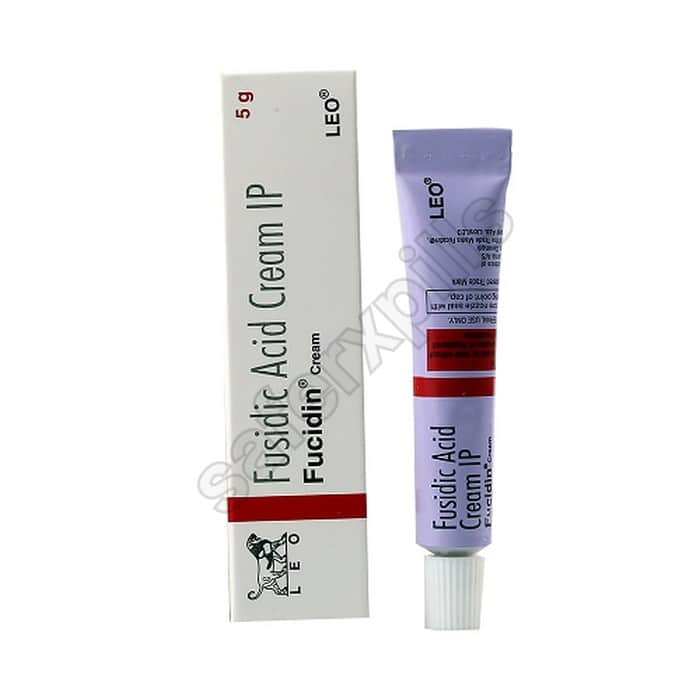
About Fucibet Cream
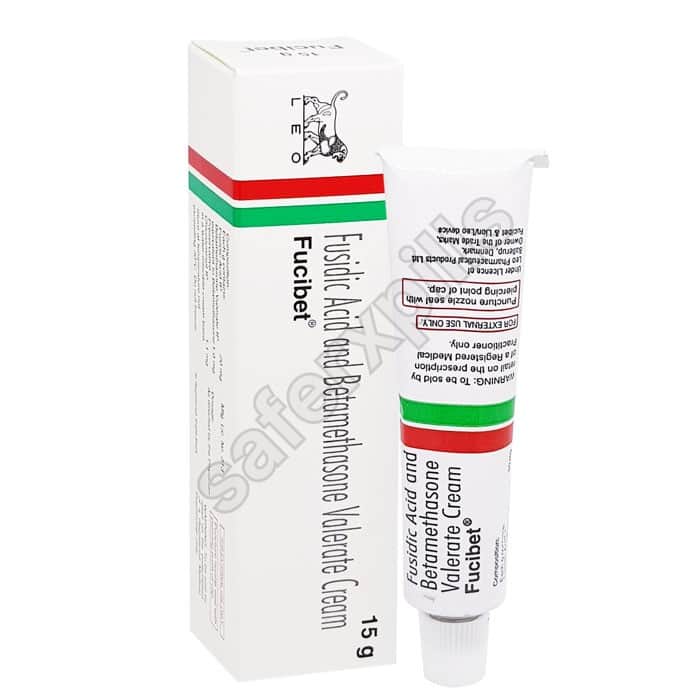
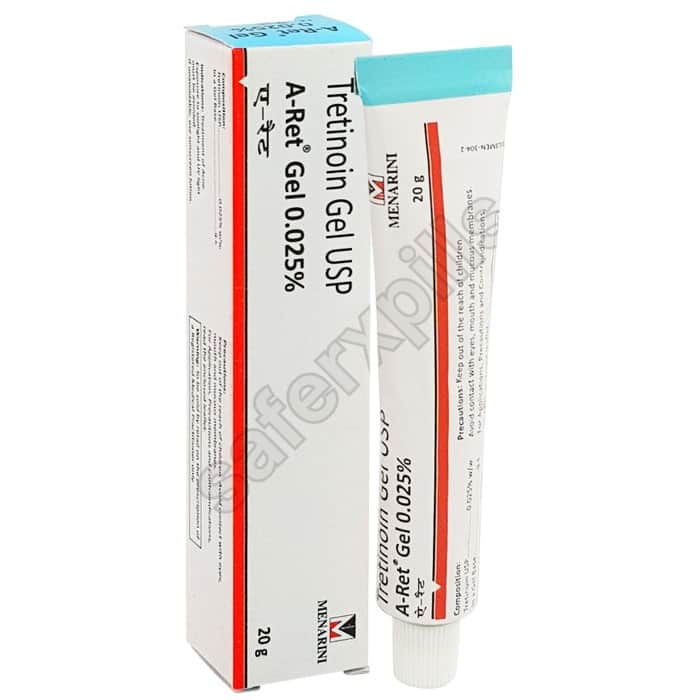
Fucibet Cream combines two medicines in one 15 g tube: fusidic acid 2%, an antibiotic, and betamethasone 0.1% as the valerate ester, a potent steroid. It is licensed for eczema that has a confirmed or suspected bacterial infection on top, and the UK label says a single course "should not normally exceed 2 weeks". Fucibet is LEO Pharma's brand. The tube we sell is the Indian pack: Tata 1mg, Apollo Pharmacy, Netmeds and Medkart list it as marketed by Sun Pharmaceutical Industries Ltd (PharmEasy lists "Ranbaxy Laboratories (Sun Pharma)"), and the tube in our product photo reads "Fusidic Acid and Betamethasone Valerate Cream", "15 g" and "Under Licence of Leo Pharmaceutical Products Ltd, Ballerup, Denmark". We sell packs of 3, 6 and 12 tubes, from $5.10 a tube before shipping.
Please read this before you order. Fucibet is a prescription medicine in the UK, Canada and India, and fusidic acid is not approved by the FDA, so this combination is not approved in the US. It is not a cream for every rash. It is not for skin infections without eczema (such as impetigo on its own, boils or spots), for ringworm or other fungal rashes, for cold sores, acne or rosacea, or for skin lightening. NICE in the UK says most people with infected eczema who are not unwell do not routinely need any antibiotic, cream or tablet, because the evidence shows limited benefit over a steroid alone. Our delivery takes 7 to 14 business days, which is most of a 2 week course. In our view, eczema that looks infected now should be seen by a pharmacist or doctor locally, and nobody should keep tubes at home to restart treatment on their own.
Fucibet Cream at a glance
| Active ingredients | Fusidic acid 2% w/w (20 mg per gram), an antibiotic, and betamethasone 0.1% w/w (1 mg per gram) as betamethasone valerate, a potent steroid (Tata 1mg: "Betamethasone (0.1% w/w)+ Fusidic Acid (2% w/w)"; tube in our product photo: "Fusidic Acid and Betamethasone Valerate Cream"; UK label section 2) |
| Brand and maker | Fucibet, LEO Pharma's brand. Indian marketer: Sun Pharmaceutical Industries Ltd (Tata 1mg, Apollo, Netmeds, Medkart); "Ranbaxy Laboratories (Sun Pharma)" with a Sun Pharma Laboratories Ltd address in Ponda, Goa (PharmEasy). Our product photo shows LEO branding and the line "Under Licence of Leo Pharmaceutical Products Ltd, Ballerup, Denmark". |
| Used for | UK label 4.1: eczematous dermatoses, including atopic, infantile, discoid, stasis, contact and seborrhoeic eczema, "when secondary bacterial infection is confirmed or suspected" |
| Regulatory status | Not approved by the FDA: fusidic acid has no FDA approval, alone or in combination. Fucibet cream is licensed in the UK (PL 00043/0091) and Canada (DIN 02474883). We found no fusidic acid with betamethasone product on healthdirect; we could not search the ARTG directly in Australia. This Indian tube is not registered with the MHRA, TGA or Health Canada. |
| Usual use | A small amount on the affected area twice daily until a satisfactory response; a single course "should not normally exceed 2 weeks" (UK label 4.2). Canadian label: twice daily, a course "should not exceed 2 weeks". |
| If it is not working | UK leaflet: "If there is no improvement after 7 days, you should stop using the cream and go back to your doctor." |
| Prescription | Prescription only in the UK (POM) and Canada. In India the tube in our photo says "To be sold by retail on the prescription of a Registered Medical Practitioner only", and Tata 1mg, Apollo and Medkart mark it prescription required. |
| Tube size | 15 g (our product photo and all five Indian listings checked) |
| Packs | 3, 6 and 12 tubes |
| Price per tube | $5.42 (3 tubes) down to $5.10 (12 tubes), before shipping |
| Storage | Below 30 °C (Tata 1mg); 15 to 25 °C (Apollo). UK label: do not store above 30 °C, and use within 3 months of first opening. It does not need a fridge. |
| Delivery | 7 to 14 business days to the US, UK, Australia and Canada; $25 shipping under $149, free from $149 |
Fucibet Cream price per tube and per gram
Prices below are as of November 2026; the pack selector shows the current price.
| Pack | Price | Per tube | Per gram | Shipping | Per tube with shipping |
|---|---|---|---|---|---|
| 3 tubes (45 g) | $16.25 | $5.42 | $0.36 | $25 | $13.75 |
| 6 tubes (90 g) | $31.25 | $5.21 | $0.35 | $25 | $9.38 |
| 12 tubes (180 g) | $61.25 | $5.10 | $0.34 | $25 | $7.19 |
All three packs are under the $149 free shipping threshold, so every order pays $25 shipping, which is more than the cream itself in the 3 pack. Per gram with shipping, the packs cost $0.92, $0.63 and $0.48 (our arithmetic, assuming 15 g tubes). In India the listed maximum retail price of one 15 g tube is Rs 97.50 (Tata 1mg, Medkart) or Rs 107 (PharmEasy, Apollo).
Even our smallest pack holds more cream than most single courses need (see the next section). Please do not order a larger pack to keep for later flare ups: both the UK and Canadian labels limit a course to 2 weeks because longer or repeated use raises the risk of antibiotic resistance and steroid side effects.
How long a 15 g tube lasts
Neither the UK nor the Canadian label gives a dose in grams. The UK leaflet measures Fucibet in fingertip units: a line of cream squeezed along an adult index finger from the tip to the first joint. Guy's and St Thomas' NHS guidance puts one adult fingertip unit at about 0.5 g, enough to cover an area about the size of two adult hands laid flat. Using those figures and the label's twice daily use, one 15 g tube lasts roughly as follows. These are our estimates, not label figures.
| Area treated (adult) | Fingertip units per application | Cream a day (twice daily) | One 15 g tube lasts about | Cream for a full 2 week course |
|---|---|---|---|---|
| A patch the size of two hands | 1 | 1 g | 15 days | 14 g, about one tube |
| One hand, front and back | 1 | 1 g | 15 days | 14 g, about one tube |
| One arm and hand | 4 | 4 g | 3 to 4 days | 56 g, about four tubes |
| One leg and foot | 8 | 8 g | under 2 days | 112 g, about seven or eight tubes |
Two things follow, in our view. First, for the localised patch of infected eczema that a topical antibiotic is meant for, one tube is about one full course; NICE says a topical antibiotic is for localised infections only, and that an oral antibiotic may be more appropriate if the infection is widespread or severe. Second, if you find yourself needing many tubes for a large area, that is a reason to see a doctor, not to buy more cream: large areas of a potent steroid raise the risk of adrenal suppression, and the UK label warns of Cushing's syndrome and adrenal insufficiency when topical steroids are used "in large amounts and for more than three weeks" (section 4.9).
Compared with what you can get locally
| Where | What is available | Cost |
|---|---|---|
| US | No FDA approved fusidic acid product, so there is no US version of Fucibet and no NADAC row for it. US prescribers use separate products: generic betamethasone valerate 0.1% cream (prescription) is FDA approved, and in our view the closest US prescription topical antibiotic is mupirocin 2%, a different molecule whose US labels cover impetigo (ointment) and "secondarily infected traumatic skin lesions" (cream), not infected eczema as such. | NADAC, effective 21 October 2026: betamethasone valerate 0.1% cream $0.43372 a gram (15 g tube, about $6.51) and $0.35266 a gram (45 g tube, about $15.87); mupirocin 2% cream $0.81383 to $0.89073 a gram. These are pharmacy acquisition costs, not shelf prices. |
| UK | Fucibet Cream, LEO Laboratories, PL 00043/0091, prescription only medicine; the NHS dictionary of medicines lists 30 g and 60 g LEO packs | Not checked |
| Canada | Fucibet (LEO Pharma, DIN 02474883), marketed since October 2018, prescription, in 15 g and 30 g tubes. The Canadian label lists different inactive ingredients from the UK cream, and its trial section names Fucibet as the lipid cream form. | Not checked |
| Australia | We found no fusidic acid with betamethasone product on healthdirect, where the only fusidate product listed is Fucidin; we could not search the ARTG directly. Fusidic acid and betamethasone are both Schedule 4 (prescription only) in the Poisons Standard October 2026. | Ask an Australian doctor about locally available treatment |
| SafeRxPills | Indian Fucibet Cream, 15 g tubes | $0.34 to $0.36 a gram before shipping; $0.48 to $0.92 a gram with shipping |
Per gram before shipping, our tubes cost about the same as a US pharmacy pays for generic betamethasone valerate cream alone, and less than it pays for mupirocin cream; with shipping, all three packs cost more per gram than the betamethasone valerate NADAC rate; the 6 and 12 packs ($0.63 and $0.48) cost less per gram than the mupirocin cream rate, and the 3 pack ($0.92) more. Keep in mind that NADAC is not what you pay at the counter. In the UK and Canada, a prescription for licensed Fucibet will reach you faster than our 7 to 14 business days. We have not found a published study comparing the Indian tube with the UK or Canadian product.
Does infected eczema need an antibiotic cream?
Often not, according to UK guidance and the best review of the evidence:
- NICE NG190 (Secondary bacterial infection of eczema and other common skin conditions: antimicrobial prescribing, published 2 March 2021): "In people who are not systemically unwell, do not routinely offer either a topical or oral antibiotic for secondary bacterial infection of eczema." It asks prescribers to take into account "the evidence, which suggests a limited benefit with antibiotics in addition to topical corticosteroids compared with topical corticosteroids alone" and "the risk of antimicrobial resistance with repeated courses of antibiotics" (1.1.5).
- Not every weepy flare is infected. NICE says "not all eczema flares are caused by a bacterial infection, so will not respond to antibiotics, even if weeping and crusts are present", and that eczema "is often colonised with bacteria but may not be clinically infected" (1.1.3).
- Keep treating the eczema. NICE says manage eczema and flares with emollients and topical corticosteroids "whether antibiotics are offered or not" (1.1.2).
- When an antibiotic cream is used, NICE's first choice is fusidic acid 2% on its own, "Apply three times a day for 5 to 7 days", "For localised infections only. Extended or recurrent use may increase the risk of developing antimicrobial resistance" (Tables 1 and 2). NICE does not name Fucibet or any steroid and antibiotic combination.
- Cochrane review (George 2019, PMID 31684694): 14 studies compared a topical steroid and antibiotic combination with the steroid alone (only 2 in infected eczema); pooling 3 of them, the combination "may lead to slightly greater global improvement" (risk ratio 1.10, 95% CI 1.00 to 1.21; 224 participants; 3 studies; low-quality evidence). The authors concluded there was "insufficient evidence on the effects of anti-staphylococcal treatments for treating people with infected or uninfected eczema".
Our reading: Fucibet is a licensed, reasonable choice when a doctor confirms localised infected eczema and wants a potent steroid and an antibiotic in one tube for up to 2 weeks. It is not something to reach for every time eczema flares, and the antibiotic adds little if the skin is not truly infected.
What the trial evidence shows
- Larsen 2007, Acta Derm Venereol (PMID 17225018): 629 patients with clinically infected atopic dermatitis were randomised to twice daily double blind treatment for 2 weeks with the lipid cream form, the standard cream (sold as Fucicort in that paper) or a lipid cream base with no active ingredient. The mean reduction in total severity score was 82.9% (lipid cream), 82.7% (cream) and 33.0% (base), and a successful bacteriological response was seen in 89.7%, 89.6% and 25.0%. This is the trial described in the Canadian label (section 14), which gives about 83% versus about 30% responders and 88% versus 25% bacteriological success for the lipid cream against the base.
- What it does not show: the comparison was against a cream base with no steroid, so it does not show how much the antibiotic adds to the steroid. That is the question the Cochrane review looked at (above), and it found only low-quality evidence of a small extra benefit.
Which Fucibet, Fucidin or Betnovate product to choose
| Product | What it is and when it fits |
|---|---|
| Fucibet Cream (this page) | Fusidic acid 2% with betamethasone 0.1% (as valerate), a potent steroid. For eczema with a confirmed or suspected bacterial infection, up to 2 weeks. |
| Fucidin Cream | Fusidic acid 2% alone, no steroid. NICE's first-choice topical antibiotic for impetigo (when hydrogen peroxide cream is unsuitable) and for localised infected eczema. The UK Fucibet leaflet says not to use Fucibet for skin conditions caused only by bacteria. |
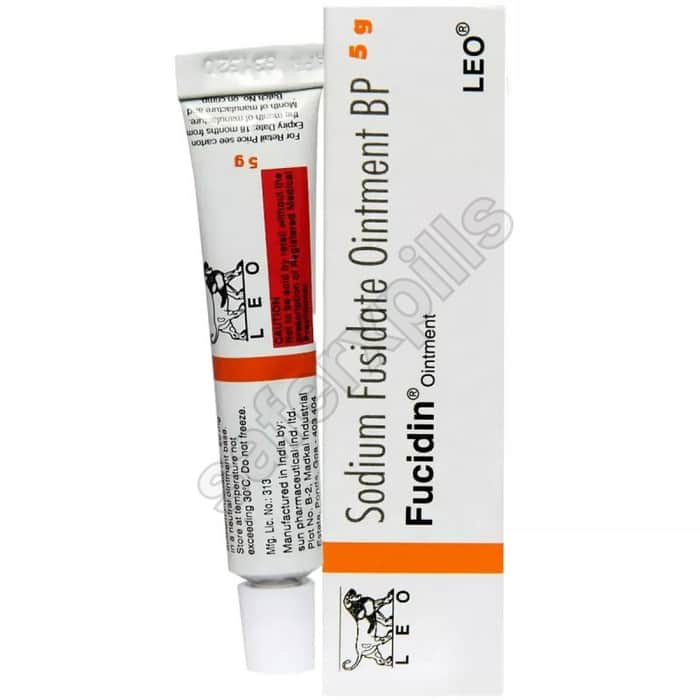
| Fucidin Ointment | Fusidic acid in a greasier ointment base, no steroid (our listing) |
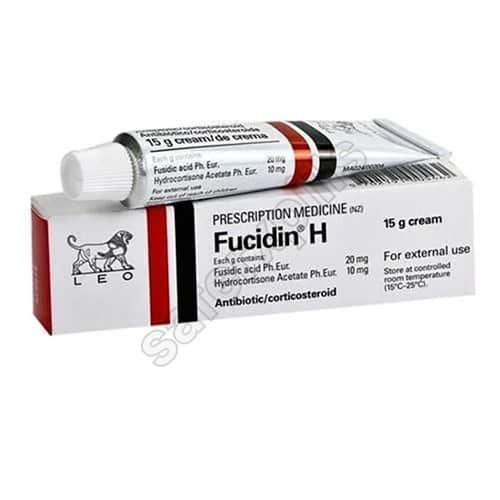
| Fucidin H Cream | Fusidic acid with hydrocortisone, a mild steroid. The UK Fucidin H label (fusidic acid 2% with hydrocortisone acetate 1%) says its label "will state mild steroid", while the UK Fucibet label says its label "will state strong steroid". |
| Betnovate 20g | Betamethasone valerate cream alone, no antibiotic. NICE says manage eczema flares with topical steroids whether or not an antibiotic is used. |
| Mupinase Cream | Mupirocin 2%, a different antibiotic with no steroid; NICE's alternative for impetigo when fusidic acid resistance is suspected or confirmed |
Which one, if any, is a decision for the doctor who has seen the skin. Fucibet is the only one in this list that combines an antibiotic with a potent steroid.
How to use Fucibet Cream
We could not find a full English prescribing label for the Indian tube, so the steps below come from the UK Fucibet label and leaflet and the Canadian product monograph. Where they differ, we say so. Follow the directions of the doctor who prescribed it.
- Use it only on the skin. UK leaflet: "This medicine is only for use on your skin or the skin of a child. Do not swallow it."
- Wash your hands first. UK leaflet: "Always wash your hands before using Fucibet."
- Open the seal with the cap. The tube in our product photo says "Puncture nozzle seal with piercing point of cap". Do not use a tube whose seal is already broken (our advice; the UK leaflet says check the seal is not broken before first use).
- Apply a small amount twice a day. UK label: "A small quantity should be applied to the affected area twice daily until a satisfactory response is obtained." The UK leaflet says use it in the morning and evening. The Canadian label says "A thin layer should be applied to cover the affected skin area." Rub it in gently (UK leaflet).
- Two weeks at most. UK label: "A single treatment course should not normally exceed 2 weeks." The UK leaflet: "Ask your doctor before using this medicine for any longer."
- Go back if it is not better in 7 days. UK leaflet: "You should notice your skin improve after just a few days of using the cream. If there is no improvement after 7 days, you should stop using the cream and go back to your doctor."
- Covering the skin only if a doctor says so. The UK label says that in more resistant lesions the effect can be enhanced by covering with polythene film, and that "Overnight occlusion is usually adequate". The Canadian label says covering under plastic "greatly increases the absorption" of the steroid and lists occlusive dressings among the situations that can lead to adrenal suppression. Apollo Pharmacy's listing says not to cover the area unless the doctor says to. If you have been told to cover the skin, the UK leaflet says you may not need to use it so often, and "A nappy on a baby may act as a dressing."
- Keep it out of the eyes. UK leaflet: "If you use it on your face, be careful to avoid your eyes." If it gets into an eye, wash it out with cold water straight away.
- Wash your hands afterwards, unless you are treating your hands (UK leaflet).
- Missed application: use it as soon as you remember, then carry on at the usual time; "Do not use a double dose to make up for a forgotten dose" (UK leaflet).
- Keep away from flames. UK label 4.4: "Instruct patients not to smoke or go near naked flames, risk of severe burns. Fabric (clothing, bedding, dressings etc) that has been in contact with this product burns more easily and is a serious fire hazard." The UK cream contains liquid and white soft paraffin; the full ingredient list of the Indian tube is not confirmed, so treat this warning as applying (our advice).
- Once opened, use within 3 months (UK label 6.3 and Canadian label 11), and write the opening date on the carton (UK leaflet).
Why the 2 week limit matters
- Resistance (UK label 4.4): "Bacterial resistance has been reported to occur with the topical use of fusidic acid. As with all antibiotics, extended or recurrent use of fusidic acid may increase the risk of developing antibiotic resistance. Limiting therapy with topical fusidic acid and betamethasone valerate to no more than 14 days at a time will minimise the risk of developing resistance."
- Hidden infection (UK label 4.4): the 14 day limit "also prevents the risk that the immunosuppressive action of corticosteroid might mask any potential symptoms of infections due to antibiotic-resistant bacteria". Because of the steroid, Fucibet "may be associated with increased susceptibility to infection, aggravation of existing infection, and activation of latent infection", and the label advises switching to systemic treatment if the infection cannot be controlled with the cream.
- Canadian label 7: courses of no more than 2 weeks at a time minimise both resistance "and the risk of overgrowth of non-susceptible microorganisms, including fungi". It adds that "Prescribing FUCIBET in the absence of a proven or strongly suspected bacterial infection is unlikely to provide benefit to the patient and risks the development of drug-resistant bacteria."
- Steroid side effects: "Long-term continuous topical therapy with Fucibet should be avoided" and "prolonged topical use of Fucibet may cause skin atrophy" (UK label 4.4). The UK leaflet says the 2 week limit is "to avoid bacteria becoming resistant to the antibiotic and to avoid the steroid causing you side effects".
- Evidence from New Zealand (Williamson 2014, PMID 25139961): the authors "observed a dramatic increase in fusidic acid (FA) resistance, and clonal expansion of FA-resistant Staphylococcus aureus", alongside a significant national increase in topical fusidic acid dispensing.
What this means for you, in our words: one course, for the area your doctor saw, for no more than 2 weeks. If the eczema flares again later, go back to plain eczema treatment and see your doctor if it looks infected; do not restart Fucibet on your own.
Face, skin folds, children and stopping
Betamethasone is classed as a potent corticosteroid (UK label 5.1), and the UK leaflet says it "is classed as a strong corticosteroid". Where you use it matters:
- Face. UK leaflet: "You must not use the medicine for a long time on your face." The Canadian label lists the face, scalp, armpits and scrotum among the sites where enough steroid may be absorbed to cause adrenal suppression and other systemic effects. Steroid withdrawal reactions are "more likely to occur when delicate skin sites such as the face and flexures are treated" (UK label 4.4).
- Sensitive areas. UK leaflet: "Unless your doctor has told you to, you must not use Fucibet on open wounds or sensitive areas such as the nostrils, ears, lips or genitals", or "on thin skin, skin ulcers, broken veins or acne".
- Skin folds. The UK leaflet says side effects are more likely if the cream is used for a long time, in large amounts or on skin folds such as the armpits or under the breasts.
- Near the eyes. Use with care near the eyes and keep it out of them (UK label 4.4). The UK leaflet: "If the cream gets into the eye, this may lead to glaucoma."
- Children. The UK label says use it with care in children, who may be more susceptible to steroid-induced adrenal suppression and Cushing's syndrome than adults: "Avoid large amounts, occlusion and prolonged treatment" (4.4). The UK leaflet: "Do not use the cream on yourself or a child for more than 2 weeks." The Canadian label is written for adults and children aged 6 years and older. Indian listings add their own limits: PharmEasy says it should not be used in children below one year of age, and Apollo says children under 12 should use it only under a doctor's supervision.
Stopping. UK label 4.4: long term use of topical steroids "can result in the development of rebound flares after stopping treatment (topical steroid withdrawal syndrome)", which can take the form of a dermatitis "with intense redness, stinging and burning that can spread beyond the initial treatment area". The MHRA says these reactions have been reported after long-term continuous or inappropriate use of topical steroids, particularly moderate to high potency ones: in adults after use at least daily for longer than a year, and in children after as little as 2 months of daily use. It understands severe reactions to be very infrequent. The UK leaflet says: if your condition comes back within 2 weeks of stopping, do not restart the cream without consulting your prescriber unless they have already advised you to, and if the redness spreads beyond the area first treated with a burning feeling, seek medical advice before restarting.
Not for ringworm, acne or skin lightening
Steroid creams, including steroid and antibiotic mixtures, are widely misused in India. Fucibet must not be used for:
- Fungal infections such as ringworm, jock itch or athlete's foot: primary skin infections caused by fungi are a contraindication (UK label 4.3), and the UK leaflet names athlete's foot. A steroid can make a fungal rash look better for a while as the infection spreads. In a study across 13 Indian centres, 50.9% of people with chronic or recurrent ringworm had misused topical steroid creams (Shenoy 2022, PMID 34378240), and an Indian dermatology expert group "strongly discouraged" topical steroids for ringworm, alone or in combination (Rengasamy 2020, PMID 32832435).
- Viral infections such as cold sores or chickenpox (UK label 4.3; UK leaflet).
- Skin infections without eczema, such as boils or spots: the UK leaflet says do not use Fucibet "To treat skin conditions caused only by bacteria". Plain impetigo is treated with other products (see the table above).
- Acne, rosacea and perioral dermatitis (a red spotty rash around the mouth or chin): rosacea and perioral dermatitis are contraindications (UK label 4.3), and the UK leaflet says not to use it on acne unless your doctor has told you to.
- Skin lightening or as a general purpose cream. In a 12 centre Indian study of 433 people using steroid creams on the face, use as a fairness or general purpose cream or aftershave was the most common reason (29%), and 90.5% had side effects, acne most often (Saraswat 2011, PMID 21393945). Fucibet does not lighten skin; the UK label lists depigmentation among potent steroid side effects.

Fucibet Cream side effects
UK label 4.8: frequencies come from a pooled analysis of clinical studies and spontaneous reports, and "The most frequently reported adverse reaction during treatment is pruritus" (itching).
| How often (UK label 4.8) | Side effect |
|---|---|
| Uncommon (up to 1 in 100) | Hypersensitivity (allergy); contact dermatitis, eczema getting worse, a burning feeling, itching, dry skin; pain and irritation where it is applied |
| Rare (up to 1 in 1,000) | Redness, hives, rash (including red and widespread rash); swelling and blisters where it is applied |
| Not known | Blurred vision; withdrawal reactions (redness that may spread beyond the treated area, burning or stinging, itch, peeling, oozing pustules) |
The UK label adds the class effects of potent steroids: skin thinning (atrophy), acne-like and perioral dermatitis, stretch marks, visible small blood vessels, rosacea, redness, extra hair growth, excess sweating, lightening of the skin and, with prolonged use, bruising; adrenal suppression, especially with prolonged use; and raised eye pressure, glaucoma or cataract after use near the eyes. The UK leaflet says these problems are more likely with long use, large amounts, skin folds, in babies and children, and under a dressing, bandage or nappy. Adrenal suppression signs, per the UK leaflet, are "tiredness, depression and anxiety", and it "can be reversed by stopping Fucibet".
In the trial described in the Canadian label, adverse events were reported in 13.5% of people using the lipid cream form against 21.6% on the cream base, and the most frequent adverse drug reactions were itching and a burning feeling (Canadian label 8.2). The UK cream contains cetostearyl alcohol, which "may cause local skin reactions (e.g. contact dermatitis)", and chlorocresol, which "may cause allergic reactions" (UK label 4.4); the inactive ingredients of the Indian tube are not confirmed.
When to get urgent help
- Allergy: the UK leaflet says tell your doctor or nurse immediately, and you may need to stop treatment, if you have difficulty breathing, your face or throat swells, or your skin develops a severe rash. With throat swelling or trouble breathing, call emergency services: 911 in the US and Canada, 999 in the UK, 000 in Australia (our advice).
- Spreading or serious infection: NICE says reassess infected eczema if you become systemically unwell, have pain out of proportion to the infection, or symptoms worsen rapidly or significantly (1.1.10), and refer to hospital anyone with signs of a more serious illness such as necrotising fasciitis or sepsis (1.1.15). Spreading redness, a hot, swollen or very painful area, a high temperature or feeling generally unwell need same-day medical care, not more cream (our advice).
- Clusters of painful blisters or punched out sores on eczema: NICE notes that eczema can be infected with the herpes simplex virus (eczema herpeticum) (1.1.3). Viral skin infections are a contraindication for Fucibet, so stop the cream and get medical help the same day (our advice).
- Eye symptoms: if cream gets in an eye and you then have "any problems with your sight or your eye is sore, contact your doctor immediately" (UK leaflet). The UK label says anyone with blurred vision or other visual disturbances should be considered for referral to an eye specialist.
- Swallowed cream: the UK label says systemic effects after accidentally swallowing it "are unlikely to occur", and the fusidic acid in one tube does not exceed the oral daily dose used for systemic treatment. If a child swallows it or you are worried, contact a doctor or pharmacist; in the US, Poison Control on 1-800-222-1222; in Australia, the Poisons Information Centre on 13 11 26 (our advice). One 15 g tube holds 300 mg fusidic acid and 15 mg betamethasone (our arithmetic from the label strengths).
- Fire: clothing, bedding or dressings with cream on them can catch fire easily (UK label 4.4). Keep away from cigarettes and naked flames.
Who should not use Fucibet Cream
Do not use it (UK label 4.3 unless another label is named):
- if you are allergic to fusidic acid or sodium fusidate, betamethasone valerate or any other ingredient (the Canadian label adds any component of the container)
- for systemic fungal infections
- for primary skin infections caused by fungi, viruses or bacteria that are untreated or not controlled by appropriate treatment
- for skin manifestations of tuberculosis or syphilis that are untreated or not controlled
- for perioral dermatitis or rosacea
- for eruptions following vaccinations (Canadian label 2 only)
Ask a doctor first:
- Pregnancy: UK label 4.6: "Fucibet should not be used during pregnancy unless clearly necessary." Animal studies of corticosteroids have shown reproductive toxicity such as cleft palate, skeletal malformations and low birth weight (UK 5.3). The Canadian label says the benefits must be weighed against the risks to the foetus, and that it "should not be used on pregnant patients in large amounts, or for prolonged periods of time".
- Breastfeeding: the UK label says it "can be used during breast-feeding but should not be applied on the breasts to avoid accidental ingestion by the infant". The Canadian label says safety during breastfeeding has not been established and that use should only be considered if the expected benefit to the mother outweighs the risk to the nursing infant.
- Children (see above): care with amounts, covering and duration; under 6 years is outside the Canadian label.
- Eczema that keeps getting infected: NICE says send a skin swab and consider a nasal swab and decolonisation treatment (1.1.13), which needs a doctor.
- A weakened immune system: NICE says the risk of complications is higher in people with underlying conditions such as immunosuppression (1.1.5).
- Glaucoma or cataract, if you need to use it near the eyes: the UK label says raised eye pressure, glaucoma or cataract may occur after use near the eyes, particularly with prolonged use and in people predisposed to them.
Other medicines: UK label 4.5 says no interaction studies have been performed and that interactions with medicines taken by mouth or injection "are considered minimal". Warnings you may read about fusidic acid and statins concern fusidic acid taken by mouth or given into a vein; the UK and Canadian Fucibet labels do not list them (our reading of UK 4.5 and Canadian 9). Do not use other steroid creams on the same skin unless your doctor has told you to (our advice).
Prescription and legal status
- India: the tube in our product photo says "To be sold by retail on the prescription of a Registered Medical Practitioner only"; Tata 1mg, Apollo and Medkart mark it prescription required.
- US: fusidic acid is not approved by the FDA, alone or in any combination; we found no fusidic acid product in Drugs@FDA or among FDA drug labels (checked 28 and 30 October 2026). The FDA says personal importation of drugs is illegal in most circumstances.
- UK: Fucibet Cream (LEO Laboratories, PL 00043/0091) is a prescription only medicine. This Indian tube is not registered with the MHRA.
- Canada: Fucibet (DIN 02474883) is a prescription medicine. This Indian tube is not registered with Health Canada.
- Australia: we found no fusidic acid with betamethasone product on healthdirect (we could not search the ARTG directly), and both ingredients are Schedule 4 (prescription only) in the Poisons Standard October 2026 (F2026L01327). This Indian tube is not registered with the TGA.
Check the rules where you live before you order.
Buying genuine Fucibet Cream
The MHRA warns: "Any medicine not authorised for sale in the UK can be unsafe or ineffective and there is no way of knowing what is in them or the negative health effects they can have." It advises UK buyers: "Only use UK-registered pharmacies, including online pharmacies displaying the official green cross logo". That warning covers this Indian tube, which is not authorised in the UK. When your order arrives, check that the carton and tube say Fucibet and fusidic acid and betamethasone valerate cream, show 15 g, name the marketer and maker, carry a batch number and an expiry date, and that the nozzle seal is intact. These checks cannot prove a tube is genuine, because counterfeiters copy packaging. If a tube causes unusual symptoms, stop using it, seek medical advice, and report it to your medicines regulator (the MHRA Yellow Card scheme in the UK, FDA MedWatch in the US, the TGA in Australia or Health Canada) as well as to us. Store it below 30 °C (Tata 1mg; UK label) and out of the reach of children.
Delivery
We ship Fucibet Cream to the US, UK, Australia and Canada in plain packaging with tracking. Standard delivery takes 7 to 14 business days to most countries, which is most of a 2 week course: infected eczema you have now should be seen locally. Shipping costs a flat $25 on orders under $149 and is free from $149. See our shipping page and refund policy.
Related guides
Sources
- Fucibet Cream, Summary of Product Characteristics, LEO Laboratories Limited, PL 00043/0091, text revised 26 April 2024 (emc updated 21 January 2025), sections 2, 4.1 to 4.9, 5.1, 5.3, 6.1, 6.3 to 6.5. emc
- Fucibet cream, Package Leaflet: Information for the User, LEO Laboratories Limited, revised March 2024. emc
- Fucibet (fusidic acid and betamethasone valerate cream) Product Monograph, LEO Pharma Inc., date of authorization 29 May 2026 (control 302616), sections 1, 2, 4, 7, 8, 9, 10, 11 and 14; Health Canada Drug Product Database, DIN 02474883, prescription, marketed since 3 October 2018 (checked 3 November 2026). Health Canada
- NHS Dictionary of Medicines and Devices: Fucibet cream (LEO Pharma) 30 g and 60 g packs, via OpenPrescribing, checked 3 November 2026.
- healthdirect Australia, fusidate medicinal product page (Fucidin only), checked 3 November 2026. Therapeutic Goods (Poisons Standard October 2026) Instrument 2026 (F2026L01327): betamethasone and fusidic acid, Schedule 4.
- NICE. Secondary bacterial infection of eczema and other common skin conditions: antimicrobial prescribing (NG190), published 2 March 2021, recommendations 1.1.2, 1.1.3, 1.1.5, 1.1.6, 1.1.10, 1.1.13, 1.1.15 and Tables 1 and 2. NICE
- NICE. Impetigo: antimicrobial prescribing (NG153), published 26 February 2020 (hydrogen peroxide 1% cream first; mupirocin if fusidic acid resistance is suspected or confirmed). NICE
- US Food and Drug Administration: openFDA Drugs@FDA and drug label searches for fusidic acid (no matches) and NDC directory (bulk ingredient only), checked 28 and 30 October 2026.
- NADAC (National Average Drug Acquisition Cost), data.medicaid.gov, latest rows as of 28 October 2026 (effective 21 October 2026), read 3 November 2026: betamethasone valerate 0.1% cream and mupirocin 2% cream; no fusidic acid rows. data.medicaid.gov
- Mupirocin ointment 2% US label, DailyMed setid 06a4ee22-d8f8-4a8a-8666-82b14f2d8476; mupirocin cream 2% US label, Alembic, setid 0580458d-7178-4031-8ac7-0cda281ade8b; section 1.
- Indian listings for Fucibet Cream 15 g (strength, marketer, tube size, prescription status, storage, price): Tata 1mg, PharmEasy, Apollo Pharmacy, Netmeds and Medkart, checked 3 November 2026; SafeRxPills product photo.
- Guy's and St Thomas' NHS Foundation Trust. Topical steroids (fingertip units). Long CC, Finlay AY. The finger-tip unit: a new practical measure. Clin Exp Dermatol 1991. PMID 1806320.
- George SM, et al. Interventions to reduce Staphylococcus aureus in the management of eczema. Cochrane Database Syst Rev 2019. PMID 31684694.
- Larsen FS, et al. An efficient new formulation of fusidic acid and betamethasone 17-valerate (fucicort lipid cream) for treatment of clinically infected atopic dermatitis. Acta Derm Venereol 2007. PMID 17225018.
- Williamson DA, et al. High usage of topical fusidic acid and rapid clonal expansion of fusidic acid-resistant Staphylococcus aureus: a cautionary tale. Clin Infect Dis 2014. PMID 25139961.
- MHRA Drug Safety Update. Topical corticosteroids: information on the risk of topical steroid withdrawal reactions, 15 September 2021. GOV.UK.
- Saraswat A, et al. Topical corticosteroid abuse on the face: a prospective, multicenter study of dermatology outpatients. Indian J Dermatol Venereol Leprol 2011. PMID 21393945.
- Jha AK, et al. Misuse of topical corticosteroids on the face: a cross-sectional study among dermatology outpatients. Indian Dermatol Online J 2016. PMID 27559498.
- Shenoy MM, et al. A multicentric clinical and epidemiological study of chronic and recurrent dermatophytosis in India. Mycoses 2022. PMID 34378240.
- Rengasamy M, et al. IADVL Task Force against Recalcitrant Tinea (ITART) consensus on the management of glabrous tinea (INTACT). Indian Dermatol Online J 2020. PMID 32832435.
- MHRA. 20 million illegal erectile dysfunction pills seized as MHRA warns against risky online buys, 13 February 2026. GOV.UK.
- US Food and Drug Administration. Personal Importation. FDA
This page is for information and is not medical advice. Fucibet contains a potent steroid and an antibiotic and is sold on prescription in India; use it only for infected eczema a doctor has diagnosed, for no more than 2 weeks.
Frequently asked questions
What is Fucibet Cream?
Fucibet Cream contains fusidic acid 2%, an antibiotic, and betamethasone 0.1% as the valerate ester, a potent steroid. The UK label licenses it for eczema when a secondary bacterial infection is confirmed or suspected. Fucibet is LEO Pharma's brand; we sell the Indian 15 g tube, which Indian pharmacy listings name as marketed by Sun Pharmaceutical Industries Ltd.
Is the Indian tube the same as UK or Canadian Fucibet?
It has the same active ingredients and strengths (fusidic acid 2%, betamethasone 0.1% as valerate), and the tube in our product photo says it is made under licence of LEO. We have not found a published study comparing the Indian tube with the UK or Canadian product, and the full list of inactive ingredients in the Indian tube is not confirmed; the UK and Canadian versions themselves use different inactive ingredients.
Is Fucibet approved in the US?
No. Fusidic acid is not approved by the FDA, alone or in any combination, so there is no US version of Fucibet. Fucibet is a licensed prescription medicine in the UK and Canada. This Indian tube is not registered with the MHRA, TGA or Health Canada, and the FDA says personal importation of drugs is illegal in most circumstances.
How much does Fucibet Cream cost per tube?
As of November 2026, $16.25 for 3 tubes ($5.42 a tube), $31.25 for 6 ($5.21) and $61.25 for 12 ($5.10), before shipping. Every pack is under $149, so $25 shipping applies, making it $13.75, $9.38 and $7.19 a tube with shipping. The pack selector shows the current price.
How do I use Fucibet Cream?
Wash your hands, then rub a small amount gently into the affected area twice a day, morning and evening, until the skin responds (UK label and leaflet). Wash your hands again unless you are treating them, keep it away from your eyes, and do not cover the skin unless your doctor tells you to. Keep treated skin, clothes and bedding away from cigarettes and naked flames, because the UK label warns of a fire risk.
How long can I use it?
The UK label says a single course should not normally exceed 2 weeks, and the Canadian label says it should not exceed 2 weeks. Both limits are there to lower the risk of antibiotic resistance and steroid side effects. The UK leaflet says that if there is no improvement after 7 days, stop using it and go back to your doctor.
Does infected eczema always need an antibiotic cream?
No. NICE in the UK says people with infected eczema who are not systemically unwell should not routinely be offered a topical or oral antibiotic, because the evidence suggests limited benefit over a steroid alone, and not every weepy flare is infected. A Cochrane review found only low-quality evidence of a small extra benefit from steroid and antibiotic combinations. Keep treating the eczema itself, and let a doctor decide if an antibiotic is needed.
Can I use it for impetigo, ringworm, acne or on my face?
Not for impetigo without eczema: the UK leaflet says not to use Fucibet for skin conditions caused only by bacteria, such as boils or spots. Fungal and viral skin infections, rosacea and perioral dermatitis are contraindications, and it is not for acne or skin lightening. The UK leaflet says you must not use it for a long time on your face, and to avoid the eyes.
What are the side effects?
The most frequently reported side effect in the UK label is itching. Uncommon effects include allergy, contact dermatitis, eczema getting worse, burning, dry skin and pain or irritation where it is applied. Longer or heavier use of the steroid can thin the skin and cause stretch marks, visible small blood vessels and adrenal suppression. Get urgent help for difficulty breathing, a swollen face or throat or a severe rash.
Can I use it in pregnancy, while breastfeeding or on children?
The UK label says it should not be used during pregnancy unless clearly necessary, and that it can be used while breastfeeding but not on the breasts. In children, the UK label says use it with care and avoid large amounts, covering and prolonged treatment; the Canadian label covers children aged 6 years and older. Ask a doctor first in all of these situations.
Do I need a prescription, and how long does delivery take?
Fucibet is prescription only in the UK and Canada, the Indian tube says it is to be sold on a doctor's prescription, both ingredients are Schedule 4 in Australia, and fusidic acid is not approved in the US. Delivery takes 7 to 14 business days in plain, tracked packaging, which is most of a 2 week course, so eczema that looks infected now should be seen locally.
Medical References
- 1.Fucibet Cream, Summary of Product Characteristics, LEO Laboratories Limited (emc)
- 2.Fucibet cream, Package Leaflet: Information for the User, LEO Laboratories Limited (emc)
- 3.Fucibet Product Monograph, LEO Pharma Inc. (Health Canada)
- 4.NICE NG190: Secondary bacterial infection of eczema and other common skin conditions: antimicrobial prescribing (2021)
- 5.George SM, et al. Interventions to reduce Staphylococcus aureus in the management of eczema. Cochrane Database Syst Rev 2019 (PMID: 31684694)
- 6.Larsen FS, et al. Fusidic acid and betamethasone 17-valerate lipid cream for clinically infected atopic dermatitis. Acta Derm Venereol 2007 (PMID: 17225018)
- 7.Williamson DA, et al. High usage of topical fusidic acid and rapid clonal expansion of fusidic acid-resistant Staphylococcus aureus. Clin Infect Dis 2014 (PMID: 25139961)
- 8.Wilkinson JD. Fusidic acid in dermatology. Br J Dermatol 1998 (existing citation, kept) (PMID: 9990411)
- 9.Gonzalez-Lopez A, Selmer M. Mechanisms of fusidic acid resistance. Biochem Soc Trans 2025 (existing citation, kept) (PMID: 40827472)
- 10.MHRA Drug Safety Update: Topical corticosteroids, risk of topical steroid withdrawal reactions (2021)
Sources: U.S. National Library of Medicine (DailyMed, PubMed), openFDA
Related articles
Epiduo vs Epiduo Forte: How Adapalene and Benzoyl Peroxide Gel Works, Results Timeline, Side Effects and Cost
Epiduo combines adapalene with benzoyl peroxide 2.5% in one once-daily acne gel, in 0.1% and 0.3% (Forte) strengths. This guide covers how the two strengths differ in the trials, how to apply the gel, what to expect week by week, the irritation rates from the US labels, bleaching of fabric and hair, the exact pregnancy wording, the over-the-counter Differin Epiduo, and what US pharmacies pay for brand and generic versions.
Read article
Dapsone Gel (Aczone) 5% vs 7.5%: How to Use It, Results, Side Effects, Warnings and Cost
Dapsone gel (Aczone) is a prescription acne gel in two strengths: 5% twice daily and 7.5% once daily. This guide covers how to apply each, who it is approved for, what the four label trials showed against vehicle, side effects with label rates, the methemoglobinemia and G6PD warnings, the orange staining with benzoyl peroxide, pregnancy and breastfeeding, generic approvals and what US pharmacies pay per gram.
Read article
Generic Otezla (Apremilast): Is It Available in the US, What It Costs, Dosing and Side Effects
The FDA has approved generic apremilast from 13 companies, but none is on sale in US pharmacies as of October 2026. This guide covers the patent dates, what apremilast treats, the 5-day starting schedule, kidney dosing, trial results, side effects and warnings, and what a month of Otezla costs pharmacies compared with Indian apremilast.
Read articleCustomer Reviews
No reviews yet. Bought Fucibet Cream? Tell other buyers how it went.