
Fucidin Cream
Generic: Fusidic Acid
Select pack size
3 creams · $5.00 per cream
About Fucidin Cream
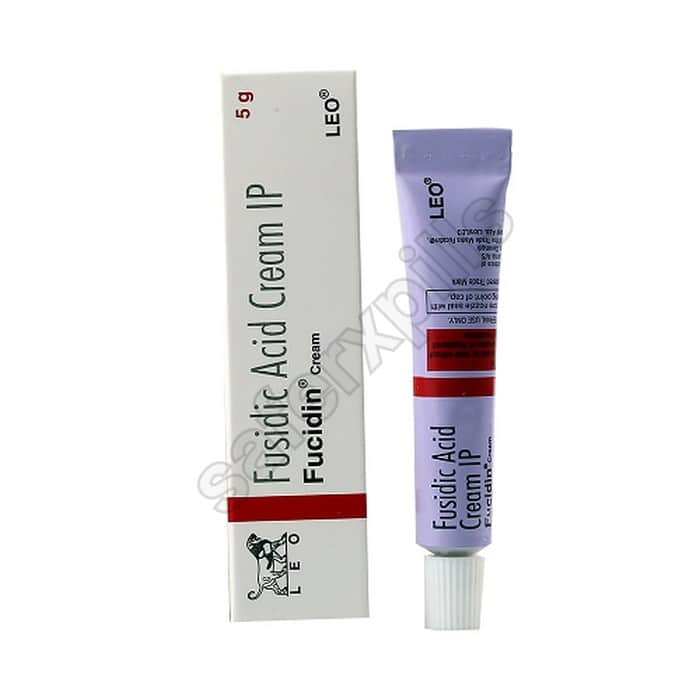
Fucidin Cream is a fusidic acid 2% antibiotic cream for bacterial skin infections such as impetigo, infected eczema and infected cuts. Fucidin is LEO Pharma's brand; the tube we sell is the Indian pack, which Tata 1mg and Apollo Pharmacy list as marketed by Sun Pharmaceutical Industries Ltd (PharmEasy lists it under "Ranbaxy Laboratories (Sun Pharma)"), and the carton in our product photo reads "Fucidin Cream", "Fusidic Acid Cream IP" and "5 g" with the LEO name and logo. We sell it in packs of 3 and 6 tubes, from $4.67 a tube in the 6 pack before shipping.
Please read this before you order. Fusidic acid is a prescription antibiotic in the UK, Canada and India, and it is not approved by the FDA in the US. It is meant for a short course on a diagnosed infection: For impetigo, NICE in the UK says consider hydrogen peroxide 1% cream first, and recommends fusidic acid for 5 days when that is unsuitable or has not worked. Our delivery takes 7 to 14 business days, which is longer than that whole course. In our view, anyone with a skin infection now should see a pharmacist or doctor locally rather than wait for a parcel, and nobody should keep tubes at home to restart treatment on their own, because both the UK label and NICE link extended or repeated use with antibiotic resistance.
Fucidin Cream at a glance
| Active ingredient | Fusidic acid 2% w/w, which is 20 mg in each gram (Tata 1mg: "Fusidic Acid (2% w/w)"; PharmEasy: "Fusidic Acid 20.0 Mg"; UK label section 2: "fusidic acid Ph.Eur. 20 mg/g") |
| Brand and maker | Fucidin is a registered trademark of LEO Pharma A/S (Canadian product monograph). Indian marketer: Sun Pharmaceutical Industries Ltd (Tata 1mg, Apollo); "Ranbaxy Laboratories (Sun Pharma)" (PharmEasy). Our product photo shows LEO branding; the manufacturer line on the tube is not legible in the photo. |
| Used for | UK label 4.1: skin infections caused by sensitive strains of Staphylococcus aureus, Streptococcus and Corynebacterium minutissimum, including impetigo, superficial folliculitis, sycosis barbae, paronychia, erythrasma, infected eczematoid or contact dermatitis and infected cuts or abrasions |
| Regulatory status | Fusidic acid is not approved by the FDA: we found no fusidic acid product in Drugs@FDA or on DailyMed. Fucidin cream is licensed in the UK (PL 00043/0065) and Canada (DIN 00586668); in Australia we found only Fucidin ointment (sodium fusidate) on healthdirect. This Indian tube is not registered with the MHRA, TGA or Health Canada. |
| Usual use | UK label: "apply gently three or four times daily" on uncovered skin. Canadian label: two to three times daily for 7 to 14 days. NICE NG153 for impetigo: three times a day for 5 days. |
| How long | NICE: a 5 day course is usually appropriate, up to 7 days on clinical judgement. Canadian label: no more than 14 days at a time to limit resistance. |
| Prescription | Prescription only in the UK (POM), Canada and Australia (Fucidin ointment, Schedule 4); "Prescription required" on Tata 1mg and Truemeds in India |
| Packs | 3 and 6 tubes. Our product photo shows a 5 g tube; Indian pharmacies also sell a 15 g tube. Read the carton when it arrives. |
| Price per tube | $5.00 (3 tubes) and $4.67 (6 tubes), before shipping |
| Storage | Below 25 °C or below 30 °C (Truemeds gives both); "dry and cool place" (PharmEasy). UK label: no special storage conditions; Canadian label: below 30 °C. It does not need a fridge. |
| Delivery | 7 to 14 business days to the US, UK, Australia and Canada; $25 shipping under $149, free from $149 |
Price per tube
Prices below are as of October 2026; the pack selector shows the current price.
| Pack | Price | Per tube | Shipping | Per tube with shipping |
|---|---|---|---|---|
| 3 tubes | $15.00 | $5.00 | $25 | $13.33 |
| 6 tubes | $28.00 | $4.67 | $25 | $8.83 |
Both packs are under the $149 free shipping threshold, so the flat $25 shipping is more than the cream itself on a small order. If each tube is 5 g, as in our product photo, the cream costs $0.93 to $1.00 a gram before shipping and $1.77 to $2.67 a gram with shipping (our arithmetic). If your tubes are 15 g, those figures are a third as much. In India the listed maximum retail price is Rs 52.81 for the 5 g tube (PharmEasy) and Rs 158.44 for the 15 g tube (Tata 1mg, Truemeds).
No label gives a number of grams per course. The UK and Canadian labels and NICE describe a thin layer on the infected area for a short course, so in our estimate one tube covers one episode of a small, localised infection, and even the 3 pack is more than one course. Please do not order extra tubes to keep for next time: see the resistance section below.
Compared with what you can get locally
| Where | What is available | Cost |
|---|---|---|
| US | No FDA approved fusidic acid product, so there is no US brand or generic to compare and no NADAC row (NADAC is the US pharmacy acquisition cost survey). The nearest prescription option is a different molecule: mupirocin 2%. US mupirocin ointment labels are indicated for "the topical treatment of impetigo" and mupirocin cream for "secondarily infected traumatic skin lesions (up to 10 cm in length or 100 cm 2 in area)". | NADAC, effective 21 October 2026: generic mupirocin 2% ointment $0.14519 to $0.29301 a gram; mupirocin 2% cream $0.81383 to $0.89073 a gram. These are pharmacy acquisition costs, not shelf prices. |
| UK | Fucidin 20 mg/g cream, LEO Laboratories, prescription only. The NHS says "A pharmacist can give the same medicines as a GP to treat impetigo." | Ask a UK pharmacist or GP |
| Canada | Fucidin Cream 2% (LEO Pharma, DIN 00586668) and Taro-Fusidic Acid 2% cream (DIN 02528096), both prescription | Ask a Canadian pharmacist |
| Australia | Fucidin ointment (sodium fusidate 20 mg/g, ARTG 12990), Schedule 4, not on the PBS. We found no fusidic acid cream on healthdirect. | Ask an Australian pharmacist |
| SafeRxPills | Indian Fucidin Cream (fusidic acid 2%) | $13.33 a tube in the 3 pack and $8.83 a tube in the 6 pack, with shipping |
Mupirocin is a different antibiotic, not a generic of fusidic acid. The Cochrane review of impetigo treatments (Koning 2012) found no clear difference in cure rates between the two in 4 studies with 440 participants. A US reader with impetigo needs a prescriber anyway, and generic mupirocin is one US prescription option a pharmacy can usually fill the same day (our view). In the UK, Canada and Australia, a local prescription for a licensed fusidic acid product will arrive faster than our 7 to 14 business days.
What NICE says about impetigo treatment
NICE guideline NG153, Impetigo: antimicrobial prescribing (published 26 February 2020), sets out this order for people who are not systemically unwell or at high risk of complications:
- Localised non-bullous impetigo: "Consider hydrogen peroxide 1% cream" first (1.1.2). "If hydrogen peroxide 1% cream is unsuitable, offer a short course of a topical antibiotic" (1.1.3).
- First-choice topical antibiotic if hydrogen peroxide is unsuitable (for example, if impetigo is around the eyes) or ineffective: "Fusidic acid 2%: Apply three times a day for 5 days" (Tables 1 and 2, adults and under 18s).
- Mupirocin 2% is the alternative "if fusidic acid resistance is suspected or confirmed", also three times a day for 5 days.
- Course length: "A 5-day course is usually appropriate but can be increased to 7 days based on clinical judgement, depending on the severity and number of lesions."
- Widespread impetigo: a short course of a topical or oral antibiotic, taking into account "previous use of topical antibiotics because antimicrobial resistance can develop rapidly with extended or repeated use" (1.1.4).
- Bullous impetigo, or anyone systemically unwell or at high risk of complications: a short course of an oral antibiotic, not a cream (1.1.5).
- No cream plus tablets: "Do not offer combination treatment with a topical and oral antibiotic to treat impetigo" (1.1.6).
- If it does not work: if impetigo is worsening or has not improved after a course of topical antibiotics, NICE says offer a short course of an oral antibiotic and consider a skin swab (1.1.11), not a second tube of cream.
The NHS says impetigo "stops being contagious 48 hours after you start using hydrogen peroxide cream or antibiotics prescribed by a pharmacist or GP". That is another reason to start treatment locally rather than wait for delivery.
Resistance: why short courses matter
- UK label 4.4: "Bacterial resistance among staphylococcus aureus has been reported to occur with the use of topical Fucidin. As with all antibiotics, extended or recurrent use may increase the risk of developing antibiotic resistance." It adds that extended or recurrent use "may increase the risk of developing contact sensitisation".
- Canadian label 4.1 and 7: "Limiting therapy with FUCIDIN to no more than 14 days at a time will minimize the risk of developing resistance." It also says that using it without "a proven or strongly suspected bacterial infection is unlikely to provide benefit to the patient and risks the development of drug-resistant bacteria".
- NICE NG153: "As with all antibiotics, extended or recurrent use of topical fusidic acid or mupirocin may increase the risk of developing antimicrobial resistance."
- Evidence from New Zealand (Williamson 2014, PMID 25139961): the authors "observed a dramatic increase in fusidic acid (FA) resistance, and clonal expansion of FA-resistant Staphylococcus aureus", concurrent with a significant national increase in topical fusidic acid dispensing.
What this means for you, in our words: use it only for an infection a pharmacist or doctor has confirmed, for the course they set, and do not use it on rashes, acne or wounds that are not infected. If impetigo keeps coming back, NICE advises a skin swab and possibly a nasal swab and decolonisation (1.1.13), which needs a doctor.
Cream, ointment or a steroid combination
Fusidic acid comes in several topical forms, and the directions for one do not carry over to another.
| Product | What it is |
|---|---|
| Fucidin Cream (this product) | Fusidic acid 2% cream. The NHS says "The ointment is greasier than the cream." |
| Fucidin Ointment | The ointment form. In Canada and Australia, Fucidin ointment contains sodium fusidate 2% (Canadian product monograph; healthdirect); it is the only Fucidin product we found on healthdirect in Australia. |
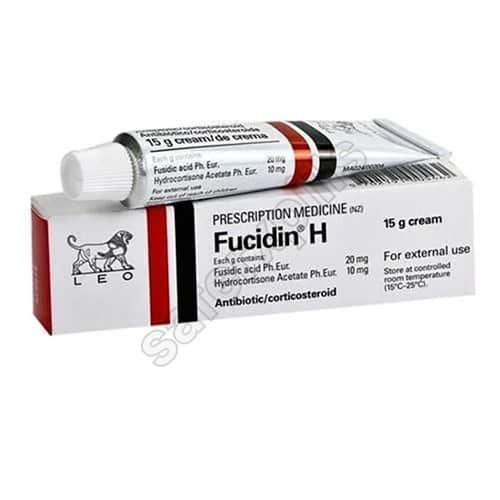
| Fucidin H Cream | Fusidic acid 2% with hydrocortisone 1% (Tata 1mg), a steroid combination. The NHS says a cream that also contains a steroid is usually put on twice a day. |
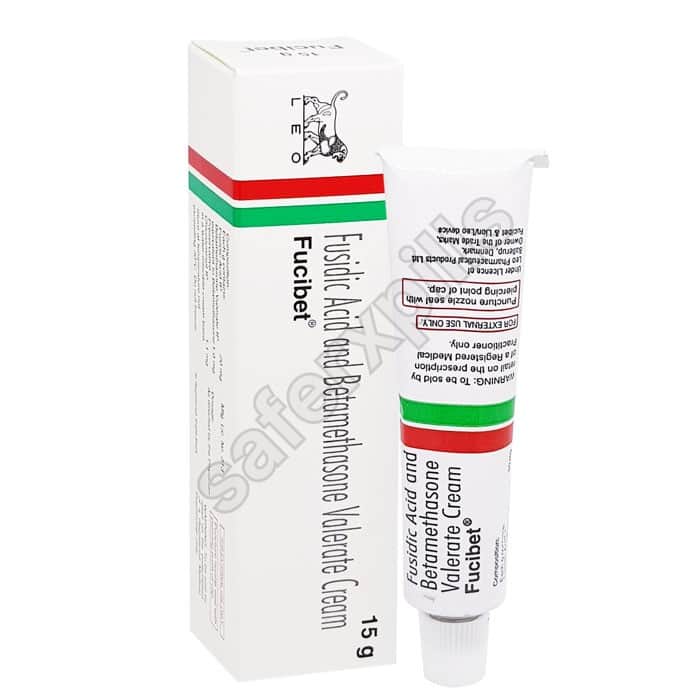
| Fucibet Cream | Fusidic acid with betamethasone, a steroid combination (NHS). It has its own label and limits. |
| Mupinase Cream and Mupinase Ointment | Mupirocin 2%, a different antibiotic; NICE's alternative when fusidic acid resistance is suspected or confirmed |
How to use Fucidin Cream
We could not find a full English prescribing label for the Indian tube, so the steps below come from the UK Fucidin cream label and leaflet, the Canadian product monograph and NICE. Where they differ, we say so. Follow the directions of the doctor or pharmacist who diagnosed the infection.
- Wash your hands first. UK leaflet: "Always wash your hands before using Fucidin cream." PharmEasy says to clean and dry the infected area before applying it.
- Check the seal. The UK leaflet says check that the seal is not broken before first use, then push the spike in the cap through it. The Indian tube may differ; do not use a tube with a broken seal (our advice).
- Apply a thin layer and rub it in gently. UK label: "apply gently three or four times daily" on uncovered skin. Canadian label: "A small amount ... two to three times daily for 7-14 days." NICE for impetigo: three times a day for 5 days.
- Covered skin may need fewer applications. UK label: "less frequent applications may be adequate". Canadian label: 1 or 2 daily under a gauze dressing. The UK leaflet says "A nappy on a baby may act as a dressing."
- Crusts do not need removing. The Canadian label says that in impetigo "it has been shown to be unneccessary to remove the crusts before application" (sic).
- Keep it away from the eyes. UK leaflet: "If you use it on your face be careful to avoid your eyes." If it gets into an eye, wash it out with cold water straight away.
- Wash your hands afterwards, unless you are treating your hands (UK leaflet).
- Missed application: use it as soon as you remember, then carry on at the usual time (UK leaflet; Canadian label 4.5).
- Finish the course you were given, and seek medical help if the infection worsens rapidly or has not improved by the end of it (NICE 1.1.7). The NHS says the condition "should improve a few days after starting treatment".
- Keep away from flames. UK label 4.4: "Instruct patients not to smoke or go near naked flames", because of the "risk of severe burns". "Fabric (clothing, bedding, dressings etc) that has been in contact with this product burns more easily and is a serious fire hazard." The UK cream contains liquid and white soft paraffin; the full ingredient list of the Indian tube is not confirmed, so treat this warning as applying (our advice).
To help stop impetigo spreading, the NHS advises washing flannels, towels and bedding at a high temperature, not sharing them, not touching or scratching the sores, and staying away from work, school or nursery until no longer contagious.
Side effects
UK label 4.8: in pooled data from clinical studies of 4,724 patients who used Fucidin cream or ointment, "the frequency of undesirable effects is 2.3%". The most frequent were skin reactions such as itching and rash, then pain and irritation where it was applied, "which all occurred in less than 1% of patients".
| How often (UK label 4.8) | Side effect |
|---|---|
| Uncommon (up to 1 in 100) | Dermatitis (including contact dermatitis and eczema), rash, itching, redness; pain at the application site (including a burning feeling) and irritation |
| Rare (up to 1 in 1,000) | Hypersensitivity (allergy), conjunctivitis, angioedema (swelling under the skin), hives, blisters |
The UK label also says the excipients butylhydroxyanisole, cetyl alcohol and potassium sorbate "may cause local skin reactions (e.g. contact dermatitis)", and that "Polysorbates can cause allergic reactions." The Canadian label adds that topical antibiotics "occasionally" allow overgrowth of organisms that do not respond; if that happens, or irritation or sensitisation develops, treatment should be stopped. Children: "Frequency, type and severity of adverse reactions in children are expected to be the same as in adults" (UK 4.8).
When to get urgent help
- Allergy: the UK leaflet says "You must get urgent medical help" if you have difficulty breathing, your face or throat swell, or your skin develops a severe rash. With throat swelling or trouble breathing, call emergency services: 911 in the US and Canada, 999 in the UK, 000 in Australia (our advice).
- Signs of a deeper or spreading infection: NICE says refer to hospital people with impetigo and signs of a more serious illness such as cellulitis, and people with widespread impetigo who are immunocompromised (1.1.15). Spreading redness, a hot, swollen or very painful area, a high temperature or feeling generally unwell need same-day medical care, not more cream (our advice).
- Babies: NICE says consider specialist advice for bullous impetigo, "particularly in babies (aged 1 year and under)" (1.1.16), and the NHS says see a GP if your child is 11 months or younger.
- Eye problems: if cream gets in an eye and you then have "any problems with your sight or your eye is sore, contact your doctor immediately" (UK leaflet).
- Swallowed cream: a small amount "is unlikely to cause any harm"; if a larger amount is swallowed or you are worried, contact a doctor, pharmacist or A&E (UK leaflet). In the US, call Poison Control on 1-800-222-1222; in Australia, the Poisons Information Centre on 13 11 26 (our advice). A 5 g tube holds 100 mg of fusidic acid (our arithmetic from 20 mg/g); the UK label says the 600 mg in a 30 g tube will usually not exceed the oral daily dose "except in children aged less than 1 year and weighing <= 10 kg".
- Fire: clothing, bedding or dressings with cream on them can catch fire easily (UK label 4.4). Keep away from cigarettes and naked flames.
Who should not use Fucidin Cream
Do not use it (the label each item comes from is named):
- if you are allergic to fusidic acid or any other ingredient of the cream (UK label 4.3; Canadian label 2, which adds any component of the container)
- in or around the eyes, lips or inside of the nose (PharmEasy listing). The UK label says use it "with care when applied in the proximity of the eyes".
- on the breast while breastfeeding: the UK label says "it is recommended to avoid applying topical Fucidin on the breast", and the Canadian label gives the same advice to protect the baby from swallowing it
- without a proven or strongly suspected bacterial infection (Canadian label 7), or for longer than the course you were given (our advice, based on the resistance warnings in the UK and Canadian labels and NICE)
Ask a doctor first:
- Pregnancy: the UK label says "Topical Fucidin can be used during pregnancy". The Canadian label says safety in pregnancy "has not been established" and that use requires the benefits to be weighed against possible hazards to the foetus. The UK leaflet says ask your doctor or pharmacist before use, and "You must not use your medicine for a long time or in large amounts."
- Children: the UK label doses adults and children the same way, and NICE gives the same fusidic acid course to under 18s. Health Canada "has not authorized an indication for pediatric use". A baby, or a child with blisters or who seems unwell, needs to be seen by a doctor (NICE 1.1.16; NHS).
- Impetigo that keeps coming back, or that has not improved after a course of cream (NICE 1.1.11 and 1.1.13).
- Bullous impetigo (large fluid-filled blisters) or widespread infection: NICE offers tablets, not cream, for bullous impetigo (1.1.5).
- A weakened immune system, for example from chemotherapy (NHS impetigo page; NICE 1.1.15).
Other medicines: the UK label says no interaction studies have been done and that interactions with medicines taken by mouth or injection "are considered minimal as the systemic absorption of topical Fucidin is negligible" (4.5). Warnings you may read about fusidic acid and statins concern fusidic acid taken by mouth or given into a vein; the UK cream label does not list them (our reading of section 4.5).
What the evidence shows
- Koning 2002, BMJ (PMID 11809642): a double blind trial in 184 children aged 0 to 12 with impetigo in Dutch general practice. After one week, 55% on fusidic acid cream were clinically cured against 13% on placebo (both also used povidone-iodine shampoo); the differences became smaller at two and four weeks. No S. aureus strains in that trial were resistant to fusidic acid.
- Koning 2012, Cochrane (PMID 22258953): 68 trials, 5,578 participants. Topical antibiotics cured more people than placebo (risk ratio 2.24, 6 studies, 575 participants), and there was "no clear evidence that either of the most commonly studied topical antibiotics (mupirocin and fusidic acid) was more effective than the other". The authors also noted that bacteria causing impetigo "show growing resistance rates for commonly used antibiotics".
Our reading: fusidic acid cream works well for small areas of impetigo when the bacteria are sensitive, and the main risk is resistance from overuse, not side effects. That is why the course should be short and supervised.
Prescription and legal status
- India: prescription required (Tata 1mg, Truemeds); PharmEasy marks it prescription only.
- US: fusidic acid is not approved by the FDA. We found no fusidic acid product in Drugs@FDA or among FDA drug labels; the FDA's NDC directory lists fusidic acid only as a bulk ingredient. The FDA says personal importation of drugs is illegal in most circumstances.
- UK: Fucidin 20 mg/g cream (LEO Laboratories, PL 00043/0065) is a prescription only medicine. This Indian tube is not registered with the MHRA.
- Canada: Fucidin Cream 2% (DIN 00586668) and Taro-Fusidic Acid (DIN 02528096) are prescription medicines. This Indian tube is not registered with Health Canada.
- Australia: Fucidin ointment (sodium fusidate) is a Schedule 4 prescription only medicine (ARTG 12990, healthdirect). This Indian tube is not registered with the TGA.
Check the rules where you live before you order.
Buying genuine Fucidin Cream
The MHRA warns: "Any medicine not authorised for sale in the UK can be unsafe or ineffective and there is no way of knowing what is in them or the negative health effects they can have." It advises UK buyers: "Only use UK-registered pharmacies, including online pharmacies displaying the official green cross logo". That warning covers this Indian tube, which is not authorised in the UK. When your order arrives, check that the carton and tube say Fucidin and fusidic acid 2%, show the tube size, name the marketer and maker, carry a batch number and an expiry date, and that the tube seal is intact. These checks cannot prove a tube is genuine, because counterfeiters copy packaging. If a tube causes unusual symptoms, stop using it, seek medical advice, and report it to your medicines regulator (the MHRA Yellow Card scheme in the UK, FDA MedWatch in the US, the TGA in Australia or Health Canada) as well as to us. Store it below 25 °C (Truemeds and Apollo; the Truemeds fact box says below 30 °C), do not freeze it (Truemeds), and keep it out of the reach of children.
Delivery
We ship Fucidin Cream to the US, UK, Australia and Canada in plain packaging with tracking. Standard delivery takes 7 to 14 business days to most countries, which is longer than a NICE impetigo course: an infection you have now should be treated with what you can get locally. Shipping costs a flat $25 on orders under $149 and is free from $149. See our shipping page and refund policy.
Related guides
- Antibiotic resistance: when antibiotics don't work
- Prescription skin care medicine guide
- Is it safe to buy medicine online?
- How to verify a legitimate online pharmacy in the USA
Sources
- Fucidin 20 mg/g Cream, Summary of Product Characteristics, LEO Laboratories Limited, PL 00043/0065, text revised 1 June 2026, sections 2, 4.1 to 4.9, 6.1, 6.4, 6.5. emc
- Fucidin 20 mg/g cream, Package Leaflet, LEO Laboratories Limited, revised May 2026. emc
- Fucidin Cream and Ointment Product Monograph including Patient Medication Information, LEO Pharma Inc., date of authorization 7 May 2026, sections 1, 2, 4, 7, 8, 9, 11; Health Canada Drug Product Database entries for DIN 00586668 and DIN 02528096. Health Canada
- healthdirect Australia, Fucidin (fusidate ointment), Schedule 4, not PBS listed; ARTG 12990, checked 28 October 2026. healthdirect
- NICE. Impetigo: antimicrobial prescribing (NG153), published 26 February 2020, recommendations 1.1.2 to 1.1.16 and Tables 1 and 2. NICE
- NHS. Fusidic acid (about; how and when to use) and Impetigo, read 28 October 2026. NHS
- US Food and Drug Administration: openFDA Drugs@FDA and drug label searches for fusidic acid (no matches) and NDC directory (bulk ingredient only), checked 28 October 2026.
- NADAC (National Average Drug Acquisition Cost), data.medicaid.gov, as of 28 October 2026: no fusidic acid rows; mupirocin 2% ointment and cream rows effective 21 October 2026.
- Mupirocin ointment 2% US label, DailyMed setid 06a4ee22-d8f8-4a8a-8666-82b14f2d8476, effective 28 July 2026; mupirocin cream 2% US label, Alembic, setid 0580458d-7178-4031-8ac7-0cda281ade8b, effective 18 March 2025; section 1.
- Indian listings for Fucidin Cream (strength, marketer, tube sizes, prescription status, storage, price): Tata 1mg, PharmEasy, Truemeds and Apollo Pharmacy, checked 28 October 2026.
- Koning S, et al. Fusidic acid cream in the treatment of impetigo in general practice: double blind randomised placebo controlled trial. BMJ 2002. PMID 11809642.
- Koning S, et al. Interventions for impetigo. Cochrane Database Syst Rev 2012. PMID 22258953.
- Williamson DA, et al. High usage of topical fusidic acid and rapid clonal expansion of fusidic acid-resistant Staphylococcus aureus: a cautionary tale. Clin Infect Dis 2014. PMID 25139961.
- MHRA. 20 million illegal erectile dysfunction pills seized as MHRA warns against risky online buys, 13 February 2026. GOV.UK.
- US Food and Drug Administration. Personal Importation. FDA
This page is for information and is not medical advice. A skin infection that is spreading, blistering, near the eyes, in a baby or in someone who feels unwell needs a doctor or pharmacist now; do not wait for a delivery.
Key Information
- ✓Active Ingredient: Fusidic Acid
- ✓Category: Skin Care
- ✓Form: Cream
- ✓Brand: Sun Pharmaceutical Industries Ltd
- ✓Manufacturer: Sun Pharmaceutical Industries Ltd
Frequently Asked Questions
What is Fucidin Cream?
Fucidin Cream is a fusidic acid 2% antibiotic cream (20 mg per gram) for bacterial skin infections such as impetigo, infected eczema or dermatitis and infected cuts. Fucidin is LEO Pharma's brand. We sell the Indian pack, which Tata 1mg and Apollo list as marketed by Sun Pharmaceutical Industries Ltd; the carton in our product photo shows a 5 g tube with LEO branding.
Is Fucidin Cream approved in the US?
No. Fusidic acid is not approved by the FDA: we found no fusidic acid product in Drugs@FDA or among FDA drug labels, and there is no US brand or generic to compare. Fucidin cream is a licensed prescription medicine in the UK and Canada. This Indian tube is not registered with the FDA, MHRA, TGA or Health Canada, and the FDA says personal importation of drugs is illegal in most circumstances.
How much does Fucidin Cream cost per tube?
As of October 2026, $5.00 a tube in the 3 pack ($15) and $4.67 a tube in the 6 pack ($28), before shipping. Shipping is $25 under $149, so the cost per tube with shipping is $13.33 and $8.83. The pack selector shows the current price.
How do I use fusidic acid cream?
Wash your hands, then rub a thin layer gently into the infected area and wash your hands again unless you are treating them. The UK label says three or four times daily on uncovered skin, the Canadian label two to three times daily, and NICE three times a day for impetigo. Covered skin may need fewer applications. Keep it away from the eyes, and keep treated skin, clothes and bedding away from cigarettes and naked flames, because the UK label warns of a fire risk.
How long should I use it?
For impetigo, NICE recommends fusidic acid 2% three times a day for 5 days, which can be extended to 7 days on clinical judgement. The NHS says courses are usually 1 or 2 weeks, and the Canadian label says no more than 14 days at a time to limit resistance. Use it for the course your pharmacist or doctor sets, and get medical help if the infection is worse or not better at the end of it.
Is it the first treatment for impetigo?
Not in the UK. NICE NG153 (2020) says consider hydrogen peroxide 1% cream first for localised non-bullous impetigo in people who are not unwell. Fusidic acid 2% is the first-choice topical antibiotic if hydrogen peroxide is unsuitable, for example around the eyes, or has not worked. Bullous impetigo, or impetigo in someone who is unwell or at high risk, needs an oral antibiotic instead.
Why does antibiotic resistance matter with this cream?
The UK label says resistance among Staphylococcus aureus has been reported with topical Fucidin, and that extended or recurrent use may increase the risk of resistance. NICE says resistance can develop rapidly with extended or repeated use, and a New Zealand study (Williamson 2014) linked a rise in topical fusidic acid use with a dramatic increase in resistant staph. Use it only for a diagnosed infection, for a short course, and do not keep tubes to restart treatment yourself.
Is mupirocin the same as fusidic acid?
No. Mupirocin is a different antibiotic. NICE uses mupirocin 2% as the alternative when fusidic acid resistance is suspected or confirmed, and the Cochrane review found no clear difference in cure rates between the two in 4 studies with 440 participants. In the US, mupirocin ointment is a prescription product labelled for impetigo, and it is one local option a US prescriber can give you.
What are the side effects?
In UK label pooled data from 4,724 patients, 2.3% had side effects; itching, rash, redness, irritation and burning where it was applied each occurred in less than 1%. Rare effects include allergy, swelling under the skin, hives, blisters and conjunctivitis. Get urgent medical help for difficulty breathing, a swollen face or throat or a severe rash.
Can I use it in pregnancy, while breastfeeding or on children?
The UK label says topical Fucidin can be used during pregnancy and breastfeeding, but recommends avoiding applying it on the breast while breastfeeding; the Canadian label says safety in pregnancy and breastfeeding has not been established. The UK label and NICE cover children, while Health Canada has not authorised a paediatric indication. Ask a doctor or pharmacist first, and have a baby aged 11 months or younger seen by a GP (NHS).
Do I need a prescription, and how long does delivery take?
Fusidic acid cream is prescription only in the UK, Canada and India, Fucidin ointment is Schedule 4 in Australia, and fusidic acid is not approved by the FDA in the US. Delivery takes 7 to 14 business days in plain, tracked packaging, which is longer than a 5 day impetigo course, so an infection you have now should be treated locally. Shipping is $25 under $149 and free from $149.
Medical References
- 1.PubMed (NCBI) (PMID: 10528784) — 1999
- 2.PubMed (NCBI) (PMID: 23367709) — 2013
- 3.PubMed (NCBI) (PMID: 40827472) — 2025
- 4.PubMed (NCBI) (PMID: 41384662) — 2025
- 5.PubMed (NCBI) (PMID: 16792734) — 2006
- 6.PubMed (NCBI) (PMID: 35141463) — 2022
- 7.PubMed (NCBI) (PMID: 9990411) — 1998
Sources: U.S. National Library of Medicine (DailyMed, PubMed), openFDA
Related Products
View all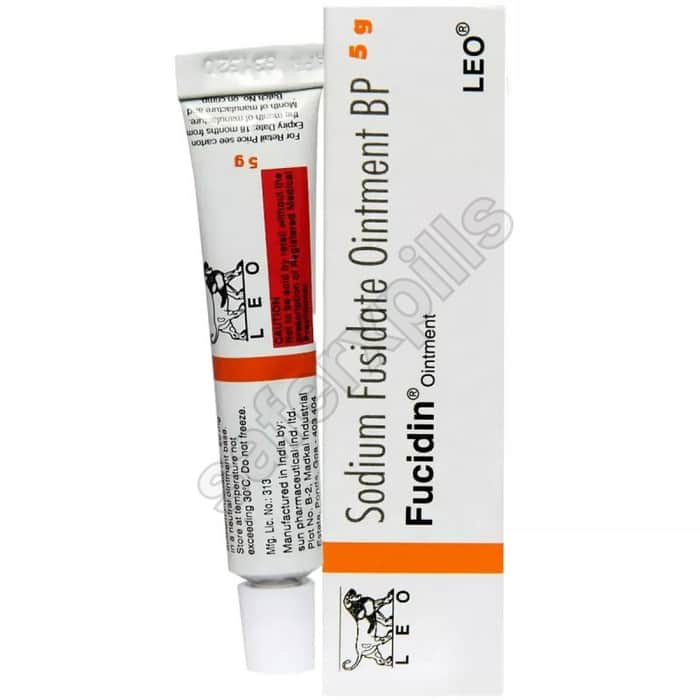
Customer Reviews
No reviews yet. Be the first to review Fucidin Cream.
Related Articles
Health guides about Fusidic Acid, written by pharmacists
Epiduo vs Epiduo Forte: How Adapalene and Benzoyl Peroxide Gel Works, Results Timeline, Side Effects and Cost
Epiduo combines adapalene with benzoyl peroxide 2.5% in one once-daily acne gel, in 0.1% and 0.3% (Forte) strengths. This guide covers how the two strengths differ in the trials, how to apply the gel, what to expect week by week, the irritation rates from the US labels, bleaching of fabric and hair, the exact pregnancy wording, the over-the-counter Differin Epiduo, and what US pharmacies pay for brand and generic versions.
Dapsone Gel (Aczone) 5% vs 7.5%: How to Use It, Results, Side Effects, Warnings and Cost
Dapsone gel (Aczone) is a prescription acne gel in two strengths: 5% twice daily and 7.5% once daily. This guide covers how to apply each, who it is approved for, what the four label trials showed against vehicle, side effects with label rates, the methemoglobinemia and G6PD warnings, the orange staining with benzoyl peroxide, pregnancy and breastfeeding, generic approvals and what US pharmacies pay per gram.

Generic Otezla (Apremilast): Is It Available in the US, What It Costs, Dosing and Side Effects
The FDA has approved generic apremilast from 13 companies, but none is on sale in US pharmacies as of October 2026. This guide covers the patent dates, what apremilast treats, the 5-day starting schedule, kidney dosing, trial results, side effects and warnings, and what a month of Otezla costs pharmacies compared with Indian apremilast.
Related Health Guide
Understanding Acne & Skin Care: Complete Guide