
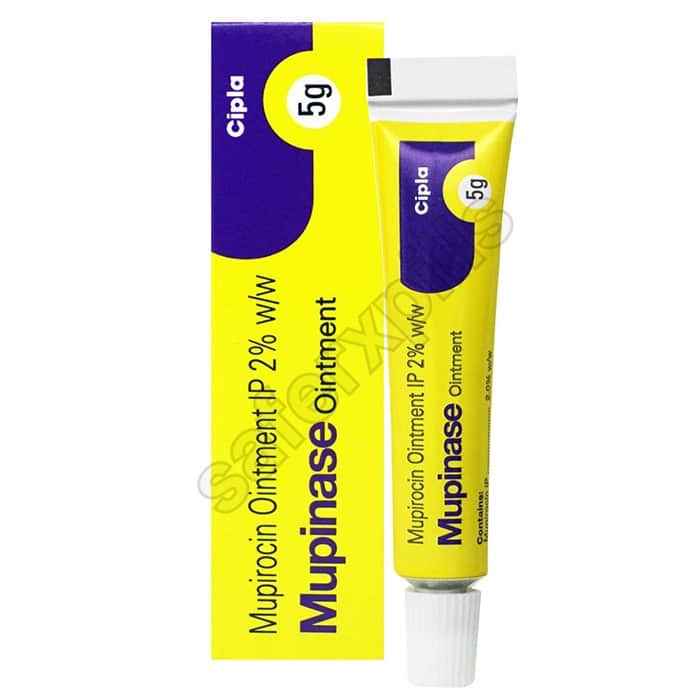
About Mupinase Ointment
Mupinase Ointment is used in the treatment of bacterial skin infections, delivering Mupirocin 2%, a potent topical antibiotic that targets gram-positive bacteria including Staphylococcus aureus and Streptococcus pyogenes. Manufactured by Cipla Limited, this ointment works by inhibiting bacterial protein synthesis, effectively treating conditions such as impetigo, infected eczema, folliculitis, and secondary skin infections. Patients seeking comprehensive skin infection treatment often compare options like Soframycin Cream (Framycetin), though Mupirocin offers superior efficacy against methicillin-resistant strains, while those addressing post-infection scarring may consider Mederma Gel (Allium/Cepa Extract/Allantoin) as part of their recovery regimen. The 2% ointment formulation ensures deep penetration into affected skin layers while maintaining moisture balance.
Dosage & How to Take Mupinase Ointment
Apply a small amount of Mupinase Ointment to the affected area three times daily after thoroughly cleaning and drying the skin. Gently massage the ointment into the infected area and surrounding skin, then optionally cover with a sterile gauze dressing if recommended by your healthcare provider. Treatment duration typically ranges from 5 to 10 days depending on infection severity, most patients see improvement within 3-5 days. Wash your hands before and after application to prevent spreading infection. Do not apply to large surface areas exceeding 10% of body surface without medical supervision, and avoid contact with eyes, nose, and mouth. For related bacterial skin concerns, patients exploring antibiotic options should understand antibiotic resistance and proper usage to ensure treatment effectiveness. Complete the full prescribed course even if symptoms improve early to prevent resistance development.
Is Mupinase Ointment Right for You?
Mupinase Ointment is safe for adults and children over 2 months old experiencing localized bacterial skin infections confirmed or suspected to be caused by Mupirocin-sensitive organisms. It is particularly effective for impetigo, minor wound infections, and infected dermatoses. However, patients with known hypersensitivity to Mupirocin or polyethylene glycol should avoid this medication. Discontinue use and consult your physician if irritation, rash, or allergic reaction develops. This ointment is not suitable for systemic infections requiring oral or intravenous antibiotics. Pregnant and breastfeeding women should consult healthcare providers before use, though topical Mupirocin is generally considered low-risk. Patients comparing cream versus ointment formulations may find Mupinase Cream (Mupirocin) preferable for less occlusive application on non-hairy areas. Do not use beyond the prescribed duration as prolonged use may lead to bacterial resistance or superinfection with non-susceptible organisms.
Buying Mupinase Ointment Online, USA, UK, Australia & Canada
SafeRxPills delivers Mupinase Ointment to customers in the USA, UK, Australia, and Canada with secure, discreet packaging arriving within 7-14 business days. Our online pharmacy ensures authentic Cipla Limited products sourced from certified manufacturers, providing quality assurance for patients across North America, Europe, and Australia. When ordering prescription skincare treatments online, customers benefit from understanding safety protocols for purchasing medicine online to verify pharmacy legitimacy. This is a prescription medicine; speak to your doctor first. All shipments include proper storage instructions and batch verification details, ensuring you receive genuine antibiotic ointment suitable for effective bacterial infection treatment. Choose SafeRxPills for reliable international delivery of dermatological medications backed by pharmaceutical expertise.
Key Information
- ✓Active Ingredient: Mupirocin
- ✓Category: Skin Care
- ✓Form: Tube
- ✓Brand: Cipla Limited
- ✓Manufacturer: Cipla Limited
Frequently Asked Questions
What is Mupinase Ointment used for?
Mupinase Ointment contains 2% mupirocin, an antibiotic used to treat bacterial skin infections. It's commonly prescribed for impetigo, infected cuts, wounds, or eczema. The ointment works by killing bacteria on the skin's surface. It should only be used for bacterial infections as diagnosed by your doctor, not for viral or fungal skin conditions.
What is the recommended dosage of Mupinase Ointment?
Typically, apply a small amount of Mupinase Ointment to the affected area 2-3 times daily. Clean and dry the area before application. Cover with a bandage if directed by your doctor. Treatment usually lasts 5-10 days. Always follow your healthcare provider's specific instructions, as dosage may vary based on the infection type and severity.
How long does Mupinase Ointment take to work?
Most people see improvement within 3-5 days of using Mupinase Ointment. However, it's important to complete the full course of treatment as prescribed, even if symptoms improve earlier. If you don't notice any improvement after 5 days, or if your condition worsens, contact your doctor for further evaluation and possible alternative treatment.
Is Mupinase Ointment safe to use?
Mupinase Ointment is generally safe when used as directed. Common side effects include mild burning, stinging, or itching at the application site. Rarely, allergic reactions may occur. Avoid contact with eyes and mucous membranes. Consult your doctor if you're pregnant, breastfeeding, or have kidney problems. This is for general information only; always consult your healthcare provider.
Can I buy Mupinase Ointment online without a prescription?
In most countries, Mupinase Ointment requires a prescription from a licensed healthcare provider because it contains an antibiotic. This ensures proper diagnosis and prevents antibiotic resistance. While some online pharmacies may offer it, purchasing prescription medications without proper medical consultation is not recommended and may be illegal. Always consult a doctor for proper evaluation and prescription.
Medical References
- 1.DailyMed (U.S. National Library of Medicine)
- 2.PubMed (NCBI) (PMID: 40773220) — 2025
- 3.PubMed (NCBI) (PMID: 19673644) — 2009
- 4.PubMed (NCBI) (PMID: 22258953) — 2012
- 5.PubMed (NCBI) (PMID: 2112164) — 1990
- 6.PubMed (NCBI) (PMID: 26142407) — 2015
Sources: U.S. National Library of Medicine (DailyMed, PubMed), openFDA
Related Products
View all

Customer Reviews
No reviews yet. Be the first to review Mupinase Ointment.
Related Articles
Health guides about Mupirocin, written by pharmacists
Epiduo vs Epiduo Forte: How Adapalene and Benzoyl Peroxide Gel Works, Results Timeline, Side Effects and Cost
Epiduo combines adapalene with benzoyl peroxide 2.5% in one once-daily acne gel, in 0.1% and 0.3% (Forte) strengths. This guide covers how the two strengths differ in the trials, how to apply the gel, what to expect week by week, the irritation rates from the US labels, bleaching of fabric and hair, the exact pregnancy wording, the over-the-counter Differin Epiduo, and what US pharmacies pay for brand and generic versions.
Dapsone Gel (Aczone) 5% vs 7.5%: How to Use It, Results, Side Effects, Warnings and Cost
Dapsone gel (Aczone) is a prescription acne gel in two strengths: 5% twice daily and 7.5% once daily. This guide covers how to apply each, who it is approved for, what the four label trials showed against vehicle, side effects with label rates, the methemoglobinemia and G6PD warnings, the orange staining with benzoyl peroxide, pregnancy and breastfeeding, generic approvals and what US pharmacies pay per gram.
Generic Otezla (Apremilast): Is It Available in the US, What It Costs, Dosing and Side Effects
The FDA has approved generic apremilast from 13 companies, but none is on sale in US pharmacies as of October 2026. This guide covers the patent dates, what apremilast treats, the 5-day starting schedule, kidney dosing, trial results, side effects and warnings, and what a month of Otezla costs pharmacies compared with Indian apremilast.
Related Health Guide
Understanding Acne & Skin Care: Complete Guide