
T-Bact Cream
Generic: Mupirocinby GlaxoSmithKline Pharmaceuticals Ltd
Select pack size
Similar medicines
View all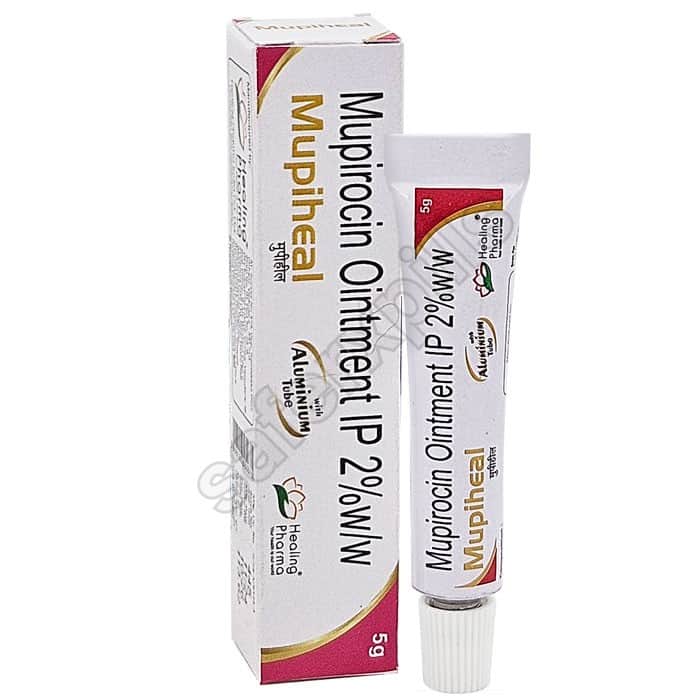

About T-Bact Cream
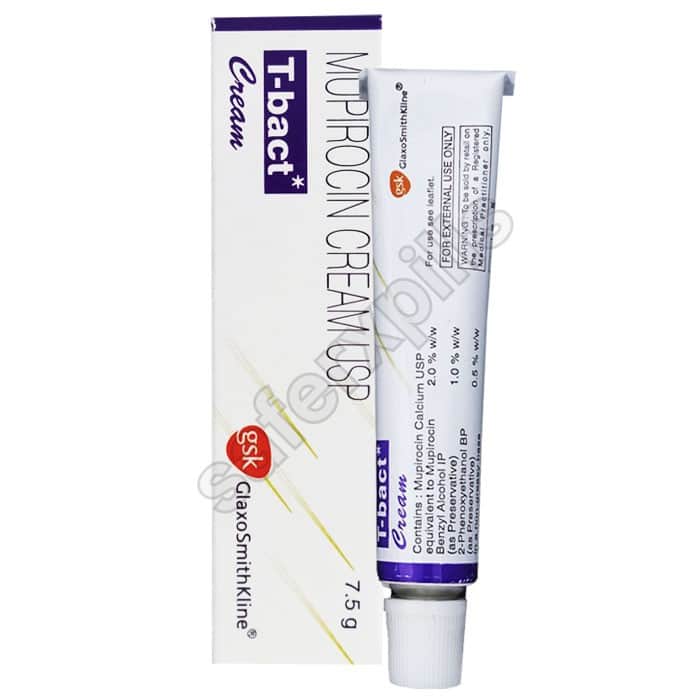
T-Bact Cream is GSK India's mupirocin cream: mupirocin calcium equivalent to 2% w/w mupirocin in a water-based, non-greasy cream. Its Indian prescribing information limits it to one job, "the topical treatment of secondarily infected traumatic lesions such as small lacerations, sutured wounds or abrasions". In plain words, a small cut, stitched wound or graze that has become infected. Our product photo shows a 7.5 g aluminium tube and carton printed "MUPIROCIN CREAM USP" with the GSK logo. We sell it in packs of 3, 6 and 12 tubes, from $6.75 a tube in the 12 pack before shipping.
Two things to know first. The cream and the ointment are not interchangeable on the label: GSK labels the cream for infected wounds, and the T-Bact Ointment for impetigo and other primary skin infections (see the comparison below). And our delivery takes 7 to 14 business days, while a full label course is 10 days. A wound that is infected today needs a pharmacist or doctor near you; this page is for people who already have a diagnosis and a plan.
T-Bact Cream at a glance
| Active ingredient | Mupirocin calcium, equivalent to mupirocin 2.0% w/w (GSK India prescribing information, section 2; the same words are printed on the tube in our photo). The US and UK cream labels put this as 21.5 mg mupirocin calcium per gram, equal to 20 mg mupirocin. |
| Cream base | "Non-greasy base" of xanthan gum, liquid paraffin, cetomacrogol, stearyl alcohol, cetyl alcohol and purified water, preserved with benzyl alcohol 1.0% w/w and 2-phenoxyethanol 0.5% w/w (GSK India 2 and 7). No polyethylene glycol. |
| Maker | GlaxoSmithKline Pharmaceuticals Ltd. Tata 1mg names the Mumbai company as marketer; PharmEasy gives GSK's Nashik plant (A-10 MIDC, Ambad-Pathardi) for the 7.5 g tube. |
| Labelled use | Secondarily infected small lacerations, sutured wounds or abrasions (GSK India 4.1). The US and UK cream labels add a size limit: up to 10 cm long or 100 cm² in area, due to susceptible Staphylococcus aureus or Streptococcus pyogenes. |
| Regulatory status | Mupirocin 2% cream is licensed in the US (generic mupirocin cream; Bactroban Cream is listed as discontinued), the UK (Bactroban 2% Cream, POM), Australia (Bactroban Cream, Schedule 4) and Canada (Stramucin cream). This Indian tube is not registered with the FDA, MHRA, TGA or Health Canada. |
| Label dose | 3 times a day for up to 10 days, depending on the response (GSK India 4.2; UK 4.2). US label: 3 times daily for 10 days. |
| Review point | Re-evaluate if there is no clinical response within 3 to 5 days (US 2; UK 4.2). The UK label adds: "The duration of treatment should not exceed 10 days." |
| Tube size | 7.5 g in our product photo and on Truemeds; PharmEasy shows the 7.5 g tube as discontinued and Apollo as sold out, while Tata 1mg and Apollo list a 10 g tube. The size you receive may be 10 g; read the carton when it arrives. |
| Price per tube | $7.00 (3 tubes), $6.83 (6 tubes), $6.75 (12 tubes), before shipping |
| Storage | "Store protected from direct sunlight at a temperature not exceeding 25°C. Do not freeze." (GSK India 8.4). No fridge needed. |
| Delivery | 7 to 14 business days; $25 shipping on orders under $149, free from $149 |
T-Bact Cream or T-Bact Ointment?
GSK India makes both, both are 2% mupirocin, and the names differ by one word. The labels treat them as two products with different jobs. This table compares the GSK India prescribing information for each (cream TBACT-N/PI/IN/2025/01; ointment TBACO/PI/IN/2025/01, both revised 20 June 2025), with US and UK label points marked.
| T-Bact Cream (this product) | T-Bact Ointment | |
|---|---|---|
| Form of mupirocin | Mupirocin calcium USP, equivalent to 2.0% mupirocin | Mupirocin IP 2.0% w/w |
| Base | Oil and water cream ("non-greasy"), with cetyl and stearyl alcohol, liquid paraffin and two preservatives | Polyethylene glycol 3350 and polyethylene glycol 400, no water and no preservative listed |
| What GSK India labels it for | Infected small cuts, sutured wounds and grazes only | Impetigo, folliculitis, furunculosis, ecthyma, infected eczema, infected bites, wounds and minor burns, plus prevention in small clean wounds |
| How often | 3 times a day, up to 10 days | 2 to 3 times a day, up to 10 days |
| Kidney and polyethylene glycol warning | No polyethylene glycol warning on the cream labels we checked. GSK India 4.2 gives the same dose in kidney impairment and the UK cream label says no dose change is needed; GSK India 5.3 still carries a line about elderly patients with moderate or severe kidney impairment that points to a 4.4 warning the cream label does not contain. | Yes: not where large amounts of polyethylene glycol could be absorbed, especially with moderate or severe kidney impairment |
| IV cannula and central line sites | Not mentioned on the GSK India cream label | "Not suitable" (GSK India ointment 4.4) |
| Ingredient warnings | UK cream 4.4: cetyl and stearyl alcohol "may cause local skin reactions (e.g. contact dermatitis)"; benzyl alcohol "may cause mild local irritation" | No excipient warning beyond the general contraindication for allergy to mupirocin or any ingredient (GSK India ointment 4.3) |
| Youngest age in US label | Established from 3 months (US cream 8.4) | Established from 2 months (US ointment 8.4) |
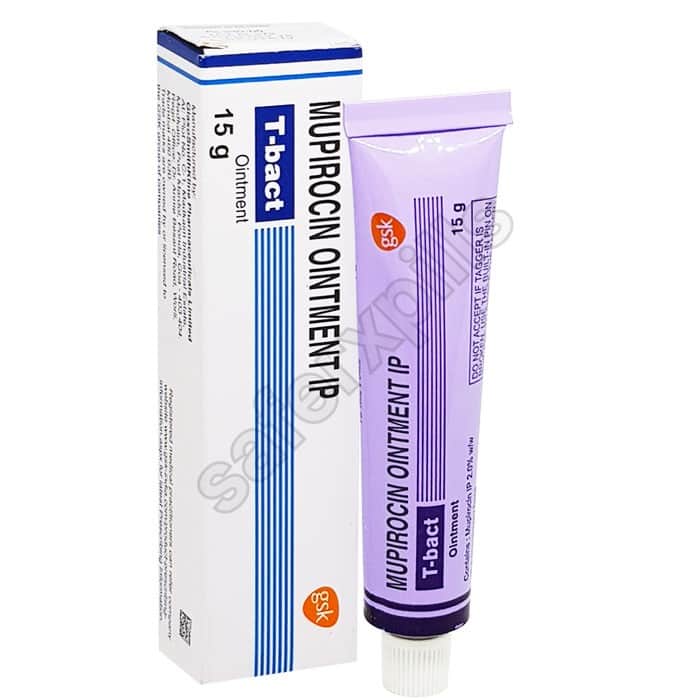
| Indian tube sizes | 7.5 g (our photo), 10 g on Tata 1mg | 5 g and 15 g (15 g in our photo) |
| Our price before shipping | $6.75 to $7.00 a tube | $11.00 to $16.00 a tube |
What this means in practice (our reading of the labels): if a doctor has diagnosed impetigo, the ointment is the GSK India product labelled for it, and the US ointment label is for impetigo too. The cream is the one labelled for an infected stitched wound or graze. If you have kidney disease, or the area is large or raw, the cream base avoids the polyethylene glycol issue that the ointment labels warn about, but check with your prescriber first. Neither is for the nose; a separate mupirocin nasal ointment exists for that (US cream 5.6).
Price per tube
Prices as of November 2026; the pack selector shows the current price.
| Pack | Price | Per tube | Shipping | Per tube with shipping |
|---|---|---|---|---|
| 3 tubes | $21.00 | $7.00 | $25 | $15.33 |
| 6 tubes | $41.00 | $6.83 | $25 | $11.00 |
| 12 tubes | $81.00 | $6.75 | $25 | $8.83 |
No pack reaches the $149 free shipping level, so the $25 is added to every order. Per gram, with 7.5 g tubes, that is $0.90 to $0.93 before shipping and $1.18 to $2.04 with shipping; if your tubes are 10 g, it is $0.68 to $0.70 before shipping and $0.88 to $1.53 with shipping (our arithmetic). Indian listed prices for the 7.5 g tube differ by site: PharmEasy shows an MRP of Rs 153.71 (listing marked discontinued), Truemeds Rs 204.66 (struck through, with a lower selling price); Tata 1mg shows Rs 218.09 for the 10 g tube.
How many tubes is one course? None of the labels gives grams per course. The US cream label sizes its animal safety margins against a human topical dose of "approximately 60 mg mupirocin per day" (8.1), which is about 3 g of cream a day (our arithmetic). Ten days at that rate is about 30 g, or four 7.5 g tubes; that is a ceiling, and a small infected graze uses far less (our estimate). So the 3 pack is at or above what most single wounds need, and the 12 pack (about 90 g at 7.5 g a tube) is several courses. GSK India 8.4 says "Any product remaining at the end of treatment should be discarded", so we do not suggest buying extra to keep.
Compared with US generics and local options
| Country | Licensed mupirocin cream | Cost or access |
|---|---|---|
| US | Generic mupirocin cream 2% (mupirocin calcium), prescription only, 15 g and 30 g tubes, from Sun, Glenmark, Alembic, Encube, Amneal, Zydus and others (FDA NDC directory). Bactroban Cream (GSK, NDA 050746, approved December 1997) is discontinued; the Federal Register determination says not for safety or effectiveness reasons (Drugs@FDA). | NADAC effective 21 October 2026: $0.81383 a gram for 15 g tubes (about $12.21 a tube) and $0.89073 a gram for 30 g tubes (about $26.72). These are pharmacy acquisition costs, not shelf prices. No Bactroban row. |
| UK | Bactroban 2% Cream (GSK, PL 00038/0372), POM, 15 g tube | Prescription from a GP, nurse or pharmacist prescriber |
| Canada | Stramucin cream (Glenmark, DIN 02483459), marketed; Bactroban Cream (DIN 02239757) was cancelled post market on 24 July 2020 | Federally non-prescription, but NAPRA lists mupirocin in Schedule I (prescription) in the provinces that use its schedules |
| Australia | Bactroban Cream (GSK, AUST R 63542), Schedule 4, 15 g tube | Prescription |
| SafeRxPills | Indian T-Bact Cream, 7.5 g tube in our photo | $8.83 to $15.33 a tube with shipping |
Plainly: per gram before shipping, our cream is close to what a US pharmacy pays for generic mupirocin cream (about 1.1 times NADAC with 7.5 g tubes, a little under it with 10 g tubes); once the $25 shipping is added it is about 1.1 to 2.5 times NADAC, depending on pack and tube size (our arithmetic). A US cash price will be higher than NADAC, but a US buyer still needs a prescription, and a local pharmacy can fill it today. For impetigo in the US, generic mupirocin ointment is the labelled form and costs pharmacies less per gram ($0.15 to $0.29 by NADAC; see the ointment page).
How to apply T-Bact Cream
From the GSK India cream prescribing information (4.2, 4.4, 8.4), the UK Bactroban Cream label (4.2, 4.4) and the US mupirocin cream label and Patient Information (2, 17). The prescriber's instructions come first.
- Clean hands. Wash them before and after each application (US Patient Information; GSK India 8.4 "Wash your hands after application").
- Use a swab, not a fingertip. Apply a small quantity "with a piece of clean cotton wool or gauze swab" (GSK India 4.2); the UK label says a thin layer.
- Three times a day. GSK India and UK: for up to 10 days, depending on the response. The US Patient Information says apply it for 10 days and not to stop early because symptoms can clear before the infection does.
- A dressing is allowed. "The treated area may be covered by a dressing" (GSK India 4.2). The US leaflet says a clean gauze pad, unless your prescriber told you to leave it uncovered.
- Nothing else on the same spot. Do not mix it with other creams, lotions or ointments: GSK India says mixing risks "dilution, resulting in a reduction in the antibacterial activity and potential loss of stability of the mupirocin in the cream".
- Skin only. Not for the eyes or nose (GSK India 4.4); the US leaflet adds the mouth and vagina. If it gets in an eye, rinse with water "until the cream residues have been removed" (GSK India 4.4).
- Day 3 to 5 check. If the wound is not improving, contact the prescriber (US 17; UK 4.2). Tata 1mg says the same: "If your skin condition does not improve within 3 to 5 days, seek medical advice."
- Stop at the end of the course and throw away what is left (GSK India 8.4).
Side effects
The US mupirocin cream label (6.1) pools 2 double-blind trials in which 339 people used the cream plus an oral placebo (the comparison was oral cephalexin). Adverse reactions occurred in 28 people (8.3%). Those reported in at least 1%: headache 1.7%, rash 1.1% and nausea 1.1%. Under 1%: abdominal pain, burning at the application site, cellulitis, dermatitis, dizziness, itching, secondary wound infection and ulcerative stomatitis. In a smaller supportive trial in 82 people with infected eczema: nausea 4.9%, headache and application site burning 3.6% each, itching 2.4%.
| Frequency | UK Bactroban Cream label (4.8) | GSK India T-Bact Cream (4.8) |
|---|---|---|
| Common (1 in 100 to 1 in 10) | Application site hypersensitivity reactions, including urticaria, itching, redness, burning sensation, contact dermatitis and rash | Cutaneous hypersensitivity reactions |
| Very rare (mostly post-marketing reports) | Systemic allergic reactions including anaphylaxis, generalised rash, urticaria and angioedema | The same |
The UK label also notes skin dryness and redness in irritancy studies in volunteers. If a sensitisation reaction or severe local irritation happens, GSK India 4.4 says treatment "should be discontinued, the product should be wiped off and appropriate alternative therapy for the infection instituted".
When to get urgent help
- Allergic reaction: stop the cream and "call your healthcare provider or go to the nearest emergency room right away" for hives, swelling of the face, lips, mouth or tongue, a rash over the whole body, trouble breathing or wheezing, dizziness, fast heartbeat, or pounding in your chest (US Patient Information). For throat swelling or breathing trouble, call 911 (US, Canada), 999 (UK) or 000 (Australia) (our advice).
- Diarrhoea during or after use: the US Patient Information says call your healthcare provider or go to the nearest emergency room right away. GSK India 4.4: with prolonged or significant diarrhoea or abdominal cramps, "treatment should be discontinued immediately and the patient investigated further".
- A wound that is getting worse: spreading redness, increasing pain or swelling, pus, red streaks, a fever or feeling unwell need same-day medical care, not more cream (our advice). Cellulitis appears among the under 1% reactions in the US trials (6.1).
- Wounds the label does not cover: deep or gaping cuts, bites, burns and anything larger than 10 cm long or 100 cm² are outside the US and UK cream indications. Get them assessed (our advice).
- Swallowed by a child: UK 4.9 says experience with overdose is limited and care is supportive. Call Poison Control (US 1-800-222-1222) or the Poisons Information Centre (Australia 13 11 26) (our advice).
Who should not use T-Bact Cream
Do not use it:
- if you have had an allergic reaction to mupirocin or any ingredient of the cream, including cetyl or stearyl alcohol, benzyl alcohol or phenoxyethanol (GSK India 4.3; UK 4.3; US 4)
- in or near the eyes, or inside the nose: "not suitable for ophthalmic use and intranasal use" (GSK India 4.4; UK 4.4); US: "not for intranasal, ophthalmic, or other mucosal use" (2)
- at the same time as another cream, lotion or ointment on the same area (GSK India 4.2; US 2)
- for longer than 10 days: the UK label says treatment "should not exceed 10 days" (4.2)
- on skin that is not infected, or on rashes, acne or impetigo without a prescriber's advice; the cream's labelled use is infected traumatic lesions (our advice, based on GSK India 4.1)
Ask a doctor or pharmacist first:
- Babies: UK 4.2: safety and efficacy under one year "have not yet been established. No data are available." US Patient Information: not known under 3 months.
- Pregnancy: UK 4.6: mupirocin "should only be used in pregnancy when the potential benefits outweigh the possible risks of treatment". GSK India 4.6: "Adequate human data on use during pregnancy are not available." US 8.1: absorption through intact skin is minimal.
- Breastfeeding: a cracked nipple being treated "should be thoroughly washed prior to breast feeding" (GSK India 4.6; UK 4.6). The US label says the same for a treated breast or nipple (8.2).
- Known MRSA: the US label (12.4) says it is appropriate to test MRSA for mupirocin susceptibility before use.
- Skin that reacts to cosmetics: the cetyl and stearyl alcohol in the base can cause contact dermatitis (UK 4.4).
Other medicines: GSK India 4.5 says "No drug interactions have been identified"; the UK cream label says no interaction studies have been performed (4.5).
What the evidence shows
- Against an oral antibiotic: in 2 randomised, double-blind trials in infected lacerations, sutured wounds and abrasions up to 10 cm, clinical efficacy at follow up was 96.1% with mupirocin cream (n = 231) and 93.1% with oral cephalexin (n = 219). Pathogen eradication was 100% in both groups (US label 14).
- Children: 93 children aged 2 weeks to 16 years were in those trials per protocol, but only 3 under 2 years used the cream. Efficacy was 97.7% (43 of 44) with the cream and 93.9% (46 of 49) with cephalexin (US label 14).
- Absorption: in 26 people who applied the cream 3 times daily for 5 days to lesions larger than the labelled size, the inactive metabolite monic acid appeared in the urine of 90% of children and 44% of adults; the label calls absorption "minimal" overall (US 12.3).
Our reading: for a small infected wound with sensitive bacteria, the cream did about as well as a course of tablets in these trials, without exposing the whole body to an antibiotic. The trials are small, and the label gives no date for them, and they say nothing about wounds bigger than the label limit.
Resistance
Mupirocin resistance is the long-term cost of using it casually. The US cream label (12.4) reports high-level, plasmid-mediated resistance in increasing numbers of S. aureus isolates and, more often, in coagulase-negative staphylococci; mupirocin resistance is more common in methicillin-resistant than in methicillin-susceptible staphylococci. The GSK India label (5.2) explains the two routes: low-level resistance from changes in the bacteria's own enzyme, and high-level resistance from a separate enzyme carried on a plasmid. NICE's impetigo guideline (NG153) warns that "extended or recurrent use of topical fusidic acid or mupirocin may increase the risk of developing antimicrobial resistance". In our view that rules out using it as a general first aid cream for clean scratches, sharing a tube in the family, or saving tubes for next time. The ointment page covers the New Zealand experience with over-the-counter mupirocin.
Other topical antibiotics we sell
| Product | How it differs |
|---|---|
| T-Bact Ointment | Same maker and strength, polyethylene glycol ointment; GSK India labels it for impetigo and other primary infections |
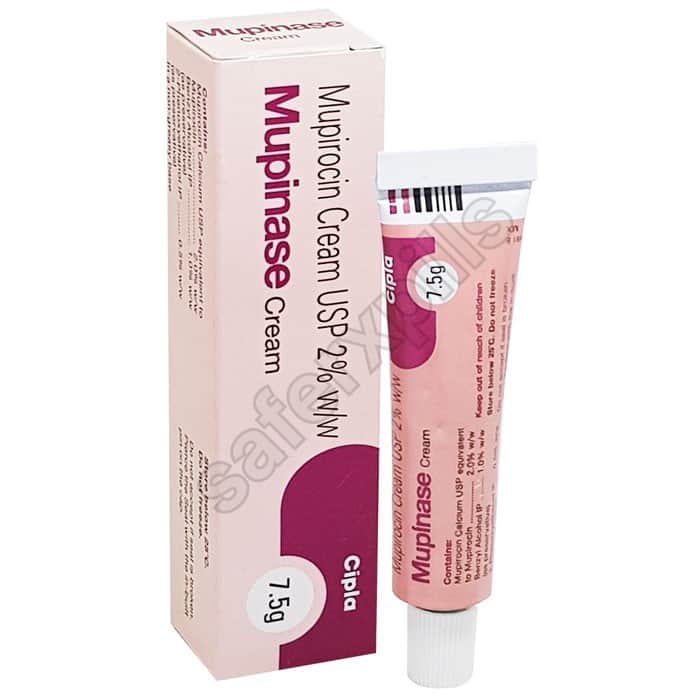
| Mupinase Cream | Cipla's mupirocin 2% cream |
| Mupiheal Ointment | Healing Pharma's mupirocin 2% ointment |
| Fucidin Cream | Fusidic acid 2%, a different antibiotic; NICE's first choice topical antibiotic for impetigo when hydrogen peroxide cream is unsuitable |
| Flutibact Ointment | Mupirocin with fluticasone, a steroid; for a different situation and with its own limits |
Prescription and legal status
- India: the tube in our photo reads "WARNING: To be sold by retail on the prescription of a Registered Medical Practitioner only". Truemeds marks it "Prescription required" and Apollo "Prescription Medicine"; Tata 1mg accepts orders against a doctor's prescription.
- US: mupirocin cream "is a prescription medicine" (US Patient Information), and the mupirocin cream ANDAs we checked in Drugs@FDA are all marked Prescription. This Indian tube is not registered with the FDA. The FDA says personal importation of drugs is illegal in most circumstances.
- UK: Bactroban 2% Cream is a prescription only medicine (POM, emc). This Indian tube is not registered with the MHRA.
- Canada: the Drug Product Database lists Stramucin cream as marketed under non-prescription drugs (checked 11 November 2026), while NAPRA's National Drug Schedules place mupirocin in Schedule I, which needs a prescription, in the provinces that use them. This Indian tube is not registered with Health Canada.
- Australia: mupirocin is Schedule 4 (prescription only) in the Poisons Standard October 2026 (F2026L01327), and Bactroban Cream is listed as Schedule 4 (Australian Commission on Safety and Quality in Health Care, Medicine Finder). This Indian tube is not registered with the TGA.
Check the rules where you live before you order.
Buying genuine T-Bact Cream
The MHRA warns: "Any medicine not authorised for sale in the UK can be unsafe or ineffective and there is no way of knowing what is in them or the negative health effects they can have." Its advice to UK buyers is: "Only use UK-registered pharmacies, including online pharmacies displaying the official green cross logo". That warning applies to this tube, which is not authorised in the UK. On arrival, compare the pack with our photo: "T-bact Cream", "MUPIROCIN CREAM USP", mupirocin calcium equivalent to mupirocin 2.0% w/w, benzyl alcohol and 2-phenoxyethanol as preservatives, the tube weight, GSK branding, a batch number, an expiry date and an unbroken seal. Matching packaging does not prove a tube is genuine, because packaging can be copied. If a tube causes an unexpected reaction, stop using it, get medical advice, and report it to the MHRA Yellow Card scheme, FDA MedWatch, the TGA or Health Canada, as well as to us. Keep it at or below 25 °C, out of sunlight, unfrozen and away from children (GSK India 8.4).
Delivery
T-Bact Cream ships to the US, UK, Australia and Canada in plain, tracked packaging. Most orders arrive in 7 to 14 business days, so do not wait for a parcel to treat a wound that is infected now. Orders under $149 pay $25 shipping; from $149 shipping is free. Details are on our shipping page and refund policy.
Related guides
Sources
- T-BACT CREAM (Mupirocin Cream USP) prescribing information, GlaxoSmithKline Pharmaceuticals Limited, Mumbai, version TBACT-N/PI/IN/2025/01, revised 20 June 2025, sections 2, 4.1 to 4.9, 5.2, 7 and 8.3 to 8.4. GSK India
- T-BACT OINTMENT prescribing information, GSK India, version TBACO/PI/IN/2025/01, revised 20 June 2025 (for the cream and ointment comparison). GSK India
- Mupirocin Cream USP, 2% US label and Patient Information (Sun Pharmaceutical Industries, Inc.; ANDA 207116), DailyMed setid 6719ffba-3430-4fa9-b65b-c5c195ee1b35, SPL version 3, published 13 April 2026, revised September 2025, sections 1, 2, 3, 4, 5.1 to 5.6, 6.1, 6.2, 8.1, 8.2, 8.4, 11, 12.3, 12.4, 14, 16, 17. DailyMed
- Mupirocin Ointment USP 2% US label (Glenmark), DailyMed setid 06a4ee22-d8f8-4a8a-8666-82b14f2d8476, section 8.4 (for the ointment age). DailyMed
- Bactroban 2% Cream, Summary of Product Characteristics, Beecham Group plc trading as GlaxoSmithKline UK, PL 00038/0372, text revised 6 November 2024, sections 2, 4.1 to 4.9, 6.1, 6.4, 6.5; legal category POM. emc
- US Food and Drug Administration, Drugs@FDA: Bactroban Cream NDA 050746 (discontinued; Federal Register determination not for safety or effectiveness reasons) and current mupirocin cream ANDAs (prescription); openFDA NDC directory for tube sizes; checked 31 October and 11 November 2026.
- NADAC (National Average Drug Acquisition Cost), data.medicaid.gov, as of 11 November 2026: mupirocin 2% cream rows effective 21 October 2026 (15 g NDCs $0.81383 per gram; 30 g NDCs $0.89073 per gram); mupirocin 2% ointment $0.14519 to $0.29301 per gram; no Bactroban row.
- Health Canada Drug Product Database: Stramucin DIN 02483459 (marketed, non-prescription drugs, checked 11 November 2026); Bactroban Cream DIN 02239757 (cancelled post market 24 July 2020, checked 31 October 2026).
- NAPRA. National Drug Schedules: mupirocin in Schedule I, checked 31 October 2026. NAPRA
- Australian Commission on Safety and Quality in Health Care, Medicine Finder: Bactroban Cream, mupirocin calcium 2%, AUST R 63542, Schedule 4, 15 g. ACSQHC; Poisons Standard October 2026 (F2026L01327), Schedule 4 "MUPIROCIN".
- NICE. Impetigo: antimicrobial prescribing (NG153), 26 February 2020, Tables 1 and 2 and the resistance statement. NICE
- Indian listings for T-Bact Cream (tube size, maker, price, prescription status, storage): PharmEasy (7.5 g), Truemeds (7.5 g), Apollo Pharmacy (7.5 g and 10 g) and Tata 1mg (10 g), checked 11 November 2026; our product photo of the Indian carton and tube.
- MHRA. 20 million illegal erectile dysfunction pills seized as MHRA warns against risky online buys, 13 February 2026. GOV.UK.
- US Food and Drug Administration. Personal Importation. FDA
This page is for information and is not medical advice. An infected wound that is spreading, deep, on the face, in a baby, or in someone with a fever needs a doctor or pharmacist now.
Frequently asked questions
What is T-Bact Cream?
T-Bact Cream is GSK India's mupirocin cream: mupirocin calcium equivalent to 2% w/w mupirocin in a non-greasy cream base preserved with benzyl alcohol and 2-phenoxyethanol. The GSK India prescribing information labels it for secondarily infected traumatic lesions such as small lacerations, sutured wounds or abrasions. Our product photo shows a 7.5 g tube.
Is T-Bact Cream the same as Bactroban Cream?
Both are GSK mupirocin calcium creams equivalent to 2% mupirocin, with matching excipient lists (xanthan gum, liquid paraffin, cetomacrogol, stearyl and cetyl alcohol, benzyl alcohol, phenoxyethanol, water) and the same dose of 3 times a day for up to 10 days. Bactroban Cream is the UK and Australian brand; T-Bact is the Indian one. We have seen no study comparing the two packs directly.
What is the difference between T-Bact Cream and T-Bact Ointment?
The cream is an oil and water cream with mupirocin calcium; the ointment is mupirocin in a polyethylene glycol base. GSK India labels the cream only for infected small cuts, stitched wounds and grazes, and the ointment for impetigo, folliculitis, boils, infected eczema and infected wounds. The ointment labels warn about polyethylene glycol absorption in kidney impairment and about IV cannula sites; the cream labels we checked do not.
Can I use T-Bact Cream for impetigo?
Impetigo is not on the cream's label in India, the US or the UK; those labels limit the cream to secondarily infected traumatic lesions. The GSK India T-Bact Ointment and the US mupirocin ointment are labelled for impetigo. NICE's first step for localised impetigo is hydrogen peroxide 1% cream, then fusidic acid, with mupirocin as the alternative when fusidic acid resistance is suspected or confirmed. Follow the prescriber who diagnosed it.
How much does T-Bact Cream cost per tube?
As of November 2026, before shipping: $7.00 a tube in the 3 pack ($21), $6.83 in the 6 pack ($41) and $6.75 in the 12 pack ($81). Every pack is under $149, so $25 shipping applies, which makes it $15.33, $11.00 and $8.83 a tube. The pack selector shows the current price. A US pharmacy pays about $12.21 for a 15 g generic mupirocin cream tube (NADAC, effective 21 October 2026).
How do I apply T-Bact Cream?
Wash your hands, then use clean cotton wool or a gauze swab to put a small amount on the infected area, 3 times a day. You may cover it with a dressing. Do not mix it with other creams, lotions or ointments on the same area, keep it out of the eyes and nose, and wash your hands afterwards (GSK India prescribing information; US Patient Information).
How long should I use T-Bact Cream?
For the time your prescriber sets, up to 10 days: GSK India and the UK label say up to 10 days depending on the response, and the UK label says treatment should not exceed 10 days. The US label says 10 days. If the wound is not better after 3 to 5 days, contact the prescriber. GSK India says any cream left at the end of treatment should be discarded.
What are the side effects of T-Bact Cream?
In 2 US trials (339 people on the cream), the reactions reported in at least 1% were headache 1.7%, rash 1.1% and nausea 1.1%. The UK label lists application site reactions such as itching, redness, burning, rash and contact dermatitis as common. Serious allergic reactions are very rare: stop the cream and get emergency help for swelling of the face or tongue, trouble breathing or a rash over the whole body.
Who should not use T-Bact Cream?
Anyone allergic to mupirocin or an ingredient of the cream, including cetyl or stearyl alcohol, benzyl alcohol or phenoxyethanol. It is not for the eyes or nose. Ask a doctor first for babies (not established under 1 year in the UK label, under 3 months in the US leaflet), in pregnancy or breastfeeding, for known MRSA, and for wounds that are deep, large, burns or bites.
Do I need a prescription for T-Bact Cream?
The Indian tube is printed for sale on a registered medical practitioner's prescription only. Mupirocin cream is prescription only in the US, the UK and Australia. In Canada it is federally non-prescription, but NAPRA's schedules, used by most provinces, list mupirocin in Schedule I (prescription). This Indian tube is not registered with the FDA, MHRA, TGA or Health Canada, and the FDA says personal importation is illegal in most circumstances.
How long does delivery take, and how do I check the tube?
Delivery takes 7 to 14 business days in plain, tracked packaging, which is longer than a 10 day course, so an infected wound should be treated locally first. On arrival, check the carton and tube against our photo: T-bact Cream, Mupirocin Cream USP, 2.0% w/w, GSK, batch number, expiry and an intact seal. These checks cannot prove a tube is genuine. Report any unexpected reaction to your regulator and to us.
Medical References
- 1.T-BACT CREAM (Mupirocin Cream USP) prescribing information, GlaxoSmithKline Pharmaceuticals Limited, Mumbai, version TBACT-N/PI/IN/2025/01, revised 20 June 2025, sections 2, 4.1 to
- 2.T-BACT OINTMENT prescribing information, GSK India, version TBACO/PI/IN/2025/01, revised 20 June 2025 (for the cream and ointment comparison). GSK India
- 3.Mupirocin Cream USP, 2% US label and Patient Information (Sun Pharmaceutical Industries, Inc.; ANDA 207116), DailyMed setid 6719ffba-3430-4fa9-b65b-c5c195ee1b35, SPL version 3, pub
- 4.Mupirocin Ointment USP 2% US label (Glenmark), DailyMed setid 06a4ee22-d8f8-4a8a-8666-82b14f2d8476, section 8.4 (for the ointment age). DailyMed
- 5.Bactroban 2% Cream, Summary of Product Characteristics, Beecham Group plc trading as GlaxoSmithKline UK, PL 00038/0372, text revised 6 November 2024, sections 2, 4.1 to 4.9, 6.1, 6
- 6.NAPRA. National Drug Schedules: mupirocin in Schedule I, checked 31 October 2026. NAPRA
- 7.Australian Commission on Safety and Quality in Health Care, Medicine Finder: Bactroban Cream, mupirocin calcium 2%, AUST R 63542, Schedule 4, 15 g. ACSQHC; Poisons Standard October
- 8.NICE. Impetigo: antimicrobial prescribing (NG153), 26 February 2020, Tables 1 and 2 and the resistance statement. NICE
- 9.US Food and Drug Administration. Personal Importation. FDA
Sources: U.S. National Library of Medicine (DailyMed, PubMed), openFDA
Related articles
Epiduo vs Epiduo Forte: How Adapalene and Benzoyl Peroxide Gel Works, Results Timeline, Side Effects and Cost
Epiduo combines adapalene with benzoyl peroxide 2.5% in one once-daily acne gel, in 0.1% and 0.3% (Forte) strengths. This guide covers how the two strengths differ in the trials, how to apply the gel, what to expect week by week, the irritation rates from the US labels, bleaching of fabric and hair, the exact pregnancy wording, the over-the-counter Differin Epiduo, and what US pharmacies pay for brand and generic versions.
Read article
Dapsone Gel (Aczone) 5% vs 7.5%: How to Use It, Results, Side Effects, Warnings and Cost
Dapsone gel (Aczone) is a prescription acne gel in two strengths: 5% twice daily and 7.5% once daily. This guide covers how to apply each, who it is approved for, what the four label trials showed against vehicle, side effects with label rates, the methemoglobinemia and G6PD warnings, the orange staining with benzoyl peroxide, pregnancy and breastfeeding, generic approvals and what US pharmacies pay per gram.
Read article
Generic Otezla (Apremilast): Is It Available in the US, What It Costs, Dosing and Side Effects
The FDA has approved generic apremilast from 13 companies, but none is on sale in US pharmacies as of October 2026. This guide covers the patent dates, what apremilast treats, the 5-day starting schedule, kidney dosing, trial results, side effects and warnings, and what a month of Otezla costs pharmacies compared with Indian apremilast.
Read articleCustomer Reviews
No reviews yet. Bought T-Bact Cream? Tell other buyers how it went.