
Hirudal Cream
Generic: Mucopolysaccharide Polysulfateby Eris Oaknet Healthcare
Select pack size
Similar medicines
View all
About Hirudal Cream
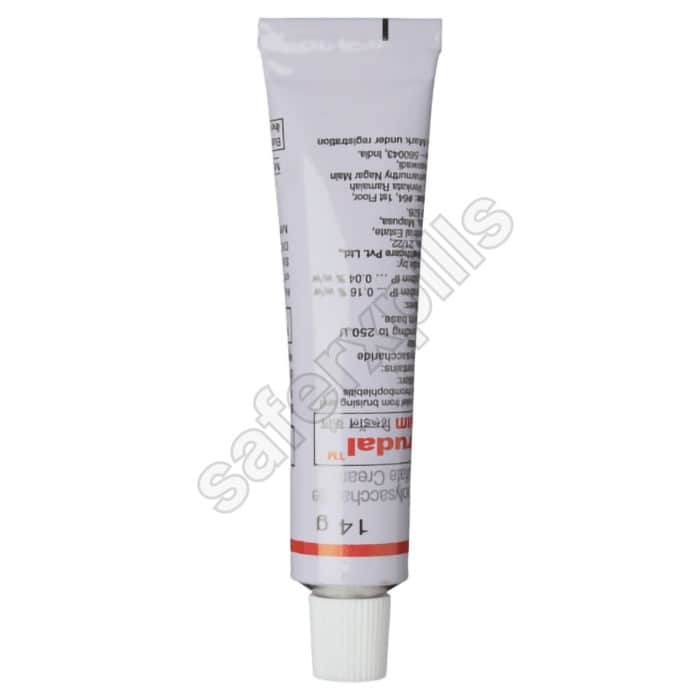
Hirudal Cream is a heparinoid cream for sore, inflamed veins just under the skin (superficial thrombophlebitis) and for bruises. It is made in India and sold by Oaknet Healthcare (Eris Oaknet Healthcare on some listings), and it comes in a 14 g tube. The active ingredient is mucopolysaccharide polysulfate, 250 IU in each gram, which is the same number of units per gram as UK Hirudoid Cream (25,000 units per 100 g; our arithmetic). We sell it in packs of 3, 6 and 12 tubes, from $4.38 a tube in the 12 pack before shipping.
Three things to know before you buy. First, it is a cream for small, surface problems. It does not treat a deep vein thrombosis (DVT), and in our view, a red, swollen, painful leg needs a medical check the same day (the NHS says ask for an urgent GP appointment or call 111 if you think you have a DVT). Second, the trial evidence for heparinoid creams is small and old: in our reading they may ease local pain a little, and no trial shows they stop a clot from spreading. Third, in the UK and Australia the same kind of cream (Hirudoid) is sold in local pharmacies without a prescription, so buying it there is usually simpler and cheaper than ordering from us.
Hirudal Cream at a glance
| Active ingredient | Mucopolysaccharide polysulfate (a heparinoid), 250 IU per gram (Tata 1mg, PharmEasy, Truemeds, Netmeds and Apollo Pharmacy listings) |
| Brand and maker | Hirudal, from Oaknet Healthcare (Tata 1mg, Truemeds, Apollo); Netmeds names Eris Oaknet Healthcare and PharmEasy names Eris Life Sciences, Goa |
| Used for | Superficial thrombophlebitis and bruises, the uses licensed for Hirudoid Cream in the UK (SmPC 4.1) |
| Regulatory status | Not approved by the FDA; we found no heparinoid cream in Health Canada's drug database. Hirudoid is licensed in the UK and registered in Australia, but this Indian pack is not registered with the MHRA or the TGA. |
| Usual use | UK label: 5 to 15 cm of cream, up to four times a day, gently massaged in |
| How long | German Hirudoid ointment (Salbe) leaflet: usually 1 to 2 weeks for superficial vein inflammation and up to 10 days for bruises and other blunt injuries |
| Packs | 3, 6 and 12 tubes of 14 g |
| Price per tube | $5.00 (3 tubes) down to $4.38 (12 tubes), before shipping |
| Storage | Room temperature: below 30 °C (Truemeds); cool place, do not freeze (Netmeds). The UK Hirudoid label says below 25 °C. |
| Delivery | 7 to 14 business days to the US, UK, Australia and Canada; $25 shipping under $149, free from $149 |
Price per tube
Prices below are as of October 2026; the pack selector shows the current price.
| Pack | Price | Per tube | Shipping | Per tube with shipping |
|---|---|---|---|---|
| 3 tubes (42 g) | $15.00 | $5.00 | $25 | $13.33 |
| 6 tubes (84 g) | $27.50 | $4.58 | $25 | $8.75 |
| 12 tubes (168 g) | $52.50 | $4.38 | $25 | $6.46 |
Every pack is under the $149 free shipping threshold, so the flat $25 shipping is most of the cost of a small order. Per gram, the cream costs $0.31 to $0.36 before shipping and $0.46 to $0.95 with shipping (our arithmetic). We cannot tell you how many tubes a course needs: the labels measure each dose as a length of cream (5 to 15 cm), not in grams, and the amount depends on the size of the area. For one bruise or one sore vein, the 3 tube pack is the sensible first order. The 12 pack is far more than a single course.
Compared with Hirudoid
| Hirudal Cream (India) | Hirudoid Cream (UK) | Hirudoid 0.3% cream (Australia) | |
|---|---|---|---|
| Active ingredient | Mucopolysaccharide polysulfate 250 IU per g | Heparinoid 0.3% w/w, equal to 25,000 units per 100 g (250 per g) | Heparinoids 3 mg per g |
| Maker | Oaknet Healthcare / Eris (India) | Thornton & Ross (STADA group) | Sponsor not shown on ARTG summary (ARTG 21033) |
| Status | Not registered in the UK, US, Australia or Canada | Licensed, PL 00240/0556; pharmacy medicine (P) | Registered medicine, not scheduled; not on the PBS; ARTG indication includes "various inflammatory conditions of the veins requiring medical supervision" |
| Tube sizes | 14 g | 14, 40 and 50 g (SmPC 6.5) | 5, 14, 20 and 40 g |
The 250 units per gram on the Hirudal listings is the same number as UK Hirudoid's 25,000 units per 100 g (our arithmetic). The labels do not say whether the units are measured the same way, so this does not show the two creams are equivalent. The Indian listings do not give a weight percentage or say where the active ingredient comes from; the German Hirudoid ointment leaflet says its chondroitin polysulfate comes from cattle windpipes (bovine trachea). We found no published study comparing Hirudal with Hirudoid. Heparinoid cream is not sold as an approved medicine in the US, so there is no US price (NADAC) to compare. In the UK you can buy Hirudoid from a pharmacy without a prescription, and in Australia it is not scheduled, which in our understanding means no prescription is needed, and a pharmacist can check whether a cream suits your problem: we would suggest that first.
In Germany, Hirudoid is sold as an ointment (Salbe) containing 300 mg chondroitin polysulfate per 100 g (25,000 units). We quote its leaflet where the UK cream leaflet is silent, but it is a different product, and its own dose (3 to 5 cm, 2 to 3 times a day) differs from the UK cream's.
Not a treatment for deep vein thrombosis
Superficial thrombophlebitis is inflammation of a vein just under the skin, usually in the leg, often with a small clot. The Royal Berkshire NHS clot clinic leaflet says it is "not the same as, and much less serious than, deep vein thrombosis (DVT)", and that it usually settles within 2 to 6 weeks. But the clot can spread: "If the clot extends to where the superficial and deep, larger veins join, a DVT can develop." That leaflet says this is more likely in the upper thigh or groin, behind the knee, in a vein that was not varicose before, after a previous DVT, or if you are immobile.
Heparinoid cream works locally; the UK leaflet calls it "a local anti-coagulant preparation". A small amount is absorbed, but the UK label says peak blood levels after use on the skin are "below the threshold of physiological relevance for coagulation" (SmPC 5.2). In our reading, that means it does not thin your blood the way a blood thinner does, so it cannot treat or prevent a DVT. The Royal Berkshire leaflet says blood thinning tablets such as apixaban or rivaroxaban "may be recommended if the thrombophlebitis is extensive or near a deep vein", and also lists fondaparinux injections. In a Cochrane review, one large placebo-controlled trial of 3,002 people found that fondaparinux injections cut the risk of a symptomatic DVT or lung clot, and the authors said prophylactic dose fondaparinux for 45 days "appears to be a valid therapeutic option" for most people; the trials of creams and gels gave no data on clots (Di Nisio 2018). Do not use this cream instead of a medical assessment.
How to use Hirudal Cream
- Use it on the skin only. The UK label says "For external use only" and the UK leaflet adds "Do NOT swallow".
- Pierce the tube seal with the spike on the cap if your tube has one (UK Hirudoid cream and German Hirudoid ointment leaflets; we have not seen how the Hirudal tube is sealed).
- Apply 2 to 6 inches (5 to 15 cm) of cream to the affected area, up to four times a day, and massage it in gently (UK label 4.2). "Do not exceed this dose" (UK leaflet).
- If the area is tender to touch, the UK leaflet says you can massage the cream into the skin around it. The German Hirudoid ointment leaflet goes further: for especially painful inflammation, spread the ointment gently over the area and its surroundings, cover it with a dressing, and do not rub or massage it in.
- Wash your hands afterwards, unless your hands are the area being treated (UK leaflet).
- Use it on unbroken skin only. Keep it away from the eyes, mouth, genital and anal areas, and do not use it on large areas of skin (UK label 4.3 and leaflet).
- For an inflamed leg vein, the German ointment leaflet says the main treatment is compression (pressure from outside, such as support stockings), and it lists the ointment for vein inflammation that cannot be treated with compression. The Royal Berkshire leaflet also lists keeping active, raising the leg when resting, a hot cloth, and anti-inflammatory painkillers or gels.
- See a doctor if your symptoms persist or get worse (UK label 4.4). The German ointment leaflet says to see a doctor if there is no improvement after 14 days of regular use.
Fire warning from the UK label (4.4): patients should be told "not to smoke or go near naked flames" because of the "risk of severe burns". "Fabric (clothing, bedding, dressings etc) that has been in contact with this product burns more easily and is a serious fire hazard. Washing clothing and bedding may reduce product build-up but not totally remove it."
What the evidence shows
Heparinoid creams have been studied since the 1970s, but the trials are small and old:
- Mehta 1975 (PMID 51664): a double blind trial in 100 surgical patients who developed thrombophlebitis after a drip. The abstract reports that the time to relief of local symptoms and signs differed significantly between heparinoid ointment and placebo; it does not give the figures.
- Bergqvist 1990 (PMID 1696799): 68 patients with spontaneous or drip-related thrombophlebitis were given Hirudoid cream, piroxicam gel or placebo. Signs and symptoms improved significantly in all three groups, including placebo, and the abstract reports no statistical difference between the treatment groups.
- Cochrane review of arm vein phlebitis after drips (Di Nisio 2015, PMID 26588711): 13 studies, 917 people. Topical treatments "such as heparinoid or diclofenac gels" improved pain compared with placebo or no treatment, but the authors called the evidence "limited and of low quality".
- Cochrane review of leg vein thrombophlebitis (Di Nisio 2018, PMID 29478266): 33 studies, 7,296 people. Topical treatments improved local symptoms compared with placebo, but no data were given on DVT or on the clot spreading, and the authors said the evidence on topical treatment "is too limited".
In our PubMed search we found no placebo-controlled trial of heparinoid cream for everyday bruises; the bruise use rests on the UK licence. We found no trial of Hirudal itself. Our reading: the cream may ease local pain and tenderness a little, and it is unlikely to harm intact skin, but it does nothing about the risk that a vein clot spreads.
Side effects
The UK SmPC lists no known side effects (4.8). The UK leaflet says: "Rarely, Hirudoid Cream can cause a rash in sensitive individuals. If this occurs, STOP using the cream and tell your doctor or pharmacist." The German ointment leaflet says hypersensitivity reactions such as skin redness occur very rarely and usually settle quickly after stopping.
Some reactions come from the other ingredients. The UK Hirudoid cream contains cetostearyl alcohol and lanolin, which "may cause local skin reactions (e.g. contact dermatitis)", and parabens, which "may cause allergic reactions (possibly delayed)" (SmPC 4.4). The Truemeds listing says Hirudal contains methylparaben 0.16% and propylparaben 0.04%; we have not confirmed whether it also contains lanolin or cetostearyl alcohol, so read the carton if you react to these. The Indian listings mention itching and rash (Tata 1mg, Truemeds).
When to get urgent help
- Signs of a deep vein clot: throbbing pain in one leg (rarely both), usually in the calf or thigh; swelling in one leg; red, blue or darkened skin around the painful area; or swollen veins (NHS). The NHS says to ask for an urgent GP appointment or get help from NHS 111 if you think you have a DVT. Outside the UK, see a doctor the same day (our advice).
- Signs of a lung clot: leg pain and swelling with shortness of breath or chest pain. The NHS says call 999 or go to A&E; "Do not drive to A&E." Elsewhere, call 911 in the US and Canada or 000 in Australia (our advice).
- A spreading vein clot: the Royal Berkshire leaflet says see a doctor urgently if inflammation, redness or hardness spreads up your inner thigh towards your groin or is around the back of your knee or calf, if your whole leg swells, or if the pain becomes suddenly worse.
- Infection: worse pain, spreading redness and feeling generally unwell (Royal Berkshire leaflet). Infection needs antibiotics, not this cream.
- Allergy: swelling of the face, lips, tongue or throat, trouble breathing, or widespread hives: get emergency help (general safety advice; true allergy to heparinoid is rare). Stop the cream if a rash appears where you applied it (UK leaflet).
- Swallowing: the UK leaflet says swallowing some cream is unlikely to be serious, but you should contact your doctor or a hospital casualty department.
Who should not use Hirudal Cream
The UK Hirudoid label (SmPC 4.3 and leaflet) says do not use it:
- if you are allergic to heparinoid or any other ingredient of the cream
- on broken skin, or on large areas of skin
- on sensitive areas or mucous membranes, such as the mouth, eyes or genital and anal areas
- in children under 5 years of age
The Tata 1mg listing's expert advice says not to use Hirudal in children under 12, while its FAQ says children may use it under medical supervision; ask a doctor before using it on any child.
Talk to a doctor or pharmacist first if:
- you are pregnant or breastfeeding. The UK SmPC says "There is no evidence to suggest that Hirudoid should not be used during pregnancy and lactation" (4.6), and the UK leaflet asks you to check with your doctor or pharmacist before use.
- the sore vein is in your leg and you are pregnant, have recently had surgery or a long flight, have had a clot before, take the pill or HRT, or have cancer. The NHS lists all of these as making a DVT more likely, so in our view the vein should be checked by a doctor rather than treated with a cream alone.
- you get phlebitis again and again, especially in veins that are not varicose. The Royal Berkshire leaflet says repeated bouts can occasionally be a first sign of a more serious condition, and tests may be advised.
Medicines that interact
The UK label lists no known interactions (SmPC 4.5), and the German ointment leaflet says the same. Blood levels after use on the skin are too low to affect clotting (UK SmPC 5.2). If you take a blood thinner such as warfarin, apixaban or rivaroxaban, the cream is not expected to change it, but a new painful or swollen vein while you are on one still needs a doctor's review (our advice). Tell your doctor or pharmacist about any other medicines (UK leaflet). PharmEasy's listing also says to consult a doctor before using other topical medicines on the same area.
Prescription and legal status
Indian listings disagree on whether Hirudal needs a prescription: PharmEasy, Truemeds and Netmeds list it as not requiring one, while Apollo Pharmacy marks it as a prescription drug. In the UK, Hirudoid Cream is a pharmacy (P) medicine, sold by a pharmacist without a prescription. In Australia, Hirudoid 0.3% cream is a registered medicine that is not scheduled (healthdirect). No heparinoid cream is approved by the FDA, and we found none in Health Canada's Drug Product Database. In the US, the FDA says personal importation of unapproved medicines is illegal in most circumstances. Check the rules where you live.
Buying genuine Hirudal
The MHRA warns: "Any medicine not authorised for sale in the UK can be unsafe or ineffective and there is no way of knowing what is in them or the negative health effects they can have." It advises UK buyers: "Only use UK-registered pharmacies, including online pharmacies displaying the official green cross logo". That warning covers Hirudal Cream, which is not authorised in the UK. When your order arrives, check that the carton and tube name Hirudal and the maker, show the strength (250 IU per gram), a batch number and an expiry date, and that the tube seal is intact. These checks cannot prove a tube is genuine, because counterfeiters copy packaging. If a tube causes unusual symptoms, stop using it, seek medical advice, and report it to your medicines regulator (the MHRA Yellow Card scheme in the UK, FDA MedWatch in the US, the TGA in Australia or Health Canada) as well as to us. Store it at room temperature, do not freeze it, and keep it out of the reach of children.
Delivery
We ship Hirudal Cream to the US, UK, Australia and Canada in plain packaging with tracking. Standard delivery takes 7 to 14 business days to most countries, which is too slow for a new painful vein: get that checked locally first. Shipping costs a flat $25 on orders under $149 and is free from $149. See our shipping page and refund policy.
Other products for bruises and local pain
| Product | What it is |
|---|---|
| Pirox Gel | Piroxicam gel, an anti-inflammatory gel (the comparison gel in the Bergqvist trial was piroxicam) |
| Volini Gel | A pain relief gel for sprains and strains |
| Brufen 400mg | Ibuprofen tablets; the Royal Berkshire leaflet says anti-inflammatory painkillers like ibuprofen may ease the pain, but are not advised in pregnancy |
| Hexilak Gel | A scar gel with onion extract, heparin and allantoin; it is not a phlebitis treatment |
Related guides
Sources
- Indian listings for Hirudal Cream 14 g (composition, maker, tube size, prescription status, storage, preservatives): Tata 1mg, PharmEasy, Truemeds, Netmeds and Apollo Pharmacy, checked 21 October 2026.
- Hirudoid Cream SmPC, sections 2, 4.1 to 4.9, 5.2, 6.4 and 6.5, Thornton & Ross Ltd, PL 00240/0556, text revised 15 November 2023. emc
- Hirudoid Cream patient leaflet, Thornton & Ross Ltd, revised September 2023 (legal category P). emc
- Hirudoid Salbe 300 mg/100 g Gebrauchsinformation (German patient leaflet), STADA Consumer Health Deutschland GmbH, revised August 2020.
- healthdirect Australia, Hirudoid (0.3% cream, not scheduled, not on the PBS), data updated 1 October 2026; TGA ARTG 21033, Hirudoid Cream heparinoids 3 mg/g.
- openFDA (Drugs@FDA and NDC directory) and the Health Canada Drug Product Database, searches for heparinoid, mucopolysaccharide polysulfate and Hirudoid, 21 October 2026: no products found.
- Mehta et al. Treatment of superficial thrombophlebitis: a randomized, double-blind trial of heparinoid cream. Br Med J 1975. PMID 51664.
- Bergqvist et al. Treatment of superficial thrombophlebitis. A comparative trial between placebo, Hirudoid cream and piroxicam gel. Ann Chir Gynaecol 1990. PMID 1696799.
- Di Nisio M, et al. Treatment for superficial infusion thrombophlebitis of the upper extremity. Cochrane Database Syst Rev 2015. PMID 26588711.
- Di Nisio M, et al. Treatment for superficial thrombophlebitis of the leg. Cochrane Database Syst Rev 2018. PMID 29478266.
- Royal Berkshire NHS Foundation Trust, Venous Thrombosis Clinic. Superficial thrombophlebitis, February 2025. RBFT
- NHS. Deep vein thrombosis, page last reviewed 30 April 2026. NHS
- MHRA. 20 million illegal erectile dysfunction pills seized as MHRA warns against risky online buys, 13 February 2026. GOV.UK.
- US Food and Drug Administration. Personal Importation. FDA
This page is for information and is not medical advice. A painful, swollen or red leg can be a sign of a blood clot; get it checked by a doctor before using any cream.
Frequently asked questions
What is Hirudal Cream?
Hirudal Cream is an Indian heparinoid cream sold by Oaknet Healthcare (Eris Oaknet Healthcare on some listings). It contains mucopolysaccharide polysulfate, 250 IU per gram, in a 14 g tube. The same kind of cream (Hirudoid) is licensed in the UK for superficial thrombophlebitis, which is a sore, inflamed vein just under the skin, and for bruises.
Is Hirudal the same as Hirudoid?
On paper it has the same number of units per gram: the Hirudal listings give 250 IU per gram, and UK Hirudoid 0.3% contains 25,000 units per 100 g, which is 250 per gram (our arithmetic). The labels do not say whether the units are measured the same way. We found no published study comparing the two creams, and the Indian listings do not give a weight percentage or the source of the active ingredient. Hirudal is not registered in the UK, US, Australia or Canada.
How much does Hirudal Cream cost per tube?
As of October 2026, $5.00 a tube in the 3 pack, $4.58 in the 6 pack and $4.38 in the 12 pack, before shipping. Shipping is $25 on orders under $149, so with shipping a tube costs $13.33, $8.75 or $6.46. The pack selector shows the current price. In the UK and Australia, Hirudoid is sold in local pharmacies without a prescription.
How do I use Hirudal Cream?
The UK Hirudoid label says to apply 5 to 15 cm of cream up to four times a day and massage it in gently, on unbroken skin only, and not to exceed that dose. If the area is very tender, the UK leaflet says you can massage it into the skin around the area, and the German Hirudoid ointment leaflet says to spread it gently, cover it with a dressing and not rub it in. Wash your hands afterwards.
How many tubes do I need?
We cannot say exactly, because the labels measure each dose as a length of cream, not in grams, and the amount depends on the size of the area. For one bruise or one sore vein, start with the 3 tube pack (42 g in total). The 12 pack is far more than a single course.
How long should I use it?
The German Hirudoid ointment (Salbe) leaflet says treatment usually lasts 1 to 2 weeks for superficial vein inflammation and up to 10 days for bruises and other blunt injuries, and to see a doctor if there is no improvement after 14 days of regular use. The UK label says to seek medical advice if symptoms persist or get worse.
Can Hirudal Cream treat a blood clot or DVT?
No. It works locally, and the UK label says peak blood levels after use on the skin are below the threshold that matters for clotting. It does not treat or prevent a deep vein thrombosis. The NHS says to ask for an urgent GP appointment or call NHS 111 if you think you have a DVT, and to call 999 or go to A&E if leg pain and swelling come with shortness of breath or chest pain. Outside the UK, call 911 in the US and Canada or 000 in Australia (our advice).
What are the side effects?
The UK SmPC lists no known side effects. The UK leaflet says that rarely the cream can cause a rash in sensitive people; if this happens, stop using it and tell your doctor or pharmacist. Parabens in the cream may cause allergic reactions, possibly delayed, and the UK cream's lanolin and cetostearyl alcohol may cause contact dermatitis. Truemeds lists parabens in Hirudal.
Who should not use Hirudal Cream?
The UK Hirudoid label says do not use it if you are allergic to heparinoid or any ingredient, on broken skin or large areas of skin, on sensitive areas or mucous membranes such as the mouth, eyes, genital or anal areas, or in children under 5. Ask a doctor first if you are pregnant or breastfeeding, or if the sore vein is in your leg and you have had a clot before.
Do I need a prescription for Hirudal Cream?
Indian listings disagree: PharmEasy, Truemeds and Netmeds list it as not needing a prescription, and Apollo Pharmacy marks it as a prescription drug. Hirudoid is a pharmacy medicine in the UK and not scheduled in Australia. No heparinoid cream is approved by the FDA, and the FDA says personal importation of unapproved medicines is illegal in most circumstances.
How long does delivery take?
Delivery takes 7 to 14 business days to the US, UK, Australia and Canada, in plain packaging with tracking. Shipping is a flat $25 on orders under $149 and free from $149. That is too slow for a new painful vein, which should be checked by a doctor locally first.
Medical References
- 1.PubMed (NCBI) (PMID: 21428242) — 2011
- 2.PubMed (NCBI) (PMID: 40142670) — 2025
- 3.PubMed (NCBI) (PMID: 35004755) — 2021
- 4.PubMed (NCBI) (PMID: 37464984) — 2023
- 5.PubMed (NCBI) (PMID: 31551225) — 2019
- 6.PubMed (NCBI) (PMID: 42248766) — 2026
- 7.PubMed (NCBI) (PMID: 37913818) — 2024
Sources: U.S. National Library of Medicine (DailyMed, PubMed), openFDA
Related articles
Tretinoin Gel vs Cream: What the Base Changes, From the Labels, Trials and Pharmacy Prices
Tretinoin gel and cream carry the same drug in different bases. This guide compares the label ingredients and strengths of Retin-A gel and cream, microsphere and water-based gels, what irritation trials found, which form suits which skin, and why a tube of gel costs US pharmacies about four times the same-strength cream.
Read article
Epiduo vs Epiduo Forte: How Adapalene and Benzoyl Peroxide Gel Works, Results Timeline, Side Effects and Cost
Epiduo combines adapalene with benzoyl peroxide 2.5% in one once-daily acne gel, in 0.1% and 0.3% (Forte) strengths. This guide covers how the two strengths differ in the trials, how to apply the gel, what to expect week by week, the irritation rates from the US labels, bleaching of fabric and hair, the exact pregnancy wording, the over-the-counter Differin Epiduo, and what US pharmacies pay for brand and generic versions.
Read article
Dapsone Gel (Aczone) 5% vs 7.5%: How to Use It, Results, Side Effects, Warnings and Cost
Dapsone gel (Aczone) is a prescription acne gel in two strengths: 5% twice daily and 7.5% once daily. This guide covers how to apply each, who it is approved for, what the four label trials showed against vehicle, side effects with label rates, the methemoglobinemia and G6PD warnings, the orange staining with benzoyl peroxide, pregnancy and breastfeeding, generic approvals and what US pharmacies pay per gram.
Read articleCustomer Reviews
No reviews yet. Bought Hirudal Cream? Tell other buyers how it went.