
Vitamin C 2000mg
Generic: Vitamin C / Ascorbic Acidby Kachhela Medex Pvt. Ltd.
Select pack size
Similar medicines
View all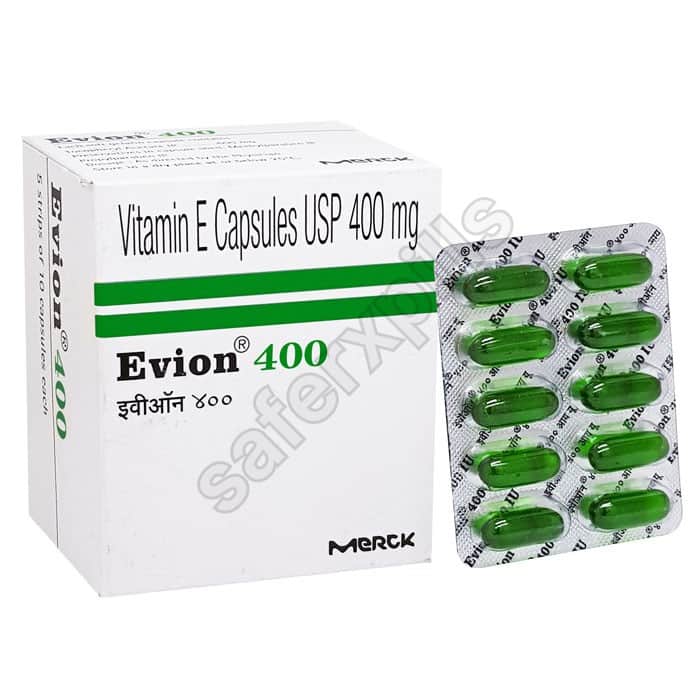
About Vitamin C 2000mg
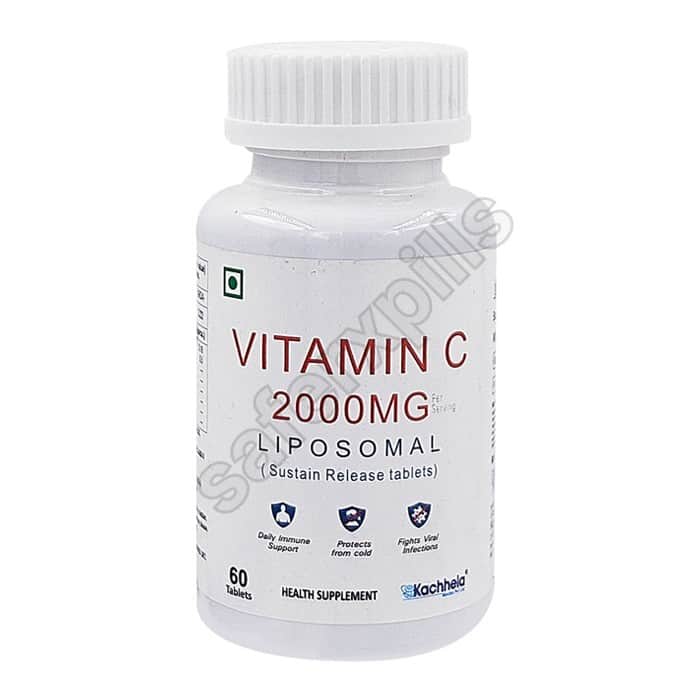
Vitamin C 2000mg is a bottle of 60 vitamin C (ascorbic acid) tablets sold in India as a health supplement under the Kachhela name. The front of the bottle in our product photo reads "Vitamin C 2000MG Per Serving, Liposomal (Sustain Release tablets)", "Health Supplement" and "60 Tablets". We sell packs of 60, 120 and 180 tablets, from $0.33 a tablet in the largest pack.
Three points first. 2,000 mg a day is the US Tolerable Upper Intake Level for adults, and that limit counts vitamin C from food as well as supplements, so this serving plus an ordinary diet takes you above it. Most adults need far less: the US recommended amount is 75 mg a day for women and 90 mg for men, and the NHS says adults aged 19 to 64 need 40 mg a day and should be able to get it from their diet. And vitamin C is a supplement, not a medicine: it is not a treatment for colds, viral infections or any other disease, whatever the icons on the bottle say. Vitamin C supplements are sold without a prescription in the US, UK, Canada and Australia, so compare local prices before ordering from us.
Vitamin C 2000mg at a glance
| Active ingredient | Vitamin C (ascorbic acid). The bottle front says 2,000 mg "per serving"; the serving size (one tablet or more) is printed on the back label, which our photo does not show. Read the label on your bottle |
| Brand and maker | Kachhela name and logo on the bottle; our listing names Kachhela Medex Pvt. Ltd. Kachhela's own trade catalogue names Secure Life Pharmaceuticals as the manufacturer |
| Form | Tablets described on the bottle as liposomal and sustained release ("Sustain Release tablets") |
| Regulatory status | A health supplement, not a medicine. In the US it is a dietary supplement, which the FDA does not approve; in the UK vitamin C supplements are food supplements; Australia and Canada regulate vitamin supplements as listed complementary medicines and natural health products. This Indian bottle is not registered with the FDA, MHRA, TGA or Health Canada |
| How much adults need | US: 75 mg a day (women), 90 mg (men), 35 mg more for smokers (NIH ODS). UK: 40 mg a day for adults 19 to 64 (NHS) |
| Upper limit | US adult Tolerable Upper Intake Level 2,000 mg a day from food and supplements together; lower for anyone under 19 (NIH ODS). NHS: under 1,000 mg a day of supplements is unlikely to cause any harm |
| Packs | 60, 120 and 180 tablets |
| Price per tablet | $0.33 to $0.42 before shipping |
| Delivery | 7 to 14 business days; $25 shipping under $149, free from $149 |
Price per tablet
Prices as of November 2026; the pack selector shows the current price.
| Pack | Price | Per tablet | Shipping | Per tablet with shipping |
|---|---|---|---|---|
| 60 tablets | $25 | $0.42 | $25 | $0.83 |
| 120 tablets | $45 | $0.38 | $25 | $0.58 |
| 180 tablets | $60 | $0.33 | $25 | $0.47 |
All three packs are under $149, so each order of one pack pays $25 shipping. On the smallest pack, shipping doubles the cost per tablet. How long a bottle lasts depends on the serving size on the back label: if one serving is one tablet, 60 tablets last 60 days; if it is two tablets, they last 30 days (our arithmetic).
Compared with other vitamin C options
Vitamin C tablets are on open sale in pharmacies, supermarkets and health shops in all four countries we ship to, mostly at lower strengths than this one (our observation), and there is no prescription saving to be had by ordering from India. We have not compared shelf prices in each country, so we give no figure here; check a local pharmacy before you order, because with $25 shipping on orders under $149 a local bottle will often cost less.
- Food first. The NHS says you should be able to get all the vitamin C you need from a varied and balanced diet. Good sources it names include citrus fruit, peppers, strawberries, blackcurrants, broccoli, brussels sprouts and potatoes.
- Lower strength tablets. If you want a supplement, a lower strength keeps you further from the upper limit. The NHS says taking less than 1,000 mg of vitamin C supplements a day is unlikely to cause any harm.
- Other vitamins we sell. Evion 400mg (vitamin E) and Methycobal 500mcg (vitamin B12, methylcobalamin) have their own pages with their evidence and limits.
How much vitamin C you need, and the upper limits
These are the US figures from the NIH Office of Dietary Supplements (ODS) fact sheet (updated 31 July 2025). The upper limit is the most you can take each day, from food and supplements together, before the risk of side effects rises.
| Age | Recommended amount (RDA) a day | Upper limit (UL) a day | Is 2,000 mg a day within the UL? |
|---|---|---|---|
| 1 to 3 years | 15 mg | 400 mg | No, 5 times the UL |
| 4 to 8 years | 25 mg | 650 mg | No, about 3 times the UL |
| 9 to 13 years | 45 mg | 1,200 mg | No |
| 14 to 18 years | 75 mg (boys), 65 mg (girls); 80 mg in pregnancy, 115 mg breastfeeding | 1,800 mg | No |
| 19 years and over | 90 mg (men), 75 mg (women); 85 mg in pregnancy, 120 mg breastfeeding | 2,000 mg | At the UL before any vitamin C from food |
The ratio column is our arithmetic from the ODS figures. People who smoke need 35 mg more a day than people who do not (ODS). The ODS adds that the upper limits "do not apply to individuals who are receiving vitamin C for medical treatment, but such individuals should be under the care of a physician." For under 19s, this product is above the upper limit, so we would not give it to children or teenagers.
What the evidence says
- Absorption falls at high doses. The ODS says about 70% to 90% of vitamin C is absorbed at intakes of 30 to 180 mg a day, but "at doses above 1 gram (g)/day, absorption falls to less than 50%". Vitamin C that is absorbed but not used leaves in the urine.
- Colds. The ODS describes a 2007 Cochrane review of placebo controlled trials of at least 200 mg a day: taking vitamin C regularly "did not significantly reduce the risk of developing a cold in the general population". Regular use shortened colds a little (about 8% in adults and 14% in children), and, the ODS says, taking vitamin C only after cold symptoms start does not appear to change how long a cold lasts or how bad the symptoms are. Fewer colds (about half as many) were seen only in trials of marathon runners, skiers and soldiers exposed to extreme exercise or cold, taking 250 mg to 1 g a day.
- Liposomal vitamin C. A 2025 scoping review (Carr, PMID 40506693) found 10 studies comparing liposomal and ordinary vitamin C. Nine showed higher blood levels with the liposomal forms (1.2 to 5.4 times the peak and 1.3 to 7.2 times the total exposure), but the formulations differed widely, none measured how much left in the urine, and only two looked at any biological effect. We have found no published study of this Kachhela tablet, so these results tell you nothing certain about it.
- Sustained release. In one trial of 48 men who smoked (Viscovich 2004, PMID 15380894), 250 mg slow release vitamin C twice daily for 4 weeks gave steadier blood levels than plain tablets, but the authors judged the differences "small and unlikely to be of significant clinical importance".
How to take Vitamin C 2000mg
- Follow the serving size and directions printed on the back of your bottle. Our photo does not show them, and we will not guess them.
- Do not take more than one serving a day. One serving already reaches the US adult upper limit before food is counted.
- Sustained release tablets are usually swallowed whole. The bottle in our photo does not say whether these can be split or crushed, so do not break them unless the back label says you can (our advice).
- If stomach upset or diarrhoea starts, stop. The NHS says these symptoms should disappear once you stop taking vitamin C supplements. A lower strength product may suit you better.
- Keep the bottle closed, in a cool dry place away from direct sunlight and out of reach of children (storage wording from a TradeIndia listing for a similar 2000 mg liposomal tablet from another seller; check your own label).
Side effects
The ODS says vitamin C has low toxicity and that high intakes are not thought to cause serious adverse effects. The common problems at high doses are gut symptoms:
- ODS: "The most common complaints are diarrhea, nausea, abdominal cramps, and other gastrointestinal disturbances due to the osmotic effect of unabsorbed vitamin C in the gastrointestinal tract." The US upper limit was set to avoid these effects (our summary of the Food and Nutrition Board's basis for the UL).
- NHS: "Taking large amounts (more than 1,000mg per day) of vitamin C can cause: stomach pain, diarrhoea, flatulence."
- Kidney stones. ODS: high intakes "have the potential to increase urinary oxalate and uric acid excretion, which could contribute to the formation of kidney stones, especially in individuals with renal disorders." Studies have given conflicting results, and "The best evidence that vitamin C contributes to kidney stone formation is in patients with pre-existing hyperoxaluria."
- Iron overload. Vitamin C improves the absorption of nonheme iron (the iron in plant foods). ODS: "in individuals with hereditary hemochromatosis, chronic consumption of high doses of vitamin C could exacerbate iron overload and result in tissue damage."
The ODS also lists other reported effects of high intakes (lower vitamin B12 and copper levels, erosion of dental enamel, allergic responses) and says that "at least some of these conclusions were a consequence of assay artifact".
When to get urgent help
Vitamin C rarely causes serious harm, so this list is our general safety advice rather than label content.
- Signs of an allergic reaction: swelling of the lips, tongue or throat, trouble breathing or swallowing, rash, hives or blistering. Stop the tablets and call emergency services (911 in the US and Canada, 999 in the UK, 000 in Australia).
- Severe pain in your side or back, blood in your urine, or pain passing urine, which can be signs of a kidney stone: see a doctor the same day.
- Diarrhoea severe enough to make you dizzy or dehydrated, or that continues after you stop: get medical advice.
- A child has swallowed several tablets: call a poison line (US 1-800-222-1222, Australia 13 11 26) or your doctor, and say what was taken, how much and when.
Who should not take it, and who should talk to a doctor first
There is no product label for this supplement with formal contraindications. The groups below come from the NIH ODS fact sheet and the upper limit table; where we draw a conclusion, we say so.
We would not use this product for:
- Children and anyone under 19: 2,000 mg is above their US upper limit (400 to 1,800 mg depending on age).
- People with hereditary hemochromatosis (iron overload), because of the ODS warning above.
Talk to a doctor before taking it if:
- You have kidney disease, have had kidney stones, or have hyperoxaluria.
- You are having chemotherapy or radiotherapy. ODS: "Individuals who are undergoing chemotherapy or radiation should consult with their oncologist prior to taking vitamin C or other antioxidant supplements, especially in high doses." It adds that it is unclear whether oral supplements change vitamin C levels enough to matter.
- You take simvastatin with niacin. ODS: vitamin C, "in combination with other antioxidants, may attenuate the increase in high-density lipoprotein levels that result from taking combination niacin/simvastatin (Zocor) therapy", and doctors should monitor lipid levels in people taking statins and antioxidant supplements.
- You are pregnant or breastfeeding. The adult upper limit is the same 2,000 mg (1,800 mg under 19), and needs are 85 mg and 120 mg a day; ask your midwife or doctor whether you need a supplement at all.
- You have an iron disorder or take iron tablets, because vitamin C increases nonheme iron absorption.
Prescription and legal status
- US: vitamin C is sold as a dietary supplement without a prescription. The FDA says that "by law, FDA does not approve dietary supplements or their labeling." This Indian bottle is not registered with the FDA.
- UK: UK government guidance says that "food supplements are required to be regulated as food" and that their use "is not intended to treat or prevent diseases in humans." No prescription is needed. This bottle is not registered with the MHRA.
- Australia: vitamin supplements are commonly sold as listed medicines with an AUST L number on the ARTG; the TGA says the indications of listed medicines "are not evaluated by the TGA at the time a medicine is listed". This bottle has no AUST L number that we know of and is not registered with the TGA.
- Canada: Health Canada regulates vitamins and minerals as natural health products, and companies that make or import them must "hold valid product and site licences". This bottle is not registered with Health Canada.
No prescription is needed in any of these countries, and the claims printed on the bottle ("Protects from cold", "Fights Viral Infections") are the maker's marketing, not claims a regulator has assessed.
Buying genuine Vitamin C 2000mg
- Check that the bottle says Vitamin C 2000MG, Liposomal, Sustain Release tablets, 60 tablets and Kachhela, and that the seal, batch number and expiry date are printed and intact. These checks cannot prove that a bottle is genuine or that each tablet holds what the label says.
- Read the back label for the serving size, the amount of vitamin C in each tablet and the maker. Kachhela's own trade catalogue lists the product with two different strengths (2000 and 1500 mg) and names Secure Life Pharmaceuticals as manufacturer, so the back label is the best guide to what you have.
- The MHRA warning on products bought online is written about medicines, but its point applies to any product from abroad: "Any medicine not authorised for sale in the UK can be unsafe or ineffective and there is no way of knowing what is in them or the negative health effects they can have." For medicines, the MHRA advises: "Only use UK-registered pharmacies, including online pharmacies displaying the official green cross logo".
- If a bottle causes symptoms, seek medical advice and report it to the MHRA Yellow Card scheme, the FDA (Safety Reporting Portal or MedWatch), the TGA or Health Canada, as well as to us.
Delivery
Orders arrive in 7 to 14 business days in plain packaging with tracking. Shipping is $25 on orders under $149 and free from $149.
Related guides
- Methycobal 500mcg: vitamin B12, when to test for deficiency before taking it, and the evidence on nerve pain.
- Evion 400mg: vitamin E capsules.
Sources
- NIH Office of Dietary Supplements. Vitamin C: Fact Sheet for Health Professionals, updated 31 July 2025 (RDA Table 1, UL Table 3, absorption, health risks from excessive vitamin C, interactions with medications, common cold). ods.od.nih.gov/factsheets/VitaminC-HealthProfessional
- NHS. Vitamins and minerals: Vitamin C, page last reviewed 3 August 2020. nhs.uk/conditions/vitamins-and-minerals/vitamin-c
- Carr AC. Do liposomal vitamin C formulations have improved bioavailability? A scoping review. Basic Clin Pharmacol Toxicol 2025;137(1):e70067. PMID 40506693.
- Viscovich M, Lykkesfeldt J, Poulsen HE. Vitamin C pharmacokinetics of plain and slow release formulations in smokers. Clin Nutr 2004;23(5):1043 to 1050. PMID 15380894.
- US FDA. Questions and Answers on Dietary Supplements, content current as of 27 August 2026.
- UK government. Food supplements: guidance for businesses (published 2 July 2018, last updated 5 October 2026).
- TGA. Listed complementary medicines (4 May 2018). Health Canada. Natural health products regulation (modified 10 August 2026).
- Product facts: bottle front in our product photo; Kachhela Medex trade catalogue (medicinesdropshipper.com); Arrowmeds and TradeIndia listings, all checked 24 November 2026.
Frequently asked questions
What is Vitamin C 2000mg?
It is a bottle of 60 vitamin C (ascorbic acid) tablets sold in India as a health supplement under the Kachhela name. The bottle front in our product photo says 2000 mg per serving, liposomal, sustained release tablets. It is a supplement, not a medicine, and it is not a treatment for colds, viral infections or any other disease.
Is each tablet 2000 mg?
The bottle front says 2000 mg "per serving". The serving size is printed on the back label, which our photo does not show, and Kachhela's own trade catalogue lists the product with two strengths (2000 and 1500 mg). Read the back label of your bottle for the amount in each tablet and the serving size.
How much does it cost per tablet?
As of November 2026, $0.42 a tablet in the 60 pack, $0.38 in the 120 pack and $0.33 in the 180 pack, before shipping. Each of these packs is under $149, so shipping is $25, which brings the cost to $0.83, $0.58 and $0.47 a tablet. The pack selector shows the current price. Vitamin C is sold without a prescription locally, so check a local pharmacy first.
How much vitamin C do I actually need?
The US recommended amount for adults is 75 mg a day for women and 90 mg for men, 35 mg more if you smoke (NIH Office of Dietary Supplements). The NHS says adults aged 19 to 64 need 40 mg a day and should be able to get it from a varied diet.
Is 2000 mg of vitamin C a day safe?
2,000 mg a day is the US Tolerable Upper Intake Level for adults, and it counts food and supplements together, so one serving plus your diet goes above it. The main risks at high intakes are diarrhoea, nausea, stomach cramps and wind. The NHS says taking less than 1,000 mg of vitamin C supplements a day is unlikely to cause any harm.
Does vitamin C stop colds?
Not for most people. The NIH fact sheet reports a Cochrane review in which regular vitamin C did not significantly reduce the risk of getting a cold in the general population; it shortened colds slightly, and taking it after symptoms started did not appear to affect how long colds lasted or how bad they were.
Is liposomal vitamin C better absorbed?
A 2025 review of 10 studies found higher blood levels with liposomal forms in nine of them, but the products differed widely and none measured what left in the urine. We found no study of this Kachhela tablet. Absorption of ordinary vitamin C falls below 50% at doses above 1 g a day (NIH ODS).
How should I take it?
Follow the serving size on the back label and take no more than one serving a day. Sustained release tablets are usually swallowed whole; do not split or crush them unless the label allows it. Stop if you get stomach upset or diarrhoea.
Who should not take it?
We would not give it to anyone under 19, because 2,000 mg is above their US upper limit, or to people with hereditary hemochromatosis. Talk to a doctor first if you have kidney disease, kidney stones or hyperoxaluria, are having chemotherapy or radiotherapy, take simvastatin with niacin, take iron, or are pregnant or breastfeeding.
Do I need a prescription?
No. Vitamin C supplements are sold without a prescription in the US (dietary supplements, which the FDA does not approve), the UK (food supplements), Australia and Canada. This Indian bottle is not registered with the FDA, MHRA, TGA or Health Canada.
How long does delivery take?
7 to 14 business days, in plain packaging with tracking. Shipping is $25 on orders under $149 and free from $149.
Medical References
- 1.Vitamin C: Fact Sheet for Health Professionals (NIH Office of Dietary Supplements) — 2025
- 2.Vitamins and minerals: Vitamin C (NHS) — 2020
- 3.Carr AC. Do Liposomal Vitamin C Formulations Have Improved Bioavailability? A Scoping Review. Basic Clin Pharmacol Toxicol 2025;137(1):e70067 (PMID: 40506693) — 2025
- 4.Viscovich M, Lykkesfeldt J, Poulsen HE. Vitamin C pharmacokinetics of plain and slow release formulations in smokers. Clin Nutr 2004;23(5):1043-50 (PMID: 15380894) — 2004
- 5.Questions and Answers on Dietary Supplements (US FDA) — 2026
- 6.Food supplements: guidance for businesses (UK government) — 2018
- 7.Listed complementary medicines (TGA) — 2018
- 8.Natural health products regulation (Health Canada) — 2026
Sources: U.S. National Library of Medicine (DailyMed, PubMed), openFDA
Related articles
Brand vs Generic Drug Prices: What US Pharmacies Pay for Viagra, Cialis, Latisse and More (NADAC, October 2026)
CMS NADAC data for the week of 28 October 2026 shows what US pharmacies pay for brand and generic versions of Viagra, Cialis, Propecia, Latisse, Lumigan and Stromectol. Generic ED and hair loss tablets cost under 2% of the brand price, while eye and lash generics cost 42% to 65%. Includes 2026 trends, supplier counts and the full method.
Read article
Buy Amaryl (Glimepiride) Online: Dosing, Hypoglycaemia Risk and What to Verify First
Amaryl is brand name glimepiride, a sulfonylurea that lowers blood sugar effectively and cheaply but carries real hypoglycaemia risk. Dosing, the CAROLINA trial evidence, interactions, and what to verify before ordering online.
Read article
Generic vs Branded Medicines: What You Really Need to Know
Many patients assume branded drugs are superior to generics. The truth, backed by decades of FDA research, is more nuanced.
Read articleCustomer Reviews
No reviews yet. Bought Vitamin C 2000mg? Tell other buyers how it went.