
Glyco 6 Cream
Generic: Glycolic Acidby Micro Labs Limited
Similar medicines
View all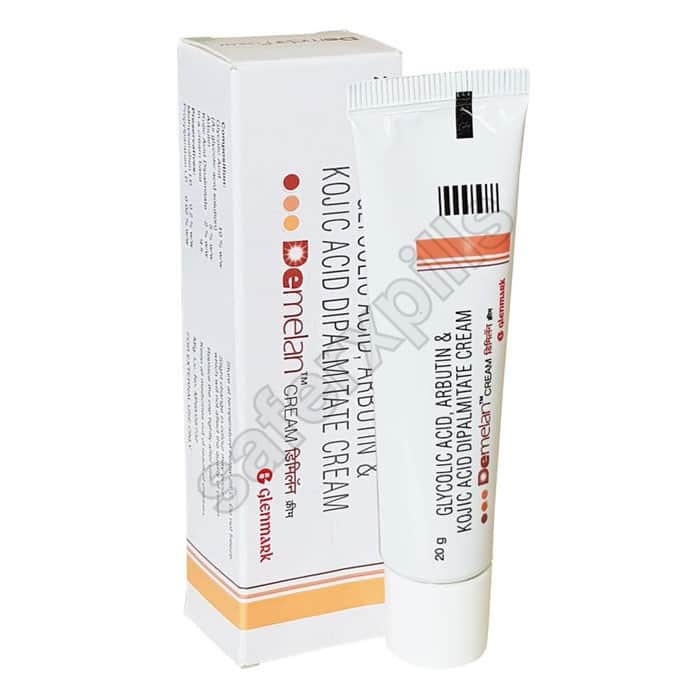
About Glyco 6 Cream
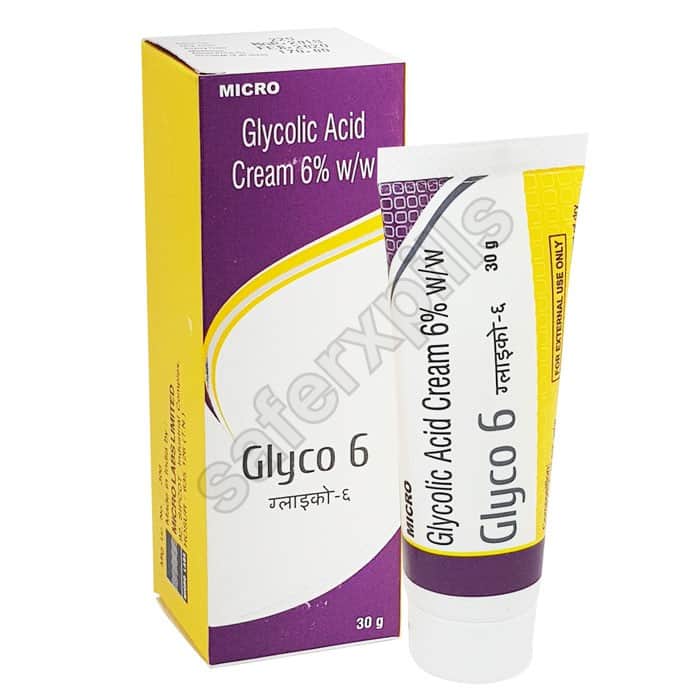
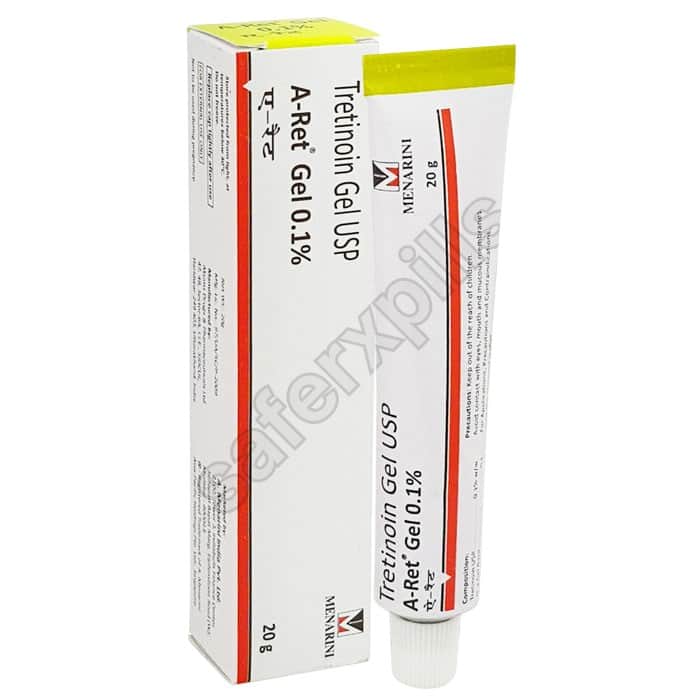
Glyco 6 Cream is a glycolic acid 6% w/w cream from Micro Labs Limited, an Indian maker. Indian pharmacy listings sell it in a 30 g tube (Truemeds, Apollo, PharmEasy, Tata 1mg, Medkart), and the carton and tube in our product photo show the same: "Glycolic Acid Cream 6% w/w", 30 g, "For external use only". Glycolic acid is an alpha hydroxy acid (AHA). The FDA describes AHA products as causing "exfoliation, or shedding of the surface skin". We sell 1, 3, 6 or 12 tubes, from $12.00 a tube in the 12 tube order before shipping.
Two things to know before you order. First, glycolic acid is a cosmetic skin care ingredient, not an approved medicine, and the evidence for low strength glycolic acid creams is modest (see "What the evidence says"). Second, AHAs make skin more sensitive to the sun, so daily sunscreen is part of using this cream. Glycolic acid products are easy to buy locally in the US and Canada, and a local product will usually cost less than an order from us once our $25 shipping is added.
Glyco 6 Cream at a glance
| Active ingredient | Glycolic acid 6% w/w (Truemeds, Apollo, PharmEasy, Tata 1mg and Medkart listings; our product photo). That is about 1.8 g of glycolic acid in a 30 g tube (our arithmetic) |
| Brand and maker | Glyco 6, Micro Labs Limited. PharmEasy names Micro Labs Limited, Hosur, Tamil Nadu; Tata 1mg names a Micro Labs plant in South Sikkim as manufacturer and Micro Labs Ltd, Bangalore, as marketer |
| What it is | An exfoliating AHA cream. Indian listings describe it for dull or uneven skin, dark spots and rough texture |
| Regulatory status | Glycolic acid is used in cosmetics. We found no FDA-approved medicine containing glycolic acid. Health Canada lists AHAs, including glycolic acid, as restricted cosmetic ingredients. Australia's Poisons Standard places glycolic acid in cosmetics in Schedule 6 unless the product has 5% or less, or 20% or less with a pH of 3.5 or more. See "Regulatory and legal status" |
| How to use | No regulator label sets a dose for this cream. Indian listings say to start 2 to 3 times a week and build up to a thin layer once daily, preferably in the evening (Truemeds), or to start about twice a week and build up (PharmEasy), after a patch test |
| Sun | AHAs can raise the risk of sunburn. The FDA's recommended wording: use a sunscreen, wear protective clothing and limit sun exposure while using the product and for a week afterwards |
| Packs | 1, 3, 6 or 12 tubes of 30 g |
| Price per tube | $15.00 (1 tube) down to $12.00 (12 tubes), before shipping |
| Delivery | 7 to 14 business days to the US, UK, Australia and Canada; $25 shipping under $149, free from $149 |
Price per tube
Prices are as of November 2026; the pack selector shows the current price. All four orders are under the $149 free shipping line, so each one pays $25 shipping. That includes the 12 tube order at $144, which is $5 short of free shipping.
| Order | Price | Per tube | Shipping | Per tube with shipping | Per gram with shipping (30 g tube) |
|---|---|---|---|---|---|
| 1 tube | $15 | $15.00 | $25 | $40.00 | $1.33 |
| 3 tubes | $42 | $14.00 | $25 | $22.33 | $0.74 |
| 6 tubes | $80 | $13.33 | $25 | $17.50 | $0.58 |
| 12 tubes | $144 | $12.00 | $25 | $14.08 | $0.47 |
The listings give no amount in grams per application, only "a thin layer", so we cannot say how long a tube lasts. A cream used on the face once a day will last much longer than one used on larger areas. Our view: buy one or three tubes first. Twelve tubes is a lot of a product you have not yet tried on your skin, and each tube has its own expiry date.
Compared with what you can buy locally
There is no US brand or generic medicine to compare Glyco 6 with, because no glycolic acid medicine is FDA approved and there is no NADAC (pharmacy acquisition cost) data for it. The fair comparison is with glycolic acid skin care sold in local shops.
| Country | Glycolic acid skin care locally | Price data we found |
|---|---|---|
| United States | Sold as cosmetics without a prescription. Example: The Ordinary Glycolic Acid 7% Exfoliating Toner (a liquid toner, not a cream), pH about 3.6, 100 ml and 240 ml | The brand's US site showed $9.00 on 4 November 2026, without saying which size that price is for |
| Canada | Sold as cosmetics; AHAs are restricted cosmetic ingredients on Health Canada's Cosmetic Ingredient Hotlist, with pH and labelling conditions for consumer products | We did not check Canadian shelf prices |
| United Kingdom | Glycolic acid skin care is sold in UK shops | We did not check UK rules or shelf prices in detail |
| Australia | Glycolic acid in cosmetics is Schedule 6 under the Poisons Standard unless 5% or less, or 20% or less with a pH of 3.5 or more | We did not check Australian shelf prices |
Our view. One tube of Glyco 6 from us costs $40 delivered. For most buyers, a local glycolic acid product will be cheaper and arrive the same day, and it will carry local labelling: in Canada the Hotlist sun advice is a condition of sale, and in the US most AHA products carry the Sunburn Alert the FDA recommends. Glyco 6 is a reasonable choice if you already know it suits your skin and want a cream rather than a toner, and the larger orders bring the cost down to about $14 a tube delivered.
Which strength to choose
Micro Labs also makes Glyco 12, a 12% glycolic acid cream, which we list. The safety review used by the US cosmetics industry and quoted by the FDA, from the Cosmetic Ingredient Review (CIR) Expert Panel, found glycolic acid consumer products safe at 10% or less with a final pH of 3.5 or more, when the product protects against sun sensitivity or its directions tell users to use daily sun protection.
| Product | Glycolic acid | What the safety reviews say |
|---|---|---|
| Glyco 6 Cream (this page) | 6% w/w | Within the CIR consumer level of 10% or less. None of the Indian listings states the pH, so we cannot confirm the pH condition |
| Glyco 12 Cream | 12% | Above the CIR consumer level of 10%. Our view: we would not recommend it as a first glycolic acid product |
| Demelan Cream | Glycolic acid with arbutin and kojic acid dipalmitate (our listing) | A combination cream; check the carton for the glycolic acid strength |
A higher strength is not automatically better. In the FDA's adverse event reports for AHA products, "the more serious adverse reactions appear to occur most often with products that cause the greatest degree of exfoliation", such as "skin peelers".
What the evidence says
The trials of glycolic acid as a cream used at home are small and old, and they tested other strengths and formulas, not Glyco 6 itself:
- Sun damaged skin, 8% cream: 74 women aged 40 to 70 used 8% glycolic acid, 8% lactic acid or a plain cream twice a day for 22 weeks. On the face, 76% on glycolic acid improved by at least one grade in overall sun damage, against 40% on the plain cream. The authors called the creams "modestly useful" (Stiller 1996, PMID 8651713).
- Sun damaged skin, 5% cream: 75 volunteers used a 5% glycolic acid cream or a placebo cream on the face and neck for 3 months. Skin texture and discolouration improved significantly more with glycolic acid; the trend for wrinkles was not statistically significant (Thibault 1998, PMID 9598014).
- Acne, 12% cream: a 45 day trial in 40 people compared a 12% glycolic acid cream with tretinoin 0.05% cream. Only 22 completed the study and 2 were withdrawn with severe facial eczema; 90% and 83.3% of patients improved, with similar tolerability (Kharfi 2001, PMID 11771434). It had no placebo group. Under FDA rules acne treatment is a drug use, and Glyco 6 is not sold as an acne treatment.
Most studies of glycolic acid for melasma and for dark marks left after acne or other skin injury are of in-clinic chemical peels (for example Lim 1997, PMID 9145959, and Burns 1997, PMID 9145958), which use much stronger acid applied by a professional and then washed off. We have not found a trial of a 6% glycolic acid cream for melasma. Our view: Glyco 6 may help with rough or dull skin and mild uneven tone, but do not expect it to clear melasma. For dark patches, see a doctor, who may suggest a prescription treatment such as azelaic acid or a hydroquinone product, with strict sun protection.
How to use Glyco 6 Cream
No regulator has approved a label for this cream, so these steps come from the Indian pharmacy listings and the FDA, Health Canada and CIR sun advice, as marked.
- Patch test first. Truemeds says to "perform a patch test 24 hours before use"; Apollo also advises a patch test before first use.
- Clean and dry the skin, then apply a thin layer and rub it in gently (Tata 1mg).
- Start slowly. PharmEasy suggests starting about twice a week at night and increasing only as your skin tolerates it. PharmEasy also says to wash it off in the morning unless your doctor says otherwise. Truemeds says to start 2 to 3 times a week and build up to once daily, preferably in the evening. Tata 1mg notes that using more than the recommended amount may increase irritation, redness or peeling.
- Keep it away from the eyes, lips and other sensitive areas; if it gets in the eye, rinse well with water (Apollo, Tata 1mg). Health Canada's required AHA warning is "Avoid contact with the eyes."
- Do not apply it to sunburned, windburned, cut or scraped skin, or to skin with active eczema (Apollo).
- Use sunscreen every day (see the next section).
- Wash your hands before and after applying it (PharmEasy).
Other products on the same skin. PharmEasy advises avoiding waxing, threading, bleaching, scrubs and other acid or retinoid products on the same area, and Tata 1mg advises caution with exfoliating products or retinoids because irritation may increase. If a doctor has given you a routine that combines glycolic acid with a prescription cream such as adapalene, follow that plan.
How long to give it. In the trials above, results were judged after 3 months (5% cream) and 22 weeks (8% cream). Our advice: give it about 3 months of regular use with daily sunscreen, and stop if your skin gets worse or stays irritated.
Sun sensitivity
This is the main safety point for any glycolic acid product. In an FDA sponsored study, "after four weeks of AHA application, volunteers' sensitivity to skin reddening produced by UV increased by 18 percent", and sensitivity to UV damage of skin cells roughly doubled on average; one week after stopping there was no significant difference (FDA). In the published version, 29 people used 10% glycolic acid (pH 3.5) or a placebo on the back for 4 weeks (Kaidbey 2003, PMID 12713551).
The FDA recommends that AHA cosmetics carry this statement: "Sunburn Alert: This product contains an alpha hydroxy acid (AHA) that may increase your skin's sensitivity to the sun and particularly the possibility of sunburn. Use a sunscreen, wear protective clothing, and limit sun exposure while using this product and for a week afterwards." Health Canada's AHA conditions say "It is recommended that prior to exposure to the sun, users cover areas where AHAs have been applied with sunscreen". The Indian carton is not labelled to these rules, so follow them yourself.
For someone treating dark spots this matters twice over: sun exposure is a major driver of pigmentation, so skipping sunscreen can undo any benefit (our view).
Side effects
There is no regulator label with side effect frequencies for this cream. The Indian listings name stinging, redness, dryness, peeling and increased sun sensitivity (PharmEasy), dry skin, redness and burning (Apollo), and itching, skin irritation and rash (PharmEasy). Truemeds says mild tingling or dryness may occur at first.
The FDA received 114 reports of skin reactions to AHA skin care products between 1992 and February 2004: "burning (45), dermatitis or rash (35), swelling (29), pigmentary changes (15), blisters or welts (14), skin peeling (13), itching (12), irritation or tenderness (8), chemical burns (6), and increased sunburn (3)". Note the pigmentary changes: irritated skin can darken, so pushing the cream harder to fade spots can backfire (our view).
When to get urgent help
- Swelling of the face, lips, tongue or throat, trouble breathing or swallowing, or widespread hives: these can be signs of a serious allergic reaction. Wash the cream off and call 911 (US and Canada), 999 (UK) or 000 (Australia). This is our general safety advice; true allergy to glycolic acid is not described on the listings we checked.
- Severe burning, swelling or blistering where you applied it: stop using it and contact a doctor (Apollo).
- Cream in the eye that still hurts, or blurred vision, after rinsing well with water: see a doctor or eye casualty the same day (our advice).
- Irritation that does not settle: Health Canada's AHA warning is "If irritation persists, discontinue use and consult a physician."
- If a child swallows the cream: contact a poison centre (US 1-800-222-1222, Australia 13 11 26) or your local emergency service (our advice).
Who should not use it
Do not use it if: you are allergic to glycolic acid or any other ingredient of the cream (Tata 1mg). We have not seen the full ingredient list of the cream base; check the carton.
The listings and safety rules also say to avoid it or take care:
- On sunburned, windburned, cut, scraped or broken skin, or skin with active eczema (Apollo, PharmEasy, Tata 1mg).
- Around the eyes, on the eyelids, lips and other sensitive areas (Apollo, Tata 1mg).
- With other acids, retinoids, scrubs, waxing, threading or bleaching on the same area (PharmEasy).
- If you cannot or will not protect the treated skin from the sun (FDA and CIR conditions).
See a doctor rather than treating it yourself if: a dark patch is new, changing, bleeding or irregular (a doctor needs to rule out a skin cancer before you treat it as a cosmetic spot), you have melasma that has not responded to sun protection, or you have moderate or severe acne. These are our recommendations.
Pregnancy, breastfeeding and children
- Pregnancy and breastfeeding: Tata 1mg says safety information is limited and to consult a doctor first; PharmEasy says to tell your doctor if you are pregnant or breastfeeding, and to avoid the breast area shortly before nursing. There is no regulator label for this cream.
- Children: Tata 1mg says safety in children and infants has not been well established and to consult a doctor first.
Regulatory and legal status
United States. The FDA says AHAs are used in cosmetic and drug products applied to the skin and names glycolic and lactic acid as the most common AHAs in cosmetic products. Its guidance on AHA cosmetics covers labelling for sun sensitivity. It is not an FDA-approved medicine: a search of Drugs@FDA (openFDA, 4 November 2026) found no approved product with glycolic acid as an active ingredient, and glycolic acid is not an active ingredient in the FDA's over the counter acne rules (21 CFR 333 subpart D). The FDA also says that "products intended for use as acne treatments or skin lighteners are considered drugs". So Glyco 6 should be understood as an exfoliating cosmetic cream, not as an approved treatment for dark spots or acne. The FDA says personal importation of unapproved medicines is illegal in most circumstances. The Indian carton is not labelled to US rules.
Canada. Health Canada's Cosmetic Ingredient Hotlist lists alpha hydroxy acids, including glycolic acid, as restricted ingredients. Consumer skin products with "between 3% and 18% total mono-AHA equivalents" need "a pH equal to or greater than 3.5", the maker or importer must provide pH levels, and the label must carry warnings such as "Avoid contact with the eyes." We do not have a pH value for Glyco 6.
Australia. The Poisons Standard (October 2026) places glycolic acid "in cosmetic products" in Schedule 6, except in salon only products, in preparations with "5% or less of glycolic acid", or in preparations with "20% or less of glycolic acid with a pH of 3.5 or greater". At 6%, Glyco 6 is above the 5% exemption, so whether it falls under the pH exemption depends on its pH, which we do not know.
United Kingdom. We did not check UK cosmetic rules for glycolic acid in detail.
India. Apollo lists Glyco 6 in its over the counter section and Tata 1mg describes it as an over the counter cream; none of the five listings we checked says a prescription is needed.
No prescription is needed for glycolic acid skin care in the US or Canada. We do not ask for one for Glyco 6.
Buying genuine Glyco 6 Cream
When your order arrives, check that the carton and tube say Glyco 6, glycolic acid cream 6% w/w, 30 g and Micro Labs Limited, show a batch number and an expiry date, and that the tube is sealed. These checks cannot prove a tube is genuine, because counterfeiters copy packaging. For products sold as medicines, the MHRA warns: "Any medicine not authorised for sale in the UK can be unsafe or ineffective and there is no way of knowing what is in them or the negative health effects they can have." It advises: "Only use UK-registered pharmacies, including online pharmacies displaying the official green cross logo". If a tube causes unusual symptoms, stop using it, seek medical advice, and report it to the MHRA Yellow Card scheme, FDA MedWatch, the TGA or Health Canada, as well as to us.
Storage. Truemeds says store below 30 C; Apollo says 15 to 30 C with the tube tightly closed; PharmEasy says a cool, dry place away from direct sunlight. No listing asks for refrigeration. Keep it away from children.
Delivery
We ship to the US, UK, Australia and Canada in 7 to 14 business days, in plain packaging with tracking. Shipping is $25 on orders under $149 and free from $149. Every Glyco 6 order on its own is under $149, so it pays shipping unless you add other items.
Related guides
Sources
- US Food and Drug Administration. Alpha Hydroxy Acids (cosmetic ingredients), content current as of 22 November 2022; includes the January 2005 labelling guidance for AHA cosmetics, the FDA sponsored sun sensitivity study, adverse event reports 1992 to February 2004 and the CIR conclusions. FDA
- openFDA Drugs@FDA search for glycolic acid as an active ingredient, no matches (4 November 2026). US OTC acne rules: 21 CFR part 333 subpart D. eCFR
- US Food and Drug Administration. Personal Importation. FDA
- Fiume et al. Alpha Hydroxy Acids. Int J Toxicol. 2017;36(5 suppl 2):15S to 21S. PMID 29025346. PubMed
- Kaidbey et al. Topical glycolic acid enhances photodamage by ultraviolet light. Photodermatol Photoimmunol Photomed. 2003. PMID 12713551. PubMed
- Stiller et al. Topical 8% glycolic acid and 8% L-lactic acid creams for the treatment of photodamaged skin. Arch Dermatol. 1996. PMID 8651713. PubMed
- Thibault et al. A double-blind randomized clinical trial on the effectiveness of a daily glycolic acid 5% formulation in the treatment of photoaging. Dermatol Surg. 1998. PMID 9598014. PubMed
- Kharfi et al. Comparative study of 12% glycolic acid cream and 0.05% retinoic acid cream for acne. Tunis Med. 2001. PMID 11771434.
- Peel studies: Lim et al. Glycolic acid peels in the treatment of melasma among Asian women. 1997. PMID 9145959. Burns et al. Glycolic acid peels for postinflammatory hyperpigmentation in black patients. 1997. PMID 9145958.
- Health Canada. Cosmetic Ingredient Hotlist, restricted ingredients: alpha hydroxy acids (date modified 13 August 2025). Health Canada
- Australian Poisons Standard October 2026 (F2026L01327), Schedule 6: glycolic acid.
- Indian pack details: Truemeds, Apollo Pharmacy, PharmEasy, Tata 1mg and Medkart listings for Glyco 6 Cream 30 g, checked 4 November 2026; SafeRxPills product photo (carton and 30 g tube, glycolic acid cream 6% w/w, Micro Labs).
- The Ordinary, Glycolic Acid 7% Exfoliating Toner, US site, checked 4 November 2026.
- MHRA. 20 million illegal erectile dysfunction pills seized as MHRA warns against risky online buys, 13 February 2026. GOV.UK.
This page is for information and is not medical advice. Talk to a doctor or pharmacist if you are unsure whether glycolic acid is right for your skin.
Frequently asked questions
What is Glyco 6 Cream?
Glyco 6 Cream is a glycolic acid 6% w/w cream from Micro Labs Limited, sold in India in a 30 g tube (Truemeds, Apollo, PharmEasy, Tata 1mg, Medkart). Glycolic acid is an alpha hydroxy acid (AHA). The FDA describes AHA products as causing exfoliation, or shedding of the surface skin. Glycolic acid is used as a cosmetic ingredient, and Glyco 6 is not an approved medicine in the US, UK, Australia or Canada.
Is Glyco 6 the same as glycolic acid creams sold in the US or UK?
The active ingredient, glycolic acid, is the same one used in many cosmetic products, but the strength, cream base and pH differ from product to product, and none of the Indian listings states the pH of Glyco 6. The Indian carton is not labelled to US, UK, Australian or Canadian rules, including the sun warning the FDA recommends for AHA cosmetics.
How much does Glyco 6 Cream cost?
As of November 2026, 1 tube costs $15, 3 tubes $42 ($14.00 a tube), 6 tubes $80 ($13.33) and 12 tubes $144 ($12.00), before shipping. All four orders are under $149, so each pays $25 shipping: $40, $67, $105 and $169 delivered. The pack selector shows the current price.
Is it cheaper to buy glycolic acid skin care locally?
Usually, yes. Glycolic acid products are sold as cosmetics without a prescription in the US and Canada. For example, The Ordinary's US site showed its 7% glycolic acid toner at $9.00 on 4 November 2026, while one tube of Glyco 6 from us costs $40 with shipping. Glyco 6 makes most sense if you already know it suits your skin.
How do I use Glyco 6 Cream?
No regulator label sets a dose. Indian listings say to patch test first, then apply a thin layer to clean, dry skin, starting 2 to 3 times a week and building up to once daily in the evening (Truemeds), or starting about twice a week and building up as tolerated (PharmEasy). Keep it away from the eyes, eyelids and lips, do not use it on broken, sunburned or irritated skin, and use sunscreen every day.
Does glycolic acid make my skin more sensitive to the sun?
Yes. In an FDA sponsored study, four weeks of AHA use increased sensitivity to UV reddening by 18 percent, and the effect was gone a week after stopping. The FDA recommends AHA cosmetics carry a Sunburn Alert telling users to use a sunscreen, wear protective clothing and limit sun exposure while using the product and for a week afterwards.
Will Glyco 6 clear melasma or dark spots?
Do not expect it to. Small trials of 5% and 8% glycolic acid creams found modest improvement in sun damaged skin, including discolouration, but most studies of glycolic acid for melasma used in-clinic peels with much stronger acid. We have not found a trial of a 6% cream for melasma. See a doctor for melasma or any new or changing dark patch.
Should I choose Glyco 6 or Glyco 12?
Start with Glyco 6. The Cosmetic Ingredient Review panel, quoted by the FDA, found glycolic acid consumer products safe at 10% or less with a pH of 3.5 or more and sun protection. Glyco 12 is above that 10% level, and the FDA says the more serious AHA reactions occur most often with the most exfoliating products.
What are the side effects of Glyco 6 Cream?
Indian listings name stinging, redness, dryness, peeling, burning, itching, irritation, rash and more sun sensitivity. FDA reports for AHA products also included swelling, blisters, chemical burns and pigment changes. Stop and contact a doctor for severe burning, swelling or blistering. Get emergency help for swelling of the face, lips or throat or trouble breathing.
Who should not use Glyco 6 Cream?
Do not use it if you are allergic to glycolic acid or any ingredient of the cream, or on sunburned, windburned, cut, scraped or eczema affected skin. Avoid other acids, retinoids, scrubs, waxing or bleaching on the same area unless a doctor has planned it. If pregnant or breastfeeding, Indian listings say to consult a doctor first.
Do I need a prescription, and how long does delivery take?
No prescription is needed for glycolic acid skin care in the US or Canada, and the Indian listings do not ask for one. We ship to the US, UK, Australia and Canada in 7 to 14 business days in plain packaging with tracking. Shipping is $25 under $149 and free from $149.
Medical References
- 1.FDA: Alpha Hydroxy Acids (cosmetic ingredients; content current as of 22 November 2022), sun sensitivity, Sunburn Alert labeling and CIR conditions — 2022
- 2.Fiume et al. Alpha Hydroxy Acids (Cosmetic Ingredient Review). Int J Toxicol 2017 (PMID: 29025346)
- 3.Kaidbey et al. Topical glycolic acid enhances photodamage by ultraviolet light. Photodermatol Photoimmunol Photomed 2003 (PMID: 12713551)
- 4.Stiller et al. Topical 8% glycolic acid and 8% L-lactic acid creams for photodamaged skin. Arch Dermatol 1996 (PMID: 8651713)
- 5.Thibault et al. Daily glycolic acid 5% formulation in the treatment of photoaging. Dermatol Surg 1998 (PMID: 9598014)
- 6.Health Canada Cosmetic Ingredient Hotlist: alpha hydroxy acids (restricted) — 2025
Sources: U.S. National Library of Medicine (DailyMed, PubMed), openFDA
Related articles
Epiduo vs Epiduo Forte: How Adapalene and Benzoyl Peroxide Gel Works, Results Timeline, Side Effects and Cost
Epiduo combines adapalene with benzoyl peroxide 2.5% in one once-daily acne gel, in 0.1% and 0.3% (Forte) strengths. This guide covers how the two strengths differ in the trials, how to apply the gel, what to expect week by week, the irritation rates from the US labels, bleaching of fabric and hair, the exact pregnancy wording, the over-the-counter Differin Epiduo, and what US pharmacies pay for brand and generic versions.
Read article
Dapsone Gel (Aczone) 5% vs 7.5%: How to Use It, Results, Side Effects, Warnings and Cost
Dapsone gel (Aczone) is a prescription acne gel in two strengths: 5% twice daily and 7.5% once daily. This guide covers how to apply each, who it is approved for, what the four label trials showed against vehicle, side effects with label rates, the methemoglobinemia and G6PD warnings, the orange staining with benzoyl peroxide, pregnancy and breastfeeding, generic approvals and what US pharmacies pay per gram.
Read article
Generic Otezla (Apremilast): Is It Available in the US, What It Costs, Dosing and Side Effects
The FDA has approved generic apremilast from 13 companies, but none is on sale in US pharmacies as of October 2026. This guide covers the patent dates, what apremilast treats, the 5-day starting schedule, kidney dosing, trial results, side effects and warnings, and what a month of Otezla costs pharmacies compared with Indian apremilast.
Read articleCustomer Reviews
No reviews yet. Bought Glyco 6 Cream? Tell other buyers how it went.