
Ketosteril Tablet
Generic: Alpha Ketoanalogueby Fresenius Kabi India Pvt.Ltd.
Select pack size
Similar medicines
View all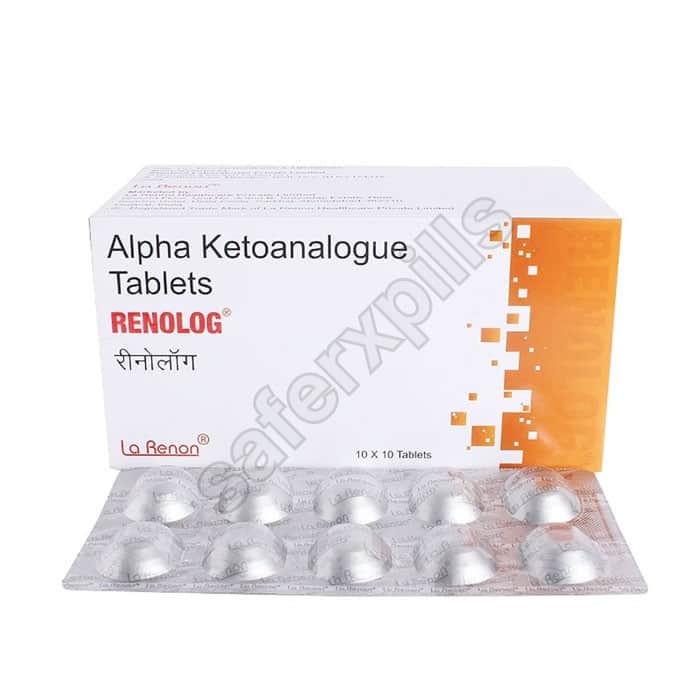
About Ketosteril Tablet
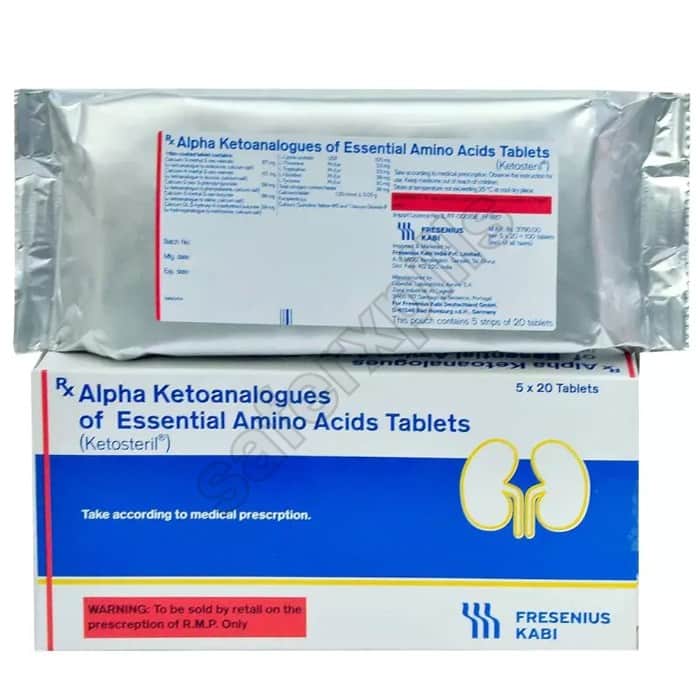
Ketosteril is a Fresenius Kabi film-coated tablet that holds four keto analogues and one hydroxy analogue of essential amino acids (as calcium salts) plus five amino acids. It is a nutrition treatment for chronic kidney disease, and it only makes sense alongside a low or very low protein diet that a kidney specialist and a dietitian prescribe and monitor. The German label describes it as preventing and treating damage from faulty or deficient protein metabolism in chronic kidney failure, with dietary protein restricted to 40 g a day or less in adults, which "in general" applies to patients with a glomerular filtration rate (GFR) below 25 mL/min (4.1, our translation). We sell the Indian-market pack, marketed by Fresenius Kabi India Pvt Ltd, in packs of 100, 200 and 300 tablets, from $1.27 a tablet in the 300 pack.
Three points first. This is not a supplement to try on your own: the guidelines that support keto acid analogues tie them to a very low protein diet "under close clinical supervision", and without that diet the tablets are not doing what the trials tested. Second, the label dose is large: 4 to 8 tablets three times a day for a 70 kg adult, so a 100 tablet pack lasts about a week. Third, there is no US product: no ketoanalogue medicine is approved by the FDA, Health Canada lists no Ketosteril, and we found no UK or Australian licence, so US readers have no cheaper US generic to compare. This page sets out the dose, warnings and evidence from the German Fachinformation and the Dutch SmPC for Ketosteril, Fresenius Kabi's own product pages for India and Hong Kong, and the KDOQI 2020 and KDIGO 2024 kidney guidelines, all listed at the end.
Ketosteril at a glance
| Active ingredients | Per tablet: calcium salts of the keto analogues of isoleucine (67 mg), leucine (101 mg), phenylalanine (68 mg) and valine (86 mg), the hydroxy analogue of methionine (59 mg), plus lysine acetate 105 mg (75 mg lysine), threonine 53 mg, tryptophan 23 mg, histidine 38 mg and tyrosine 30 mg. Nitrogen 36 mg and calcium 50 mg (1.25 mmol) per tablet (German and Dutch labels, section 2) |
| Brand and maker | Ketosteril, Fresenius Kabi. The Indian pack is marketed by Fresenius Kabi India Pvt Ltd (Tata 1mg, PharmEasy, Apollo); PharmEasy names Labesfal, Laboratórios Almiro SA, Portugal, as the manufacturer for Fresenius Kabi Deutschland, the same plant the Dutch leaflet names |
| Regulatory status | Not approved by the FDA (no ketoanalogue product in openFDA) or Health Canada (no Ketosteril in the Drug Product Database), both checked 30 October 2026. We found no MHRA or TGA licence. Licensed in Germany, the Netherlands and other European countries; prescription only in Germany |
| Usual dose from the label | Adults of 70 kg: 4 to 8 tablets three times a day during meals, swallowed whole (German and Dutch labels 4.2), which is 12 to 24 tablets a day. Fresenius Kabi's Hong Kong page adds "1 tablet/5 kg body weight/day" |
| Timing | No half-life is given. In healthy people, blood keto acid levels rise within 10 minutes, peak at 20 to 60 minutes and are back to baseline by 90 minutes (5.2) |
| Packs | 100, 200 and 300 tablets (Indian strips hold 20 tablets per PharmEasy and Apollo; the Indian box holds 100) |
| Price per tablet | $1.65 (100 pack), $1.28 (200 pack) and $1.27 (300 pack); all three packs ship free |
| Delivery | 7 to 14 business days to the US, UK, Australia and Canada; $25 shipping under $149, free from $149 |
Our listing shows the strength as "600 mg". That is not a strength on any label: each tablet holds ten ingredients, and the amounts above add up to 630 mg of active ingredients (our arithmetic). Read the composition on the carton rather than the strength field.
What Ketosteril is used for
Protein you eat is broken down into nitrogen waste, mainly urea, which failing kidneys clear less well. A very low protein diet cuts that load but can leave the body short of essential amino acids. The keto and hydroxy acids in Ketosteril are essential amino acids without their nitrogen-carrying amino group: after absorption they pick up nitrogen from non-essential amino acids and become the matching essential amino acids, so urea production falls and uraemic toxins build up less (German and Dutch labels 5.1). The labels add that keto acid supplements have a positive effect on high phosphate and secondary hyperparathyroidism in kidney disease, and that with a very low protein diet they allow a lower nitrogen intake while avoiding the harm of too little protein and malnutrition (5.1).
Who the labels cover.
- Germany (4.1): chronic kidney failure with dietary protein of 40 g a day or less in adults, which in general applies to patients with a GFR below 25 mL/min (our translation). The label says to keep taking it as long as the GFR stays below 25 mL/min and protein stays at 40 g a day or less (4.2).
- Netherlands (4.1): adults with chronic kidney disease, protein intake of 40 g a day or less, GFR of 25 mL/min/1.73 m² or lower (our translation).
- India (Fresenius Kabi India product page): "Prevention & therapy of damages due to CKD till GFR is 15 ml/min,i.e.stages II, III & IV of CKD". The Indian wording covers earlier stages than the EU labels; the EU wording is the one tied to a GFR below 25.
It is not a treatment for asthma, and it does not replace dialysis, blood pressure control or the other kidney medicines your specialist prescribes.
Price per tablet
Prices below are as of October 2026; the pack selector shows the current price.
| Pack | Price | Per tablet | Shipping | Per tablet with shipping |
|---|---|---|---|---|
| 100 tablets | $165 | $1.65 | Free | $1.65 |
| 200 tablets | $256 | $1.28 | Free | $1.28 |
| 300 tablets | $381 | $1.27 | Free | $1.27 |
Every pack is above the $149 free shipping line. The 200 and 300 packs are cheaper per tablet than the 100 pack before any shipping is counted, so the saving comes from the pack price, not from shipping.
How long a pack lasts
This is where Ketosteril differs from most tablets: the daily tablet count is high. For a 70 kg adult the label range is 12 to 24 tablets a day, and the Hong Kong rule of 1 tablet per 5 kg gives 14 a day. All figures below are our arithmetic.
| Pack | At 12 a day (label minimum, 70 kg) | At 14 a day (1 per 5 kg, 70 kg) | At 24 a day (label maximum, 70 kg) |
|---|---|---|---|
| 100 tablets | about 8 days | about 7 days | about 4 days |
| 200 tablets | about 17 days | about 14 days | about 8 days |
| 300 tablets | 25 days | about 21 days | 12 to 13 days |
At 14 tablets a day, one month (30 days) takes 420 tablets. That costs about $17.78 a day with the 300 pack and $23.10 a day with the 100 pack, or about $533 to $693 a month (our arithmetic). Our delivery takes 7 to 14 business days, which is longer than a 100 pack lasts at the label dose, so if your kidney team has prescribed Ketosteril, order before you run low and do not ration tablets while you wait. Check that the expiry dates on the strips cover the weeks you need.
Compared with Ketosteril in Europe and with US options
| Ketosteril (ours, Indian pack) | Ketosteril in Germany and the Netherlands | United States | |
|---|---|---|---|
| Maker | Fresenius Kabi; PharmEasy names Labesfal, Portugal, as manufacturer | Fresenius Kabi; the Dutch leaflet names Labesfal, Portugal | No approved product |
| Regulatory status | Sold in India; not registered with the FDA, MHRA, TGA or Health Canada | Licensed (Germany 299.00.00; Netherlands RVG 124798) | No ketoanalogue medicine approved by the FDA |
| Prescription | Prescription in India per Tata 1mg and Apollo | Prescription only in Germany; medical prescription in Belgium | Not applicable |
| Cost per tablet | $1.27 to $1.65 | Not checked | No NADAC row, because there is no US product |
NADAC, the US Medicaid survey of what pharmacies pay for medicines, only covers FDA-approved drugs, so there is no US acquisition price to set against ours. Our pack carries the same brand as the European packs, and PharmEasy's manufacturer line names the same plant as the Dutch leaflet (Labesfal, Portugal); the Indian listings give different countries of origin (Tata 1mg Portugal, PharmEasy Germany, Apollo India), so check the carton you receive. We have not seen a regulator review of the Indian pack, and we cannot point to one.
Other keto acid tablets. Renolog (La Renon Healthcare) is another keto acid analogue tablet in our range. Its makeup and dose are on its own label; do not swap one brand for another tablet for tablet without your kidney team.
How many tablets: dose by body weight
There is only one Ketosteril tablet, so the choice is the number of tablets, and that is your specialist's decision. The labels give the dose for a 70 kg adult (4 to 8 tablets three times a day). The Hong Kong page's rule of 1 tablet per 5 kg of body weight a day gives these totals (our arithmetic):
| Body weight | Tablets a day at 1 per 5 kg | Calcium from the tablets | Nitrogen from the tablets |
|---|---|---|---|
| 50 kg | 10 | 500 mg | 360 mg |
| 60 kg | 12 | 600 mg | 432 mg |
| 70 kg | 14 | 700 mg | 504 mg |
| 80 kg | 16 | 800 mg | 576 mg |
| 90 kg | 18 | 900 mg | 648 mg |
The calcium column matters: at 50 mg per tablet, the label range of 12 to 24 tablets adds 600 to 1,200 mg of calcium a day (our arithmetic), on top of any calcium-based phosphate binders or supplements. That is why the labels ask for regular calcium checks.
How to take Ketosteril
- Take it only as your kidney specialist prescribes, together with the protein-restricted diet your dietitian sets. The labels tie use to a diet of 40 g of protein a day or less in adults (German and Dutch labels 4.1, 4.2).
- Take the tablets during meals, spread over three meals. The German label says taking them during meals allows proper absorption and conversion into the matching amino acids (4.2, our translation). Tata 1mg's listing says "with or without food"; that conflicts with the label, so follow the label.
- Swallow the tablets whole with enough fluid. The Dutch label says they must not be chewed "because of the bad smell of the tablet contents" (4.2, our translation). The tablets are oblong, yellow and about 17.2 by 6.6 mm (Dutch label 3).
- Keep at least 2 hours between Ketosteril and tetracyclines, quinolones such as ciprofloxacin and norfloxacin, and iron, fluoride or estramustine products (Fresenius Kabi India page; German and Dutch labels 4.5).
- Eat enough calories. The German label says adequate calorie intake must be watched (4.4, our translation). On a very low protein diet, too few calories can lead to muscle loss; your dietitian will set the energy target.
- Expect blood tests. The labels say serum calcium should be monitored regularly (4.4), and phosphate too if you take aluminium hydroxide.
- If you miss a dose, do not take a double dose to make up for it (Dutch leaflet; the German leaflet says the same). Do not stop Ketosteril without talking to your doctor first (Dutch leaflet).
The diet behind the tablets
The guidelines do not recommend keto acid analogues as a pill on their own. They recommend them as part of a supervised protein-restricted diet:
- KDOQI 2020 (US National Kidney Foundation and Academy of Nutrition and Dietetics): "In adults with CKD 3-5 who are metabolically stable, we recommend, under close clinical supervision, protein restriction with or without keto acid analogs, to reduce risk for ESKD/death (1A) and improve quality of life (2C)." The options are a low protein diet of 0.55 to 0.60 g protein per kg a day, or a very low protein diet of 0.28 to 0.43 g per kg a day "with additional keto acid/amino acid analogs to meet protein requirements (0.55 to 0.60 g /kg body weight/day)". This recommendation is for people without diabetes.
- KDOQI 2020, diabetes: "In adults with CKD 3-5 and who have diabetes, it is reasonable to prescribe, under close supervision, a dietary protein intake of" 0.6 to 0.8 g per kg body weight per day "to maintain a stable nutritional status and optimize glycemic control" (OPINION). It does not add keto acid analogues for this group.
- KDIGO 2024: the main recommendation is to keep protein at 0.8 g per kg a day in adults with CKD G3 to G5 (2C). A practice point adds that in adults with CKD "who are willing and able, and who are at risk of kidney failure", doctors can consider prescribing, "under close supervision", a very low protein diet of 0.3 to 0.4 g per kg a day supplemented with essential amino acids or ketoacid analogs, up to 0.6 g per kg a day in total (3.3.1.2). Another says not to prescribe low or very low protein diets in metabolically unstable people with CKD (3.3.1.3).
For a 70 kg adult, a very low protein diet of 0.28 to 0.43 g per kg is about 20 to 30 g of protein a day (our arithmetic). KDIGO warns people not to confuse grams of protein with grams of food: 100 g of meat holds only about 25 g of protein. A diet this strict needs a renal dietitian; it is not something to work out from a web page.
What the evidence says
- Cochrane review, 2020 (Hahn et al., 17 studies, 2,996 analysed participants, non-diabetic adults with CKD 3 to 5): a very low protein intake compared with a low protein intake "probably reduces the number who reach ESKD" (10 studies, 1,010 participants: risk ratio 0.65, 95% CI 0.49 to 0.85; moderate certainty) and probably made little or no difference to death. The authors say data on adverse effects such as weight change and protein energy wasting are limited, and that more studies of harms and quality of life "are required before these dietary approaches can be recommended for widespread use". The review compares diets; it is not a test of Ketosteril alone.
- Garneata 2016 (randomised trial, non-diabetic adults with eGFR below 30): a vegetarian diet of 0.3 g protein per kg with ketoanalogues at 1 tablet per 5 kg a day, against a 0.6 g per kg low protein diet, for 15 months. The adjusted number needed to treat to avoid dialysis was 22.4 at eGFR below 30 and 2.7 at eGFR below 20. Only 14% of screened patients were randomised: people had to be well nourished and good at keeping to the diet.
- Chen 2024 meta-analysis (16 trials, 1,344 participants, CKD 3 to 5, median 13 months): ketoanalogues added to a protein-restricted diet gave a higher GFR, lower urea and phosphorus and higher calcium than a low protein diet alone, a "marginally lower risk of ESKD in participants without diabetes", and no difference in deaths. The authors call for larger, longer studies, especially in people with diabetes. A 2025 letter to the journal questioned how one included study was interpreted (PMID 41138038).
In short: in carefully chosen, closely followed patients, a supplemented very low protein diet probably delays dialysis for some. The evidence does not show that the tablets help without the diet, and most of it excludes people with diabetes.
Side effects
| How often (German and Dutch labels 4.8) | Side effect | What the label says to do |
|---|---|---|
| Very rare (fewer than 1 in 10,000) | High blood calcium (hypercalcaemia) | Reduce vitamin D intake. If high calcium persists, reduce the dose of Ketosteril and all other sources of calcium |
That is the only side effect in the labels. Calcium rose in the Chen 2024 meta-analysis too, and each tablet carries 50 mg of calcium, so high calcium is the risk to watch, particularly with calcium-based phosphate binders, vitamin D or digoxin. No overdose cases have been reported (German and Dutch labels 4.9). The labels list no stomach side effects. The tablets are large and many are taken each day, so tell your kidney team if they are hard to swallow (our advice).
When to get urgent help
Get medical help straight away, or call emergency services (911 in the US and Canada, 999 in the UK, 000 in Australia), if you have:
- Signs of high calcium: strong thirst and passing a lot more urine, nausea, vomiting, constipation or stomach pain, muscle weakness, drowsiness or confusion, or a fast or irregular heartbeat (symptom list from an NHS hypercalcaemia guideline, Kent and Medway, 2025). The labels say a raised calcium makes the heart more sensitive to cardiac glycosides such as digoxin and raises the risk of arrhythmia (4.5).
- Signs of an allergic reaction: swelling of the face, lips, tongue or throat, trouble breathing or swallowing, hives or a widespread rash. Allergy to any ingredient is a contraindication (4.3).
- Signs that kidney failure is getting worse: much less urine, new breathlessness, swelling of the legs or face, severe tiredness, itching, or confusion (our advice; these need your kidney team the same day or emergency care).
- Taking far more than prescribed: no overdose cases are reported (4.9), but the Dutch leaflet says contact your doctor or pharmacist straight away. In the US, Poison Control is on 1-800-222-1222; in Australia, the Poisons Information Centre is on 13 11 26.
Contact your dietitian or kidney team soon (our advice) if you are losing weight without trying, feel weaker, or cannot keep to the diet. Tell any doctor who treats you that you take Ketosteril, how many tablets a day, and every calcium, vitamin D, iron or antibiotic product you use.
Who should not take Ketosteril
Never take it if (German label 4.3): you are allergic to any of the active ingredients or excipients, you have hypercalcaemia (high blood calcium), or you have a disorder of amino acid metabolism (our translation). The Dutch label words the last item as inborn errors of amino acid synthesis (4.3, our translation), and the Fresenius Kabi India page as "disturbed amino acid metabolism".
Warnings and groups that need care:
- Phenylketonuria (PKU): "In case of hereditary phenylketonurie it has to be taken into account that this product contains phenylalanine" (Fresenius Kabi India page; German and Dutch labels 4.4).
- Children: the labels say there is no experience in children (German 4.4; Dutch 4.2 and 4.4). KDIGO 2024 says "Do not restrict protein intake in children with CKD due to the risk of growth impairment" (3.3.1.4).
- Pregnancy and breastfeeding: there are no clinical data in pregnancy (German label; the Dutch label says no adequate data); animal studies do not indicate direct or indirect harmful effects; caution is advised when prescribing in pregnancy. There is no experience in breastfeeding (German and Dutch labels 4.6).
- Diabetes: KDOQI suggests 0.6 to 0.8 g protein per kg a day for people with diabetes and CKD 3 to 5 and does not mention keto acid analogues for this group, and the Cochrane review and the Garneata trial covered only people without diabetes. A decision for your specialist.
- Metabolically unstable or frail people: KDIGO 2024 advises against low or very low protein diets in metabolically unstable people (3.3.1.3), and to consider higher protein and calorie targets in older adults with frailty or sarcopenia (3.3.1.5).
- People on dialysis: the EU labels tie Ketosteril to a GFR below 25 mL/min and a diet of 40 g protein a day or less, and Fresenius Kabi India describes it for the "predialysis period". For metabolically stable adults on haemodialysis, KDOQI 2020 recommends 1.0 to 1.2 g protein per kg a day, which is not a restricted diet. Ask your nephrologist whether you still need it once dialysis starts.
Medicines that interact (German and Dutch labels 4.5; Fresenius Kabi India page):
- Calcium-containing medicines can trigger or worsen high blood calcium.
- Tetracyclines, quinolones such as ciprofloxacin and norfloxacin, and iron, fluoride or estramustine products form poorly soluble compounds with calcium; keep at least 2 hours between them and Ketosteril.
- Cardiac glycosides (for example digoxin): if calcium rises, sensitivity to them and the risk of arrhythmia increase.
- Aluminium hydroxide: as uraemic symptoms improve, its dose may need to be reduced, and serum phosphate should be monitored for a fall.
- Vitamin D: the labels say to cut vitamin D intake first if calcium rises (4.8).
Prescription and legal status
In the US, no ketoanalogue medicine is approved by the FDA, and the FDA says personal importation of unapproved medicines is illegal in most circumstances. In Canada, the Drug Product Database lists no product named Ketosteril (checked 30 October 2026). In the UK we found no Ketosteril licence on the emc or the MHRA products database, and in Australia we found no ARTG listing; neither register could be searched fully by machine, so check locally. In Germany Ketosteril is prescription only (German label 11), and in Belgium it is supplied on medical prescription (Dutch and Belgian leaflet). In India, Tata 1mg marks it "Prescription required" and Apollo "Prescription Medicine". Whatever the rules where you live, use it only with a prescription from a kidney specialist.
Buying genuine Ketosteril
The MHRA warns that "Any medicine not authorised for sale in the UK can be unsafe or ineffective and there is no way of knowing what is in them or the negative health effects they can have", and it advises UK buyers to "Only use UK-registered pharmacies, including online pharmacies displaying the official green cross logo". That warning covers this Indian Ketosteril pack. When your order arrives, read the strips and box: they should say Ketosteril, list the keto acid analogues and amino acids, name Fresenius Kabi, and carry a batch number and expiry date. The European tablets are oblong, yellow and about 17 mm long (Dutch label 3). These checks cannot prove that tablets are genuine, because counterfeiters copy packaging. If a batch causes unusual symptoms, seek medical advice and report it to your medicines regulator (the MHRA Yellow Card scheme in the UK, FDA MedWatch in the US, the TGA in Australia or Health Canada) as well as to us.
Storage. The German label says do not store above 25 °C and keep the blisters in the carton to protect them from moisture (6.4); shelf life is 3 years (6.3). The Fresenius Kabi India page says "Do not store above 25°C. Protect from moisture." PharmEasy gives below 25 °C, and Tata 1mg below 30 °C. No refrigeration is needed. Keep it out of the reach of children.
Delivery
We ship Ketosteril to the US, UK, Australia and Canada in plain packaging with tracking. Standard delivery takes 7 to 14 business days. Shipping costs a flat $25 on orders under $149 and is free from $149, so every Ketosteril pack ships free. Because a 100 pack lasts about a week at the label dose for a 70 kg adult, plan your order around your prescribed tablet count. See our shipping page and refund policy.
Related guides
- Jardiance vs Farxiga (covers the EMPA-KIDNEY and DAPA-CKD kidney trials)
- What is an international online pharmacy? A US patient's guide
- How to check an online pharmacy before you buy
Related products: Renolog (another keto acid analogue tablet), Jardiance 10mg and Forxiga 10mg.
Sources
- Ketosteril-Tabletten, Filmtabletten. German Fachinformation, Fresenius Kabi Deutschland GmbH, Zulassungsnummer 299.00.00, Stand September 2014: sections 2, 4.1 to 4.9, 5.1, 5.2, 6.3, 6.4, 11. fachinfo.de
- Ketosteril filmomhulde tabletten. Dutch SmPC, Fresenius Kabi Nederland BV, RVG 124798, first authorised 27 January 2021, renewed 22 December 2025: sections 2, 3, 4.1 to 4.9, 5.1, 5.2, 6.4. Patient leaflet NOTBE726, approved January 2021. CBG SmPC; CBG leaflet
- Fresenius Kabi product pages for Ketosteril, India and Hong Kong, read 30 October 2026. India; Hong Kong
- Ikizler TA, et al. KDOQI Clinical Practice Guideline for Nutrition in CKD: 2020 Update. Am J Kidney Dis. 2020;76(3 Suppl 1):S1 to S107. PMID 32829751. Statements quoted from the Academy of Nutrition and Dietetics executive summary. andeal.org
- KDIGO 2024 Clinical Practice Guideline for the Evaluation and Management of Chronic Kidney Disease. Kidney Int. 2024;105(4S):S117 to S314, section 3.3.1. KDIGO
- Hahn D, et al. Low protein diets for non-diabetic adults with chronic kidney disease. Cochrane Database Syst Rev. 2020. PMID 33118160. PubMed
- Garneata L, et al. Ketoanalogue-supplemented vegetarian very low-protein diet and CKD progression. J Am Soc Nephrol. 2016. PMID 26823552. PubMed
- Fang TC. Concerns regarding misinterpretation of Bellizzi et al. in the 2024 meta-analysis on ketoanalogue use in CKD. J Nephrol. 2025;38(9):2501 to 2502. PMID 41138038. PubMed
- Chen, et al. Efficacy and safety of ketoanalogue supplementation combined with protein-restricted diets in advanced chronic kidney disease: a systematic review and meta-analysis. J Nephrol. 2024. PMID 39340710. PubMed
- Kent and Medway Medicines Optimisation. Treatment of acute hypercalcaemia in adults, 2025 (signs and symptoms). NHS Kent and Medway
- openFDA (Drugs@FDA, NDC directory, drug labels) and the Health Canada Drug Product Database, searched 30 October 2026: no Ketosteril or ketoanalogue product found.
- Indian pharmacy listings for Ketosteril (Tata 1mg, PharmEasy and Apollo Pharmacy), checked 30 October 2026.
- MHRA. 20 million illegal erectile dysfunction pills seized as MHRA warns against risky online buys, 13 February 2026. GOV.UK
- US Food and Drug Administration. Personal Importation. FDA
This page is for information and is not medical advice. Ketosteril is a prescription nutrition treatment for chronic kidney disease. Take it only as part of a protein-restricted diet prescribed and monitored by a kidney specialist and a renal dietitian, with regular calcium checks, and do not start, stop or change it on your own.
Frequently asked questions
What is Ketosteril?
Ketosteril is a Fresenius Kabi film-coated tablet containing four keto analogues and one hydroxy analogue of essential amino acids (as calcium salts) plus five amino acids. It is a nutrition treatment for chronic kidney disease, used together with a low or very low protein diet. The German label covers adults whose dietary protein is restricted to 40 g a day or less, which in general applies to patients with a GFR below 25 mL/min. It is not an asthma medicine.
Is the Indian Ketosteril the same as the European one?
It carries the same brand and the same label composition, and PharmEasy's listing names the same Portuguese plant (Labesfal) as the Dutch leaflet, though Indian listings disagree on country of origin (Portugal, Germany or India). The Indian pack is marketed by Fresenius Kabi India Pvt Ltd, and PharmEasy names Labesfal in Portugal as the manufacturer for Fresenius Kabi Deutschland, the same plant named in the Dutch leaflet. We have not seen a regulator review of the Indian pack, and it is not registered with the FDA, MHRA, TGA or Health Canada.
How much does Ketosteril cost per tablet?
As of October 2026, $1.65 a tablet in the 100 pack, $1.28 in the 200 pack and $1.27 in the 300 pack; the pack selector shows the current price. Every pack is over $149, so shipping is free. At 14 tablets a day, the dose for a 70 kg adult by the 1 tablet per 5 kg rule, that is about $17.78 to $23.10 a day (our arithmetic). There is no US product, so there is no US price to compare.
How do I take Ketosteril?
Only as your kidney specialist prescribes, with the protein-restricted diet your dietitian sets. The label dose for a 70 kg adult is 4 to 8 tablets three times a day during meals, swallowed whole and not chewed. Keep at least 2 hours between Ketosteril and tetracyclines, quinolones such as ciprofloxacin, or iron, fluoride or estramustine products. Your calcium should be checked regularly.
How many Ketosteril tablets a day?
The German and Dutch labels give 12 to 24 tablets a day for a 70 kg adult (4 to 8 three times a day). Fresenius Kabi's Hong Kong page gives 1 tablet per 5 kg of body weight a day, which is 14 tablets at 70 kg and 10 at 50 kg (our arithmetic). There is only one tablet strength, so your specialist sets the number of tablets. Our listing's "600 mg" is not a label strength.
How long does a pack of Ketosteril last?
At 14 tablets a day, a 100 pack lasts about 7 days, a 200 pack about 14 days and a 300 pack about 21 days (our arithmetic). At the label maximum of 24 a day, a 300 pack lasts 12 to 13 days. Delivery takes 7 to 14 business days, so order before you run low and do not ration tablets while you wait.
Can I take Ketosteril without a low protein diet or a doctor?
No. KDOQI 2020 recommends keto acid analogues only with a very low protein diet "under close clinical supervision", and KDIGO 2024 says to consider them only under close supervision in people at risk of kidney failure, and not in people who are metabolically unstable. A very low protein diet without a dietitian risks malnutrition. We would not recommend taking Ketosteril on your own.
What are the side effects of Ketosteril?
The only side effect in the German and Dutch labels is high blood calcium, listed as very rare. If it happens, vitamin D intake is reduced first, then the Ketosteril dose and other calcium sources. Each tablet has 50 mg of calcium, so 12 to 24 tablets add 600 to 1,200 mg a day (our arithmetic). Thirst, passing more urine, nausea, constipation, confusion or an irregular heartbeat need urgent medical help.
Who should not take Ketosteril?
The German label says never with allergy to any ingredient, high blood calcium (hypercalcaemia) or a disorder of amino acid metabolism. It contains phenylalanine, which matters in phenylketonuria. There is no experience in children, and KDIGO says not to restrict protein in children with CKD. Pregnancy needs caution, and there is no breastfeeding experience. Calcium medicines, digoxin and aluminium hydroxide need extra care.
Do I need a prescription for Ketosteril?
It is prescription only in Germany, supplied on prescription in Belgium, and marked prescription required by Tata 1mg and Apollo in India. No ketoanalogue medicine is approved by the FDA, Health Canada lists no Ketosteril, and we found no UK or Australian licence. The FDA says personal importation of unapproved medicines is illegal in most circumstances. Use it only with a kidney specialist's prescription.
How long does delivery of Ketosteril take?
Orders usually arrive in 7 to 14 business days in plain packaging, with tracking. Shipping is $25 on orders under $149 and free from $149, so every Ketosteril pack ships free. Because a 100 pack lasts about a week at the label dose for a 70 kg adult, plan your order around your prescribed tablet count.
Related articles

How to Take Sildenafil Safely: Nitrates, Alpha Blockers, Alcohol and Dose Limits
A deeper safety guide to sildenafil: the full checklist from the FDA and EU labels, the alpha blocker and alcohol blood pressure data, interacting medicines, why doses above 100 mg add side effects without benefit, and how to spot counterfeit tablets.
Read article
Brand vs Generic Drug Prices: What US Pharmacies Pay for Viagra, Cialis, Latisse and More (NADAC, October 2026)
CMS NADAC data for the week of 28 October 2026 shows what US pharmacies pay for brand and generic versions of Viagra, Cialis, Propecia, Latisse, Lumigan and Stromectol. Generic ED and hair loss tablets cost under 2% of the brand price, while eye and lash generics cost 42% to 65%. Includes 2026 trends, supplier counts and the full method.
Read article
Buy Amaryl (Glimepiride) Online: Dosing, Hypoglycaemia Risk and What to Verify First
Amaryl is brand name glimepiride, a sulfonylurea that lowers blood sugar effectively and cheaply but carries real hypoglycaemia risk. Dosing, the CAROLINA trial evidence, interactions, and what to verify before ordering online.
Read articleCustomer Reviews
No reviews yet. Bought Ketosteril Tablet? Tell other buyers how it went.