
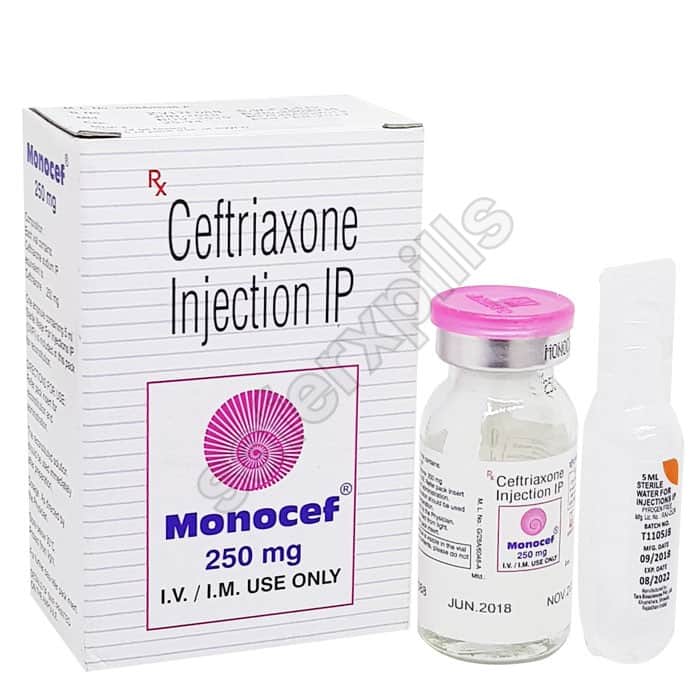
Monocef 250mg
Generic: Ceftriaxoneby Aristo Pharmaceuticals Pvt. Ltd.
Similar medicines
View all
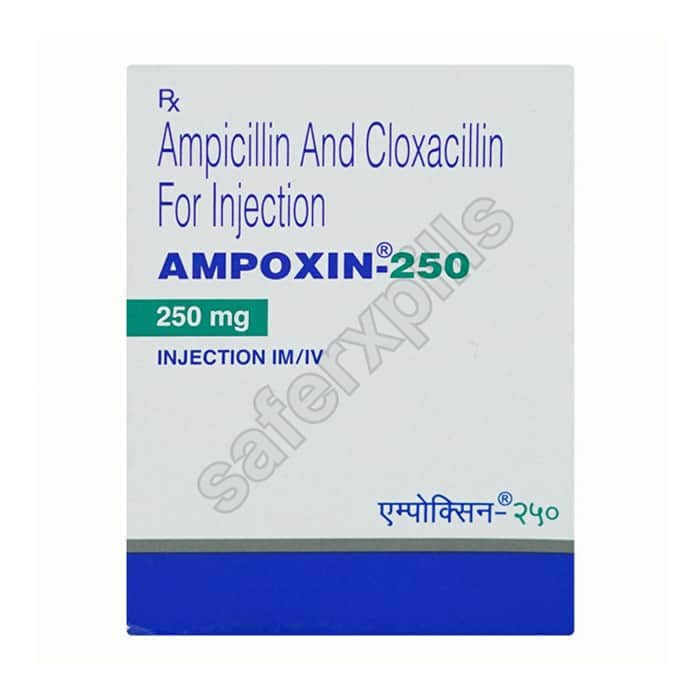
About Monocef 250mg
Monocef 250mg is a single vial of ceftriaxone sodium powder, equal to 250 mg of ceftriaxone, made in India by Aristo Pharmaceuticals. Ceftriaxone is a third generation cephalosporin antibiotic. Once the powder is dissolved, a doctor or nurse injects it deep into a large muscle or gives it into a vein, for serious bacterial infections such as pneumonia, kidney infections, meningitis and some sexually transmitted infections. We sell it in packs of 3, 6 or 12 vials, from $4.42 a vial in the 12 pack.
Four points first. First, this is a clinic medicine. Every Indian listing we checked says a healthcare professional gives it, and Tata 1mg says "Kindly do not self administer". The US, UK, Canadian and Australian labels are written for the professionals who prepare and inject it, and none describes self-injection. Second, treating an infection yourself with an injectable antibiotic is unsafe. The infection may not be bacterial, ceftriaxone may be the wrong antibiotic for it, a serious and occasionally fatal allergic reaction can happen after an injection (US label), and unneeded courses help bacteria become resistant. Third, our delivery takes 7 to 14 business days, so a parcel from us is far too slow for any infection that needs ceftriaxone now. Fourth, 250 mg is no longer the US gonorrhoea dose: the US Centers for Disease Control and Prevention (CDC) has recommended 500 mg since its December 2020 update, kept in its 2021 guidelines. In our view you should only order this product if the doctor or clinic that will give the injection has asked you to supply it. US readers should know that a generic 250 mg vial costs a US pharmacy much less (see the comparison below).
Monocef 250mg at a glance
| Active ingredient | Ceftriaxone sodium, equal to 250 mg ceftriaxone, one vial of powder for injection |
| Brand and maker | Monocef, Aristo Pharmaceuticals Pvt Ltd (Tata 1mg, Truemeds, Apollo, PharmEasy); country of origin India (Truemeds, Apollo, PharmEasy) |
| Who gives it | A doctor or nurse. Apollo: "should only be administered by a healthcare professional"; PharmEasy: "Do not self-inject" |
| Regulatory status | Ceftriaxone for injection is licensed in the US, UK, Canada and Australia as generics. This Indian Monocef pack is not registered with the FDA, MHRA, TGA or Health Canada |
| Usual dose from the labels | Adults: 1 to 2 g once a day, at most 4 g a day (US label). Single dose for uncomplicated gonorrhoea: 250 mg into a muscle (US and Canadian labels), 500 mg (UK label and CDC 2021 guidelines). Children: by weight |
| Half-life | 5.8 to 8.7 hours in healthy adults; after an injection into a muscle, peak blood levels came 2 to 3 hours after the dose (US label) |
| Storage | Below 30 C (Tata 1mg); 20 to 25 C (Apollo). Labels: 20 to 25 C (US), not above 25 C (UK), 15 to 30 C (Canada), below 25 C (Australia); the US, Canadian and Australian labels also say protect from light. Not a refrigerated product |
| Packs | 3, 6 and 12 vials |
| Price per vial | $5.00 (3 vials) down to $4.42 (12 vials), before shipping |
| Delivery | 7 to 14 business days to the US, UK, Australia and Canada, without temperature control; $25 shipping under $149, free from $149 |
Price per vial
Prices below are as of October 2026; the pack selector shows the current price.
| Pack | Price | Per vial | Shipping | Per vial with shipping |
|---|---|---|---|---|
| 3 vials | $15 | $5.00 | $25 | $13.33 |
| 6 vials | $28 | $4.67 | $25 | $8.83 |
| 12 vials | $53 | $4.42 | $25 | $6.50 |
All three packs are under the $149 free shipping line, so each order of this product alone pays $25 shipping. The larger packs are cheaper per vial before shipping as well. In India, Tata 1mg shows an MRP of Rs 29.76 for one vial, PharmEasy Rs 30.45 and Truemeds Rs 30.26.
Which pack fits a course? Buy only the number of vials the doctor or clinic giving the injections has asked for. As a guide from the labels: a single 250 mg gonorrhoea dose under the US label uses 1 vial, and the CDC's 500 mg dose uses 2. An adult course at the usual 1 to 2 g a day would need 4 to 8 vials of 250 mg every day (our arithmetic), so for adult doses a 1 g vial such as Monocef 1gm is the practical form, and it is cheaper per gram from us ($8.75 to $10.00 per 1 g vial against $17.68 to $20.00 for four 250 mg vials, before shipping, our arithmetic). Each vial is for single use, so do not plan to keep part of a vial, and please do not keep spare vials to treat a future infection.
Compared with ceftriaxone in the US, UK, Canada and Australia
| Monocef 250mg (ours, Indian pack) | US | UK | Canada and Australia | |
|---|---|---|---|---|
| Products | Aristo Pharmaceuticals | Generic ceftriaxone for injection (for example Hikma, Hospira, Sandoz, Apotex); the original brand, Rocephin, is discontinued | Generic ceftriaxone powder for injection, for example Ceftriaxone 250mg (PL 05448/0005) | Canada: 250 mg vials marketed by Sandoz and SteriMax. Australia: generic 1 g and 2 g vials (for example Viatris, DBL); we did not find a 250 mg vial on the Australian sources we checked |
| Registered with that country's regulator | No: not registered with the FDA, MHRA, TGA or Health Canada | Yes, FDA (abbreviated applications), "Rx only" | Yes, MHRA, prescription only medicine | Yes: Health Canada (DIN 02292262 and 02325594), prescription; Australia Schedule 4 |
| Diluent in the pack | Not stated on the listings (PharmEasy: "Dry Vial"); not confirmed for our stock | Hikma 250 mg: powder only, boxes of 25 vials | Powder only (no excipients); packs of 1 to 100 vials | Canada: powder vials |
| Cost per 250 mg vial | $4.42 to $5.00 before shipping | NADAC $0.86220 (generic) | Not checked | Not checked |
NADAC is the average price US pharmacies pay to buy a medicine, published by the US Medicaid programme. In the NADAC file of 21 October 2026, generic ceftriaxone 250 mg vials from Hospira, Sandoz and Apotex are listed at $0.86220 a vial (rate effective 18 February 2026). Generic 500 mg vials are $1.29062 to $1.85524 and 1 g vials $1.17958 to $1.45713 (both effective 21 October 2026). There is no brand row, because Rocephin is no longer sold in the US. So our 250 mg vial costs about 5 to 6 times what a US pharmacy pays before shipping, and about 7.5 times or more with shipping (our arithmetic). NADAC is an acquisition cost, not the price a patient pays, and in our understanding (not from a label) ceftriaxone injections in the US, UK, Canada and Australia are usually given from the clinic's or hospital's own stock. If you are in one of these countries, ask the team treating you before you order. We have not seen any data comparing the Indian Monocef pack with the US, UK, Canadian or Australian products.
Gonorrhoea and the 250 mg dose
Many people search for ceftriaxone 250 mg because it was the standard gonorrhoea injection for years. The current advice is different, and the labels disagree with each other:
- CDC (US), 2021 guidelines: ceftriaxone "500 mg IM in a single dose for persons weighing <150 kg", and 1 g for people weighing 150 kg or more. The CDC says that although 250 mg is highly effective against current isolates, "a higher dose is likely necessary for isolates with elevated MICs" (strains that are harder to kill). If chlamydia has not been ruled out, the CDC adds doxycycline 100 mg twice a day for 7 days.
- UK label (4.2): "500 mg as a single intramuscular dose".
- US generic label (Hikma) and Canadian monograph: still say a single 250 mg injection into a muscle. These label texts are older than the CDC change; the Hikma text was last revised in December 2021.
Gonorrhoea needs a test, treatment by a sexual health service or doctor, treatment of partners and a retest: the CDC says people should be retested 3 months after treatment, and anyone with gonorrhoea of the throat should have a test of cure 7 to 14 days after treatment. A vial bought online does none of that. Please do not use this product to treat a suspected sexually transmitted infection yourself.
Which strength to choose
The doctor chooses the vial from the dose. This table shows where a 250 mg vial fits in the labels.
| Use | Dose in the labels | Does a 250 mg vial fit? |
|---|---|---|
| Adults, most infections | US: 1 to 2 g once a day (or split twice a day), at most 4 g a day. UK: 1 to 2 g or 2 g once a day by infection, 2 to 4 g for meningitis, endocarditis and fever in neutropenic patients | No. It would take 4 to 16 vials a day (our arithmetic); use a 1 g vial |
| Uncomplicated gonorrhoea, single dose | US label and Canada: 250 mg IM. UK label: 500 mg IM. CDC 2021: 500 mg IM (1 g at 150 kg or more) | One vial matches the older US and Canadian label dose; current UK and CDC doses need 2 vials |
| Surgical prophylaxis | US: 1 g into a vein 30 minutes to 2 hours before surgery. UK: 2 g as a single dose | No |
| Children, ear infection (acute otitis media) | US: single IM dose of 50 mg/kg, not more than 1 g. UK: single IM dose of 50 mg/kg | Only for small children (250 mg is 50 mg/kg at 5 kg, our arithmetic); dosed by a doctor |
| Children, other infections | US: 50 to 75 mg/kg a day, not more than 2 g a day; meningitis 100 mg/kg a day, not more than 4 g a day. UK: 50 to 100 mg/kg once a day by infection | Depends on weight; dosed and given in hospital or clinic |
For adult doses, see Monocef 1gm. Never swap between strengths or change a dose without the doctor treating you.
How Monocef 250mg is given
This section is for you and the professional giving the injection. It summarises the labels; it is not a guide to injecting yourself.
- Route. The US label says ceftriaxone "may be administered intravenously or intramuscularly". Into a muscle, it "should be injected well within the body of a relatively large muscle" (US), by "deep intramuscular injection" with not more than 1 g at one site (UK 4.2). Into a vein, it is given as an infusion over 30 minutes (US), or over at least 30 minutes or by slow injection over 5 minutes (UK 4.2).
- Lidocaine as the diluent. For an injection into a muscle, the powder is often dissolved in 1% lidocaine, a local anaesthetic, because the injection is painful (the Australian label says an injection into a muscle without lidocaine "is painful"). The UK label lists 1.0 mL of 1% lidocaine for a 250 mg vial (6.6); the US label lists 0.9 mL of diluent for 250 mg/mL, with 1% lidocaine without epinephrine among the allowed diluents. A lidocaine solution must never go into a vein: the US label says "Intravenous administration of ceftriaxone solutions containing lidocaine is contraindicated", and the UK label says such solutions "should never be administered intravenously" (4.3). The contraindications to lidocaine also apply (US, UK 4.3), so tell the clinic if you have ever reacted to a local anaesthetic.
- Calcium. Ceftriaxone can form a solid with calcium. The US label says calcium-containing diluents such as Ringer's or Hartmann's solution must not be used, and ceftriaxone "must not be administered simultaneously with calcium-containing IV solutions, including continuous calcium-containing infusions such as parenteral nutrition via a Y-site"; in patients other than newborns the two may be given one after the other if the line is flushed well in between. The UK label is stricter: "In patients of any age, ceftriaxone must not be mixed or administered simultaneously with any calcium-containing intravenous solutions, even via different infusion lines or at different infusion sites" (4.4). Both labels say there have been no reports of an interaction with calcium taken by mouth, or between ceftriaxone injected into a muscle and calcium (US Dosage and Administration, UK 4.5).
- Newborn babies. In newborns, doses into a vein are given over 60 minutes to reduce the risk of bilirubin brain damage (US, UK 4.2). See Who should not use it for the newborn contraindications.
- Do not mix with other drugs. Vancomycin, amsacrine, aminoglycosides and fluconazole are incompatible in the same solution (US; the UK label adds labetalol, 6.2), and the UK label says ceftriaxone should not be mixed in the same syringe with any drug other than 1% lidocaine (6.6).
- Use the mixed solution quickly. UK: use immediately; chemical stability is shown for 24 hours at 2 to 8 C and 6 hours below 25 C (6.3). US: an intramuscular solution at 250 mg/mL keeps 24 hours at 25 C or 3 days at 4 C. Mixing is done by the clinic.
- Course length. The US label says treatment should usually continue for at least 2 days after the signs of infection have gone, usually 4 to 14 days in total, and at least 10 days for Streptococcus pyogenes. The UK label says 48 to 72 hours after the fever has settled or eradication is shown (4.2). The doctor decides when to stop or switch to tablets.
- Where. Because the labels report serious and occasionally fatal allergic reactions, and the US label says serious reactions may need epinephrine and other emergency measures, the injection should be given where staff can treat a reaction. That is our reading of the labels, not label wording.
Lower doses and extra care for some groups
- Kidney and liver. The US label says no dose change is needed for kidney or liver impairment alone, but with both liver dysfunction and significant kidney disease the dose "should not exceed 2 gm daily". The UK label limits the dose to 2 g a day in preterminal kidney failure (creatinine clearance below 10 mL/min) and advises close monitoring with severe kidney and liver impairment (4.2). The US label also reports serious nervous system reactions (encephalopathy, seizures, myoclonus) during postmarketing use, some in people with severe kidney impairment whose dose was not adjusted.
- Older people. No dose change up to 2 g a day provided there is no severe kidney and liver impairment (US); no change provided kidney and liver function is satisfactory (UK 4.2). The UK label says encephalopathy was reported particularly in elderly people with severe kidney impairment or nervous system disorders (4.4).
- Blood thinners. With warfarin and other vitamin K antagonists the bleeding risk may rise; the US label says clotting tests should be monitored frequently, during and after treatment, and the UK label recommends frequent INR checks (4.5). People with low vitamin K (chronic liver disease, malnutrition) may need prothrombin time monitoring (US).
- Diabetes and blood glucose meters. The US and UK labels say ceftriaxone "may falsely lower estimated blood glucose values obtained with some blood glucose monitoring systems", and that urine glucose tests that are not enzymatic may give false positives. Ask the clinic whether your meter is affected.
- Kidney stones and a low sodium diet. The UK label says use in people with past kidney stones or high urine calcium should be a benefit and risk decision (4.4). Each gram of ceftriaxone contains 3.6 mmol of sodium (UK 4.4); a 250 mg vial contains about 21 mg of sodium (UK 2).
- Pregnancy. The US label says ceftriaxone "should be used during pregnancy only if clearly needed"; the UK label says it should be given in pregnancy, and in particular the first trimester, only if the benefit outweighs the risk (4.6).
- Breastfeeding. Low concentrations pass into breast milk. The US label says caution should be exercised; the UK label says a risk of diarrhoea and fungal infection in the baby cannot be excluded and a decision must be made on breastfeeding or treatment (4.6).
- Driving. The UK label says dizziness may affect driving and patients should be cautious (4.7).
- Syphilis and Lyme disease. The UK label says some people with spirochete infections may have a Jarisch-Herxheimer reaction (fever, chills, aches) shortly after treatment starts, and that the antibiotic should not be stopped for it (4.4). Tell the clinic if this happens.
Side effects
The US label gives rates from clinical trials for effects considered related to ceftriaxone or of uncertain cause. The table shows selected rows; the full list is longer. There is no chart on this page because no blog kit chart covers ceftriaxone.
| Effect (selected, US label trials) | Rate |
|---|---|
| Eosinophilia (raised eosinophil white cells) | 6% |
| Thrombocytosis (raised platelets) | 5.1% |
| Raised liver enzymes ALT / AST | 3.3% / 3.1% |
| Diarrhoea or loose stools | 2.7% |
| Leukopenia (low white cells) | 2.1% |
| Rash | 1.7% |
| Raised BUN (a kidney test) | 1.2% |
| Pain, hardening and tenderness at the injection site | 1% overall; warmth, tightness or hardening in 5% (1 of 20) after a 250 mg/mL injection into a muscle |
Serious effects the labels describe, without a trial rate:
- Allergic reactions: "serious and occasionally fatal hypersensitivity reactions (i.e., anaphylaxis) have been reported" (US). The UK label adds that reactions can progress to Kounis syndrome, an allergic reaction that can cause a heart attack, and lists severe skin reactions (Stevens-Johnson syndrome, toxic epidermal necrolysis, DRESS) that can be life-threatening or fatal (4.4).
- C. difficile diarrhoea: reported with nearly all antibiotics, including ceftriaxone, and "may range in severity from mild diarrhea to fatal colitis" (US). It can start more than two months after the last dose.
- Haemolytic anaemia: an immune breakdown of red blood cells; "Severe cases of hemolytic anemia, including fatalities, have been reported" in adults and children (US; UK 4.4).
- Gallbladder and kidney precipitates: ceftriaxone-calcium deposits can form in the gallbladder (sometimes mistaken for gallstones) or urinary tract, most often in children; they can cause symptoms, and urinary deposits can block the ureters and cause kidney failure. The US label says these appear reversible after stopping and asks for adequate hydration. Pancreatitis, possibly from bile duct blockage, has also been reported.
- Nervous system: encephalopathy (sleepiness, confusion), seizures, myoclonus and non-convulsive status epilepticus, reversible after stopping in the reported cases (US).
- Blood: isolated cases of agranulocytosis, most after 10 days of treatment and total doses of 20 g or more (US).
When to get urgent help
Get emergency help straight away, or tell the staff at once if you are still in the clinic, if any of these happen after an injection:
- Swelling of the lips, tongue, face or throat, hives, wheezing, or trouble breathing or swallowing. Chest pain during an allergic reaction can be a sign of Kounis syndrome (UK leaflet).
- A widespread rash with blistering, peeling skin or sores in the mouth, eyes or genitals.
- Watery or bloody diarrhoea, with or without stomach cramps and fever, even two or more months after the last dose. The US label says patients should contact their physician as soon as possible.
- Yellow skin or eyes, dark urine, unusual tiredness or breathlessness (possible haemolytic anaemia).
- Severe pain in the upper right belly, or passing little or no urine (possible gallbladder or kidney precipitates).
- Confusion, unusual sleepiness, twitching or a seizure. The US label tells patients and carers to inform their healthcare provider "at once" of any such signs.
- An infection that is getting worse rather than better.
The order of this list and "straight away" are our general safety advice. Tell the emergency staff that you were given ceftriaxone (Monocef), how much, when, and whether lidocaine was used as the diluent.
Who should not use Monocef 250mg
Contraindicated (never use it if):
- You are allergic to ceftriaxone or any other cephalosporin. This is a contraindication in all four labels. The labels then differ on penicillin allergy:
- US: contraindicated with known hypersensitivity "to ceftriaxone, any of its excipients or to any other cephalosporin"; people with past reactions to penicillin and other beta-lactams "may be at greater risk", and it "should be given cautiously" to them.
- UK 4.3: also contraindicated with a "History of severe hypersensitivity (e.g. anaphylactic reaction) to any other type of beta-lactam antibacterial agent (penicillins, monobactams and carbapenems)"; caution after a non-severe reaction (4.4).
- Canada: contraindicated with known hypersensitivity to the drug, "other cephalosporins, or penicillins".
- Australia (Viatris): contraindicated with "known hypersensitivity to beta-lactam antibiotics".
- Premature babies up to a postmenstrual age of 41 weeks (gestational age plus age since birth) (US, UK 4.3).
- Newborns with high bilirubin. The US label says "Hyperbilirubinemic neonates should not be treated with ceftriaxone" because it can displace bilirubin and cause bilirubin brain damage. The UK label contraindicates it in full-term newborns up to 28 days "with hyperbilirubinaemia, jaundice, or who are hypoalbuminaemic or acidotic" (4.3). The Canadian monograph says hyperbilirubinemic and preterm neonates "should not be treated with ceftriaxone".
- Newborns needing intravenous calcium. Contraindicated in neonates (28 days or younger) "if they require (or are expected to require) treatment with calcium-containing IV solutions, including continuous calcium-containing infusions such as parenteral nutrition" (US; UK 4.3 and the Canadian monograph say the same in their own words). Fatal cases with crystals in the lungs and kidneys have been reported in newborns given ceftriaxone and calcium-containing fluids, including at least one where they were given at different times through different lines (US).
- Into a vein with lidocaine, or with lidocaine as the diluent if you have a contraindication to lidocaine (US, UK 4.3; Australia names lidocaine allergy).
Use only with care, or the doctor may choose another antibiotic:
- A past non-severe reaction to a penicillin or other beta-lactam (see above; the wording differs by label).
- Both liver dysfunction and significant kidney disease (US: no more than 2 g a day); severe kidney impairment (neurological reactions, US).
- A history of kidney stones or high urine calcium (UK 4.4).
- Warfarin or other vitamin K antagonists (US, UK 4.5).
- Suspected chlamydia: ceftriaxone has no activity against Chlamydia trachomatis, so the US label says antichlamydial treatment should be added.
Antibiotic resistance and why self-treatment is unsafe
The US label opens with this line: ceftriaxone "should be used only to treat or prevent infections that are proven or strongly suspected to be caused by bacteria". It adds that giving it without a proven or strongly suspected bacterial infection "is unlikely to provide benefit to the patient and increases the risk of the development of drug-resistant bacteria", and that samples for culture should be taken before treatment starts. The World Health Organization places ceftriaxone in its "Watch" group: antibiotics with a higher potential for resistance that the WHO treats as key targets for stewardship programmes. Self-treating with an injectable antibiotic skips the diagnosis, the culture, the choice of the right drug, the allergy check and the emergency cover. Our antibiotic resistance guide explains why unneeded courses matter beyond one person.
Storage
- Temperature. Tata 1mg lists Monocef 250 mg as "Store below 30°C". Truemeds gives both below 30 C and below 25 C on the same page, and Apollo says 20 to 25 C. The labels say 20 to 25 C (US), do not store above 25 C (UK 6.4), 15 to 30 C (Canada) and below 25 C (Australia); the US, Canadian and Australian labels also say to protect it from light (the UK label gives only the temperature). None of these sources asks for a fridge for the unopened powder.
- Heat in transit. Our parcels travel for 7 to 14 business days without temperature control and can be exposed to more than 25 C in summer. Keep the vial in its carton, away from light and heat, when it arrives, and let the clinic inspect it before use. That is our advice.
- After mixing. See How it is given: the UK label says use immediately; any refrigeration limits apply to the mixed solution, not to the powder.
Prescription and legal status
In the US, ceftriaxone for injection is a prescription medicine ("Rx only"), and the FDA says personal importation of unapproved medicines is illegal in most circumstances. In the UK, ceftriaxone powder for injection is a prescription only medicine. In Canada, ceftriaxone 250 mg vials are marketed prescription products (Health Canada Drug Product Database). In Australia, ceftriaxone is Schedule 4, prescription only. In India, Tata 1mg and Truemeds mark Monocef 250 mg "Prescription required" and Apollo marks it a prescription medicine. Whatever the rules where you live, the labels are written for the professionals who give it. Check the rules where you live.
Buying genuine Monocef
The MHRA warns that "Any medicine not authorised for sale in the UK can be unsafe or ineffective and there is no way of knowing what is in them or the negative health effects they can have", and it advises UK buyers to "Only use UK-registered pharmacies, including online pharmacies displaying the official green cross logo". That warning covers this Indian Monocef pack. When your order arrives, check that the vial and carton say Monocef, ceftriaxone and 250 mg, with Aristo, a batch number and an expiry date, and that the seal is intact. Aristo also sells Monocef SB, which contains sulbactam as well as ceftriaxone, so check the name carefully. These checks cannot prove that an injection is genuine or sterile, because counterfeiters copy packaging. If a batch causes unusual symptoms, seek medical advice and report it to your medicines regulator (the MHRA Yellow Card scheme in the UK, FDA MedWatch in the US, the TGA in Australia or Health Canada) as well as to us.
Delivery
We ship Monocef 250mg to the US, UK, Australia and Canada in plain packaging with tracking. Standard delivery takes 7 to 14 business days, so this product can never be used for an infection that needs treatment now. Shipping costs a flat $25 on orders under $149 and is free from $149. See our shipping page and refund policy.
Related guides
Sources
- Ceftriaxone for Injection, USP, US prescribing information, Hikma Pharmaceuticals USA Inc., DailyMed setid 8351aa37-552d-471d-b293-c564dcb6ec29, version 18, published 2 October 2026 (text revised December 2021): opening resistance statement, Clinical Pharmacology, Indications, Contraindications, Warnings, Precautions, Adverse Reactions, Dosage and Administration, Compatibility and Stability, How Supplied, carton. DailyMed
- Ceftriaxone 250mg powder for solution for injection, UK SmPC, Istituto Biochimico Italiano G. Lorenzini (Bowmed Ibisqus), PL 05448/0005, text revised 11 June 2024: sections 2, 4.1 to 4.9, 6.1 to 6.6; package leaflet; legal category POM. emc
- Ceftriaxone Sodium for Injection BP, Canadian product monograph, SteriMax Inc., control no. 282633, revised 20 August 2024: sections 1, 2, 4, 7, 9, 11. Health Canada Drug Product Database: DIN 02292262 (Sandoz) and DIN 02325594 (SteriMax), 250 mg, marketed, prescription; searched 26 October 2026. Health Canada
- Ceftriaxone Viatris, Australian product information, Alphapharm Pty Ltd trading as Viatris, AUST R 164920 and 164917, revised January 2024: sections 4.2, 4.3, 4.4, 4.6, 6.4, 7. medicines.org.au; healthdirect, Ceftriaxone (DBL): Schedule 4, store below 25 degrees, protect from light. healthdirect
- Workowski KA, Bachmann LH, Chan PA, et al. Sexually Transmitted Infections Treatment Guidelines, 2021. MMWR Recomm Rep 2021;70(No. RR-4):1-187. PMID 34292926; CDC gonococcal infections among adolescents and adults page, last reviewed 21 September 2022. CDC
- St Cyr S, Barbee L, Workowski KA, et al. Update to CDC's Treatment Guidelines for Gonococcal Infection, 2020. MMWR Morb Mortal Wkly Rep 2020;69:1911-1916. PMID 33332296.
- US Food and Drug Administration, Drugs@FDA and openFDA NDC directory: Rocephin (NDA 050585) discontinued, Federal Register determination that it was not discontinued for safety or effectiveness reasons; generic 250 mg vials from Hikma (ANDA 065342), Hospira and Sandoz (ANDA 065169) and Apotex (ANDA 203702); searched 26 October 2026.
- Centers for Medicare and Medicaid Services. National Average Drug Acquisition Cost (NADAC) 2026, file of 21 October 2026: ceftriaxone 250 mg vial $0.86220 (NDC 00409-7337-01, 00409-7337-20, 00781-3206-95, 60505-6151-01; effective 18 February 2026); 500 mg $1.29062 to $1.85524 and 1 g $1.17958 to $1.45713 (effective 21 October 2026). data.medicaid.gov
- World Health Organization. AWaRe classification of antibiotics for evaluation and monitoring of use, 2023 (ceftriaxone: Watch group).
- Indian listings for Monocef 250 mg (Tata 1mg, Truemeds, Apollo Pharmacy, PharmEasy), checked 26 October 2026.
- MHRA. 20 million illegal erectile dysfunction pills seized as MHRA warns against risky online buys, 13 February 2026. GOV.UK
- US Food and Drug Administration. Personal Importation. FDA
This page is for information and is not medical advice. Monocef 250mg is a prescription antibiotic injection that must be given by a doctor or nurse. It is not for self-treatment of any infection.
Frequently asked questions
What is Monocef 250mg?
Monocef 250mg is one vial of ceftriaxone sodium powder, equal to 250 mg of ceftriaxone, made in India by Aristo Pharmaceuticals. Ceftriaxone is a cephalosporin antibiotic that a doctor or nurse dissolves and injects into a large muscle or gives into a vein for serious bacterial infections. We sell packs of 3, 6 and 12 vials.
Is it the same as ceftriaxone sold in the US, UK, Canada or Australia?
It contains the same active ingredient. Ceftriaxone for injection is licensed as generics in all four countries (the original US brand, Rocephin, is discontinued), but this Indian Monocef pack is not registered with the FDA, MHRA, TGA or Health Canada. We have not seen data comparing it with those products.
What does Monocef 250mg cost per vial?
As of October 2026, $5.00 a vial in the 3 pack, $4.67 in the 6 pack and $4.42 in the 12 pack, before shipping; the pack selector shows the current price. Every pack is under $149, so shipping is $25. A US pharmacy pays about $0.86 for a generic 250 mg vial (NADAC, 21 October 2026), so US generics are far cheaper.
Can I inject Monocef 250mg myself at home?
No. Indian listings say a healthcare professional gives it (Tata 1mg: "Kindly do not self administer"), and the labels are written for professionals. Serious and occasionally fatal allergic reactions have been reported, the powder must be mixed correctly, and a lidocaine solution must never go into a vein. Only order it if the doctor or clinic giving the injection has asked you to supply it.
Can I use it to treat an infection myself?
Please do not. Self-treating an infection with an injectable antibiotic is unsafe: the infection may not be bacterial, ceftriaxone may be the wrong drug, and an allergic reaction needs emergency care. The US label says ceftriaxone should be used only for infections proven or strongly suspected to be bacterial. Our delivery also takes 7 to 14 business days, far too slow for an infection that needs it.
Is 250 mg the right dose for gonorrhoea?
Not under current US guidance or the UK label. The CDC's 2021 guidelines recommend 500 mg into a muscle once (1 g at 150 kg or more), plus doxycycline if chlamydia has not been ruled out, and the UK label says 500 mg. The Hikma US label and the Canadian monograph still print 250 mg. Gonorrhoea needs testing, partner treatment and a retest through a sexual health service.
Which strength should I choose: 250 mg or 1 g?
The doctor chooses from the dose. The usual adult dose is 1 to 2 g once a day (US label), which would mean 4 to 8 vials of 250 mg a day, so a 1 g vial such as Monocef 1gm is the practical choice for adults and is cheaper per gram from us. The 250 mg vial fits single small doses, such as the older 250 mg gonorrhoea dose or weight-based doses for small children.
What are the main side effects?
In US label trials: eosinophilia 6%, raised platelets 5.1%, raised liver enzymes about 3%, diarrhoea 2.7%, low white cells 2.1% and rash 1.7%. Serious effects include anaphylaxis, severe skin reactions, C. difficile diarrhoea (even two months after the dose), haemolytic anaemia, gallbladder or kidney precipitates, and confusion or seizures, some of them in people with severe kidney impairment (US label).
Who should not be given Monocef 250mg?
Anyone allergic to ceftriaxone or another cephalosporin (all labels). Penicillin allergy wording differs: the UK label contraindicates it after a severe beta-lactam reaction, the Canadian label after penicillin hypersensitivity, the Australian label after any beta-lactam hypersensitivity, and the US label says use cautiously. It is also contraindicated in premature babies, in newborns with high bilirubin and in newborns needing intravenous calcium.
Do I need a prescription?
Yes, in practice. Ceftriaxone injection is prescription only in the US, UK, Canada and Australia (Schedule 4), and Indian listings mark Monocef 250 mg as prescription required. The FDA says personal importation of unapproved medicines is illegal in most circumstances. Check the rules where you live.
How is it delivered and stored?
We ship in plain packaging with tracking, in 7 to 14 business days, without temperature control; shipping is $25 under $149 and free from $149. Tata 1mg lists storage below 30 C and Apollo 20 to 25 C; the labels say 20 to 25 C, protected from light (US), or not above 25 C (UK). It does not need a fridge before mixing. Keep it in the carton and let the clinic check it.
Medical References
Sources: U.S. National Library of Medicine (DailyMed, PubMed), openFDA
Related articles
Brand vs Generic Drug Prices: What US Pharmacies Pay for Viagra, Cialis, Latisse and More (NADAC, October 2026)
CMS NADAC data for the week of 28 October 2026 shows what US pharmacies pay for brand and generic versions of Viagra, Cialis, Propecia, Latisse, Lumigan and Stromectol. Generic ED and hair loss tablets cost under 2% of the brand price, while eye and lash generics cost 42% to 65%. Includes 2026 trends, supplier counts and the full method.
Read article
Buy Amaryl (Glimepiride) Online: Dosing, Hypoglycaemia Risk and What to Verify First
Amaryl is brand name glimepiride, a sulfonylurea that lowers blood sugar effectively and cheaply but carries real hypoglycaemia risk. Dosing, the CAROLINA trial evidence, interactions, and what to verify before ordering online.
Read article
Generic vs Branded Medicines: What You Really Need to Know
Many patients assume branded drugs are superior to generics. The truth, backed by decades of FDA research, is more nuanced.
Read articleCustomer Reviews
No reviews yet. Bought Monocef 250mg? Tell other buyers how it went.