
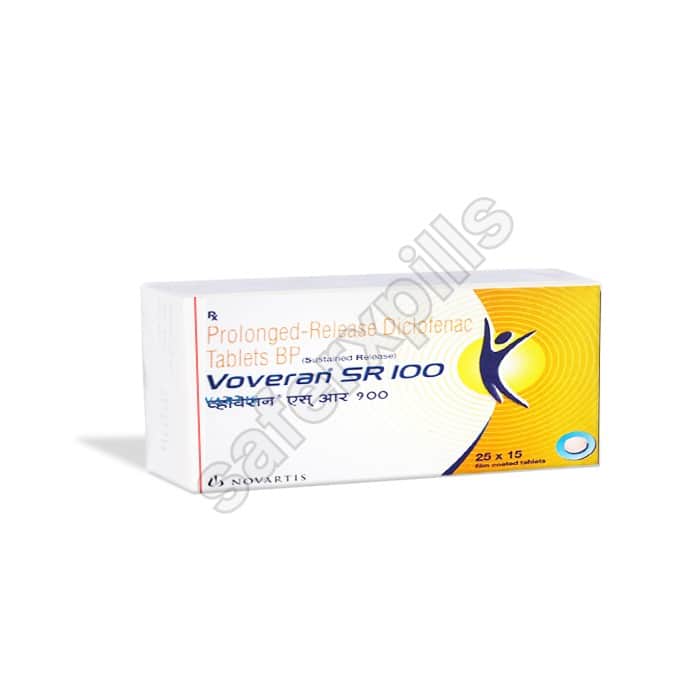
About Voveran SR 100mg
Voveran SR 100 is an Indian sustained release tablet of diclofenac 100 mg, a nonsteroidal anti-inflammatory drug (NSAID) used for arthritis and for pain with inflammation in muscles and joints. The carton in our product photo reads "Prolonged-Release Diclofenac Tablets BP (Sustained Release)", carries the Rx mark and the Novartis name, and holds 25 strips of 15 film coated tablets. Voveran is a Novartis India brand; Tata 1mg and Truemeds list Dr. Reddy's Laboratories as the marketer of the 15 tablet strip. We sell it in packs of 60, 90 and 120 tablets, from $0.37 a tablet in the largest pack.
Three points first. Diclofenac carries a US boxed warning for heart attack, stroke and stomach bleeding, and since 2013 the UK label has said it must not be used by people with established ischaemic heart disease (such as angina or a past heart attack), congestive heart failure (NYHA class II to IV), peripheral arterial disease (circulation problems in the legs) or cerebrovascular disease (such as a past stroke or mini stroke). The usual dose of this strength is one tablet once a day, taken whole. And it is a prescription medicine in the US, UK, Canada and Australia. This page sets out the doses, warnings and prices from the current US label for diclofenac sodium extended release 100 mg tablets and the UK label for a diclofenac sodium 100 mg prolonged release tablet, listed at the end.
Voveran SR 100 at a glance
| Active ingredient | Diclofenac 100 mg in a sustained (prolonged) release tablet. The carton in our photo names the British Pharmacopoeia product "Prolonged-Release Diclofenac Tablets BP"; Tata 1mg and Truemeds list the composition as "Diclofenac (100mg)". The US and UK labels below are for diclofenac sodium |
| Brand and maker | Voveran, a Novartis India Ltd brand (carton in our photo). Tata 1mg and Truemeds name Dr. Reddy's Laboratories as marketer. The Hindu (10 August 2026) reported that Dr. Reddy's 2022 agreement to sell Novartis India brands was terminated and that Dr. Reddy's would sell them only until 30 September 2026, so strips may carry either name |
| Regulatory status | Diclofenac sodium 100 mg slow release tablets are licensed in the US, UK and Canada; we found no such tablet registered in Australia. This Indian Voveran pack is not registered with the FDA, MHRA, TGA or Health Canada |
| Usual dose from the label | One 100 mg tablet once a day (US label, Dosage and Administration; UK label 4.2). UK maximum 150 mg a day in total (4.2). The US label allows 100 mg twice a day only for rheumatoid arthritis, "In the rare patient" where 100 mg a day is not enough |
| Timing | Peak blood levels about 4.5 hours after a tablet taken with a meal (UK 5.2); mean time to peak 5.3 hours in the US label's table (Clinical Pharmacology). Half-life of diclofenac about 2 to 3 hours (US Table 1; UK 5.2); the slow release tablet is what spreads the dose over the day |
| Packs | 60, 90 and 120 tablets (Indian strips hold 15) |
| Price per tablet | $0.42 (60 pack) down to $0.37 (120 pack), before shipping |
| Delivery | 7 to 14 business days to the US, UK, Australia and Canada; $25 shipping under $149, free from $149 |
Price per tablet
Prices below are as of November 2026; the pack selector shows the current price.
| Pack | Price | Per tablet | Shipping | Per tablet with shipping |
|---|---|---|---|---|
| 60 tablets | $25 | $0.42 | $25 | $0.83 |
| 90 tablets | $35 | $0.39 | $25 | $0.67 |
| 120 tablets | $44 | $0.37 | $25 | $0.58 |
All three packs are under the $149 free shipping line, so a single pack carries $25 shipping. The larger packs are cheaper per tablet before shipping too.
How long a pack lasts. At the label dose of one tablet a day, the 60 pack lasts 60 days, the 90 pack 90 days and the 120 pack 120 days. If a doctor has prescribed 100 mg twice a day under the US rheumatoid arthritis rule, the packs last 30, 45 and 60 days. That is our arithmetic, not a label figure. Both labels say to use the lowest effective dose for the shortest time, and the UK label says the need for pain relief and the response to treatment "should be re-evaluated periodically" (4.4). A pack is not a reason to keep taking it. Do not keep leftover tablets to treat new pain without advice, and check that the expiry date on the strips covers the time you need.
SR, ER, XL and MR: what the letters mean
SR (sustained release), ER (extended release), XL and MR (modified release) or prolonged release all describe tablets made to release diclofenac slowly, so one tablet can cover a day. The US calls this tablet "extended-release", the UK "prolonged-release", and Indian packs "SR". They are not the same as diclofenac 50 mg enteric coated (gastro-resistant) tablets, which are taken two or three times a day, or diclofenac potassium tablets, which act faster. The US label says these forms "are not necessarily bioequivalent even if the milligram strength is the same", so do not switch between them without your doctor or pharmacist.
Swallow the tablet whole. The UK label says it is "To be taken whole with liquid, preferably with or after food" (4.2). Do not break, crush or chew it (our advice for a slow release tablet); we have no data on a cut Voveran SR tablet.
Compared with US generics and the brand
| Voveran SR 100 (ours) | US generic diclofenac sodium ER 100 mg | US Voltaren-XR 100 mg | |
|---|---|---|---|
| Maker | Novartis India brand; marketed in India by Dr. Reddy's until 30 September 2026 | Several US generic makers (for example Aurobindo, Dexcel, Ingenus) | Novartis (NDA 020254) |
| FDA status | Not registered with the FDA (Indian pack) | FDA approved | Discontinued; the FDA recorded that it was not withdrawn for safety or effectiveness reasons |
| Cost per tablet | $0.37 to $0.42 before shipping; $0.58 to $0.83 with shipping | About $0.64 (NADAC $0.63546) | No NADAC row |
NADAC is the average price US pharmacies pay to buy a medicine, published by the US Medicaid programme. It is not the price a patient pays at the counter. Generic diclofenac sodium ER 100 mg is $0.63546 a tablet (4 NDC rows, effective 21 October 2026, in the file dated 4 November 2026). Before shipping our tablet is cheaper than that; with shipping, only the 120 pack comes in below it (our arithmetic).
The cheaper US route is a different form. Diclofenac sodium delayed release (enteric coated) 50 mg tablets are $0.06299 a tablet in the same file, so 100 mg a day as two 50 mg tablets costs a US pharmacy about 13 cents (our arithmetic), about a third of our 120 pack price before shipping. Because the labels say the forms are not interchangeable, that switch is your prescriber's decision. If you are in the US and have a prescription, ask your pharmacist for cash prices on both forms before ordering from us.
US generics were approved by showing they are bioequivalent to the US reference product. We have not seen bioequivalence data comparing Voveran SR 100 with US or UK diclofenac tablets.
Which strength to choose
| Daily amount | Product | How it fits the labels |
|---|---|---|
| 75 mg slow release | Voveran SR 75mg | A lower slow release strength. We have not reviewed its label for this page |
| 100 mg once a day | Voveran SR 100 | The usual US dose for osteoarthritis and rheumatoid arthritis, and the UK dose (one tablet daily) |
| 150 mg a day | Voveran SR 100 plus a 50 mg ordinary tablet, only if prescribed | The UK maximum. The UK label reaches it "by supplementation with the conventional dosage forms containing diclofenac sodium 25 mg or 50 mg", not by taking one and a half slow release tablets |
| 200 mg a day (100 mg twice daily) | Voveran SR 100, only if prescribed | US label, rheumatoid arthritis only, "In the rare patient" where 100 mg a day is unsatisfactory, "if the benefits outweigh the clinical risks of increased side effects". Above the UK maximum of 150 mg |
Higher doses bring more heart risk. The UK label says the evidence "consistently" points to an increased risk of heart attack or stroke with diclofenac, "particularly at high dose (150 mg daily) and in long term treatment" (4.4, 4.8). The US label says the rise in heart risk "has been observed most consistently at higher doses", and a European study quoted in the US label found the liver injury risk rose further with "doses of 150 mg or more". Any increase above 100 mg a day is your doctor's decision.
How to take Voveran SR 100
- Take it exactly as your doctor advises, at the lowest dose that works for the shortest time (US label; UK 4.2).
- One tablet once a day, swallowed whole with liquid, preferably with or after food (UK 4.2). The US label says food delays the peak by 1 to 2 hours and doubles the peak level, without changing how much is absorbed overall.
- Do not take it with any other NSAID: aspirin at pain relief doses, ibuprofen, naproxen, another diclofenac tablet, or a diclofenac potassium tablet (US Precautions; UK 4.4, 4.5). The US label warns that NSAIDs may be present in over-the-counter cold, fever or sleep products.
- For long-term use, the US label tells doctors to check liver enzymes (transaminases) at the start and periodically, and "within 4 to 8 weeks after initiating treatment"; it also suggests periodic blood counts and chemistry tests. The UK label asks for regular liver checks and blood counts during prolonged treatment (4.4).
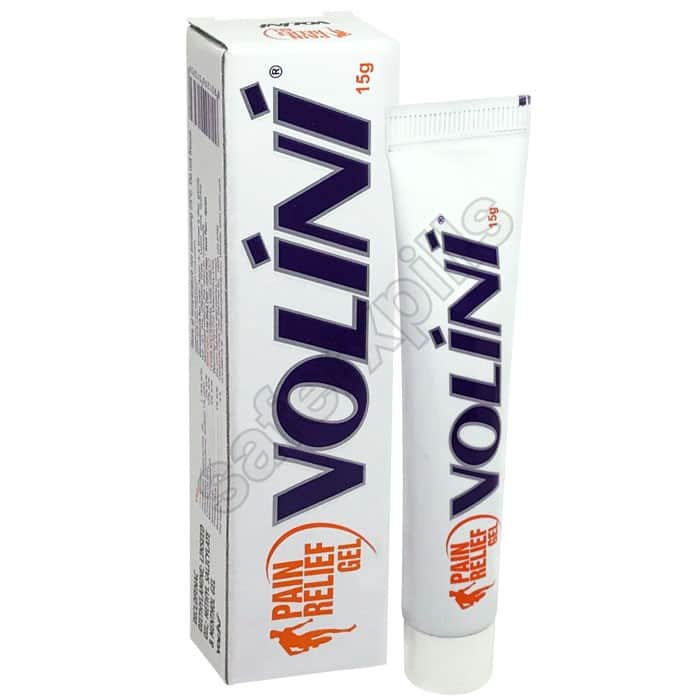
- If you have arthritis pain in one or two joints, a skin gel may be enough: NICE says to offer a topical NSAID for knee osteoarthritis and consider one for other joints (NG226). We sell Volini Gel (a diclofenac gel), Pirox Gel (piroxicam) and Naprosyn Gel. Ask your doctor before using an NSAID gel and tablet together (our advice).
Lower doses and extra care for some groups
- Older people. The US label says older people are at greater risk of serious heart, stomach and kidney reactions and, if the benefit outweighs these risks, to "start dosing at the low end of the dosing range". The UK label recommends the lowest effective dose in frail older people or those with low body weight (4.2, 4.4). A once daily 100 mg tablet cannot go lower; ask your doctor whether a lower strength suits you.
- Kidney problems. The UK label contraindicates diclofenac in kidney failure and advises caution in mild to moderate kidney impairment (4.2, 4.3). The US label says to avoid it in advanced kidney disease "unless the benefits are expected to outweigh the risk of worsening renal function", and to correct dehydration before starting.
- Liver problems. The UK label contraindicates it in liver failure and advises caution in mild to moderate impairment and in hepatic porphyria (4.2, 4.3, 4.4). The US label says people with liver disease "may require reduced doses".
- Heart risk factors without established heart disease. High blood pressure, high cholesterol, diabetes or smoking: the UK label says diclofenac should be used "only after careful consideration" (4.4).
- CYP2C9 inhibitors. With voriconazole, diclofenac peak levels rose by 114% and total exposure by 78% (US label). The UK label advises caution with potent CYP2C9 inhibitors (4.5).
- Children. The UK label says these tablets "are not suitable for children" (4.1, 4.2). The US label says safety and effectiveness in children have not been established.
Side effects
The US boxed warning reads: "Nonsteroidal anti-inflammatory drugs (NSAIDs) cause an increased risk of serious cardiovascular thrombotic events, including myocardial infarction and stroke, which can be fatal. This risk may occur early in treatment and may increase with duration of use." and "NSAIDs cause an increased risk of serious gastrointestinal (GI) adverse events, including bleeding, ulceration, and perforation of the stomach or intestines, which can be fatal. These events can occur at any time during use and without warning symptoms. Elderly patients and patients with a prior history of peptic ulcer disease and/or GI bleeding are at greater risk for serious GI events."
| How often (UK label 4.8) | Reported effects |
|---|---|
| Common (1 in 100 to 1 in 10) | Headache, dizziness, vertigo, nausea, vomiting, diarrhoea, indigestion, abdominal pain, wind, loss of appetite, raised liver enzymes, rash |
| Uncommon (1 in 1,000 to 1 in 100) | Heart attack, heart failure, palpitations, chest pain. The label says this frequency "reflects data from long-term treatment with a high dose (150mg/day)" |
| Rare (1 in 10,000 to 1 in 1,000) | Allergic reactions including anaphylaxis, sleepiness, tiredness, asthma, stomach inflammation, stomach or bowel bleeding, vomiting blood, black stools, ulcers with or without bleeding or perforation, hepatitis, jaundice, hives, swelling (oedema) |
| Very rare (under 1 in 10,000) | Blood disorders, serious skin reactions (Stevens-Johnson syndrome, toxic epidermal necrolysis), liver failure, acute kidney failure, aseptic meningitis, stroke, vision and hearing changes, high blood pressure, pancreatitis |
Selected rows. The US label lists, for diclofenac ER "or other NSAIDs", effects in about 1% to 10% of patients: stomach and bowel complaints including ulcers and gross bleeding or perforation, abnormal kidney function, anaemia, dizziness, swelling, raised liver enzymes, headaches, longer bleeding time, itching, rashes and ringing in the ears. It gives no placebo comparison.
Heart and circulation. The UK label says clinical trial and epidemiological data "consistently point towards an increased risk of arterial thrombotic events (for example myocardial infarction or stroke) associated with the use of diclofenac, particularly at high dose (150 mg daily) and in long term treatment" (4.8). A 2013 analysis of randomised trials (CNT Collaboration, PMID 23726390), which the MHRA cited, found that "of 1000 patients allocated to a coxib or diclofenac for a year, three more had major vascular events, one of which was fatal", compared with placebo. In the same analysis naproxen did not significantly increase major vascular events; if heart risk is your concern, ask your doctor which pain reliever fits you (our suggestion; see Naprosyn 500mg). NSAIDs can cause new or worse high blood pressure, and the US label cites a meta-analysis that found about a 2-fold increase in hospital admission for heart failure with NSAIDs (Warnings).
Stomach bleeding numbers. The US label says ulcers, gross bleeding or perforation caused by NSAIDs "occurred in approximately 1% of patients treated for 3 to 6 months, and in about 2% to 4% of patients treated for one year", and that "Only one in five patients, who develop a serious upper GI adverse event on NSAID therapy, is symptomatic". People with a past ulcer or stomach bleed had "a greater than 10-fold increased risk". The UK label says a protective medicine such as a proton pump inhibitor or misoprostol "should be considered" for people with a past ulcer, for older people and for those on low dose aspirin (4.4).
Liver. This is the warning that sets diclofenac apart in its US label. In trials of diclofenac products, liver enzyme (AST) rises above 3 times normal were seen in about 2% of about 5,700 patients; in one open-label trial of 3,700 people treated for 2 to 6 months, about 4% had meaningful rises in ALT and/or AST and about 1% had marked rises above 8 times normal, and rises were more frequent than with other NSAIDs. In 42 of the 51 people with marked rises, the abnormal tests appeared in the first 2 months. Post-marketing reports include liver failure, some fatal or needing a transplant.
Driving. The UK label says people who get visual disturbances, dizziness, vertigo, sleepiness or tiredness "should refrain from driving or operating machinery" (4.7).
When to get urgent help
The US Medication Guide says to get emergency help right away for:
- shortness of breath or trouble breathing, chest pain, weakness in one part or side of your body, or slurred speech (possible heart attack or stroke)
- swelling of the face or throat. The US label says to "seek immediate emergency help" for signs of an anaphylactic reaction. The UK label adds that an allergic reaction can lead to a heart attack (Kounis syndrome), with chest pain together with allergy signs (4.4)
Stop taking it and call your doctor right away (US Medication Guide) if you:
- vomit blood, or have blood in your stool or black, sticky stools like tar, or indigestion or stomach pain
- have nausea, unusual tiredness or weakness, diarrhoea, itching, yellow skin or eyes, or flu-like symptoms (possible liver injury). The US label says to stop and "seek immediate medical therapy"
- get a skin rash or blisters with fever. The US label says to stop at "the first appearance of skin rash or any other sign of hypersensitivity"
- have unusual weight gain or swelling of the arms, legs, hands or feet
- have taken too much. The Medication Guide says to "call your healthcare provider or get medical help right away". Call a poison line (US 1-800-222-1222, Australia 13 11 26), especially if a child has swallowed tablets. The UK label lists headache, vomiting, stomach bleeding, dizziness, fainting, fits and, in significant poisoning, kidney failure and liver damage (4.9)
Tell the emergency staff that you took diclofenac slow release (Voveran SR 100), how much and when.
Who should not take Voveran SR 100
Never take it if (US label, Contraindications and boxed warning; UK label 4.3):
- you have had an allergic reaction (including anaphylaxis or a serious skin reaction) to diclofenac or any ingredient of the tablet
- you have had asthma, hives or other allergic-type reactions after aspirin or another NSAID. The US label says "Severe, sometimes fatal, anaphylactic reactions to NSAIDs have been reported in such patients"; the UK label names attacks of asthma, angioedema, urticaria or acute rhinitis brought on by ibuprofen, aspirin or other NSAIDs
- you are about to have, or have just had, heart bypass surgery (CABG). The US boxed warning says the tablets "are contraindicated in the setting of coronary artery bypass graft (CABG) surgery"
- under the UK label: you have established congestive heart failure (NYHA class II to IV), ischaemic heart disease (such as angina or a past heart attack), peripheral arterial disease or cerebrovascular disease (a past stroke or mini stroke). These were added after the 2013 European review; the MHRA said patients with these conditions "should be switched to an alternative treatment at their next routine appointment". The US label instead says to avoid it after a recent heart attack and in severe heart failure unless the benefits are expected to outweigh the risk
- under the UK label: an active stomach or bowel ulcer, bleeding or perforation; a past stomach bleed or perforation linked to an NSAID; recurrent ulcers or bleeding (two or more proven episodes); liver failure; kidney failure
- you are in the last three months of pregnancy (UK 4.3, 4.6). The US wording differs; see below
Avoid, or only with your doctor's agreement:
- Pregnancy. The US label says to avoid NSAIDs, including this tablet, "in pregnant women at about 30 weeks gestation and later" because of premature closure of the fetal ductus arteriosus. From about 20 weeks, NSAIDs "may cause fetal renal dysfunction leading to oligohydramnios" (low amniotic fluid); if an NSAID is needed between about 20 and 30 weeks, it says to use the lowest dose for the shortest time and to consider ultrasound monitoring if treatment goes beyond 48 hours. The UK label says diclofenac "should not be given unless clearly necessary" in the first and second trimesters (4.6).
- Breastfeeding. The UK label says diclofenac "should not be administered during breast feeding" (4.6). The US label says it may be present in milk and asks to weigh the benefits.
- Trying to conceive. The UK label says it "is not recommended in women attempting to conceive" (4.4, 4.6); the US label describes a reversible delay in ovulation and says to consider stopping in women who have difficulty conceiving.
- Asthma, nasal polyps, hay fever or chronic lung disease without known aspirin sensitivity: watch for worsening; the UK label recommends "readiness for emergency" (4.4).
- Ulcerative colitis or Crohn's disease: close medical surveillance, as these may get worse (UK 4.4).
- Lupus and mixed connective tissue disease: increased risk of aseptic meningitis (UK 4.4).
- Bleeding disorders or blood thinning medicines (US Warnings; UK 4.4).
- After bowel surgery: the UK label says NSAIDs may raise the risk of an anastomotic leak (4.4).
- Rare sugar intolerances: some UK 100 mg prolonged release tablets contain sucrose (UK 4.4). We do not have the full ingredient list for the Indian tablet; read the strip or ask us.
Medicines that interact
- Blood thinners and bleeding risk: warfarin and other anticoagulants, antiplatelet medicines such as aspirin or clopidogrel, SSRIs and SNRIs (antidepressants such as sertraline or venlafaxine) (US Drug Interactions table; UK 4.5).
- Low dose aspirin for the heart. The US label says the tablets are "not a substitute for low dose aspirin for cardiovascular protection" and tells patients not to take low dose aspirin with it "until they talk to their healthcare provider". Paracetamol (acetaminophen, for example Calpol 500mg) is a non-NSAID pain reliever. The US label names acetaminophen among potentially liver-toxic medicines to use with caution alongside diclofenac, so ask your doctor before combining them.
- Other NSAIDs and salicylates, including COX-2 inhibitors: "not recommended" (US); "should be avoided" (UK 4.4).
- Blood pressure medicines: NSAIDs can weaken ACE inhibitors, angiotensin receptor blockers and beta blockers; with ACE inhibitors or ARBs in older, dehydrated or kidney-impaired people they can cause kidney failure (US; UK 4.5).
- Diuretics (water tablets): reduced effect and kidney risk; potassium-sparing diuretics, ciclosporin, tacrolimus and trimethoprim can raise potassium (UK 4.5).
- Lithium and digoxin (levels rise), methotrexate (serious toxicity when given within 24 hours of an NSAID, UK 4.5), ciclosporin and tacrolimus (kidney toxicity), pemetrexed (US: in people with creatinine clearance of 45 to 79 mL/min, avoid short half-life NSAIDs such as diclofenac for 2 days before, the day of and 2 days after).
- Oral corticosteroids such as prednisolone: higher risk of stomach ulcers and bleeding (US Warnings; UK 4.4, 4.5).
- Voriconazole and other strong CYP2C9 inhibitors raise diclofenac levels; rifampin (rifampicin) may make it less effective (US).
- Quinolone antibiotics (convulsions), phenytoin (levels rise), diabetes medicines (check blood sugar), colestipol and cholestyramine (take diclofenac at least 1 hour before or 4 to 6 hours after), and mifepristone (no NSAIDs for 8 to 12 days after it) (UK 4.5).
- Alcohol is a risk factor for stomach bleeding (US Warnings).
Tell your doctor or pharmacist about every medicine, supplement and over-the-counter painkiller you take.
Prescription and legal status
In the US, diclofenac sodium extended release 100 mg tablets are prescription only ("Rx only") and sold as FDA-approved generics; the brand Voltaren-XR is discontinued. We found no oral diclofenac sold over the counter in the US; the nonprescription diclofenac products in the FDA's drug listings are skin gels and creams. The FDA says personal importation of unapproved medicines is illegal in most circumstances. In the UK, diclofenac sodium 100 mg prolonged release tablets (for example Dexcel XL, PL 14017/0008) are prescription-only medicines (POM), and the MHRA notes that oral diclofenac is no longer available without a prescription. In Canada, Voltaren SR (DIN 00590827) was cancelled in January 2026, and Apo-Diclo SR 100 mg (DIN 02091194) is marketed as a prescription medicine. In Australia, we found no 100 mg slow release diclofenac tablet; diclofenac tablets are Schedule 4 (prescription only) apart from small packs of low strength tablets (Poisons Standard October 2026). In India, Tata 1mg and Truemeds mark Voveran SR 100 as prescription required, and the carton in our photo carries the Rx mark. Check the rules where you live.
Buying genuine Voveran SR 100
The MHRA warns that "Any medicine not authorised for sale in the UK can be unsafe or ineffective and there is no way of knowing what is in them or the negative health effects they can have", and it advises UK buyers to "Only use UK-registered pharmacies, including online pharmacies displaying the official green cross logo". That warning covers this Indian Voveran pack. When your order arrives, read the strip: it should say Voveran SR 100, prolonged release diclofenac 100 mg, with Novartis or Dr. Reddy's named, a batch number and an expiry date. These checks cannot prove that tablets are genuine, because counterfeiters copy packaging. If a batch causes unusual symptoms, seek medical advice and report it to your medicines regulator (the MHRA Yellow Card scheme in the UK, FDA MedWatch in the US, the TGA in Australia or Health Canada) as well as to us. Truemeds lists the storage as below 25 °C.
Delivery
We ship Voveran SR 100 to the US, UK, Australia and Canada in plain packaging with tracking. Standard delivery takes 7 to 14 business days, so it is not a way to treat pain that needs relief today. Shipping costs a flat $25 on orders under $149 and is free from $149. See our shipping page and refund policy.
Related products: Voveran SR 75mg, Reactin 50mg (another diclofenac sodium tablet; see its page), Naprosyn 500mg, Volini Gel and Pirox Gel.
Related guides
- Muscle relaxers compared: cyclobenzaprine, tizanidine, baclofen and carisoprodol
- How to verify a legitimate online pharmacy
Sources
- Diclofenac Sodium Extended-Release Tablets USP 100 mg, US prescribing information and Medication Guide, Aurobindo Pharma (ANDA 076152), DailyMed setid d9b6f1d0-1710-46fb-8ea4-80b3ca60a575, version 1, published 24 July 2026 (text revised 01/2026): boxed warning, Clinical Pharmacology (Table 1), Indications, Contraindications, Warnings, Precautions (Drug Interactions Table 2, Pregnancy, Nursing Mothers, Pediatric and Geriatric Use), Adverse Reactions, Overdosage, Dosage and Administration. DailyMed
- Diclofenac sodium extended-release tablets, Edenbridge Pharmaceuticals, DailyMed setid bd25a2b1-a4d5-4893-97d1-efdcd414a97d, version 5 (Dosage and Administration cross-check). DailyMed
- Diclofenac sodium Dexcel XL 100 mg Prolonged-release Tablets, UK SmPC, Dexcel Pharma Ltd, PL 14017/0008, text revised 16 April 2026: sections 4.1 to 4.9, 5.2, 6.1, 6.4. emc
- MHRA Drug Safety Update. Diclofenac: new contraindications and warnings, June 2013. GOV.UK
- Coxib and traditional NSAID Trialists' (CNT) Collaboration. Vascular and upper gastrointestinal effects of non-steroidal anti-inflammatory drugs: meta-analyses of individual participant data from randomised trials. Lancet 2013;382:769-79. PMID 23726390. PubMed
- US Food and Drug Administration, openFDA drug approvals: Voltaren-XR 100 mg (NDA 020254) discontinued, with a Federal Register determination that it was not discontinued for safety or effectiveness reasons; generic diclofenac sodium ER 100 mg ANDAs listed as prescription; searched 5 November 2026.
- Centers for Medicare and Medicaid Services. National Average Drug Acquisition Cost (NADAC) 2026, file as of 4 November 2026: diclofenac sodium ER 100 mg tablet $0.63546 (4 NDC rows), diclofenac sodium DR 50 mg tablet $0.06299 (effective 21 October 2026, one NDC 28 October 2026); ER 100 mg effective 21 October 2026; no Voltaren-XR row. data.medicaid.gov
- Health Canada Drug Product Database: Voltaren SR (DIN 00590827) cancelled post market 27 January 2026; Apo-Diclo SR 100 mg (DIN 02091194) marketed, prescription; searched 5 November 2026. Health Canada
- Australian Poisons Standard October 2026 (F2026L01327), diclofenac entries in Schedules 2, 3 and 4; Australian Commission on Safety and Quality in Health Care, Medicine Finder, Voltaren tablets and suppositories. Medicine Finder
- NICE guideline NG226, Osteoarthritis in over 16s: diagnosis and management, 19 October 2022. NICE
- Indian pharmacy listings for Voveran SR 100 (Tata 1mg, Truemeds), checked 5 November 2026; The Hindu, Dr. Reddy's, Novartis India terminate agreement, 10 August 2026. The Hindu
- MHRA. 20 million illegal erectile dysfunction pills seized as MHRA warns against risky online buys, 13 February 2026. GOV.UK
- US Food and Drug Administration. Personal Importation. FDA
This page is for information and is not medical advice. Diclofenac 100 mg slow release tablets are prescription medicines in the US, UK and Canada, and diclofenac tablets at this strength are prescription only in Australia. Take it only as advised by a doctor who knows your heart, stomach, liver and kidney health, at the lowest dose for the shortest time.
Key Information
- ✓Active Ingredient: Diclofenac
- ✓Category: Pain
- ✓Form: Tablet
- ✓Brand: Novartis India Ltd
- ✓Manufacturer: Novartis India Ltd
Frequently Asked Questions
What is Voveran SR 100?
Voveran SR 100 is an Indian sustained (prolonged) release tablet containing 100 mg of diclofenac, a nonsteroidal anti-inflammatory drug (NSAID). The carton in our product photo reads "Prolonged-Release Diclofenac Tablets BP" with the Novartis name; Tata 1mg and Truemeds list Dr. Reddy's Laboratories as marketer of the 15 tablet strip. The US label covers the signs and symptoms of osteoarthritis and rheumatoid arthritis; the UK label also covers pain and inflammation in conditions such as ankylosing spondylitis, acute gout, tendinitis, bursitis, low back pain, sprains and strains.
Is Voveran SR 100 the same as Voltaren-XR or a UK diclofenac 100 mg MR tablet?
It contains the same amount of diclofenac in a slow release tablet, but it is a different product. Voltaren-XR 100 mg is discontinued in the US (the FDA recorded that this was not for safety or effectiveness reasons), and US generics were approved by showing bioequivalence to it. We have not seen bioequivalence data comparing Voveran SR 100 with US or UK tablets. The US label says different diclofenac forms "are not necessarily bioequivalent even if the milligram strength is the same".
How much does Voveran SR 100 cost per tablet?
As of November 2026 (the pack selector shows the current price): 60 tablets $25 ($0.42 each), 90 tablets $35 ($0.39), 120 tablets $44 ($0.37), before shipping. Shipping is $25 under $149 and free from $149, so with shipping a single pack works out at $0.83, $0.67 and $0.58 a tablet. US pharmacies pay about $0.64 a tablet for generic diclofenac ER 100 mg (NADAC, effective 21 October 2026), but diclofenac 50 mg delayed release tablets cost them about $0.06 each, so 100 mg a day of the ordinary form costs a US pharmacy about 13 cents (our arithmetic). NADAC is not the price you pay at the counter, and switching forms is your prescriber's decision.
How do I take Voveran SR 100?
The usual label dose is one tablet once a day (US label; UK label 4.2), swallowed whole with liquid, preferably with or after food (UK 4.2). Do not break, crush or chew it. Use the lowest dose that works for the shortest time, and do not take it with any other NSAID, including ibuprofen, naproxen, aspirin at pain relief doses or another diclofenac product.
What is the maximum dose of diclofenac SR?
The labels differ. The UK label sets a maximum of 150 mg a day, reached by adding an ordinary 25 mg or 50 mg diclofenac tablet to the 100 mg slow release tablet (4.2). The US label allows 100 mg twice a day (200 mg) only for rheumatoid arthritis, "In the rare patient" where 100 mg a day is unsatisfactory, "if the benefits outweigh the clinical risks of increased side effects". The UK label links the heart risk particularly to 150 mg a day and long-term use. Never raise the dose without your doctor.
How long does Voveran SR 100 last and when does it peak?
The UK label says peak blood levels come about 4.5 hours after a tablet taken with a meal (5.2); the US label's table gives a mean of 5.3 hours. Diclofenac itself has a short half-life of about 2 to 3 hours (US Table 1; UK 5.2); the slow release tablet is designed so that one tablet a day is enough. In the US label, food delays the peak by 1 to 2 hours without changing the total absorbed.
What are the main side effects of Voveran SR 100?
Common effects in the UK label (1 in 100 to 1 in 10) are headache, dizziness, vertigo, nausea, vomiting, diarrhoea, indigestion, abdominal pain, wind, loss of appetite, raised liver enzymes and rash (4.8). The US boxed warning covers heart attack, stroke and stomach or intestinal bleeding, ulceration and perforation, which can be fatal. The US label also warns about liver injury and asks doctors to check liver enzymes within 4 to 8 weeks of starting long-term treatment. The US Medication Guide says to get emergency help right away for chest pain, shortness of breath, weakness in one part or side of the body, slurred speech or swelling of the face or throat, and to stop taking it and call your doctor right away if you vomit blood or have black, tarry stools.
Who should not take Voveran SR 100?
Do not take it if you are allergic to diclofenac or if aspirin or another NSAID has caused asthma, hives or other allergic reactions (US and UK labels), or around heart bypass surgery (CABG) (US label). The UK label also contraindicates it in established heart failure (NYHA II to IV), ischaemic heart disease, peripheral arterial disease and cerebrovascular disease; in active or recurrent ulcers or bleeding, or a past NSAID-related bleed; in liver or kidney failure; and in the last three months of pregnancy. The US label says to avoid NSAIDs from about 30 weeks of pregnancy and to limit use from about 20 weeks. The UK label says it should not be given while breastfeeding.
Is diclofenac SR safe if I have heart problems or high blood pressure?
After a 2013 European review, the UK label made established heart disease, heart failure (NYHA II to IV), peripheral arterial disease and stroke or mini stroke contraindications, and says people with risk factors such as high blood pressure, high cholesterol, diabetes or smoking should be treated "only after careful consideration" (4.3, 4.4). A 2013 analysis of trials (PMID 23726390) found three extra major vascular events per 1,000 people treated for a year with diclofenac or a coxib, compared with placebo. Talk to your doctor before taking it; in the same analysis naproxen did not significantly increase major vascular events.
Do I need a prescription for Voveran SR 100?
Yes, in practice. Diclofenac 100 mg slow release tablets are prescription only in the US ("Rx only"), in the UK (POM) and in Canada (Apo-Diclo SR, prescription). In Australia diclofenac tablets are Schedule 4 except small packs of low strength tablets, and we found no 100 mg slow release tablet there. Tata 1mg and Truemeds mark Voveran SR 100 as prescription required in India. This Indian pack is not registered with the FDA, MHRA, TGA or Health Canada, and the FDA says personal importation of unapproved medicines is illegal in most circumstances.
How long does delivery take?
Standard delivery to the US, UK, Australia and Canada takes 7 to 14 business days, in plain packaging with tracking. Shipping is a flat $25 on orders under $149 and free from $149. Because of the wait, it is not suitable for pain that needs treatment today.
Medical References
- 1.Diclofenac Sodium Extended-Release Tablets USP 100 mg: US prescribing information and Medication Guide, Aurobindo Pharma (DailyMed, SPL version 1) — 2026
- 2.Diclofenac sodium Dexcel XL 100 mg Prolonged-release Tablets: UK Summary of Product Characteristics, Dexcel Pharma Ltd (emc) — 2026
- 3.MHRA Drug Safety Update: Diclofenac, new contraindications and warnings (June 2013) — 2013
- 4.CNT Collaboration. Vascular and upper gastrointestinal effects of non-steroidal anti-inflammatory drugs: meta-analyses of individual participant data from randomised trials. Lancet 2013;382:769-79 (PMID: 23726390) — 2013
- 5.NADAC 2026: diclofenac sodium ER 100 mg and DR 50 mg tablets (effective 21 October 2026) — 2026
- 6.Health Canada Drug Product Database: Apo-Diclo SR 100 mg DIN 02091194; Voltaren SR DIN 00590827 (cancelled 2026)
- 7.ACSQHC Medicine Finder: Voltaren tablets and suppositories (Australia)
- 8.NICE NG226: Osteoarthritis in over 16s, diagnosis and management — 2022
- 9.US FDA: Personal Importation
Sources: U.S. National Library of Medicine (DailyMed, PubMed), openFDA
Related Products
View all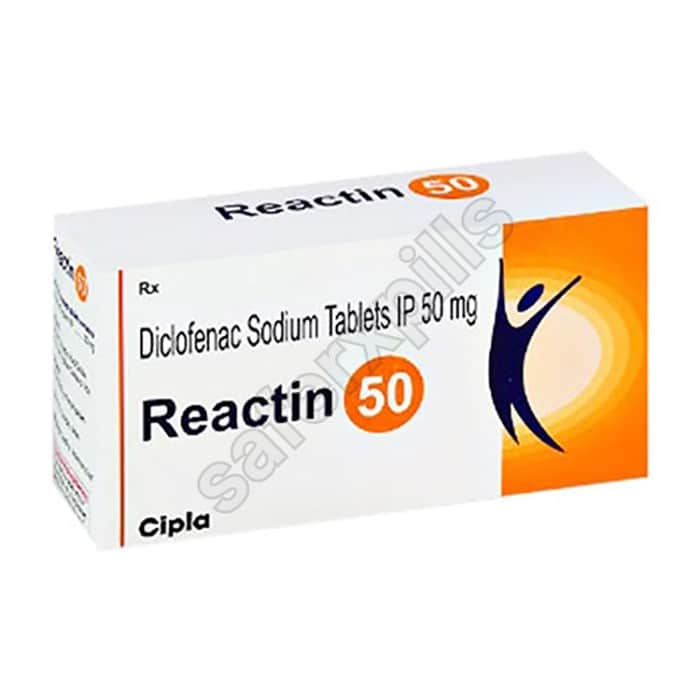
Customer Reviews
No reviews yet. Be the first to review Voveran SR 100mg.
Related Articles
Health guides about Diclofenac, written by pharmacists
Baclofen: Uses, Dosage, Side Effects, Withdrawal Risks and Cost
Baclofen is a prescription antispastic for spasticity from multiple sclerosis and spinal cord disease. This guide covers what it is and is not approved for, the US forms, the label titration schedule up to 80 mg a day, side effect rates from the label, the abrupt withdrawal warning, kidney dosing, alcohol and other interactions, the intrathecal pump, its legal status, the alcohol use disorder trials and what generic baclofen costs US pharmacies.

Cyclobenzaprine Dosage: 5 mg vs 10 mg and the Three Week Limit
Cyclobenzaprine is dosed at 5 mg three times daily, raised to 10 mg if needed, for two to three weeks at most. Trial data shows drowsiness rising from 19 to 28 points over placebo when the dose doubles, which is the case for starting low.

Tizanidine Dosage and the Drug Interactions That Change It
Tizanidine starts at 2 mg every six to eight hours and tops out at 36 mg daily, but interactions usually decide the ceiling. Ciprofloxacin raises exposure tenfold and fluvoxamine thirty three fold, and both combinations are contraindicated.
Related Health Guide
Understanding Chronic Pain Management: Complete Guide