Is Latisse Covered by Insurance? Real Costs, Coupons & Cheaper Alternatives (2026)
Milan Sojitra
B.Pharm, Rajiv Gandhi University. Founder, SafeRxPills
Is Latisse Covered by Insurance? Real Costs, Coupons & Cheaper Alternatives (2026) | SafeRxPills — pharmacy guide
Why Insurance Rarely Covers Latisse
The straightforward answer is that Latisse is FDA-approved for one indication only: hypotrichosis of the eyelashes. That phrase sounds medical, but for insurance purposes it describes inadequate or insufficient eyelashes, which insurers uniformly classify as a cosmetic concern rather than a treatable medical condition.
US health insurance plans, both private and public, follow a standard cosmetic exclusion. If a treatment does not address disease, disfigurement from injury, or a congenital defect, it falls outside covered benefits. Botox for wrinkles, tummy tucks, hair transplants, and eyelash growth serums all share this classification. Insurers routinely deny prior authorization requests for Latisse based on this exclusion, regardless of how the prescription is coded.
Even at the pharmacy level, cash pay is the default for Latisse. Chain pharmacies like CVS, Walgreens, and Walmart do not process it through insurance benefits under normal circumstances. Specialty ophthalmology pharmacies handle it as an out-of-pocket product.
The Narrow Exceptions Where It Might Be Covered
A few situations exist where insurance coverage becomes possible, though none are guaranteed:
Chemotherapy-related eyelash loss
Patients who have lost eyelashes due to cancer treatment can sometimes get Latisse covered under a medical necessity argument. This requires physician documentation of the chemotherapy course, the resulting hypotrichosis, and a letter of medical necessity. Some insurers approve it under durable medical equipment or medical dermatology benefits. Others deny it as cosmetic regardless.
Alopecia areata affecting eyelashes
Alopecia areata is a recognized autoimmune condition. When it causes loss of eyelashes (alopecia areata universalis or specific eyelash involvement), some plans will approve coverage on medical grounds. Documentation from a dermatologist is required. Coverage is inconsistent between plans.
Trichotillomania-related hair loss
Trichotillomania is a mental health condition classified in the DSM-5. Eyelash loss from this condition sometimes qualifies for medical coverage, particularly when connected to broader mental health treatment. Approval requires psychiatric documentation.
Off-label prescription for glaucoma patients
Bimatoprost, the active ingredient in Latisse, is also the active ingredient in Lumigan (glaucoma treatment). When a glaucoma patient is prescribed Lumigan 0.03% and applies it for its intraocular pressure benefit, the eyelash growth is a documented side effect. Insurance covers Lumigan for glaucoma routinely. The prescription is for the eye pressure indication, not the eyelash effect, but the eyelash growth happens anyway. This is not the same as Latisse coverage, but it is how many glaucoma patients end up with fuller lashes without additional cost.
What Latisse Actually Costs in 2026
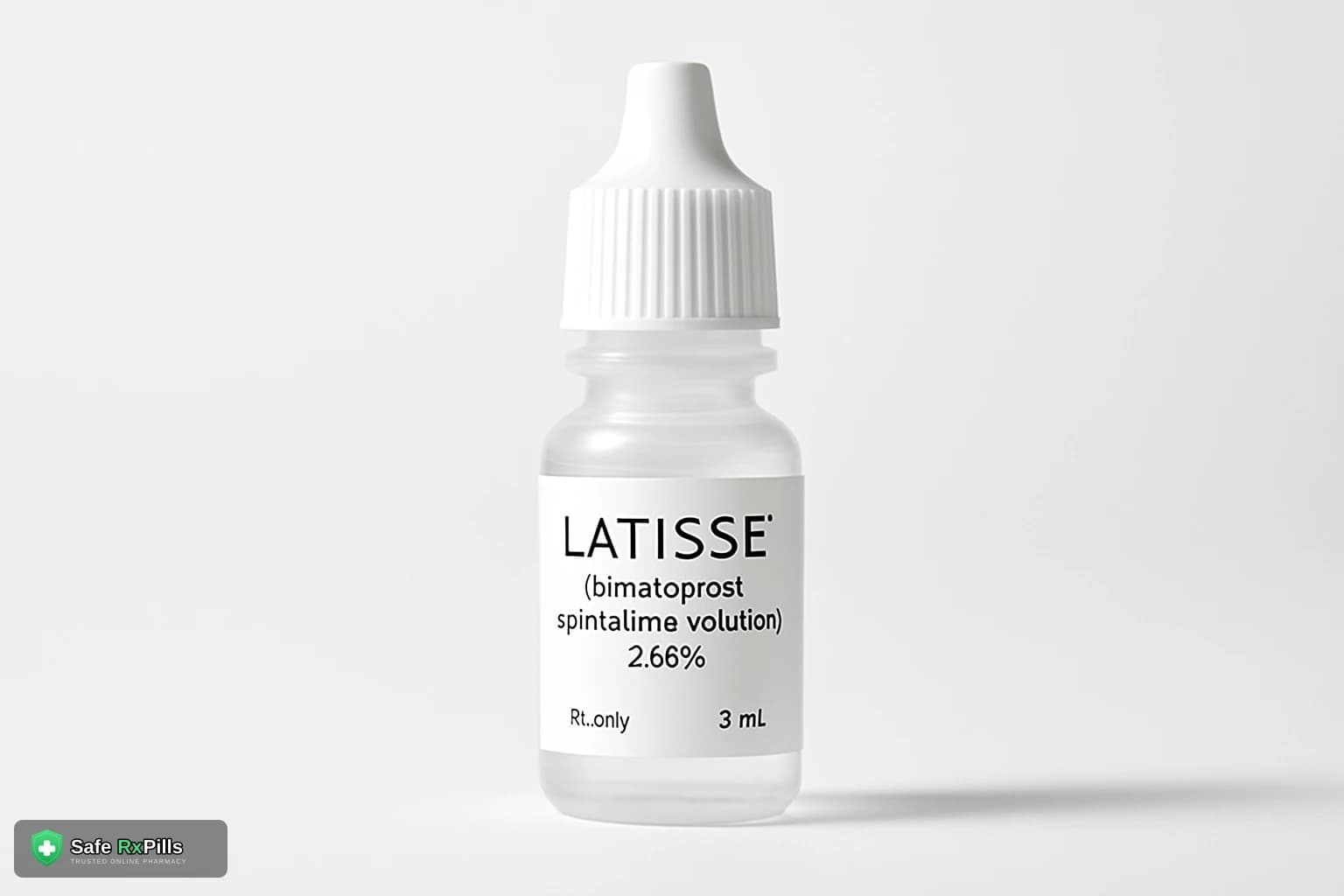
Cash retail pricing varies significantly by pharmacy and region. Current typical prices for a 3 ml bottle (approximately 6 to 8 weeks of daily use):
- Ophthalmology clinics selling direct: 130 to 160 dollars
- CVS, Walgreens, Walmart: 145 to 180 dollars
- Costco: 120 to 150 dollars (Costco membership not always required for pharmacy)
- Online pharmacies (US-based): 140 to 170 dollars
The 5 ml bottle, which lasts about 10 to 12 weeks, typically runs 220 to 260 dollars retail. Annualized, using the smaller bottle consistently, most Latisse users spend between 900 and 1,200 dollars per year on the medication alone. This does not include the applicator brushes, which are single use and can add 20 to 40 dollars monthly if replaced properly.
Application: one drop per eyelid per night, applied with a sterile applicator to the upper lash line only. Initial results appear at week 8, with full effect at week 16. The eyelash length reverts to baseline within 8 to 12 weeks after stopping, so this is a maintenance product, not a one-time treatment.
Allergan Manufacturer Savings Card
AbbVie (which acquired Allergan in 2020) runs a Latisse savings program for eligible patients. Terms shift periodically, but the program has historically offered:
- Up to 40 dollars off per bottle for commercially insured patients (who pay out of pocket)
- Sometimes a first-bottle discount of 50 dollars for new users
- Not available for patients on Medicare, Medicaid, TRICARE, or other federal insurance
The program is administered through participating dermatology and ophthalmology practices. To use it, patients typically enroll through their prescriber's office or the Latisse.com website. The card processes at the pharmacy at pickup. Annual savings can reach 200 to 300 dollars for consistent users.
Federal insurance exclusion is important: anti-kickback statutes prohibit manufacturer coupons for anyone with Medicare Part D, Medicaid, or TRICARE coverage. This applies to millions of Americans over 65 or on federal programs, who therefore see no benefit from this savings pathway.
GoodRx and Pharmacy Discount Options
GoodRx, SingleCare, WellRx, and similar prescription discount services negotiate cash prices with pharmacies. For Latisse, typical GoodRx pricing runs 105 to 140 dollars per 3 ml bottle depending on the pharmacy. This represents a 15 to 25 percent reduction from standard retail.
These cards do not require insurance and do not exclude Medicare patients (though they cannot be used with insurance simultaneously). The catch is that using a discount card means the transaction does not apply to insurance deductibles or out-of-pocket maximums, which matters more for people close to hitting those thresholds.
Comparison shopping across pharmacies is worth the effort. GoodRx's pharmacy price comparison feature typically shows a 30 to 50 dollar spread between the lowest and highest priced pharmacies in the same zip code for the same 3 ml bottle.
FDA-Approved Generic Bimatoprost
In 2021, the FDA approved a generic bimatoprost 0.03% ophthalmic solution for the same hypotrichosis indication as Latisse. Sandoz and a few other manufacturers produce it. Generic bimatoprost is chemically identical to Latisse, follows the same FDA bioequivalence standards, and works the same way.
Pricing: US generic bimatoprost 0.03% for eyelash growth typically runs 60 to 110 dollars per 3 ml bottle, roughly 30 to 50 percent cheaper than brand Latisse. GoodRx pricing can bring generic bimatoprost down to 45 to 80 dollars at some pharmacies.
Availability is inconsistent. Not every pharmacy stocks the generic, and some prescribers still default to writing "Latisse" as a brand name. Patients asking for the generic explicitly and confirming with the pharmacy before pickup can capture the savings.
International Generic Alternatives
Bimatoprost 0.03% is manufactured under multiple international brand names, most notably Careprost by Sun Pharmaceutical in India. These products contain the same active ingredient at the same concentration as Latisse, produced in WHO-GMP certified facilities.
Typical pricing at established international pharmacies:
- Careprost 3ml: 9 to 15 dollars per bottle
- Latisse Generic 0.03%: 30 to 45 dollars per bottle
- Lashisma Eye Drop: 35 to 45 dollars per bottle
- Lumigan 0.03% (brand for glaucoma, works for lashes too): 45 to 55 dollars per bottle
For a detailed head-to-head, see our Careprost vs Latisse comparison. The active ingredient is identical, the formulation is nearly identical, and the eyelash results follow the same 8 to 16 week timeline. The main differences are packaging, applicator inclusion (Careprost bottles typically do not include applicators, which must be sourced separately), and regulatory pathway (personal importation rather than domestic prescription).
Legally, importing bimatoprost from international pharmacies for personal use falls under the FDA's personal importation policy, which allows small quantities (typically 90 day supply) of unapproved-in-USA medications for personal use when there is no US-approved equivalent for the specific formulation. Because FDA-approved generic bimatoprost exists in the USA, this exception is narrower for Careprost than for medications with no US equivalent, though enforcement against personal-use quantities is essentially nonexistent.
HSA and FSA Eligibility
Latisse and generic bimatoprost sit in a grey zone for Health Savings Account (HSA) and Flexible Spending Account (FSA) reimbursement.
The IRS rule (Publication 502) allows medical expenses that are primarily for the diagnosis, cure, mitigation, treatment, or prevention of disease. Cosmetic procedures and products are excluded except when they treat a specific medical condition. Latisse prescribed for chemotherapy-related hypotrichosis, alopecia areata, or trichotillomania typically qualifies. Latisse prescribed purely for cosmetic eyelash enhancement typically does not.
HSA/FSA administrators vary in how strictly they enforce this. Some accept any prescription-labeled bimatoprost. Others require a Letter of Medical Necessity from the prescriber documenting the medical indication. Patients using HSA/FSA funds should keep the prescription documentation and be prepared to substantiate the medical purpose if the administrator asks for documentation.
Side by Side Monthly Cost Comparison
Assuming daily bilateral application (both eyes, one drop each), a 3 ml bottle lasts approximately 6 to 8 weeks. Using 7 weeks as the median, here is the effective monthly cost of common options:
- Brand Latisse, no discount: 90 to 110 dollars per month
- Brand Latisse with manufacturer savings card: 65 to 85 dollars per month
- Brand Latisse with GoodRx: 70 to 90 dollars per month
- FDA-approved generic bimatoprost, cash: 40 to 70 dollars per month
- FDA-approved generic bimatoprost with GoodRx: 30 to 55 dollars per month
- Careprost (international generic): 6 to 10 dollars per month
- Lumigan covered by insurance for glaucoma: insurance copay only, roughly 5 to 30 dollars
Annualized, the spread between the highest and lowest options is roughly 1,200 dollars per year. That is a meaningful difference for a cosmetic maintenance treatment.
Bottom Line
Insurance coverage for Latisse in the USA is the exception, not the rule. Assume you will pay out of pocket unless you have a specific medical indication (chemotherapy, alopecia areata, trichotillomania) documented by a prescriber. Even then, coverage is inconsistent between plans and requires prior authorization work.
The real cost-saving levers, ranked by savings potential:
- Switch to Careprost or another verified international generic bimatoprost. Same active ingredient, 80 to 90 percent lower cost. Comes with the trade-off of ordering from an international pharmacy and self-supplying applicators.
- Switch to FDA-approved generic bimatoprost domestically. About 40 to 50 percent cost reduction with the convenience of US pharmacy fulfillment.
- Stack GoodRx or SingleCare with any of the above.
- Use the Allergan savings card if you are commercially insured and prefer the brand.
- If you have glaucoma or elevated intraocular pressure, discuss Lumigan with your ophthalmologist. Insurance covers it for the eye pressure indication and the eyelash growth is a documented side effect.
The eyelash growth effect is identical across all bimatoprost 0.03% products because the active ingredient is identical. Paying brand pricing for Latisse specifically buys you the brand-name packaging, the included applicators, and the reassurance of AbbVie's brand quality control. Whether that is worth an additional 800 dollars per year over Careprost is a personal calculation, not a medical one.
Where to Buy Careprost in Your Country
Bimatoprost is prescription-only in every market SafeRxPills ships to, but the rules on personal importation, customs handling and delivery times are different in each one. Pick the guide that matches where you live:
- Buy Careprost in the USA: FDA status, prescription rules, personal import allowance and counterfeit checks.
- Buy Careprost in the UK: MHRA position, customs handling and typical UK delivery windows.
- Buy Careprost in Australia: TGA Personal Importation Scheme, the 3 month supply limit and what Australian customers should expect.
To order directly, see Careprost 3ml (bimatoprost 0.03%) or browse the full eye care range.
Related Topics:
?Frequently Asked Questions
Is Latisse ever covered by health insurance?
Rarely. Because Latisse is FDA-approved only for hypotrichosis of the eyelashes, which insurers classify as cosmetic, most commercial and federal insurance plans exclude it under standard cosmetic exclusions. Coverage is sometimes possible for patients with chemotherapy-related eyelash loss, alopecia areata affecting eyelashes, or trichotillomania, but requires physician documentation and prior authorization, and approval is inconsistent between plans.
How much does Latisse cost without insurance in 2026?
Cash retail pricing for a 3 ml bottle typically runs 130 to 180 dollars, lasting approximately 6 to 8 weeks with daily bilateral use. The 5 ml bottle runs 220 to 260 dollars. Annualized cost for consistent use falls between 900 and 1,200 dollars, plus separate cost for single-use applicators.
Does Medicare cover Latisse?
No. Medicare Part D plans exclude Latisse under cosmetic exclusions. Medicare Advantage plans follow the same rule. Additionally, federal anti-kickback statutes prohibit Medicare beneficiaries from using the Allergan manufacturer savings card, so that discount pathway is closed to Medicare patients.
Is generic bimatoprost the same as Latisse?
Yes, for practical purposes. The FDA approved generic bimatoprost 0.03% ophthalmic solution in 2021 with the same hypotrichosis indication as Latisse. Generic products meet FDA bioequivalence standards, contain the same active ingredient at the same concentration, and produce the same eyelash growth results on the same timeline.
Is Careprost the same as Latisse?
Careprost by Sun Pharmaceutical contains bimatoprost 0.03%, the same active ingredient as Latisse, at the same concentration, manufactured in WHO-GMP certified facilities in India. The clinical effect on eyelash growth is the same. Differences are packaging, applicator inclusion (Careprost typically does not include applicators), regulatory pathway (personal importation rather than domestic FDA distribution), and cost (about 10 to 15 dollars per bottle versus 130 to 180 for Latisse).
Can I use my HSA or FSA to buy Latisse?
Sometimes. HSA and FSA reimbursement depends on the medical indication. Latisse prescribed for chemotherapy-related hypotrichosis, alopecia areata, or trichotillomania typically qualifies as a medical expense. Latisse prescribed purely for cosmetic enhancement typically does not. Some administrators require a Letter of Medical Necessity from the prescriber. Keep documentation in case your account administrator asks for substantiation.
How can I get Latisse cheaper?
Options ranked by savings: switching to Careprost or another international generic bimatoprost saves 80 to 90 percent. FDA-approved generic bimatoprost in the USA saves 40 to 50 percent. GoodRx or SingleCare discount cards save 15 to 25 percent on brand or generic. The Allergan manufacturer savings card offers up to 40 dollars off per bottle for commercially insured patients only.
How long does one bottle of Latisse last?
A 3 ml bottle lasts approximately 6 to 8 weeks with once-daily application to both upper lash lines. A 5 ml bottle lasts approximately 10 to 12 weeks. Actual duration depends on how carefully the drops are applied and whether waste is minimized. Applying more than one drop per lash line does not accelerate results and wastes the product.
Milan Sojitra
Founder, SafeRxPills, B.Pharm, Rajiv Gandhi University
Pharmacist and founder of SafeRxPills. Works on generic medicine sourcing and patient-facing drug information for the US, UK, Australian and Canadian markets.
Comments (0)
Leave a Comment
No comments yet. Be the first to share your thoughts!
Related Articles