
Oflox Eye Drop
Generic: Ofloxacinby Cipla Limited
Select pack size
Similar medicines
View all

About Oflox Eye Drop
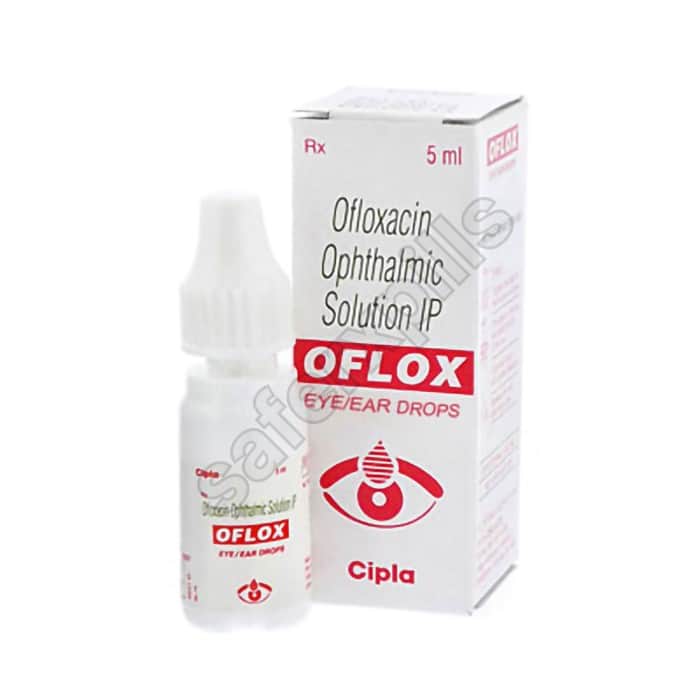
Oflox Eye Drop is Cipla's ofloxacin 0.3% (3 mg per mL) antibiotic eye drop for bacterial eye infections such as bacterial conjunctivitis and, under an eye doctor's care, bacterial corneal ulcers. Tata 1mg names Cipla Ltd (Solapur) as the maker, and the Indian listings we checked all show a 5 mL bottle. We sell it in packs of 3, 6 or 12 bottles, from $1.51 a bottle in the 12 bottle pack, before shipping.
Two things to know before you order. First, an eye infection needs treatment now, and our delivery takes 7 to 14 business days, so this is not a way to treat an infection you have today; a red, painful eye, especially in a contact lens wearer, needs to be seen the same day (see "When to get urgent help"). Second, with shipping, a single order from us costs more than a US pharmacy pays for a generic bottle (see the price comparison below). Clinical details on this page come from the US Ocuflox and generic ofloxacin 0.3% ophthalmic labels, the UK Exocin label and the Australian Ocuflox label, all listed under Sources.
Oflox Eye Drop at a glance
| Active ingredient | Ofloxacin 0.3% w/v (3 mg per mL), a fluoroquinolone antibiotic; 5 mL bottle on the Indian listings. The listings we checked do not name a preservative, so read the carton (the US, UK and Australian products contain benzalkonium chloride). |
| Brand and maker | Oflox, Cipla Ltd (Tata 1mg, PharmEasy and Apollo Pharmacy listings) |
| Labelled use | US: bacterial conjunctivitis and bacterial corneal ulcers caused by susceptible bacteria. UK: external eye infections such as conjunctivitis and keratoconjunctivitis, in adults and children (4.1). Australia: corneal ulcers (bacterial keratitis) and severe bacterial conjunctivitis in adults (4.1). |
| Regulatory status | Ofloxacin 0.3% eye drops are licensed in the US (Ocuflox and generics), the UK (Exocin), Australia (Ocuflox) and Canada (Ocuflox). The Indian pack we sell is not registered with the FDA, MHRA, TGA or Health Canada. |
| Usual dose | Conjunctivitis (US label): one to two drops every 2 to 4 hours on days 1 and 2, then four times daily on days 3 to 7. Corneal ulcers follow a much more intensive schedule set by an eye doctor (see "How to use"). |
| Course length | US conjunctivitis schedule: 7 days. UK: should not exceed 10 days (4.2). Australia: not normally more than 10 days without an eye review (4.2). |
| Packs | 3, 6 or 12 bottles (no single bottle pack) |
| Price per bottle | $1.51 to $1.67 before shipping; $3.59 to $10.00 with shipping |
| Delivery | 7 to 14 business days to the US, UK, Australia and Canada; $25 shipping under $149, free from $149 |
Price per bottle
Prices as of October 2026; the pack selector shows the current price. No pack reaches the $149 free shipping level on its own, so each includes the $25 shipping charge below unless you add other items. Per mL figures assume 5 mL bottles, the size on every Indian listing we checked; confirm the size on the carton.
| Pack | Price | Per bottle | Per mL | Shipping | Order total | Per bottle with shipping |
|---|---|---|---|---|---|---|
| 3 bottles | $5.00 | $1.67 | $0.33 | $25 | $30.00 | $10.00 |
| 6 bottles | $9.38 | $1.56 | $0.31 | $25 | $34.38 | $5.73 |
| 12 bottles | $18.13 | $1.51 | $0.30 | $25 | $43.13 | $3.59 |
How many bottles you need. The US Ocuflox brand is supplied as a single 5 mL bottle (US label, How Supplied), and the Australian PBS allows at most two 5 mL bottles on one prescription for bacterial keratitis. So even our smallest pack holds more than one usual prescription. An opened bottle should be thrown away 28 days after first opening (UK label 6.3; the Australian label and the PharmEasy listing say 4 weeks), and the UK label gives an unopened shelf life of 2 years (6.3). A 6 or 12 bottle pack is far more than any labelled course. Please do not keep spare bottles to treat a future red eye yourself: many red eyes are viral or allergic, and the NHS notes that antibiotics do not work for those.
Compared with ofloxacin eye drops in the US
Ocuflox (Allergan, now AbbVie, NDA 019921) is still listed as a prescription product in Drugs@FDA, and several makers sell FDA approved generic ofloxacin 0.3% eye drops in 5 mL and 10 mL bottles. The figures below are what US pharmacies paid according to the Medicaid NADAC survey, per-NDC rows in the file as of 21 October 2026 (each row effective 21 October 2026). They are pharmacy acquisition costs, not the price at the counter. NADAC has no row for the Ocuflox brand.
| Product | Maker | FDA approved | US pharmacy cost per mL | Per bottle |
|---|---|---|---|---|
| Generic ofloxacin 0.3% eye drops, 5 mL | Several (for example Bausch & Lomb, Apotex) | Yes | $1.23 ($1.22968) | About $6.15 |
| Generic ofloxacin 0.3% eye drops, 10 mL | Several | Yes | $1.10 ($1.10143) | About $11.01 |
| Oflox Eye Drop, Indian pack (this page), 5 mL | Cipla | No (not registered with the FDA) | $0.30 to $0.33 from us, before shipping | $1.51 to $1.67 before shipping; $3.59 to $10.00 with shipping |
Plainly: per bottle before shipping, ours costs less than a US pharmacy pays. But most people need one bottle, not 3 to 12, and our cheapest order is $30 with shipping, against about $6.15 that a US pharmacy pays for one generic 5 mL bottle. For one infection, a US generic on prescription is very likely to cost you less, and you get it the same day. If you are in the US and have a prescription, compare US generic cash prices and your insurance cover first. In Australia, Ocuflox 5 mL is on the PBS (item 5567B) for bacterial keratitis with authority, with a dispensed price of A$29.76 for the maximum quantity of two bottles.
Oflox eye drops and related products
Ofloxacin eye drops come in one strength (0.3%), so there is no strength to choose. The questions are whether you need an antibiotic eye drop at all, and which product.
| Product | What it is | When it fits |
|---|---|---|
| Oflox Eye Drop (this product) | Ofloxacin 0.3% antibiotic alone | Bacterial eye infection diagnosed or judged likely by a doctor, optometrist or pharmacist |
| Oflox-D Eye Drop | Ofloxacin 0.3% with the corticosteroid dexamethasone 0.1% (as listed on our site) | A different product. Steroid eye drops should only be used when an eye doctor prescribes them (our advice); they are not a stronger version of Oflox. |
| Oflox 200mg and Oflox 400mg | Ofloxacin tablets taken by mouth | Different products for infections elsewhere in the body, with the boxed fluoroquinolone warnings that apply to tablets. Do not take tablets for an eye infection unless a doctor tells you to. |
Eye or ear? PharmEasy and Tata 1mg list the Indian product as "Eye/Ear Drops", and PharmEasy lists ear infections among its uses, while Apollo Pharmacy says it is "only for use in eyes". We have not seen Cipla's leaflet, and the US, UK and Australian labels used on this page cover the eye only (in the US, ofloxacin ear drops are a separate product with their own label). This page gives eye use only. Do not put it in the ear unless a doctor has told you to.
How to use Oflox eye drops
Use the schedule your doctor gives you. The labels set these schedules:
| Infection and label | Days 1 and 2 | After that |
|---|---|---|
| Bacterial conjunctivitis, US label | One to two drops every two to four hours in the affected eye(s) | Days 3 through 7: one to two drops four times daily |
| Bacterial corneal ulcer, US label | One to two drops every 30 minutes while awake; wake at about four and six hours after going to bed and put in one to two drops | Days 3 through 7 to 9: one to two drops hourly while awake. Days 7 to 9 through completion: one to two drops four times daily |
| External eye infections, UK label (all ages) | One to two drops every two to four hours | Four times daily; the length of treatment should not exceed ten days (4.2) |
| Severe bacterial conjunctivitis, Australian label (adults) | One drop every four hours | One drop every six hours for up to eight days; not normally more than 10 days without an eye review (4.2) |
| Corneal ulcer, Australian label (adults) | One to two drops every 30 minutes while awake, plus a dose four hours after going to bed and again two hours after that | Days 3 to 7: hourly while awake. Day 7 to the end (usually within 21 days): four times daily until the ulcer is completely healed (4.2) |
A corneal ulcer can threaten sight. It needs an eye specialist to diagnose it and check it during treatment (our advice); the labels' corneal ulcer schedules are not for self-treatment.
- Wash your hands. Tilt your head back, pull the lower lid down gently and put the drop into the pocket. Close the eye for about 30 seconds (UK leaflet).
- Do not let the dropper tip touch your eye, lids, fingers or anything else. The US label says to avoid contaminating the applicator tip with material from the eye, fingers or other source.
- If you use another eye medicine, wait at least 5 to 10 minutes between them (Tata 1mg listing).
- Replace the cap straight after use. Do not use a new bottle if the seal on the neck is broken (UK leaflet).
- If you miss a dose, put it in as soon as you remember unless the next dose is nearly due; do not use a double dose (UK leaflet).
- If too many drops go in, rinse the eye with clean water and take the next dose at the normal time. If anyone drinks the drops by accident, contact a doctor straight away (UK leaflet).
- If the infection gets worse, or does not improve within a reasonable time, stop and see a doctor: the UK label says to discontinue and use another treatment in that case (4.4). The NHS says to see a GP if conjunctivitis has not cleared within 7 days.
- Throw the bottle away 28 days after first opening (UK label 6.3) or 4 weeks (Australian label; PharmEasy listing), even if some is left.
Contact lenses. The UK label says contact lenses are not recommended during treatment for an eye infection; if you must wear them, remove them before the drop and wait at least 15 minutes before putting them back, and benzalkonium chloride is known to discolour soft lenses (4.4). The Australian label says the drops should not be used while wearing soft contact lenses (4.4). The US labels give no contact lens advice. The NHS says do not wear contact lenses until your eyes are better, and the Tata 1mg listing says the same for the Indian pack. Our advice: leave lenses out for the whole course, and throw away the lenses and case you were wearing when the infection started.
Not for injection. The US label says the solution should not be injected under the conjunctiva, nor put directly into the front chamber of the eye.
Groups who need extra care
- Babies and children. The US and UK labels say safety and effectiveness in infants below the age of one year have not been established, and the UK leaflet says it is not recommended for infants under one year. The UK label says the use of Exocin in newborns with ophthalmia neonatorum caused by gonorrhoea or chlamydia is not recommended (4.4). The Australian label is for adults: it says Ocuflox should be avoided in children who have not attained joint maturity, and the Australian consumer leaflet says it should not be used in children younger than 12. The UK label, by contrast, covers all ages. A baby under 30 days old with red, sticky eyes needs an urgent appointment (NHS).
- Heart rhythm. The UK label advises caution with fluoroquinolones, including these drops, in people with congenital long QT syndrome, uncorrected low potassium or magnesium, heart disease (for example heart failure, heart attack or a slow heart rate), or who take medicines that prolong the QT interval (for example class IA and III antiarrhythmics, tricyclic antidepressants, macrolides, antipsychotics). It adds that older people and women may be more sensitive to these medicines (4.4, 4.5).
- A damaged corneal surface or corneal ulcer. The UK label advises caution because corneal perforation has been reported in people with a corneal defect or ulcer treated with topical fluoroquinolones, although many reports had other factors (4.4). Corneal deposits have also been reported, with no proven link (4.4).
- Dry eye. The benzalkonium chloride in the UK product may cause eye irritation and dry eye symptoms; use with caution in dry eye (UK label 4.4).
- Sun. The UK label says sun or UV exposure should be avoided during use because of possible photosensitivity (4.4).
- Long use. As with other antibiotics, prolonged use may lead to overgrowth of organisms that do not respond, including fungi (US label; UK label 4.4).
- Pregnancy. The US label says use it in pregnancy "only if the potential benefit justifies the potential risk to the fetus". The UK label recommends that Exocin "not be used in pregnant women", and the Australian label says the same for Ocuflox, because systemic quinolones caused joint damage in young animals (4.6). The UK leaflet asks you to tell your doctor so they can decide.
- Breastfeeding. The US and UK labels say a decision should be made whether to stop nursing (the UK label says temporarily) or not use the drug, taking into account how important the drug is to the mother.
- Driving. Vision may blur for a short time after the drops; do not drive or use machines until your sight is clear (UK label 4.7).
- Older adults. The US label found no overall differences in safety or effectiveness compared with younger patients.
Medicines to mention to your doctor: The US label says no interaction studies were done with the eye drops, but that some quinolones taken by mouth or injection have raised theophylline levels, interfered with caffeine breakdown, increased the effect of warfarin, and been linked to short rises in creatinine with cyclosporine. The UK label says studies with systemic ofloxacin found that caffeine and theophylline clearance were not significantly affected, and advises caution with medicines that prolong the QT interval (4.5). Eye drops reach the blood in very small amounts: in the US label's study, peak blood levels after ten days of drops were more than 1000 times lower than after standard oral doses.
Side effects
The US label says the most frequently reported reaction was transient burning or discomfort in the eye. Other reported reactions include stinging, redness, itching, chemical conjunctivitis or keratitis, swelling of the eye, the area around it or the face, a feeling of something in the eye, sensitivity to light, blurred vision, tearing, dryness and eye pain, with rare reports of dizziness and nausea. The UK label lists eye irritation and eye discomfort as common (up to 1 in 10) (4.8).
The UK label also lists these, with a frequency that cannot be estimated from the data (4.8):
- allergic reactions, from itchy eyes and eyelids to anaphylaxis (swelling of the face, mouth or tongue, difficulty breathing, shock)
- Stevens-Johnson syndrome and toxic epidermal necrolysis (severe skin reactions)
- abnormal heart rhythms, including ventricular arrhythmia and torsades de pointes, mostly in people with risk factors for QT prolongation, and QT prolongation on the ECG
- keratitis, conjunctivitis, eyelid swelling, eye redness, eye pain, dry eye, dizziness and nausea
The US label adds that a rare case of Stevens-Johnson syndrome progressing to toxic epidermal necrolysis has been reported in a patient using ofloxacin eye drops, and that serious and sometimes fatal allergic reactions have been reported with quinolones taken by mouth or injection, some after the first dose. The UK label notes that because a small amount is absorbed, side effects reported with systemic use could possibly occur (4.8).
What the trials showed. In the US label's conjunctivitis trial, 86% (54 of 63) of people on ofloxacin improved after 2 days, against 72% (48 of 67) on the vehicle drop. In its corneal ulcer trial of 140 people, 82% (61 of 74) succeeded on ofloxacin against 80% (53 of 66) on fortified tobramycin 1.5% and cefazolin 10% drops, with a median of 11 and 10 days to success.
When to get urgent help
- A red, painful eye with blurred or reduced vision, strong sensitivity to light, or a white spot on the clear front of the eye, especially if you wear contact lenses: get same-day care from an eye doctor or an emergency department (our advice; these can be signs of a corneal ulcer). The NHS lists eye pain, sensitivity to light, vision changes and very red eyes as reasons for an urgent GP appointment or NHS 111.
- A baby less than 30 days old with red, sticky eyes: get an urgent appointment (NHS).
- Allergy signs (rash, hives, swelling of the face, lips, tongue or throat, wheezing, trouble breathing or swallowing): stop the drops and call emergency services (911 in the US and Canada, 999 in the UK, 000 in Australia; our advice for severe signs). The US label says to stop at the first sign of a rash or allergic reaction and contact your doctor; serious reactions may need emergency treatment.
- Reddish target-like spots or round patches, often with blisters, on the body: stop the drops and get medical help straight away. The UK leaflet describes these as early signs of the potentially life-threatening skin reactions Stevens-Johnson syndrome and toxic epidermal necrolysis.
- A racing or irregular heartbeat: get medical help, especially if you have a heart rhythm problem or take medicines that affect it (our advice; the UK label lists abnormal heart rhythms as a side effect and advises caution in people with QT risk factors, 4.4, 4.8).
- The infection gets worse or does not improve within a reasonable time: stop and see a doctor rather than carrying on (the UK label says to discontinue and use another treatment, 4.4).
- Someone swallows the drops: contact a doctor straight away (UK leaflet) or poison control (US Poison Help 1-800-222-1222; Australian Poisons Information Centre 13 11 26).
Tell the doctor or emergency staff what was used (ofloxacin 0.3% eye drops), how much and when.
Who should not use Oflox eye drops
Never use it if:
- You have had an allergic reaction to ofloxacin, to any other quinolone antibiotic (for example ciprofloxacin, levofloxacin or moxifloxacin), or to any ingredient of the drops (contraindicated in the US label and UK label 4.3). The Australian label adds that a history of hypersensitivity to other quinolones, including nalidixic acid, may also rule it out (4.3).
Not recommended, or only with your doctor's agreement:
- Pregnancy: the UK and Australian labels recommend it is not used in pregnant women (4.6); the US label says only if the benefit justifies the risk.
- Infants under one year: not recommended (UK leaflet); safety not established (US and UK labels). Children who have not reached joint maturity: avoid (Australian label); under 12: should not be used (Australian consumer leaflet).
- Newborns with eye infection from gonorrhoea or chlamydia: not recommended (UK label 4.4).
- Contact lenses during treatment: not recommended (UK label 4.4); the drops should not be used while wearing soft contact lenses (Australian label 4.4).
- Breastfeeding, QT prolongation risk, corneal defects or ulcers, and dry eye: only after talking to your doctor (see "Groups who need extra care").
- A red eye that may be viral or allergic: antibiotics will not help (NHS).
Prescription and legal status
Ofloxacin eye drops are prescription medicines in the US ("Rx only" on the Ocuflox label), the UK (Exocin is a prescription only medicine on the emc), Australia (Ocuflox is Schedule 4, Prescription Only Medicine) and Canada (Ocuflox, DIN 02143291, prescription). Tata 1mg and Apollo Pharmacy mark the Indian Oflox as needing a prescription. Ofloxacin 0.3% eye drops are licensed in all four countries, but the Indian pack we sell is not registered with the FDA, MHRA, TGA or Health Canada, and the FDA says personal importation of unapproved medicines is illegal in most circumstances. Check the rules where you live.
Buying genuine Oflox
The MHRA warns: "Any medicine not authorised for sale in the UK can be unsafe or ineffective and there is no way of knowing what is in them or the negative health effects they can have." That warning covers this Indian pack. The MHRA also advises: "Only use UK-registered pharmacies, including online pharmacies displaying the official green cross logo." When your order arrives, check that the carton and bottle say Oflox and ofloxacin 0.3% w/v, name Cipla, and show a batch number and an expiry date, that the seal on the bottle neck is intact, and that the solution is clear. These checks cannot prove a bottle is genuine, because counterfeiters copy packaging. Eye drops must be sterile: do not use a bottle with a broken seal or a cloudy solution. If a batch causes symptoms, seek medical advice and report it to your medicines regulator (the MHRA Yellow Card scheme in the UK, FDA MedWatch in the US, the TGA in Australia or Health Canada) as well as to us.
Delivery
We ship Oflox Eye Drop to the US, UK, Australia and Canada in plain packaging with tracking. Standard delivery takes 7 to 14 business days, which is too slow for an infection you have now. Shipping costs a flat $25 on orders under $149 and is free from $149. None of the labels or listings we checked asks for refrigeration. Store the bottle as the carton says: the UK label says do not store above 25°C, the Australian label says store below 25°C and protect from light, the US Ocuflox label gives 15°C to 25°C, and the Indian listings say below 25°C (Tata 1mg), not above 25°C and protected from light (PharmEasy) or a cool, dry place away from sunlight (Apollo Pharmacy). See our shipping page and refund policy.
Related guides
- Antibiotic resistance: when antibiotics do not work
- How to buy eye care medicine online safely
- Buying eye drops from an online pharmacy
Other eye drops: Oflox-D Eye Drop (ofloxacin with dexamethasone) and Nevanac Eye Drop (nepafenac, for pain and inflammation after cataract surgery).
Sources
- Ocuflox (ofloxacin ophthalmic solution) 0.3%, US prescribing information, Allergan/AbbVie, NDA 019921, DailyMed setid 7aab4449-3dda-4e2c-8e40-b3244a548bf5, version 13, effective 6 January 2025 (text revised 06/2024): Clinical Pharmacology, Clinical Studies, Indications, Contraindications, Warnings, Precautions, Adverse Reactions, Dosage and Administration, How Supplied. DailyMed
- Ofloxacin ophthalmic solution USP 0.3%, US prescribing information, Apotex Corp., ANDA 076513, DailyMed setid 5117d567-2004-c5ed-1391-f8831864696f, version 13, effective 15 September 2026 (cross-check; storage). DailyMed
- Exocin 3 mg/ml Eye Drops, Solution, UK Summary of Product Characteristics, AbbVie Ltd, PL 41042/0064, text revised 01/04/2022, sections 2, 4.1 to 4.9, 5.2, 6.1, 6.3, 6.4; and patient leaflet (last revised February 2022). emc SmPC, emc leaflet
- Ocuflox eye drops, Australian Product Information (date of revision 23 August 2023) and Consumer Medicine Information (July 2025), AbbVie Pty Ltd, AUST R 47485, sections 4.1 to 4.6, via the ACSQHC Medicine Finder, accessed 27 October 2026. ACSQHC
- Pharmaceutical Benefits Scheme, item 5567B, ofloxacin 0.3% eye drops 5 mL (Ocuflox), accessed 27 October 2026. PBS
- Health Canada Drug Product Database: Ocuflox (DIN 02143291, ofloxacin 0.3%, prescription, marketed). Health Canada DPD
- US Food and Drug Administration, Drugs@FDA and NDC Directory via openFDA: Ocuflox NDA 019921 (prescription) and generic ofloxacin ophthalmic solutions (for example ANDA 076622 Bausch & Lomb, ANDA 076513 Apotex), 5 mL and 10 mL bottles, queried 27 October 2026. Drugs@FDA
- Centers for Medicare and Medicaid Services. National Average Drug Acquisition Cost (NADAC), ofloxacin 0.3% eye drops, per-NDC rows, 2026 file as of 21 October 2026 (rates effective 21 October 2026). data.medicaid.gov
- NHS. Conjunctivitis, page last reviewed 23 April 2024. NHS
- Tata 1mg, PharmEasy and Apollo Pharmacy. Oflox 0.3% eye (eye/ear) drops 5 ml listings, accessed 27 October 2026. Tata 1mg, PharmEasy, Apollo Pharmacy
- MHRA. 20 million illegal erectile dysfunction pills seized as MHRA warns against risky online buys, 13 February 2026. GOV.UK
- US Food and Drug Administration. Personal Importation. FDA
This page is for information and is not medical advice. Ofloxacin eye drops are a prescription medicine; a doctor should confirm that you have a bacterial eye infection and set your treatment.
Frequently asked questions
What is Oflox Eye Drop?
Oflox is Cipla's ofloxacin 0.3% (3 mg per mL) antibiotic eye drop, sold in India in 5 mL bottles. Ofloxacin is a fluoroquinolone antibiotic. The US Ocuflox label covers bacterial conjunctivitis and bacterial corneal ulcers; the UK Exocin label covers external eye infections such as conjunctivitis and keratoconjunctivitis. It does not treat viral or allergic red eyes.
Is Oflox the same as Ocuflox or Exocin?
It has the same active ingredient and strength (ofloxacin 0.3%) as Ocuflox (US, Canada, Australia) and Exocin (UK). It is a different product from a different maker, and the Indian pack is not registered with the FDA, MHRA, TGA or Health Canada. The Indian listings we checked do not name a preservative; the US, UK and Australian products contain benzalkonium chloride. Read the carton.
How much does Oflox Eye Drop cost?
As of October 2026, $5.00 for 3 bottles ($1.67 each), $9.38 for 6 ($1.56 each) and $18.13 for 12 ($1.51 each), plus $25 shipping on orders under $149. With shipping that is $30.00 to $43.13 an order. A US pharmacy pays about $6.15 for one generic 5 mL bottle (NADAC, effective 21 October 2026), so for a single infection a US generic on prescription is likely to cost you less. The pack selector shows the current price.
How do I use ofloxacin eye drops for conjunctivitis?
Follow your doctor's schedule. The US label gives one to two drops in the affected eye(s) every two to four hours on days 1 and 2, then one to two drops four times daily on days 3 to 7. The UK label gives the same start, then four times daily, for no more than ten days. Do not let the dropper tip touch the eye, and wash your hands first.
What is the dose for a corneal ulcer?
The US label schedule is one to two drops every 30 minutes while awake on days 1 and 2 (plus doses about four and six hours after going to bed), then hourly while awake until day 7 to 9, then four times daily until treatment is complete. A corneal ulcer can threaten sight, so it must be diagnosed and followed by an eye specialist; this schedule is not for self-treatment.
How long should I use it, and how many bottles do I need?
The US conjunctivitis schedule lasts 7 days, and the UK label says treatment should not exceed ten days. US Ocuflox is supplied as one 5 mL bottle, and the Australian PBS allows at most two bottles per prescription for keratitis, so our smallest pack (3 bottles) is already more than a usual prescription. Throw an opened bottle away after 28 days (UK label) or 4 weeks (Australian label), and do not keep spares to treat a later red eye yourself.
Can I use Oflox eye drops in my ear?
Some Indian listings call it Eye/Ear Drops and PharmEasy lists ear infections, but Apollo Pharmacy says it is only for the eyes, and we have not seen Cipla's leaflet. The US, UK and Australian labels we used cover the eye only (US ofloxacin ear drops are a separate product). Do not use it in the ear unless a doctor has told you to.
What are the side effects of ofloxacin eye drops?
The most frequent is brief burning or discomfort in the eye (US label); eye irritation and discomfort are common in the UK label. Others include stinging, redness, itching, swelling, light sensitivity, blurred vision, tearing and dry eye. Rare but serious reactions include severe allergy and severe skin reactions (Stevens-Johnson syndrome), and the UK label lists heart rhythm problems, mostly in people with risk factors for QT prolongation. Stop and get help at the first sign of rash or allergy.
Who should not use Oflox eye drops?
Never use it if you are allergic to ofloxacin, any other quinolone antibiotic or any ingredient (US and UK labels). The UK and Australian labels recommend it is not used in pregnancy; the US label says only if the benefit justifies the risk. Safety under one year is not established (US and UK), the Australian leaflet says not under 12, and the UK label advises caution with heart rhythm risks, corneal ulcers and dry eye. Our advice: leave contact lenses out during treatment (the UK label says contact lenses are not recommended).
Do I need a prescription for ofloxacin eye drops?
Yes. Ofloxacin eye drops are prescription medicines in the US, the UK, Australia (Schedule 4) and Canada, and Tata 1mg and Apollo Pharmacy mark the Indian Oflox as prescription only. A red eye should be checked before using an antibiotic, because many are viral or allergic. The FDA says personal importation of unapproved medicines is illegal in most circumstances.
How long does delivery take?
Standard delivery to the US, UK, Australia and Canada takes 7 to 14 business days, in plain packaging with tracking. That is too slow for an infection you have now: a red, painful eye or a change in vision needs same-day care. Shipping is a flat $25 under $149 and free from $149. No label or listing we checked asks for refrigeration; store it as the carton says (the UK label says do not store above 25°C, the Australian label below 25°C).
Medical References
Sources: U.S. National Library of Medicine (DailyMed, PubMed), openFDA
Related articles
Ofloxacin Eye Drops: Dosage, Side Effects, Eye vs Ear Use and US Cost
Ofloxacin ophthalmic solution 0.3% (Ocuflox) is a prescription fluoroquinolone eye drop for bacterial conjunctivitis and corneal ulcers. This guide gives the exact US label dosing for each, how to use the drops, side effects and warnings, pregnancy and child use, how it compares with ciprofloxacin, moxifloxacin, gatifloxacin and besifloxacin drops, why ofloxacin eye and ear drops are separate US products, when a steroid combination such as Oflox-D is not appropriate, and what a bottle costs US pharmacies.
Read article
Brand vs Generic Drug Prices: What US Pharmacies Pay for Viagra, Cialis, Latisse and More (NADAC, October 2026)
CMS NADAC data for the week of 28 October 2026 shows what US pharmacies pay for brand and generic versions of Viagra, Cialis, Propecia, Latisse, Lumigan and Stromectol. Generic ED and hair loss tablets cost under 2% of the brand price, while eye and lash generics cost 42% to 65%. Includes 2026 trends, supplier counts and the full method.
Read article
Buy Amaryl (Glimepiride) Online: Dosing, Hypoglycaemia Risk and What to Verify First
Amaryl is brand name glimepiride, a sulfonylurea that lowers blood sugar effectively and cheaply but carries real hypoglycaemia risk. Dosing, the CAROLINA trial evidence, interactions, and what to verify before ordering online.
Read articleCustomer Reviews
No reviews yet. Bought Oflox Eye Drop? Tell other buyers how it went.