
Ciplox 500mg
Generic: Ciprofloxacinby Cipla Limited
Similar medicines
View all
About Ciplox 500mg
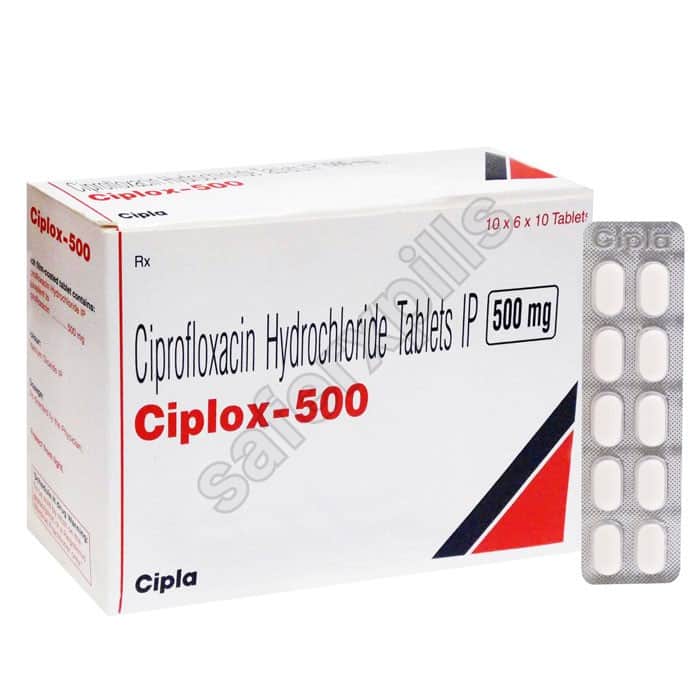
Ciplox 500mg is Cipla's ciprofloxacin tablet for the Indian market. Each tablet contains 500 mg of ciprofloxacin, the same amount as the 500 mg tablet of Cipro, Bayer's US brand. Ciprofloxacin is a fluoroquinolone antibiotic, in the same family as levofloxacin, ofloxacin and norfloxacin. Tata 1mg, PharmEasy and Truemeds all list Ciplox 500 as a strip of 10 tablets from Cipla Ltd. We sell it in packs of 25, 60 and 90 tablets, from $0.556 a tablet in the largest pack, before shipping.
Three things before you read further. First, regulators restrict fluoroquinolones such as ciprofloxacin because of disabling and potentially permanent side effects: the US label says to reserve it for acute uncomplicated cystitis, acute sinusitis and acute exacerbation of chronic bronchitis only when there is no alternative, the EMA says it should not be used for mild or moderate infections unless commonly recommended antibiotics cannot be used, and the MHRA says it must only be prescribed when other commonly recommended antibiotics are inappropriate. Second, 500 mg twice a day is the US and UK label dose for many adult infections, and a 7 to 14 day course at that dose is 14 to 28 tablets, so our 60 and 90 packs hold more than most single courses need. Third, a US pharmacy pays about $0.12 for a generic ciprofloxacin 500 mg tablet, and our delivery takes 7 to 14 business days, which is too slow for an infection you have now. This page uses the current US Cipro prescribing information (Bayer, effective 2 March 2026), a current UK ciprofloxacin 500 mg label (Sun Pharma UK, revised 7 October 2026) and regulator notices, all listed at the end. We found no published trial of Ciplox itself.
Ciplox 500mg at a glance
| Active ingredient | Ciprofloxacin 500 mg per tablet |
| Brand and maker | Ciplox 500, Cipla Ltd, India (Tata 1mg, PharmEasy and Truemeds listings) |
| Drug class | Fluoroquinolone antibiotic |
| Regulatory status | Ciprofloxacin 500 mg tablets are licensed in the US, UK, Canada and Australia, but this Indian pack is not registered with the FDA, MHRA, TGA or Health Canada. Ciprofloxacin tablets are prescription only in all four countries |
| Usual dose from the label | US label: 500 mg every 12 hours for infectious diarrhoea, typhoid fever, complicated abdominal infections (with metronidazole), chronic bacterial prostatitis and acute sinusitis; 500 to 750 mg every 12 hours for skin, bone and joint and lower respiratory infections; 250 to 500 mg every 12 hours for urinary infections. The UK label uses 500 mg twice daily for complicated cystitis and uncomplicated pyelonephritis |
| Half-life | About 4 hours with normal kidney function; peak blood levels 1 to 2 hours after a dose (US label) |
| Timing | With or without food, but not with milk, yoghurt or calcium-fortified juice on their own, and well apart from antacids, iron, zinc and calcium supplements |
| Packs | 25, 60 and 90 tablets (sold in India in strips of 10) |
| Price per tablet | $1.04 (25 pack), $0.583 (60 pack), $0.556 (90 pack), before shipping |
| Delivery | 7 to 14 business days to the US, UK, Australia and Canada; $25 shipping under $149, free from $149 |
Price per tablet
Prices below are as of October 2026; the pack selector shows the current price.
| Pack | Price | Per tablet | Shipping | Per tablet with shipping |
|---|---|---|---|---|
| 25 tablets | $26 | $1.04 | $25 | $2.04 |
| 60 tablets | $35 | $0.583 | $25 | $1.00 |
| 90 tablets | $50 | $0.556 | $25 | $0.833 |
The 60 and 90 packs are cheaper per tablet before shipping as well as after it. All three packs are under $149, so each single pack pays $25 shipping. The 25 pack costs almost as much in total as the 60 pack, because its price per tablet is nearly double.
How many tablets does a course need? At 500 mg every 12 hours, each day of treatment uses 2 tablets. From the label doses: a 7 day course (UK label for complicated cystitis or uncomplicated pyelonephritis; NICE for acute pyelonephritis when ciprofloxacin is used) is 14 tablets; a 5 to 7 day course for infectious diarrhoea (US label) is 10 to 14; a 10 day course for typhoid fever or acute sinusitis (US label) is 20; a 7 to 14 day course for a urinary, skin or lower respiratory infection at 500 mg is 14 to 28; and the 28 day course for chronic bacterial prostatitis (US label) is 56. A few uses need more, such as bone and joint infections (4 to 8 weeks, 56 to 112 tablets at 500 mg) and anthrax exposure (60 days, 120 tablets). This is our arithmetic from the label doses. So the 25 pack covers a course of up to 12 days at 2 tablets a day, and the 60 and 90 packs are more than most single courses need. Please do not keep leftover tablets to treat yourself or someone else next time: a new infection needs a new diagnosis, and the right antibiotic may be a different one. Ask a pharmacist how to dispose of unused tablets.
Compared with Cipro and US generics
| Ciplox 500mg (our Indian pack) | Cipro 500 mg (US) | Generic ciprofloxacin 500 mg (US) | |
|---|---|---|---|
| Ciprofloxacin per tablet | 500 mg | 500 mg | 500 mg |
| Maker | Cipla Ltd, India | Bayer HealthCare Pharmaceuticals | Several, for example Aurobindo and Hikma |
| Status | Not registered with the FDA | FDA approved, prescription only | FDA approved, prescription only |
| Cost per tablet | $0.556 to $1.04 before shipping | No NADAC row for brand tablets | $0.12 (NADAC) |
NADAC is the US National Average Drug Acquisition Cost: what US pharmacies pay for a medicine, not the cash price at the counter. The generic figure is $0.12065 per ciprofloxacin 500 mg tablet, the rate on every one of the 26 per-NDC rows, effective 21 October 2026 (the latest NADAC week when we checked on 27 October 2026). Before shipping, ours costs about 4.6 to 8.6 times that, and a 14 tablet course costs a US pharmacy about $1.69 (our arithmetic). If you are in the US and a doctor prescribes ciprofloxacin, a local generic is almost certainly cheaper and you can collect it the same day; compare US generic cash prices first.
Is Ciplox the same as Cipro? It contains the same active ingredient at the same strength, but it is made in India for the Indian market, with its own label. We have not found a published study comparing Ciplox with Cipro or with US generics.
Which strength to choose
| Product | Ciprofloxacin per tablet | How it fits the labels | Price per tablet before shipping |
|---|---|---|---|
| Ciplox 250mg | 250 mg | US label: the only dose listed for acute uncomplicated cystitis (250 mg every 12 hours for 3 days) and the lower end for other urinary infections; also the lower end of the reduced doses for kidney impairment. UK label: the lower end of 250 to 500 mg twice a day for uncomplicated cystitis | $0.375 to $0.417 |
| Ciplox 500mg | 500 mg | US label: the dose for most adult infections in its table (500 mg, or 500 to 750 mg, every 12 hours) and the upper end for urinary infections and for kidney impairment. UK label: 500 mg twice daily for complicated cystitis, uncomplicated pyelonephritis, diarrhoea and typhoid fever, the lower end of 500 to 750 mg for most other infections, and a single 500 mg dose in some situations (see below). NICE: 500 mg twice a day for 7 days for acute pyelonephritis when ciprofloxacin is used | $0.556 to $1.04 |
| Ciplox 750mg | 750 mg | US label: the upper dose for skin, bone and joint, lower respiratory infections and plague | Not reviewed on this page |
If your prescriber chooses 500 mg per dose, one Ciplox 500 tablet from the 60 or 90 pack ($0.583 or $0.556) costs less than two Ciplox 250 tablets ($0.75 to $0.83), but one tablet from our 25 pack ($1.04) costs more, before shipping (our arithmetic). The US Cipro label says Cipro 500 mg tablets are scored and can be split in half to give 250 mg, but all three Indian listings we checked say not to break Ciplox 500 (Tata 1mg: "Swallow it as a whole. Do not chew, crush or break it."; PharmEasy and Truemeds: "Do not cut, break, or chew the medicine."). So do not cut a Ciplox 500 tablet to make a 250 mg dose; if you need 250 mg, use a 250 mg tablet. Ciplox eye drops and Ciplox D eye and ear drops are different products with their own doses; never use tablets in the eye or ear, and never use eye drop directions for tablets.
Is ciprofloxacin the right antibiotic?
For most common infections, regulators say it is not the first choice:
- US label (2026): the boxed warning says that because fluoroquinolones have been associated with serious adverse reactions, "reserve CIPRO for use in patients who have no alternative treatment options" for acute exacerbation of chronic bronchitis, acute uncomplicated cystitis and acute sinusitis. The label adds that for some patients each of these three "is self-limiting". These are infections for which the US label's dose is 500 mg (sinusitis) or 500 to 750 mg (lower respiratory infections), so the restriction applies directly to this strength. The FDA's July 2018 safety communication repeats that prescribers "should not prescribe fluoroquinolones to patients who have other treatment options" for these three infections. The US label does not attach this reserve wording to its other indications, such as typhoid fever or chronic bacterial prostatitis.
- European Union (2019): after a review of disabling and potentially permanent side effects, the EMA said fluoroquinolones should not be used for infections that might get better without treatment or are not severe (such as throat infections), for non-bacterial prostatitis, "for preventing traveller's diarrhoea or recurring lower urinary tract infections", or for mild or moderate bacterial infections "unless other antibacterial medicines commonly recommended for these infections cannot be used".
- UK (2024): the MHRA says systemic fluoroquinolones "must now only be prescribed when other commonly recommended antibiotics are inappropriate." The UK ciprofloxacin 500 mg label applies this to every indication it lists ("This applies to all indications listed below") and says other antibiotics count as inappropriate when there is resistance to other first-line antibiotics, they are contraindicated, they caused side effects that made you stop them, or treatment with them failed. Its indication list is different from the US one: it names, for example, exacerbations of chronic obstructive pulmonary disease, acute exacerbation of chronic sinusitis (not acute sinusitis), uncomplicated acute cystitis, acute pyelonephritis, bacterial prostatitis and gastro-intestinal infections such as travellers' diarrhoea (typhoid fever appears in its dose table), and for COPD exacerbations and uncomplicated cystitis it adds that the tablets "should be used only when it is considered inappropriate to use other antibacterial agents that are commonly recommended".
- NICE (UK guidance): for acute kidney infection (pyelonephritis, NG111), NICE lists ciprofloxacin 500 mg twice a day for 7 days "only if other first-choice antibiotics are unsuitable", and refers to the MHRA restrictions. For lower urinary tract infection (NG109), ciprofloxacin is not among NICE's first or second choices.
Some uses deserve a plain warning. The UK label says ciprofloxacin is "not recommended for the treatment of streptococcal infections due to inadequate efficacy", and the US label says it is "not a drug of first choice" for pneumonia caused by Streptococcus pneumoniae, so it is a poor choice for a sore throat or a typical chest infection. The UK label lists a single 500 mg dose for gonorrhoea, but says to use it for gonococcal infection only if resistance can be excluded, and the US Centers for Disease Control and Prevention stopped recommending fluoroquinolones for gonorrhoea in 2007 because resistance had become widespread. Do not take ciprofloxacin for suspected gonorrhoea; get tested and treated with a current recommended medicine. For typhoid fever, a 2019 CDC report said "Fluoroquinolones should not be used for empiric treatment of typhoid fever patients who traveled to South Asia", because of resistance; typhoid needs a doctor and a blood or stool culture. Do not take it to prevent traveller's diarrhoea (EMA). Fever, pain in the side or back, or vomiting with a urinary infection can mean a kidney infection, so see a doctor promptly. Our nitrofurantoin for UTI guide covers one of the first-choice options for bladder infections and its limits.
How to take Ciplox 500mg: label doses by infection
| Infection (adults) | Dose | How often | How long | Ciplox 500 tablets per course (our arithmetic) |
|---|---|---|---|---|
| Uncomplicated cystitis, pre-menopausal women (UK label) | 500 mg | Single dose | 1 day | 1 |
| Uncomplicated cystitis (UK label) | 250 to 500 mg | Twice daily | 3 days | Up to 6 (at 500 mg) |
| Urinary tract infections (US label) | 250 to 500 mg | Every 12 hours | 7 to 14 days | 14 to 28 (at 500 mg) |
| Complicated cystitis or uncomplicated pyelonephritis (UK label) | 500 mg | Twice daily | 7 days | 14 |
| Infectious diarrhoea (US label) | 500 mg | Every 12 hours | 5 to 7 days | 10 to 14 |
| Typhoid fever (US label; UK label 7 days) | 500 mg | Every 12 hours | 10 days | 20 (UK: 14) |
| Acute sinusitis (US label; reserve, see above) | 500 mg | Every 12 hours | 10 days | 20 |
| Skin, or lower respiratory infections (US label) | 500 to 750 mg | Every 12 hours | 7 to 14 days | 14 to 28 (at 500 mg) |
| Chronic bacterial prostatitis (US label) | 500 mg | Every 12 hours | 28 days | 56 |
The US label also gives 500 mg doses for complicated abdominal infections (with metronidazole, 7 to 14 days) and anthrax exposure (60 days), and 500 to 750 mg for plague (14 days) and bone and joint infections (4 to 8 weeks). Its table says that generally "ciprofloxacin should be continued for at least 2 days after the signs and symptoms of infection have disappeared", except for anthrax exposure. The UK label's prostatitis course is 2 to 4 weeks (acute) to 4 to 6 weeks (chronic) at 500 to 750 mg twice daily. These infections need a doctor's diagnosis and often tests, not a tablet bought in advance. In children, the US label limits ciprofloxacin to complicated urinary or kidney infections (ages 1 to 17), anthrax exposure and plague, at doses set by weight.
- Swallow each tablet whole with a glass of water; the Indian listings say not to cut, crush, break or chew Ciplox 500. The US label says ciprofloxacin may be taken with or without food; Truemeds suggests taking it after a meal to avoid stomach discomfort.
- Do not take it with milk, yoghurt or calcium-fortified juice on their own, because less of the medicine is absorbed. The US label says it may be taken with a meal that contains these products; the UK label says dietary calcium as part of a meal does not significantly affect absorption.
- Keep antacids containing magnesium or aluminium, sucralfate, phosphate binders such as sevelamer, and supplements containing calcium, iron or zinc apart from each dose. The US label says take ciprofloxacin at least 2 hours before or 6 hours after them; the UK label says 1 to 2 hours before or at least 4 hours after. The longer US gap covers both (our reading).
- Drink fluids liberally during the course. The US label says this avoids highly concentrated urine and crystals in the urine.
- If you miss a dose, the US label says take it as long as it is more than 6 hours before the next dose; if less than 6 hours remain, skip it and take the next dose at the usual time. Never take two doses together.
- Cut down on coffee, tea, cola and energy drinks (our advice): the US label says caffeine can build up while you take ciprofloxacin. The NHS also advises avoiding drinking a lot of alcohol because it can increase the risk of side effects.
- Know how you react before you drive or use machinery. The UK label says ciprofloxacin may affect reaction time.
- Avoid strong sun, sunbeds and UV treatment, and cover up outdoors (US label).
- Take the full course you were prescribed unless you get one of the serious reactions listed below. If that happens, the US label says stop and call your healthcare provider about finishing the treatment with another antibiotic.
Lower doses for some groups
- Kidney problems. The US label gives the usual dose above a creatinine clearance of 50 mL/min, 250 to 500 mg every 12 hours at 30 to 50 mL/min, 250 to 500 mg every 18 hours at 5 to 29 mL/min, and 250 to 500 mg every 24 hours, after dialysis, for people on haemodialysis or peritoneal dialysis. The UK label gives 250 to 500 mg every 12 hours at 30 to 60 mL/min/1.73 m² and 250 to 500 mg every 24 hours at 30 or below, and after dialysis for people on haemodialysis. At reduced kidney function, 500 mg is the top of the labelled range, and the doses are given less often; your prescriber may choose 250 mg instead. Ask your doctor for your kidney blood test result if you are not sure.
- Older people. The US label says no dose change is needed over 65 with normal kidney function, but older people are at higher risk of tendon rupture (more so with steroid medicines), aortic aneurysm and QT effects on the heart, and care should be taken in dose selection. The UK label says older people should receive a dose based on the severity of the infection and their creatinine clearance.
- Liver problems. The UK label says no dose change is needed. The US label found no significant change in how the body handles ciprofloxacin in stable cirrhosis, but notes temporary rises in liver tests or jaundice, "especially in patients with previous liver damage".
- Children and teenagers. The US label says ciprofloxacin is "not a drug of first choice in the pediatric population" because joint and tissue side effects were more common than with other antibiotics. In the label's trial in children with urinary infections, musculoskeletal side effects occurred in 9.3% on ciprofloxacin against 6% on the comparison antibiotic within 6 weeks, and 13.7% against 9.5% within a year. Children's doses are set by weight with a maximum per dose, so a child's antibiotic and dose should be set by their doctor.
Side effects
Across clinical trials in which 49,038 people took ciprofloxacin by mouth or injection, the most frequently reported adverse reactions were nausea (2.5%), diarrhoea (1.6%), abnormal liver function tests (1.3%), vomiting (1%) and rash (1%), according to the US label. The UK label also names nausea and diarrhoea as the most commonly reported.
| Adverse reaction (US label, all ciprofloxacin trials) | How often |
|---|---|
| Nausea | 2.5% |
| Diarrhoea | 1.6% |
| Abnormal liver function tests | 1.3% |
| Vomiting | 1% |
| Rash | 1% |
This table shows the five most frequent reactions only; the label lists many less common ones, and it does not split these rates by dose. Reactions reported in fewer than 1% of trial patients include headache, dizziness, insomnia, nightmares, hallucinations, depression, seizures, fainting, fast heartbeat, raised or lowered blood sugar, joint pain, sun sensitivity, severe skin reactions, blurred or disturbed vision, ringing in the ears and hearing loss. Reports since marketing include QT prolongation and torsade de pointes, worsening of myasthenia gravis, peripheral neuropathy, tendon rupture, liver failure including fatal cases, life-threatening pancytopenia, pseudomembranous colitis, thrush, confusion, delirium and loss of smell or taste. The US label says these reports come from a population of uncertain size, so it is not always possible to reliably estimate their frequency.
Like other antibiotics, ciprofloxacin can cause C. difficile diarrhoea, which the US label says "may range in severity from mild diarrhea to fatal colitis" and has been reported more than two months after a course. The UK label says anti-diarrhoea medicines that slow the gut are contraindicated in this situation, so do not take one for it without medical advice.
The boxed warning and other serious warnings
Fluoroquinolones in the US carry a boxed warning. The current Cipro label says fluoroquinolones "have been associated with disabling and potentially irreversible serious adverse reactions that have occurred together", including:
- Tendinitis and tendon rupture in all ages, most often the Achilles tendon, but also the shoulder, hand, biceps and thumb. It can start within hours or days of starting ciprofloxacin, or as long as several months after the course ends, and can affect both sides. The risk is higher over 60, with corticosteroid (steroid) medicines, and after a kidney, heart or lung transplant.
- Peripheral neuropathy: pain, burning, tingling, numbness or weakness, which may start soon after the first dose and may be irreversible in some people.
- Central nervous system effects, including seizures, raised pressure inside the skull, and psychiatric reactions such as hallucinations, anxiety, depression, confusion, delirium, memory problems, and suicidal thoughts or attempted or completed suicide (the UK label says depression or psychosis progresses this far in rare cases). These may occur after the first dose.
- Myasthenia gravis (a separate point in the box): fluoroquinolones "may exacerbate muscle weakness", and deaths and the need for breathing support have been reported. The US label says to avoid ciprofloxacin in anyone with a known history of myasthenia gravis.
The label says to stop ciprofloxacin immediately at the first signs of a serious adverse reaction, and to avoid fluoroquinolones in future after one. People of any age and people without risk factors have had these reactions. The UK label adds that such reactions can be prolonged, "continuing for months or years", and that "There are no pharmacological treatments established to be effective treatments" for them.
- Aortic aneurysm and dissection. In December 2018 the FDA warned that "Fluoroquinolones should not be used in patients at increased risk unless there are no other treatment options available." It named a history of blockages or aneurysms of the aorta or other blood vessels, high blood pressure, certain genetic disorders that involve blood vessel changes, and older age. The US label says to reserve ciprofloxacin for people with a known aortic aneurysm or at greater risk "only when there are no alternative antibacterial treatments available". The UK label also warns of leaking heart valves (aortic and mitral regurgitation) and lists Marfan syndrome, Ehlers-Danlos syndrome, Turner syndrome, Behcet's disease, high blood pressure, rheumatoid arthritis, Takayasu arteritis, giant cell arteritis, atherosclerosis, Sjögren's syndrome and infective endocarditis among the risk factors.
- Low and high blood sugar. The US label says "Severe cases of hypoglycemia resulting in coma or death have been reported", usually in people with diabetes taking diabetes tablets (for example glyburide) or insulin; its interactions table names mainly sulfonylureas such as glyburide and glimepiride. In July 2018 the FDA required fluoroquinolone labels to add that low blood sugar can lead to coma.
- Heart rhythm. Ciprofloxacin can prolong the QT interval, and torsade de pointes has been reported. The US label says to avoid it in people with known QT prolongation or risk factors for it, such as congenital long QT syndrome, uncorrected low potassium or magnesium, heart failure, a past heart attack or a slow heart rate, and with the medicines listed in the interactions section.
- Liver. The US label reports severe liver injury, including liver failure and deaths, with onset ranging from 1 to 39 days into treatment; most people who died were older than 55.
- Allergy. Serious and occasionally fatal allergic reactions have been reported, some after the first dose.
- Kounis syndrome (an allergic reaction that narrows the heart arteries and can cause a heart attack) is listed in the UK label.
When to get urgent help
Stop taking Ciplox and get medical help straight away if you have:
- Swelling of the lips, tongue, face or throat, hoarseness, trouble breathing or swallowing, a fast heartbeat, hives, a spreading rash, or blistering or peeling skin. Call emergency services (911 in the US and Canada, 999 in the UK, 000 in Australia).
- Sudden, severe and constant pain in the stomach, chest or back. The FDA says go to an emergency room or call 911; the NHS says call 999 if you think you might be having an acute aortic dissection. The UK label also says to get immediate medical attention for sudden breathlessness, new palpitations, or swelling of the abdomen or legs.
- A seizure, hallucinations, confusion, severe anxiety or agitation, depression or thoughts of harming yourself, or a headache that will not go away, with or without blurred vision.
- Pain, swelling or inflammation in a tendon, or being unable to use a joint or bear weight. The US label says rest the area and do not exercise it.
- Pins and needles, burning, numbness, pain or weakness in the hands, feet, arms or legs.
- Worsening muscle weakness or trouble breathing, especially if you have myasthenia gravis.
- Prolonged palpitations or fainting (the US label's signs of a QT problem).
- Low blood sugar, especially if you have diabetes. Shaking, sweating, a fast heartbeat, hunger, confusion or drowsiness are common signs (our list). The US Medication Guide says that if you have diabetes and get low blood sugar while taking ciprofloxacin, stop taking it and call your healthcare provider right away; check your blood sugar as often as they advise.
- Yellow skin or eyes, dark urine, pale stools, itching, tenderness under the right ribs, or loss of appetite with nausea or vomiting, which can mean liver injury.
- Watery or bloody diarrhoea, with or without stomach cramps or fever, during the course or up to two months or more afterwards.
- Any change in your vision: the UK label says an eye specialist should be consulted immediately. Also a severe sunburn-like reaction.
- Seizures, palpitations or difficulty breathing if you also take theophylline: the US label says seek medical help immediately.
If you take too much, the US Medication Guide says call your healthcare provider or get medical help right away. Tell the emergency staff that you took ciprofloxacin, how much and when. The UK label says an overdose of 12 g caused mild toxicity and 16 g caused acute kidney failure, and that ECG (heart) monitoring should be undertaken after an overdose because of the possibility of QT prolongation.
Who should not take Ciplox 500mg
Never take it if (US and UK label contraindications):
- you have ever had an allergic reaction to ciprofloxacin, any other quinolone antibiotic such as levofloxacin, ofloxacin, moxifloxacin or norfloxacin, or any ingredient of the tablet
- you take tizanidine (a muscle relaxant). In a study in the US label, ciprofloxacin 500 mg twice a day raised tizanidine's peak level 7-fold and its total exposure 10-fold, with a stronger effect on blood pressure and sedation
Avoid it (the wording of the label named):
- if you have myasthenia gravis (US label: "Avoid"; the UK label says use "with caution")
- if you have had a serious reaction to a quinolone or fluoroquinolone before, including tendinitis, tendon rupture or peripheral neuropathy (US label: avoid; UK label: "should be avoided", and ciprofloxacin "should generally not be used" after quinolone-related tendon disease)
- if you have a history of tendon problems or of peripheral neuropathy, from any cause (US Medication Guide: "should not be used")
- if you have known QT prolongation or risk factors for it, or take a class IA or class III heart rhythm medicine (quinidine, procainamide, amiodarone, sotalol), a tricyclic antidepressant, a macrolide antibiotic or an antipsychotic (US label: "Avoid"; the UK label says caution)
- if you have a known aortic aneurysm or are at increased risk of one, unless there is no other treatment option (FDA 2018; US label 5.9)
- if you have G6PD deficiency: the UK label says it "should be avoided in these patients unless the potential benefit is considered to outweigh the possible risk", because of reports of red blood cell breakdown
- with theophylline, duloxetine or zolpidem (US label: avoid use), and with methotrexate (UK label: "not recommended")
- with corticosteroid medicines: the UK label says concomitant use "should be avoided" because of the tendon risk
- if you are breastfeeding: the US label says breastfeeding is not recommended during treatment and for 2 days after the last dose (or milk can be pumped and discarded for that time); the UK label says ciprofloxacin "should not be used during breast-feeding"
Talk to a doctor first if:
- you have epilepsy, have had seizures, or have another brain condition that lowers the seizure threshold, such as a past stroke or severe hardening of the brain arteries: both labels say use with caution
- you have diabetes, especially if you take a sulfonylurea or insulin
- you have kidney problems (see the dose section) or liver disease
- you are over 60, have had a kidney, heart or lung transplant, or do strenuous exercise (higher risk of tendon rupture, US label; for steroid medicines see the list above)
- you have high blood pressure, a family history of aneurysm, heart valve disease, or a connective tissue disorder such as Marfan or Ehlers-Danlos syndrome
- you have a history of depression or other mental health problems
- you are pregnant: the UK label prefers to avoid it. The US label says decades of published data have not identified a drug-associated risk of major birth defects, miscarriage or other harm, but that these studies cannot rule out less common risks; the UK label says "As a precautionary measure, it is preferable to avoid the use of ciprofloxacin during pregnancy"
Medicines that interact with ciprofloxacin
Ciprofloxacin blocks the liver enzyme CYP1A2, so medicines cleared by that enzyme can build up. Several of the US label's interaction studies used ciprofloxacin 500 mg, the strength of this tablet. The US label lists:
- Tizanidine: contraindicated (US and UK labels).
- Theophylline: avoid use; serious and fatal reactions, including cardiac arrest, seizures and breathing failure, have been reported with the combination. If it cannot be avoided, theophylline levels should be monitored and the dose adjusted.
- Medicines that prolong the QT interval, such as class IA or III heart rhythm medicines, tricyclic antidepressants, macrolides and antipsychotics: avoid use.
- Duloxetine: avoid use (five-fold increase in exposure). Zolpidem: avoid use.
- Diabetes tablets, mainly sulfonylureas such as glyburide (glibenclamide) and glimepiride: severe and sometimes fatal low blood sugar has been reported; monitor blood glucose.
- Warfarin and other oral anticoagulants: the blood-thinning effect can increase; monitor prothrombin time and INR frequently during and shortly after the course.
- Methotrexate: levels may rise, with a risk of methotrexate toxicity; the US label says monitor carefully, and the UK label says the combination is not recommended.
- Ropinirole: with ciprofloxacin 500 mg twice a day, its peak level rose 60% and exposure 84%; monitor and adjust. Clozapine: levels rose by 29% (and its active metabolite by 31%) with ciprofloxacin 250 mg; monitor and adjust the clozapine dose.
- NSAID painkillers such as ibuprofen or naproxen (not aspirin): very high quinolone doses with NSAIDs have provoked convulsions in animal studies and after marketing; use with caution.
- Sildenafil (Viagra and its generics): with a single 500 mg ciprofloxacin dose, sildenafil exposure about doubled; use with caution. Caffeine and pentoxifylline: they clear more slowly.
- Phenytoin: levels can go up or down; monitor during and shortly after the course. Cyclosporine: monitor kidney function.
- Probenecid: raises ciprofloxacin levels; use with caution.
- Antacids, sucralfate, multivitamins and products containing magnesium, aluminium, calcium, iron or zinc, phosphate binders and didanosine buffered tablets: they cut absorption (magnesium or aluminium antacids by as much as 90%); see the timing rules above.
- Corticosteroids: higher tendon rupture risk (US 5.2); the UK label and the EMA say combined use should be avoided.
The UK label also lists olanzapine, agomelatine and lidocaine. Tell your doctor or pharmacist about every medicine and supplement you take before you start.
Using an antibiotic responsibly
The US label says ciprofloxacin "should be used only to treat or prevent infections that are proven or strongly suspected to be caused by susceptible bacteria", and that culture and susceptibility tests should be done before treatment to identify the bacteria. It also warns that prescribing it without a proven or strongly suspected bacterial infection "is unlikely to provide benefit to the patient and increases the risk of the development of drug-resistant bacteria." The UK label says resistance of E. coli, the most common cause of urinary infections, to fluoroquinolones "varies across the European Union", and that prescribers should take the local level of resistance into account. In practice this means: do not start Ciplox on your own for a sore throat, cough, cold, diarrhoea or urinary symptoms; see a doctor or pharmacist, who may find you need no antibiotic, or a different one. Do not keep tablets for travel or pass leftovers on. Our antibiotic resistance guide explains why unneeded courses matter beyond one person.
Prescription and legal status
Tata 1mg and Truemeds mark Ciplox 500 as prescription required in India, and PharmEasy calls it a prescription antibiotic; we did not check its Indian drug schedule.
- US: Cipro (Bayer) and generic ciprofloxacin 500 mg tablets are FDA approved and prescription only. The FDA says personal importation of medicines not approved in the US is illegal in most circumstances.
- UK: ciprofloxacin 500 mg tablets are licensed (for example Sun Pharma UK, PL 14894/0023), and the NHS ciprofloxacin page says: "It's only available with a prescription." The MHRA restricts all systemic fluoroquinolones to cases where other commonly recommended antibiotics are inappropriate.
- Canada: Bayer's Cipro 500 mg tablet was cancelled post market in 2020; many generic ciprofloxacin 500 mg tablets, such as Sandoz Ciprofloxacin and Auro-Ciprofloxacin, are marketed as prescription medicines (Health Canada Drug Product Database).
- Australia: ciprofloxacin tablets, for example Ciprol 500 mg, are Schedule 4 prescription-only medicines (healthdirect).
Ciplox itself is not registered with the FDA, the MHRA, the TGA or Health Canada. Antibiotics should be taken only for an infection a clinician has diagnosed, at the dose and for the length of time prescribed. Check the rules where you live.
Buying genuine Ciplox
The MHRA warns: "Any medicine not authorised for sale in the UK can be unsafe or ineffective and there is no way of knowing what is in them or the negative health effects they can have." That warning covers this Indian pack, which is not authorised in the UK. The MHRA advises UK buyers to "Only use UK-registered pharmacies, including online pharmacies displaying the official green cross logo". When your order arrives, read the strip: it should say Ciplox 500 and ciprofloxacin 500 mg, name Cipla, and show a batch number and an expiry date. The Indian listings give different storage wording (Tata 1mg: below 25°C; Truemeds: below 30°C, and room temperature 15 to 25°C, protected from light and moisture; PharmEasy: no special storage conditions), so follow the wording on your strip. These checks cannot prove that tablets are genuine, because counterfeiters copy packaging. If your symptoms have not improved within 2 or 3 days, or come back soon after the course, see a doctor for tests rather than taking more tablets (our advice). If a batch causes unusual symptoms, seek medical advice and report it to your medicines regulator (the MHRA Yellow Card scheme in the UK, FDA MedWatch in the US, the TGA in Australia or Health Canada) as well as to us.
Delivery
We ship Ciplox 500mg to the US, UK, Australia and Canada in plain packaging with tracking. Standard delivery takes 7 to 14 business days to most countries. Shipping costs a flat $25 on orders under $149 and is free from $149. An infection cannot wait two weeks for tablets to arrive, so if you have symptoms now, see a doctor or pharmacist locally. See our shipping page and refund policy.
Related guides
- Nitrofurantoin for UTI: dosing, and why it fails above the bladder
- Norfloxacin 400 mg: uses, dosage, side effects and why it left US pharmacies
- Antibiotic resistance: when antibiotics do not work and what you can do
Other strength: Ciplox 250mg. Other fluoroquinolones with the same class warnings: Oflox 400mg (ofloxacin) and Norflox 400mg (norfloxacin).
Sources
- CIPRO (ciprofloxacin hydrochloride) tablets, US prescribing information and Medication Guide, Bayer HealthCare Pharmaceuticals, DailyMed setid 888dc7f9-ad9c-4c00-8d50-8ddfd9bd27c0, version 32, effective 2 March 2026: boxed warning, sections 1, 2.1 to 2.4, 3, 4, 5.1 to 5.19, 6.1 to 6.3, 7, 8.1, 8.2, 8.4 to 8.7, 10, 12.3, 16, 17. DailyMed
- Ciprofloxacin tablets, Aurobindo Pharma, US label revised 01/2025 (DailyMed setid 6a935846-3c97-4517-bc4e-2377f673285e): cross-check of the US generic wording. DailyMed
- Ciprofloxacin 500 mg film-coated tablets, UK summary of product characteristics, Sun Pharma UK (Ranbaxy (UK) Limited), PL 14894/0023, date of revision 7 October 2026: sections 4.1 to 4.9. emc
- US Food and Drug Administration. Drug safety communication: FDA reinforces safety information about serious low blood sugar levels and mental health side effects with fluoroquinolone antibiotics, 10 July 2018. FDA
- US Food and Drug Administration. Drug safety communication: FDA warns about increased risk of ruptures or tears in the aorta blood vessel with fluoroquinolone antibiotics in certain patients, 20 December 2018. FDA
- European Medicines Agency. Quinolone and fluoroquinolone containing medicinal products, Article 31 referral, European Commission decision 11 March 2019. EMA
- MHRA. Fluoroquinolone antibiotics: must now only be prescribed when other commonly recommended antibiotics are inappropriate. Drug Safety Update, 22 January 2024. GOV.UK
- NICE NG111, Pyelonephritis (acute): antimicrobial prescribing, recommendations checked 27 October 2026, and NICE NG109, Urinary tract infection (lower): antimicrobial prescribing. NICE NG111, NICE NG109
- Chatham-Stephens K, et al. Emergence of extensively drug-resistant Salmonella Typhi infections among travelers to or from Pakistan, United States, 2016 to 2018. MMWR 2019;68(1):11 to 13. CDC
- Centers for Disease Control and Prevention. Update to CDC's sexually transmitted diseases treatment guidelines, 2006: fluoroquinolones no longer recommended for treatment of gonococcal infections. MMWR 2007. PMID 17431378.
- NHS. Ciprofloxacin, page last reviewed 9 October 2026. NHS
- Medicaid NADAC (National Average Drug Acquisition Cost), per-NDC rows for ciprofloxacin HCl 500 mg tablets (26 rows, $0.12065 each), effective 21 October 2026, checked 27 October 2026; no Cipro brand tablet row. data.medicaid.gov
- Health Canada Drug Product Database, ciprofloxacin 500 mg products and status, searched 27 October 2026. Health Canada
- healthdirect Australia, Ciprol (ciprofloxacin) 250 mg, 500 mg and 750 mg tablets, Schedule 4. healthdirect
- Tata 1mg, PharmEasy and Truemeds listings for Ciplox 500 tablet, checked 27 October 2026.
- MHRA. 20 million illegal erectile dysfunction pills seized as MHRA warns against risky online buys, 13 February 2026. GOV.UK
- US Food and Drug Administration. Personal Importation. FDA
This page is for information and is not medical advice. Ciprofloxacin is a prescription antibiotic in India, the US, the UK, Canada and Australia. Take it only for an infection a clinician has diagnosed, and do not start, stop or change an antibiotic course without a clinician's advice.
Frequently asked questions
What is Ciplox 500mg?
Ciplox 500mg is Cipla's ciprofloxacin tablet for the Indian market. Each tablet contains 500 mg of ciprofloxacin, a fluoroquinolone antibiotic, and Indian pharmacy listings (Tata 1mg, PharmEasy, Truemeds) sell it as a strip of 10 tablets from Cipla Ltd. It treats certain bacterial infections when a clinician has diagnosed one. It does not treat colds, flu or other viral infections, and it is not the same product as Ciplox eye drops.
Is Ciplox 500 the same as Cipro 500?
It contains the same active ingredient at the same strength as the Cipro 500 mg tablet (Bayer), but it is made in India for the Indian market, with its own label. We have not found a published study comparing Ciplox with Cipro or with US generics. Ciprofloxacin 500 mg tablets are licensed in the US, UK, Canada and Australia, but this Indian pack is not registered with the FDA, MHRA, TGA or Health Canada.
What does Ciplox 500mg cost per tablet?
As of October 2026, $1.04 a tablet in the 25 pack ($26), $0.583 in the 60 pack ($35) and $0.556 in the 90 pack ($50), before shipping. Shipping is $25 under $149, so each single pack pays it. The pack selector shows the current price. For comparison, US pharmacies pay $0.12065 for a generic ciprofloxacin 500 mg tablet (NADAC, effective 21 October 2026), so a US prescription filled locally is almost certainly cheaper.
How do I take Ciplox 500mg?
Take it only as prescribed, usually every 12 hours. Swallow the tablet whole with water; the Indian listings say not to cut, crush, break or chew it. It can be taken with or without food, but not with milk, yoghurt or calcium-fortified juice on their own. The US label says take it at least 2 hours before or 6 hours after antacids, sucralfate and products containing calcium, iron or zinc. Drink plenty of fluids. If you miss a dose and the next one is less than 6 hours away, skip it; never take two doses together.
How many tablets does a course need?
At 500 mg every 12 hours, each day uses 2 tablets. From the label doses, a 7 day course is 14 tablets, a 10 day course (typhoid fever or acute sinusitis, US label) is 20, a 7 to 14 day course for a urinary, skin or chest infection is 14 to 28, and the 28 day course for chronic bacterial prostatitis is 56. This is our arithmetic. So our 25 pack covers a course of up to 12 days at 2 tablets a day, and the 60 and 90 packs hold more than most single courses need. Please do not keep leftovers to treat yourself or anyone else later.
Should I choose Ciplox 250 or Ciplox 500?
Follow the dose your prescriber sets. The 500 mg tablet matches the US label dose for most adult infections and the upper end for urinary infections; the 250 mg tablet matches the US dose for acute uncomplicated cystitis and the lower end of the reduced doses for kidney impairment. For a 500 mg dose, one Ciplox 500 tablet from the 60 or 90 pack costs less than two Ciplox 250 tablets, but one from the 25 pack costs more. Do not cut a Ciplox 500 tablet to make 250 mg: the Indian listings say not to break it.
Is ciprofloxacin a good first choice?
Usually not. The US label says to reserve it for acute exacerbation of chronic bronchitis, acute uncomplicated cystitis and acute sinusitis in patients who have no alternative treatment options. The EMA says fluoroquinolones should not be used for mild or moderate infections unless commonly recommended antibiotics cannot be used, and the MHRA says they must only be prescribed when other commonly recommended antibiotics are inappropriate, which the UK label applies to every indication. NICE lists it for acute pyelonephritis only if other first-choice antibiotics are unsuitable.
What are the side effects?
The most frequent in the US label's trials were nausea (2.5%), diarrhoea (1.6%), abnormal liver tests (1.3%), vomiting (1%) and rash (1%). The US boxed warning covers disabling and potentially irreversible serious reactions that have occurred together: tendinitis and tendon rupture, peripheral neuropathy and central nervous system effects, plus worsening of myasthenia gravis. Other serious risks include aortic aneurysm or dissection, severe low blood sugar, heart rhythm problems, liver injury and C. difficile diarrhoea. Stop it and get medical help at the first sign of these.
Who should not take Ciplox 500mg?
Never take it if you are allergic to ciprofloxacin or any other quinolone, or if you take tizanidine (US and UK labels). The US label says avoid it with myasthenia gravis, after a previous serious fluoroquinolone reaction, with known QT prolongation or QT-prolonging medicines, and with theophylline, duloxetine or zolpidem; with a known aortic aneurysm or a higher risk of one, the FDA says fluoroquinolones should not be used unless there are no other treatment options. Do not breastfeed during the course and for 2 days after it (US label); the UK label says it should not be used during breast-feeding, and that steroid medicines should be avoided with it. Talk to a doctor first if you have epilepsy, diabetes or kidney problems, are over 60, or are pregnant.
Do I need a prescription?
Yes. Ciprofloxacin tablets are prescription only in the US, the UK, Canada and Australia, and Tata 1mg and Truemeds mark Ciplox 500 as prescription required in India. The FDA says personal importation of medicines not approved in the US is illegal in most circumstances, and the MHRA advises UK buyers to use only UK-registered pharmacies. Take an antibiotic only for an infection a clinician has diagnosed.
How long does delivery take?
Standard delivery takes 7 to 14 business days to the US, UK, Australia and Canada, in plain packaging with tracking. Shipping costs $25 on orders under $149 and is free from $149. An infection cannot wait that long, so if you have symptoms now, see a doctor or pharmacist locally.
Medical References
Sources: U.S. National Library of Medicine (DailyMed, PubMed), openFDA
Related articles

Brand vs Generic Drug Prices: What US Pharmacies Pay for Viagra, Cialis, Latisse and More (NADAC, October 2026)
CMS NADAC data for the week of 28 October 2026 shows what US pharmacies pay for brand and generic versions of Viagra, Cialis, Propecia, Latisse, Lumigan and Stromectol. Generic ED and hair loss tablets cost under 2% of the brand price, while eye and lash generics cost 42% to 65%. Includes 2026 trends, supplier counts and the full method.
Read article
Buy Amaryl (Glimepiride) Online: Dosing, Hypoglycaemia Risk and What to Verify First
Amaryl is brand name glimepiride, a sulfonylurea that lowers blood sugar effectively and cheaply but carries real hypoglycaemia risk. Dosing, the CAROLINA trial evidence, interactions, and what to verify before ordering online.
Read article
Generic vs Branded Medicines: What You Really Need to Know
Many patients assume branded drugs are superior to generics. The truth, backed by decades of FDA research, is more nuanced.
Read articleCustomer Reviews
No reviews yet. Bought Ciplox 500mg? Tell other buyers how it went.