
Dytor 10mg
Generic: Torsemide
Select pack size
60 tablets · $0.38 per tablet
About Dytor 10mg
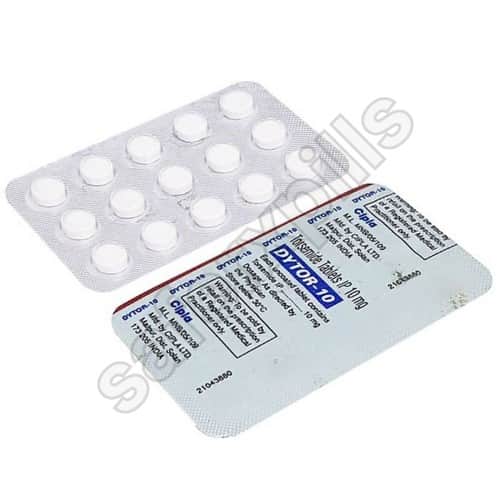
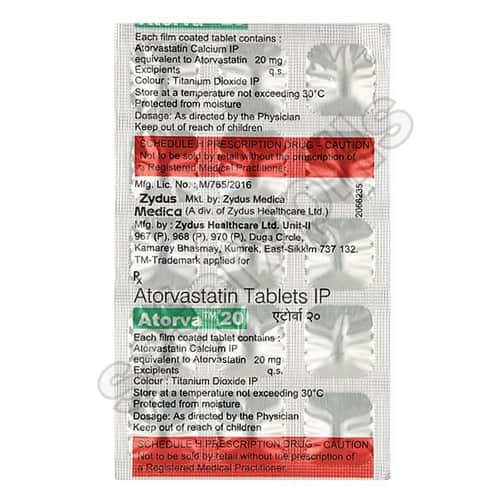
Dytor 10mg is torsemide (also spelt torasemide) 10 mg, a loop diuretic or "water tablet" made in India by Cipla. The US torsemide label covers two uses: swelling (edema) caused by heart failure, kidney disease or liver disease, and high blood pressure (US label 1.1, 1.2). Indian pharmacy listings (Truemeds, PharmEasy, Medkart) sell Dytor 10 in strips of 15 tablets from Cipla, and the strip in our product photo reads "Torsemide Tablets IP 10 mg" with the Cipla name. We sell Dytor 10mg in packs of 60, 90 and 120 tablets, from $0.33 a tablet in the 120 pack before shipping.
Three points first. A loop diuretic is not a medicine to manage on your own: the US label tells doctors to check fluid status, kidney function, blood salts (electrolytes) and blood sugar periodically (5.1, 5.2), and the dose is changed according to how much fluid you lose. Only take Dytor 10mg if a doctor has prescribed torsemide and is doing those checks. Second, in liver cirrhosis with fluid in the abdomen, the US label says treatment "is best initiated in the hospital" (8.7). And on price, plainly: US pharmacies pay about 6 cents for a generic torsemide 10 mg tablet, so if you are in the US with a prescription, a local generic is very likely to cost you less than ours (our estimate; NADAC is not the price you pay at the counter).
Dytor 10mg at a glance
| Active ingredient | Torsemide (torasemide) 10 mg per tablet, a loop diuretic of the pyridine-sulfonylurea class (US 11) |
| Brand and maker | Dytor, Cipla Ltd (Truemeds, PharmEasy and Medkart listings; Cipla name on the strip in our product photo) |
| Regulatory status | Torsemide is licensed in the US (generic tablets; Soaanz 40 mg) and the UK (Torem 10 mg, POM). Health Canada lists only Demadex torsemide products, cancelled in 2000, and we found no Australian registration. This Indian pack is not registered with the FDA, MHRA, TGA or Health Canada |
| Usual dose from the label | Set by your doctor. US: heart failure edema starts at 10 or 20 mg once daily; liver cirrhosis 5 or 10 mg once daily with an aldosterone antagonist or potassium-sparing diuretic; kidney failure 20 mg once daily; high blood pressure 5 mg once daily, raised to 10 mg after 4 to 6 weeks if needed (US 2.1, 2.2). UK: oedema usually 5 mg once daily, up to 20 mg (4.2) |
| Timing | Urine flow starts within 1 hour, peaks in the first or second hour and lasts about 6 to 8 hours (US 12.2). Half-life about 3.5 hours (US 12.3) |
| Packs | 60, 90 and 120 tablets (4, 6 or 8 Indian strips of 15) |
| Price per tablet | $0.38 (60 pack), $0.34 (90 pack), $0.33 (120 pack), before shipping |
| Delivery | 7 to 14 business days to the US, UK, Australia and Canada; $25 shipping under $149, free from $149 |
What torsemide is used for
US generic torsemide label (section 1). "Torsemide tablets are indicated for the treatment of edema associated with heart failure, renal disease or hepatic disease" (1.1), and "for the treatment of hypertension, to lower blood pressure" (1.2). The label adds: "There are no controlled trials demonstrating risk reduction with torsemide" (1.2); the heart attack and stroke benefit of blood pressure treatment comes from trials of other blood pressure medicines.
Soaanz (US brand; 40 mg marketed, 20 mg and 60 mg discontinued). Soaanz "is indicated in adults for the treatment of edema associated with heart failure or renal disease" (Soaanz label 1, revised 11/2021). It does not carry the liver or blood pressure uses, and it has no 10 mg tablet.
UK label for Torem 10 mg (section 4.1). "Oedema due to congestive heart failure; hepatic, pulmonary or renal oedema." The UK 10 mg label does not list high blood pressure.
A diuretic relieves fluid build up; it does not cure the heart, kidney or liver disease behind it. In heart failure trials described in the US label, people with NYHA class II to IV heart failure who took 10 mg to 20 mg a day lost significantly more weight and swelling than people on placebo (12.2).
Price per tablet
Prices below are as of November 2026; the pack selector shows the current price.
| Pack | Price | Per tablet | Shipping | Per tablet with shipping |
|---|---|---|---|---|
| 60 tablets | $23 | $0.38 | $25 | $0.80 |
| 90 tablets | $31 | $0.34 | $25 | $0.62 |
| 120 tablets | $40 | $0.33 | $25 | $0.54 |
Every single pack is under the $149 free shipping line, so one pack carries $25 shipping, which more than doubles the cost of the 60 pack. Four 120 packs (480 tablets, $160) ship free and work out at $0.33 a tablet (our arithmetic). The 120 pack is the cheapest per tablet before and after shipping.
How long a pack lasts. At one 10 mg tablet a day, a dose within the US starting range for heart failure edema and cirrhosis and the US step up dose for high blood pressure (2.1, 2.2), the 60, 90 and 120 packs last 60, 90 and 120 days (our arithmetic). Your dose may change after blood tests or weight checks, so agree it with your doctor before you buy a large pack, and check the expiry date on the strips.
Compared with US brands and US generic torsemide
| Dytor 10mg (ours, Indian pack) | Demadex 10 mg (original US brand) | US generic torsemide 10 mg | |
|---|---|---|---|
| Maker | Cipla Ltd | NDA 020136 (now held by Pharmobedient), approved 23 August 1993 | Several US generic makers (for example Teva/Pliva, Aurobindo, Hetero) |
| FDA status | Not registered with the FDA (Indian pack) | Discontinued in all strengths; the FDA says not for safety or effectiveness reasons | Approved generics (ANDAs), prescription only |
| Cost per tablet | $0.33 to $0.38 before shipping | No NADAC row | NADAC $0.06346 (effective 21 October 2026) |
| Cost of 120 tablets | $40 plus $25 shipping, or $160 for 480 tablets with free shipping | Not sold | About $7.62 at NADAC (our arithmetic) |
NADAC is the average price US pharmacies pay to buy a medicine, published by the US Medicaid programme. It is not the price a patient pays at the counter. In the NADAC file with the as-of date 4 November 2026, all 7 generic torsemide 10 mg tablet NDC rows are at $0.06346 a tablet, effective 21 October 2026. There is no NADAC row for Demadex or Soaanz. Soaanz is a separate US brand (NDA 213218, approved 14 June 2021); Drugs@FDA lists its 40 mg tablet as a prescription product and its 20 mg and 60 mg tablets as discontinued.
Say it plainly: US generics are far cheaper than ours. Our tablet costs about 5 to 6 times what US pharmacies pay for generic torsemide 10 mg, before our shipping (our arithmetic). If you live in the US and have a prescription, compare local cash prices for generic torsemide before you order from us.
Is it the same as US torsemide? It has the same active ingredient and strength. US generics prove bioequivalence to the reference product; the Indian Dytor pack has not been through a US, UK, Canadian or Australian review, so we cannot point to a regulator check of it. US Teva tablets are white to off white, round and scored (US 3, 16). The strip in our product photo shows plain white round tablets; we have not confirmed whether Indian Dytor 10 tablets are scored, so do not split them unless your pharmacist confirms they are scored.
Which Dytor strength: the label doses
Cipla makes Dytor in 5 mg, 10 mg, 20 mg and 100 mg tablets, and we list all four. The table maps them to the US generic label (2.1, 2.2). The right strength depends on the condition and on how much fluid you need to lose, which only your doctor can judge.
| Condition (US label) | Starting dose | Raising the dose | Dytor strength that fits |
|---|---|---|---|
| Edema in heart failure | 10 mg or 20 mg once daily | Roughly double if the response is not enough; "Doses higher than 200 mg have not been adequately studied" | 10 mg or 20 mg to start |
| Edema in chronic kidney failure | 20 mg once daily | Roughly double if needed; above 200 mg not adequately studied | 20 mg to start; 100 mg tablets only for high doses a kidney specialist sets |
| Edema in liver cirrhosis | 5 mg or 10 mg once daily, with an aldosterone antagonist or a potassium-sparing diuretic | Roughly double if needed; "Doses higher than 40 mg have not been adequately studied in this population" | 5 mg or 10 mg to start |
| High blood pressure | 5 mg once daily | 10 mg once daily if 5 mg is not enough within 4 to 6 weeks; if 10 mg is not enough, add another blood pressure medicine | 5 mg to start; 10 mg is the label's top dose for blood pressure |
For high blood pressure, the label does not go above 10 mg: it says to add another medicine instead (2.2). The UK Torem label gives a usual oedema dose of 5 mg once daily, increased stepwise up to 20 mg if necessary, and says "In individual cases, as much as 40mg torasemide/day has been administered" (4.2).
How to take Dytor 10mg
- Take it once a day, at the dose your doctor sets (US 2.1, 2.2). The UK label says the tablets "should be taken in the morning" for convenience and swallowed with some fluid without chewing (4.2); taking it early means most of the extra urine comes in the daytime.
- Food does not change how much is absorbed: food delays the peak level by about 30 minutes, but "overall bioavailability (AUC) and diuretic activity are unchanged" (US 12.3).
- Expect to pass more urine within about an hour, for about 6 to 8 hours (US 12.2).
- Keep your blood test appointments. The US label tells doctors to monitor volume status and kidney function (5.1) and serum electrolytes and blood glucose (5.2) periodically; the UK label asks for regular checks of electrolytes, potassium, glucose, uric acid and creatinine, especially during long term treatment (4.4).
- Weighing yourself at the same time each day and keeping a record helps your doctor judge the dose (our advice).
- Do not change the dose yourself, and do not take extra tablets to lose weight. If lightheadedness or fainting happens, see below.
- For blood pressure, the effect builds over weeks: it is near maximal after 4 to 6 weeks and may keep increasing for up to 12 weeks (US 12.2). If you stop suddenly, blood pressure returns to pretreatment levels over several days (US 12.2).
Store below 30°C (strip in our photo; Truemeds listing). US generic tablets are stored at 20 to 25°C (US 16), and the UK label needs no special storage (6.4). No refrigeration is needed. Keep it out of the reach of children.
Extra care for some groups
- Liver cirrhosis with ascites. US: "Torsemide can cause sudden alterations of fluid and electrolyte balance which may precipitate hepatic coma in patients with hepatic disease with cirrhosis and ascites. In these patients, diuresis with torsemide is best initiated in the hospital" (8.7). It can cause or contribute to new or worsening hepatic encephalopathy, and the label says to use an aldosterone antagonist or potassium-sparing drug with it in liver disease (8.7). UK: "it is recommended that diuresis with any drug be initiated in the hospital", and "Extreme caution is required" in people with a history of hepatic encephalopathy (4.4).
- Kidney disease. Less of each dose reaches its site of action, so the effect of a given dose is reduced (US 12.3). In a study of acute kidney failure with total daily doses of 520 mg to 1200 mg, 19% of patients had seizures, at similar rates with comparably high furosemide doses (US 8.6). These were hospital doses, far above the tablet doses in this page (our note).
- Low blood pressure, dehydration or low blood volume. US: excessive diuresis "may cause potentially symptomatic dehydration, blood volume reduction and hypotension and worsening renal function, including acute renal failure particularly in salt-depleted patients or those taking renin-angiotensin aldosterone inhibitors" (5.1). The UK label lists hypotension and pre-existing hypovolaemia as contraindications (4.3).
- Diabetes and gout. Torsemide can raise blood glucose, and "gout may rarely be precipitated" (US 5.2). UK: carbohydrate metabolism should be monitored in latent or manifest diabetes, and caution is required in gout (4.4).
- Trouble passing urine. UK: urine retention must be corrected before or during treatment, and people with partial blockage of the urinary tract must be closely monitored (4.4). Acute urinary retention is in the US post-marketing list (6.2).
- Older people. US: no age related differences in effectiveness or safety were seen (8.5). UK: patients must be carefully monitored, "Especially at the start of the treatment and in elderly" (4.4).
- Pregnancy. US: there are no available data on use in pregnant women (8.1). UK: "Torasemide should not be used during pregnancy, unless the clinical condition of the woman requires treatment with torasemide" (4.6).
- Breastfeeding. US: no data on torsemide in human milk, and "Diuretics can suppress lactation" (8.2). UK: a decision should be made whether to stop breastfeeding or stop torasemide (4.6).
- Children. US: safety and effectiveness have not been established (8.4). UK: "There is no experience of torasemide in children" (4.2).
- Driving. UK: people who feel dizzy should not drive or operate machinery (4.7).
Side effects
The US label lists three main risks in its warnings: low blood pressure and worsening kidney function, electrolyte and metabolic changes, and hearing problems (5.1 to 5.3).
- Electrolytes and blood sugar. "Torsemide can cause potentially symptomatic hypokalemia, hyponatremia, hypomagnesemia, hypocalcemia, and hypochloremic alkalosis" (low potassium, sodium, magnesium and calcium, and a shift in the blood's acid balance), and it "can cause an increase in blood glucose levels and hyperglycemia" (US 5.2). UK: low potassium "is a major risk factor for both ventricular and atrial arrhythmias", so potassium must be closely monitored (4.4).
- Hearing. "Tinnitus and hearing loss (usually reversible) have been observed with loop diuretics, including torsemide. Higher than recommended doses, severe renal impairment, and hypoproteinemia, appear to increase the risk of ototoxicity" (US 5.3).
In US placebo-controlled trials (daily doses 1.25 mg to 20 mg, mostly 5 mg to 10 mg), the figures were:
| US label 6.1 finding | Torsemide | Placebo |
|---|---|---|
| Excessive urination, all US placebo-controlled trials | 6.7% | 2.2% |
| Excessive urination, blood pressure studies, 5 mg a day | 4% | 1% |
| Excessive urination, blood pressure studies, 10 mg a day | 15% | 1% |
| Potassium below 3.5 mEq/L at any time, blood pressure studies at 5 or 10 mg | 1.5% | 3% |
| Stopped because of adverse reactions, US trials | 3.5% | 4.4% |
The blood pressure rows and the potassium row come from people with high blood pressure on 5 mg or 10 mg a day. The label says that in heart failure, liver cirrhosis or kidney disease treated with higher doses, low potassium "was observed with greater frequency, in a dose-related manner" (6.1). At 10 mg a day for 6 weeks, blood urea, creatinine and uric acid rose slightly (mean 1.8 mg/dL, 0.05 mg/dL and 1.2 mg/dL) and serum glucose by a mean 5.5 mg/dL (6.1).
UK label (4.8). Common (up to 1 in 10): metabolic alkalosis, fluid and electrolyte imbalance (for example low blood volume, low sodium), headache, dizziness, stomach and bowel upset (loss of appetite, upper abdominal pain, nausea, vomiting, diarrhoea, constipation), muscle spasms, fatigue and weakness. Frequency not known includes tinnitus and deafness, fainting, low blood pressure, heart attack, reduced blood flow to the heart or brain, angina, embolism, visual impairment, dry mouth, pancreatitis and serious skin reactions.
US post-marketing reports (no reliable frequency): pancreatitis, abdominal pain, paresthesia, confusion, visual impairment, loss of appetite, low white cells, platelets and red cells, raised liver enzymes, thiamine (vitamin B1) deficiency, Stevens-Johnson syndrome, toxic epidermal necrolysis, photosensitivity, itching and acute urinary retention (6.2).
When to get urgent help
- Fainting. The US label says patients "should be told that if syncope occurs, torsemide should be discontinued until the physician has been consulted" (17). Lightheadedness, especially in the first days, should be reported to your doctor (17).
- Signs of too much fluid loss (our list): severe dizziness, very dry mouth, great thirst, passing very little urine, or confusion. Diarrhoea, vomiting, heavy sweating or not drinking enough make this more likely (US 17). Get medical advice the same day (our advice).
- Muscle cramps or weakness with a fast or irregular heartbeat or palpitations, which can point to low potassium or magnesium (our advice, based on US 5.2 and UK 4.4). A fast or irregular heartbeat with chest pain or fainting needs emergency care.
- Ringing in the ears or hearing loss (US 5.3): contact your doctor promptly (our advice).
- Drowsiness, confusion or behaviour change if you have liver disease, which can be a sign of hepatic encephalopathy (US 8.7): get medical help straight away.
- A serious skin reaction (blistering, peeling, widespread rash with fever or sores in the mouth), since Stevens-Johnson syndrome and toxic epidermal necrolysis have been reported (US 6.2; UK 4.8), or an allergic reaction with swelling of the lips, tongue or throat, or trouble breathing or swallowing: call emergency services (our advice).
- Severe stomach pain spreading to the back (pancreatitis is in US 6.2), or being unable to pass urine (acute urinary retention, US 6.2): get medical help the same day (our advice).
- Chest pain, or sudden weakness, numbness or trouble speaking: call emergency services (our advice; the UK label lists heart attack, myocardial and cerebral ischaemia and embolism with frequency not known, 4.8).
- Swelling, breathlessness or weight gain that gets worse despite the tablets: in heart failure this needs urgent review (our advice).
- Taking too many tablets. Overdose can cause "dehydration, hypovolemia, hypotension, hyponatremia, hypokalemia, hypochloremic alkalosis, and hemoconcentration" (US 10); the UK label adds drowsiness, confusion and circulatory collapse (4.9). Get medical help straight away. Hemodialysis does not remove torsemide (US 10).
Tell the medical staff that you take torsemide, how much and when you last took it, and every other medicine you take.
Who should not take Dytor 10mg
Never take it if (US label 4): you are allergic to torsemide; you are anuric (making no urine); or you are in hepatic coma. The UK label also contraindicates (4.3): allergy to sulphonamides ("sulfa drugs") or any excipient; anuria with renal failure; hepatic coma "until the condition is improved or corrected"; low blood pressure; pre-existing low blood volume; cardiac arrhythmias; simultaneous treatment with aminoglycoside or cephalosporin antibiotics; and kidney problems caused by drugs that damage the kidneys.
Medicines to avoid or that need monitoring (US 7 unless stated):
- Aminoglycoside antibiotics (such as gentamicin): loop diuretics increase their ear toxicity; the US label says "Avoid concomitant use of torsemide and aminoglycoside antibiotics, if possible" (7.6). The UK label contraindicates them with torasemide (4.3).
- Lithium: torsemide reduces lithium clearance, "inducing a high risk of lithium toxicity"; lithium levels need monitoring (7.5).
- NSAID painkillers (ibuprofen, naproxen, diclofenac): the combination "has been associated with the development of acute renal failure", and NSAIDs can reduce torsemide's effect (7.1). People taking high doses of salicylates (aspirin) may get salicylate toxicity (7.1). The US label asks patients to discuss NSAIDs with their doctor first (17).
- ACE inhibitors and angiotensin receptor blockers: higher risk of low blood pressure and kidney impairment (7.7). In liver cirrhosis the US label pairs torsemide with an aldosterone antagonist such as spironolactone (2.1, 8.7); torsemide also reduces how fast the kidneys clear spironolactone (12.3). Taking them together still needs potassium blood tests (our note).
- CYP2C9 inhibitors (amiodarone, fluconazole, miconazole, oxandrolone) raise torsemide levels; inducers such as rifampin lower them (7.2). Torsemide may affect warfarin, phenytoin and celecoxib (7.2).
- Cholestyramine: take torsemide "at least one hour before or 4 to 6 h after" it (7.3).
- Probenecid may reduce the diuretic effect (7.4).
- Corticosteroids and ACTH: more risk of low potassium (7.9). Radiocontrast agents: more risk of kidney toxicity (7.8).
- Digoxin (UK 4.5): low potassium or magnesium can make the heart more sensitive to cardiac glycosides. The UK label also lists theophylline, laxatives, diabetes medicines (whose action may be reduced) and alcohol (dizziness) (4.5).
Torsemide or furosemide?
Torsemide and furosemide are both loop diuretics. TRANSFORM-HF, an open-label US trial of 2,859 people hospitalised with heart failure, compared a torsemide strategy with a furosemide strategy after discharge. Deaths were 26.1% with torsemide and 26.2% with furosemide over a median follow-up of 17.4 months (hazard ratio 1.02); the authors note that loss to follow-up, crossover and nonadherence limit the interpretation (Mentz 2023, PMID 36648467). Switching between them is a decision for your doctor, because the doses are not the same milligram for milligram.
Prescription and legal status
In the US, torsemide tablets are prescription only (Drugs@FDA lists the generic tablets and Soaanz 40 mg as prescription products), and the FDA says personal importation of unapproved medicines is illegal in most circumstances. In the UK, Torem 10 mg tablets (Viatris, PL 46302/0143) are a prescription-only medicine (POM). In Canada, the Health Canada Drug Product Database lists only Demadex torsemide products, all cancelled post market on 27 July 2000 (checked 4 November 2026). In Australia, we found no registered torsemide product in the sources we checked; we could not search the ARTG directly. In India, the Truemeds and Medkart listings say a prescription is required, and the strip in our photo carries the prescription-only retail line. Check the rules where you live.
Buying genuine Dytor
The MHRA warns that "Any medicine not authorised for sale in the UK can be unsafe or ineffective and there is no way of knowing what is in them or the negative health effects they can have", and it advises UK buyers to "Only use UK-registered pharmacies, including online pharmacies displaying the official green cross logo". That warning covers this Indian Dytor pack. When your order arrives, read the strip: it should say Dytor 10 and Torsemide Tablets IP 10 mg, name Cipla, and carry a batch number and expiry date. These checks cannot prove that tablets are genuine, because counterfeiters copy packaging. If a batch causes unusual symptoms, seek medical advice and report it to your medicines regulator (the MHRA Yellow Card scheme in the UK, FDA MedWatch in the US, the TGA in Australia or Health Canada) as well as to us. Our guide to counterfeit medicines and how fake pills reach buyers explains more.
Delivery
We ship Dytor 10mg to the US, UK, Australia and Canada in plain packaging with tracking. Standard delivery takes 7 to 14 business days. Shipping costs a flat $25 on orders under $149 and is free from $149. Do not run out: if you stop a diuretic, fluid can build up again (our note), so order well before your supply ends and ask your doctor what to do if a delivery is late.
Related products and guides
- Aldactone 25mg: spironolactone, an aldosterone antagonist that the US torsemide label pairs with torsemide in liver cirrhosis (2.1).
- Forxiga 10mg and Jardiance 10mg: SGLT2 inhibitors licensed for heart failure; they do not replace a diuretic prescribed for fluid build up (our note).
- Blood pressure medication names: the 5 main types, how they work, warnings and cost
- Jardiance vs Farxiga: trial results, dosing, side effects and 2026 US prices
- Counterfeit medicine: how fake pills reach buyers and how to tell if pills are fake
Sources
- Torsemide tablets, US prescribing information, Teva Pharmaceuticals USA (manufactured by Pliva Hrvatska), DailyMed setid 8a95cbdb-0601-47a5-9b3a-0c3b0629ceb9, SPL version 11, published 5 June 2025: sections 1, 2.1, 2.2, 3, 4, 5.1 to 5.3, 6.1, 6.2, 7.1 to 7.9, 8.1, 8.2, 8.4 to 8.7, 10, 11, 12.1 to 12.3, 16, 17. The same clinical wording is in the Aurobindo (version 17) and Kesin (version 1, November 2026) generic labels, which also list povidone allergy as a contraindication. DailyMed
- Soaanz (torsemide) tablets, US prescribing information, Sarfez Pharmaceuticals, revised 11/2021 (NDA 213218, supplement 1, the latest label on Drugs@FDA): sections 1 to 4. FDA
- Drugs@FDA: NDA 020136 Demadex (torsemide) 5, 10, 20 and 100 mg tablets, all discontinued, "not discontinued or withdrawn for safety or effectiveness reasons"; NDA 213218 Soaanz 40 mg prescription, 20 and 60 mg discontinued; checked 4 November 2026. Drugs@FDA
- Torem 10 mg Tablets, UK Summary of Product Characteristics, Viatris, PL 46302/0143, text revised October 2025 (emc 6663): sections 2, 3, 4.1 to 4.9, 5.1, 5.2, 6.4. emc
- Health Canada Drug Product Database: Demadex tablets 5, 10, 20 and 100 mg and injection, Hoffmann-La Roche, cancelled post market 27 July 2000; checked 4 November 2026. Health Canada
- Centers for Medicare and Medicaid Services. National Average Drug Acquisition Cost (NADAC) 2026: file with as-of date 4 November 2026, torsemide 10 mg tablet $0.06346 (7 NDC rows), effective 21 October 2026. data.medicaid.gov
- Mentz RJ, et al. Effect of torsemide vs furosemide after discharge on all-cause mortality in patients hospitalized with heart failure: the TRANSFORM-HF randomized clinical trial. JAMA 2023. PMID 36648467. PubMed
- Indian pharmacy listings for Dytor 10 tablet, strip of 15 (Truemeds, PharmEasy, Medkart), checked 4 November 2026.
- MHRA. 20 million illegal erectile dysfunction pills seized as MHRA warns against risky online buys, 13 February 2026. GOV.UK
- US Food and Drug Administration. Personal Importation. FDA
This page is for information and is not medical advice. Torsemide is a prescription medicine that needs regular blood tests and a doctor who adjusts the dose. Take it only as prescribed, and do not start, stop or change the dose without your doctor.
Key Information
- ✓Active Ingredient: Torsemide
- ✓Category: Heart & Blood Pressure
- ✓Form: Tablet
- ✓Brand: Dytor
- ✓Manufacturer: Cipla Limited
Frequently Asked Questions
What is Dytor 10mg?
Dytor 10mg is torsemide (torasemide) 10 mg, a loop diuretic or water tablet made in India by Cipla. The US torsemide label covers swelling (edema) caused by heart failure, kidney disease or liver disease, and high blood pressure. The UK Torem 10 mg label covers oedema only. It is a prescription medicine that needs blood tests and a doctor who sets the dose.
Is Dytor 10mg the same as US torsemide?
It has the same active ingredient and strength as US generic torsemide 10 mg. The original US brand, Demadex, is discontinued in all strengths (the FDA says not for safety or effectiveness reasons), and the newer US brand Soaanz has no 10 mg tablet. US generics prove bioequivalence to the reference product; this Indian Cipla pack is not registered with the FDA, MHRA, TGA or Health Canada, so we cannot point to a regulator review of it.
How much does Dytor 10mg cost per tablet?
As of November 2026, $0.38 a tablet in the 60 pack, $0.34 in the 90 pack and $0.33 in the 120 pack, before shipping; the pack selector shows the current price. Shipping is $25 under $149 and free from $149. US pharmacies pay about $0.06 a tablet for generic torsemide 10 mg (NADAC, effective 21 October 2026), so in the US a local generic is very likely to cost you less than ours.
How do I take Dytor 10mg?
Once a day at the dose your doctor sets. The UK label says take it in the morning, swallowed with some fluid without chewing. Food delays the peak level by about 30 minutes but does not change how much is absorbed (US label 12.3). Keep your blood test appointments: the US label tells doctors to check fluid status, kidney function, electrolytes and blood glucose periodically.
Which Dytor strength should I take?
Your doctor decides. The US label starts heart failure edema at 10 or 20 mg once daily, kidney failure edema at 20 mg, liver cirrhosis edema at 5 or 10 mg with an aldosterone antagonist or potassium-sparing diuretic, and high blood pressure at 5 mg, raised to 10 mg after 4 to 6 weeks if needed. For blood pressure the label adds another medicine rather than going above 10 mg.
How quickly does it work and how long does a pack last?
Urine flow starts within about 1 hour, peaks in the first or second hour and lasts about 6 to 8 hours (US label 12.2). For blood pressure the effect is near maximal after 4 to 6 weeks. At one tablet a day, the 60, 90 and 120 packs last 60, 90 and 120 days (our arithmetic); your dose may change after blood tests.
Can I take a higher dose if my swelling does not go down?
Not on your own. The US label raises the dose by roughly doubling only when a doctor judges the response inadequate, and says doses above 200 mg (above 40 mg in liver cirrhosis) have not been adequately studied. Low potassium was seen more often at higher doses (US 6.1), and higher than recommended doses appear to increase the risk of ear damage (US 5.3). Worsening swelling, breathlessness or weight gain needs a medical review.
What are the side effects of Dytor 10mg?
Passing more urine is expected. The US label warns about low blood pressure and worsening kidney function, low potassium, sodium, magnesium and calcium, raised blood sugar and uric acid (gout may rarely be triggered), and tinnitus and hearing loss (usually reversible). The UK label lists headache, dizziness, stomach upset, muscle spasms and fatigue as common. Fainting means stop and consult your doctor (US 17).
Who should not take Dytor 10mg?
The US label contraindicates it in torsemide allergy, in people who make no urine (anuria) and in hepatic coma. The UK label adds sulphonamide (sulfa) allergy, low blood pressure, low blood volume, cardiac arrhythmias, use with aminoglycoside or cephalosporin antibiotics, and kidney damage caused by drugs. In cirrhosis with ascites, the US label says treatment is best started in hospital.
Do I need a prescription for Dytor 10mg?
Yes in practice. Torsemide is prescription only in the US and the UK (Torem 10 mg, POM). Health Canada lists only Demadex products cancelled in 2000, and we found no Australian registration. Indian listings (Truemeds, Medkart) say a prescription is required. The FDA says personal importation of unapproved medicines is illegal in most circumstances.
How long does delivery take?
Standard delivery to the US, UK, Australia and Canada takes 7 to 14 business days, in plain packaging with tracking. Shipping is $25 on orders under $149 and free from $149. Order well before your supply runs out, because stopping a diuretic can let fluid build up again.
Medical References
- 1.Torsemide tablets: US prescribing information, Teva Pharmaceuticals USA (DailyMed, SPL version 11) — 2025
- 2.SOAANZ (torsemide) tablets: US prescribing information, Sarfez Pharmaceuticals, revised 11/2021 — 2021
- 3.Drugs@FDA: NDA 020136 Demadex (torsemide) tablets, discontinued
- 4.Torem 10 mg Tablets: UK Summary of Product Characteristics, Viatris (emc) — 2025
- 5.Mentz RJ et al. Effect of torsemide vs furosemide after discharge on all-cause mortality in patients hospitalized with heart failure: the TRANSFORM-HF randomized clinical trial. JAMA 2023 (PMID: 36648467) — 2023
- 6.NADAC 2026 (National Average Drug Acquisition Cost), CMS — 2026
- 7.Health Canada Drug Product Database: Demadex (torsemide) products, cancelled post market 2000
Sources: U.S. National Library of Medicine (DailyMed, PubMed), openFDA
Related Products
View all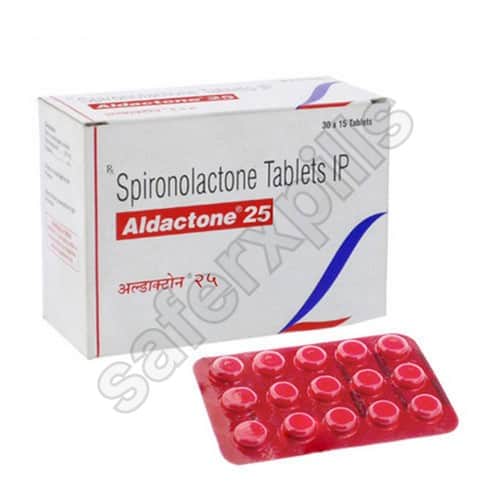
Customer Reviews
No reviews yet. Be the first to review Dytor 10mg.
Related Articles
Health guides about Torsemide, written by pharmacists
Brand vs Generic Drug Prices: What US Pharmacies Pay for Viagra, Cialis, Latisse and More (NADAC, October 2026)
CMS NADAC data for the week of 28 October 2026 shows what US pharmacies pay for brand and generic versions of Viagra, Cialis, Propecia, Latisse, Lumigan and Stromectol. Generic ED and hair loss tablets cost under 2% of the brand price, while eye and lash generics cost 42% to 65%. Includes 2026 trends, supplier counts and the full method.
Buy Amaryl (Glimepiride) Online: Dosing, Hypoglycaemia Risk and What to Verify First
Amaryl is brand name glimepiride, a sulfonylurea that lowers blood sugar effectively and cheaply but carries real hypoglycaemia risk. Dosing, the CAROLINA trial evidence, interactions, and what to verify before ordering online.

Generic vs Branded Medicines: What You Really Need to Know
Many patients assume branded drugs are superior to generics. The truth, backed by decades of FDA research, is more nuanced.