
Kerendia 10mg
Generic: Finerenoneby Bayer Zydus Pharma
Similar medicines
View all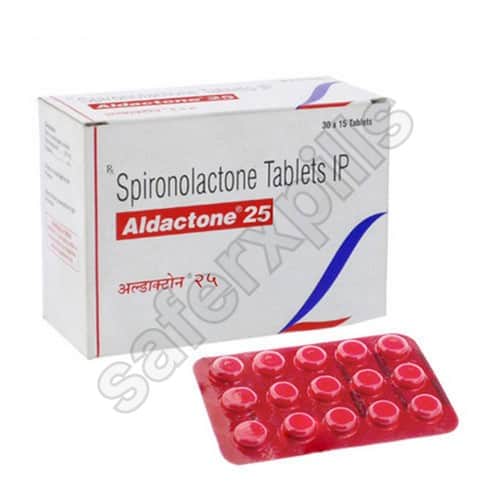
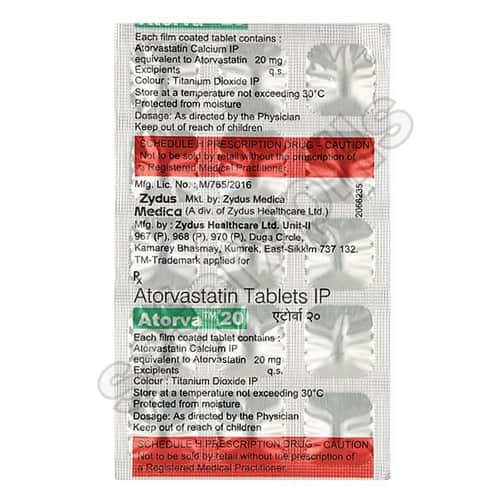
About Kerendia 10mg
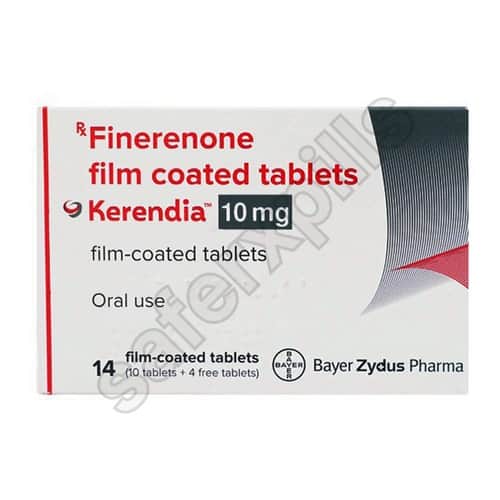
Kerendia 10mg is Bayer's finerenone 10 mg film-coated tablet, sold here in its Indian pack. Tata 1mg, PharmEasy, Truemeds and Apollo Pharmacy all name Bayer Zydus Pharma as the Indian marketer, and the carton in our product photo carries the Bayer and Bayer Zydus Pharma names. Kerendia is the same brand name in the US, UK, Australia, Canada and India. Finerenone is a nonsteroidal mineralocorticoid receptor antagonist: it blocks the receptor that aldosterone and cortisol switch on, which drives salt retention and is thought to contribute to fibrosis and inflammation in the kidney, heart and blood vessels (US label 12.1). It is taken as one tablet once a day. In both the US and UK labels, 10 mg is the starting dose when kidney function (eGFR) is 25 to below 60, and the dose to restart on after treatment has been paused for high potassium. We sell Kerendia 10mg in packs of 28, 56 and 84 tablets, from $2.80 a tablet in the 84 pack.
Three points first. Kerendia is not a medicine you can manage on your own. Both labels require a blood test for potassium and kidney function before the first tablet, another about 4 weeks after starting or changing the dose, and regular tests after that; the dose goes up, stays the same, or is paused depending on those results. If you cannot get these tests from a doctor, do not take it. The main risk is high blood potassium (hyperkalemia), the most common adverse reaction in the kidney trials. And never take it with a strong CYP3A4 inhibitor such as itraconazole, ketoconazole, ritonavir or clarithromycin: that combination is contraindicated. On price, plainly: there is no US generic on sale, and US pharmacies pay on average about $22.85 a tablet for brand Kerendia (NADAC), so our tablets cost far less than the US brand; whether that matters to you depends on your insurance. This page uses the current US Kerendia label and the UK Kerendia 10 mg product information, both listed at the end.
Kerendia 10mg at a glance
| Active ingredient | Finerenone 10 mg per film-coated tablet, a nonsteroidal mineralocorticoid receptor antagonist (MRA) |
| Brand and maker | Kerendia, Bayer. Tata 1mg, PharmEasy, Truemeds and Apollo name Bayer Zydus Pharma as the Indian company; PharmEasy gives Bayer AG, Leverkusen, Germany as the manufacturer address. Tata 1mg, PharmEasy and Truemeds give Germany as the country of origin; Apollo gives India |
| Regulatory status | Finerenone is licensed in the US (Kerendia, prescription), the UK (Kerendia, POM), Australia (Kerendia, Schedule 4) and Canada (Kerendia, prescription). This Indian Kerendia pack is not registered with the FDA, MHRA, TGA or Health Canada |
| Usual dose from the label | Start at 10 mg once daily if eGFR is 25 to below 60; the US label (and the UK label for heart failure) starts at 20 mg if eGFR is 60 or more; not started below 25. Target 20 mg for kidney disease with diabetes; 20 mg or 40 mg for heart failure, set by eGFR at the start (US 2.2, 2.3; UK 4.2) |
| Blood tests | Potassium and eGFR before starting, 4 weeks after starting or any dose change, then periodically (US 2.1, 2.3; UK 4.2, 4.4). Not started if potassium is above 5.0 |
| Half-life | About 2 to 3 hours; peak blood level 0.5 to 1.25 hours after a dose; steady state after 2 days; food makes no clinically significant difference (US 12.3) |
| Packs | 28, 56 and 84 tablets. Indian strips hold 14 tablets (Tata 1mg, PharmEasy, Truemeds, Apollo), so our packs are 2, 4 and 6 strips |
| Price per tablet | $2.86 (28 pack), $2.82 (56 pack), $2.80 (84 pack), before shipping |
| Delivery | 7 to 14 business days to the US, UK, Australia and Canada; $25 shipping under $149, free from $149 |
What Kerendia 10mg is licensed for
US label (section 1, current version). Kerendia is indicated to:
- "reduce the risk of sustained estimated glomerular filtration rate (eGFR) decline, end-stage kidney disease, cardiovascular death, non-fatal myocardial infarction, and hospitalization for heart failure in adults with chronic kidney disease (CKD) associated with Type 2 diabetes mellitus (T2DM)."
- "reduce urinary albumin-to-creatinine ratio (UACR), which is expected to reduce the risk of sustained eGFR decline and end-stage kidney disease in adults with CKD associated with Type 1 diabetes mellitus (T1DM)."
- "reduce the risk of cardiovascular death, hospitalization for heart failure, and urgent heart failure visits in adults with heart failure with left ventricular ejection fraction (LVEF) ≥ 40%."
The FDA first approved Kerendia on 9 July 2021, added the heart failure use (from the FINEARTS-HF trial) on 11 July 2025, and added kidney disease with type 1 diabetes on 16 September 2026 (Drugs@FDA, NDA 215341). The type 1 diabetes use rests on a different kind of evidence: the label says the effect on urine albumin was "used to infer" a lower risk of kidney decline, based on the type 2 diabetes outcome trials plus a 6 month albumin trial in type 1 diabetes (US 14.2).
UK label (section 4.1). Kerendia is indicated "for the treatment of chronic kidney disease (stage 3 and 4 with albuminuria) associated with type 2 diabetes in adults" and "for the treatment of symptomatic chronic heart failure with left ventricular ejection fraction (LVEF) ≥ 40% in adults". The UK label we checked (revised 10 April 2026) does not include type 1 diabetes.
What it is not. Finerenone is not a blood sugar medicine and not a blood pressure medicine, although the UK label reports a small fall in systolic blood pressure of 2 to 4 mm Hg in the first month (4.8). It is not established in anyone under 18 (US 8.4; UK 4.2).
Blood tests: why Kerendia is not self-managed
Every dose decision on Kerendia comes from a blood test. Potassium below is in mEq/L (US) or mmol/L (UK); for potassium the two numbers are the same (our note).
- Before the first tablet. "Measure serum potassium levels and eGFR before initiation. Do not initiate treatment if serum potassium is > 5.0 mEq/L" (US 2.1). For kidney disease, if potassium is above 4.8 to 5.0, starting "may be considered with additional serum potassium monitoring within the first 4 weeks" (US 2.3; UK 4.2).
- Starting dose by eGFR. 20 mg once daily if eGFR is 60 or more; 10 mg once daily if eGFR is 25 to below 60; below 25, "Initiation is not recommended" (US Table 1). The UK label gives the same 10 mg and not recommended rows for kidney disease (Table 1), and 20 mg, 10 mg and not recommended for heart failure (Table 3).
- At 4 weeks. Potassium (and, in heart failure, eGFR) is measured again 4 weeks after starting and 4 weeks after any dose change, then periodically (US 2.3; UK 4.2).
- Kidney disease with diabetes, on 10 mg (US Table 2; UK Table 2): potassium 4.8 or less: increase to 20 mg, unless eGFR has fallen by more than 30%, when 10 mg is kept. Above 4.8 to 5.5: stay on 10 mg. Above 5.5: withhold Kerendia and consider restarting at 10 mg when potassium is 5.0 or less.
- Heart failure, on 10 mg (US Table 3; UK Table 4): potassium below 5.0: increase to 20 mg, unless eGFR has fallen by more than 30%. 5.0 to below 5.5: stay on 10 mg. 5.5 or more: withhold, and restart at 10 mg when potassium is below 5.5 (if repeated readings are 5.5 or more, wait until below 5.0).
- Kidney function in heart failure. The US label says Kerendia "can cause worsening of renal function in patients with heart failure" and asks for eGFR checks before starting, with dose increases, and periodically; it says to "Consider delaying up-titration or interrupting treatment" if kidney function gets clinically significantly worse (5.2). The UK label says elderly people and people with an eGFR below 60 should be monitored more frequently (4.4).
The UK patient leaflet puts it simply: "Using the results of your blood tests, your doctor decides whether you can start to take Kerendia", and "After 4 weeks of taking Kerendia, you will have more blood tests." If you buy from us, you still need a doctor who orders and reads these tests. Do not raise, lower or restart the dose yourself.
Price per tablet
Prices below are as of November 2026; the pack selector shows the current price.
| Pack | Price | Per tablet | Shipping | Per tablet with shipping |
|---|---|---|---|---|
| 28 tablets | $80 | $2.86 | $25 | $3.75 |
| 56 tablets | $158 | $2.82 | Free | $2.82 |
| 84 tablets | $235 | $2.80 | Free | $2.80 |
Before shipping, the three packs cost almost the same per tablet (6 cents apart). Most of the difference comes from shipping: the 28 pack is under the $149 free shipping line and carries $25 shipping; the 56 and 84 packs ship free.
Which pack to buy first (our advice). At one tablet a day, the 28 pack lasts 4 weeks, the 56 pack 8 weeks and the 84 pack 12 weeks (our arithmetic). Because both labels call for a blood test 4 weeks after starting, and the result often moves the dose from 10 mg to 20 mg (see the blood test rules above), a 56 or 84 pack of 10 mg can be left partly unused if you are just starting. If you are new to Kerendia, the 28 pack matches the first 4 weeks. Larger packs make sense once your doctor has settled you on 10 mg, for example because your potassium stays above 4.8 (kidney disease) or at 5.0 or more (heart failure). Check that the expiry date on the strips covers the months you need.
Compared with US Kerendia
| Kerendia 10mg (ours, Indian pack) | US Kerendia 10 mg | US generic finerenone | |
|---|---|---|---|
| Maker | Bayer (Indian pack, Bayer Zydus Pharma) | Bayer HealthCare Pharmaceuticals; label says manufactured in Germany | None on sale |
| FDA status | Not registered with the FDA (Indian pack) | Approved (NDA 215341, 9 July 2021) | One tentative approval (Apotex, 20 mg and 40 mg, 27 August 2026); a tentative approval cannot be marketed |
| Cost per tablet | $2.80 to $2.86 before shipping | NADAC $22.85403 | No NADAC rows |
| Cost of 28 tablets | $80 before shipping | About $639.91 at NADAC | Not available |
NADAC is the average price US pharmacies pay to buy a medicine, published by the US Medicaid programme. It is not the price a patient pays at the counter. In the NADAC file as of 4 November 2026, all four Kerendia 10 mg NDC rows (50419-0540-01, -02, -05 and -06) are at $22.85403 a tablet, effective 21 October 2026. There are no NADAC rows for generic finerenone. Our tablet costs about one eighth of the US brand acquisition cost, before our shipping (our arithmetic). That is a real price difference, but it does not include the blood tests and doctor visits you need either way, and US patients with insurance may pay much less than NADAC for brand Kerendia. Compare with your own plan before deciding.
Generic finerenone. Drugs@FDA lists one generic application, from Apotex, with tentative approval for 20 mg and 40 mg tablets on 27 August 2026 and no 10 mg strength. Tentative approval means the FDA has reviewed it but it cannot yet be sold in the US. We found no generic finerenone rows in the US NADAC file.
Is our Kerendia the same as US Kerendia? It is the same brand from the same company, with the same active ingredient and strength. The Indian pack is not registered with the FDA, MHRA, TGA or Health Canada, so we cannot point to a review of this pack by any of them. The US and UK labels describe the 10 mg tablet as pink, oblong and film-coated, marked "FI" on one side and "10" on the other (US 3; UK 3); we have not confirmed the markings on the Indian tablets.
Which strength to choose
| Daily dose | Product | How it fits the labels |
|---|---|---|
| 10 mg once daily | Kerendia 10mg (this product) | Starting dose for eGFR 25 to below 60, in kidney disease and heart failure. Restart dose after Kerendia is withheld for high potassium. Kept long term when potassium or an eGFR fall of more than 30% rules out an increase (US 2.2, 2.3; UK 4.2) |
| 20 mg once daily | Kerendia 20mg (also listed in our shop) | Starting dose for eGFR 60 or more. Target and maximum dose for kidney disease with type 2 diabetes (UK 4.2; US 2.3 target). Target for heart failure if eGFR was below 60 at the start (US 2.3; UK 4.2) |
| 40 mg once daily | Not stocked | Heart failure only: the target dose if eGFR was 60 or more at the start; the UK label's maximum for heart failure (US 2.3; UK 4.2). Not a dose for kidney disease with diabetes |
The strength is chosen by your blood results, not by how you feel. In FINEARTS-HF, about 65% of patients had reached their target dose by month 6 (US 14.3). Moving between strengths is your doctor's decision after a potassium and eGFR result; never change the dose yourself, and do not combine tablets to make a dose your doctor has not prescribed.
How to take Kerendia 10mg
- Take one tablet once a day, with a glass of water, with or without food (UK 4.2; US 12.3).
- If you cannot swallow tablets whole, Kerendia "may be crushed and mixed with water or soft foods such as applesauce immediately prior to use" (US 2.2; UK 4.2).
- Do not take it with grapefruit or grapefruit juice (US 7.1, 17; UK 4.2, 4.5).
- If you miss a dose, take it as soon as you notice, "but only on the same day". Otherwise skip it and take the next dose as usual (US 2.4). Do not take 2 doses to make up for a missed one (UK 4.2).
- Talk to your doctor before using potassium supplements or salt substitutes that contain potassium (US 17).
- Keep every blood test appointment: before starting, at 4 weeks, after each dose change, and as your doctor schedules after that (US 2.3; UK 4.2).
- Tell every doctor, dentist and pharmacist that you take finerenone before you start any new medicine, especially antibiotics, antifungals, HIV medicines and epilepsy medicines (see the interactions section).
Kidney function, liver and other groups needing care
- Kidney function. US: starting is not recommended with an eGFR below 25 (Table 1; 5.2). UK: "finerenone treatment should not be initiated" below 25 "due to limited clinical data"; it can be continued with an eGFR of 15 or more, and "should be discontinued in patients who have progressed to end-stage renal disease (eGFR < 15 mL/min/1.73 m2)" (4.2, 4.4). The risk of high potassium "increases with decreasing kidney function" (US 5.1).
- Early creatinine rise. Starting Kerendia "may cause an initial small increase in blood creatinine levels (mean change <0.1 mg/dL) and a small decrease in eGFR (mean change 2-3 mL/min)" in the first 4 weeks, which then stabilises and was reversible after stopping (US 6.1).
- Liver impairment. US: "Avoid use of Kerendia in patients with severe hepatic impairment (Child Pugh C)"; no dose change in mild or moderate impairment, but consider extra potassium checks in moderate impairment, where exposure rose by 38% (8.6, 12.3). UK: finerenone "should not be initiated" in severe hepatic impairment (4.2, 4.4).
- Age 65 and over. No dose change (US 8.5; UK 4.2), but the UK label recommends regular monitoring of kidney function (4.2, 4.4). In FINEARTS-HF, 79% of patients were 65 or older (US 8.5).
- People already at risk of high potassium. The UK label names low eGFR, higher potassium and previous high potassium as risk factors and says more frequent monitoring "has to be considered" (4.4).
- Heart failure NYHA class IV. Experience is limited (UK 4.4).
- Low blood pressure. The UK label says the risk of low blood pressure rises with several other blood pressure medicines and recommends blood pressure monitoring (4.5).
- Children under 18. Safety and efficacy have not been established (US 8.4; UK 4.2).
Side effects
| Adverse reaction (US Table 4) | Kerendia (n=6510) | Placebo (n=6489) |
|---|---|---|
| Hyperkalemia (high potassium) | 14.0% | 6.9% |
| Hypotension (low blood pressure) | 4.6% | 3.0% |
| Hyponatremia (low sodium) | 1.3% | 0.7% |
Table 4 pools FIDELIO-DKD and FIGARO-DKD (adults with kidney disease and type 2 diabetes, 10 mg or 20 mg, mean 2.2 and 2.9 years) and lists reactions in at least 1% that were more common than on placebo. Hospital admission for high potassium was 0.9% against 0.2%, and high potassium led to stopping treatment in 1.7% against 0.6% (US 6.1). In the UK label's pooled data, potassium above 5.5 was reported in 16.8% on finerenone against 7.4% on placebo, and above 6.0 in 3.3% against 1.3% (4.8).
Heart failure trial (FINEARTS-HF). Adverse reactions related to worsening kidney function were reported in 18% on Kerendia against 12% on placebo, including renal impairment (7% vs 4%), eGFR decreased (5% vs 4%), acute kidney injury (4% vs 2%) and renal failure (3% vs 2%); hospital admission for these events was 2.0% against 1.3% (US 6.1). The UK label adds high potassium in 9.7% against 4.2%, low blood pressure in 7.6% against 4.7%, diarrhoea in 5.7% against 4.4% and constipation in 3.8% against 2.7% (4.8), and says that in some people who stopped finerenone, eGFR did not return to baseline levels (4.8).
Other findings. A small rise in uric acid that attenuates over time (US 6.1); itching, listed as common in kidney disease with diabetes, and a small fall in haemoglobin (UK 4.8). After approval, angioedema, rash and hives (urticaria) have been reported (US 6.2). The type 1 diabetes trial (119 people on Kerendia, mean 5.9 months) showed a safety profile consistent with the type 2 diabetes trials (US 6.1).
What the trials showed
| Trial (US label section) | Who took part | Main result, Kerendia vs placebo |
|---|---|---|
| FIDELIO-DKD (14.1) | 5,674 adults with kidney disease and type 2 diabetes, mean eGFR 44, on an ACE inhibitor or ARB; median 2.6 years | 40% or more sustained eGFR decline, kidney failure or renal death: HR 0.82 (0.73 to 0.93). Cardiovascular death, non-fatal heart attack, non-fatal stroke or heart failure admission: HR 0.86 (0.75 to 0.99) |
| FIGARO-DKD (14.1) | 7,352 adults with kidney disease and type 2 diabetes, mean eGFR 68; 3.4 years | Cardiovascular composite: HR 0.87 (0.76 to 0.98), mainly fewer heart failure admissions. Kidney composite: HR 0.87 (0.76 to 1.01), a confidence interval that includes no effect |
| FINE-ONE (14.2) | 242 adults with kidney disease and type 1 diabetes, on insulin and an ACE inhibitor or ARB; 6 months | Urine albumin (UACR) 22% lower than placebo at month 3 and 28% lower at month 6. No outcome data on kidney failure |
| FINEARTS-HF (14.3) | 6,001 adults with heart failure and LVEF 40% or more, mean age 72; median 2.7 years | Cardiovascular death plus total heart failure events: rate ratio 0.84 (0.74 to 0.95). Cardiovascular death alone: HR 0.93 (0.78 to 1.11) |
Each result is against placebo added to usual care; these trials do not compare finerenone with spironolactone, eplerenone or an SGLT2 inhibitor. Few patients in the outcome trials took an SGLT2 inhibitor: 5% in FIDELIO-DKD and 14% in FINEARTS-HF, and FINE-ONE excluded them (US 14.1 to 14.3). If you also take an SGLT2 inhibitor such as Forxiga 10mg or Jardiance 10mg, that is a decision for your doctor; our Jardiance vs Farxiga guide covers those two medicines' own kidney and heart failure trials.
When to get urgent help
Get medical help straight away, or call emergency services, if you have:
- Signs that may mean high potassium. The UK patient leaflet lists "weakness or tiredness", "feeling sick (nausea), numbness in the hands and lips, muscle cramps, decreased pulse rate." High potassium can affect the heart rhythm, so get same-day medical advice and a potassium test, and call emergency services if you feel very weak, faint or your pulse is slow (our advice).
- Swelling of the face, lips, tongue or throat, trouble breathing or swallowing, or a widespread rash or hives. Angioedema, rash and urticaria have been reported (US 6.2), and an allergy to any ingredient is a contraindication (US 4; UK 4.3).
- Dizziness, light-headedness or fainting, which the UK leaflet lists as possible signs of low blood pressure.
- Signs of a sudden kidney problem, especially if you have heart failure: the US label says that rarely, severe events associated with worsening kidney function, including events needing hospital care, have been observed (US 5.2). Tell your doctor promptly about much less urine than usual or new swelling (our advice).
- Taking too much. The US label says "immediately interrupt Kerendia treatment"; the most likely effect of an overdose is high potassium, and finerenone is unlikely to be efficiently removed by haemodialysis (US 10). In the US, call Poison Help on 1-800-222-1222; in Australia, the Poisons Information Centre on 13 11 26 (our addition).
Tell the medical staff that you take finerenone (Kerendia), how much and when you last took it, and every other medicine you take, because several interactions raise potassium.
Who should not take Kerendia 10mg
Never take it if (contraindications in both labels: US 4; UK 4.3):
- you are allergic to finerenone or any ingredient of the tablet;
- you take a strong CYP3A4 inhibitor. The UK label names itraconazole, ketoconazole, ritonavir, nelfinavir, cobicistat, clarithromycin, telithromycin and nefazodone. Itraconazole was predicted to raise finerenone exposure by more than 400% (US 12.3);
- you have adrenal insufficiency (US) or Addison's disease (UK).
Not recommended, should not be used, or only with care:
- Potassium above 5.0: "Do not initiate" (US 2.1, 5.1); "should not be initiated" (UK 4.2, 4.4).
- eGFR below 25 at the start: initiation not recommended (US Table 1; UK 4.2). UK: discontinue once eGFR is below 15 (4.2).
- Severe liver impairment: US "Avoid use" (8.6); UK "should not be initiated" (4.2).
- Other potassium-sparing medicines: UK: finerenone "should not be given concomitantly with" potassium-sparing diuretics (amiloride, triamterene) or other MRAs such as eplerenone, spironolactone (for example Aldactone), esaxerenone or canrenone (4.4). The US label asks for more frequent potassium monitoring with drugs or supplements that raise potassium (7.3).
- Strong or moderate CYP3A4 inducers: US "Avoid concomitant use" (7.1); UK "should not be used concomitantly" (4.5). Examples in the UK label: rifampicin, carbamazepine, phenytoin, phenobarbital, St John's Wort and efavirenz.
- Pregnancy: US: no human data; animal studies showed developmental toxicity at about 2 times human exposure (8.1). UK: "should not be used during pregnancy unless the clinical condition of the woman requires treatment with finerenone" (4.6), and women who could become pregnant should use effective contraception (4.4, 4.6).
- Breastfeeding: US: "avoid breastfeeding during treatment and for 1 day after treatment" (8.2). UK: women should be advised not to breastfeed during treatment (4.4).
- Rare sugar intolerances: each UK Kerendia 10 mg tablet contains 45 mg lactose, and the UK label says people with galactose intolerance, total lactase deficiency or glucose-galactose malabsorption "should not take this medicinal product" (2, 4.4). The US tablet also contains lactose monohydrate (US 11). We have not confirmed the excipients of the Indian pack, so read the carton.
- Under 18: not established (US 8.4; UK 4.2).
Medicines that interact
- Moderate CYP3A4 inhibitors: erythromycin raised finerenone exposure (AUC) by 248% and verapamil by 170% (US 12.3). Potassium should be monitored when starting or changing either medicine (US 7.1; UK 4.5).
- Weak CYP3A4 inhibitors: amiodarone raised exposure by 21% (US 12.3); the UK label's model predicts a 1.6-fold rise with fluvoxamine (4.5). Potassium monitoring is advised (US 7.1; UK 4.5).
- CYP3A4 inducers: rifampicin and efavirenz were predicted to cut exposure by 90% and 80% (US 12.3), which may reduce the effect.
- Potassium supplements, trimethoprim and trimethoprim/sulfamethoxazole: higher risk of high potassium; the UK label says monitoring of potassium "is required" and Kerendia may need to be paused during trimethoprim treatment (4.5). For potassium-enriched salt substitutes the UK label says use with caution and monitor potassium (4.4).
- Other blood pressure medicines: more risk of low blood pressure; blood pressure monitoring is recommended (UK 4.5).
- Grapefruit: avoid (US 7.1; UK 4.5).
No clinically significant interaction was seen with warfarin, digoxin, rosuvastatin or gemfibrozil (US 12.3). Effects on CYP2C8 and CYP3A4 substrates were seen only at 40 mg (US 7.2, 12.3). In the kidney trials almost everyone also took an ACE inhibitor or ARB (99.8% in FIDELIO-DKD, US 14.1). Tell your doctor or pharmacist about every medicine and supplement you take.
Prescription and legal status
In the US, Kerendia (NDA 215341) is a prescription medicine, and the FDA says personal importation of unapproved medicines is illegal in most circumstances. In the UK, Kerendia 10 mg (Bayer plc, PLGB 00010/0751) is a prescription-only medicine (POM). In Australia, Kerendia 10 mg is registered (AUST R 350772) and is Schedule 4 (Prescription Only Medicine). In Canada, Kerendia 10 mg (DIN 02531917) has been marketed as a prescription medicine since 22 November 2022 (Health Canada Drug Product Database, checked 4 November 2026). In India, Tata 1mg, Truemeds and Apollo mark Kerendia 10mg as a prescription medicine, and the carton in our product photo carries the Rx symbol. Check the rules where you live.
Buying genuine Kerendia
The MHRA warns that "Any medicine not authorised for sale in the UK can be unsafe or ineffective and there is no way of knowing what is in them or the negative health effects they can have", and it advises UK buyers to "Only use UK-registered pharmacies, including online pharmacies displaying the official green cross logo". That warning covers this Indian Kerendia pack. When your order arrives, read the carton and strips: they should say Kerendia and finerenone 10 mg, name Bayer or Bayer Zydus Pharma, and carry a batch number and expiry date. These checks cannot prove that tablets are genuine, because counterfeiters copy packaging. If a batch causes unusual symptoms, seek medical advice and report it to your medicines regulator (the MHRA Yellow Card scheme in the UK, FDA MedWatch in the US, the TGA in Australia or Health Canada) as well as to us.
Storage. The US label says store at 20 to 25°C, with excursions from 15 to 30°C permitted (16.2); the UK label says no special storage conditions are needed (6.4). For the Indian pack, Tata 1mg and Truemeds give "Store below 30°C", PharmEasy a cool and dry place protected from direct sunlight, moisture and heat, and Apollo room temperature. No refrigeration is needed. Keep it out of the reach of children.
Delivery
We ship Kerendia 10mg to the US, UK, Australia and Canada in plain packaging with tracking. Standard delivery takes 7 to 14 business days. Shipping costs a flat $25 on orders under $149 and is free from $149. Order well before your current supply runs out, and do not stop or ration your tablets while you wait without talking to your doctor. See our shipping page and refund policy.
Related guides
- Jardiance vs Farxiga: trial results, dosing, side effects and 2026 US prices
- Januvia vs Tradjenta: sitagliptin and linagliptin compared, including kidney dosing
- Type 2 diabetes treatment options compared
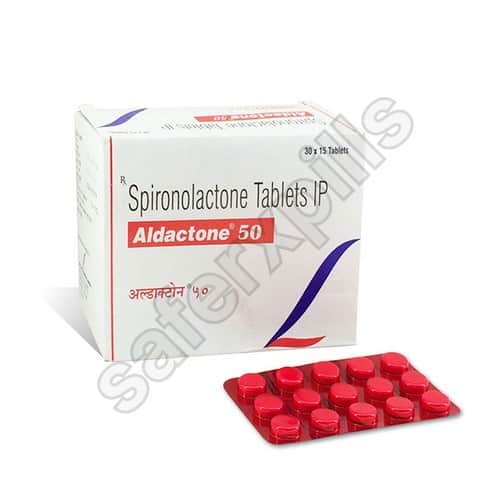
Other products: Forxiga 10mg (dapagliflozin, an SGLT2 inhibitor with kidney disease and heart failure uses), Jardiance 10mg (empagliflozin) and Aldactone 25mg (spironolactone, a steroidal MRA; not to be combined with finerenone).
Sources
- KERENDIA (finerenone) tablets, US prescribing information, Bayer HealthCare Pharmaceuticals Inc. (DailyMed setid fc726765-5d5a-4d6e-b037-b847bda9fb7c, SPL version 15, published 29 September 2026): sections 1, 2.1 to 2.4 (Tables 1 to 3), 3, 4, 5.1, 5.2, 6.1 (Table 4), 6.2, 7.1 to 7.3, 8.1, 8.2, 8.4 to 8.6, 10, 11, 12.1 to 12.3, 14.1 to 14.3 (Tables 5 and 6), 16, 17. DailyMed
- Kerendia 10 mg film-coated tablets, UK Summary of Product Characteristics, Bayer plc, PLGB 00010/0751, POM, text revised 10/04/2026 (emc 13437): sections 2, 3, 4.1 to 4.9, 6.1, 6.4, 6.5; and the UK patient leaflet, last revised 06/2026 (sections 2 and 4). emc
- Drugs@FDA, NDA 215341 Kerendia (Bayer): original approval 9 July 2021; efficacy supplements include 11 July 2025 (heart failure) and 16 September 2026 (CKD with type 1 diabetes); ANDA 220684 finerenone (Apotex), tentative approval 27 August 2026 (openFDA, data updated 2 November 2026). Drugs@FDA
- Centers for Medicare and Medicaid Services. National Average Drug Acquisition Cost (NADAC) 2026, file as of 4 November 2026: Kerendia 10 mg tablet $22.85403 (NDCs 50419054001, 50419054002, 50419054005, 50419054006), effective 21 October 2026; no finerenone generic rows. data.medicaid.gov
- Bakris GL et al. Effect of Finerenone on Chronic Kidney Disease Outcomes in Type 2 Diabetes (FIDELIO-DKD). N Engl J Med 2020. PMID 33264825.
- Pitt B et al. Cardiovascular Events with Finerenone in Kidney Disease and Type 2 Diabetes (FIGARO-DKD). N Engl J Med 2021. PMID 34449181.
- Solomon SD et al. Finerenone in Heart Failure with Mildly Reduced or Preserved Ejection Fraction (FINEARTS-HF). N Engl J Med 2024. PMID 39225278.
- Heerspink HJL et al. Finerenone in Type 1 Diabetes and Chronic Kidney Disease (FINE-ONE). N Engl J Med 2026. PMID 41780000.
- healthdirect Australia, Kerendia: Schedule 4; Australian Commission on Safety and Quality in Health Care Medicine Finder, Kerendia 10 mg AUST R 350772. healthdirect
- Health Canada Drug Product Database: Kerendia 10 mg, DIN 02531917, Bayer Inc, marketed since 22 November 2022, prescription; checked 4 November 2026. Health Canada
- Indian pharmacy listings for Kerendia 10mg (Tata 1mg, PharmEasy, Truemeds, Apollo Pharmacy), checked 4 November 2026.
- MHRA. 20 million illegal erectile dysfunction pills seized as MHRA warns against risky online buys, 13 February 2026. GOV.UK
Frequently asked questions
What is Kerendia 10mg?
Kerendia 10mg is Bayer's finerenone 10 mg film-coated tablet, sold here in its Indian pack (Tata 1mg, PharmEasy, Truemeds and Apollo name Bayer Zydus Pharma as the Indian marketer). Finerenone is a nonsteroidal mineralocorticoid receptor antagonist. In the US it is licensed for adults with chronic kidney disease associated with type 2 or type 1 diabetes, and for adults with heart failure with an ejection fraction of 40% or more (US label 1). The UK label covers kidney disease with type 2 diabetes and heart failure (UK 4.1).
Is Indian Kerendia the same as US Kerendia?
It is the same brand from the same company, Bayer, with the same active ingredient and strength. The Indian pack is not registered with the FDA, MHRA, TGA or Health Canada, so none of them has reviewed this pack. The US and UK labels describe the 10 mg tablet as pink and oblong, marked "FI" and "10"; we have not confirmed the markings on the Indian tablets.
How much does Kerendia 10mg cost per tablet?
As of November 2026, $2.86 a tablet in the 28 pack ($80), $2.82 in the 56 pack ($158) and $2.80 in the 84 pack ($235), before shipping; the pack selector shows the current price. The 28 pack carries $25 shipping, which makes it $3.75 a tablet; the 56 and 84 packs ship free. In the NADAC file as of 4 November 2026, the average US pharmacy acquisition cost of Kerendia 10 mg was $22.85403 a tablet.
Is there a generic Kerendia in the US?
Not on sale. As of 4 November 2026, Drugs@FDA lists one generic finerenone application (Apotex, 20 mg and 40 mg) with tentative approval only, which means it cannot yet be marketed, and the US NADAC file has no generic finerenone rows. Brand Kerendia is the only finerenone sold in US pharmacies.
Do I need blood tests while taking Kerendia?
Yes. Both labels require potassium and eGFR to be measured before starting, 4 weeks after starting or any dose change, and periodically after that (US 2.1, 2.3; UK 4.2). Kerendia is not started if potassium is above 5.0, and it is withheld if potassium rises above 5.5 in kidney disease. Without a doctor ordering and reading these tests, do not take it.
How do I take Kerendia 10mg?
One tablet once a day, with or without food, with a glass of water (UK 4.2). The tablet may be crushed and mixed with water or soft food such as applesauce just before taking (US 2.2). Avoid grapefruit and grapefruit juice. If you miss a dose, take it the same day only; otherwise skip it and never take two doses together (US 2.4; UK 4.2).
Should I take Kerendia 10mg or 20mg?
Your kidney function and potassium decide. The labels start at 10 mg if eGFR is 25 to below 60. The US label starts at 20 mg if eGFR is 60 or more; the UK 10 mg label gives that 20 mg start for heart failure. After 4 weeks, the dose usually goes up to 20 mg if potassium is low enough (4.8 or less in kidney disease, below 5.0 in heart failure) and eGFR has not fallen by more than 30% (US 2.2, 2.3; UK 4.2). In heart failure the target can be 40 mg, which we do not stock. Never change the dose yourself.
What are the side effects of Kerendia?
In the pooled kidney trials, high potassium affected 14.0% on Kerendia against 6.9% on placebo, low blood pressure 4.6% against 3.0% and low sodium 1.3% against 0.7% (US Table 4). In the heart failure trial, events related to worsening kidney function were more common (18% against 12%) (US 6.1). Angioedema, rash and hives have been reported after approval (US 6.2).
Who should not take Kerendia?
Never take it with a strong CYP3A4 inhibitor (such as itraconazole, ketoconazole, ritonavir or clarithromycin), with adrenal insufficiency or Addison's disease, or if you are allergic to any ingredient (US 4; UK 4.3). It is not started with potassium above 5.0 or eGFR below 25, is to be avoided (US) or not started (UK) in severe liver impairment, and the UK label says it should not be given with potassium-sparing diuretics or other MRAs such as spironolactone or eplerenone (UK 4.4). Avoid breastfeeding during treatment and for 1 day after (US 8.2).
Do I need a prescription for Kerendia?
Yes in every country we ship to. Kerendia is a prescription medicine in the US, prescription-only (POM) in the UK, Schedule 4 in Australia and prescription in Canada. The FDA says personal importation of unapproved medicines is illegal in most circumstances. This Indian pack is not registered with the FDA, MHRA, TGA or Health Canada. Check the rules where you live.
How long does delivery of Kerendia 10mg take?
Standard delivery takes 7 to 14 business days to the US, UK, Australia and Canada, in plain packaging with tracking. Shipping is $25 on orders under $149 and free from $149. Order before your current supply runs out, and keep your blood test appointments while you wait.
Medical References
- 1.KERENDIA (finerenone) tablets, US prescribing information, Bayer HealthCare Pharmaceuticals (DailyMed SPL version 15) — 2026
- 2.Kerendia 10 mg film-coated tablets, UK Summary of Product Characteristics (Bayer plc, PLGB 00010/0751, POM) — 2026
- 3.Drugs@FDA: NDA 215341 Kerendia (approved 9 July 2021; efficacy supplements include 11 July 2025 (heart failure) and 16 September 2026 (CKD with type 1 diabetes)) — 2026
- 4.CMS National Average Drug Acquisition Cost (NADAC) 2026: Kerendia 10 mg, effective 21 October 2026 — 2026
- 5.Bakris GL et al. Effect of Finerenone on Chronic Kidney Disease Outcomes in Type 2 Diabetes (FIDELIO-DKD). N Engl J Med 2020 (PMID: 33264825) — 2020
- 6.Pitt B et al. Cardiovascular Events with Finerenone in Kidney Disease and Type 2 Diabetes (FIGARO-DKD). N Engl J Med 2021 (PMID: 34449181) — 2021
- 7.Solomon SD et al. Finerenone in Heart Failure with Mildly Reduced or Preserved Ejection Fraction (FINEARTS-HF). N Engl J Med 2024 (PMID: 39225278) — 2024
- 8.Heerspink HJL et al. Finerenone in Type 1 Diabetes and Chronic Kidney Disease (FINE-ONE). N Engl J Med 2026 (PMID: 41780000) — 2026
Sources: U.S. National Library of Medicine (DailyMed, PubMed), openFDA
Related articles
Brand vs Generic Drug Prices: What US Pharmacies Pay for Viagra, Cialis, Latisse and More (NADAC, October 2026)
CMS NADAC data for the week of 28 October 2026 shows what US pharmacies pay for brand and generic versions of Viagra, Cialis, Propecia, Latisse, Lumigan and Stromectol. Generic ED and hair loss tablets cost under 2% of the brand price, while eye and lash generics cost 42% to 65%. Includes 2026 trends, supplier counts and the full method.
Read article
Buy Amaryl (Glimepiride) Online: Dosing, Hypoglycaemia Risk and What to Verify First
Amaryl is brand name glimepiride, a sulfonylurea that lowers blood sugar effectively and cheaply but carries real hypoglycaemia risk. Dosing, the CAROLINA trial evidence, interactions, and what to verify before ordering online.
Read article
Generic vs Branded Medicines: What You Really Need to Know
Many patients assume branded drugs are superior to generics. The truth, backed by decades of FDA research, is more nuanced.
Read articleCustomer Reviews
No reviews yet. Bought Kerendia 10mg? Tell other buyers how it went.